
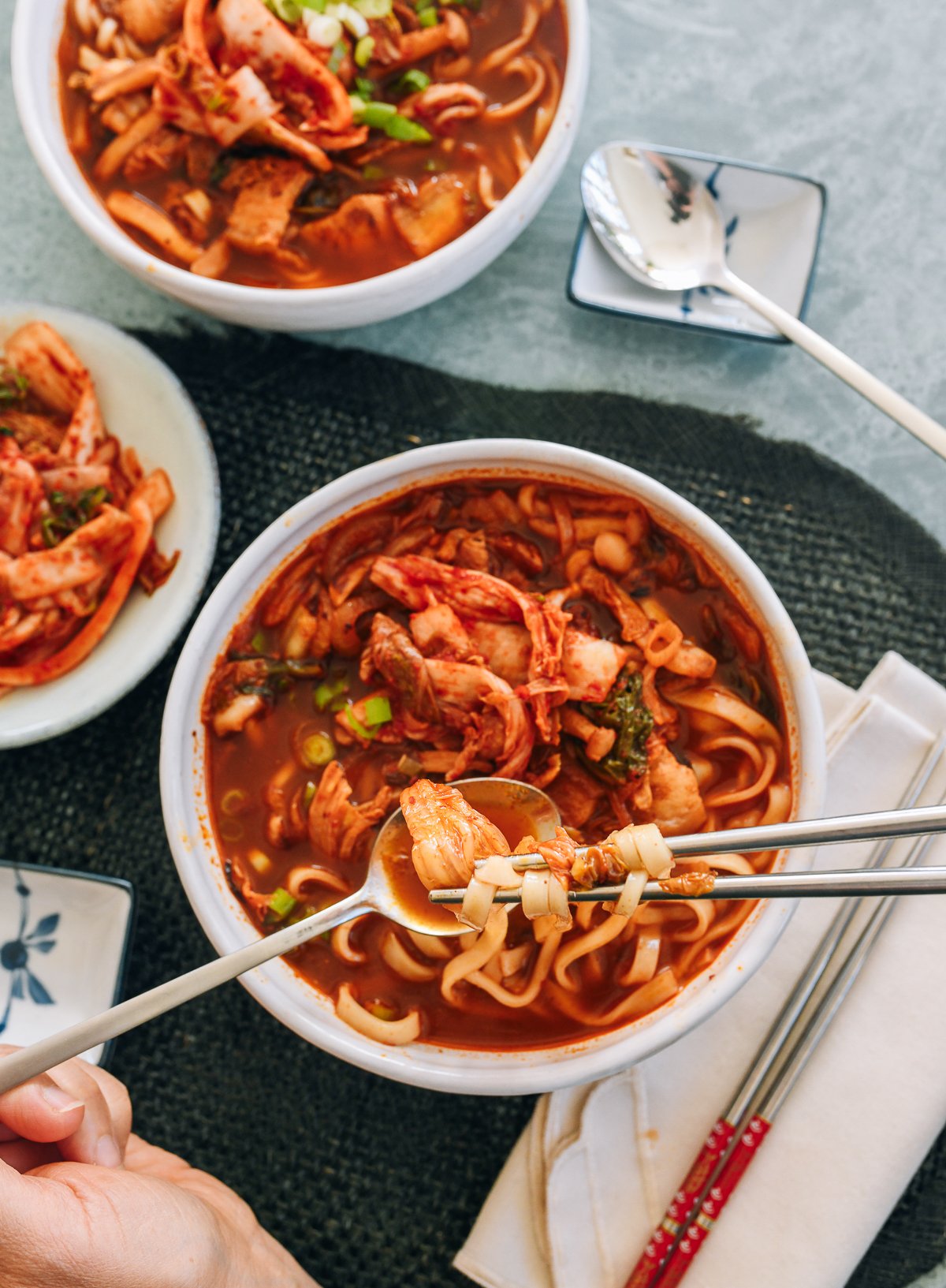
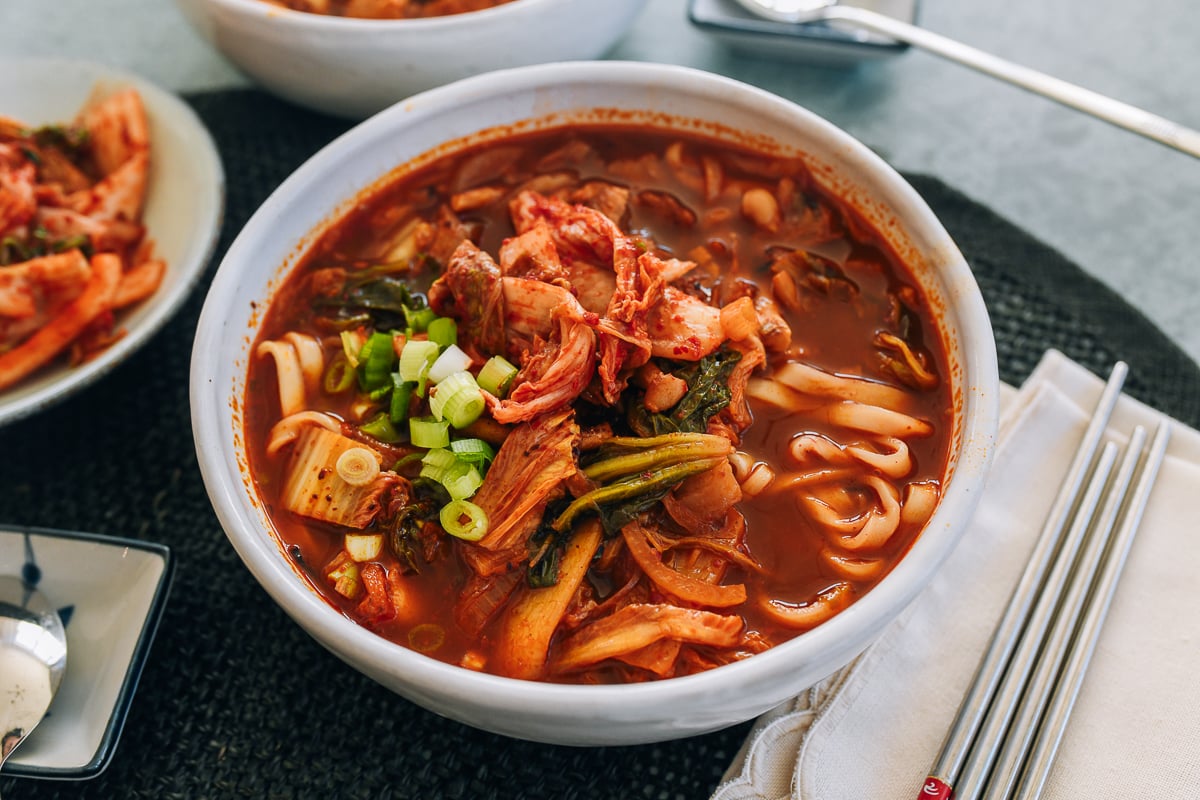
This Kimchi Noodle Soup is spicy, savory, complex, and extremely tasty! Inspired by Shin Ramyun instant noodles and our general love of Korean food, I’ve come up with a noodle soup recipe that I’ll be making on repeat all fall and winter long!
Why I Created This Recipe
My mom’s all-time favorite Korean dish is called Jjampong, a seafood noodle soup with a spicy red broth and chewy wheat noodles. I recently discovered that similar to Jajangmyeon (black bean noodles), the dish is actually a Korean-style Chinese dish, developed by Chinese restaurants in Korea.
My mom loves no cuisine more than her native Chinese food, so her favorite Korean dish revealing itself to be a Korean Chinese dish made total sense.
Having grown up a bit seafood-averse (though I’m coming around these days), I still loved Jjampong’s complex spicy broth. Even at the height of my disinclination towards seafood, I slurped up the broth and chewy noodles whilst avoiding the mussels, shrimp, and squid.
I’ve long looked for a jjampong-like noodle soup that I could fully embrace—a soup with a milder seafood flavor and a little more meat than seafood. I never found it in restaurants. The closest I’ve come to is some places (an H-Mart food court comes to mind) that serve Kimchi Jigae or Soondubu with noodles. (In all instances, not great.)
But during the making of our recent video on Instant Ramen Hacks, hack #5, the Kimchi Ramen (Shin Ramyun with bunashimeji/seafood mushrooms and kimchi) was kind of a revelation. Just enough seafood flavor, savory, meaty, and a little tangy from the kimchi.


I set out to create an easy noodle soup from fresh and pantry ingredients that would echo those flavors. And by George, I think I’ve done it.
Building Complexity
While this noodle soup will take a bit longer than an instant ramen packet, it won’t take much longer. We’re going to build a lot of complex flavors in about 25 minutes of cook time.
I recently came across this Shin Cup-Style Spicy Korean Ramyun Noodle Soup Recipe by much-admired chef and recipe developer J. Kenji Lopez-Alt.
In it, he makes a homemade dashi stock with kombu (kelp) and dried bonito flakes, sears short ribs with aromatics, and even takes a leaf out of Chinese cuisine’s book by adding doubanjiang (a spicy fermented broad bean sauce from Sichuan Province).
The result is a no-doubt delicious bowl of noodles, though it takes an hour of active prep and five and a half hours of cooking time.
I find myself with precious little time these days. So in my quest to create a homemade jjampong/shin cup hybrid, I relied on a few umami powerhouse pantry ingredients:
- Instant Dashi Granules
- Chicken Bouillon Paste
- Beef Bouillon Paste
- Fish Sauce
These ingredients built the savory canvas on top of which I added the kimchi and its juices, onion and garlic, gochujang (Korean fermented pepper paste), and gochugaru (Korean chili flakes). My go-to brand for the bouillon pastes is Better Than Bouillon. You can find it at Costco, and I’ve slowly been foregoing canned or boxed chicken stock ever since I started using it.
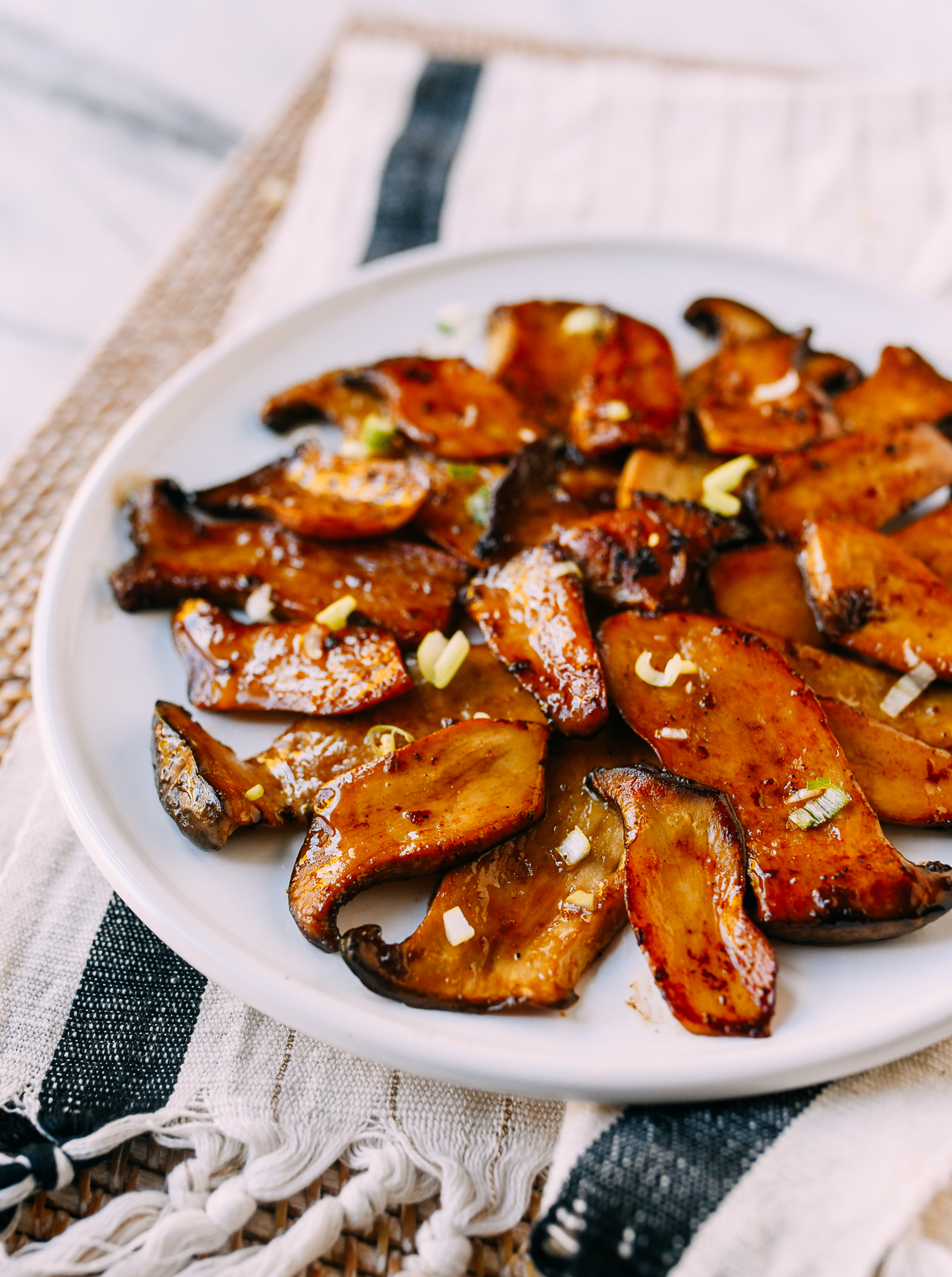
Plus, I included those all-important seafood mushrooms. I also added pork belly to give the dish even more meaty flavor (also because Kimchi and pork belly are just a match made in heaven in my book. See Kaitiln’s Dubu Kimchi recipe and my 10-Minute Pork Belly Kimchi Bowls). That said, you certainly could substitute beef by searing thinly sliced velveted flank steak here. (See my dad’s How to Velvet Beef article for more on that.)

The results were exactly what I was looking for. Meaty, with a little hint of seafood from the dashi stock, fish sauce, the complex fermented seafood aroma of the kimchi, and the peculiar alchemy of the seafood mushrooms (which actually do taste a bit like shellfish). It was spicy, with a little onion/garlic zip, and just packed with umami.
Give it a try. As you can see by the brevity in the instructions, this is not a complicated soup to make. You’ll have a steaming hot bowl of noodles in front of you in about 35 minutes. I think you’ll love it as much as I do.

This recipe makes 3 large bowls of noodles, or 4 medium servings.
Kimchi Noodle Soup Recipe Instructions
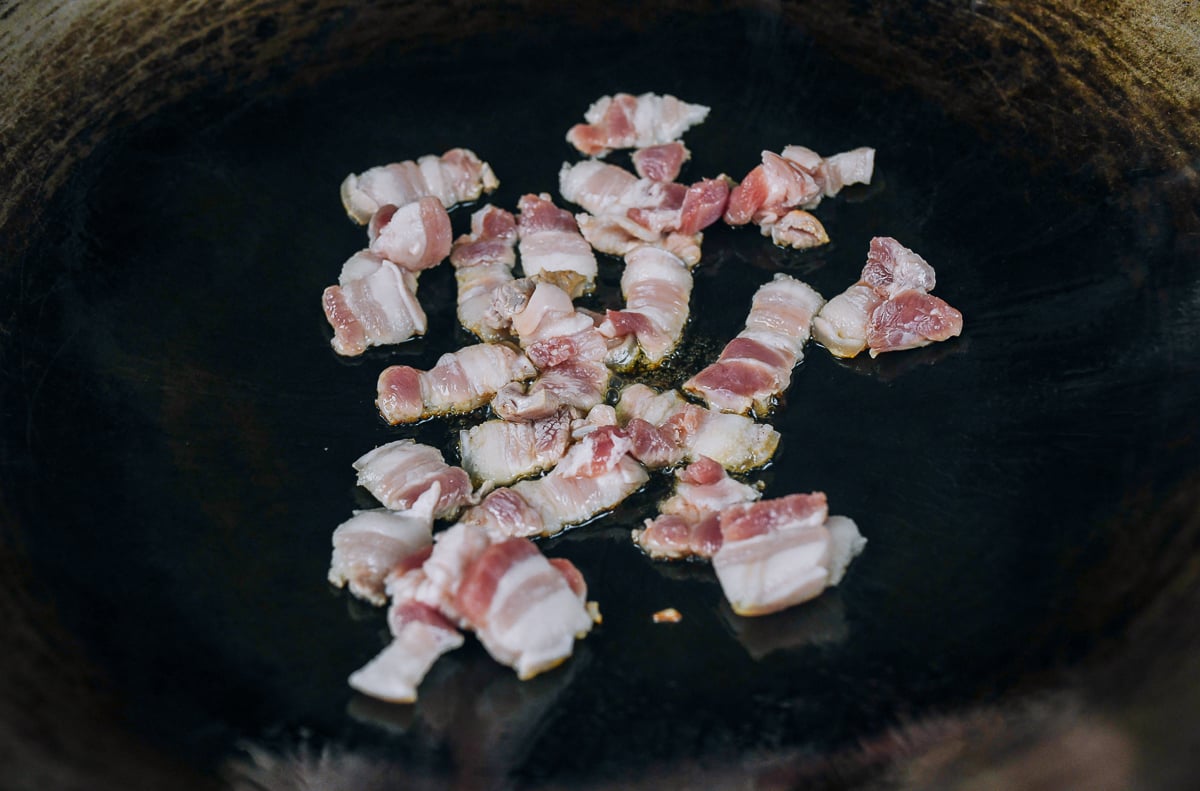
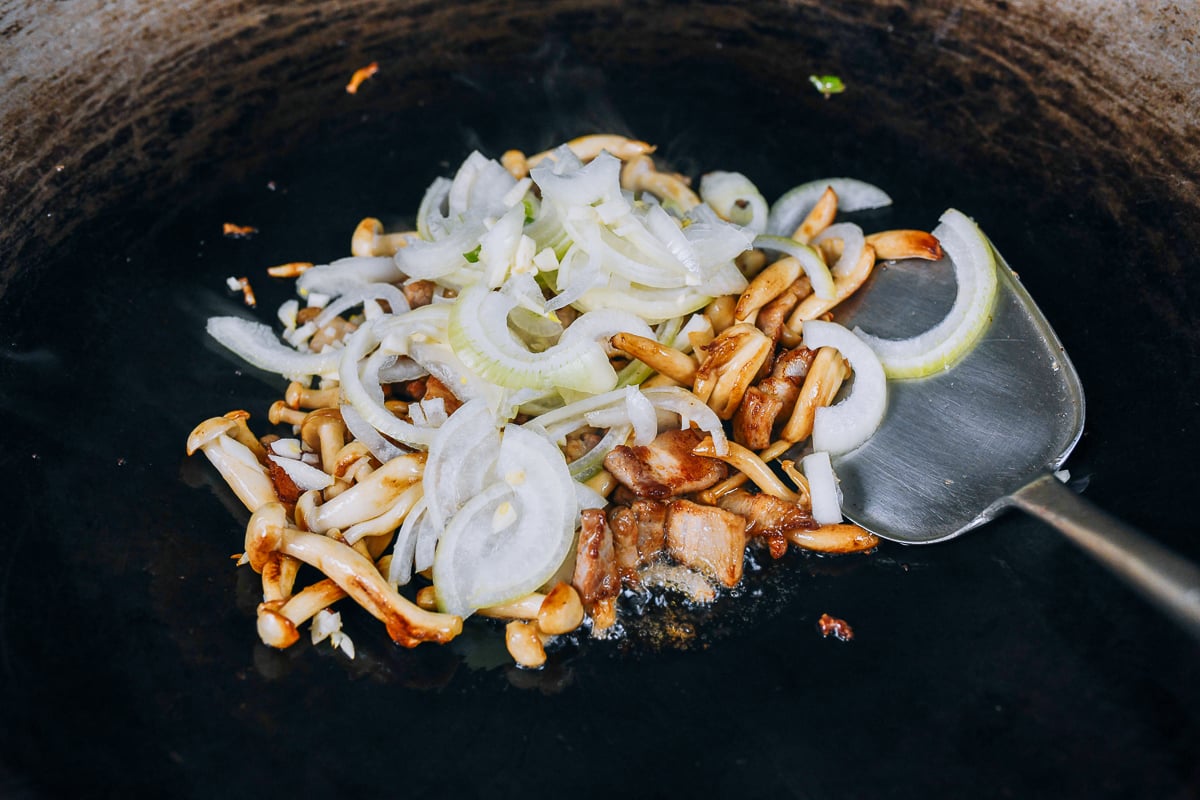
Heat a wok or wide soup pot over high heat until very hot. Add the oil, followed by the pork belly, and stir-fry for 2 minutes (or until lightly browned and caramelized). Add the mushrooms, and stir-fry for 2 minutes.
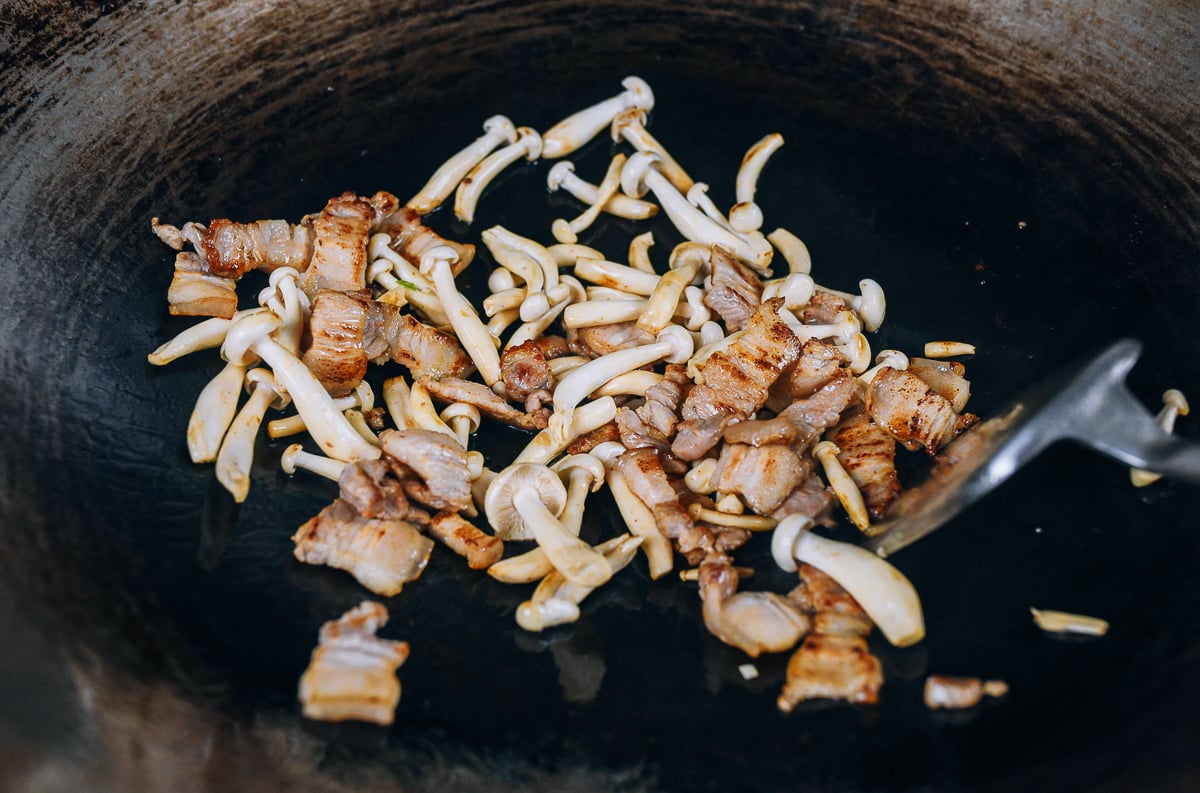
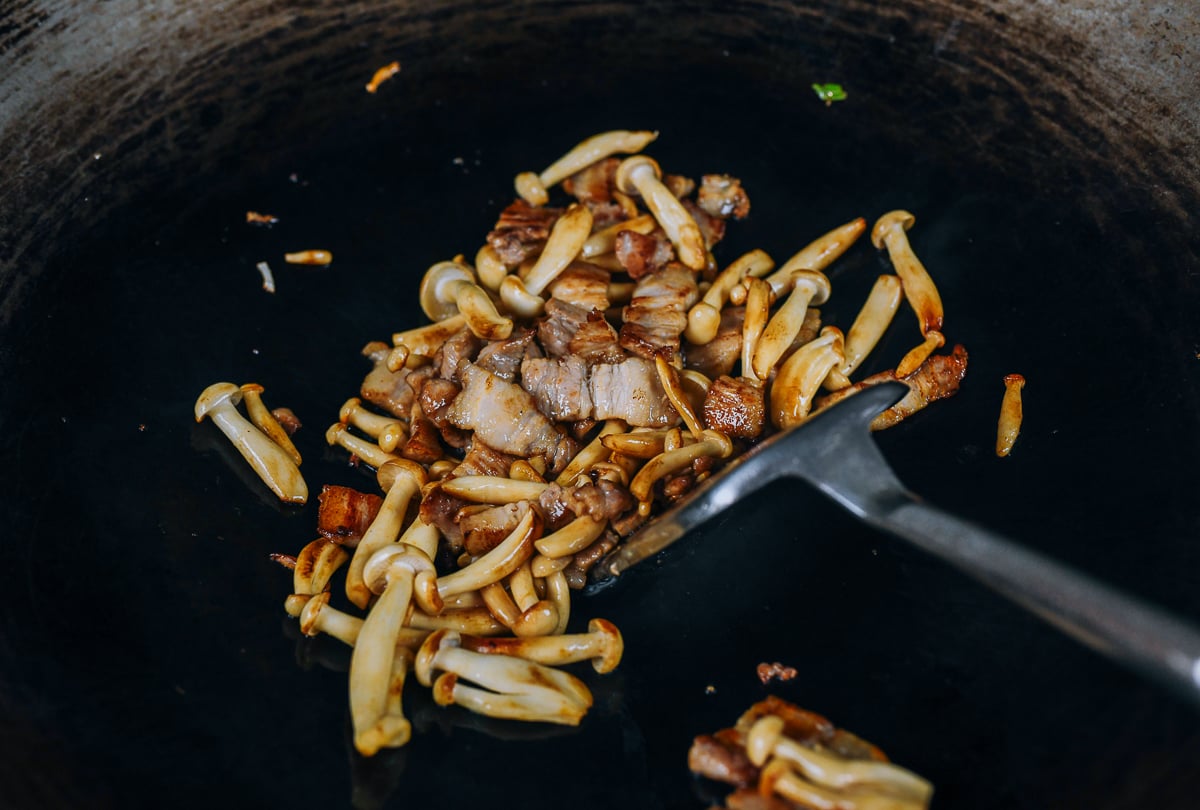
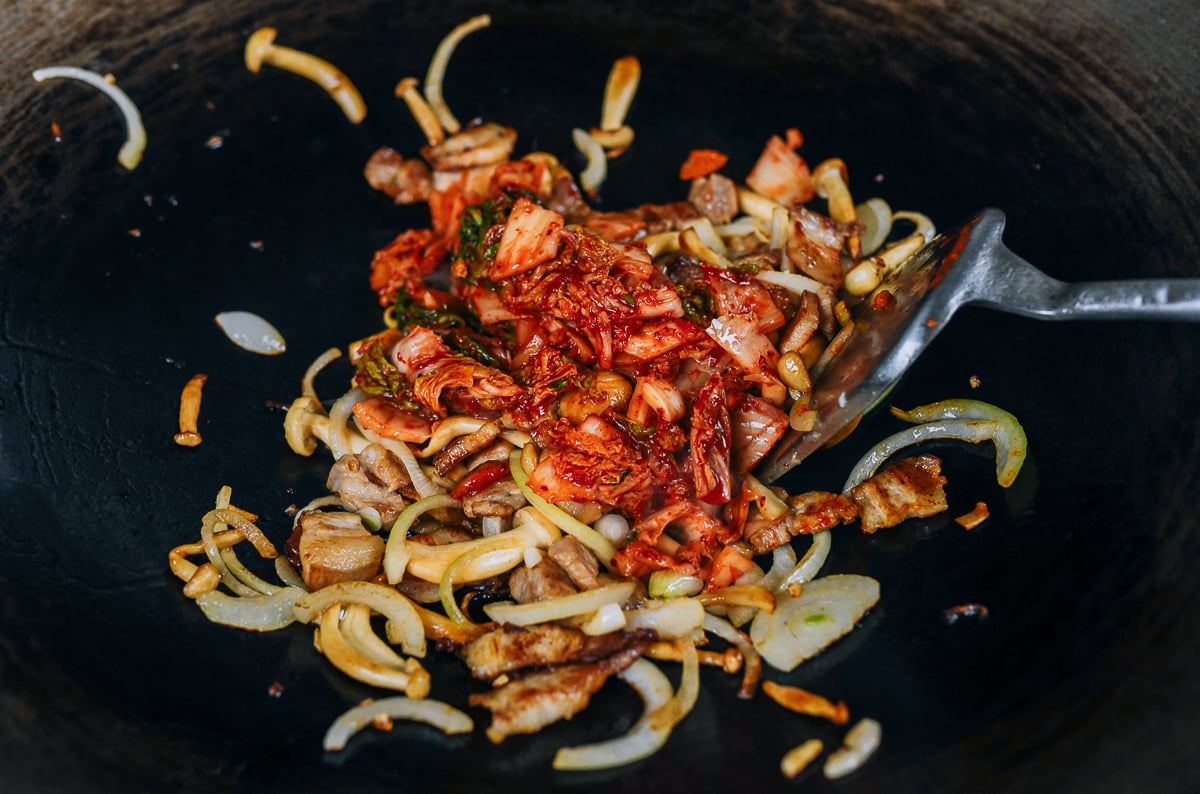
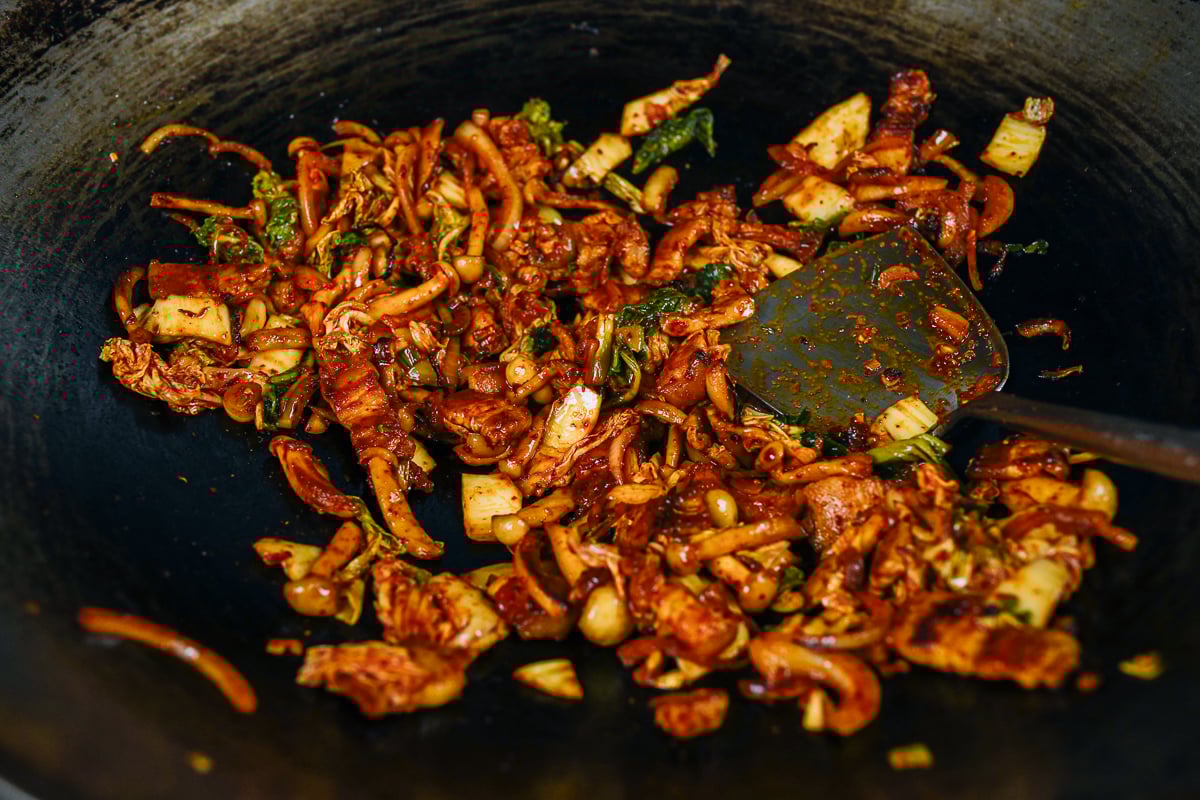
Then add the onion, garlic, kimchi, and sugar, and cook for 3 minutes. Finally, add the gochujang and cook for another minute. Remove this mixture to a plate, and set aside.
To the wok or pot, add the dashi stock, chicken stock, beef bouillon paste and water, and kimchi juice. Mix well to deglaze the surface of the pan and ensure the bouillon paste is completely dissolved. Bring to a boil. Stir in the gochugaru, fish sauce, and sesame oil, reduce the heat to low, and cover.
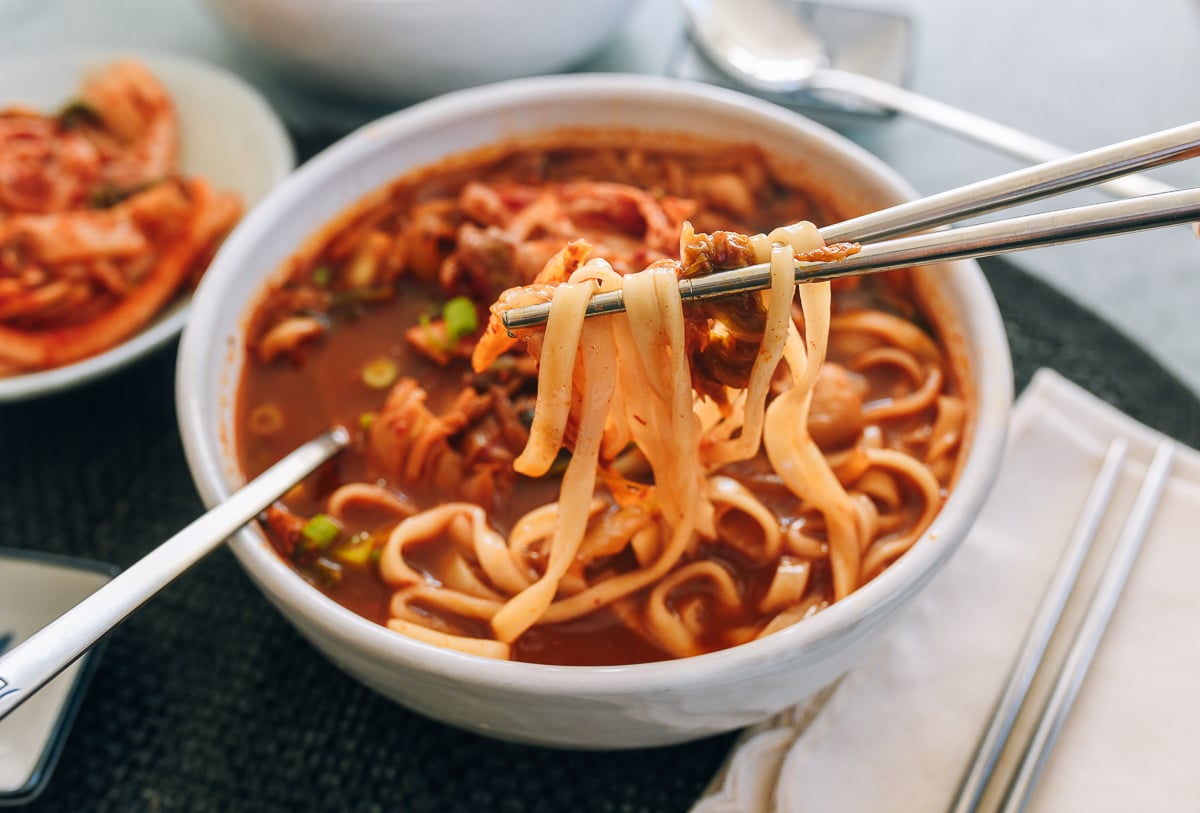
Meanwhile, bring a large pot of water to a boil for the noodles. Cook the noodles according to package instructions, and divide between 3-4 bowls. Cover with the broth, and top with the kimchi, pork belly, and mushroom mixture. Garnish with chopped scallions, and enjoy!
Looking for more authentic recipes? Subscribe to our email list and be sure to follow us on Pinterest, Facebook, Instagram, and Youtube!
Recipe

Kimchi Noodle Soup
Ingredients
- 1 tablespoon neutral oil (such as vegetable, canola, or avocado oil)
- 8 ounces boneless pork belly (thinly sliced)
- 5 ounces seafood mushrooms or bunashimeji mushrooms
- 1 small onion (thinly sliced)
- 2 cloves garlic (chopped)
- 1 cup napa cabbage kimchi (roughly chopped)
- 1 teaspoon sugar
- 1 tablespoon gochujang (Korean fermented pepper paste)
- 2 cups dashi stock (I use instant dashi granules)
- 2 teaspoons chicken bouillon paste (mixed with 2 cups/475ml hot water; or prepared chicken stock)
- 1 teaspoon beef bouillon paste (mixed with 2 cups/475ml hot water)
- ¼ cup kimchi juice
- 2 tablespoons gochugaru (Korean chili flakes)
- 1 tablespoon fish sauce
- ¼ teaspoon sesame oil
- 12 ounces fresh wheat noodles
- 1 scallion (chopped)
Instructions
- Heat a wok or wide soup pot over high heat until very hot. Add the oil, followed by the pork belly, and stir-fry for 2 minutes (or until lightly browned and caramelized).
- Add the mushrooms, and stir-fry for 2 minutes. Then add the onion, garlic, kimchi, and sugar, and cook for 3 minutes. Finally, add the gochujang and cook for another minute. Remove this mixture to a plate, and set aside.
- To the wok or pot, add the dashi stock, chicken stock, beef bouillon paste and water, and kimchi juice. Mix well to deglaze the surface of the pan and ensure the bouillon paste is completely dissolved. Bring to a boil. Stir in the gochugaru, fish sauce, and sesame oil, reduce the heat to low, and cover.
- Meanwhile, bring a large pot of water to a boil for the noodles. Cook the noodles according to package instructions, and divide between 3-4 bowls. Cover with the broth, and top with the kimchi, pork belly, and mushroom mixture. Garnish with chopped scallions, and enjoy!