I was first exposed to Korean Black Bean Noodles during my more youthful, bouncy days of K-pop fueled ardor, when I would routinely listen to Big Bang, 2PM, and Girls Generation, and binge-watch Korean dramas with subtitles between finishing homework assignments.
Watching all the Korean BBQ-eating, bibimbap-mixing, and jajangmyeon slurping made it pretty inevitable that I would try my hand at K cuisine, too.
A Chinese-Inspired Korean Dish
When we started hanging around Beijing more often, I was surprised to find that this dish is actually a Chinese dish first and foremost, and a beloved Beijing staple at that.
When it comes to the world of Asian food, one often finds that certain dishes have numerous iterations depending on whether you’re talking to a Chinese person, a Korean person, a Japanese person, a person from Malaysia, etc. A lot of Chinese dishes have made their way across borders and have been adapted for local tastes. Ever gone to an Indian buffet and had Chicken Manchurian, for example?
Black bean noodles is one such dish. Case in point, our recipe for Beijing Fried Sauce Noodles, Zha Jiang Mian, whose sauce involves mushrooms, pork, sweet bean sauce, and ground bean paste.
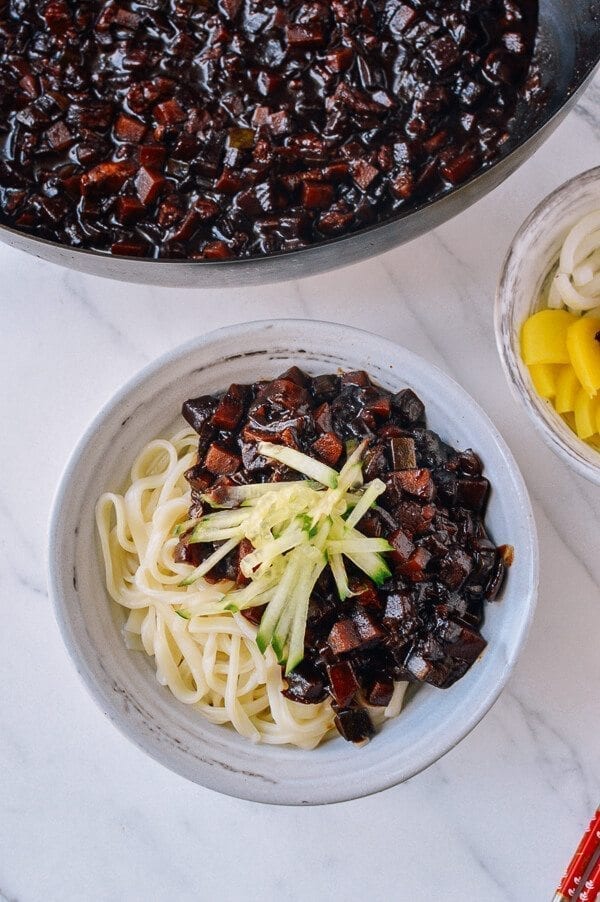
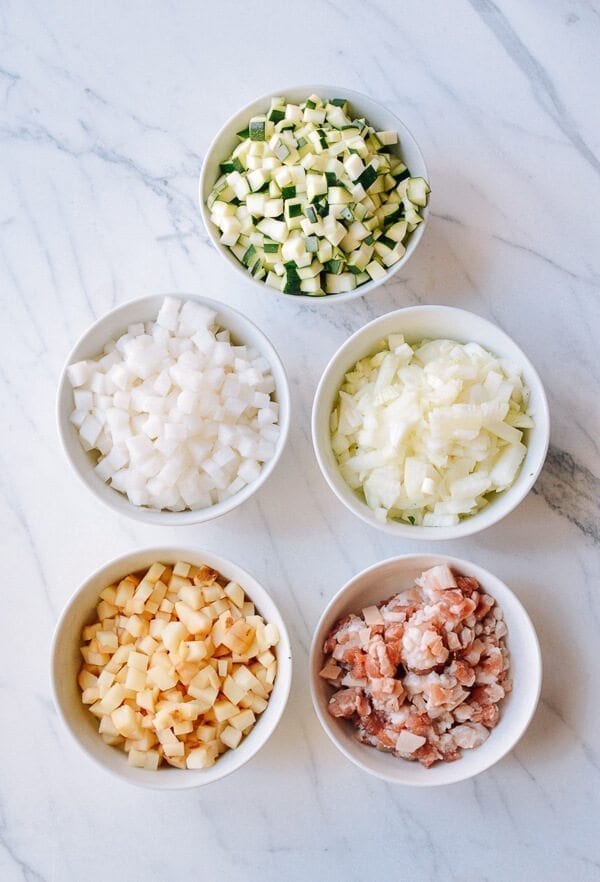
When you look at the Korean version—jajangmyeon (note the adjusted spelling, but similar sound)—it uses chopped pork belly, zucchini, potato, onion, daikon radish, and chunjang. It is just as delicious in its own way, despite being quite different!
Sourcing Ingredients
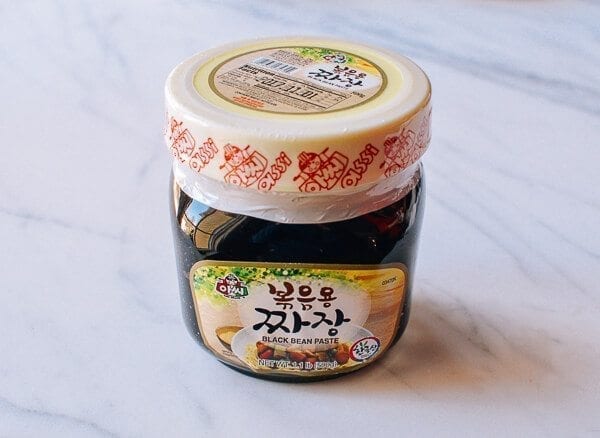
You can find this dish in Chinese Korean restaurants, but it’s easy to make at home once you’ve gotten your hands on the right paste.
Luckily, Korean pastes are packaged for dummies, so you’ll find that chunjang (black bean paste) is in a black plastic tub, gochujang (red pepper paste) is in a red plastic tub, doenjang (soybean paste) is in a brown plastic tub, and ssamjang (a combination of gochujang and doenjang used for Korean BBQ) is in a green plastic tub. Okay that last one is the least intuitive, but still! Pretty dummy-proof.
So make a batch of these black bean noodles before your next K drama session, or try your hand at some of our other Korean-style recipes: Korean BBQ, Salmon Bibimbap, Kimchi Jigae, Kimchi Pancakes, or Quick Dubu Kimchi!
Jajangmyeon: Recipe Instructions
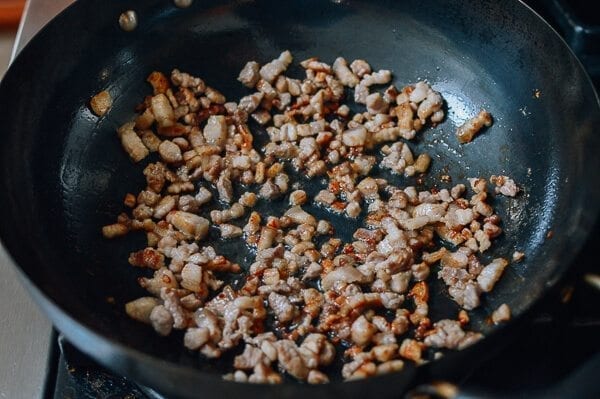
Heat 1 tablespoon of oil in a wok or pan over high heat. Stir fry the pork belly until it’s golden brown and crisped. The secret is high heat and minimal stirring! If there is a significant amount of pork fat pooling in the pan, you can drain that off.
Add the daikon radish and stir-fry for 1 minute, followed by the onion, zucchini, and potato. Stir-fry for another few minutes, until the potato is translucent.
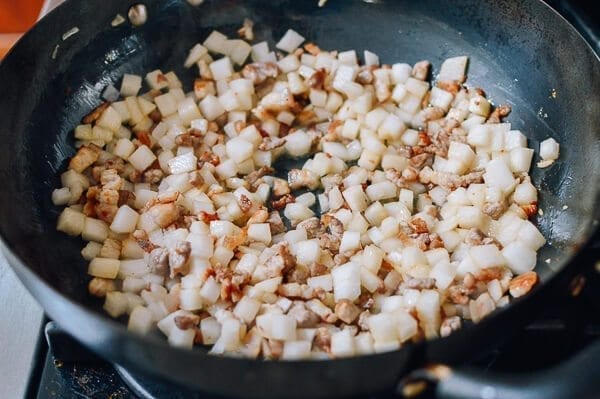
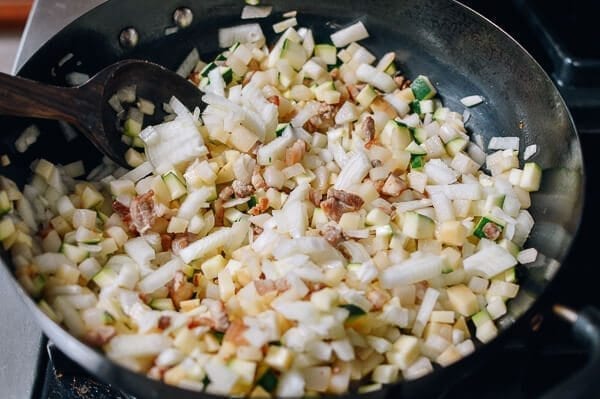
Clear a space in the center of the wok or pan, and the remaining 2 tablespoons of oil. Add the chunjang (Korean black bean paste) and let it fry in the center of the pan in the oil for one minute. Now stir everything together.
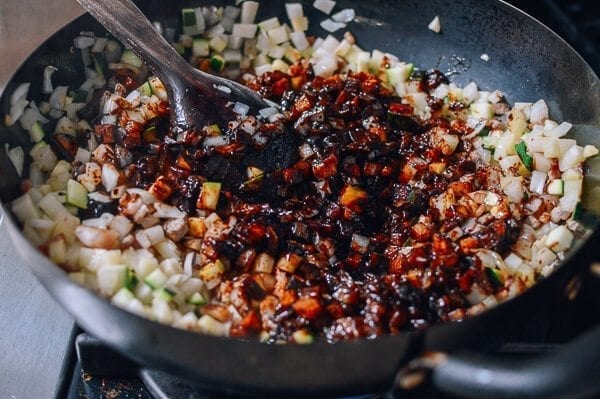
Add 2 cups of water, and let the sauce come to a boil. Turn the heat down and let it simmer with the lid on for 10 minutes. (If your sauce is becoming too thick, you can gradually add up to an additional cup of water.) This is the perfect time to cook your fresh Korean noodles (follow the instructions on the package). I didn’t specify the quantity of noodles to use, because this recipe makes quite a lot of sauce, that can be reheated and served with freshly cooked noodles whenever you want them. Just cook the amount that you’d like to eat for each sitting.
After 10 minutes, check to make sure that the potato is cooked through. Once it’s fully cooked, add the potato starch or cornstarch slurry, and stir until thick and glossy. Finish off with the sesame oil.
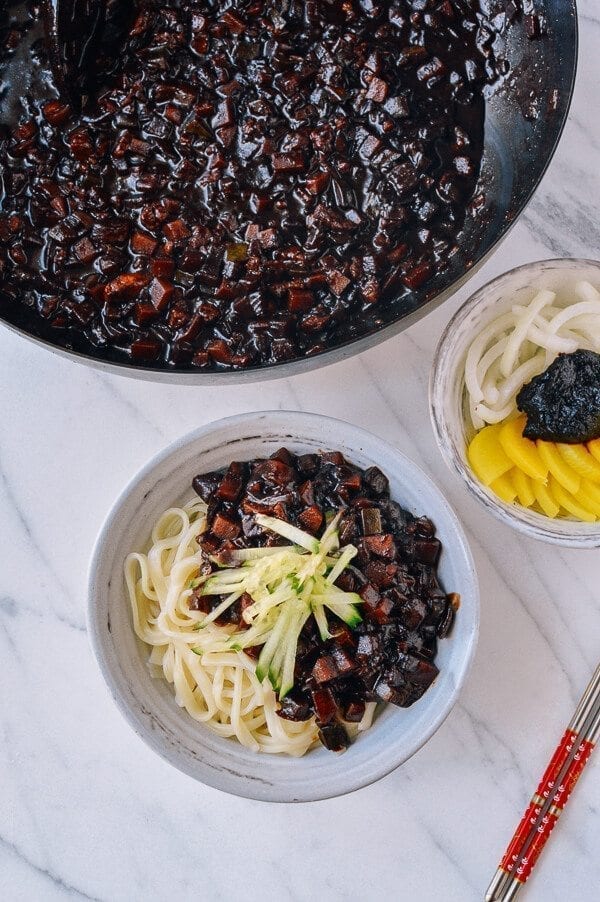
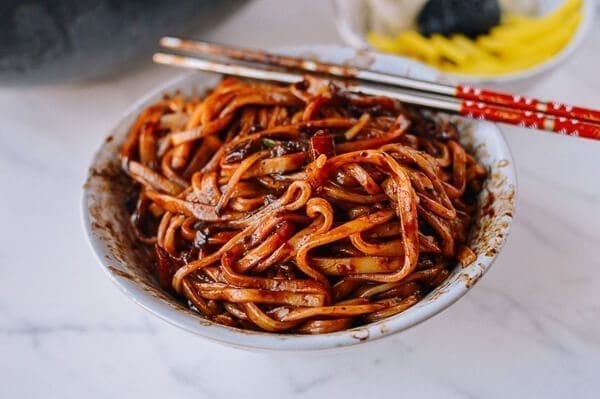
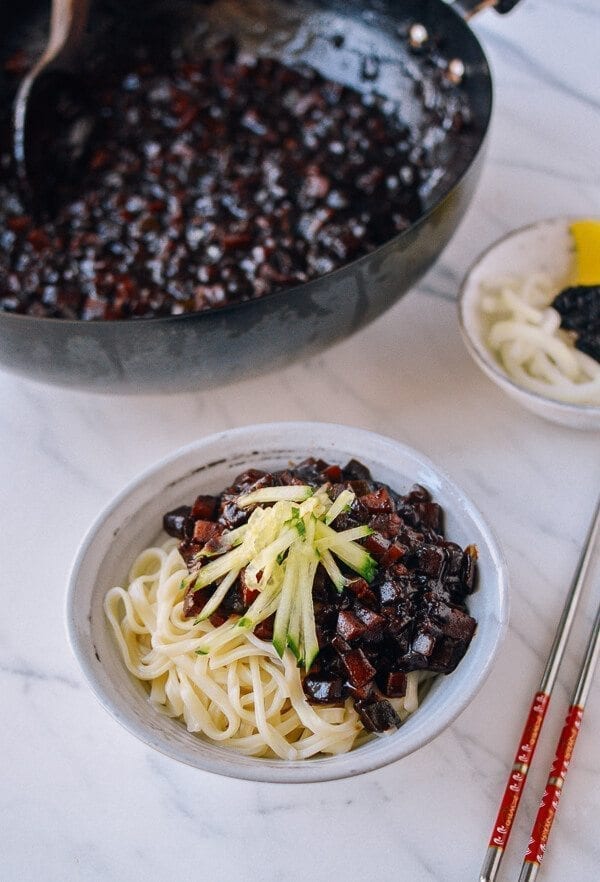
Serve with the noodles, and garnish with the cucumber. On the side, serve you black bean noodles with that signature pickled radish and chopped onion.
Looking for more authentic recipes? Subscribe to our email list and be sure to follow us on Pinterest, Facebook, Instagram, and Youtube!
Recipe

Korean Black Bean Noodles (Jajangmyeon)
Ingredients
- 3 tablespoons vegetable oil (divided)
- ½ pound pork belly or any marbled piece of pork (225g, cut into small cubes)
- 1 cup daikon or Korean radish (cut into ¼-inch cubes)
- 2 small onions (diced)
- 1 zucchini (cut into ¼-inch cubes)
- 2 small potatoes (peeled and cut into ¼-inch cubes)
- ½ cup chunjang (Korean black bean paste)
- 2-3 cups water (depending on your desired consistency)
- Fresh Korean noodles
- 2 tablespoons potato starch (or cornstarch, combined with ¼ cup water and 1 teaspoon of sugar in a small bowl)
- 1 teaspoon sesame oil
- 1 small seedless cucumber (cut into thin matchsticks for garnish)
- Yellow pickled radish and some additional cut raw onion (for serving)
Instructions
- Heat 1 tablespoon of oil in a wok or pan over high heat. Stir fry the pork belly until it’s golden brown and crisped. The secret is high heat and minimal stirring! If there is a significant amount of pork fat pooling in the pan, you can drain that off.
- Add the radish and stir-fry for 1 minute, followed by the onion, zucchini, and potato. Stir-fry for another few minutes, until the potato is translucent.
- Clear a space in the center of the wok or pan, and the remaining 2 tablespoons of oil. Add the Korean black bean paste (chunjang) and let it fry in the center of the pan in the oil for one minute. Now stir everything together.
- Add 2 cups of water, and let the sauce come to a boil. Turn the heat down and let it simmer with the lid on for 10 minutes. (If your sauce is becoming too thick, you can gradually add up to an additional cup of water.) This is the perfect time to cook your Korean noodles (follow the instructions on the package). I didn’t specify the quantity of noodles to use, because this recipe makes quite a lot of sauce, that can be reheated and served with freshly cooked noodles whenever you want them. Just cook the amount that you’d like to eat for each sitting.
- After 10 minutes, check to make sure that the potato is cooked through. Once it’s fully cooked, add the potato starch slurry, and stir until thick and glossy. Finish off with the sesame oil.
- Serve with the noodles, and garnish with the cucumber. On the side, serve with that signature pickled radish and chopped onion.