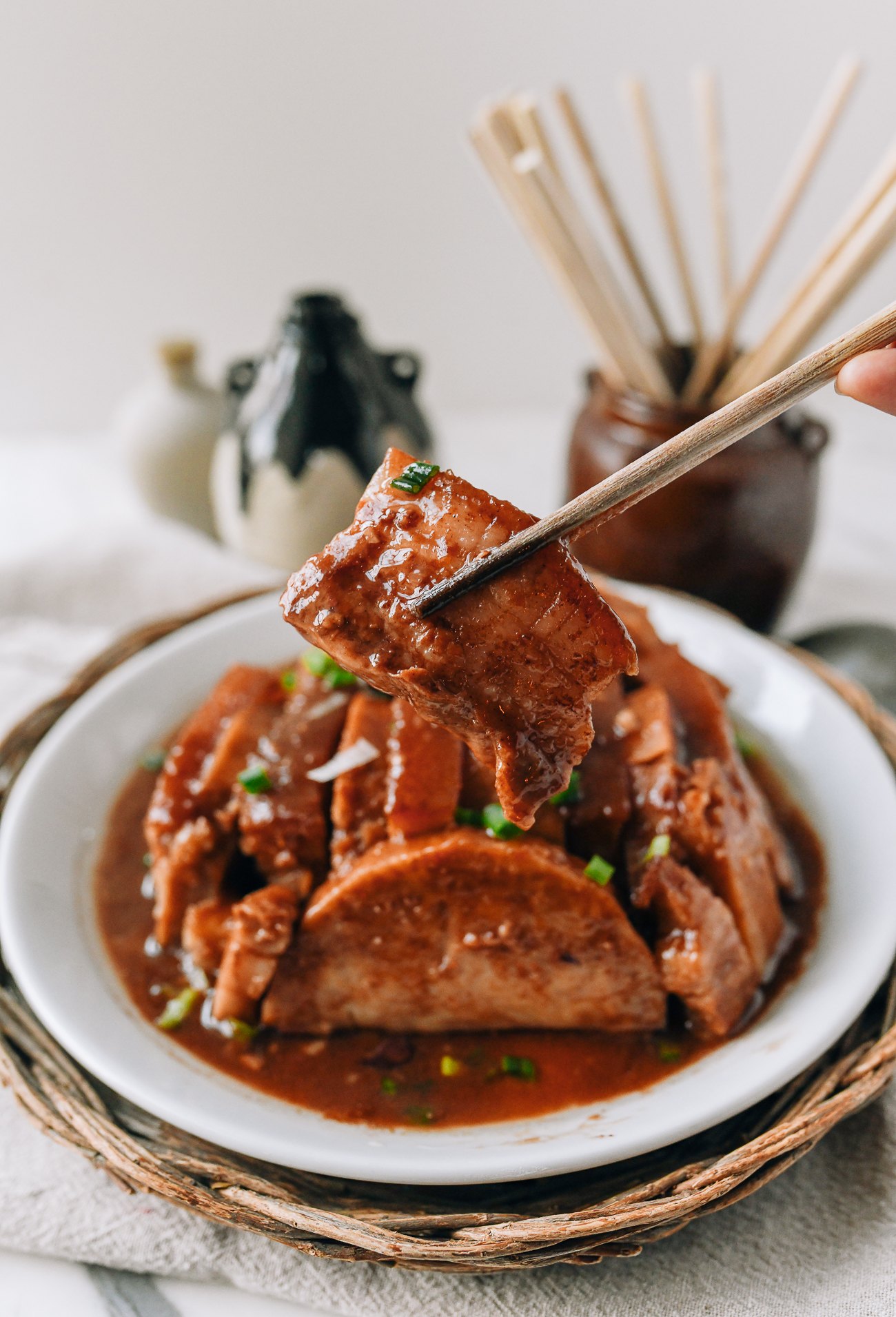
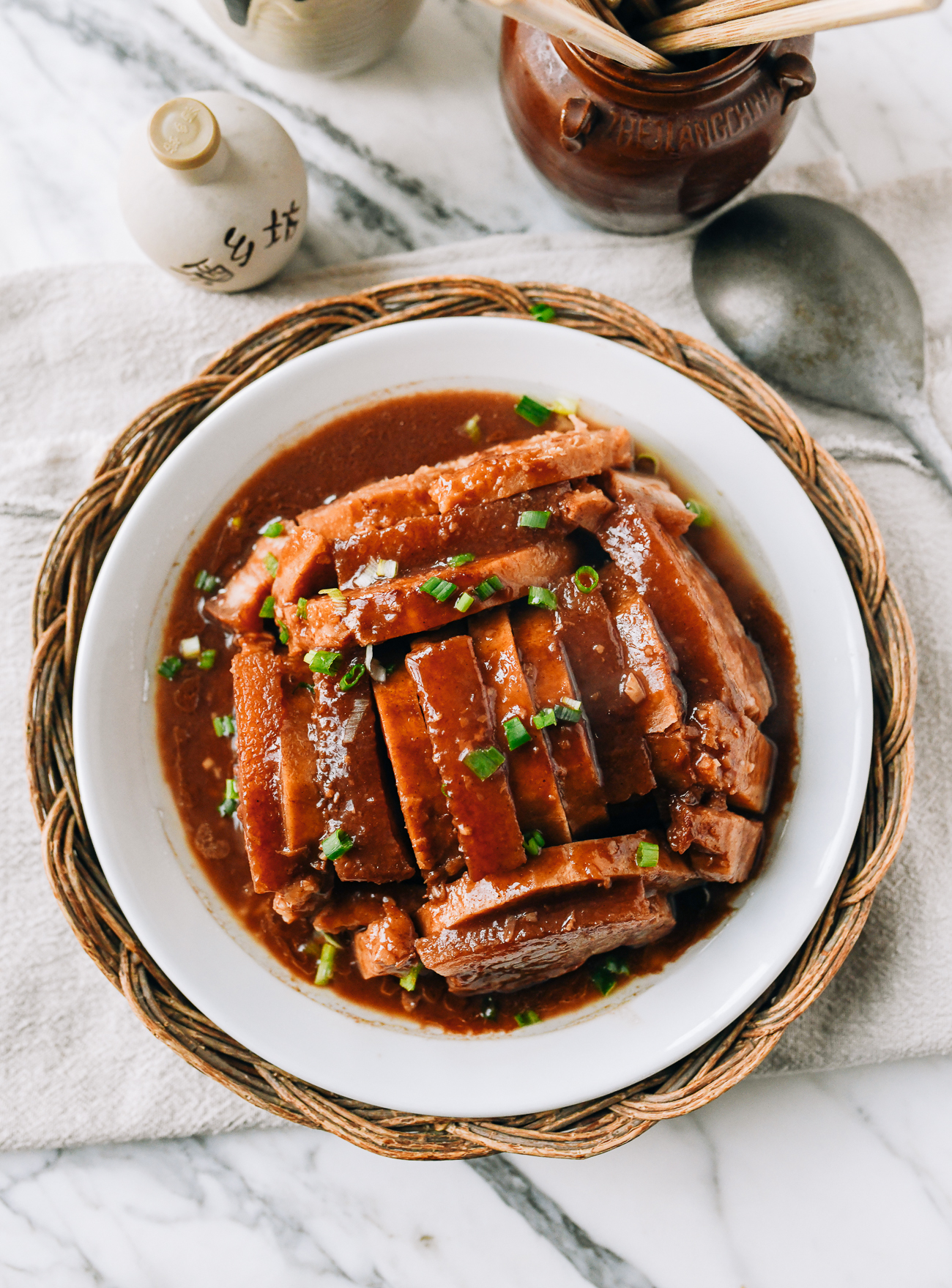
Pork Belly with Taro (芋头扣肉), or wu tau kau yuk in Cantonese (yùtóu kòu ròu in Mandarin), is home-cooked, show-stopping Chinese comfort food at its best.
In this recipe, steamed taro and pork melt together into a perfect centerpiece dish for Chinese New Year, or any other special occasion.
A Show-Stopping Pork Dish
Perhaps this year, you’re looking for a different pork recipe than the old standards, like Judy’s hong shao rou.
This steamed pork belly with taro is a Hakka dish that often shows up on dinner tables during Chinese New Year festivities.
For me, as a hungry—and admittedly a little husky—kid, this Pork Belly with Taro was one of the best things that could show up on the dinner table.
I remember my father saying that he and his brothers also looked forward to eating this dish during the Lunar New Year. He would always remark that the bigger and fattier the pork belly, the better!
Worth the Effort
Just because this wu tau kau yuk is a home-cooked favorite doesn’t mean it’s simple. That’s what makes it a special occasion dish!
You have to first blanch the pork belly, then fry it to crisp up the skin. After frying, you soak the pork belly in the blanching liquid to achieve a unique texture for the pork skin. The taro gets fried too, for a toasty, rich flavor.
Everything is then sliced, marinated, and arranged in a bowl in an alternating pattern. The whole thing melts together after 90 minutes of steaming.
But wait, there’s more! It gets inverted onto a plate, like a meaty version of a pineapple-upside down cake.
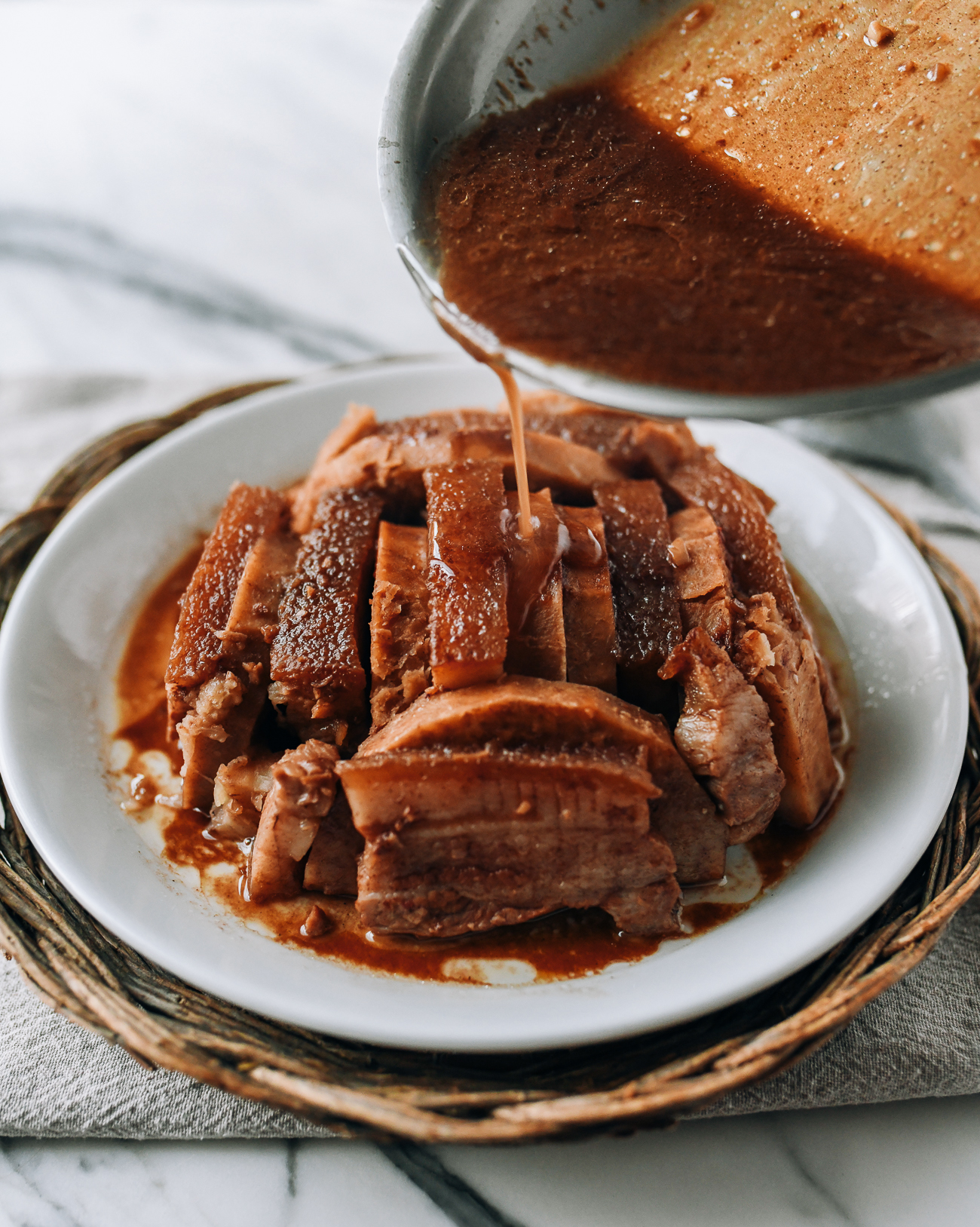
In the last couple minutes of preparation, you drain off the sauce, reduce it to a gravy, and pour it over the dish for shine and extra flavor.

Fun Fact!
In Mandarin, kòu ròu (扣肉) means “inverted meat,” so any type of dish with those two characters are cooked in this similar style, including Mei Cai Kou Rou—another favorite.
Origins of Wu Tau Kau Yuk
Steamed Pork Belly with Taro is a traditional Hakka dish from China’s southern Guangdong province.
It uses some unique spices and flavorings, including red fermented bean curd, a favorite Hakka ingredient you frequently see in braised dishes (like our Braised Pork with Arrowhead Root), along with star anise and five spice powder.
These ingredients transform the pork belly and taro into an immensely flavorful main dish that must be eaten with rice!
What is Taro?
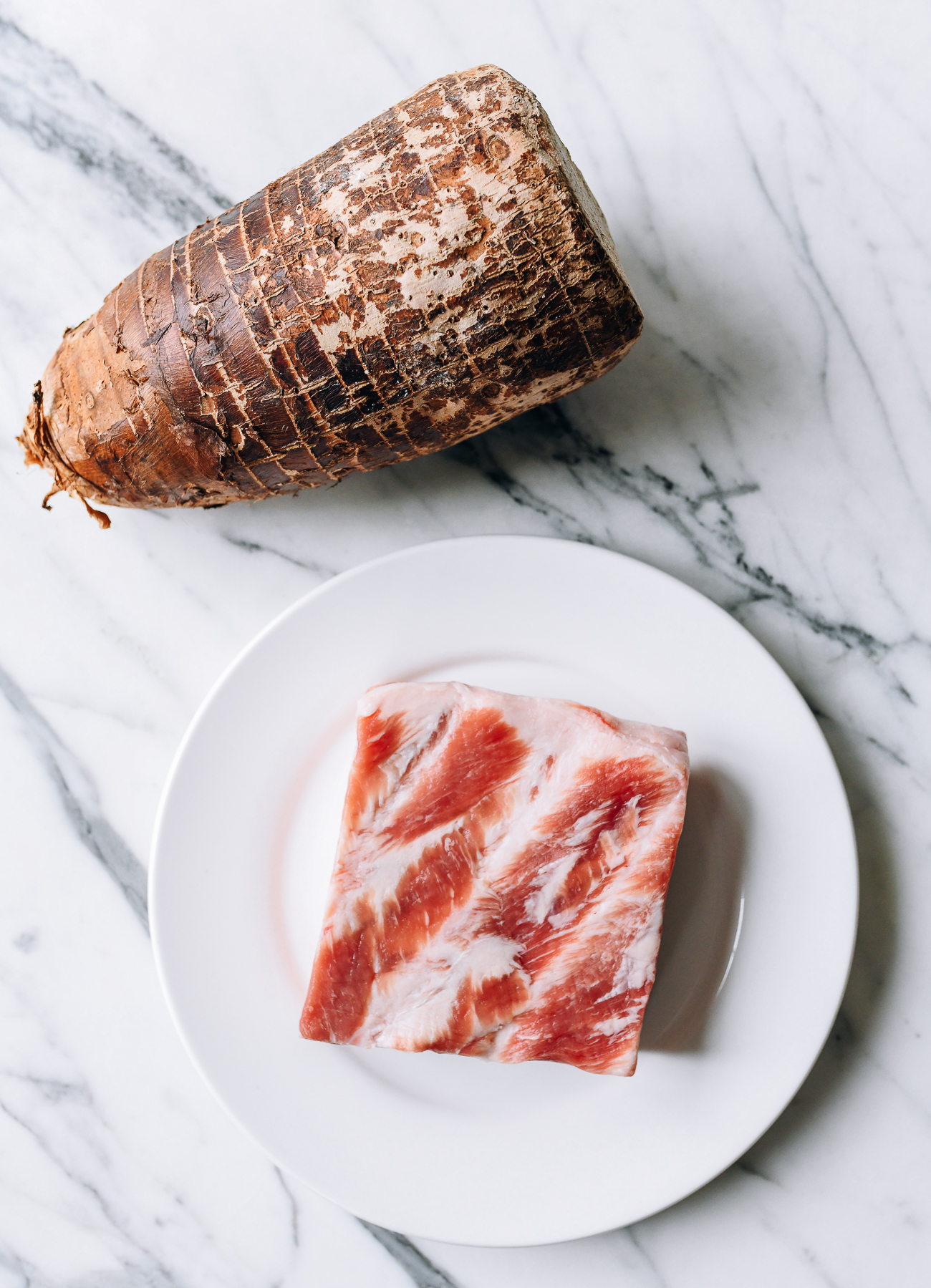
Taro, or yùtóu (芋头) in Mandarin / wu tau in Cantonese, is one of my favorite root vegetables.
Starchy and very fragrant, taro comes in large and small forms that have different tastes and textures.
The taste of small taro is milder and less starchy than the large variety—similar to yucca. For this taro and pork belly recipe, you will need a large taro.
Large taro has a texture similar to a russet potato, with a little more body to it. Sarah in particular loves large taro! She describes the flavor as “nutty and buttery.”
Ok, on to the recipe…
Steamed Pork Belly & Taro: Recipe Instructions
1. Prepare the sauce mixture:
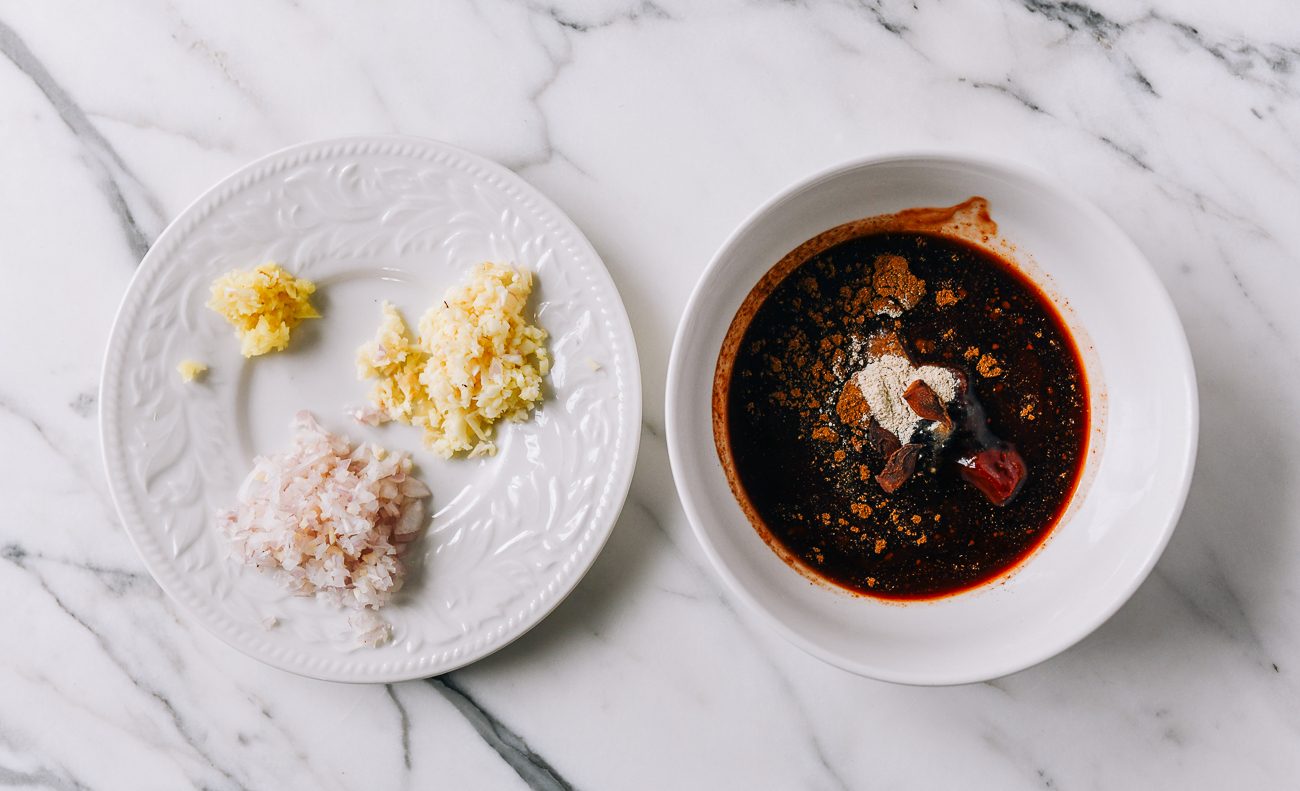
In a medium bowl, combine the fermented tofu, sugar, light soy sauce, oyster sauce, Shaoxing wine, five spice powder, white pepper, dark soy sauce, and the star anise pods (just break the smaller pods off the main star anise, or pick some out that have already broken). Set aside.
2. Blanch pork belly and prep taro:
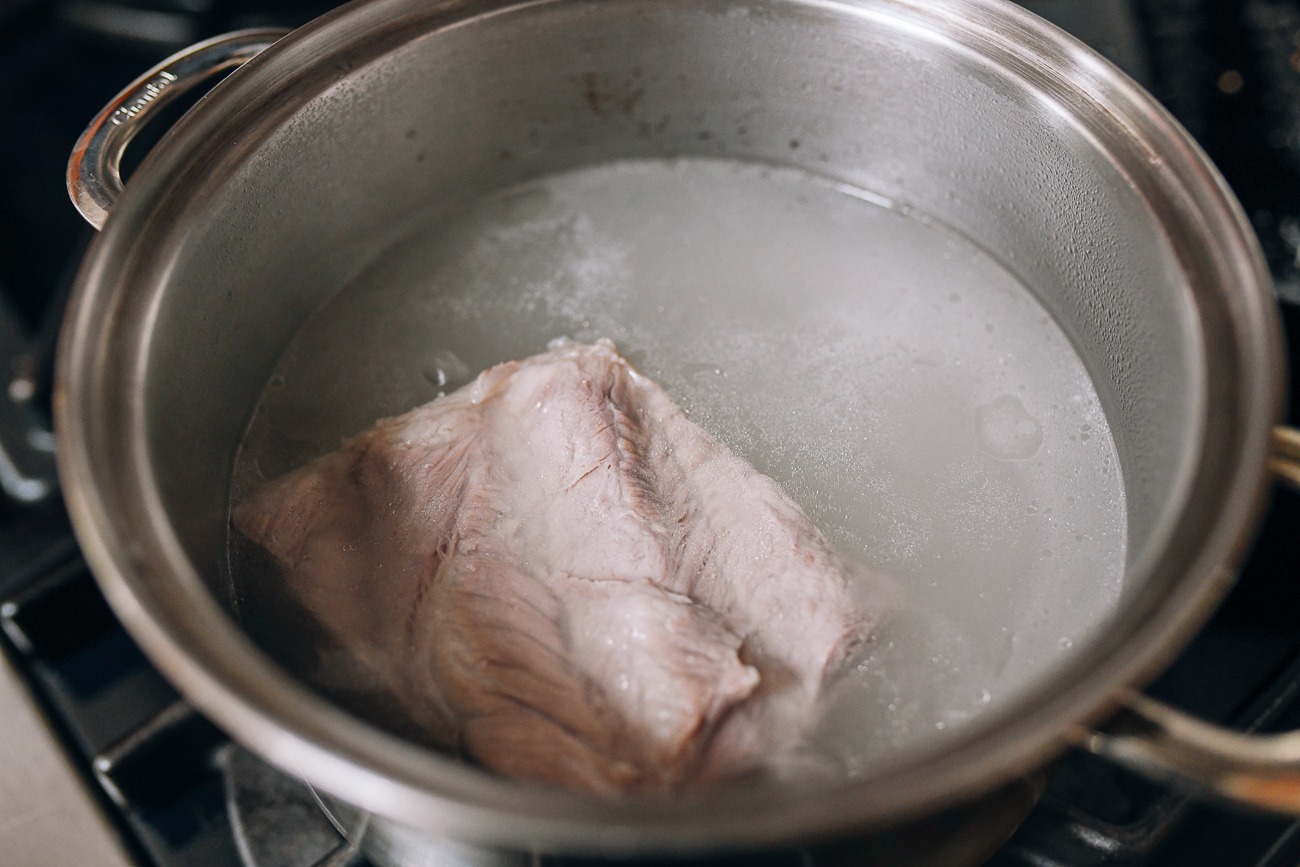
Bring about 6 cups of water to a boil to blanch the pork belly (be sure to save this blanching water, as you will use it again later).
Add 1 teaspoon sugar and 2 teaspoons salt.
Place the pork belly into the boiling water skin side down. Bring back up to a boil, and simmer for 30 minutes.
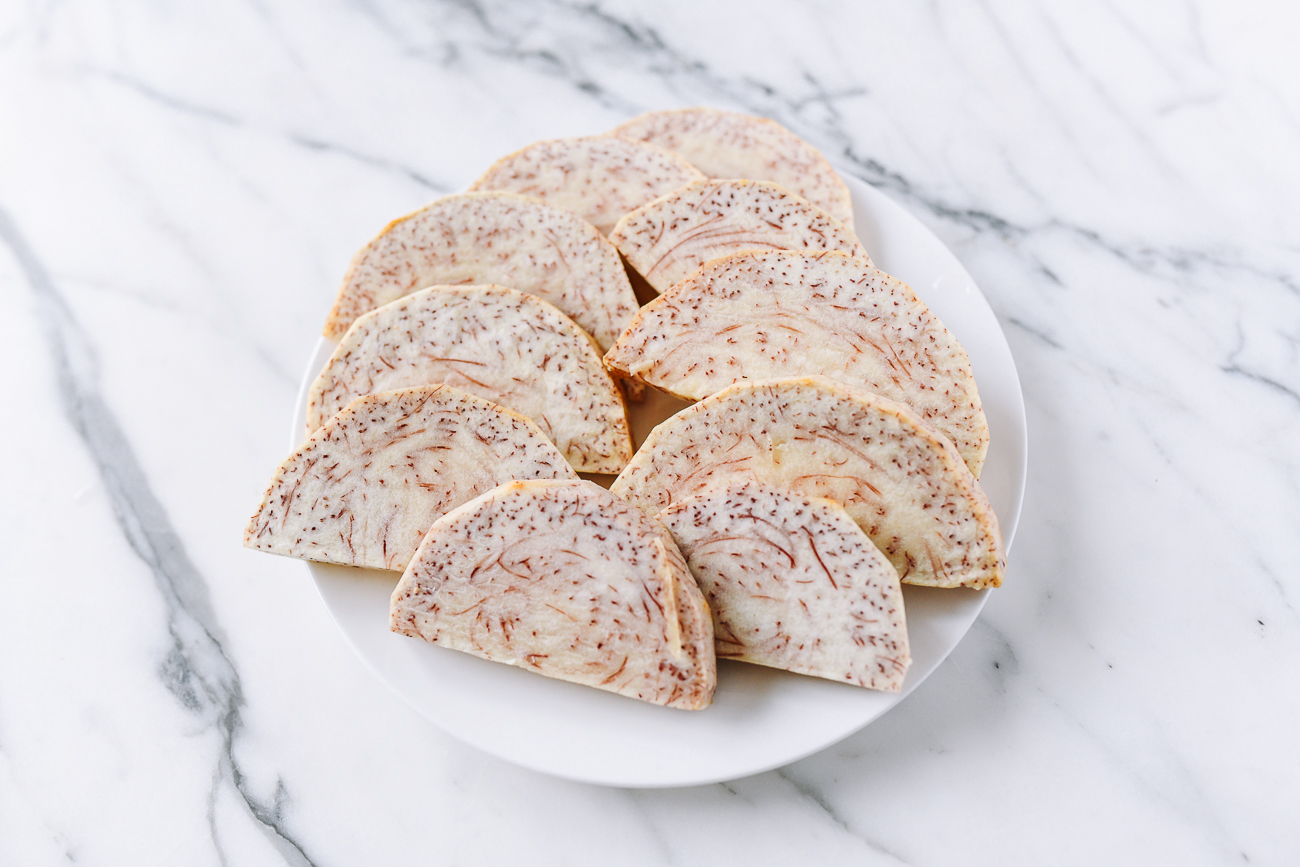
Meanwhile, cut the taro into ½-inch thick pieces, about 2 ½ x 3 inches in size.
After 30 minutes, remove the pork belly and cool completely. Set the blanching liquid aside to cool (you will need it again).
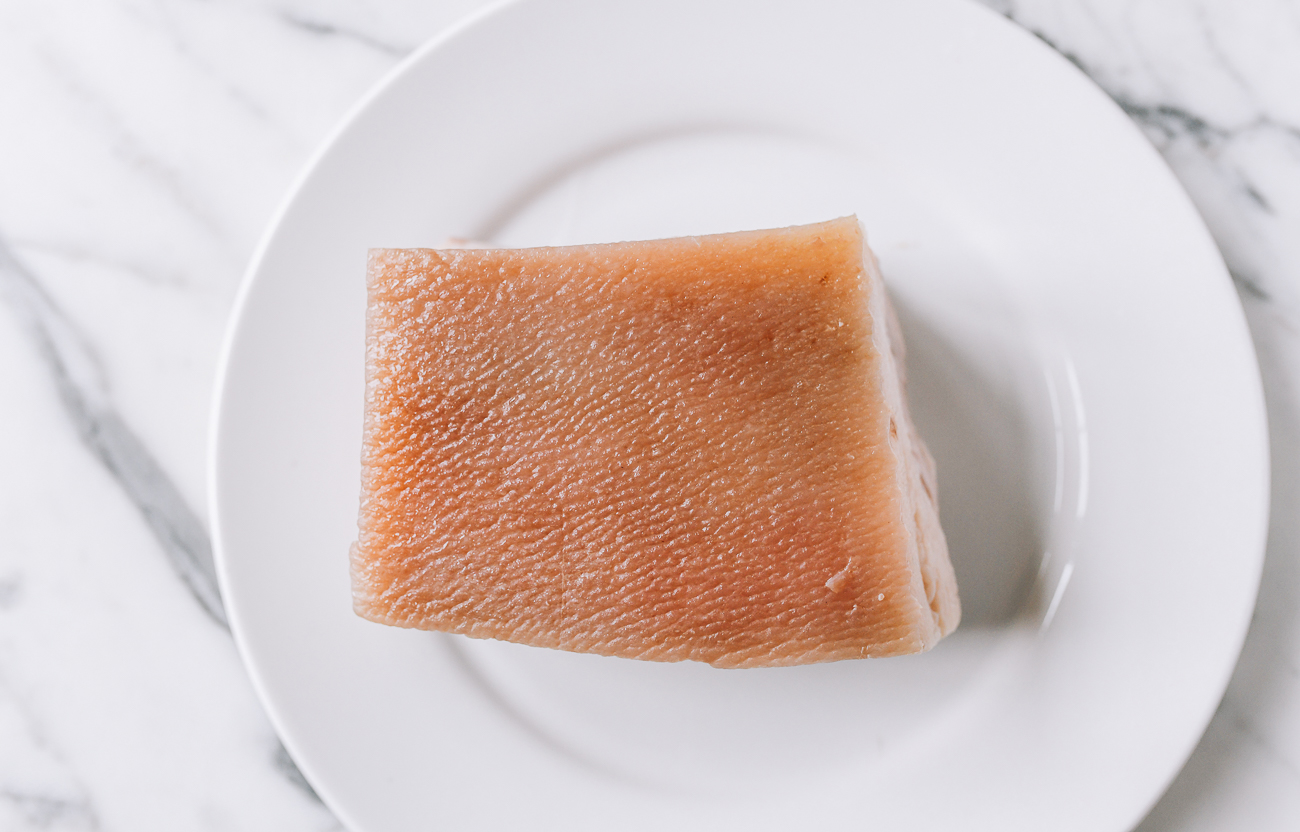
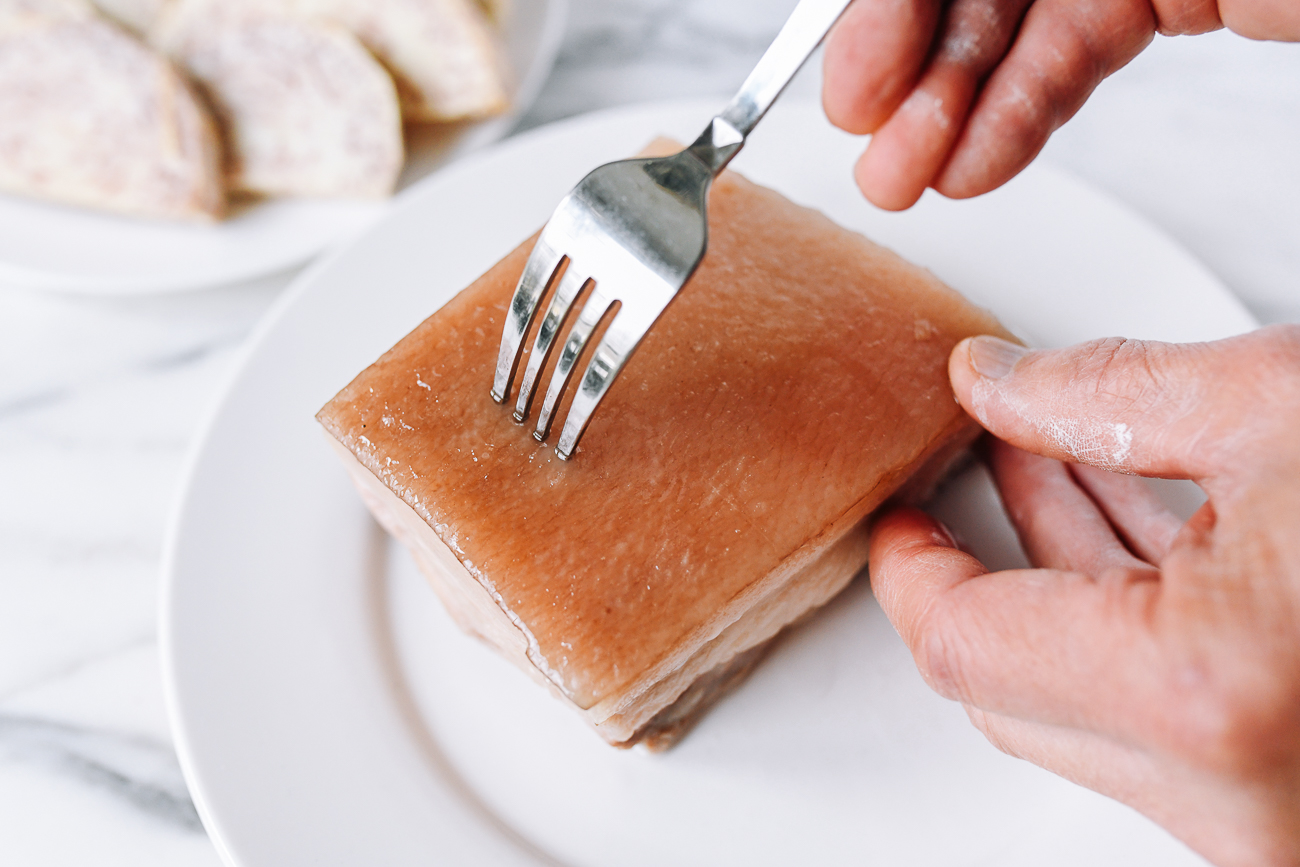
When the pork belly has cooled, use a fork to evenly pierce holes all over the skin, down into the top layer of fat. (Don’t pierce all the way through to the meat.)
Brush ½ teaspoon dark soy sauce over the pork belly skin. Set aside for 10-15 minutes to air dry, or until the dark soy sauce has dried on the surface of the pork.
3. Fry the taro and pork belly:
Grab a deep pot or wok that will accommodate the pork belly. Add frying oil, and heat to 325°F/163°C. In batches, fry the taro slices until a golden crust forms, about 90 seconds (45 seconds per side if shallow frying).
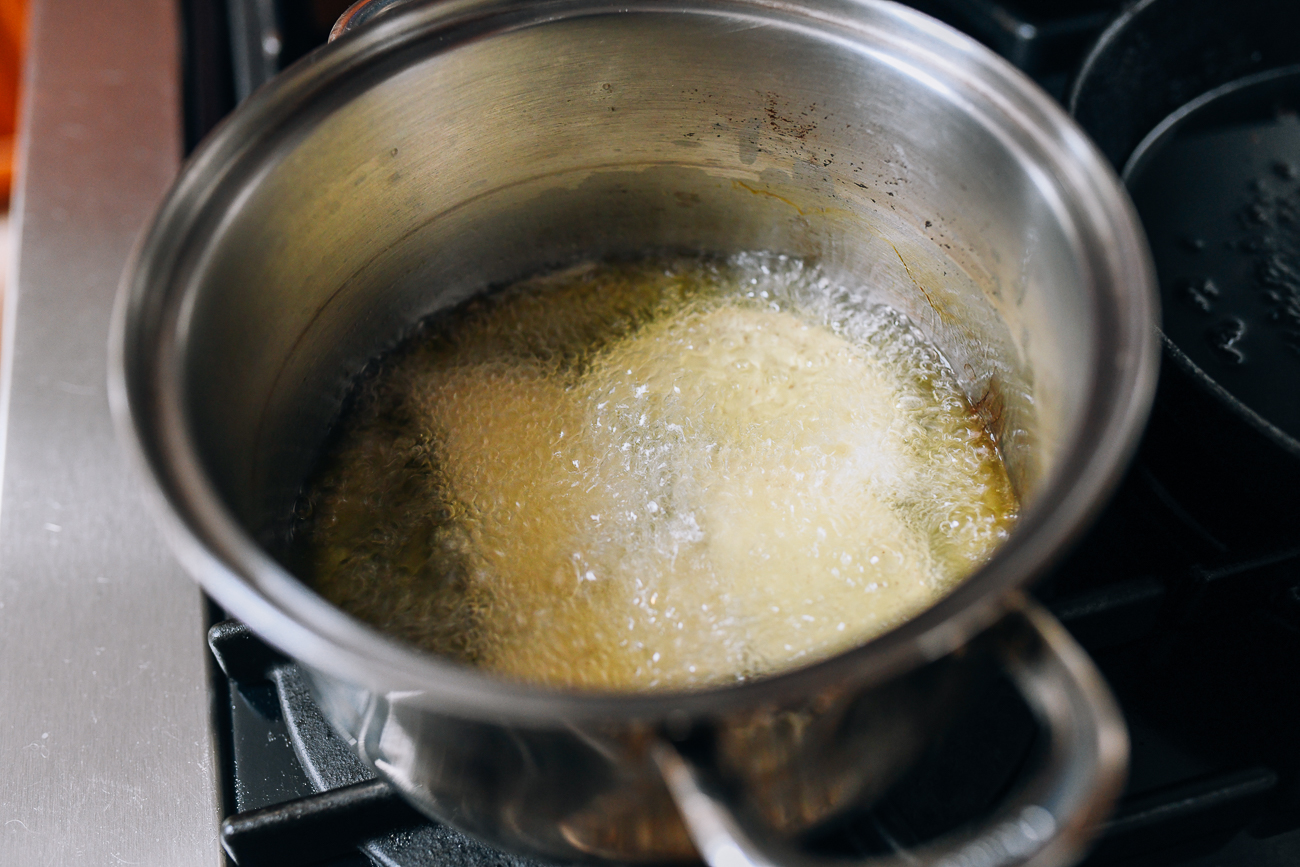
Set aside to cool.
Next, the pork belly. Be sure it’s really dry by patting it all over with a paper towel.
With the pot lid in one hand, use a metal wok spatula or tongs to carefully lower the pork belly into the oil skin-side down. Immediately cover the pot to catch any oil splatter.
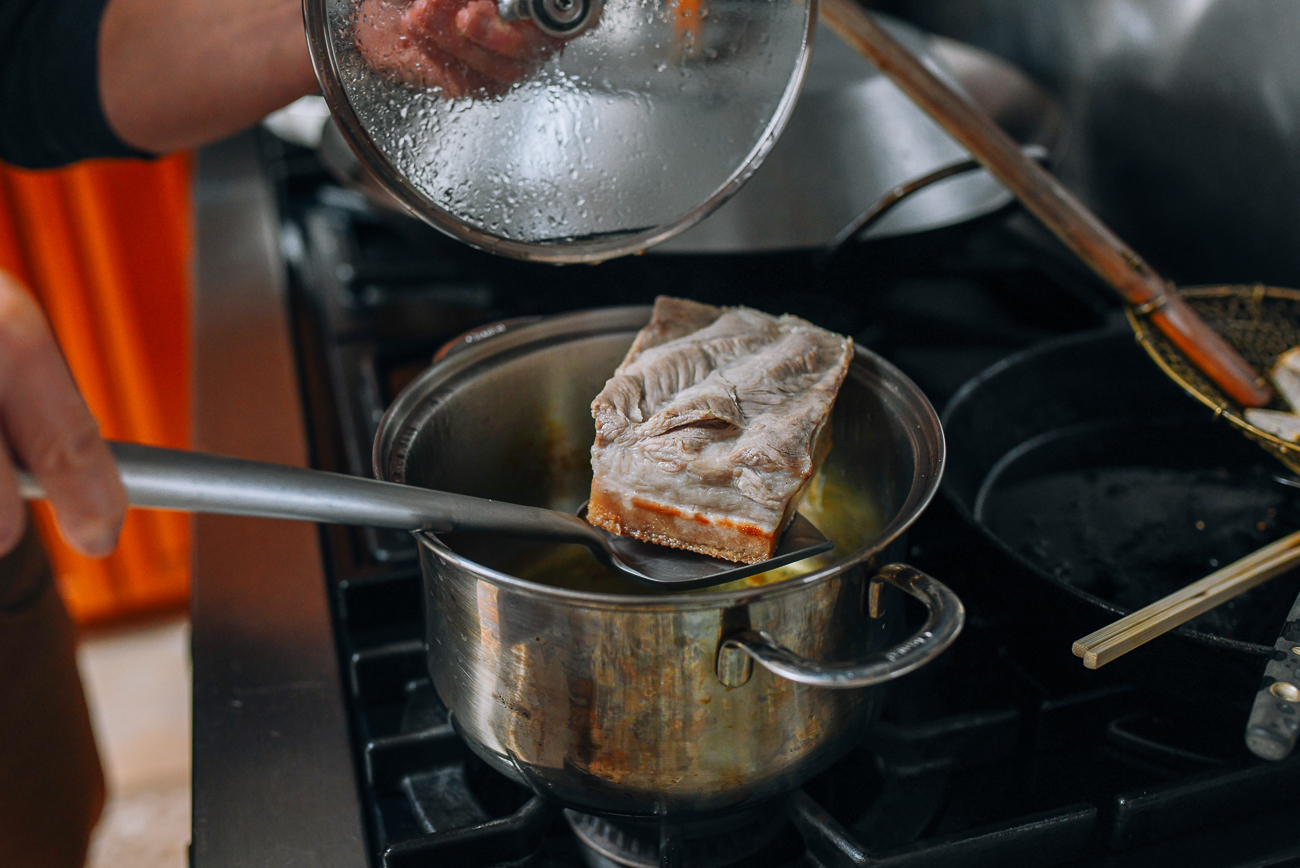
Turn off the heat, and let the pork shallow fry for 3 minutes (the pork skin is the part you’re concerned with frying), or until the oil stops splattering (meaning any residual moisture has cooked off).
Many recipes use more oil to deep-fry the pork, but it’s too messy. Again, the most important point is to make sure the skin is fried.
4. Soak the fried pork belly in the blanching liquid:
Remove the pork belly from the oil, and place it back into the pot of cooled blanching liquid (I moved my liquid to a bowl so it would cool faster). Soak for 10 minutes.
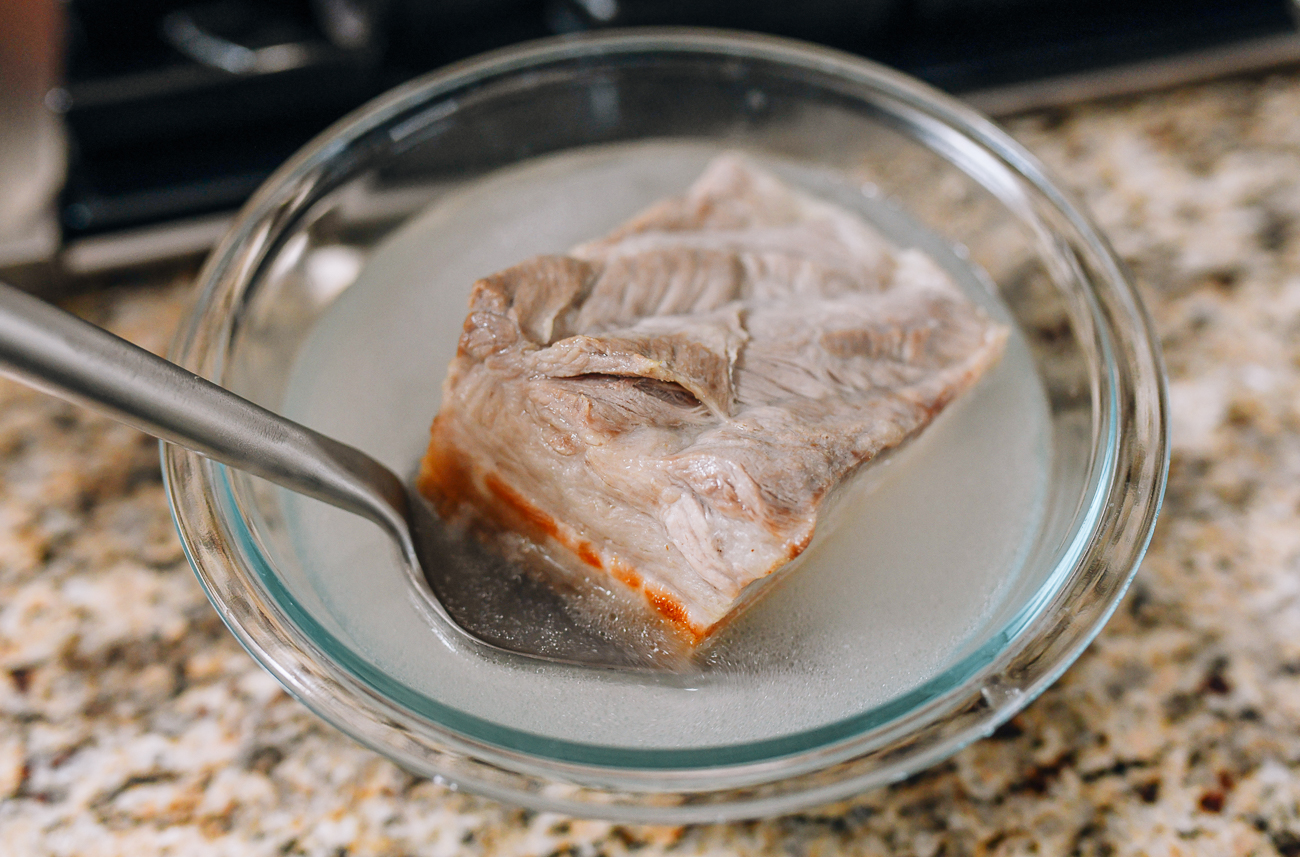
This step seems counterintuitive after frying, but soaking the pork belly (particularly the skin) in the blanching liquid gives it a luxuriously tender yet springy and chewy texture.
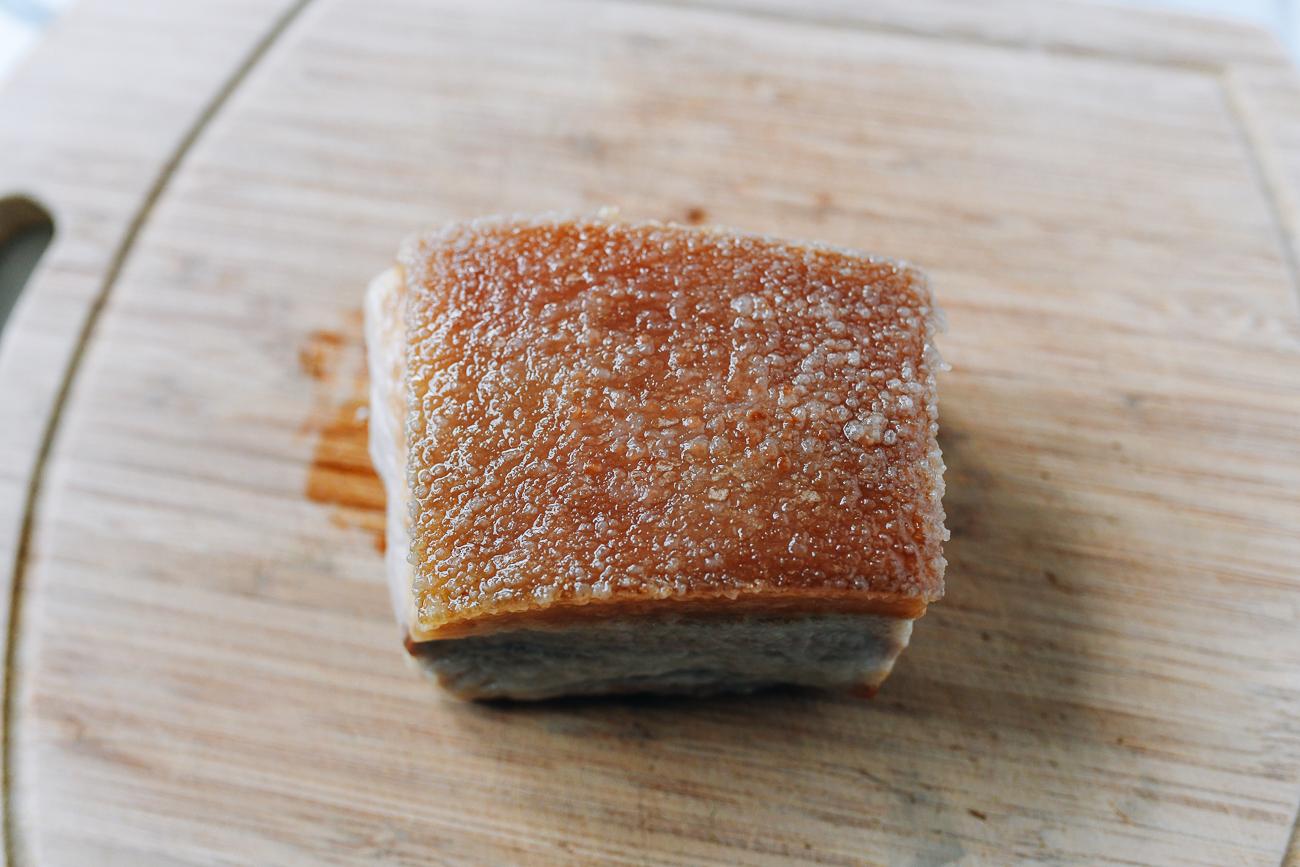
After 10 minutes, remove the pork belly from the pot, and set aside to cool further. Remove ¾ cup of the blanching liquid, and set aside.
Tip!
You can use the remaining blanching liquid as a starter for pork soup or for stir-fry recipes calling for chicken or pork stock!
5. Cook the marinade & marinate pork:
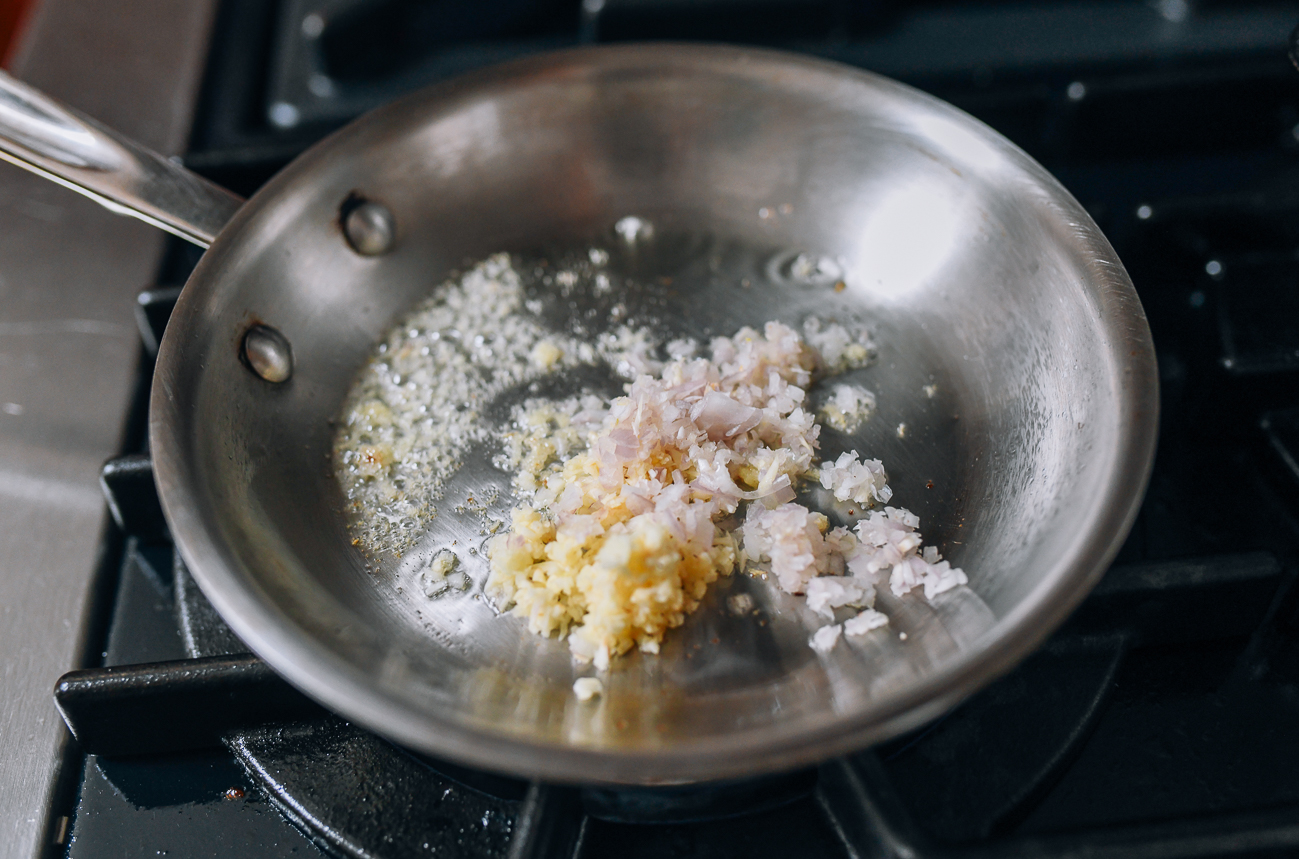
Meanwhile, cook the marinade. Heat a wok or saucepan over medium heat. Add 2 teaspoons of vegetable oil, along with the ginger.
Let the ginger brown lightly for about 15 seconds.
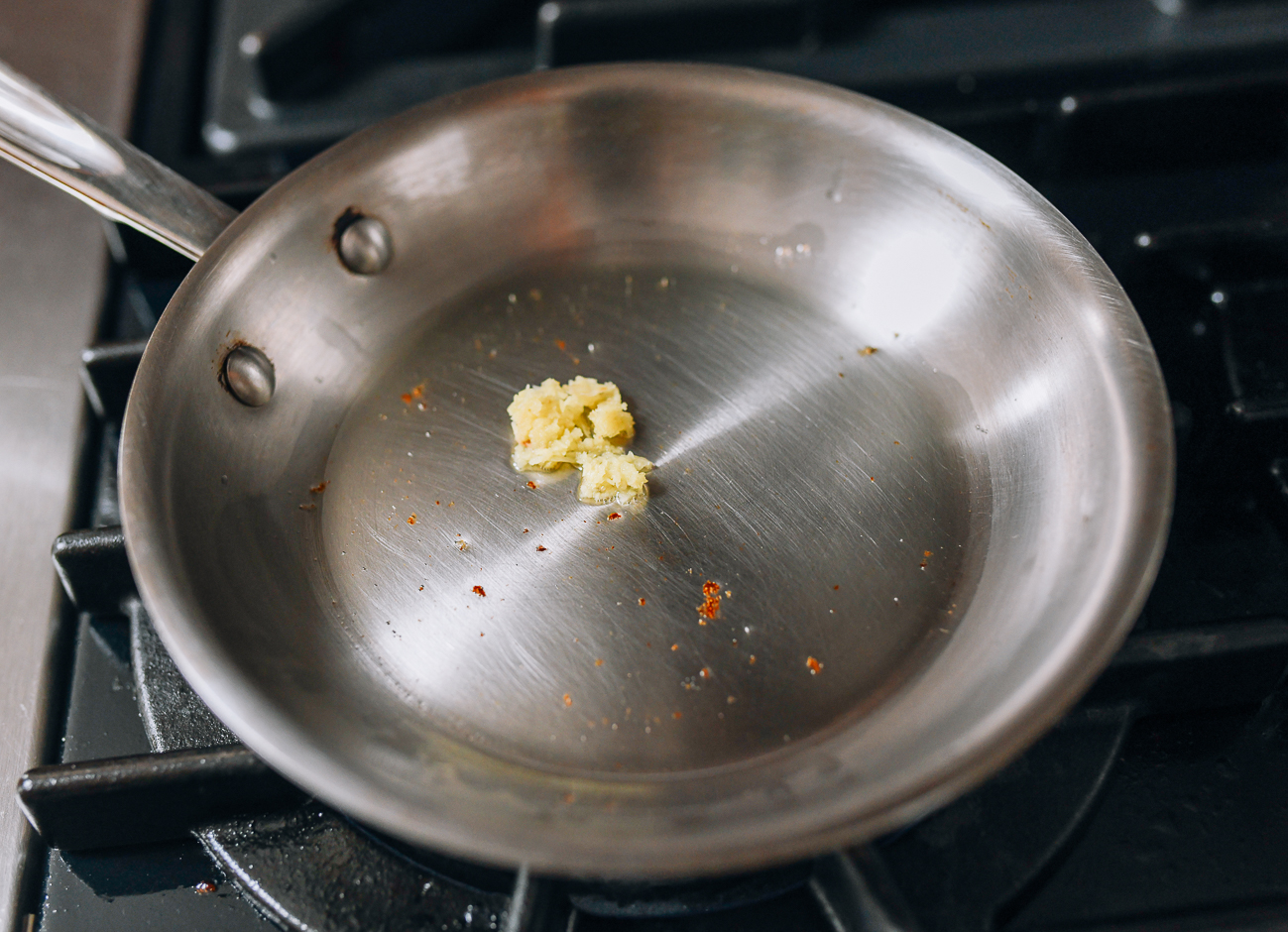
Next, add the garlic and shallots, and cook until translucent, about 1 minute.
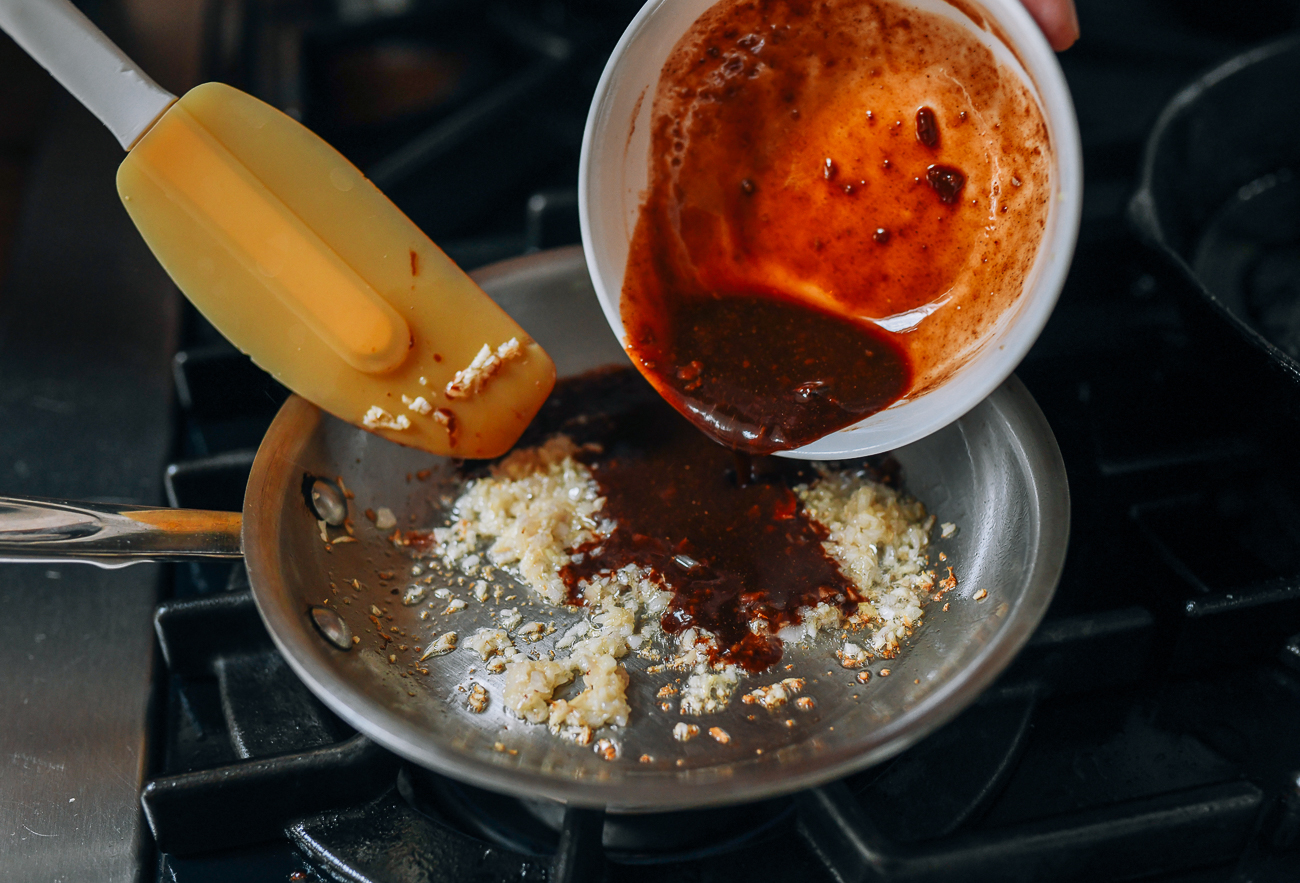
Add the sauce mixture you prepared earlier, along with ½ cup of the reserved pork blanching water.
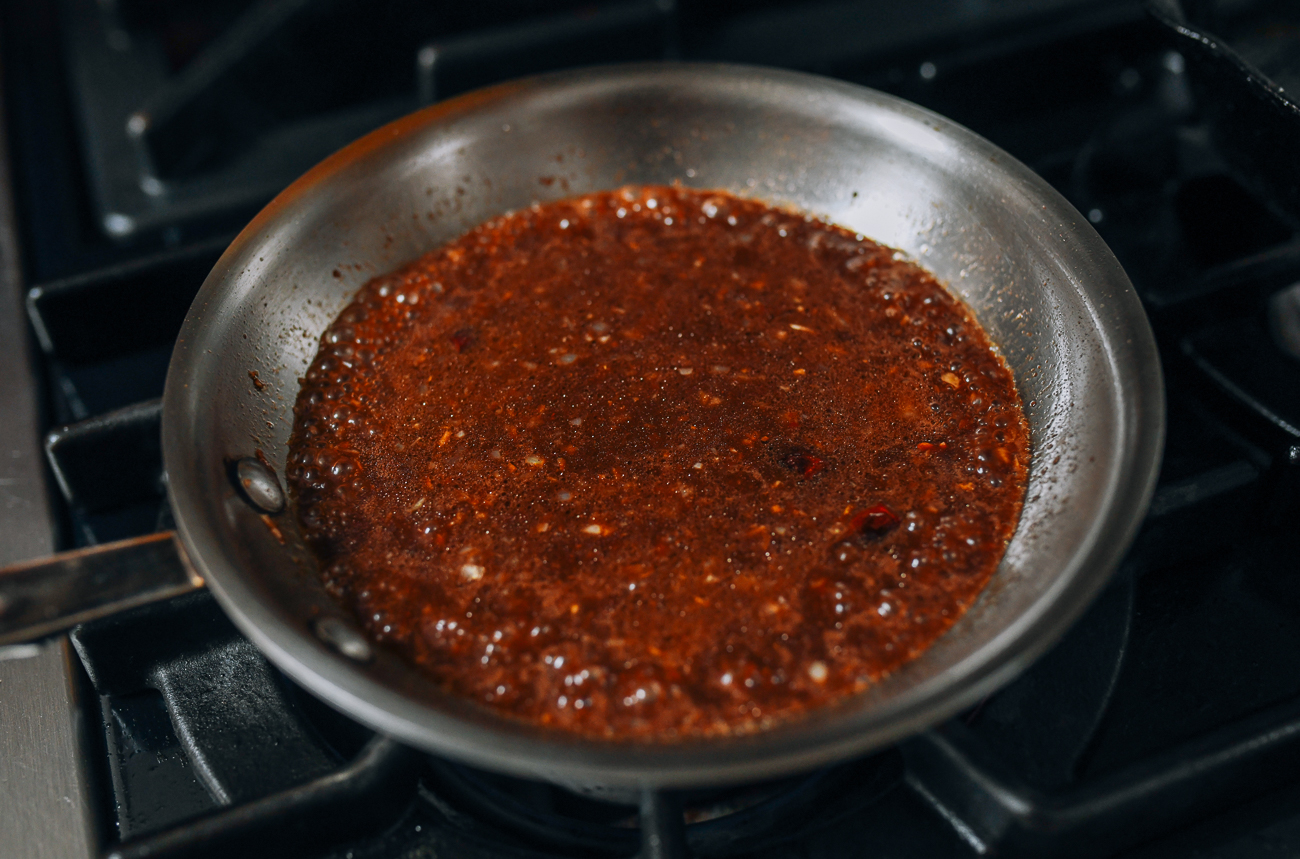
Simmer for 1 minute, remove from the heat, and cool.
When the pork belly is cool enough to handle, slice it into 2 ½ x 3 inch pieces at a ½-inch thickness (roughly the same size and shape as the taro).
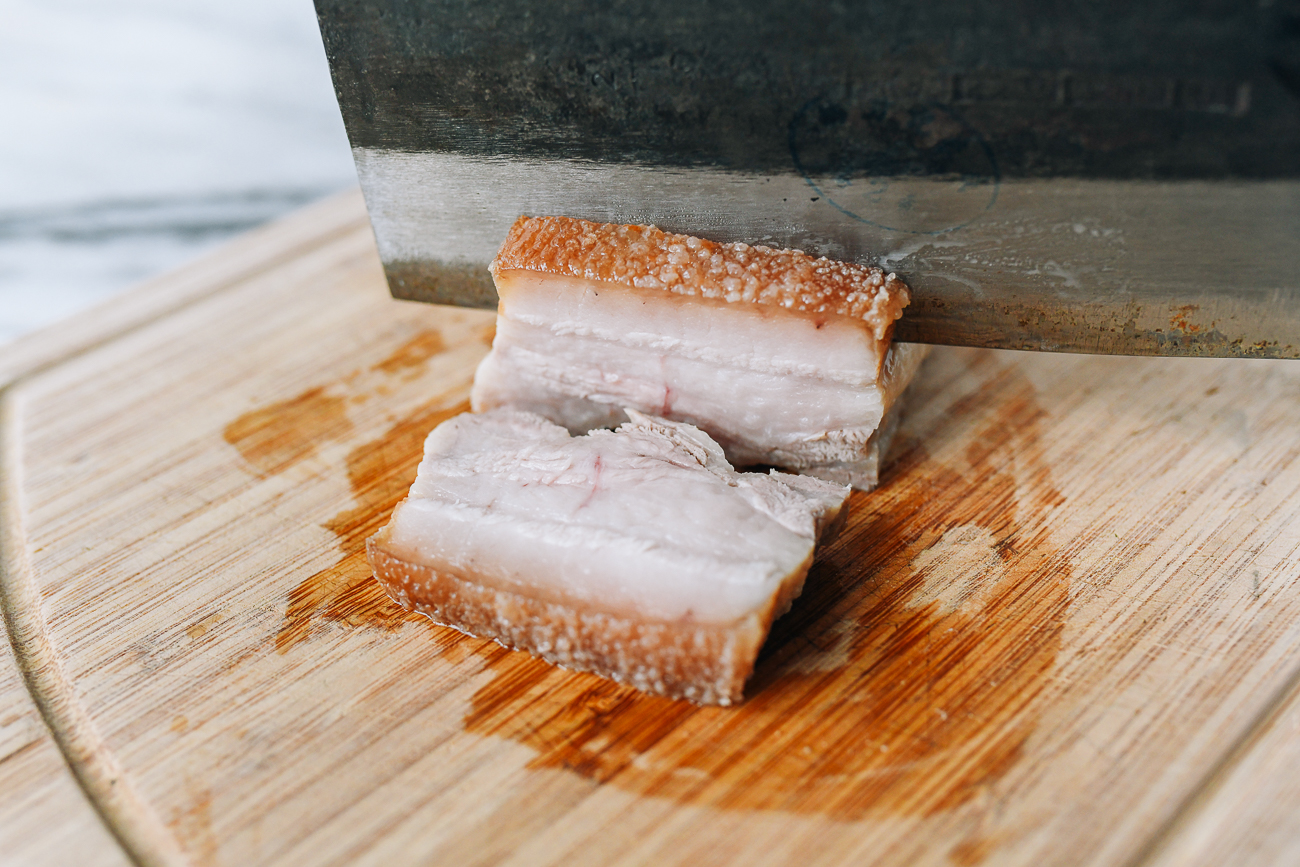
Transfer the pork belly to a large bowl, and pour the cooled marinade over it.
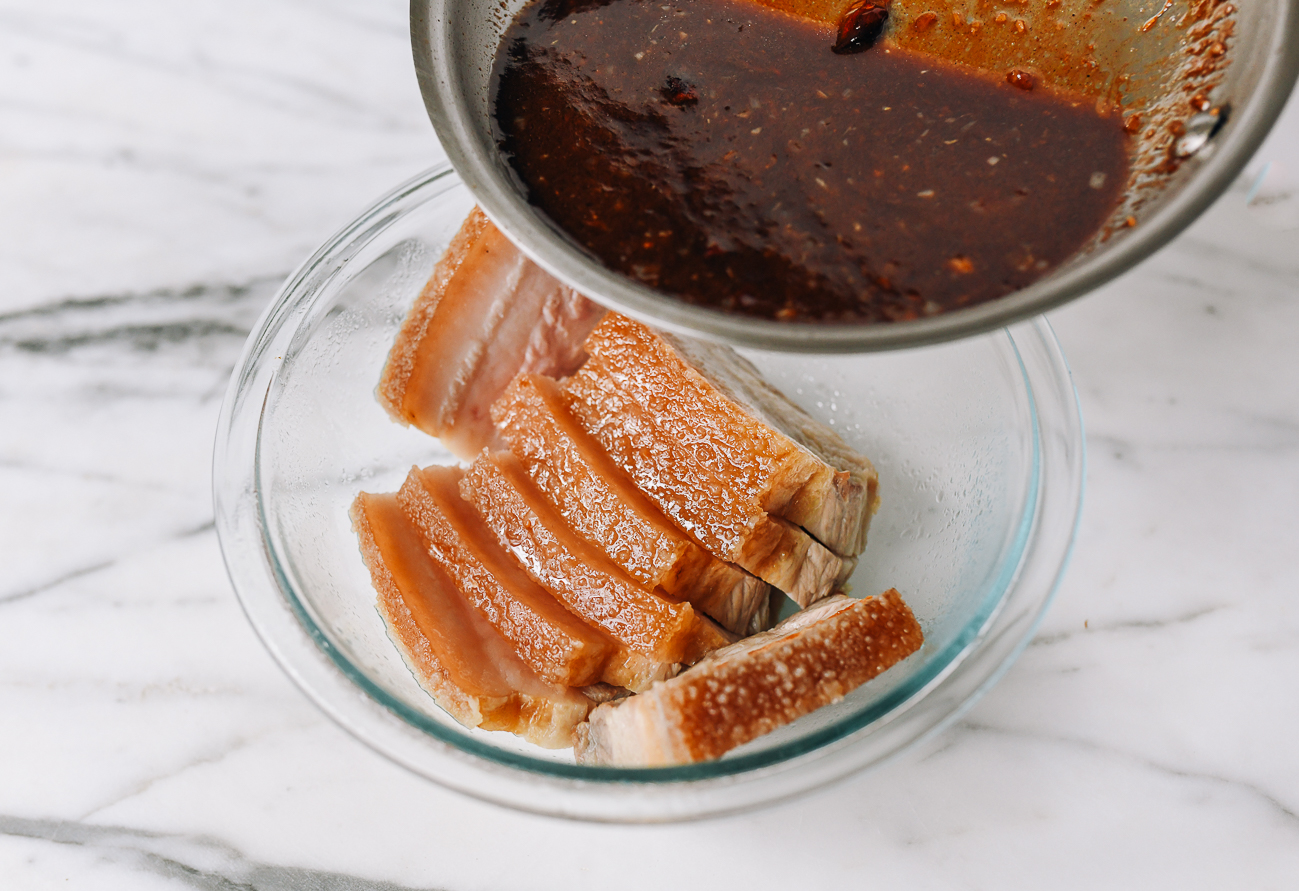
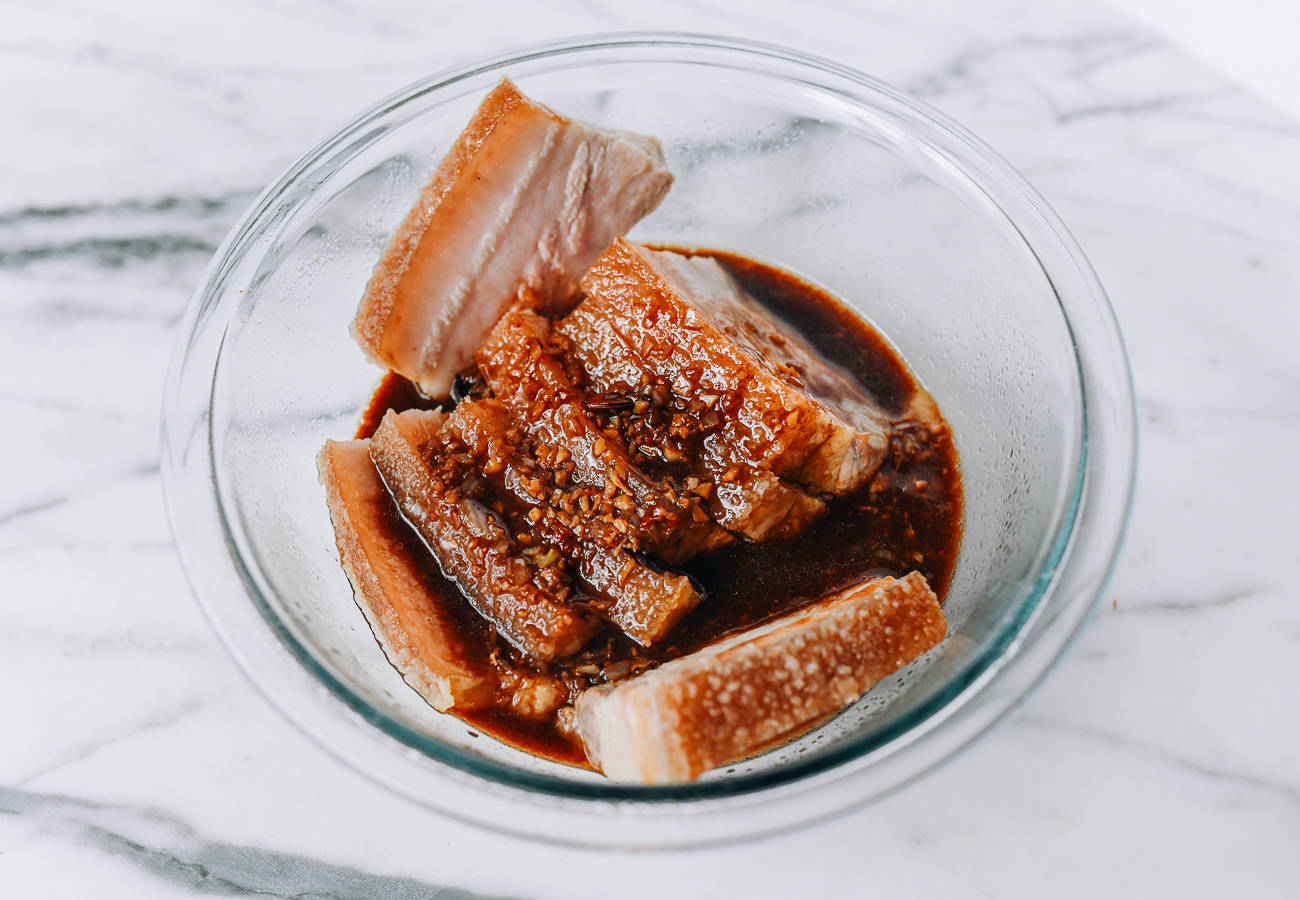
Marinate for at least 1 hour, tossing with a rubber spatula every 20 minutes for the most even and effective marinating. (Can marinate longer, even overnight.)
6. Assemble & steam:
Select a round heat-proof bowl, ideally 3-inches deep.
Arrange the pork belly and taro slices around the bowl in alternating pieces, with the pork belly skin-side down (when it’s flipped, it will be skin-side up).
Before adding each individual piece of taro to the bowl, carefully coat each one with the pork belly marinade (the taro is delicate, so you really do have to coat each piece individually).
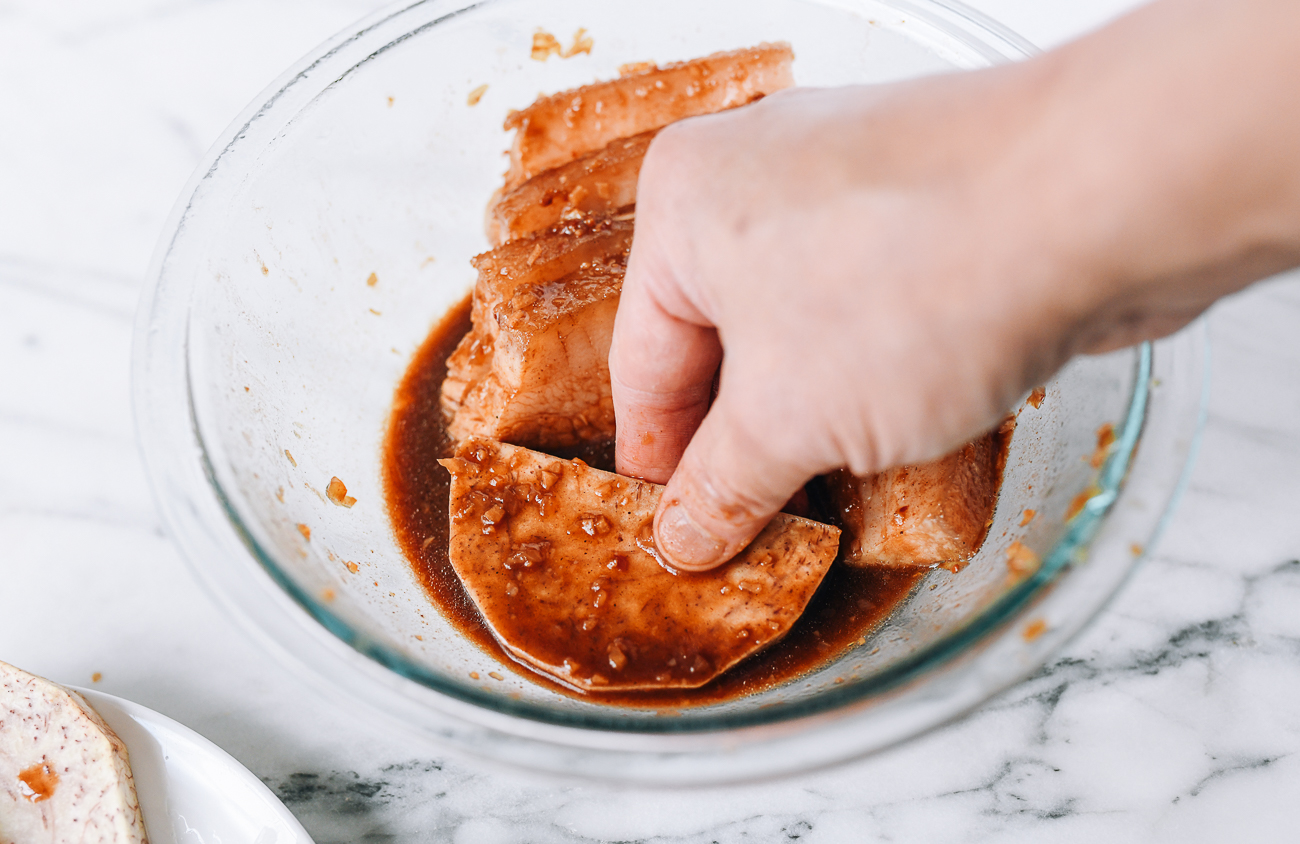
See how the marinated pork belly and taro (just dipped in the same marinade) are arranged in an alternating pattern?
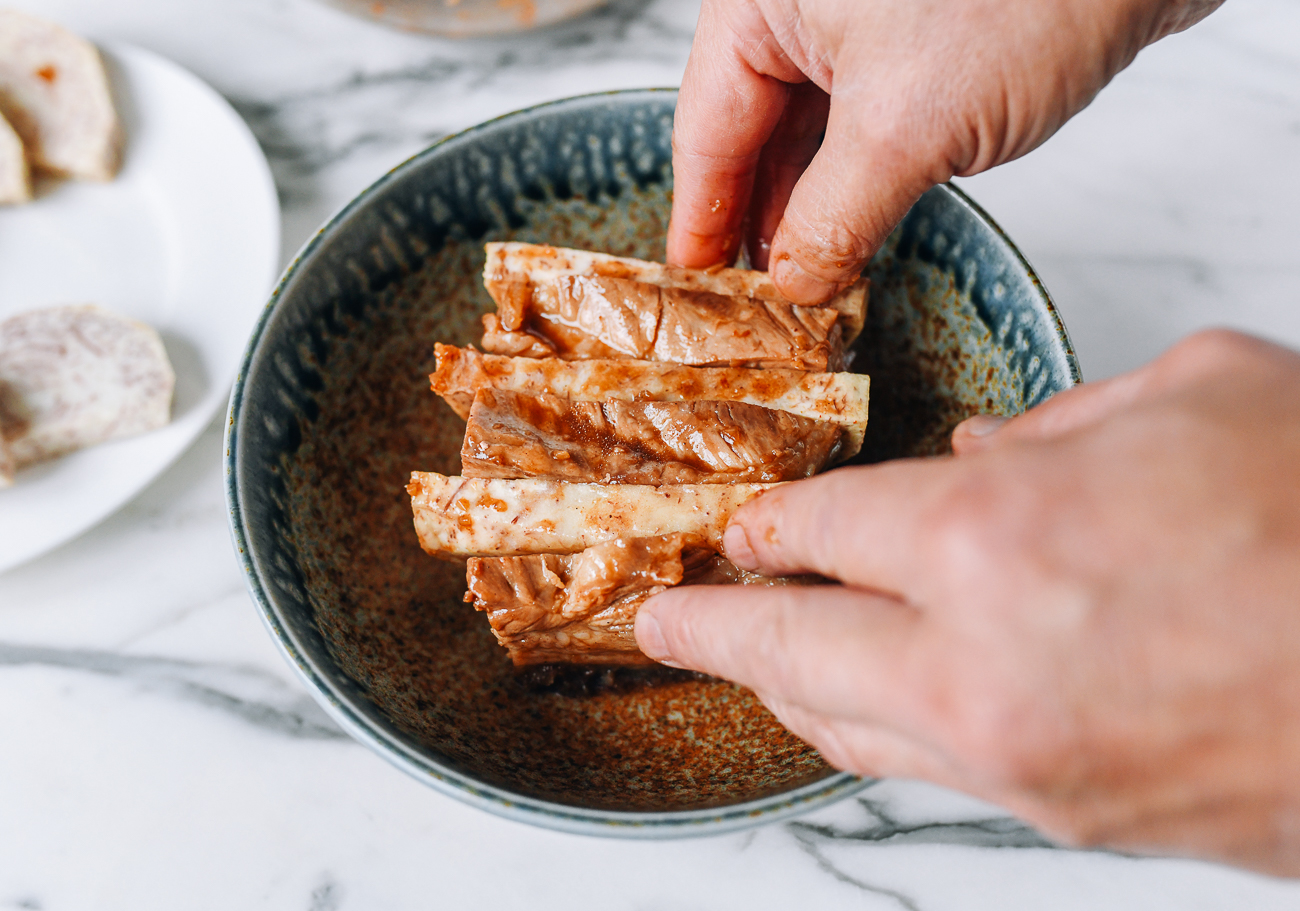
Fill in the entire bowl…
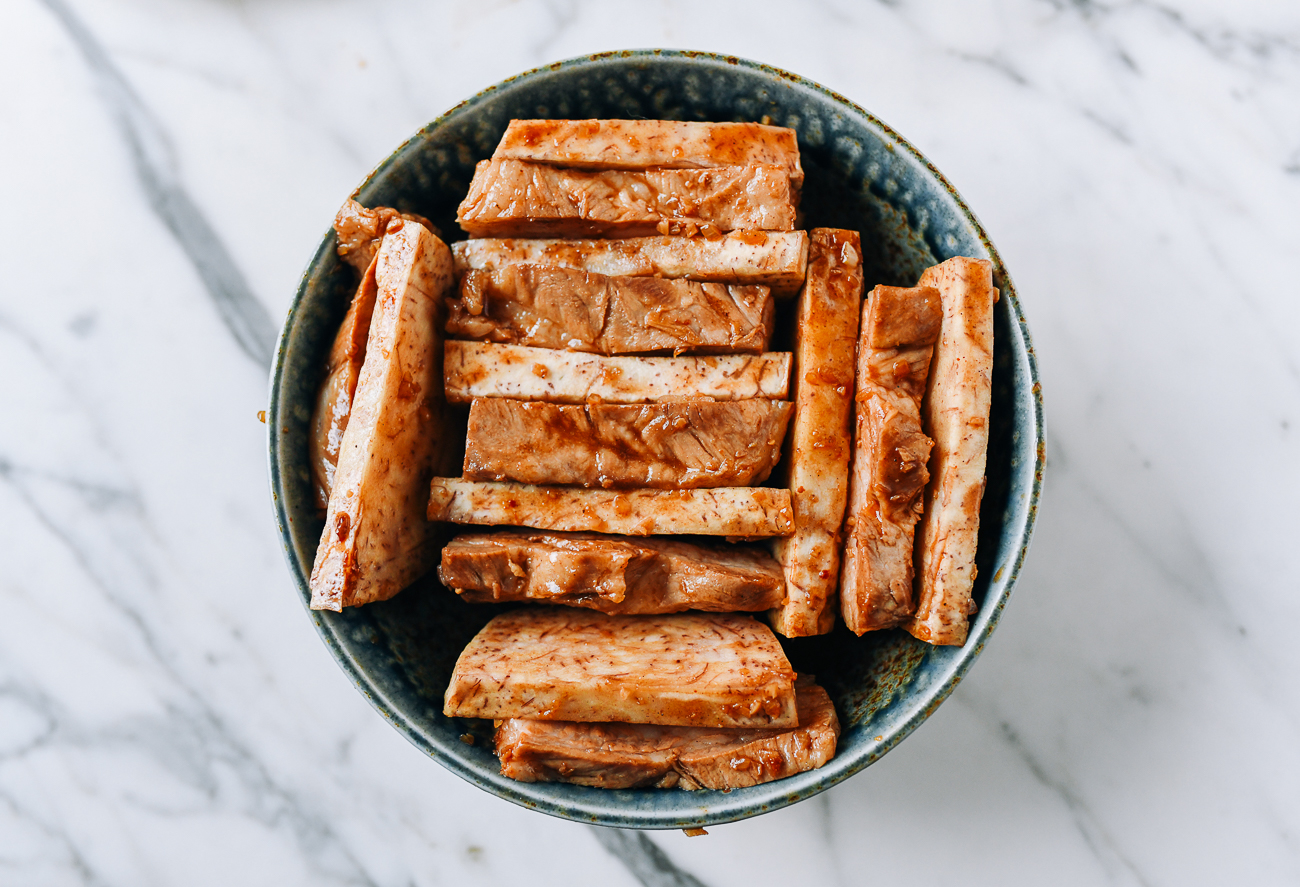
To fill any cracks, you may want to slice some of the pork belly and taro into smaller pieces:
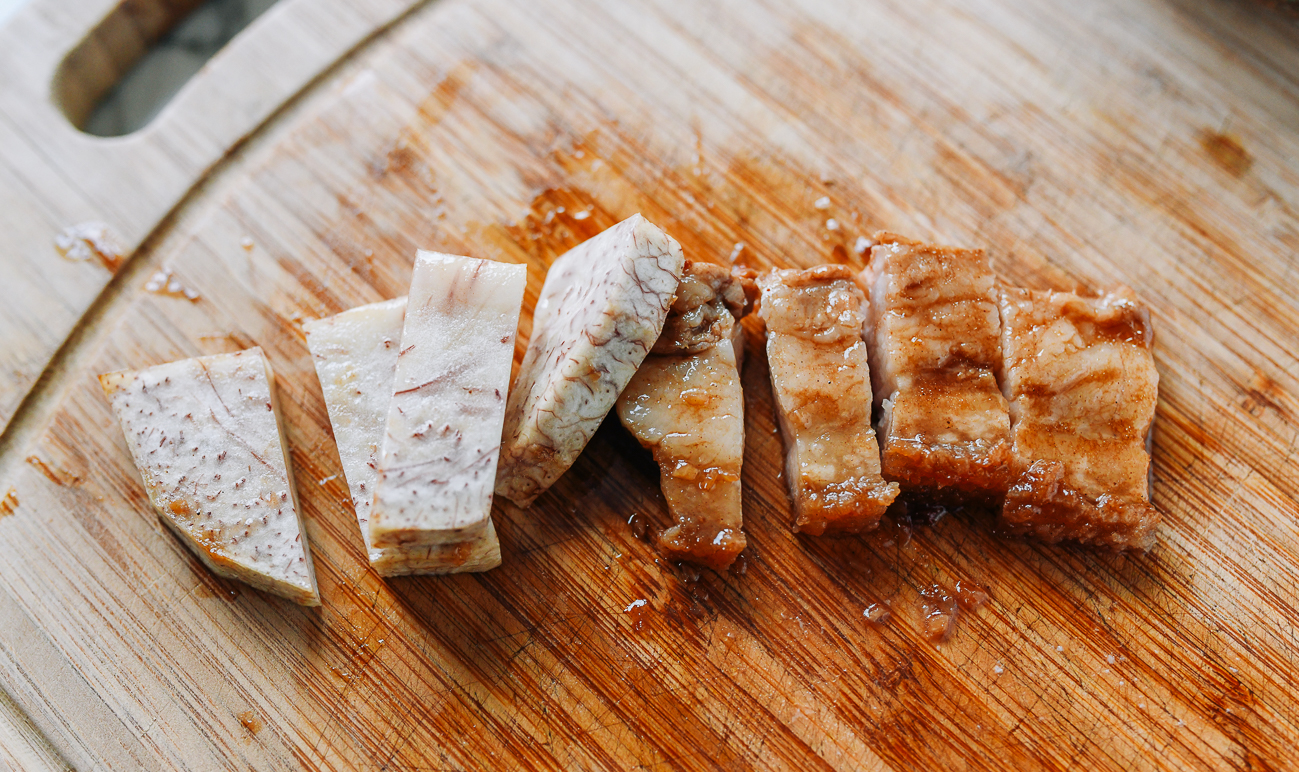
The pork belly and taro should fit into the bowl snugly, with as few gaps as possible.
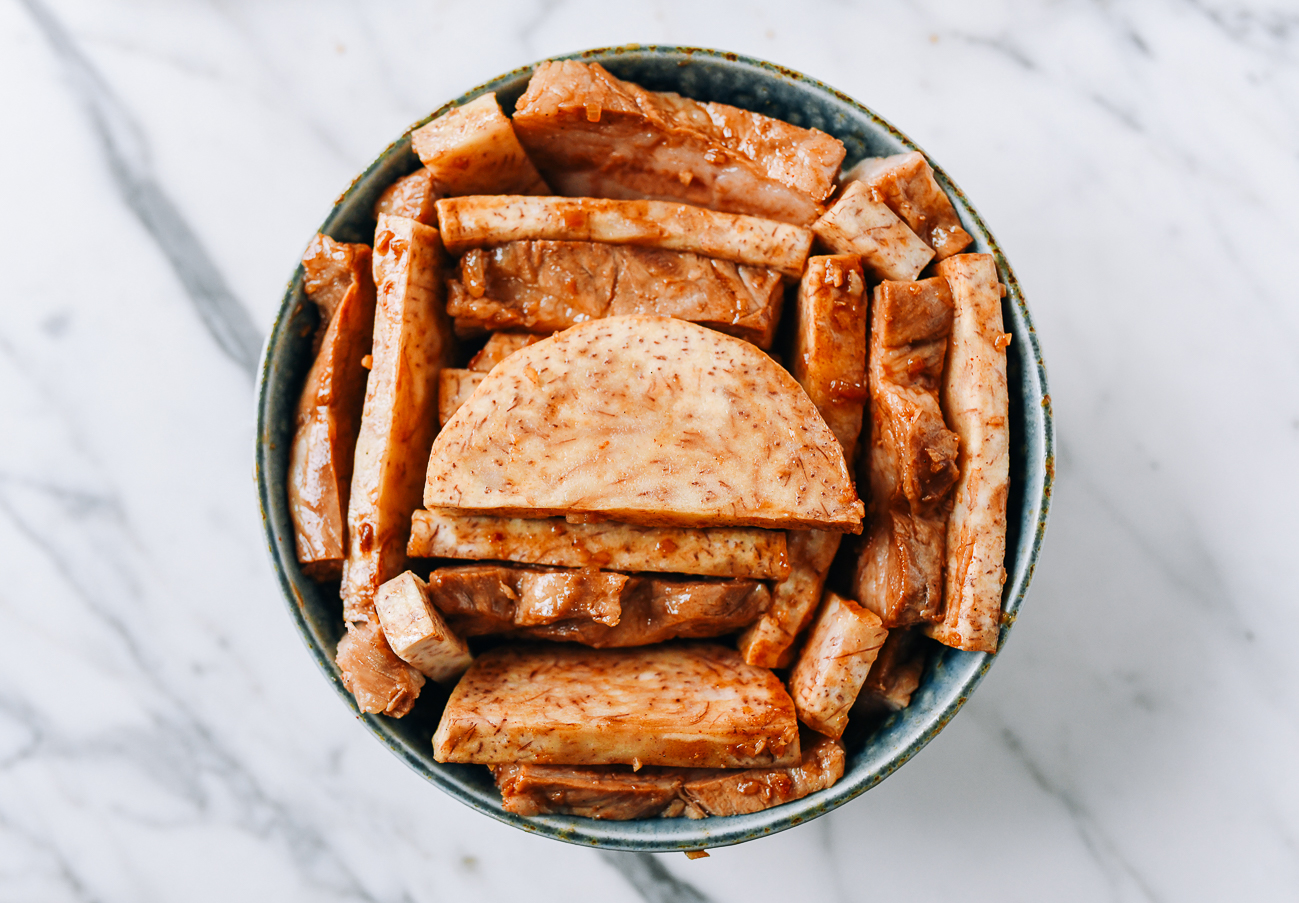
Once all the taro and pork belly is in the bowl, pour any remaining marinade evenly over the top.
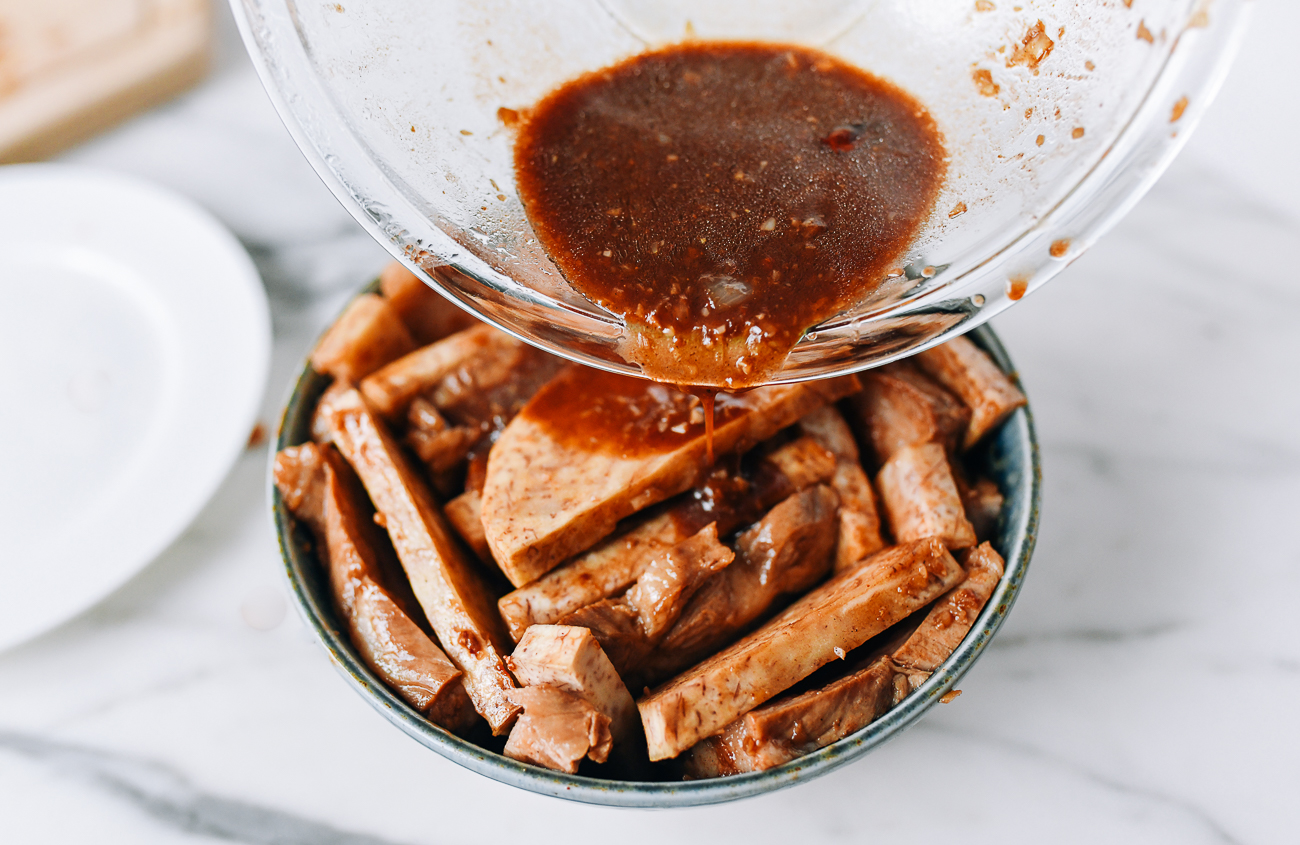
Prepare a steamer with simmering water. When the water is at a boil, place the bowl into the steamer.
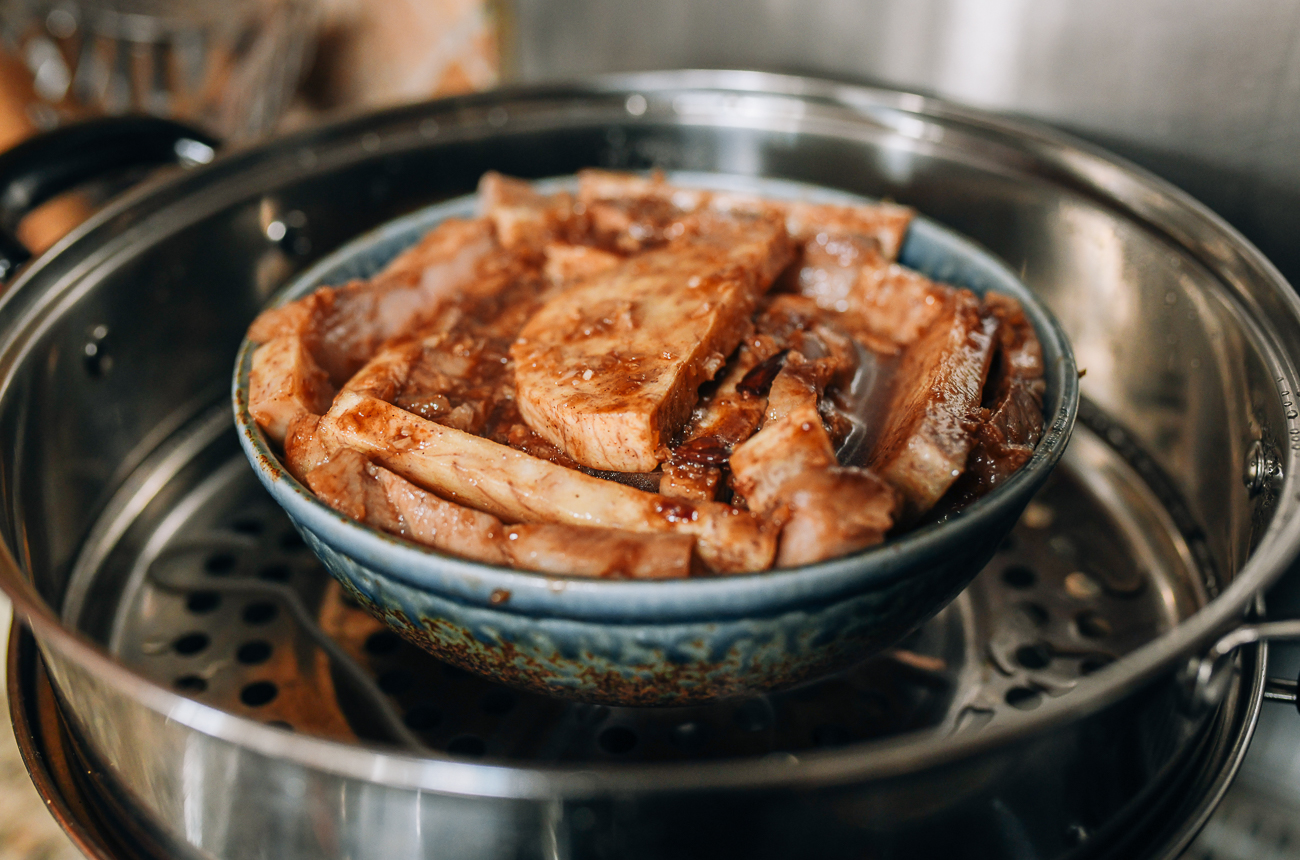
Steam for 90 minutes over medium heat. The water should be bubbling enough to generate a good amount of steam. Periodically check the steamer to add more boiling water when needed.
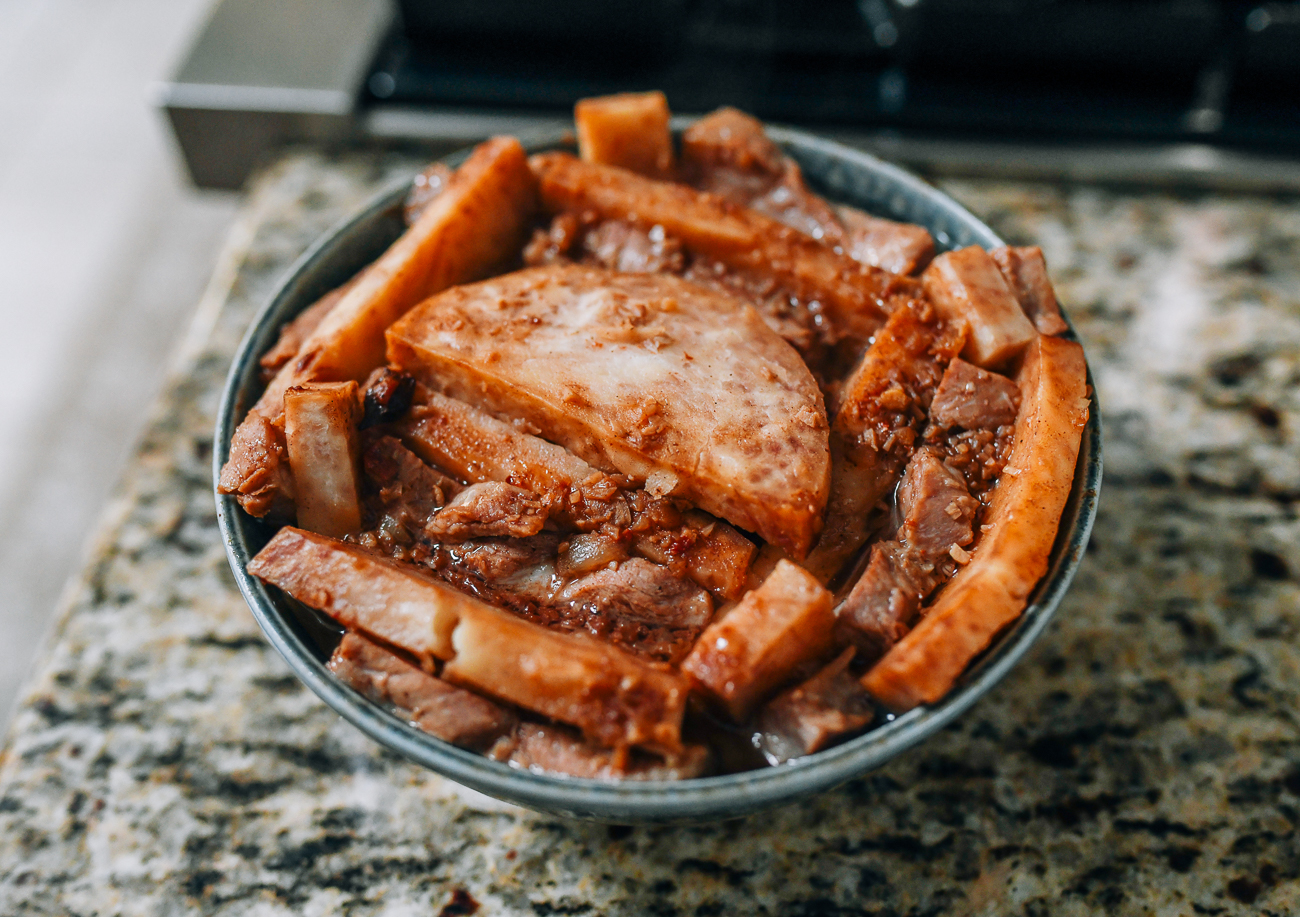
7. Sauce & Serve
After steaming, carefully pour off the hot liquid from the pork and taro into a wok or saucepan (you can use a rubber spatula to hold the pork and taro in place while pouring).
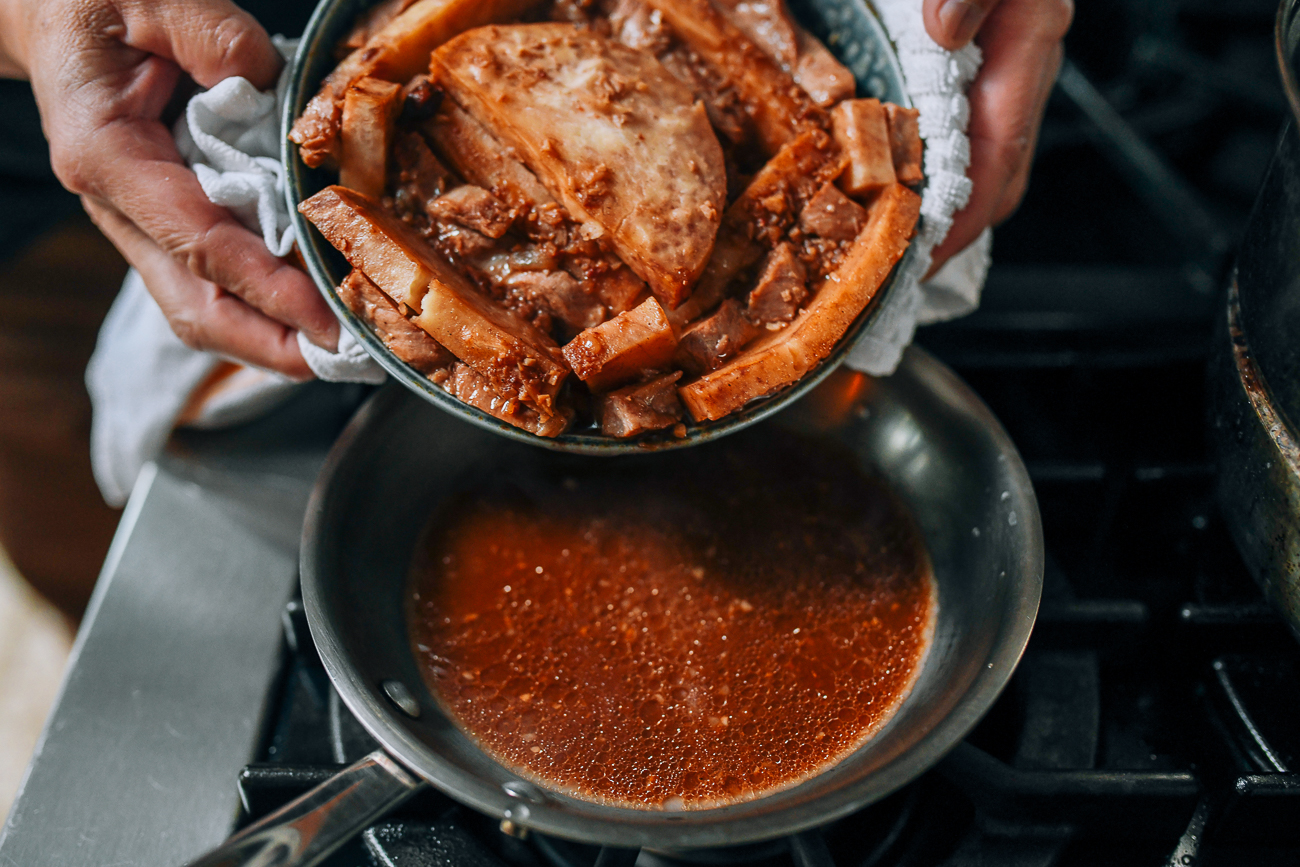
Return the bowl to the steamer with the heat off, and cover to keep it warm.
Add the remaining ¼ cup of the reserved pork belly blanching water to the sauce, and bring to a simmer over medium heat. Gradually add the cornstarch slurry until the sauce is thick and glossy, and coats a spoon.
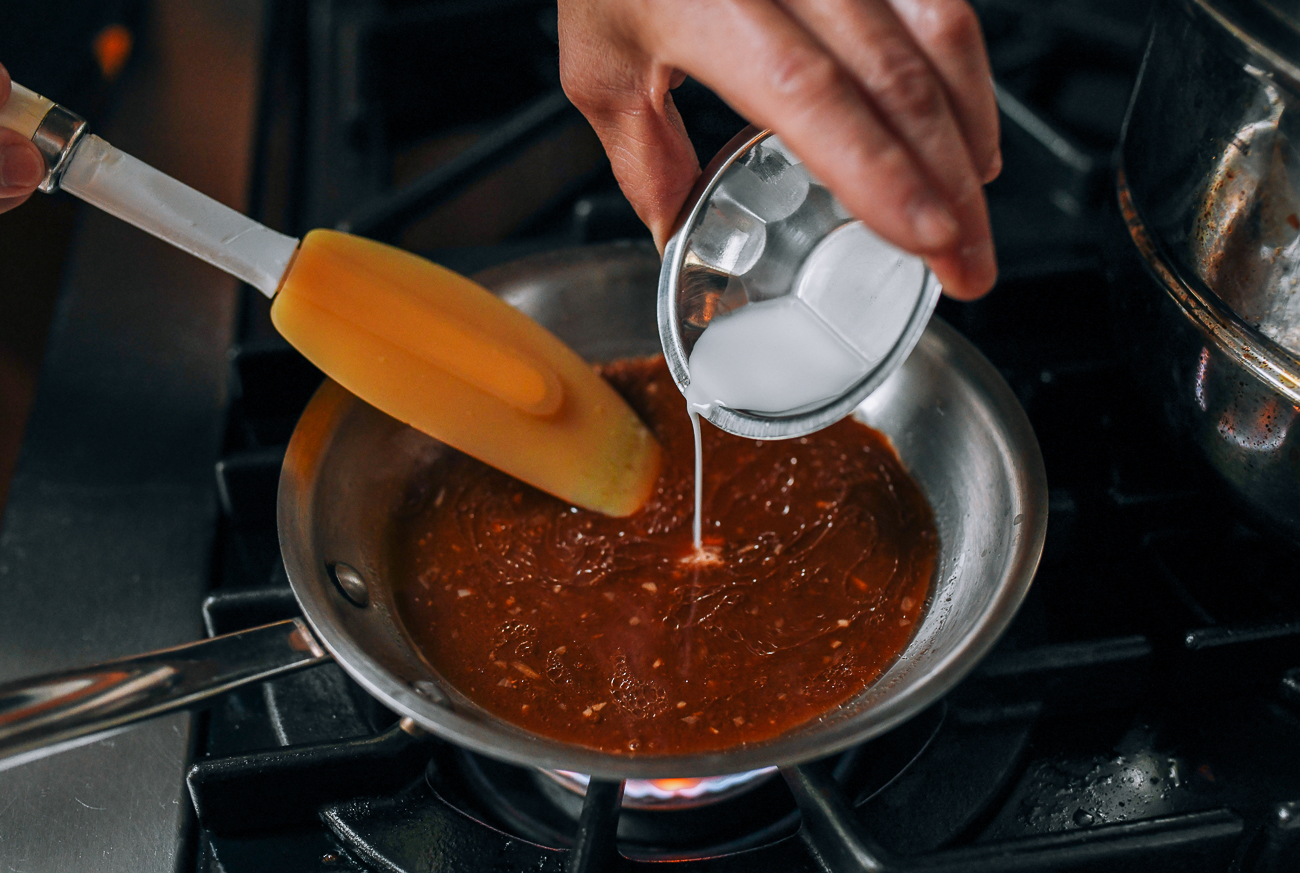
Give it a taste, and season with a pinch of salt or drizzle of soy sauce if needed.
Grab a plate or shallow bowl to serve the pork belly in. Put it on top of the pork and taro bowl.
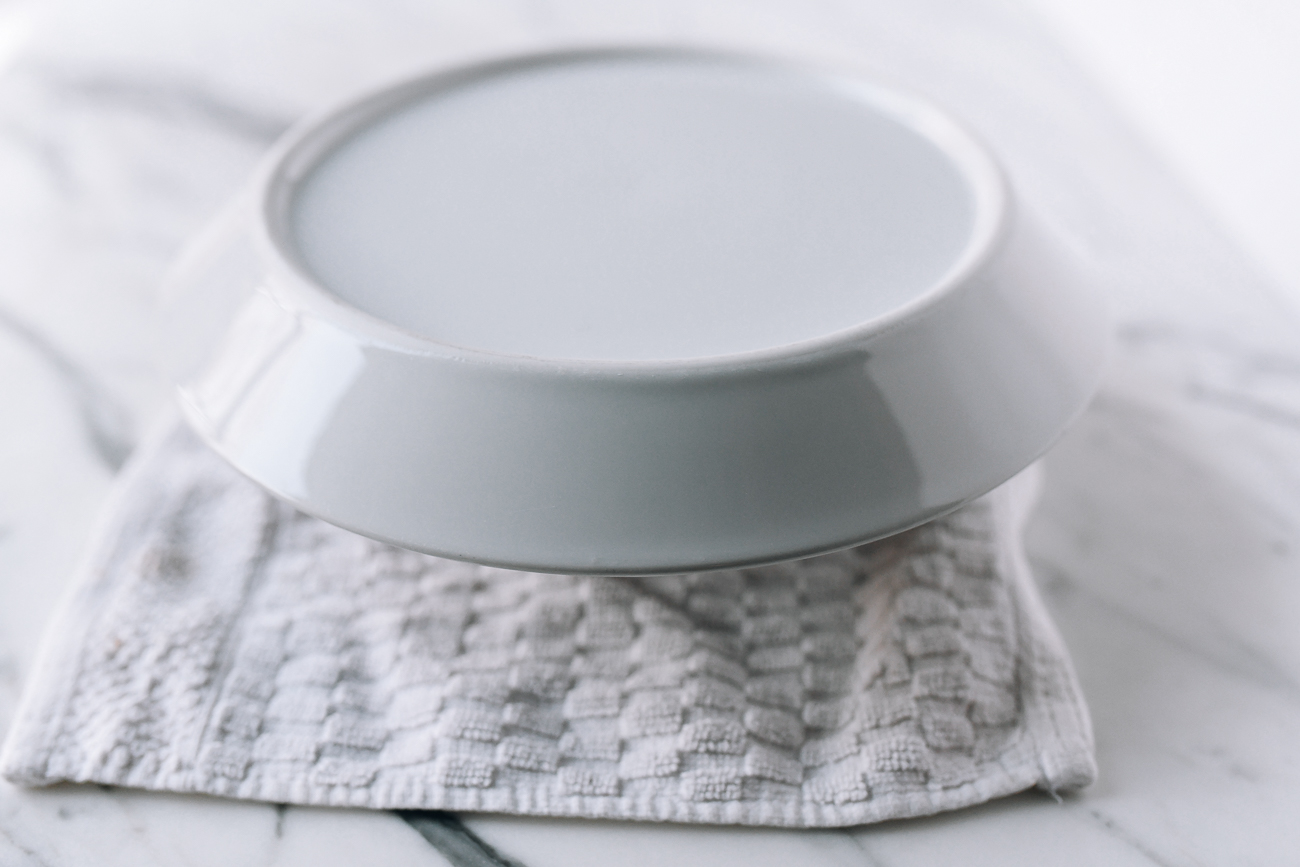
Carefully flip it over.
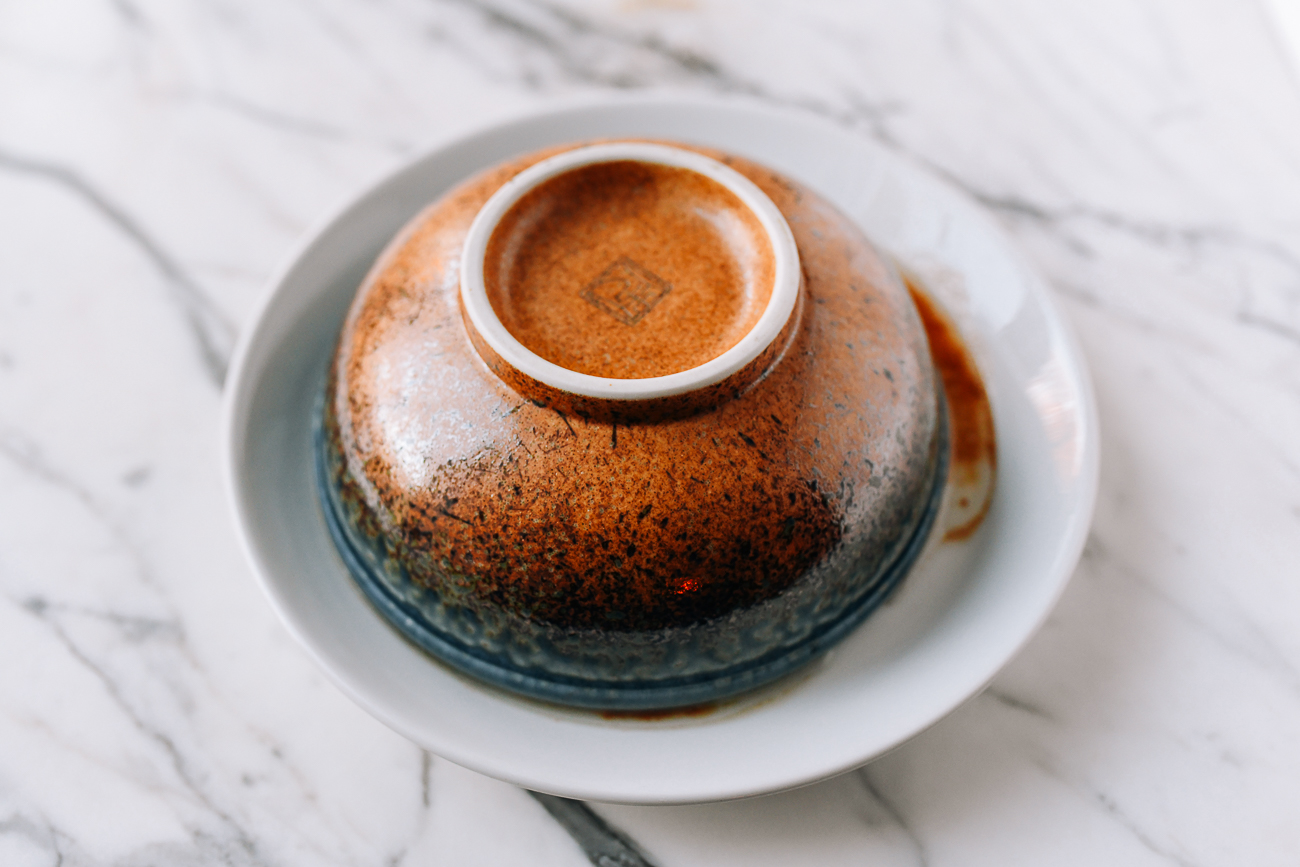
Twist the hot bowl a quarter of a turn to ensure the taro and pork are not stuck to the bowl…
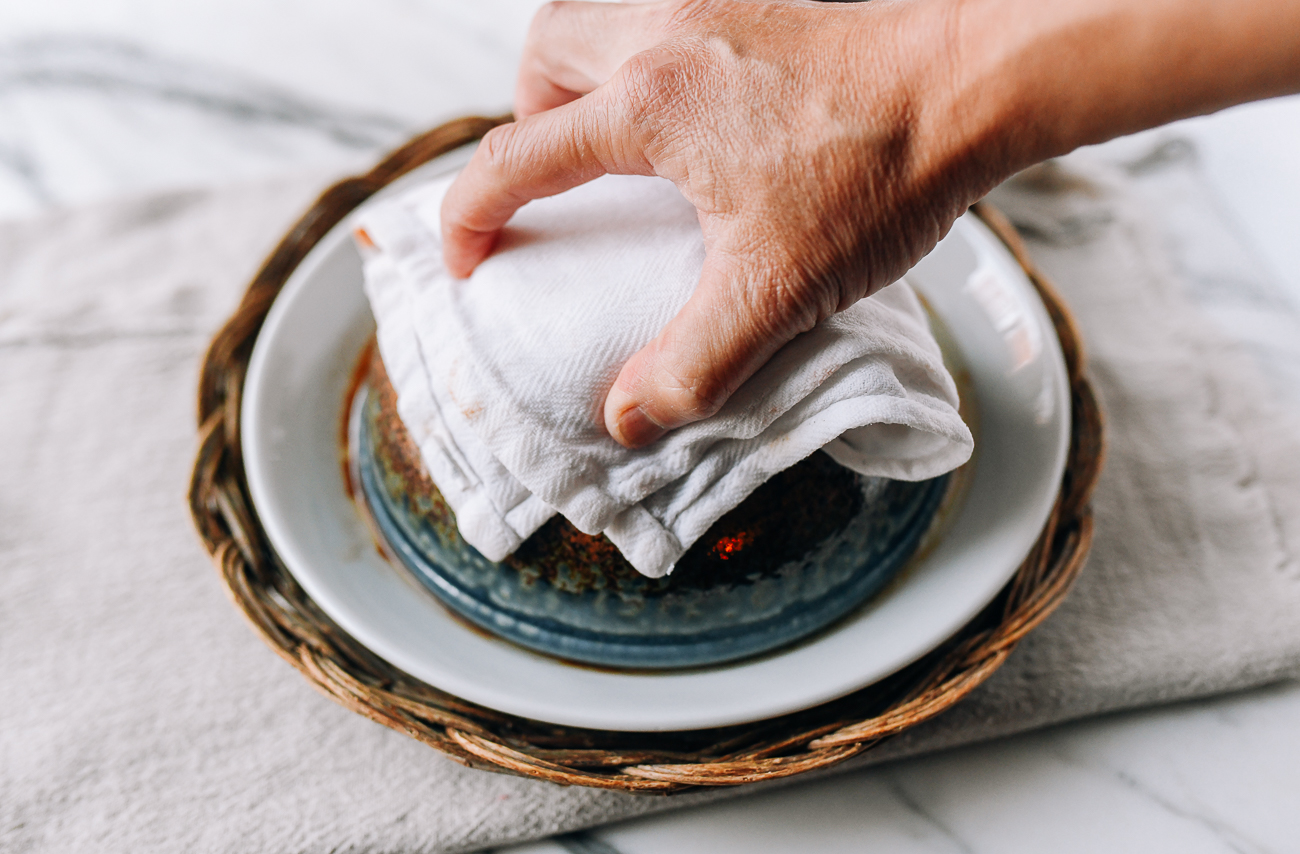
And lift it up, leaving the pork and taro behind in a dome.
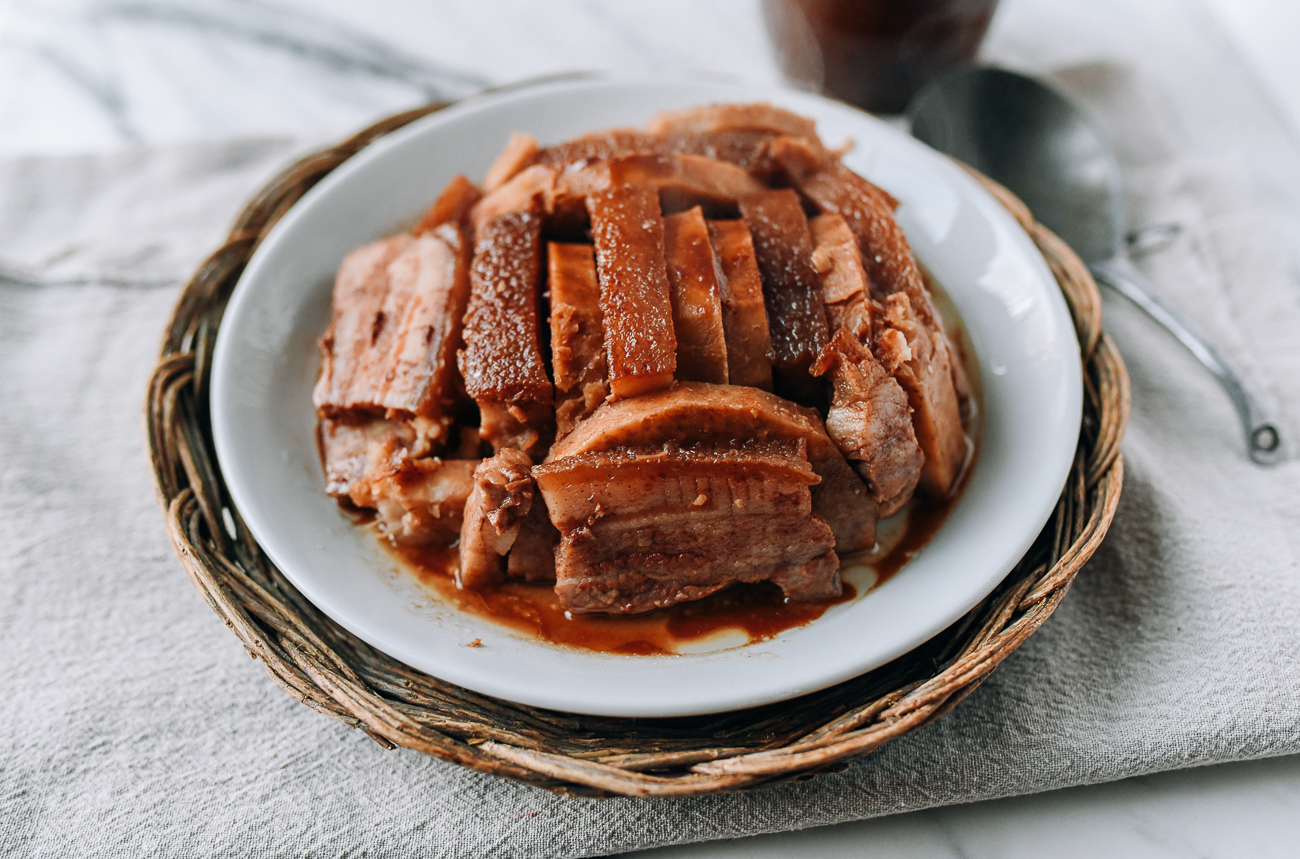
Pour the sauce over the top…
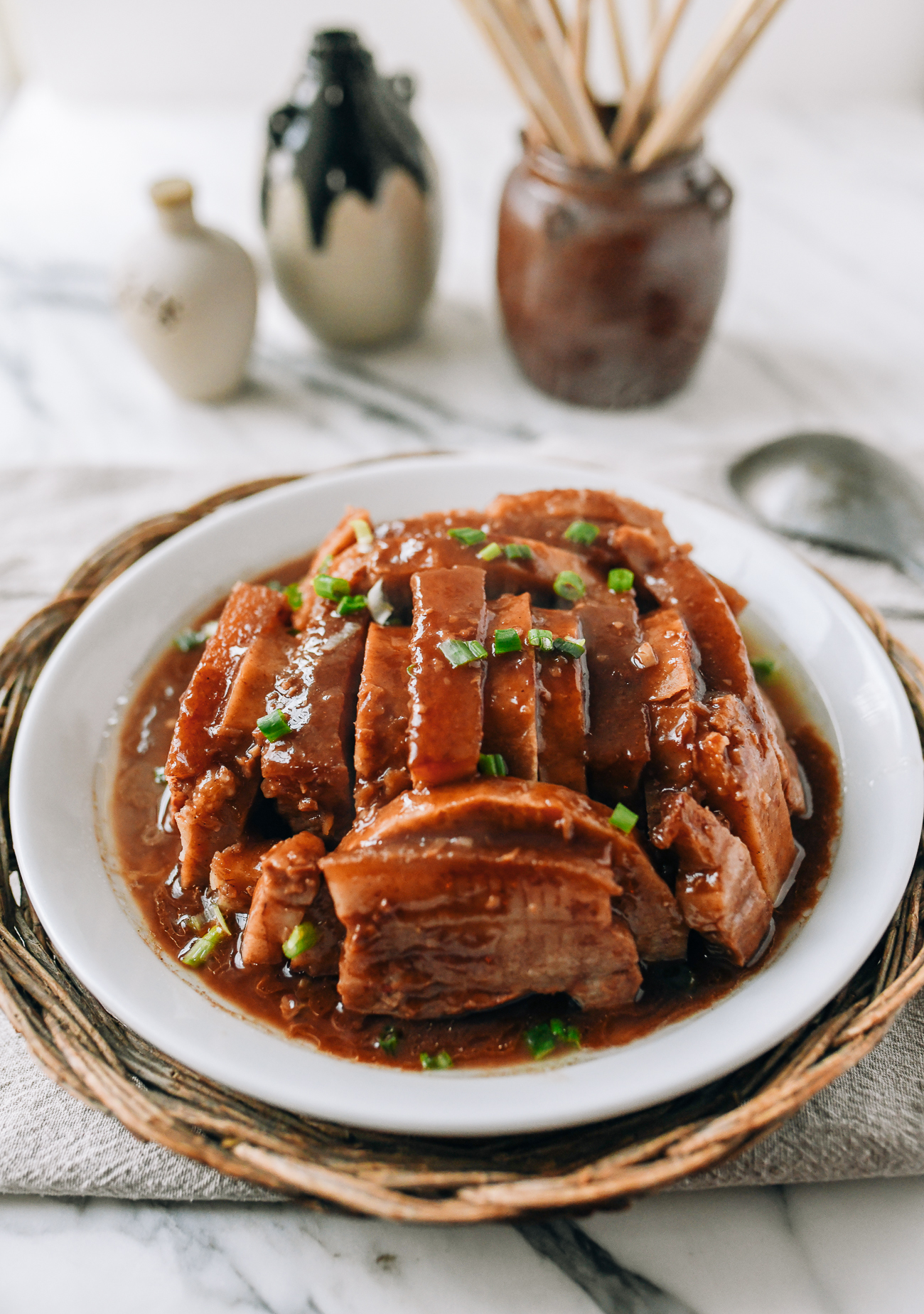
And garnish with chopped scallions if desired. Serve!
Looking for more authentic recipes? Subscribe to our email list and be sure to follow us on Pinterest, Facebook, Instagram, and Youtube!
Recipe

Steamed Pork Belly with Taro
Ingredients
For the sauce mixture:
- 1 piece red fermented bean curd (lam yee, about 2 tablespoons or 25g per piece)
- 1 tablespoon sugar
- 2 tablespoons light soy sauce
- 1 tablespoon oyster sauce
- 1 teaspoon Shaoxing wine
- 1/2 teaspoon five spice powder
- 1/4 teaspoon ground white pepper
- 1/4 teaspoon dark soy sauce
- 3 small pods from a whole star anise
For the rest of the dish:
- 20 ounces boneless skin-on pork belly
- 1 teaspoon sugar
- 2 teaspoons salt
- 1 pound large taro
- 1/2 teaspoon dark soy sauce
- 1 cup vegetable oil (for frying, plus 2 teaspoons)
- 1/2 teaspoon ginger (finely minced)
- 2 teaspoons garlic (finely minced)
- 1 tablespoon shallot (finely minced)
- 1/2 teaspoon cornstarch (mixed with 1 teaspoon water)
- 1 tablespoon scallions (chopped, for garnish)
Instructions
Prepare sauce mixture:
- In a medium bowl, combine the fermented tofu, sugar, light soy sauce, oyster sauce, Shaoxing wine, five spice powder, white pepper, dark soy sauce, and the star anise pods (just break the smaller pods off the main star anise, or pick some out that have already broken). Set aside.
Blanch pork belly and prep taro:
- Bring about 6 cups of water to a boil to blanch the pork belly (be sure to save this blanching water, as you will use it again later). Add 1 teaspoon sugar and 2 teaspoons salt. Place the pork belly into the boiling water skin side down. Bring back up to a boil, and simmer for 30 minutes.
- Meanwhile, cut the taro into ½-inch thick pieces, about 2 ½ x 3 inches in size.
- After 30 minutes, remove the pork belly and cool completely. Set the blanching liquid aside to cool (you will need it again later).
- When the pork belly has cooled, use a fork to evenly pierce holes all over the skin, down to the top layer of fat. (Don’t pierce all the way through to the meat.)
- Brush ½ teaspoon dark soy sauce over the pork belly skin. Set aside for 10-15 minutes to air dry, or until the dark soy sauce has dried on the surface of the pork.
Fry the taro and pork belly:
- Grab a deep pot or wok that will accommodate the pork belly. Add frying oil, and heat to 325°F/163°C. In batches, fry the taro slices until a golden crust forms, about 90 seconds (45 seconds per side). Set aside to cool.
- Next, the pork belly. Be sure it’s really dry by patting it all over with a paper towel. With the pot lid in one hand, use a metal wok spatula or tongs to carefully lower the pork belly into the oil skin-side down. Immediately cover the pot to catch any oil spatter.
- Turn off the heat, and let the pork shallow fry for 3 minutes (the pork skin is the part you’re concerned with frying), or until the oil stops splattering (meaning any residual moisture has cooked off). Many recipes use more oil to deep fry the pork, but it is too messy. Again, the most important point is to make sure the skin is fried.
- Remove the pork belly from the oil, and place it back into the pot of cooled blanching liquid. Soak for 10 minutes.
- This step seems counterintuitive after frying, but soaking the pork belly (particularly the skin) in the blanching liquid gives it a luxuriously tender yet springy/chewy texture.
- After 10 minutes, remove the pork belly from the pot, and set aside to cool further. Remove ¾ cup of the blanching liquid, and set aside.
Cook the marinade & marinate pork:
- Meanwhile, cook the marinade. Heat a wok or saucepan over medium heat. Add 2 teaspoons of vegetable oil, along with the ginger. Let the ginger brown lightly for about 15 seconds. Next, add the garlic and shallots, and cook until translucent, about 1 minute. Add the sauce mixture you prepared earlier, along with ½ cup of the reserved pork blanching water. Simmer for 1 minute, remove from the heat, and cool.
- When the pork belly is cool enough to handle, slice it into 2½x3-inch pieces at ½-inch thickness (roughly the same size/shape as the taro). Transfer the pork belly to a large bowl, and pour the cooled marinade over it. Marinate for at least 1 hour, tossing with a rubber spatula every 20 minutes for the most even and effective marinating. (Can marinate longer, even overnight.)
Assemble & steam:
- Select a round heat-proof bowl, ideally 3-inches deep.
- Arrange the pork belly and taro slices around the bowl in alternating pieces, with the por belly skin-side down (when it’s flipped, it will be skin-side up). As you assemble, carefully coat each individual piece of taro with the pork belly marinade (the taro is delicate, so you really do have to coat each piece individually).
- To fill any cracks, slice some of the pork belly and taro into smaller pieces. It should fit into the bowl snugly, with as few gaps as possible. Once all the taro and pork belly is in the bowl, pour any remaining marinade evenly over the top.
- Prepare a steamer with simmering water. When the water is at a boil, place the bowl into the steamer, and steam for 90 minutes over medium heat. The water should be bubbling enough to generate a good amount of steam. Periodically check the steamer to add more boiling water when needed.
Sauce & Serve
- After steaming, carefully pour off the hot liquid from the pork and taro into a wok or saucepan (use a rubber spatula to hold the pork and taro in place while pouring). Return the bowl to the steamer with the heat off, and cover to keep it warm.
- Add the remaining ¼ cup of the reserved pork belly blanching water to the sauce, and bring to a simmer over medium heat. Gradually add the cornstarch slurry until the sauce is thick and glossy, and coats a spoon. Give it a taste, and season with a pinch of salt or drizzle of soy sauce if needed.
- Grab a plate or shallow bowl to serve the pork belly in. Put it on top of the pork and taro bowl, and carefully flip it over. Twist the hot bowl a quarter of a turn to ensure the taro and pork are not stuck to the bowl, and lift it up, leaving the pork and taro behind in a dome.
- Pour the sauce over the top, garnish with chopped scallions if desired, and serve!