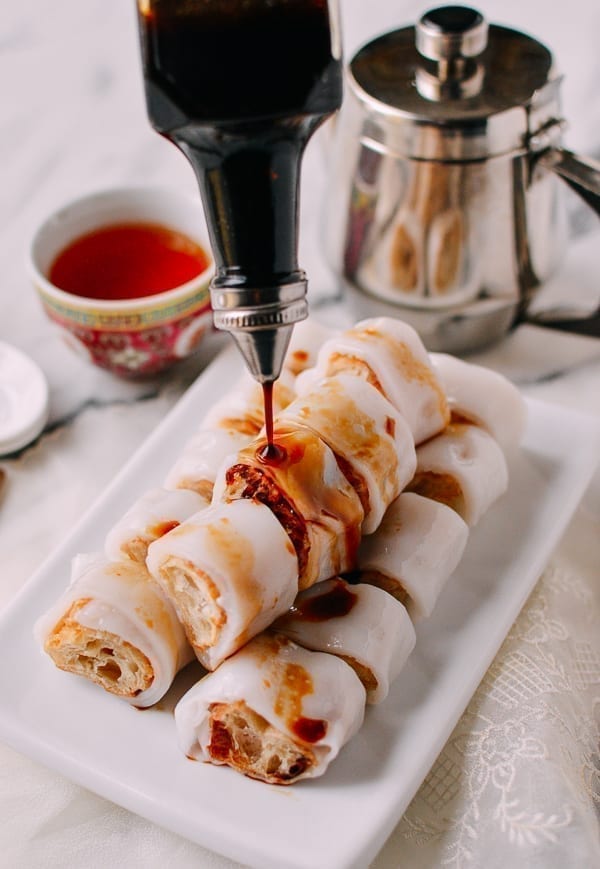
Zhaliang is everyone’s favorite dim sum item, especially kids. When Sarah, Kaitlin, and their cousins were little, zhaliang was the most requested and coveted plate on the table!
What is Zhaliang?
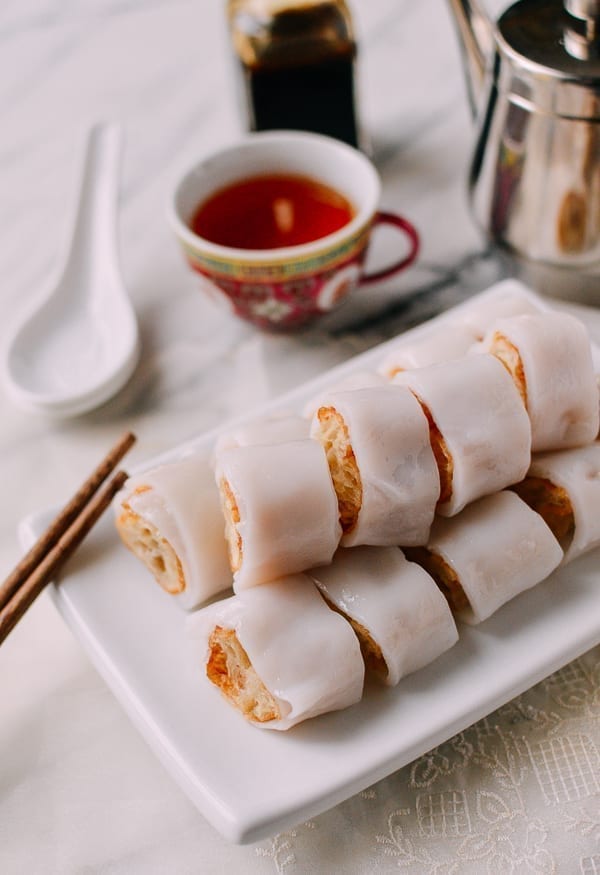
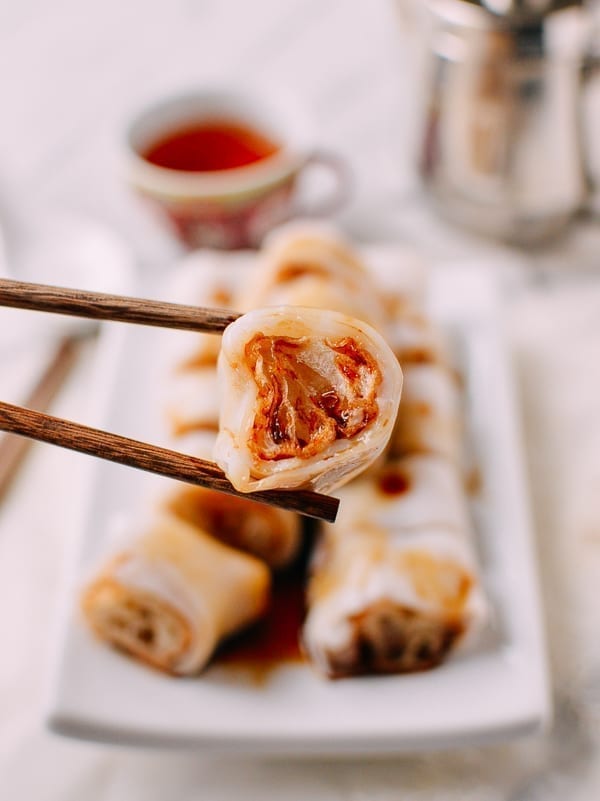
Zhaliang is a Cantonese dim sum dish consisting of crispy Chinese fried dough (youtiao) wrapped inside silky rice noodles. It is then garnished with a drizzle of sweet soy sauce and sometimes sesame seeds or scallions.
The winning texture and flavor combination is hard not to love!
Your Guide to Making Zhaliang At Home
Since I successfully figured out the recipe for dim sum rice noodles (or cheung fun––see our shrimp cheung fun recipe here), I knew I had to post a zhaliang recipe.
We have all the steps and information to make sure it’s a success, especially if you live somewhere where you can’t get good dim sum. Just in case you can’t find store-bought Chinese Fried Dough (aka youtiao, 油条), we’ve got you covered with a youtiao recipe as well.
If you’ve made our Shrimp Cheung Fun, just know that the process to make the rice noodles is exactly the same. Why not make both and have yourself a nice Chinese dim sum brunch at home? You can even supplement with our other dim sum recipes and host a dim sum party!
What Does “Zhaliang” Mean?
Like me, you might have wondered why this favorite Cantonese dim sum has such a funny name. The name, zhaliang, 炸两, literally translates to “fry two.”
It is said that this dim sum dish also has another name, zhayip, which translates to “fry one.” You tiao is often made with two pieces of dough pressed together, right? (See below for photo of said youtiao.)

So, zhaliang is made with half of a youtiao, which gets ripped into two pieces.
Meanwhile, zhayip (“fry one”) has “one” WHOLE youtiao and therefore is more expensive. With the test of time, the less expensive version won the competition, and no one ever heard of zhayip ever again.
People are always looking for a bargain!
Tools You Need to Make This Recipe
- A metal cake pan, sheet pan, or any heat-proof flat-bottomed pan with a rim that can fit in your wok and float on top of simmering water. Ideally, it would be square or rectangle-shaped.
- A plastic or silicone dough scraper. Though I’ve seen Chinese chefs use cleavers for this purpose, the plastic dough scraper is more user-friendly and does not stick to the rice noodles. A spatula can also work. If you use a metal utensil, brush it with oil to prevent it from sticking to the rice noodles.
- A large wok or steamer with a lid that will fit your pan (find out more about how to set up a steamer here.)
- A pastry brush
- A new 100% cotton cloth in white or a natural color
- A plate gripper for safely lowering and lifting the hot pan out of the steamer
Zhaliang Recipe: Instructions
Step 1: Make the sauce
Prepare the sauce by adding all the ingredients (1 scallion, white part only, 1-inch piece of ginger, 2 ½ tablespoons light soy sauce, 2 teaspoons dark soy sauce, 5 teaspoons sugar, 1/3 cup water, 1 teaspoon oyster sauce, 1 teaspoon oil, and salt to taste) to a small saucepan over medium low heat.
Bring the sauce to a simmer and turn off the heat. Cool completely and remove the ginger and scallion. You can store this sauce in the refrigerator for up to 2 weeks.
Step 2: Reheat the you tiao
Preheat your oven or toaster oven to 350 degrees F/175 degrees C. Rip 1 piece of Chinese Fried Dough in half lengthwise into 2 long pieces, and reheat for 5-8 minutes—as long as it takes to get hot and slightly crunchy, but not brittle like a piece of toast. Take care not to burn it. They will be crisp once cooled.
Step 3: Prepare the rice noodle rolls (cheung fun)
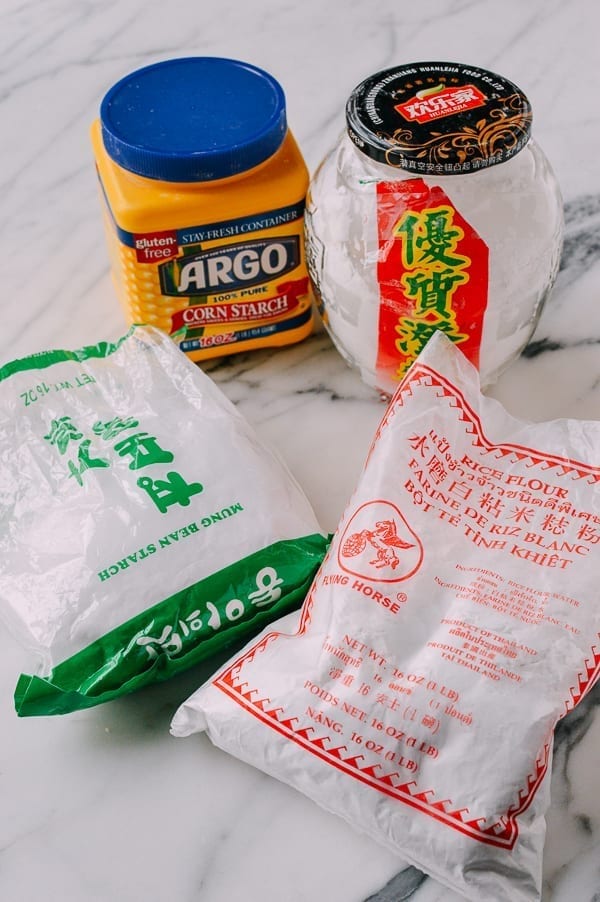
First, gather the cooking tools you need. Next, combine the rice flour, mung bean starch, wheat starch, cornstarch, and salt in a large mixing bowl.
Add the water and stir for at least three minutes until the dry ingredients are well-dissolved.
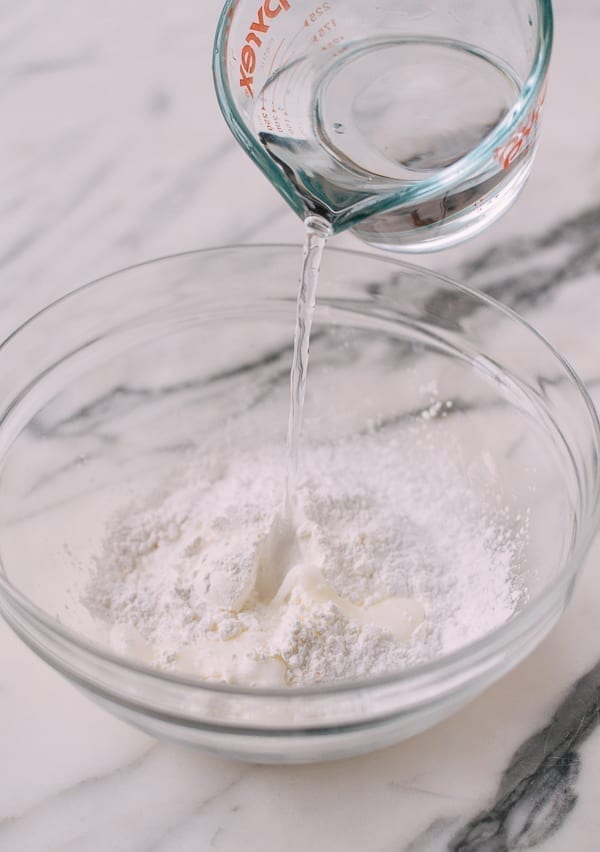
Set aside and allow time for any air bubbles to dissipate.
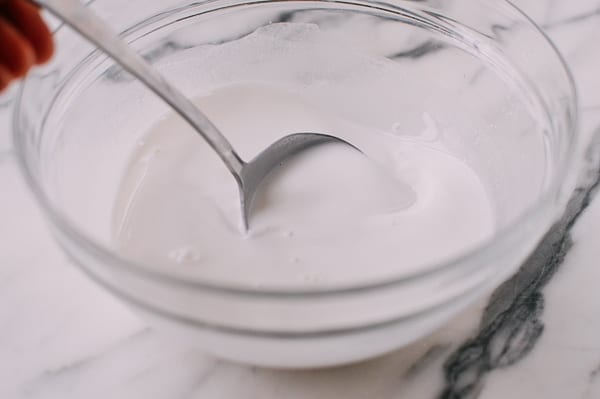
Soak the cotton cloth in water for a few minutes so it’s completely saturated.
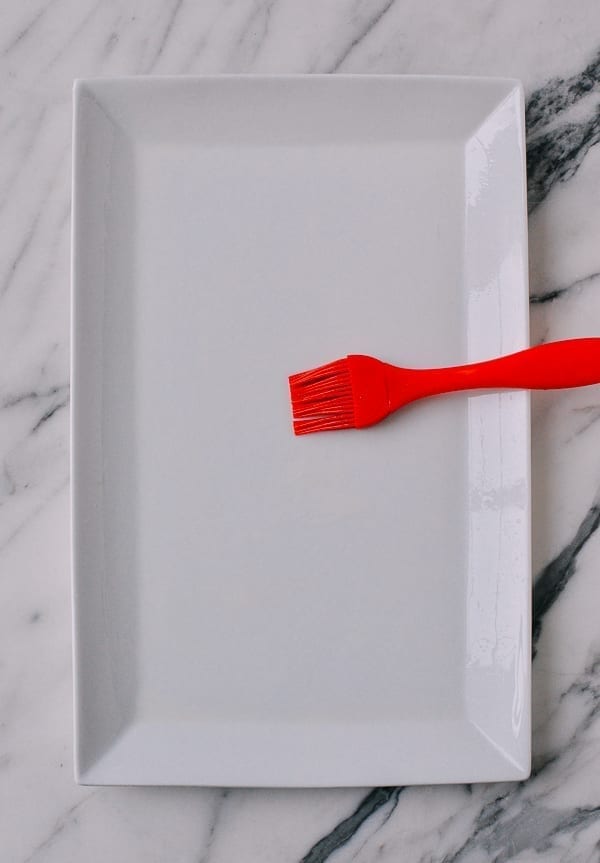
Prepare a large assembly station by brushing some oil on a clean, smooth surface like a non-porous countertop, a large flat plate, or a smooth cutting board. I’ve found a large smooth plate works best, as it has the least amount of friction.
Next, pre-boil the water in your steamer or wok with the lid on (more on how to set up a steamer here), making sure your wok or steamer fits the flat-bottomed pan you will use to cook the rice noodles. I used a 9 x 13 inch non-stick sheet pan. This recipe makes 2 full sheets of rice noodles in this sized pan (equivalent to about two dim sum orders).
Now lift the soaking wet cotton cloth out of the water and line the bottom of the pan with it. Do not wring out the water!
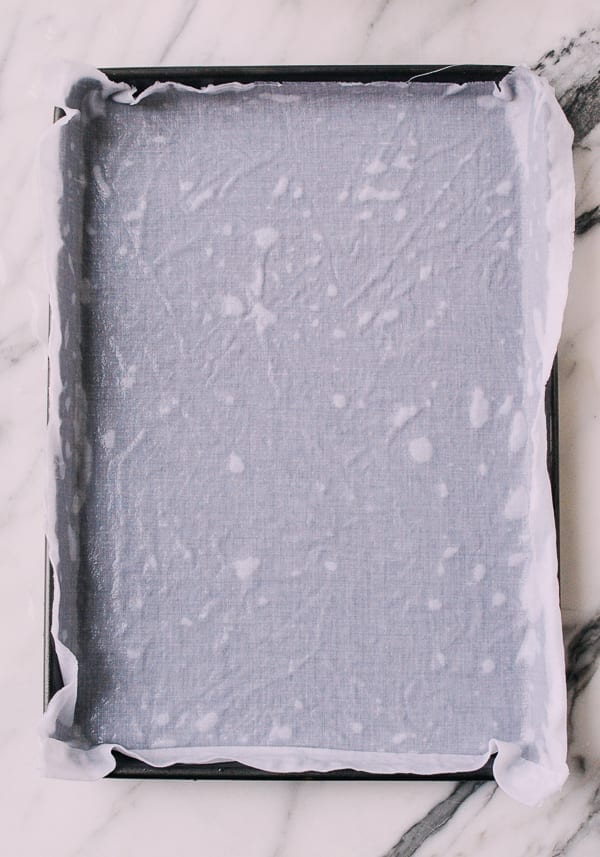
Re-stir the starch and water mixture well before adding just enough to cover the cloth at the bottom of the pan completely. Too much means too thick of a rice noodle. The water in your steamer should be boiling.
Use the plate gripper and carefully lower the pan into the steamer or directly onto the simmering water if you’re using a wok. Make sure the pan is perfectly level, or the noodles will be too thick on one side and too thin on the other. Immediately cover the lid and steam on high for 2 minutes. All of this must happen quickly.
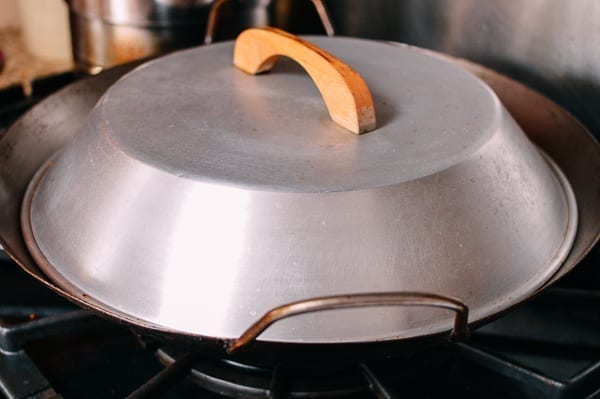
When 2 minutes have elapsed, remove the pan from the steamer using the plate gripper, and transfer to your assembly station.
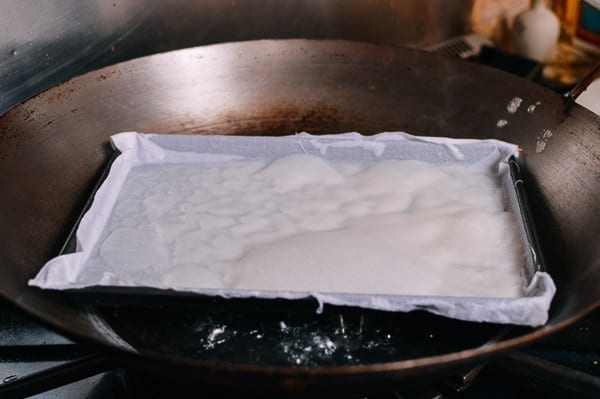
Carefully lift the cloth out of the pan…
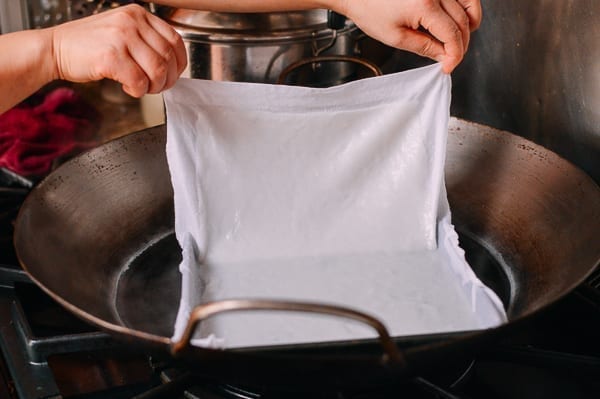
And place it with the rice noodle side down onto the oiled surface you prepared earlier. Use the dough scraper and your hands to carefully scrape the rice noodle sheet off of the cotton cloth and lift the cloth away so the noodle is in a single layer on the oiled surface.
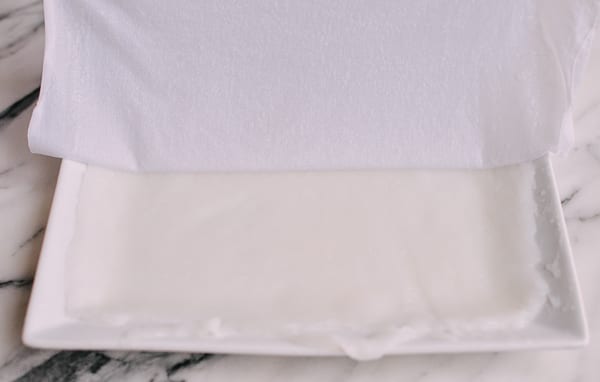
This step must happen quickly while the noodle and cotton cloth are still hot. The noodle might have a small hole here or there––don’t fret. It does not affect the tastiness or look of the end result!
Step 4: Assemble the Zhaliang!
Line up one crispy youtiao along the long side of the rice noodle.
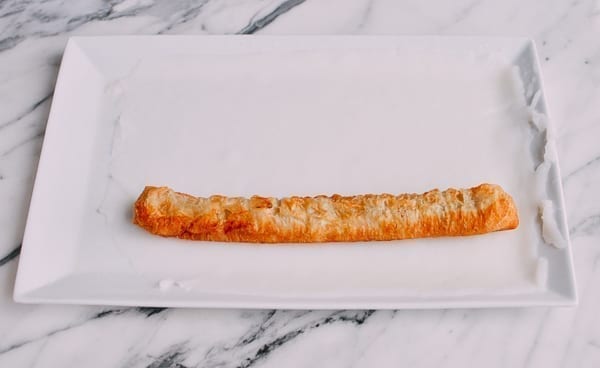
Using the dough scraper, roll it up in the rice sheet so it’s in one long cigar.
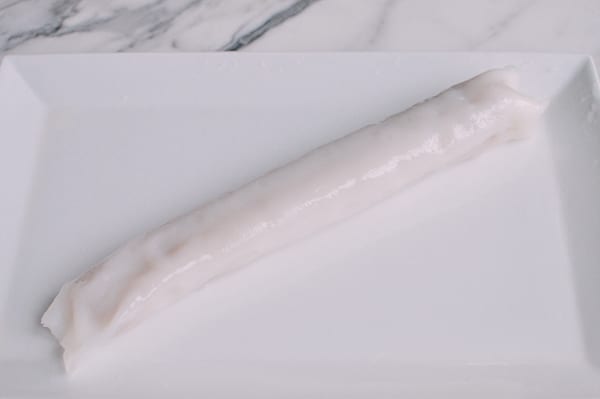
Cut each into bite-sized pieces.
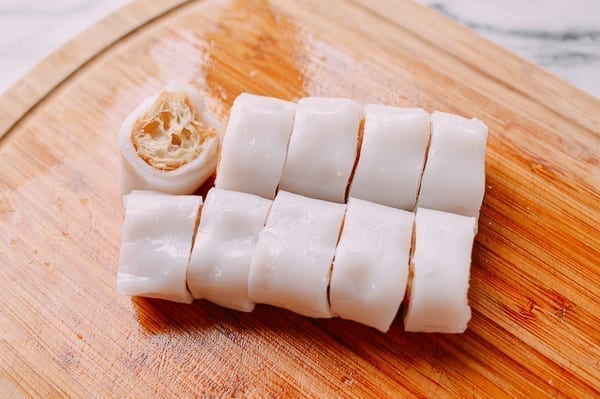
Transfer to a serving plate.
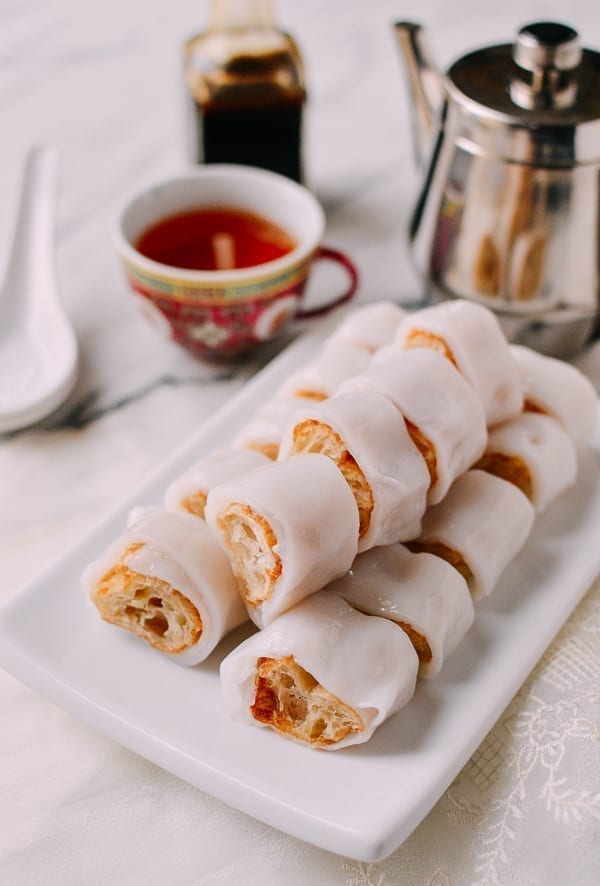
Drizzle with the prepared sauce, and eat while it’s still hot!
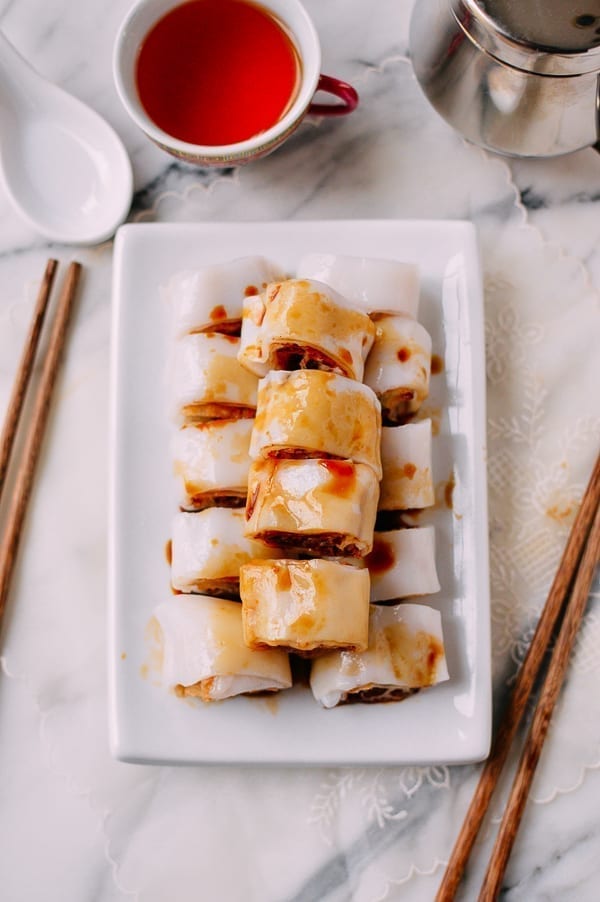
Rinse the cotton cloth in clean water (no soap or detergent necessary) to remove the rice residue before making the next one. These are best when fresh. In this case, we discourage leftovers!
Looking for more authentic recipes? Subscribe to our email list and be sure to follow us on Pinterest, Facebook, Instagram, and Youtube!
Recipe

Zhaliang
Ingredients
For the sauce:
- 1 scallion (white part only)
- 1 inch piece ginger
- 2 1/2 tablespoons light soy sauce
- 2 teaspoons dark soy sauce
- 5 teaspoons sugar
- 1/3 cup water
- 1 teaspoon oyster sauce
- 1 teaspoon oil
- salt (to taste)
For the zhaliang:
- 1 youtiao (Chinese fried dough stick)
- 5 tablespoons rice flour (40g)
- 1 tablespoon mung bean starch (9g)
- 2 tablespoons wheat starch (18g)
- 2 tablespoons cornstarch (18g)
- 1/4 teaspoon salt
- 1 cup water (235ml)
- vegetable or canola oil (for brushing)
Instructions
Step 1: Make the Sauce
- Prepare the sauce by adding all the ingredients (1 scallion, white part only, 1-inch piece of ginger, 2 ½ tablespoons light soy sauce, 2 teaspoons dark soy sauce, 5 teaspoons sugar, 1/3 cup water, 1 teaspoon oyster sauce, 1 teaspoon oil, and salt to taste) to a small saucepan over medium low heat.
- Bring the sauce to a simmer and turn off the heat. Cool completely and remove the ginger and scallion. You can store this sauce in the refrigerator for up to 2 weeks.
Step 2: Reheat the Youtiao
- Preheat your oven or toaster oven to 350 degrees F/175 degrees C. Rip 1 piece of Chinese Fried Dough in half lengthwise into 2 long pieces, and reheat for 5-8 minutes—as long as it takes to get hot and slightly crunchy, but not brittle like a piece of toast. Take care not to burn it. They will be crisp once cooled.
Step 3: Prepare the rice noodle rolls (cheung fun)
- First, gather the cooking tools you need. Soak the cotton cloth in water for a few minutes so it’s completely saturated.
- Next, combine the rice flour, mung bean starch, wheat starch, cornstarch, and salt in a large mixing bowl. Add the water and stir for at least three minutes until the dry ingredients are well-dissolved. Set aside and allow time for any air bubbles to dissipate.
- Prepare a large assembly station by brushing some oil on a clean, smooth surface like a non-porous countertop, a large flat plate, or a smooth cutting board. I've found a large smooth plate works best, as it has the least amount of friction.
- Next, pre-boil the water in your steamer or wok with the lid on (more on how to set up a steamer here), making sure your wok or steamer fits the flat-bottomed pan you will use to cook the rice noodles. I used a 9 x 13 inch non-stick sheet pan. This recipe makes 2 full sheets of rice noodles in this sized pan (equivalent to about two dim sum orders).
- Now lift the soaking wet cotton cloth out of the water and line the bottom of the pan with it. Do not wring out the water!
- Re-stir the starch and water mixture well before adding just enough to cover the cloth at the bottom of the pan completely. Too much means too thick of a rice noodle. The water in your steamer should be boiling. Use the plate gripper and carefully lower the pan into the steamer or directly onto the simmering water if you’re using a wok. Make sure the pan is perfectly level, or the noodles will be too thick on one side and too thin on the other. Immediately cover the lid and steam on high for 2 minutes. All of this must happen quickly.
- When 2 minutes have elapsed, remove the pan from the steamer using the plate gripper, and transfer to your assembly station. Carefully lift the cloth out of the pan and place it with the rice noodle side down onto the oiled surface you prepared earlier. Use the dough scraper and your hands to carefully scrape the rice noodle sheet off of the cotton cloth and lift the cloth away so the noodle is in a single layer on the oiled surface. This step must happen quickly while the noodle and cotton cloth are still hot. The noodle might have a small hole here or there––don’t fret. It does not affect the tastiness or look of the end result!
Step 4: Assemble the Zhaliang!
- Line up one crispy youtiao along the long side of the rice noodle. Using the dough scraper, roll it up in the rice sheet so it’s in one long cigar. Cut each into bite-sized pieces, drizzle with the prepared sauce, and eat while it’s still hot!
- Rinse the cotton cloth in clean water (no soap or detergent necessary) to remove the rice residue before making the next one. These are best eaten when fresh.