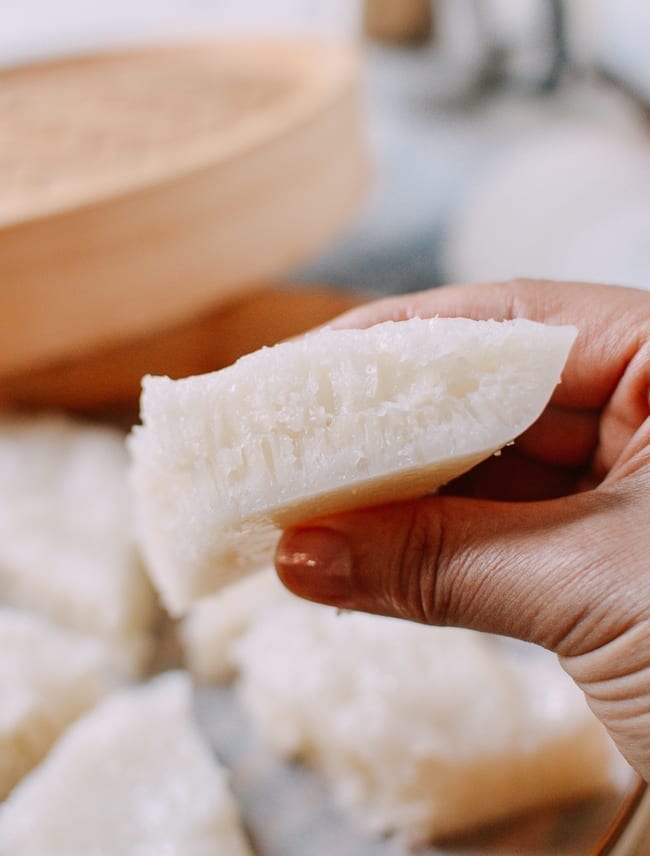
This white sugar sponge cake recipe (白糖糕 – báitáng gāo in Mandarin or baak tong gou in Cantonese) has been a long time coming. We’ve received many requests for bai tang gao over the years!
I apologize for making you all wait so long for this classic recipe. The suspense was definitely not intentional. It’s an easy recipe to make, but all the recipes I tried weren’t quite right. Let’s just say it took quite a bit of experimentation to get the correct ratio of ingredients and the fluffy, slightly chewy texture I was looking for!
A Disappearing Recipe
Baak tong gou, or white sugar sponge cake, is actually hard to come by these days. I think that must be why we’ve received so many recipe requests.
You can’t really find it at Cantonese teahouses anymore, though many of our readers remember having it at dim sum in their childhood years. Indeed, this steamed cake, made from just a few ingredients—rice flour, sugar, yeast—has long been a favorite of young kids.
Just imagine, you’re in the city for a weekend dim sum brunch with your family, dim sum carts zig zagging around tables full of other patrons. You crane your neck to try and spot your favorite dishes, and your eyes widen as this delectable sweet finds its way to the table!
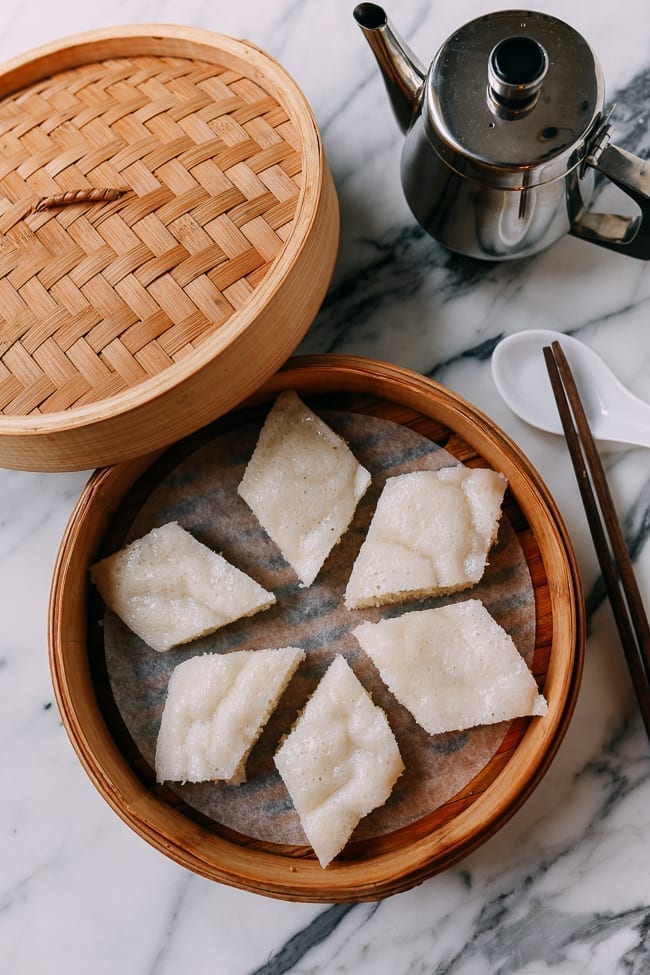
Or perhaps you’re walking down the street, holding your grandmother’s hand as she leads you past tofu shops, fruit vendors, and vegetable sellers. You spot a cart on the other side of the sidewalk, where the vendor passes a warm glistening rice cake to a happy customer. You tug on grandma’s hand and steer her towards the cart, hoping for a piece of your own.
So much love around that little piece of white sugar sponge cake! In the old days, bai tang gao was readily available, and no one thought to make it at home. Now, though, it’s disappearing even from Chinatowns and dim sum restaurants.
Such food memories can be very powerful, and that’s why it’s so important to document these recipes. If this was a childhood favorite of yours, now you can share that nostalgia with your own kids, friends, and other family.
Just 4 Ingredients
Yes, you read that right! All you need for this recipe is regular white granulated sugar, rice flour, active dry yeast, and a bit of oil for brushing (plus some water!).
In order to get this bai tang gao right, you should measure these ingredients using a digital kitchen scale. It’s a good investment, for about $12-$20.
This recipe involves a simple fermentation process that yields a texture somewhere between fluffy/spongy and chewy. The combination of the yeast and rice flour also yields a sweet rice wine flavor, similar to fermented jiu niang.
Like most Chinese desserts, it’s subtle and not too sweet. How many of you remember eating this as a child? Let us know in the comments below!
Ok, on to the recipe.
Bai Tang Gao: Recipe Instructions
In a heat proof mixing bowl, mix the rice flour with 80g (80 ml) water to form large clumps. Set aside.
In a small pot, add the sugar and 200g water. Bring to a boil and stir just until the sugar is completely dissolved. Turn off the heat and immediately pour the boiling sugar water into the clumped rice mixture.
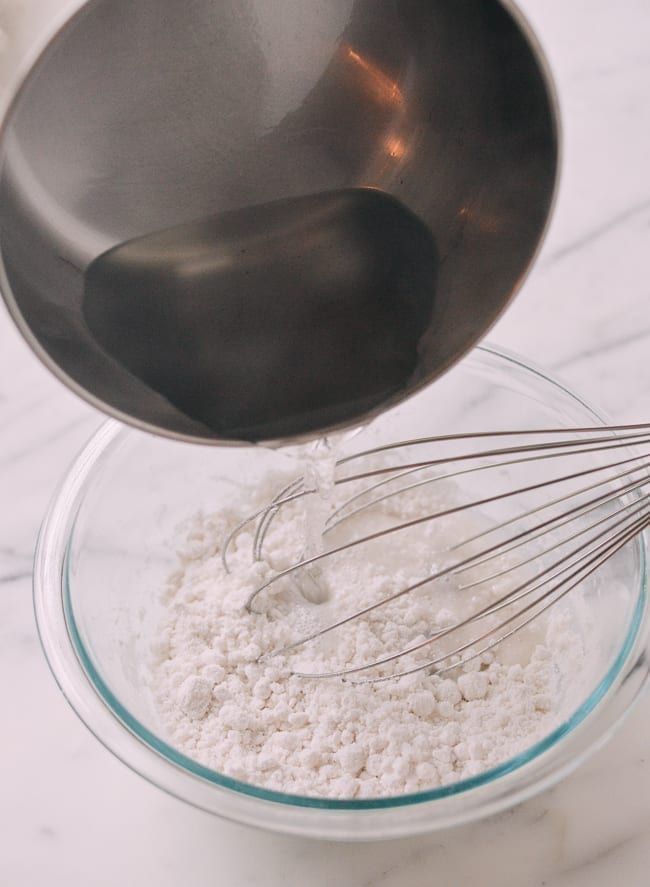
Whisk for a few minutes, until smooth (there should be no lumps). The mixture will look like a thin batter. Cool until lukewarm.
While the mixture is cooling, dissolve 3g active dry yeast (or instant yeast) into 2 tablespoons lukewarm water. Let stand for 15 minutes so the yeast can bloom.
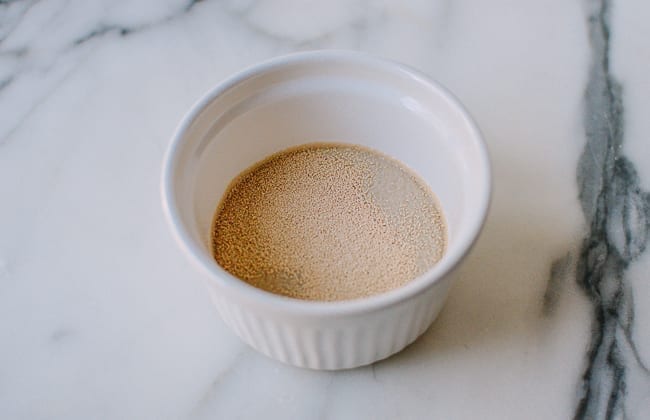
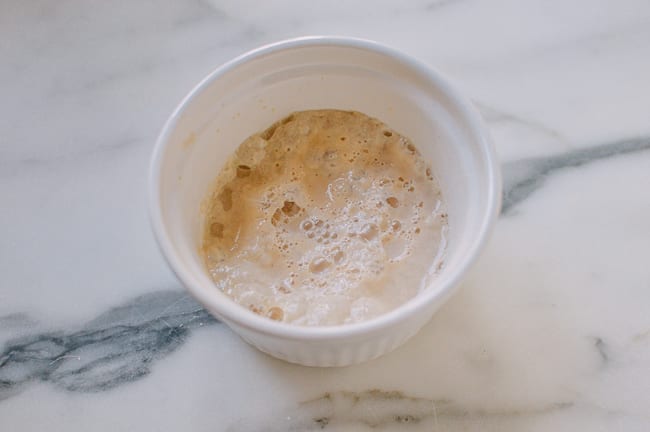
When the rice mixture is lukewarm and the yeast has activated, stir the yeast mixture into the batter and whisk for 3 minutes.
Cover the bowl with an overturned plate, and allow it to ferment in a warm place for at least 3 hours. I left mine inside the microwave with a large mug of boiled water sitting next to it and the door closed. After each hour, I replaced the mug of water with another mug of boiling water to keep the environment warm.
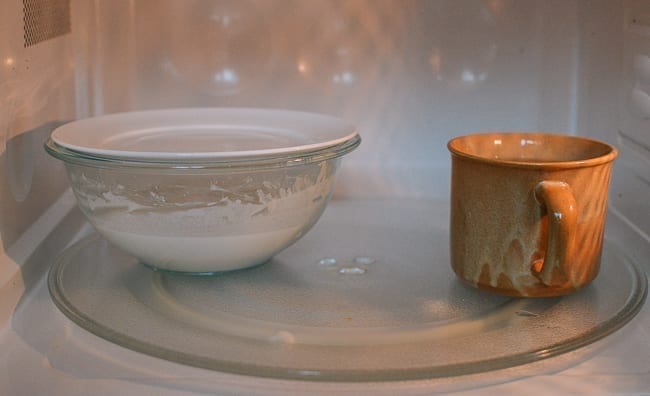
In the last 10 minutes of fermentation, prepare your steamer, and make sure there’s enough water in it to last for 20 minutes of steaming over high heat.
After the 3 hours of fermentation are complete, you’ll see foamy bubbles have formed on the surface of your batter. Turn on the heat to boil the water in the steamer.
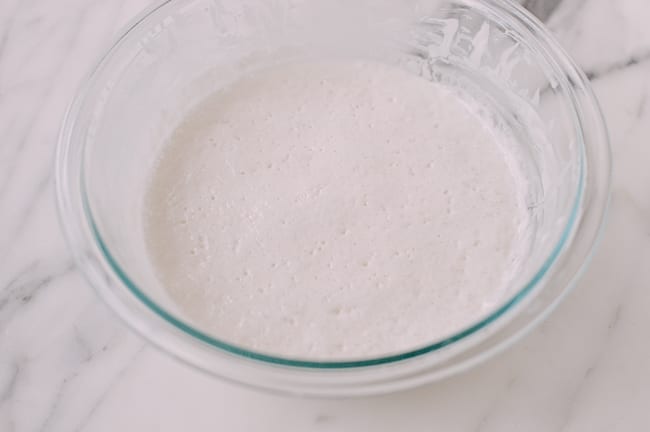
Pour the rice mixture into a 8″ or 9″ pie pan or other shallow heatproof dish that will fit inside your steamer. When the water is at a rolling boil, carefully place the dish into the steamer, cover, and steam for 20 minutes on high heat.
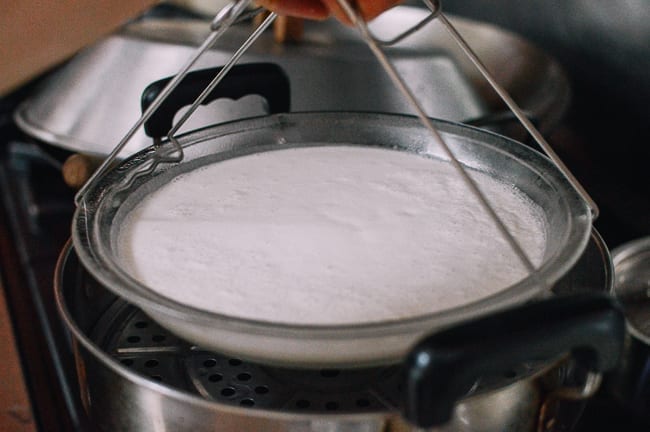
After 20 minutes, turn off the heat but do not uncover the steamer. Let the cake rest for 2 minutes. After 2 minutes, you may open the lid and remove the cake from the steamer.
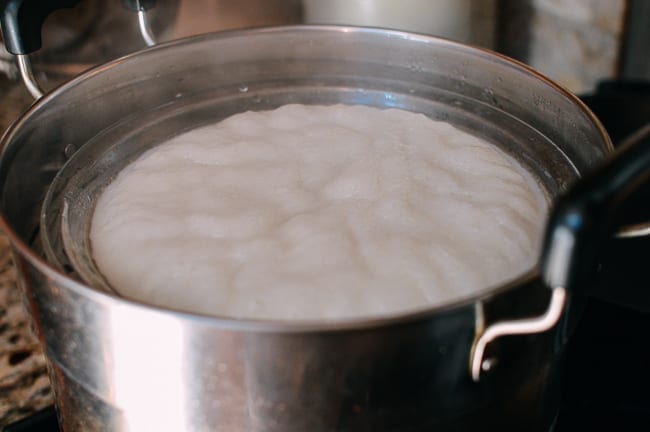
Brush the top of the cake lightly with vegetable oil to give it a nice shine and keep it moist.
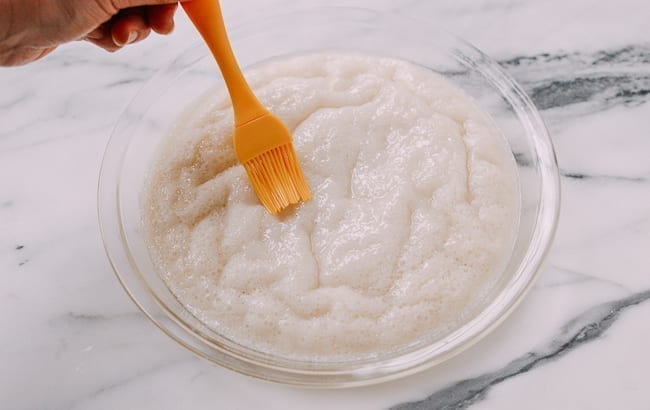
Allow it to cool on the counter before cutting. Brush your knife with oil before slicing.
Store in an airtight container in the refrigerator (during spring/summer) or on the counter (fall/winter). I enjoy these cold or at room temperature, but if you want to reheat them, simply steam for 5 minutes.
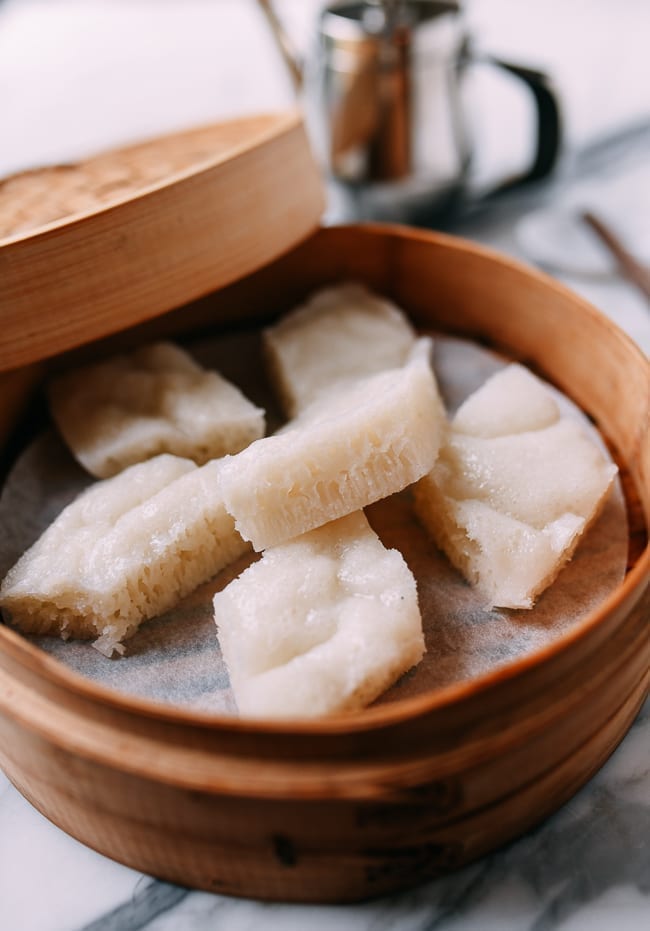
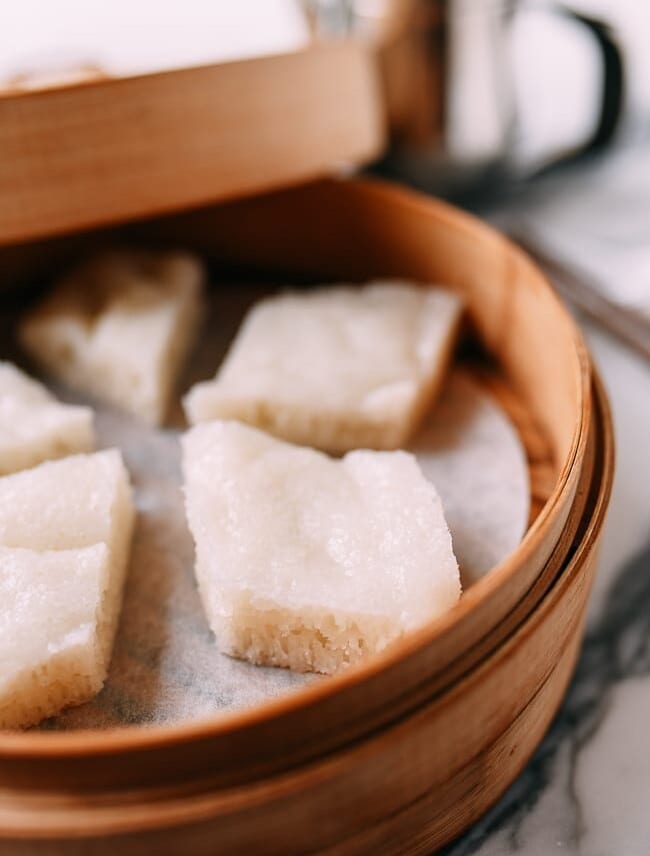
Looking for more authentic recipes? Subscribe to our email list and be sure to follow us on Pinterest, Facebook, Instagram, and Youtube!
Recipe

White Sugar Sponge Cake (Bai Tang Gao – 白糖糕)
Ingredients
- 150 g rice flour (regular rice flour; NOT glutinous rice flour)
- 280 g water (divided; note that when measuring water, g = ml)
- 100 g white granulated sugar
- 3 g active dry yeast (can substitute instant yeast)
- 30 g lukewarm water
- vegetable oil (for brushing)
Instructions
- In a heat proof mixing bowl, mix the rice flour with 80g (80 ml) water to form large clumps. Set aside.
- In a small pot, add the sugar and the remaining 200g water. Bring to a boil and stir just until the sugar is completely dissolved. Turn off the heat and immediately pour the boiling sugar water into the clumped rice mixture. Whisk for a few minutes, until smooth (there should be no lumps). The mixture will look like a thin batter. Cool until lukewarm.
- While the mixture is cooling, dissolve 3g active dry yeast (or instant yeast) into 2 tablespoons lukewarm water. Let stand for 15 minutes so the yeast can bloom.
- When the rice mixture is lukewarm and the yeast has activated, stir the yeast mixture into the batter and whisk for 3 minutes.
- Cover the bowl with an overturned plate, and allow it to ferment in a warm place for at least 3 hours. I left mine inside the microwave with a large mug of boiled water sitting next to it and the door closed. After each hour, I replaced the mug of water with another mug of boiling water to keep the environment warm.
- In the last 10 minutes of fermentation, prepare your steamer, and make sure there’s enough water in it to last for 20 minutes of steaming over high heat.
- After the 3 hours of fermentation are complete, you’ll see foamy bubbles have formed on the surface of your batter. Turn on the heat to boil the water in the steamer.
- Pour the rice mixture into a 8" to 9" pie pan or other shallow heatproof dish that will fit inside your steamer. When the water is at a rolling boil, carefully place the dish into the steamer, cover, and steam for 20 minutes on high heat.
- After 20 minutes, turn off the heat but do not uncover the steamer. Let the cake rest for 2 minutes. After 2 minutes, you may open the lid and remove the cake from the steamer.
- Brush the top of the cake lightly with vegetable oil to give it a nice shine and keep it moist. Allow it to cool on the counter before cutting. Brush your knife with oil before slicing. Serve.