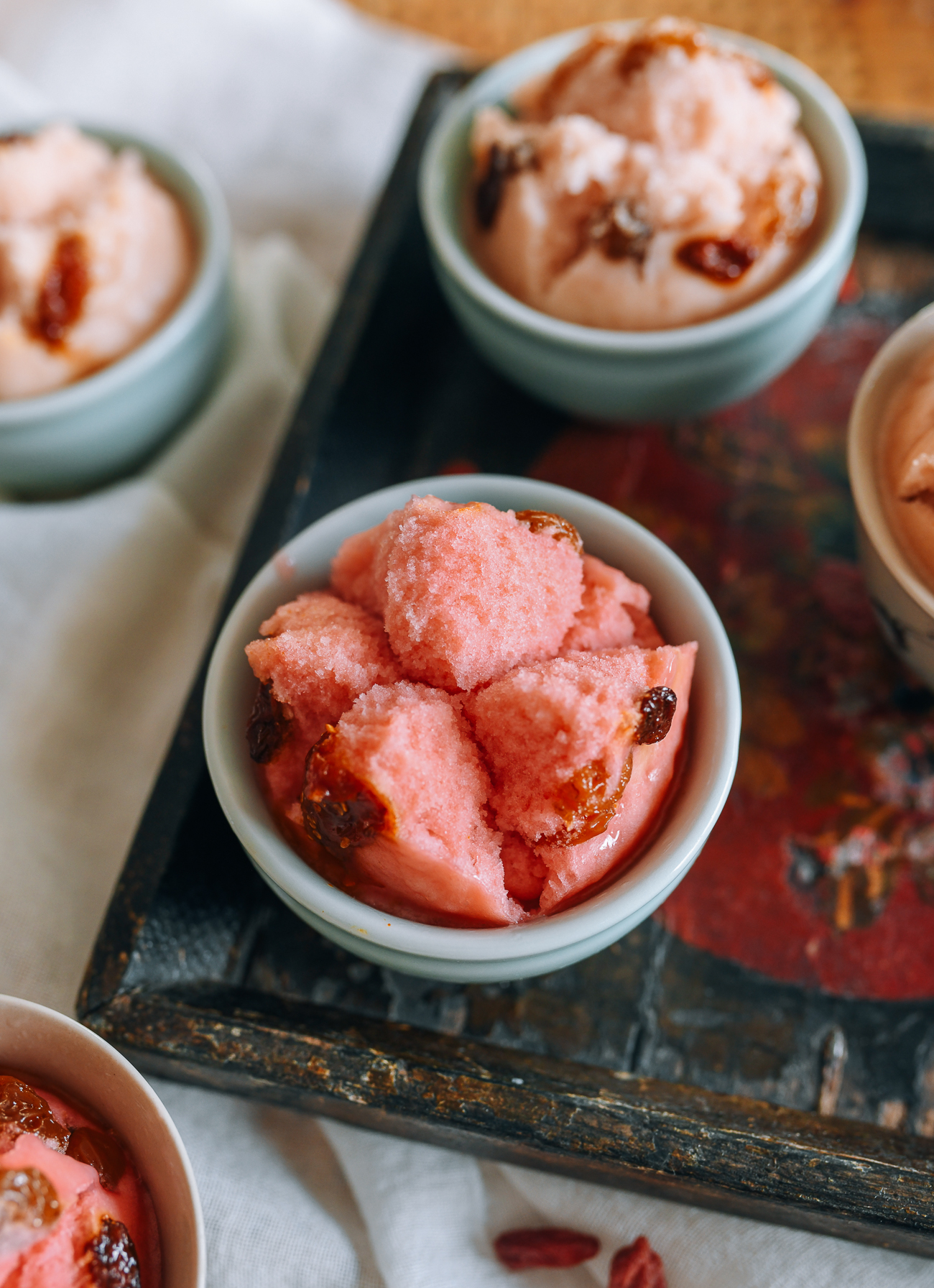
Chinese Fa Gao (fāgāo – 发糕), also known as prosperity cake or fortune cake, is a common sight around Chinese New Year. It’s also served at other holidays, ceremonial events, and weddings. This fa gao recipe will walk you through how to make it.
Finally, a Fa Gao Recipe!
This is a recipe that I’ve been contemplating for a long time—a few years as a matter of fact. There are many types of fa gao with regional differences.
Cantonese fa gao is made with flour and yeast, and it’s similar to Ma Lai Go. After much debating with myself, I decided to make a type of fa gao that’s made with rice (short grain white rice, in this case).
This recipe yielded a very nice chew, with a sweet rice wine aroma that you don’t get from flour. I think that rice wine flavor is essential!
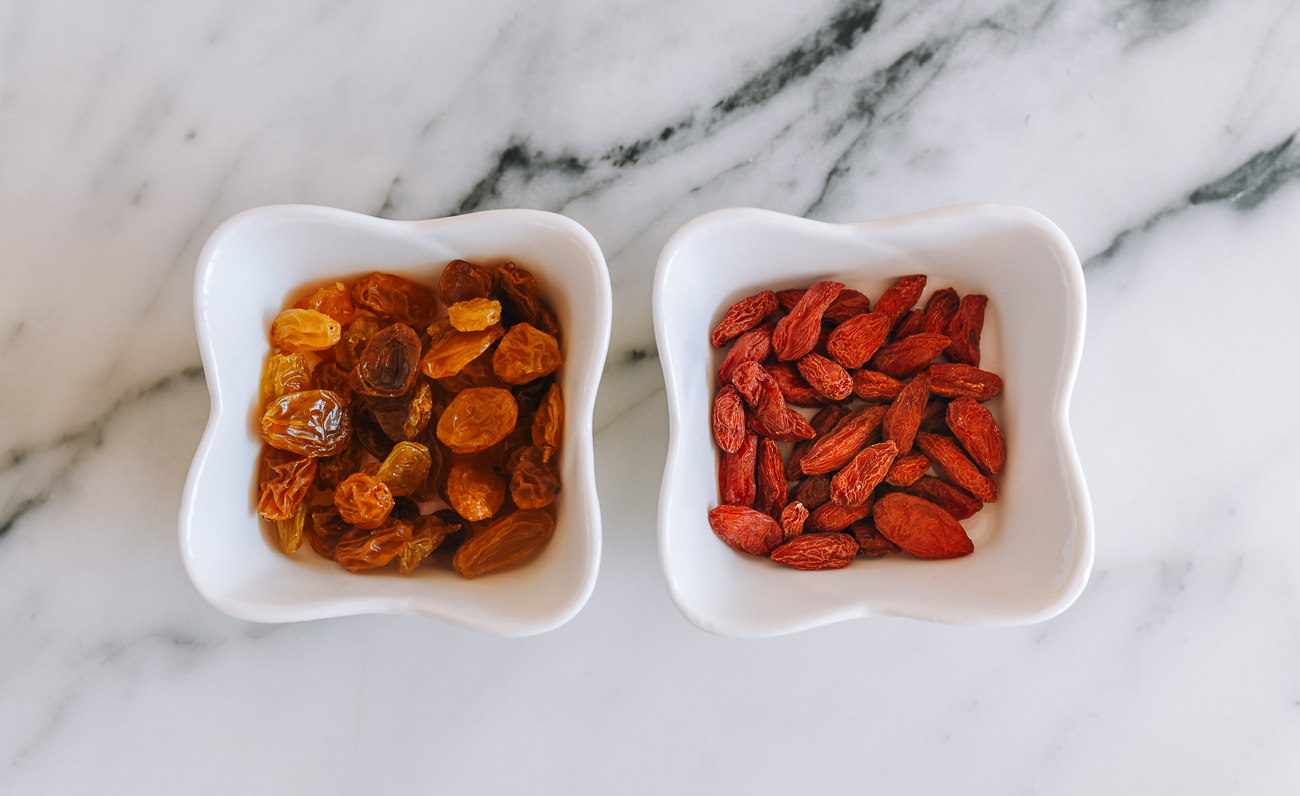
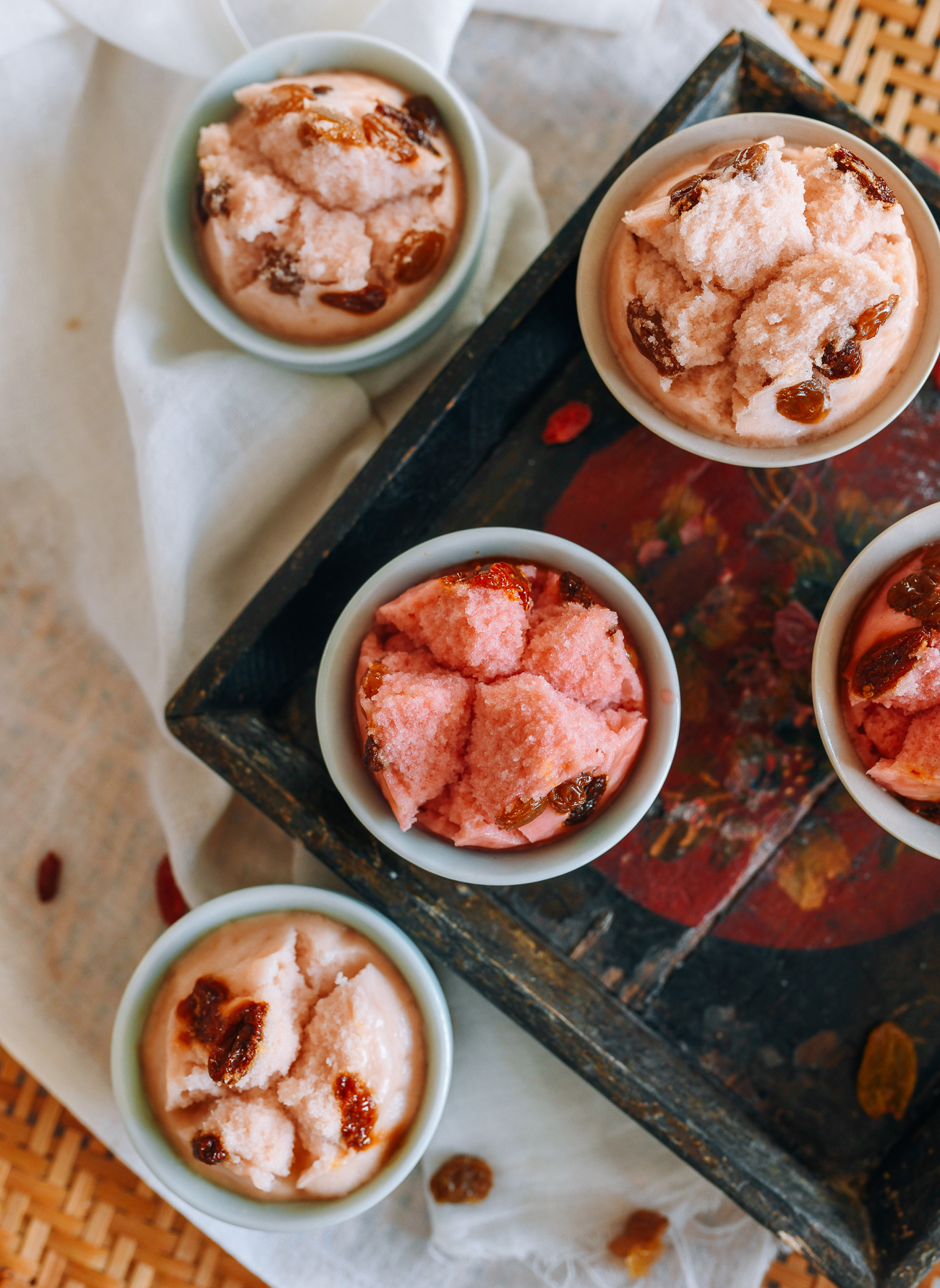
We also add dried goji berries and raisins, which add sweetness, though these are optional!
No Special Ingredients Needed
Traditional rice fa gao is made with Chinese distiller’s yeast for fermentation, and it’s a multi-day process. Moreover, Chinese distiller’s yeast can be hard to find in many places.
I developed this recipe with regular active dry yeast and some shortcuts to make it achievable for everyone, without any special ingredients.
- I’ve added a small amount of flour and regular yeast to shorten the fermentation time (and these are ingredients you likely already have at home).
- There is baking powder in this recipe, which forces the cake to rise and crack (the signature look of fagao) during the steaming process.
How to Steam Fa Gao
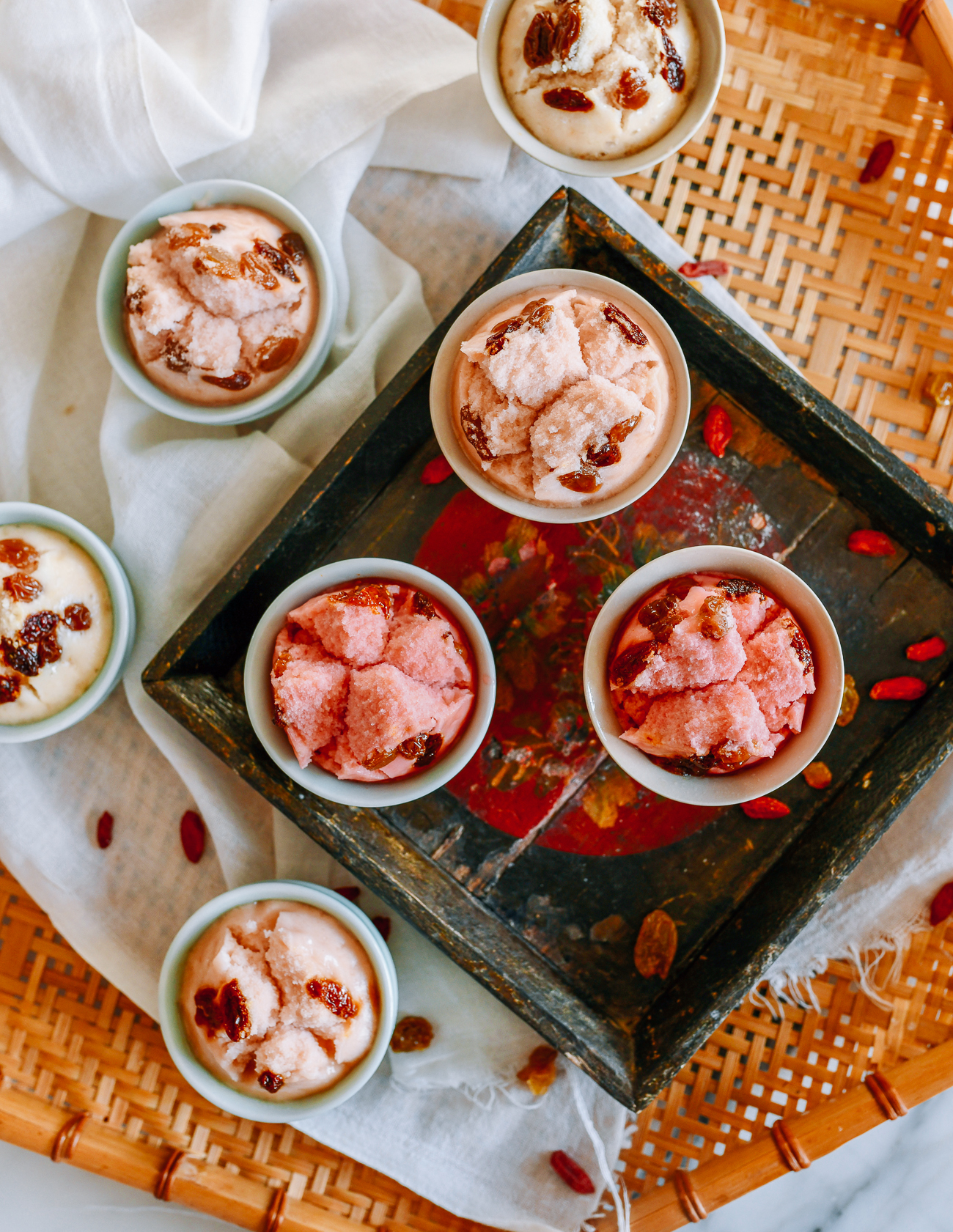
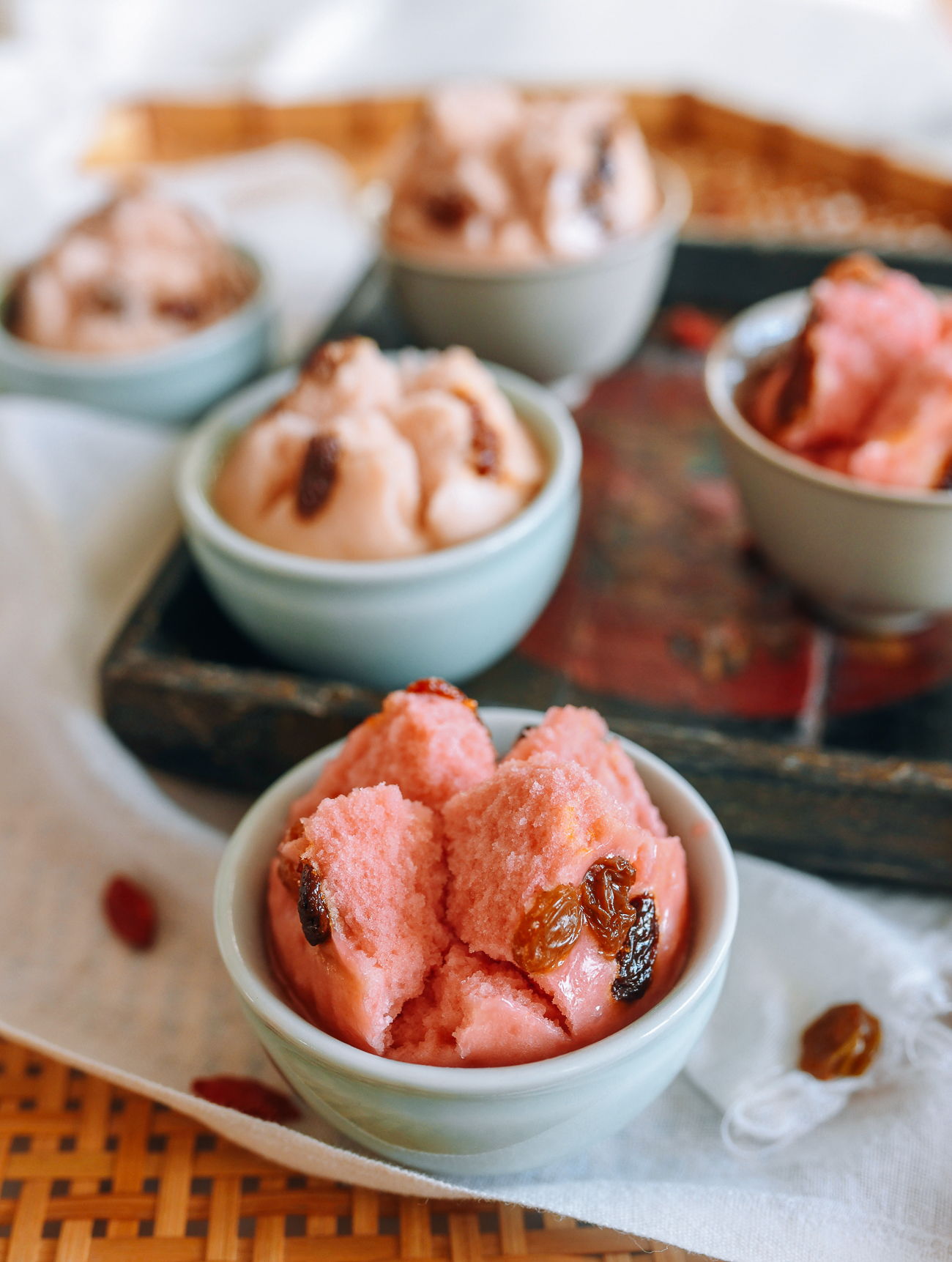
Adding baking powder to the mixture allows the cake to blossom during the steaming process without days of fermentation. Your goal is to get a sizable rise, or dà fā (大发), which is a symbol of greater fortune. The top splits open and resembles a blooming flower or “smiling” cake.
I watched an old couple making fa gao on the food show, A Bite of China. There was great anticipation to see how high their fa gao would rise (as an indication of prosperity for the new year). When they took their fa gao out of the steamer, they remarked, “This year’s fa gao rose nicely!” Let us know how high your fa gao rises!
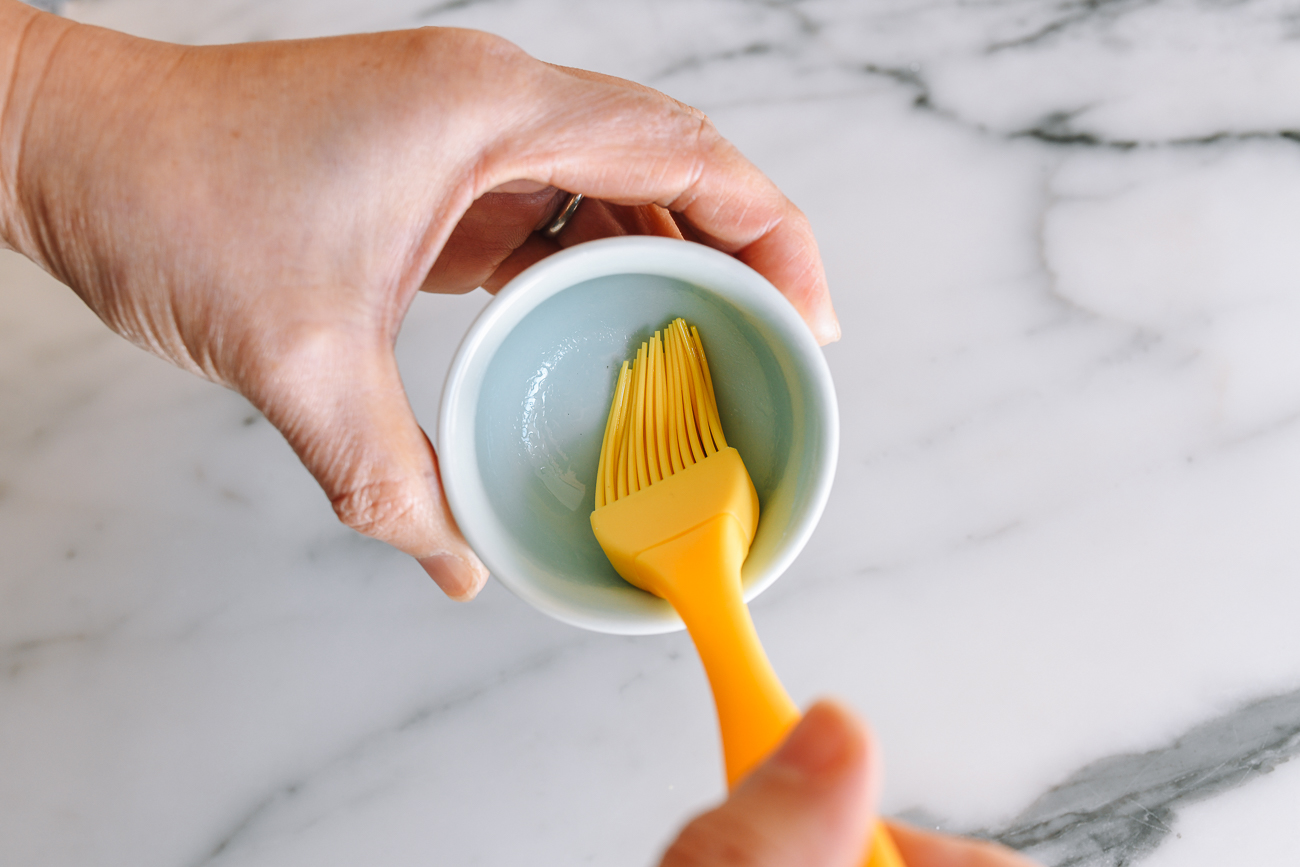
Steaming vessels should be small. They can range from shallow heatproof tea cups to tart tins or nonstick muffin pans (as long as they can sit in your steamer). Be sure to brush them with oil to prevent the filling from sticking. I generally don’t use paper muffin cups because some of the cake ends up sticking to the cup. It’s a little wasteful!
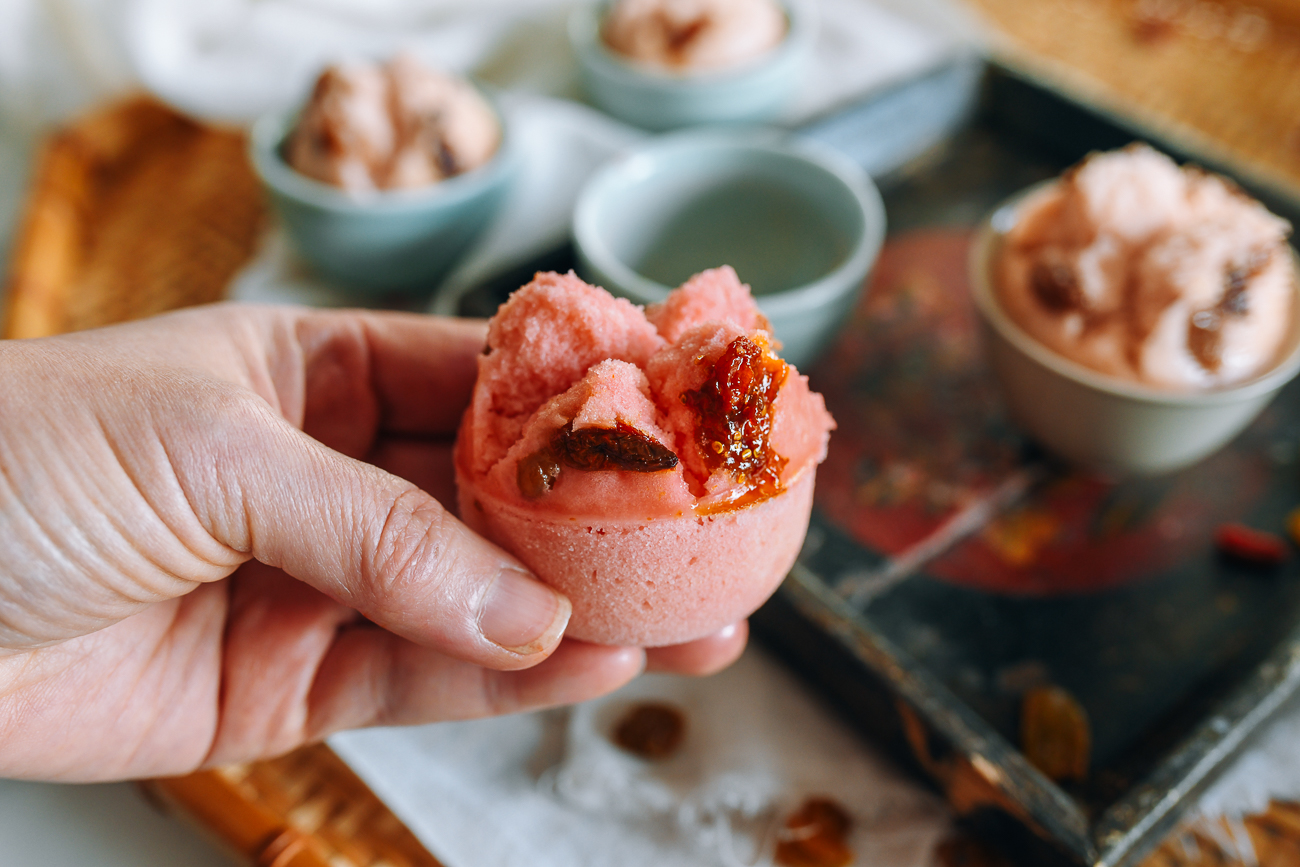
Just don’t overfill the vessels! There has to be enough room for them to rise and keep their shape. Fill tart tins about 80%, muffin cups about 70%, or small tea cups about 80%.
Ok, let’s get to the recipe.
Fa Gao Recipe Instructions
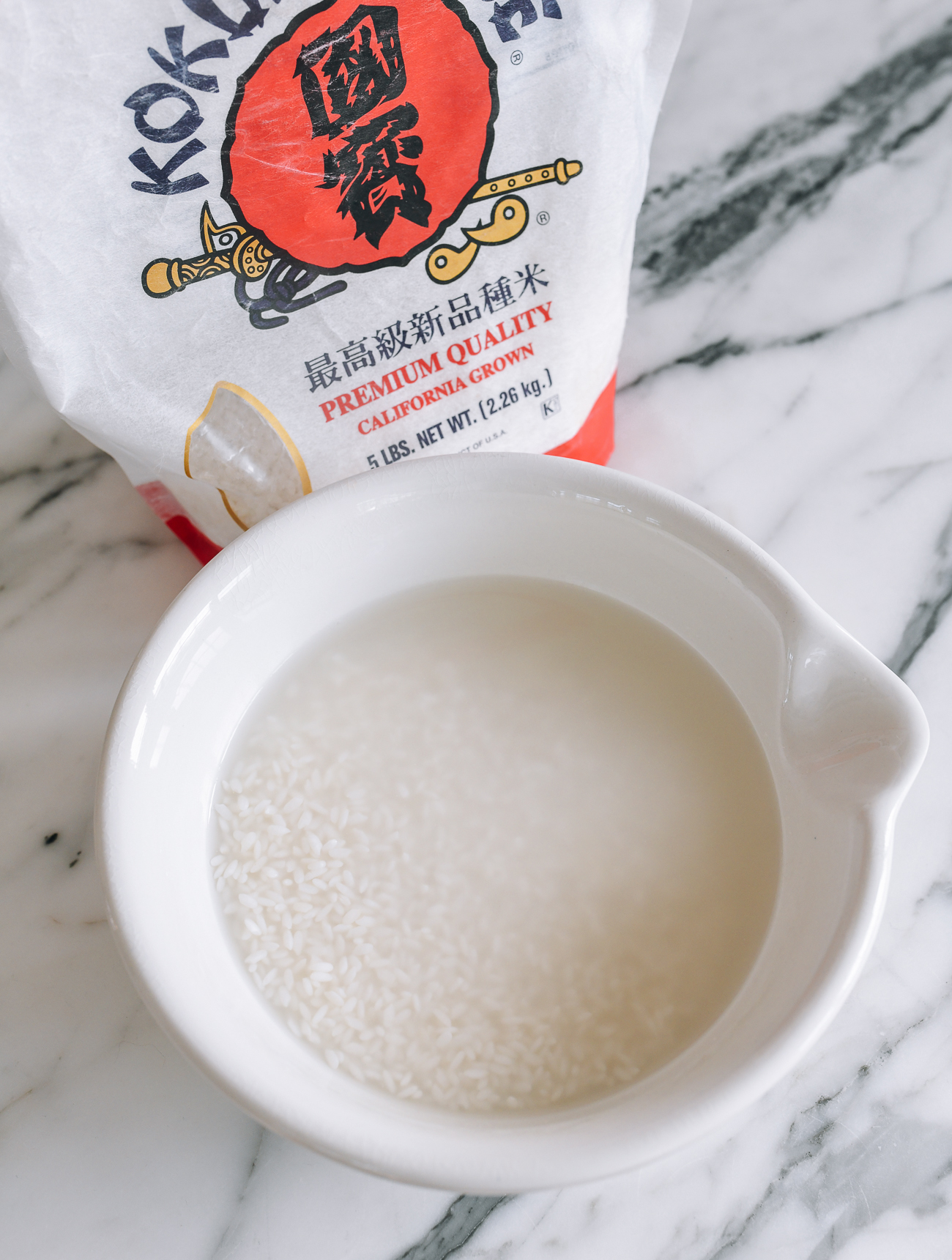
Add the short grain white rice to a medium bowl, and cover it with 2 inches/5cm of water. Cover the bowl with an overturned plate and let the rice soak overnight.
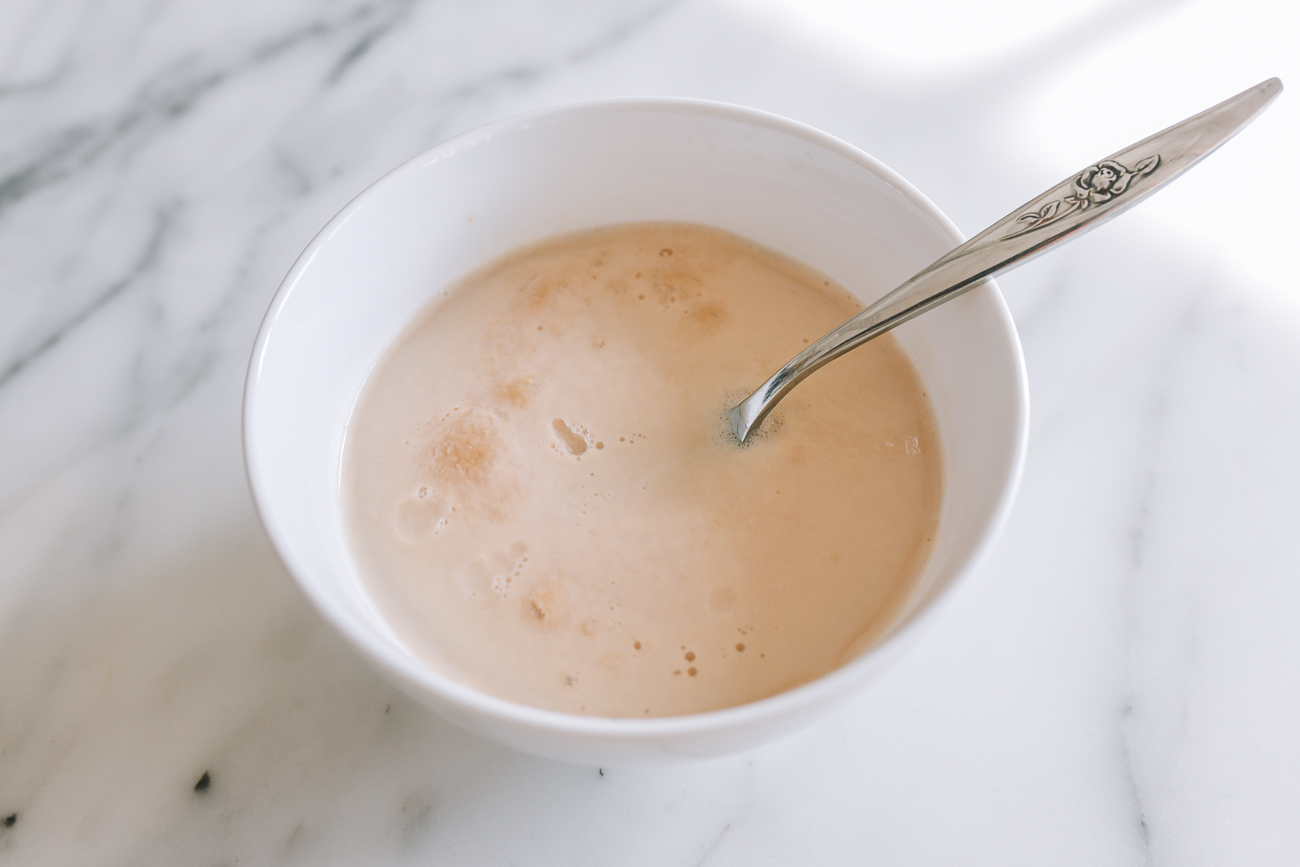
Dissolve yeast and 1 teaspoon sugar in the tepid water, and let it sit for 15 minutes until foamy.
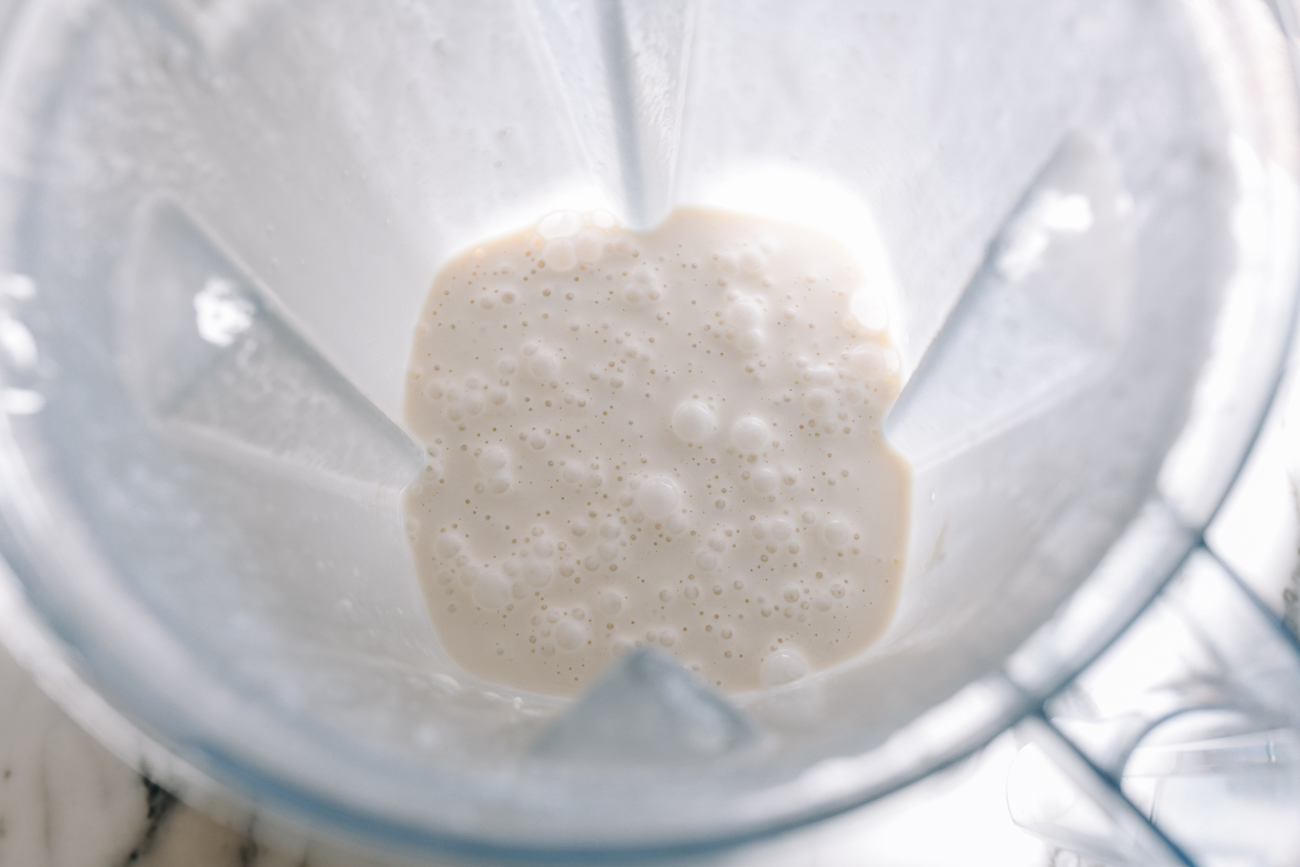
Drain the rice, and add it to a high powered blender along with the yeast mixture. Blend until smooth. Then add in the flour and remaining 1/3 cup sugar. Blend again until well incorporated and mixture resembles thin pancake batter.
Transfer the mixture to a large bowl.
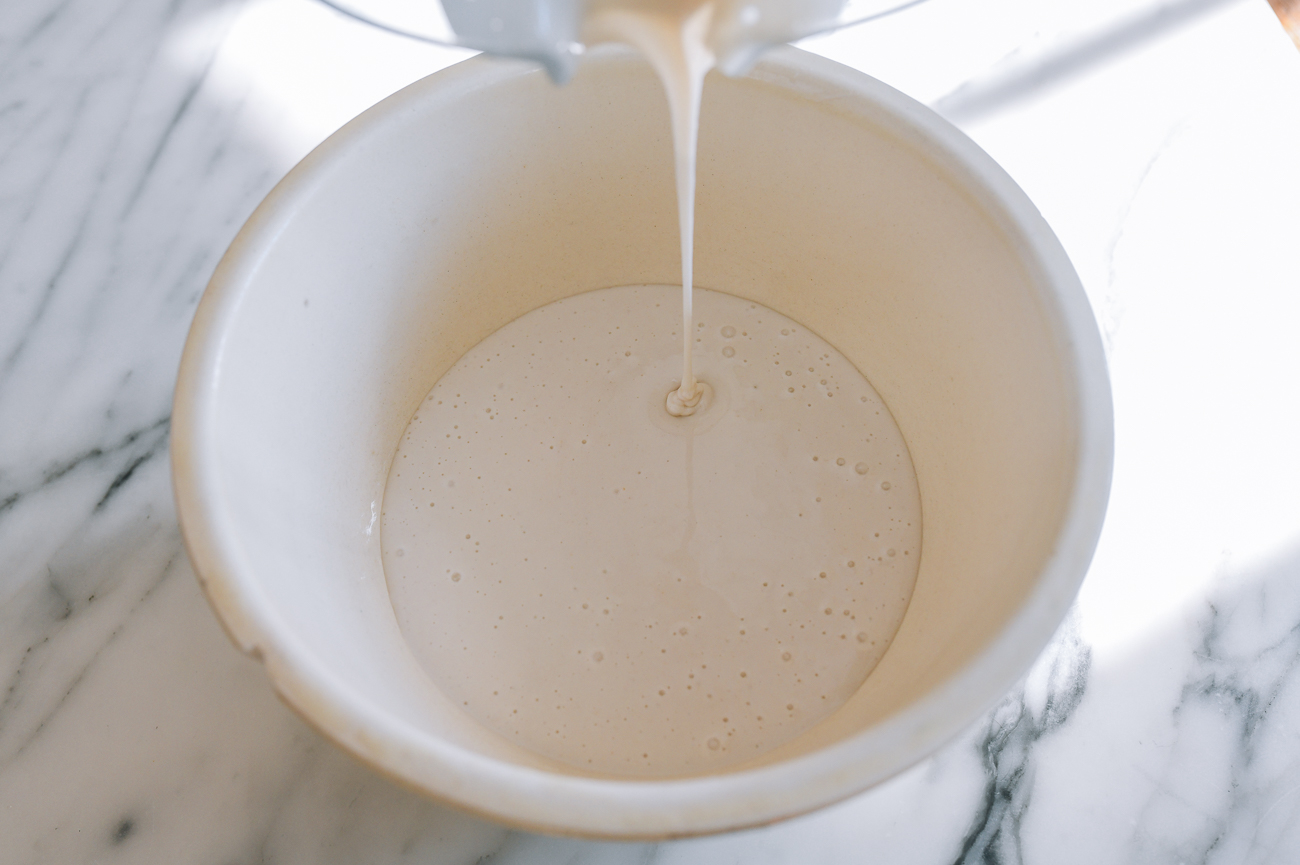
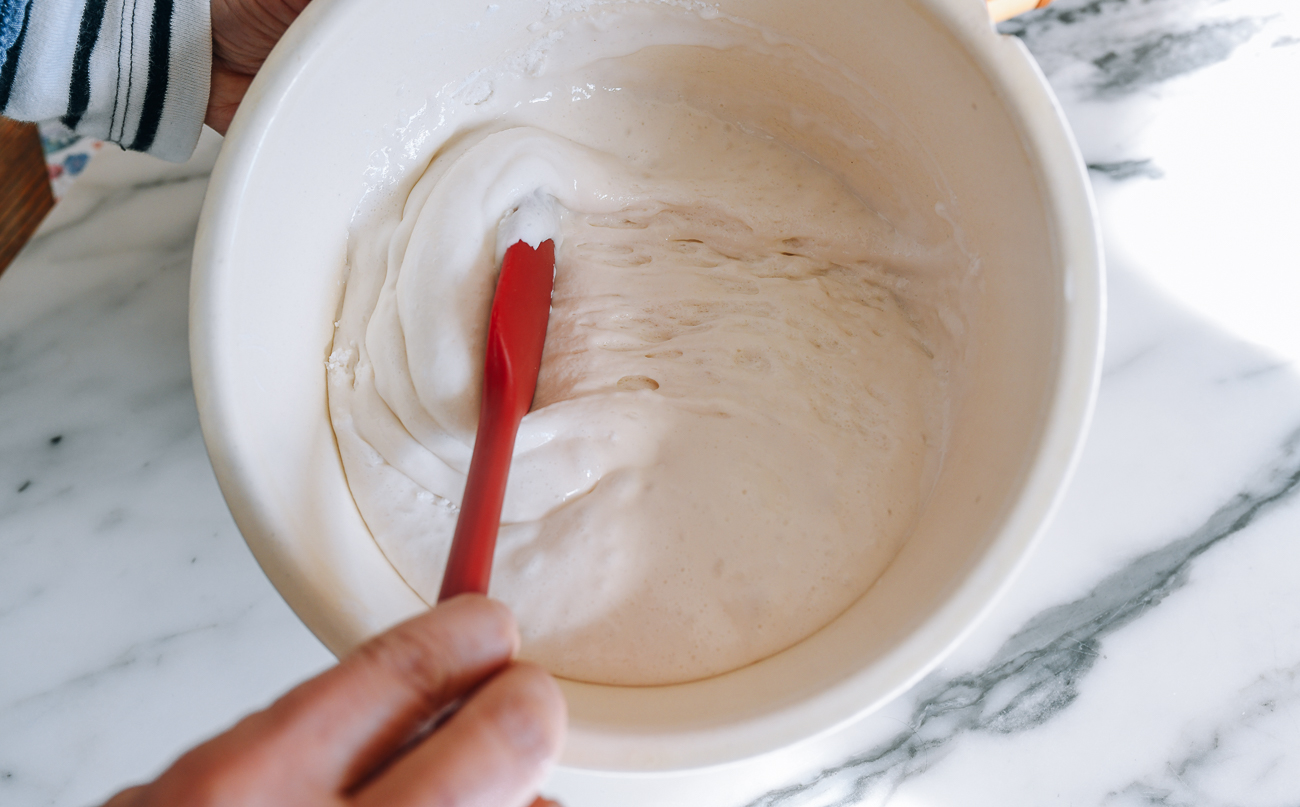
Cover with an overturned plate, and let the mixture ferment in a warm place for about 2 hours, or until it doubles in volume. (I placed mine in a closed microwave with a large mug of boiling water next to it.)
Brush your steaming vessels (small tea cups, tart tins, or a muffin tin) with a light coating of oil.
The rice mixture will look a bit bubbly and puffy.
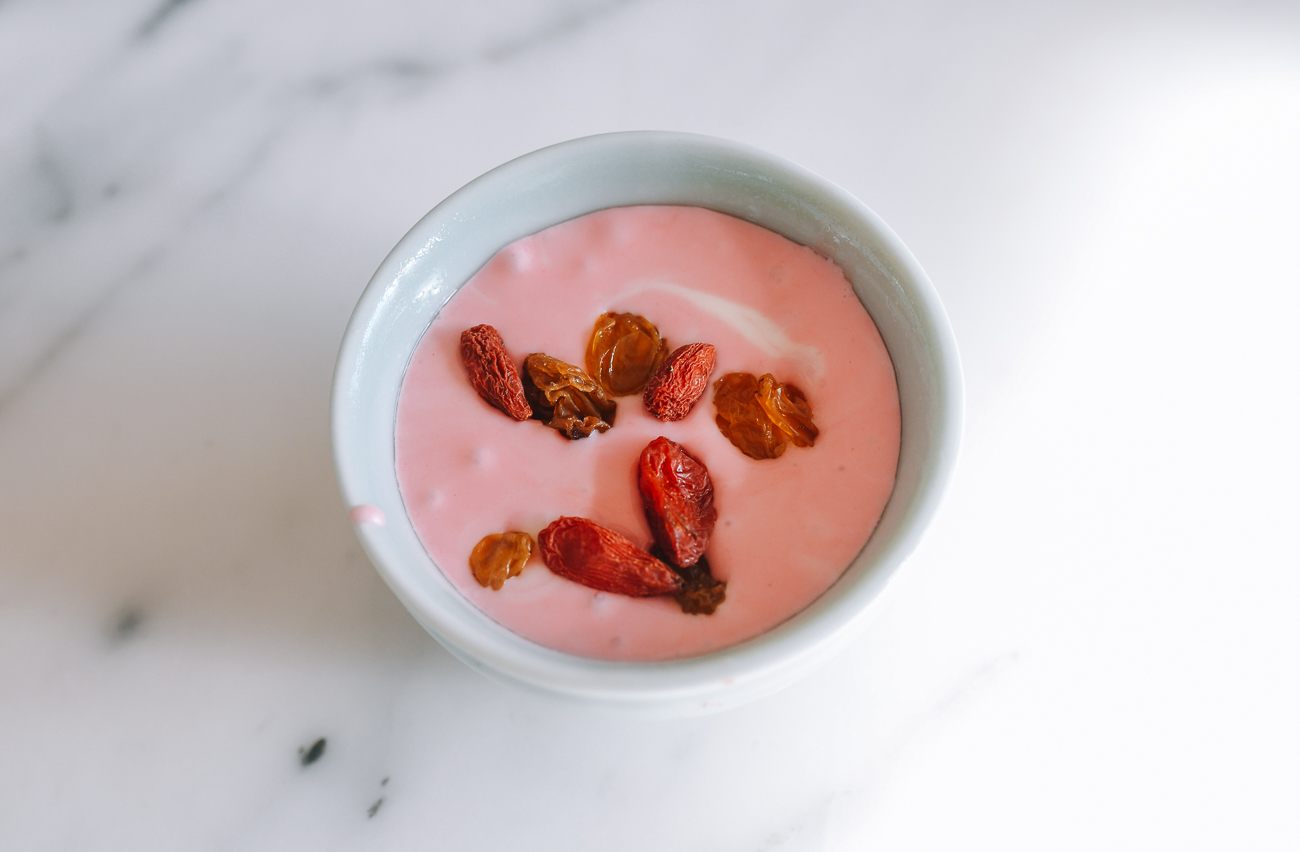
Fold in the salt, baking powder, and red food coloring (if using). Mix well to combine. Fill each oiled steaming vessel about 70% – 80% full, and top with the dried goji berries and raisins (if using). Set aside to rest while you heat up the water in the steamer (this short resting period will help ensure a better rise).
Fill your steamer with at least 3 inches/7.5 cm of water. (See our post on how to set up a steamer.) Heat over medium-high heat until the water is boiling.
When the water in the steamer is at a boil, transfer the cakes to the steamer. Cover, and steam over high heat for 25 minutes. Do not open the lid during steaming. After 25 minutes, turn off the heat and let the cakes rest in the steamer for 5 minutes with the cover still on.
Enjoy the cakes warm. Store any leftover cakes in an airtight container to keep them from drying out. Refrigerate or freeze, and steam to reheat.
Looking for more authentic recipes? Subscribe to our email list and be sure to follow us on Pinterest, Facebook, Instagram, and Youtube!
Recipe

Fa Gao (Chinese Prosperity Cake)
Ingredients
- 1 cup short grain white rice (anything labeled “sushi rice” will work)
- 1 teaspoon active dry yeast
- 1 teaspoon granulated sugar or brown sugar (plus 1/3 cup/70g)
- 1/2 cup tepid water
- 1/4 cup all-purpose flour
- vegetable oil for brushing
- 1/4 teaspoon salt
- 2 teaspoons baking powder
- 2 drops red food coloring (optional)
- goji berries and golden raisins (for topping, optional)
Instructions
- Add the rice to a medium bowl, and cover it with 2 inches/5cm of water. Cover the bowl with an overturned plate and let the rice soak overnight.
- Dissolve yeast and 1 teaspoon sugar in the tepid water, and let it sit for 15 minutes until foamy.
- Drain the rice, and add it to a high-powered blender along with the yeast mixture. Blend until smooth. Then add in the flour and remaining 1/3 cup sugar. Blend again until well incorporated and mixture resembles thin pancake batter. Transfer the mixture to a large bowl. Cover with an overturned plate and let the mixture ferment in a warm place for about 2 hours, or until it doubles in volume. (I placed mine in a closed microwave with a large mug of boiling water next to it.)
- Brush your steaming vessels (small tea cups, tart tins, or a muffin tin) with a light coating of oil. The rice mixture will look a bit bubbly and puffy. Fold in the salt, baking powder, and red food coloring (if using). Mix well to combine. Fill each oiled steaming vessel about 70% – 80% full, and top with the dried goji berries and raisins (if using). Set aside to rest while you heat up the water in the steamer (this short resting period will help ensure a better rise).
- Fill your steamer with at least 3 inches/7.5 cm of water. (See our post on how to set up a steamer.) Heat over medium-high heat until the water is boiling.
- When the water in the steamer is at a full boil, transfer the cakes to the steamer. Cover, and steam over high heat for 25 minutes. Do not open the lid during steaming. After 25 minutes, turn off the heat and let the cakes rest in the steamer for 5 minutes with the cover still on.