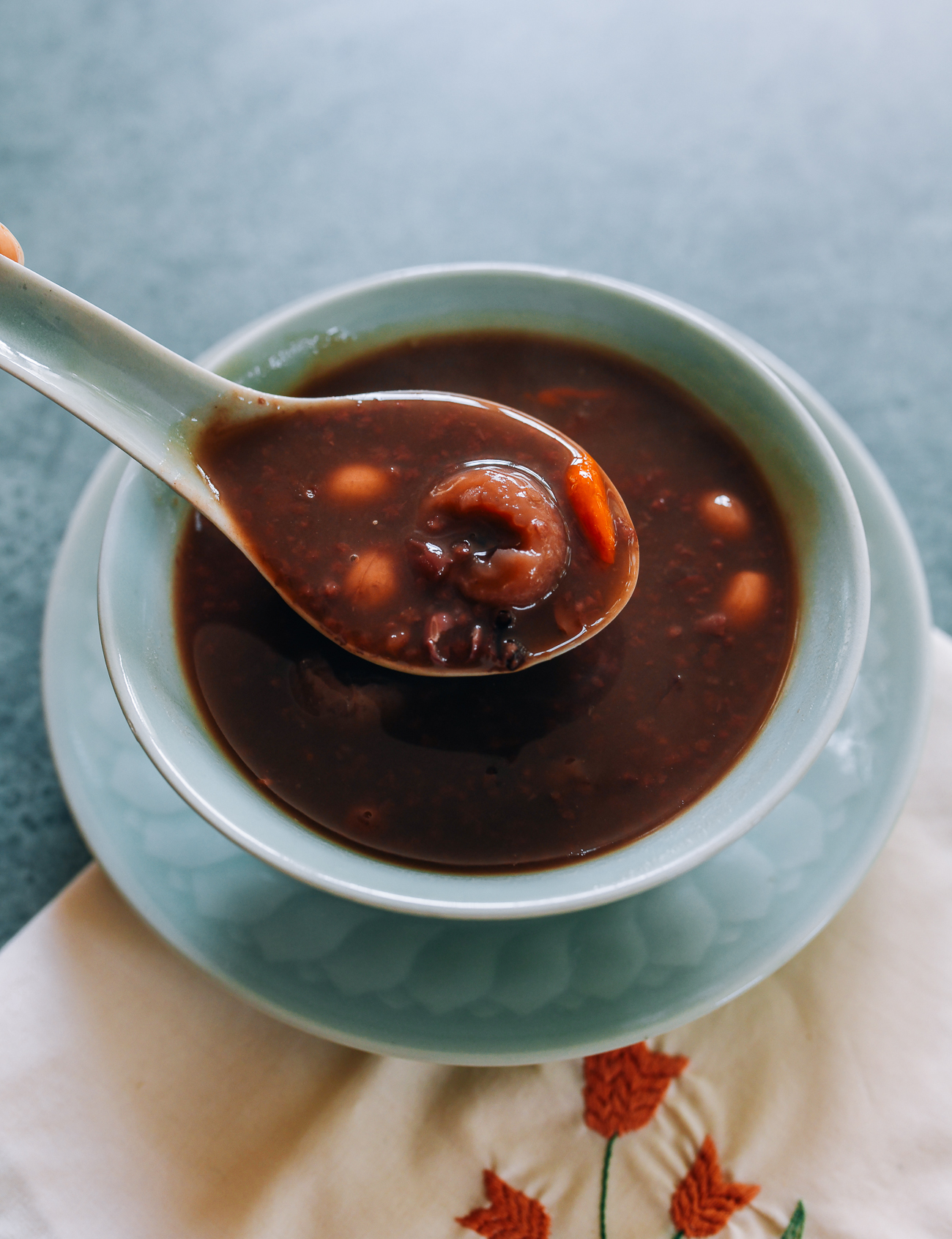
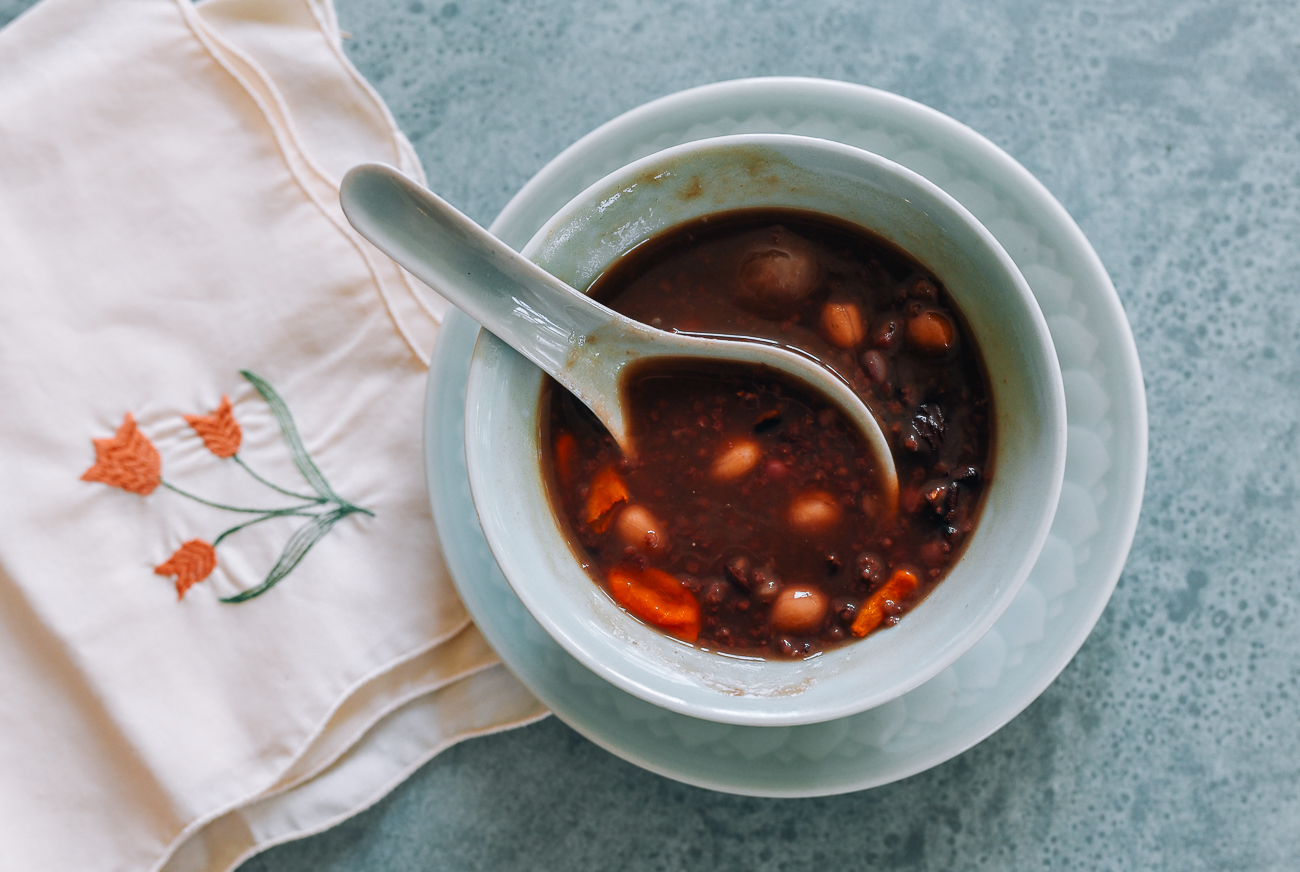
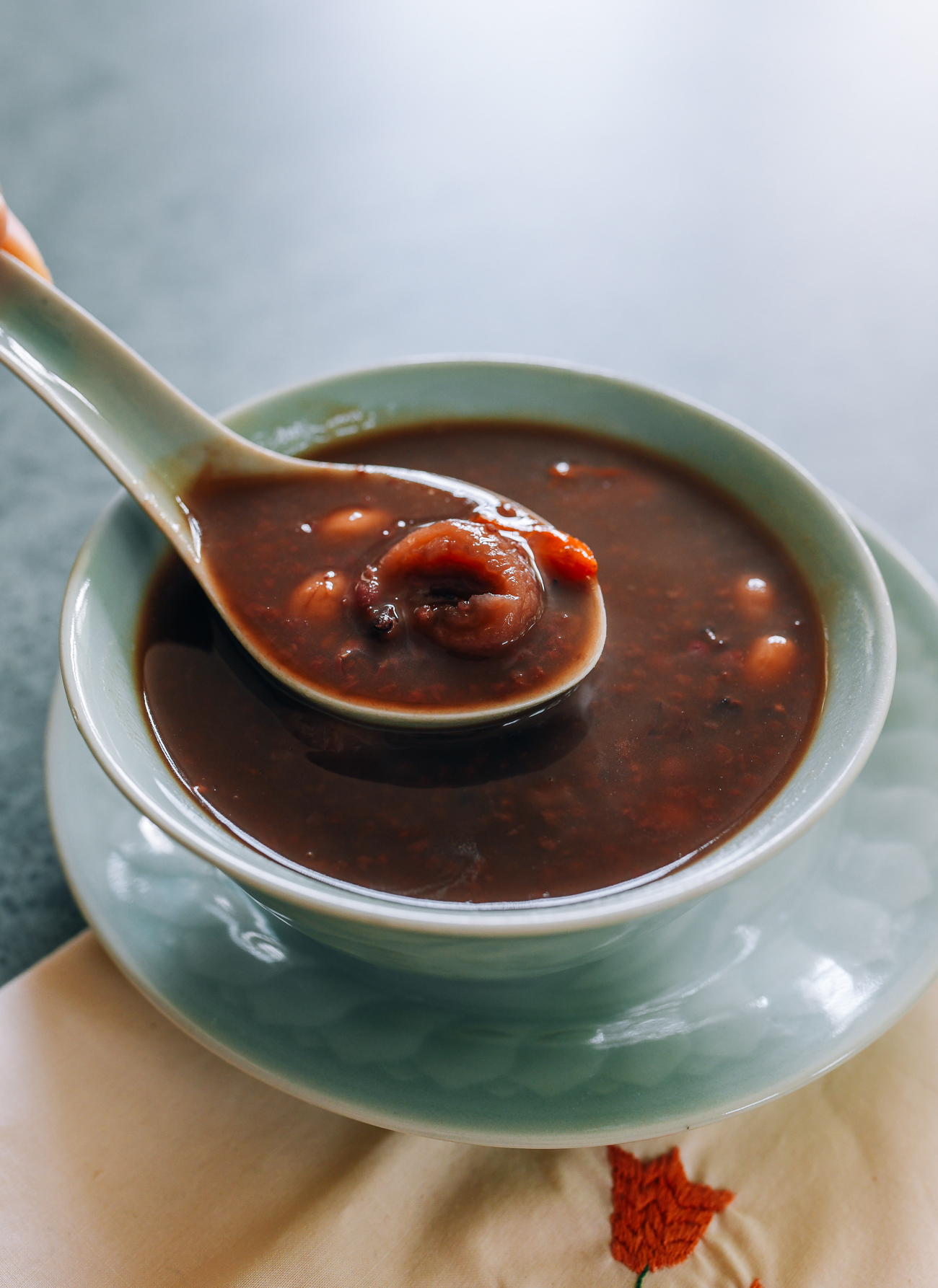
Today we have another recipe in our postpartum series—a lightly sweet postpartum porridge made with 7 nourishing Chinese ingredients. In Chinese, the porridge is called yuè zi zhōu (月子粥) which roughly translates to postpartum confinement porridge, and it’s especially meant for the first month after giving birth!
Give Chinese Dessert Soups a Try!
To be quite honest, unlike some of the other postpartum recipes like pork knuckles with copious amounts of vinegar and ginger (to the point that it tastes medicinal!), this porridge can actually very much be enjoyed by anyone.
It’s a recipe in the genre of sweet Chinese soups, known in Chinese as 糖水 (táng shuǐ in Mandarin or tong sui in Cantonese). For more on these soups, check out our recipes like sweet red bean soup, taro sago/tapioca soup, and snow fungus soup with pears.
While a sweet soup or porridge may not sound like a dessert, its light sweetness makes it a delicious, satisfying, and nutritious end to a meal, or a snack or breakfast. You can prepare it ahead of time and freeze single serving portions.
Benefits of Postpartum Sweet Porridge
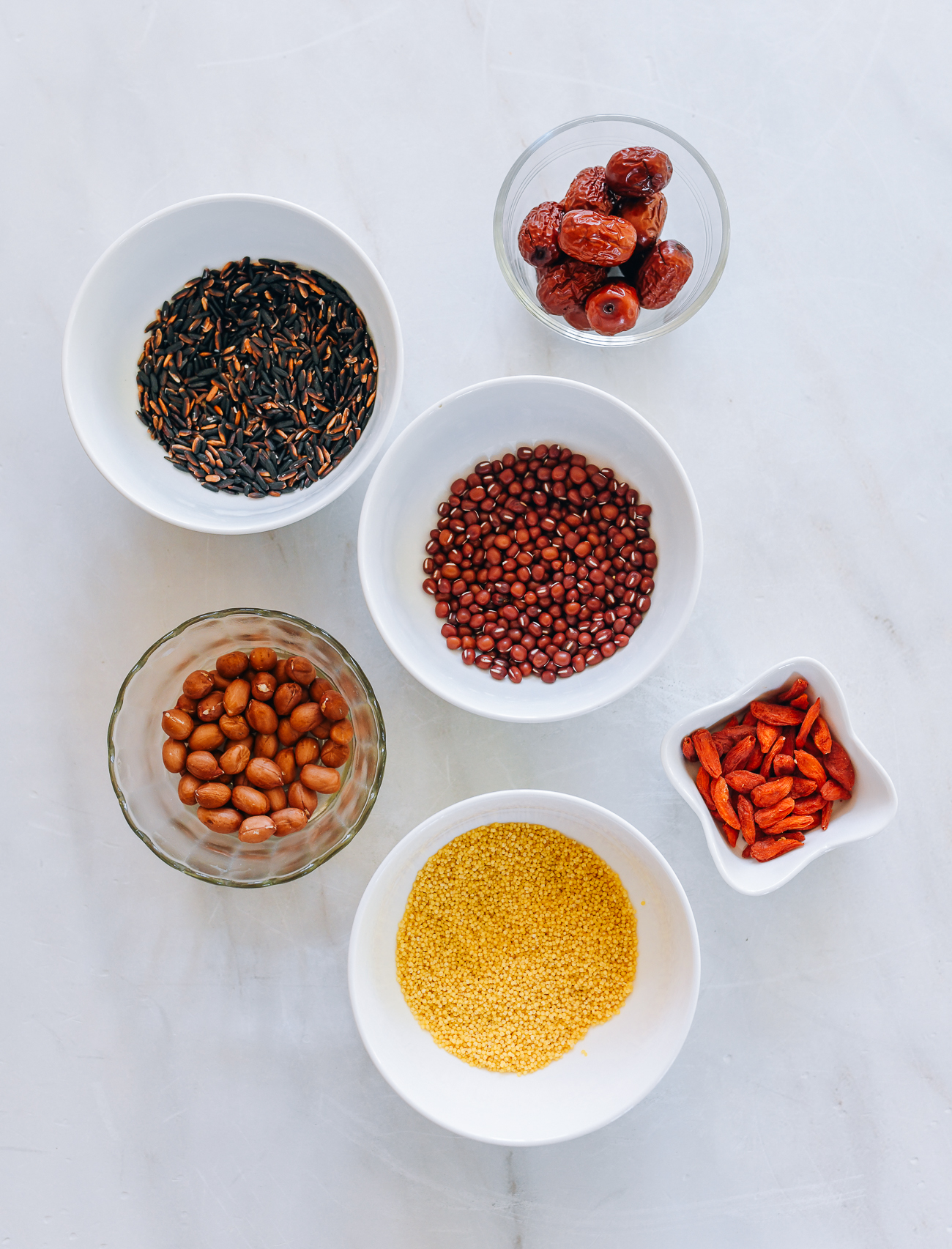
This porridge is made primarily of millet and black rice, with the addition of red adzuki beans, Chinese red dates, dried longan fruits, goji berries, and Chinese dark brown sugar.
These are familiar foods that we’ve used before in recipes on the blog, but let’s talk about the health benefits of each according to Traditional Chinese Medicine, and why they’re thought to be particularly beneficial for anyone who has recently given birth.
Note: This post was written for educational purposes and should not be construed as medical advice! Always consult your doctor before making any significant dietary changes!
- Millet is believed to nourish the spleen, kidney and stomach.
- Black rice is thought to invigorate the kidneys and liver, activate blood circulation, and help rebalance qi (energy) in the body. It has higher iron content than other types of rice, so it is used to help treat anemia, which is common in pregnant and postpartum women.
- Pink skin-on peanuts are used in TCM to nourish the blood. It is also believed to help improve lactation in new mothers.
- Adzuki red beans can help to clear the heart and nourish the mind, strengthen the spleen and kidneys, and also reduce fluid retention. They may also help stimulate milk production, balance hormones, and improve digestion.
- Chinese red dates, aka jujubes are a commonly used health food in Chinese culture for people with a weak spleen and stomach, insufficient qi or blood loss, fatigue, weakness, and insomnia. They’re particularly recommended for postpartum women as well as women who are experiencing their time of the month!
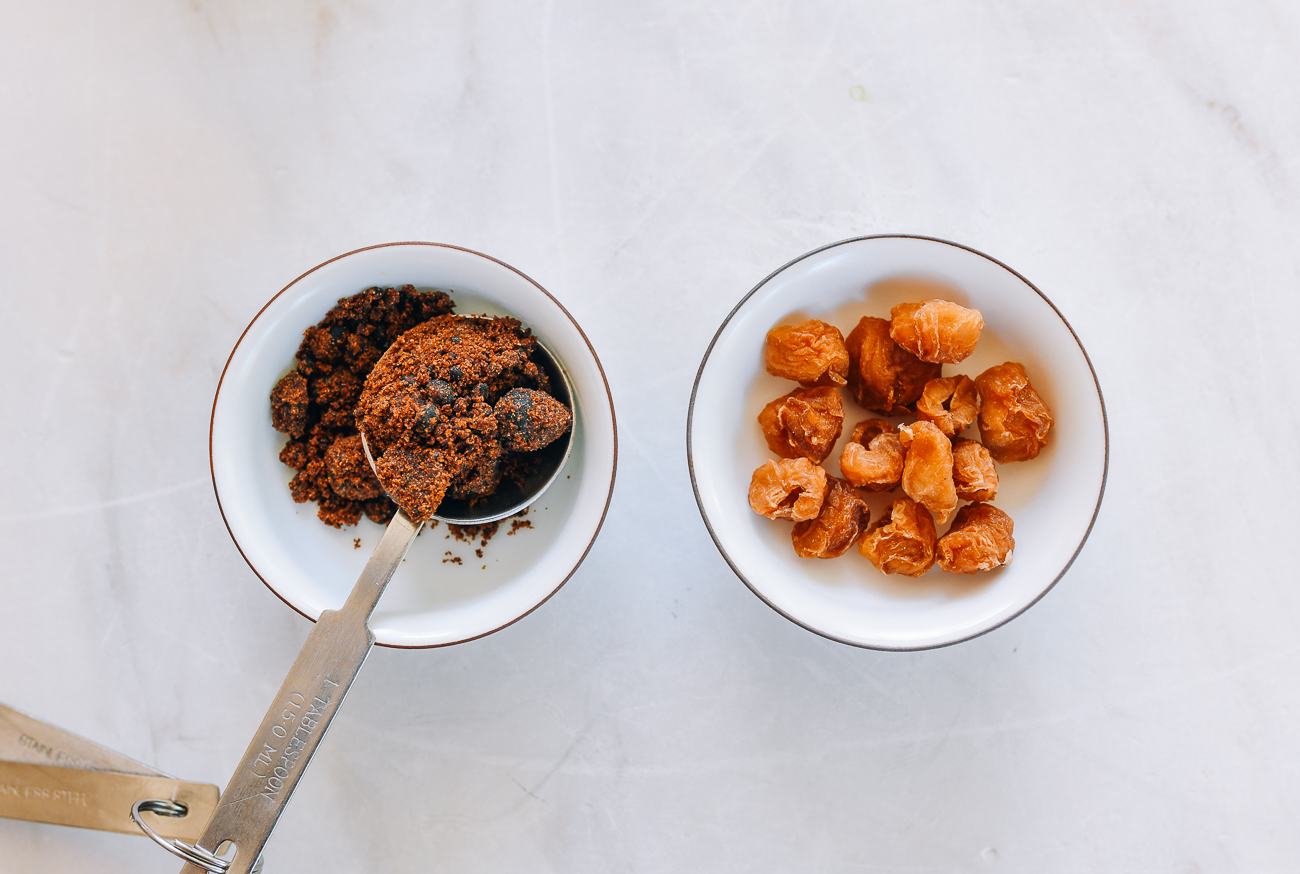
- Longan fruit is believed to benefit the heart and spleen, promote qi, tonify the blood, soothe the nerves, and help treat anemia. Dried longan fruit can also cause constipation, which is why it’s noted as optional. (I know they’re delicious, but try not to eat too much in one sitting!)
- Ginger shows up in many Chinese postpartum foods, because it is believed to have warming properties that help rebalance the body, which post-childbirth, is believed to have an excess of yin (cold) energy.
- Goji berries protect the liver, can reduce fatigue, and enhance immunity. Goji berries are thought to be suitable for people who are in a weakened state.
- Chinese brown sugar can help promote blood circulation and replenish bodily deficiencies. Along with millet, it can be used as a tonic for those who suffer from blood loss, weak constitution, and poor appetite. To an American eye, it looks similar to dark brown sugar, but in Chinese it’s called “black sugar.”

TIp!
If you’d like to reduce your consumption of sugar, you can omit or reduce the sweet/glutinous rice and Chinese brown sugar. These ingredients have a thickening effect, but a longer cooking time can also help to thicken the porridge. You can also use the back of a spoon to agitate the grains and break up some of the red beans to release the starch and thicken the porridge that way.
Cooking Tips
Do not stir the pot when making porridge! It sounds surprising, but I learned this technique from a reader and her elders. The grains will stick to the bottom of the pot the more you stir it. I tested it, so you don’t have to!
If you want to make this porridge ahead, I would recommend using our porridge hack—freeze the washed grains and beans to reduce the cooking time by at least half! Read more about this method in our 30-minute multi-grain congee recipe.
Further Reading
You can read more about Chinese ingredients in our ingredients glossary:
Also read more about Chinese confinement and the postpartum dietary guidelines below:
Check out our full list of Chinese postpartum recipes here!
Recipe Instructions
Rinse the millet, black rice/black glutinous rice, peanuts, and red beans clean to wash away any dirt or dust. Transfer everything to a thick-bottomed soup pot along with 6-8 cups of water. Soak for 1-2 hours, or overnight.
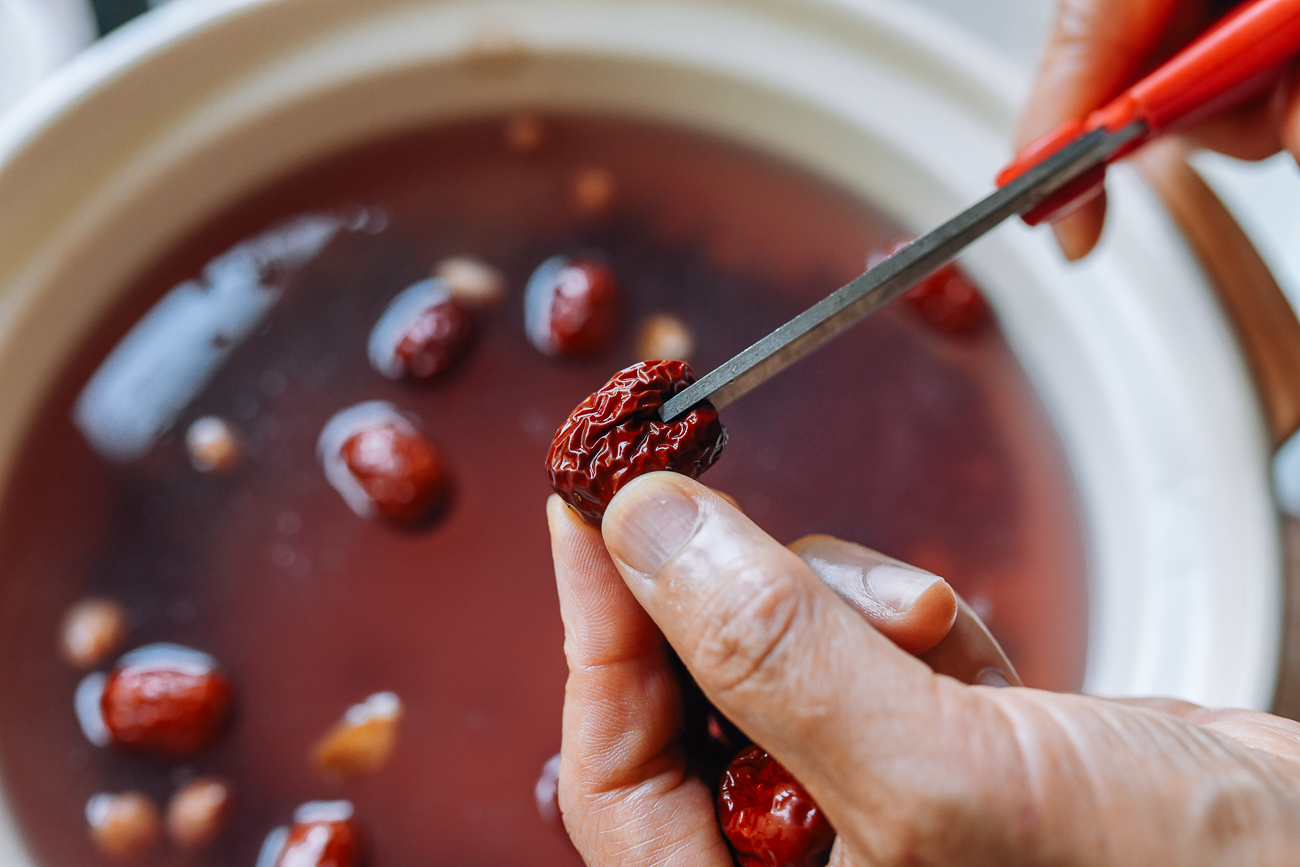
After soaking, cut the red dates open and remove the pit in the middle. You can use your fingers, or cut around the pit with a paring knife. Add the dates, dried longan fruit (if using), and ginger.
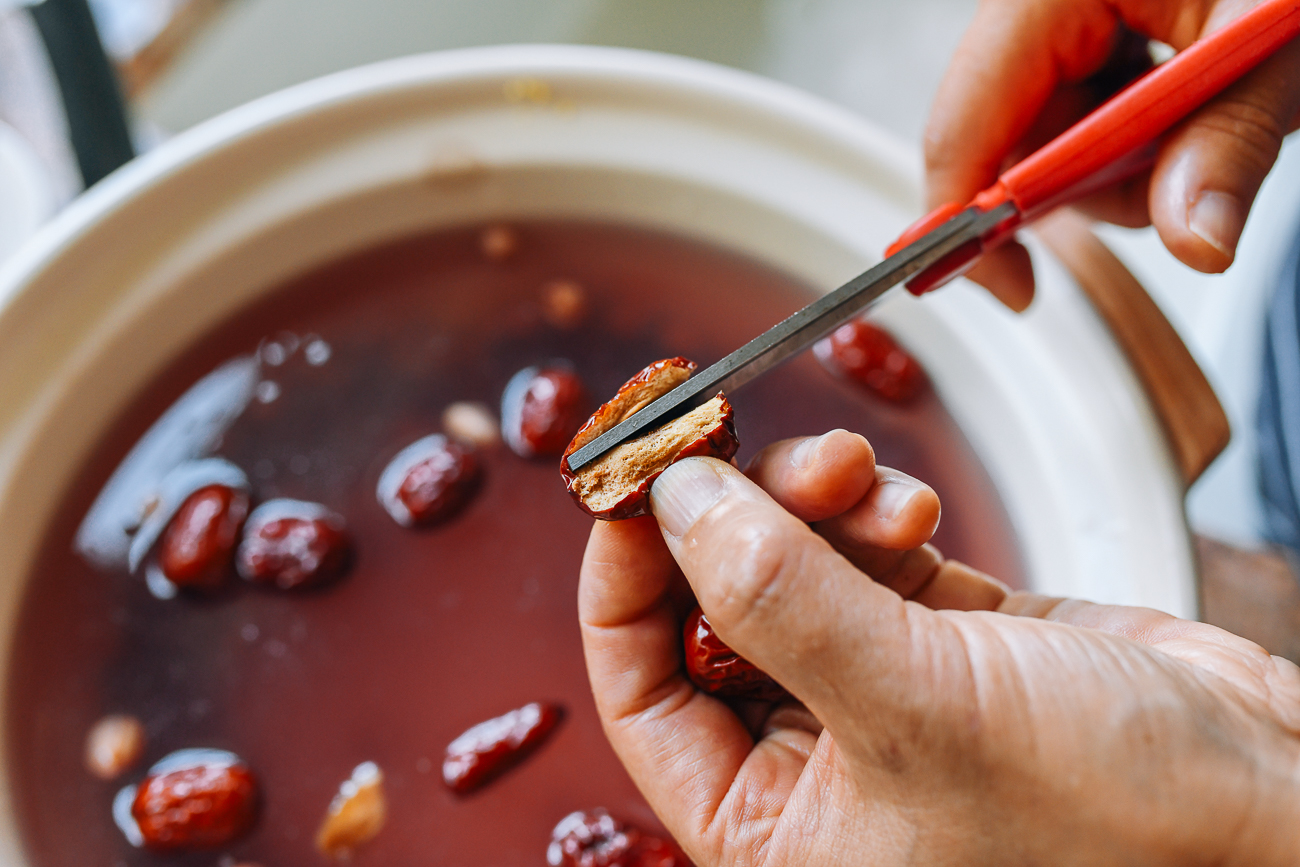
Bring the porridge to a boil, then cover and reduce the heat to low. Simmer for 1 hour. If the soup boils over, slightly angle the lid to release excess steam. Adjust the heat to ensure that the porridge is at a low and slow simmer. Avoid the temptation to stir the porridge, as the grains will stick to the bottom of the pot the more you stir it.
After one hour, turn off the heat, and leave the porridge on the stove for 1 hour, letting it continue cooking in residual heat. I’ve found this method is very effective to save on cooking gas.
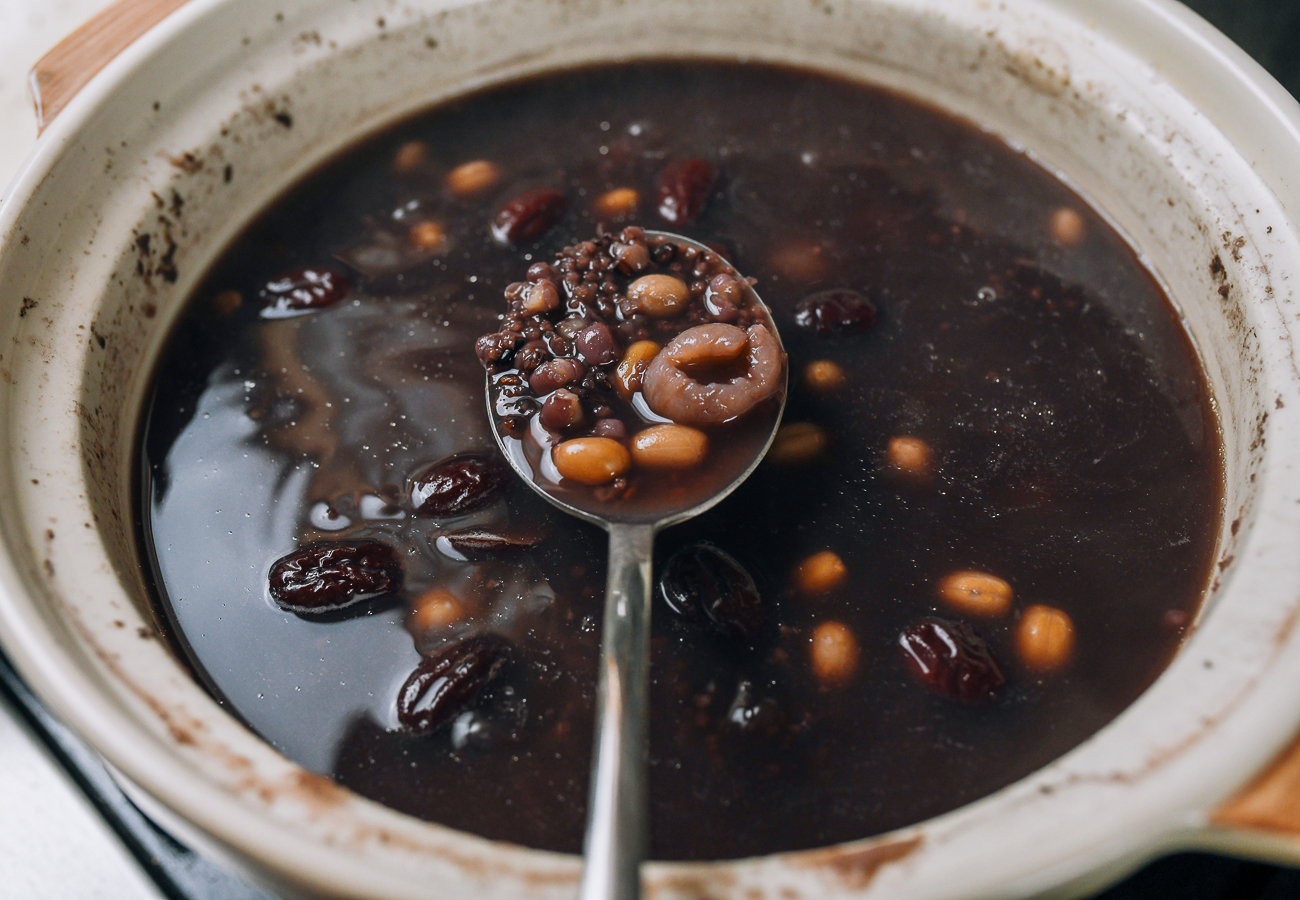
Before serving, add the goji berries and the Chinese brown sugar (if using).
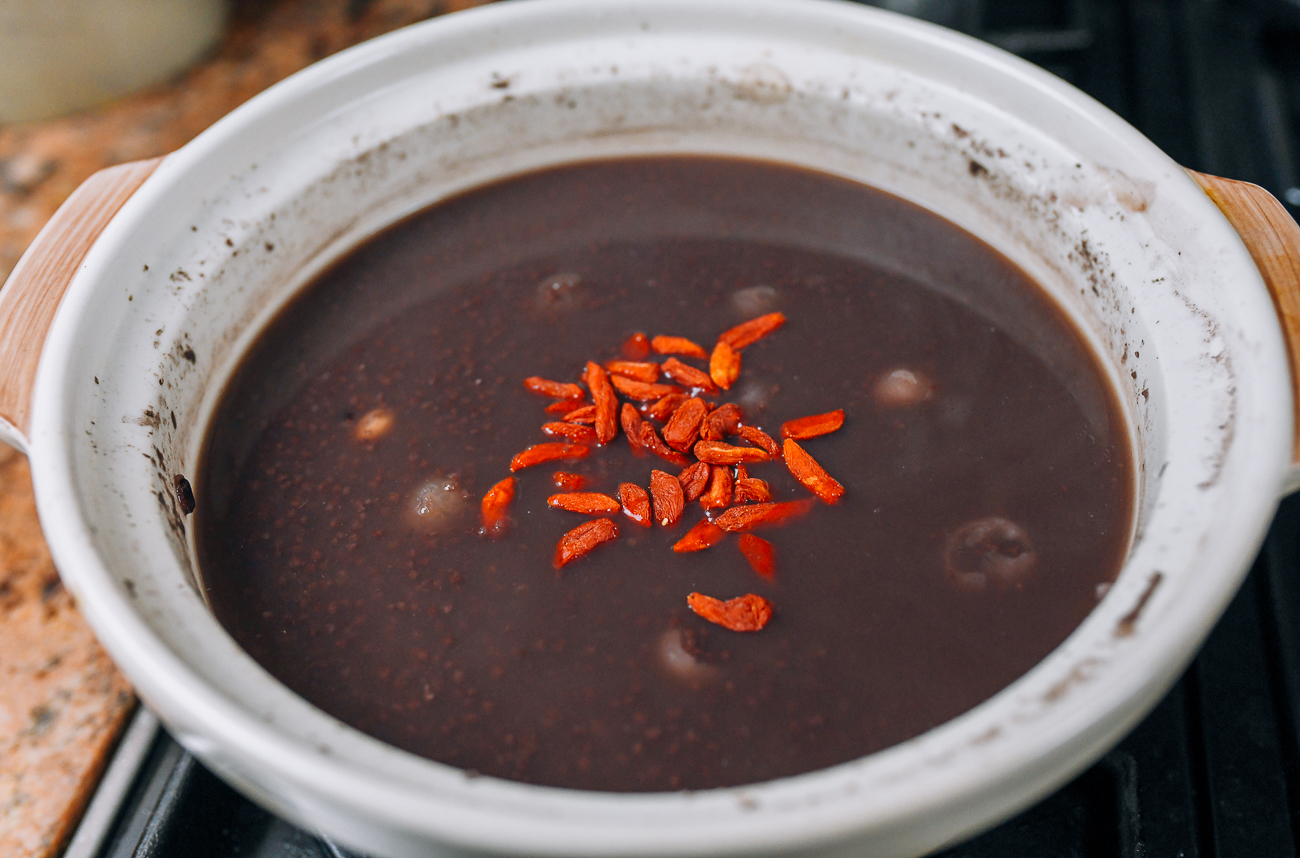
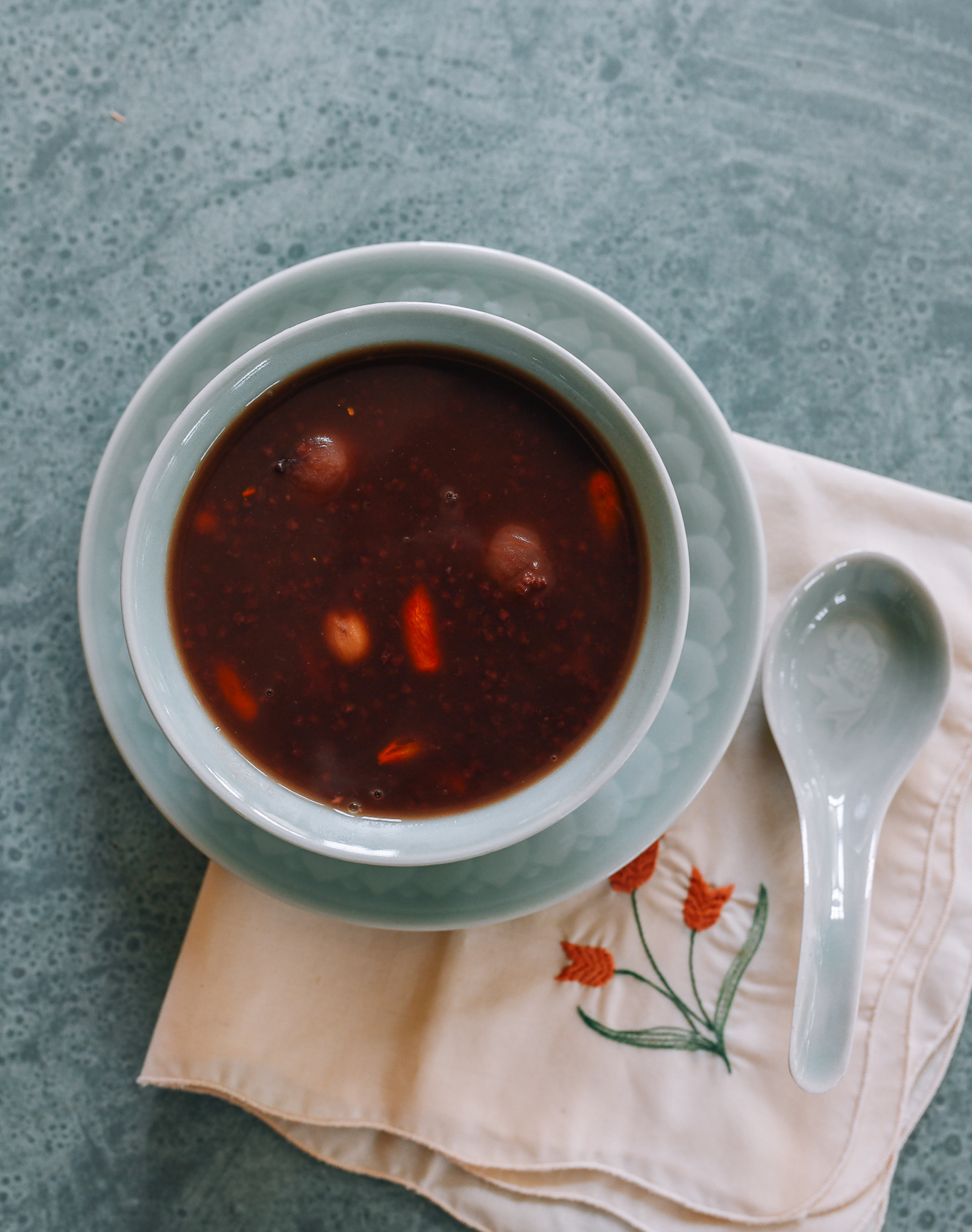
Bring to a boil, and cook until the porridge reaches the ideal thickness, which should take about 10-15 minutes. Serve hot!
Looking for more authentic recipes? Subscribe to our email list and be sure to follow us on Pinterest, Facebook, Instagram, and Youtube!
Recipe

Chinese Postpartum Confinement Porridge
Ingredients
- 1/4 cup millet (小米)
- 1/4 cup black rice (and/or black glutinous rice – 黑米/黑糯米)
- 1/4 cup raw skin-on peanuts (红衣花生)
- 1/4 cup red (adzuki) beans (红豆)
- 6-8 cups water (use less if you prefer a thick porridge, and more if you prefer a thin porridge)
- 12 Chinese red dates (AKA jujubes) (红枣)
- 8 dried longan fruits (optional)
- 2 slices ginger
- 2 tablespoons dried goji berries (枸杞)
- Chinese brown/black sugar (红糖 – to taste, optional; we added 2 tablespoons)
Instructions
- Rinse the millet, black rice/black glutinous rice, peanuts, and red beans clean to wash away any dirt or dust. Transfer everything to a thick-bottomed soup pot along with 6-8 cups of water. Soak for 1-2 hours, or overnight.
- After soaking, cut the red dates open and remove the pit in the middle. You can use your fingers, or cut around the pit with a paring knife. Add the dates, dried longan fruit (if using), and ginger.
- Bring the porridge to a boil, then cover and reduce the heat to low. Simmer for 1 hour. If the soup boils over, slightly angle the lid to release excess steam. Adjust the heat to ensure that the porridge is at a low and slow simmer. Avoid the temptation to stir the porridge, as the grains will stick to the bottom of the pot the more you stir it.
- After one hour, turn off the heat, and leave the porridge on the stove for 1 hour, letting it continue cooking in residual heat.
- Add the goji berries and the Chinese brown sugar (if using). Bring to a boil, and cook until the porridge reaches the ideal thickness, which should take about 10-15 minutes. Serve hot!