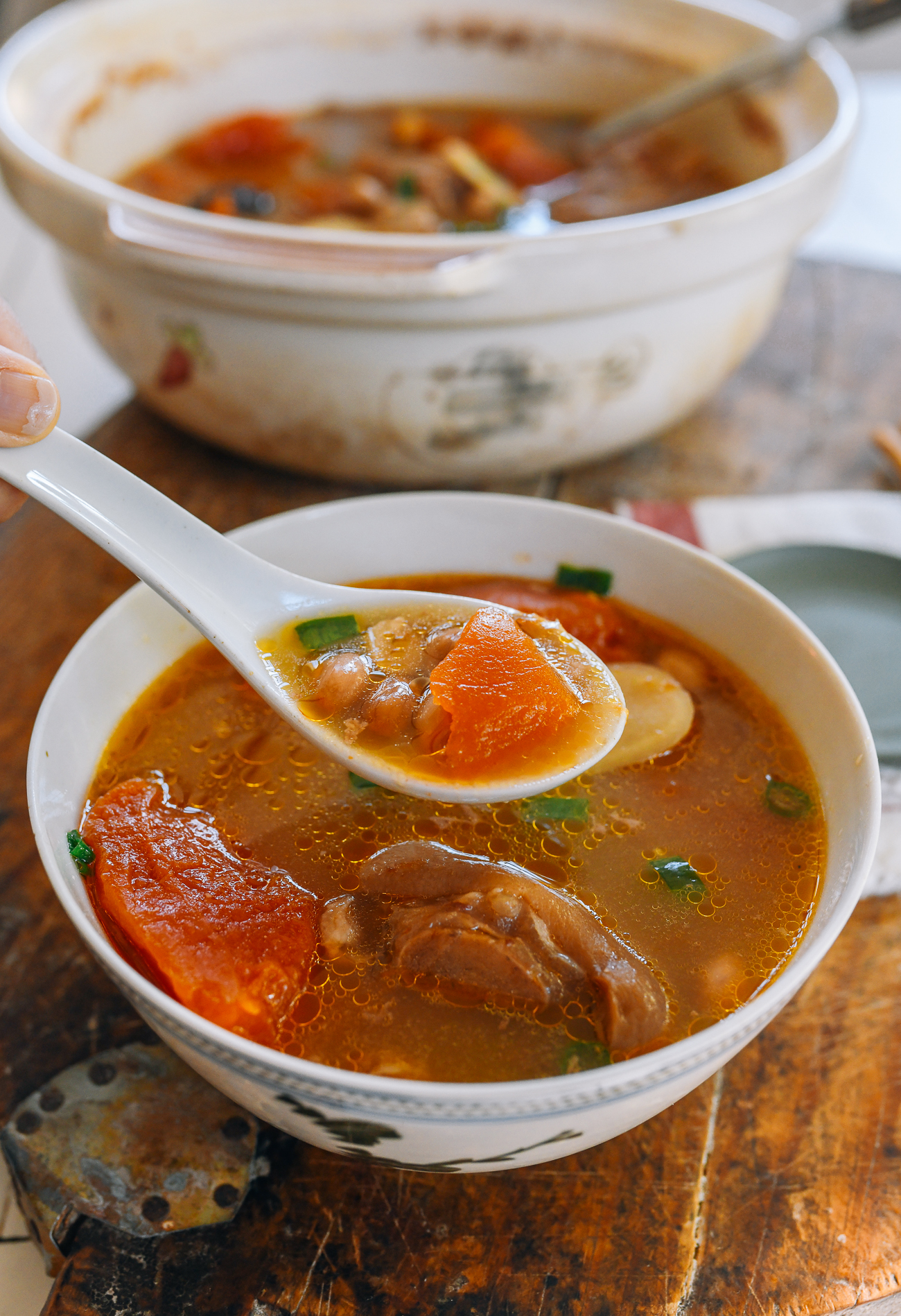
If you read the words pig feet papaya soup and are still reading—thank you for the vote of confidence! You’d never think to put pork trotters and papaya in the same pot, but this soup is a traditional Chinese recipe designed to help new moms with milk production and postpartum recovery.
The powerful combination of pig feet and papaya has loads of nutrients to help lactating parents produce enough milk for their new baby’s needs, while ginger helps warm and replenish the body.
Sarah recently had her first child (a grandson!), and we stocked up her freezer with this soup!
Pig Feet, a Chinese Postpartum Food
It’s a commonly held belief among Chinese people that pig feet speeds up recovery from childbirth, restoring strength and vitality to the body.
According to traditional Chinese medicine, pig feet have the ability to improve Qi, warm the blood, and expel cold and dampness—all things that new mothers may need after the physical exertion of giving birth.
They can replenish the body with protein, iron, and calcium and supposedly even aid lactation! Some Cantonese women also love to eat pig feet, because all the collagen in the dish can improve skin texture.
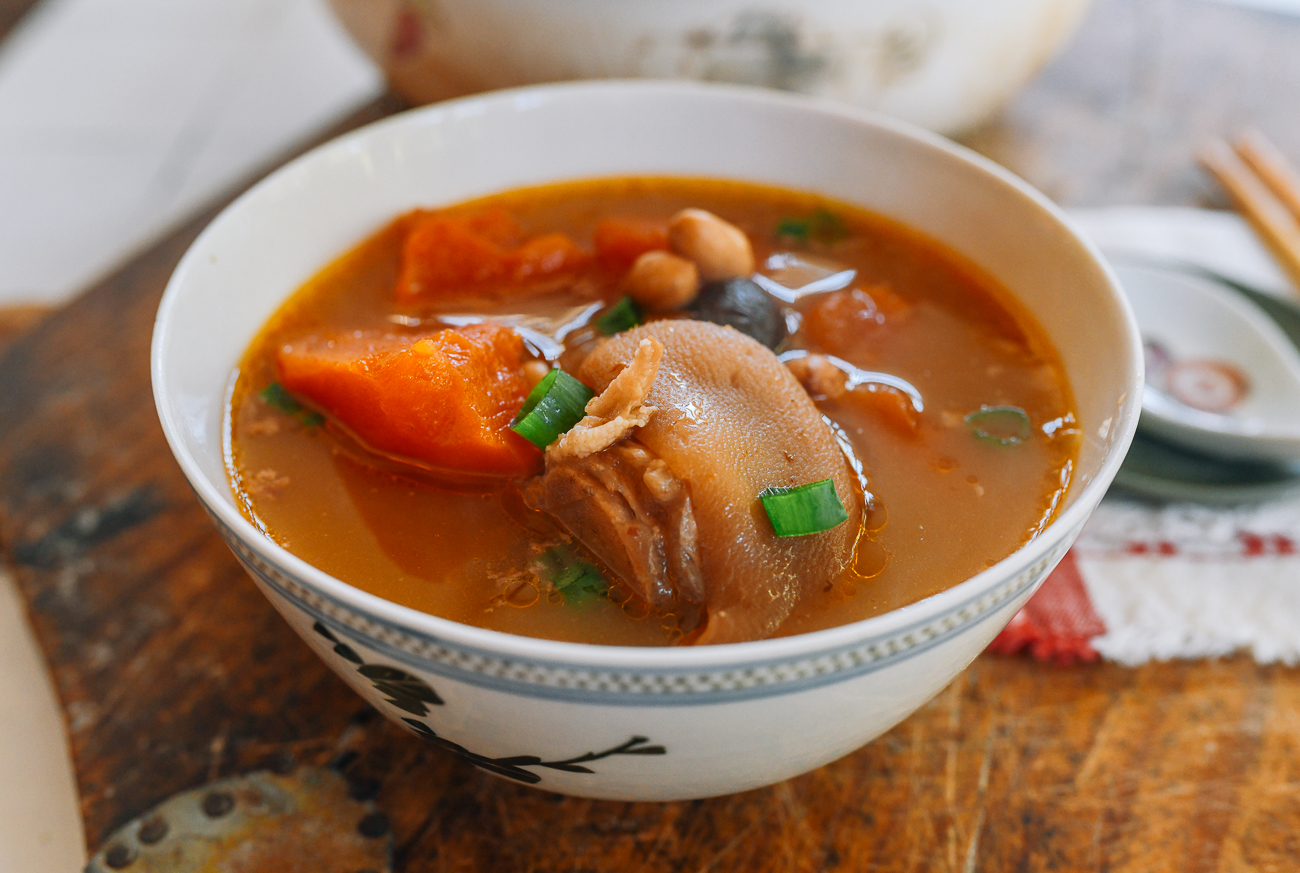
The other ingredients in the soup are also beneficial. Skin-on peanuts help to reduce inflammation and have a restorative effect on the blood. Papaya is high in fiber, which helps to prevent constipation. Pig feet are also typically cooked with a good amount of ginger, which improves circulation (translation for non pregnant folks: rosy cheeks!).
And if you’re skeptical—pig feet can be totally delicious. When they’re cooked right, there’s actually a good amount of meat on them, and the skin turns gelatinous and wonderfully chewy.
It’s a textural experience that is truly tasty and nostalgic. (Korean cooks even debone pig feet and cut them in slices to serve with ssamjang and raw garlic. It’s delicious and another one of my favorite ways to eat them! You can find it pre-cooked at H-Mart.)

When to Eat This Soup
In researching this post, I have read that you should wait 5-7 days after giving birth before enjoying this soup for its lactation benefits. In other words, it’s best to give your body a chance to produce milk at its natural rate before attempting to increase milk production.
Some folks may simply not need it. It depends on the individual’s body and the baby’s appetite. After that, you can drink this soup throughout the duration of your breastfeeding period.
Preparing and Meal-Prepping Postpartum Foods
We have a full guide to Postpartum Diet guidelines for a 30-day Chinese confinement period, as well as an article all about the confinement tradition. In the home stretch of your pregnancy, you and family can prepare these foods and freeze them in individual serving sizes for the confinement period.
Hot soups are an essential part of the confinement diet, and making a variety ahead of time is a huge help. Not only are they nourishing, they make for easy meals when you’re sleep-deprived and tending to the new baby.
Recipe tips!
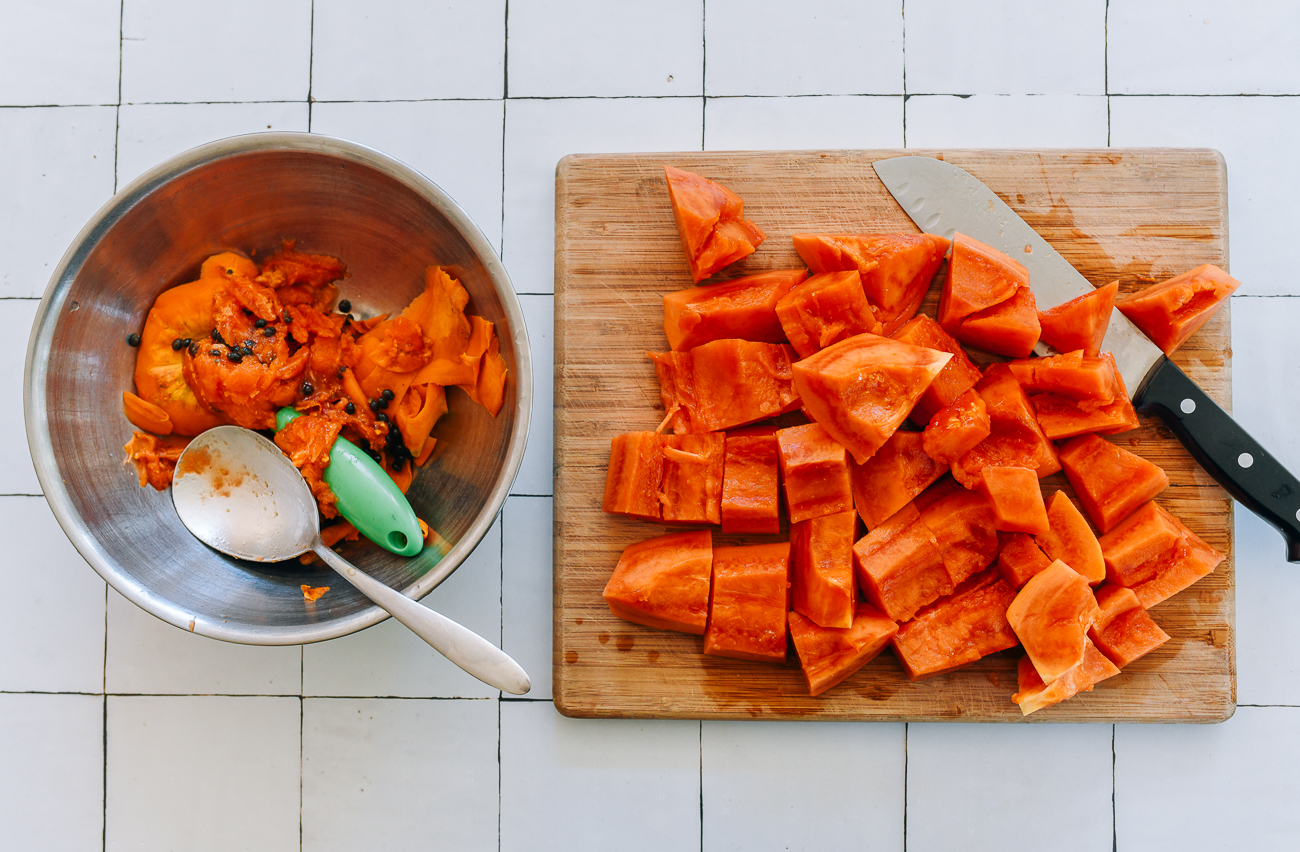
Select your papaya according to your tastes. Very soft and ripe papaya will be very sweet and will make the soup sweeter. When we photographed the recipe, we used a very ripe papaya!
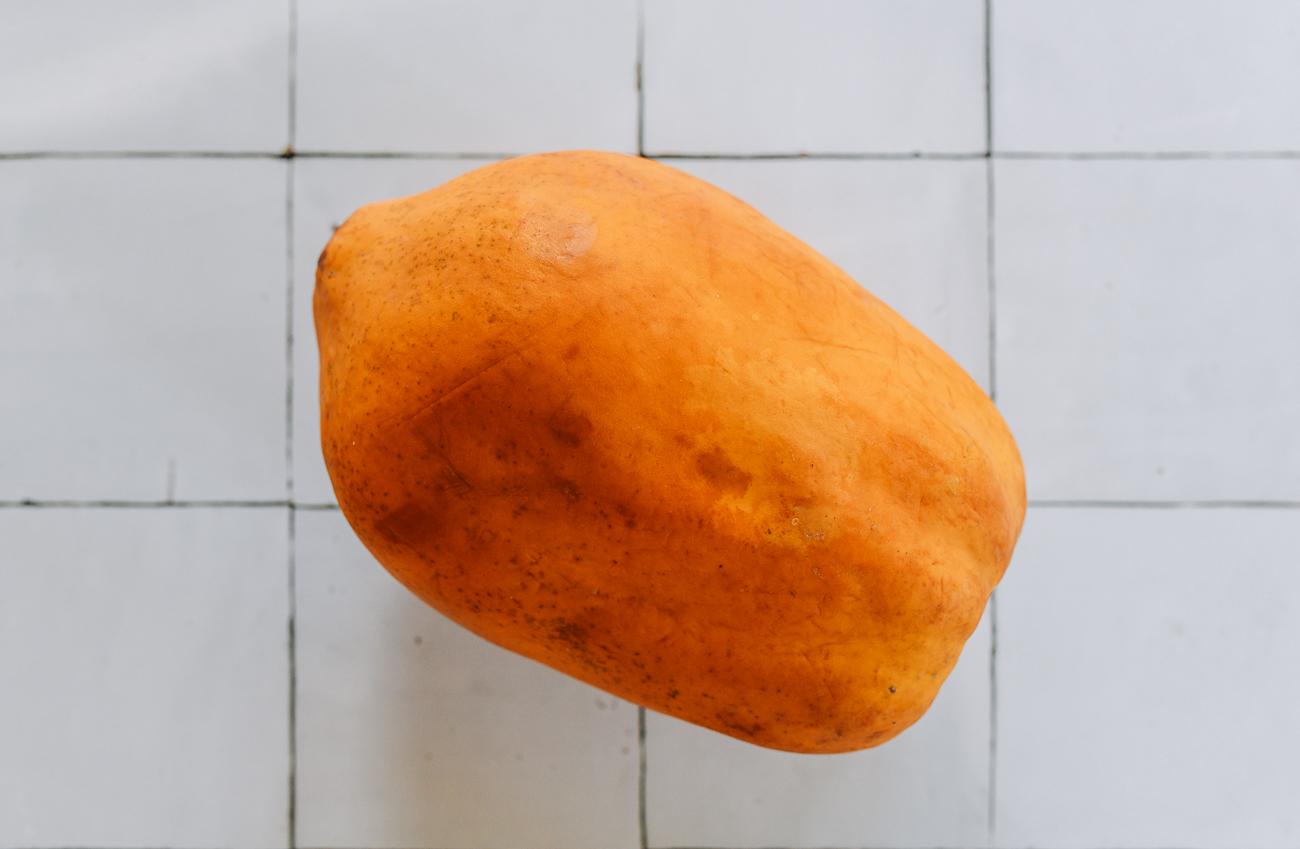
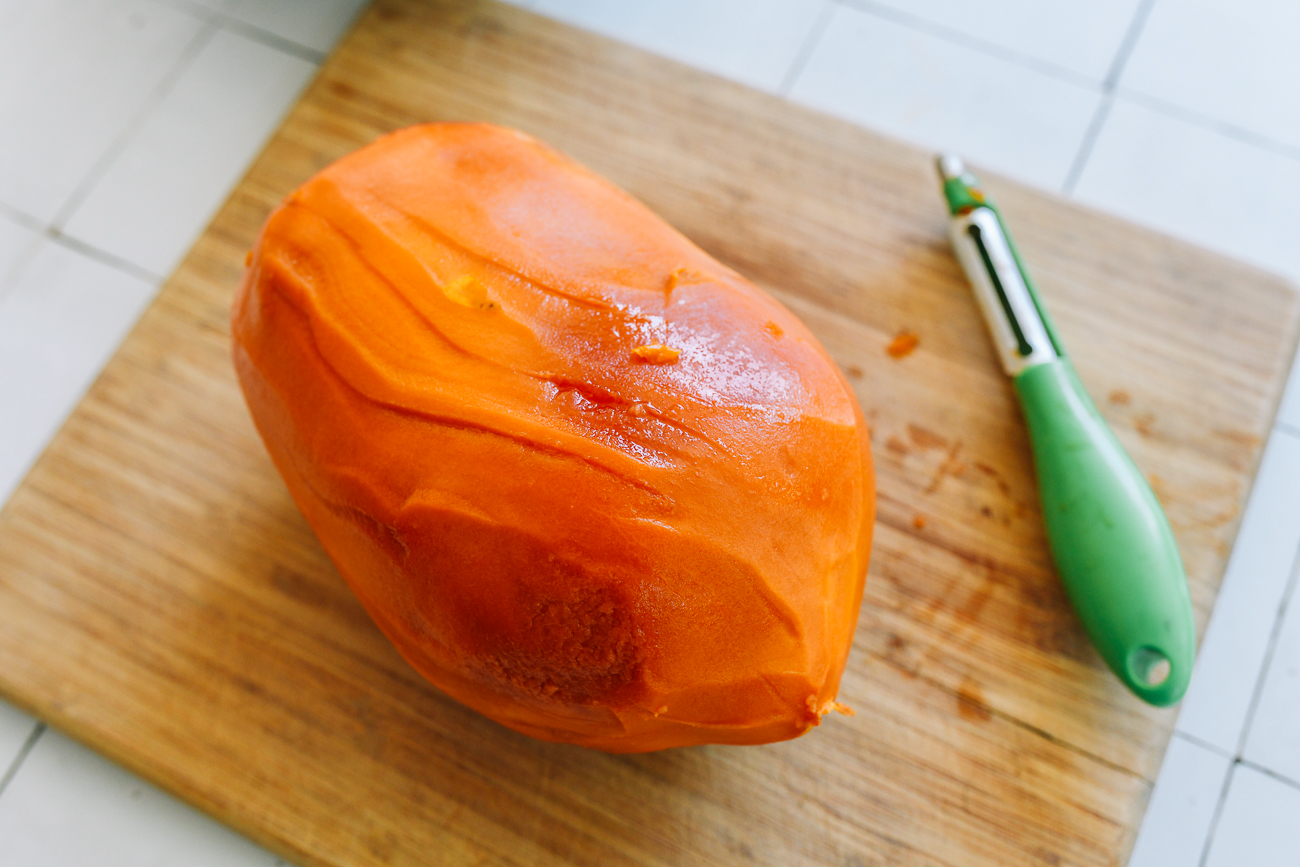
We prefer greener papaya for this recipe for that reason.
Ripe papayas turn a deep golden or orange color, while unripe papayas are green. A middle ground is ideal to get the nutrient benefits from the papaya without making the soup too sweet.
If the sound of this soup is just too much for you, another beneficial dish to make is our Pig Feet with Soy Beans. Both are great choices to aid in lactation.
If you’d like, this soup is ideal for making in your Instant Pot or slow cooker. Use the soup setting. Read more about Instant Pot cooking options here. If you’re cooking it in a slow cooker, you may need up to 6 hours on high or longer to break down the collagen in the pig feet.
Recipe Instructions
Have your butcher cut the pig feet into large chunks. It’s quite difficult to do at home without a heavy duty meat cleaver, and can result in bone shards. Rinse them clean of any bits of bone or blood and transfer to a pot with enough water to submerge the pig feet.
Bring to a boil, and boil for two minutes. Turn off the heat, drain, and rinse the pieces clean of any impurities.
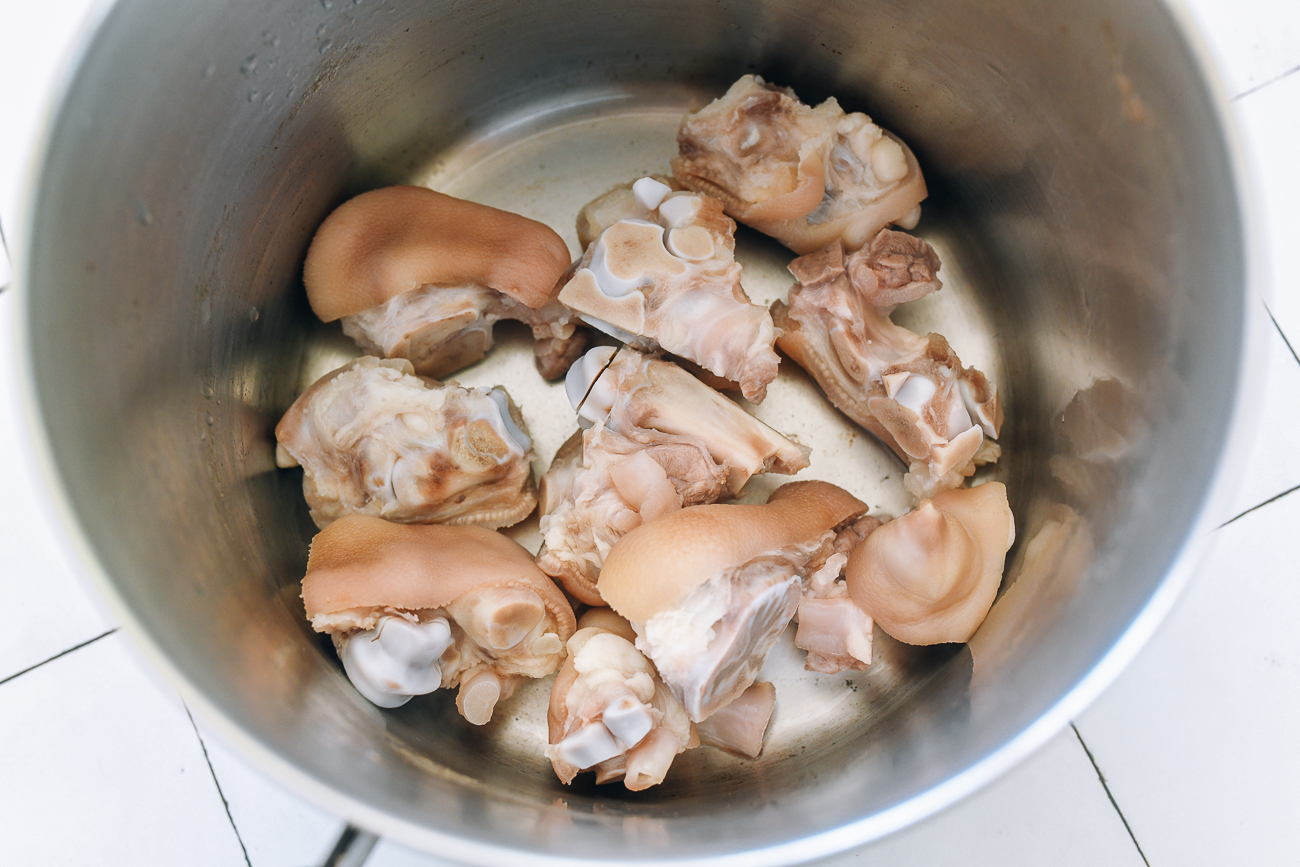
Transfer the pig feet to a large soup pot (if using the same pot you boiled them in, wash the pot first), along with the peanuts, ginger, dates, and 13 cups water.
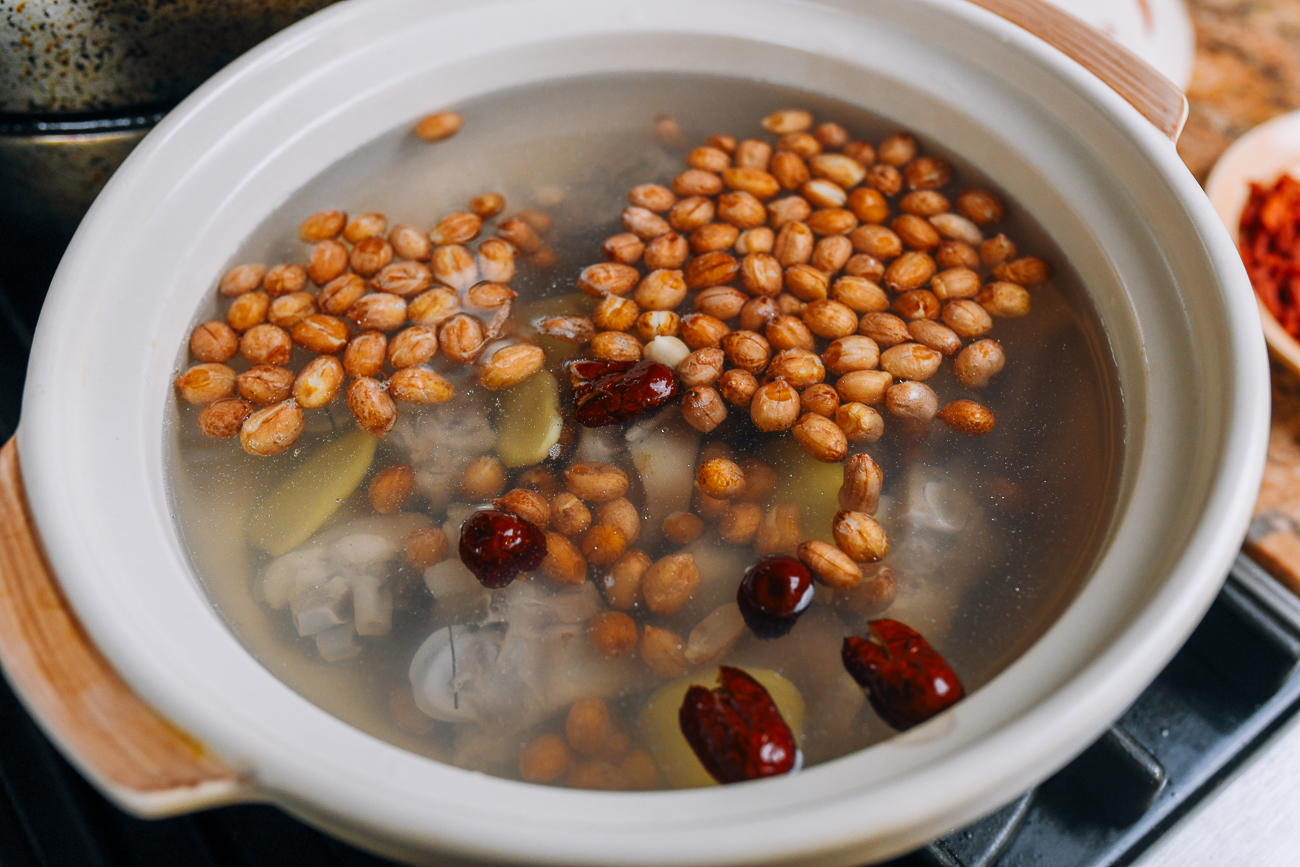
Cover and bring to a boil. Reduce the heat to a simmer, cover, and cook for 90 minutes.
After 90 minutes, add the papaya and goji berries, and bring to a boil.
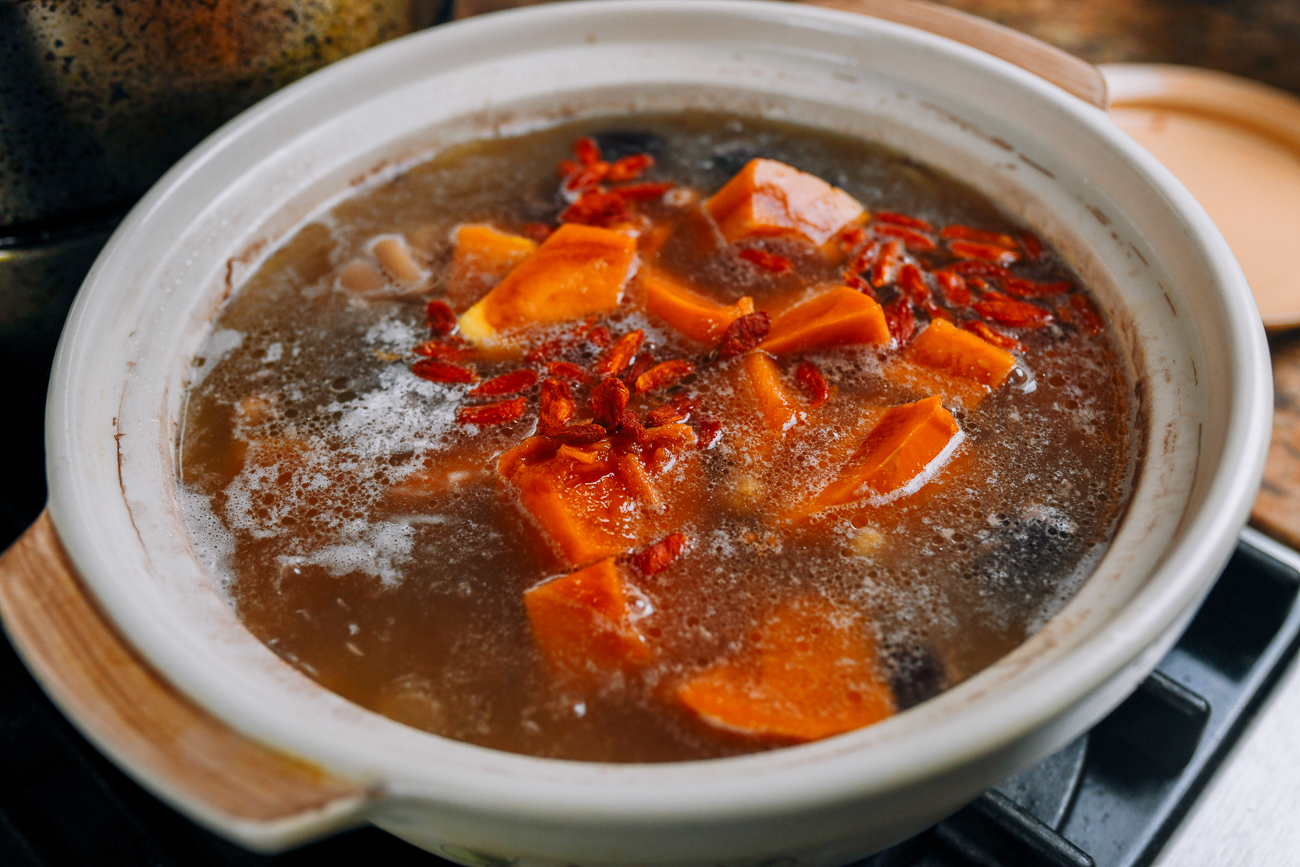
Reduce the heat and simmer for another hour, until the pork trotters are tender and gelatinous.
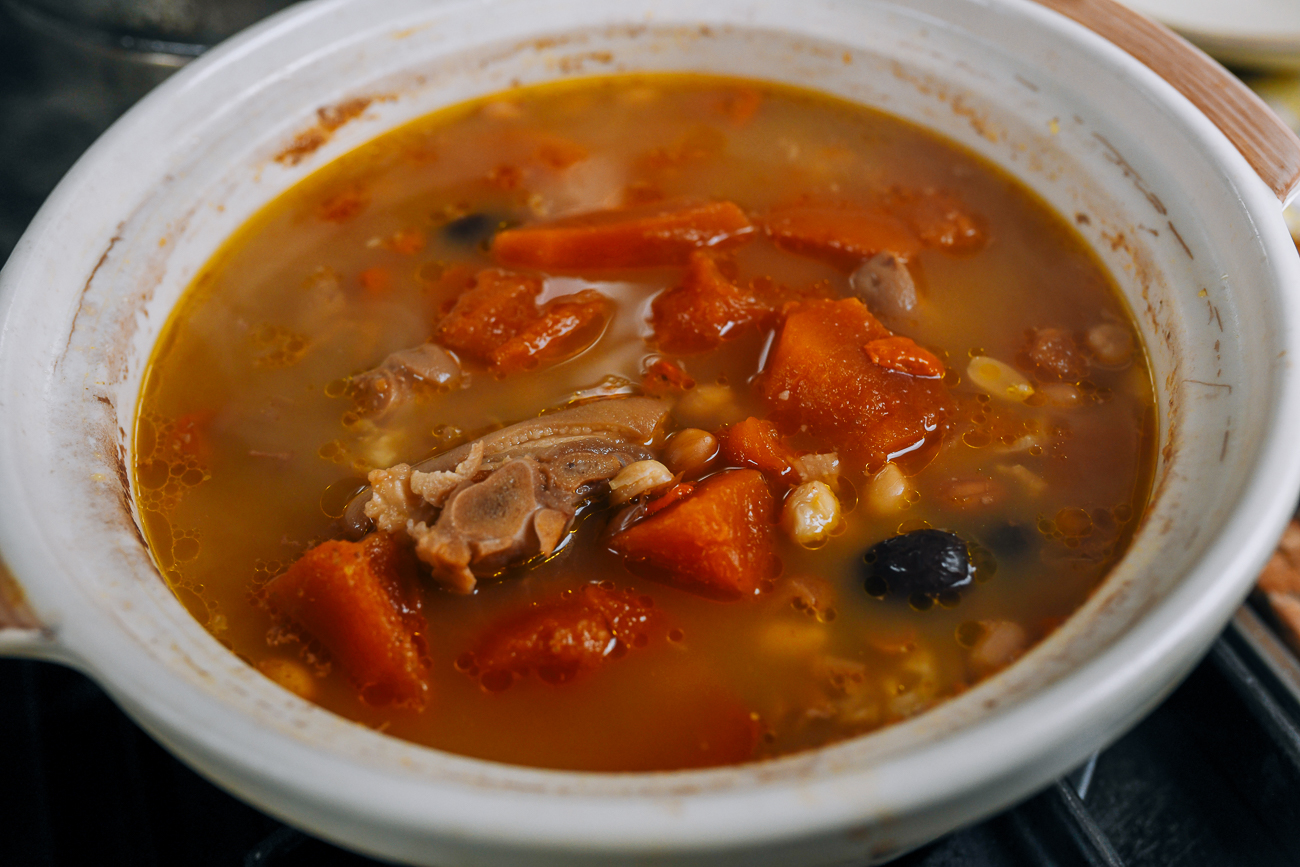
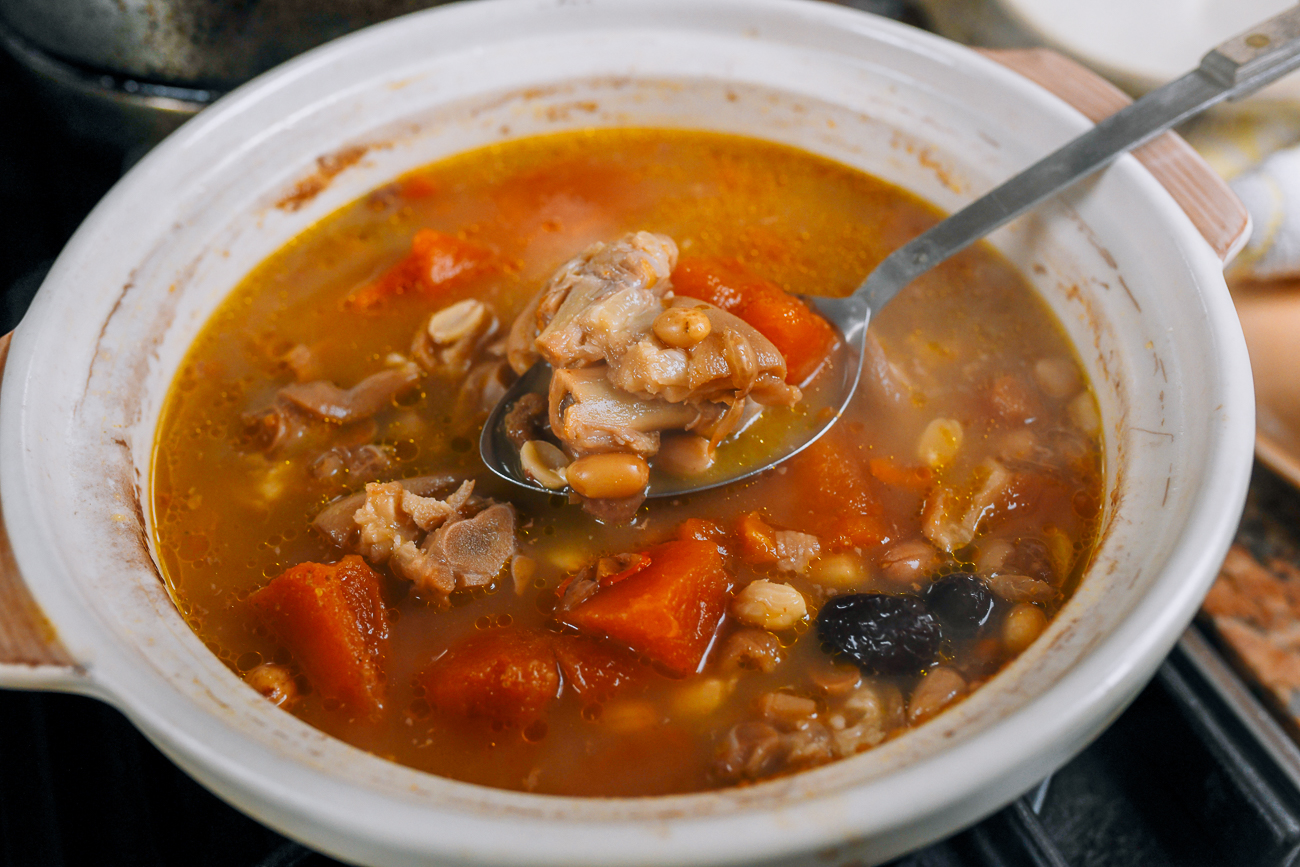
Salt to taste and sprinkle with scallions just before serving.
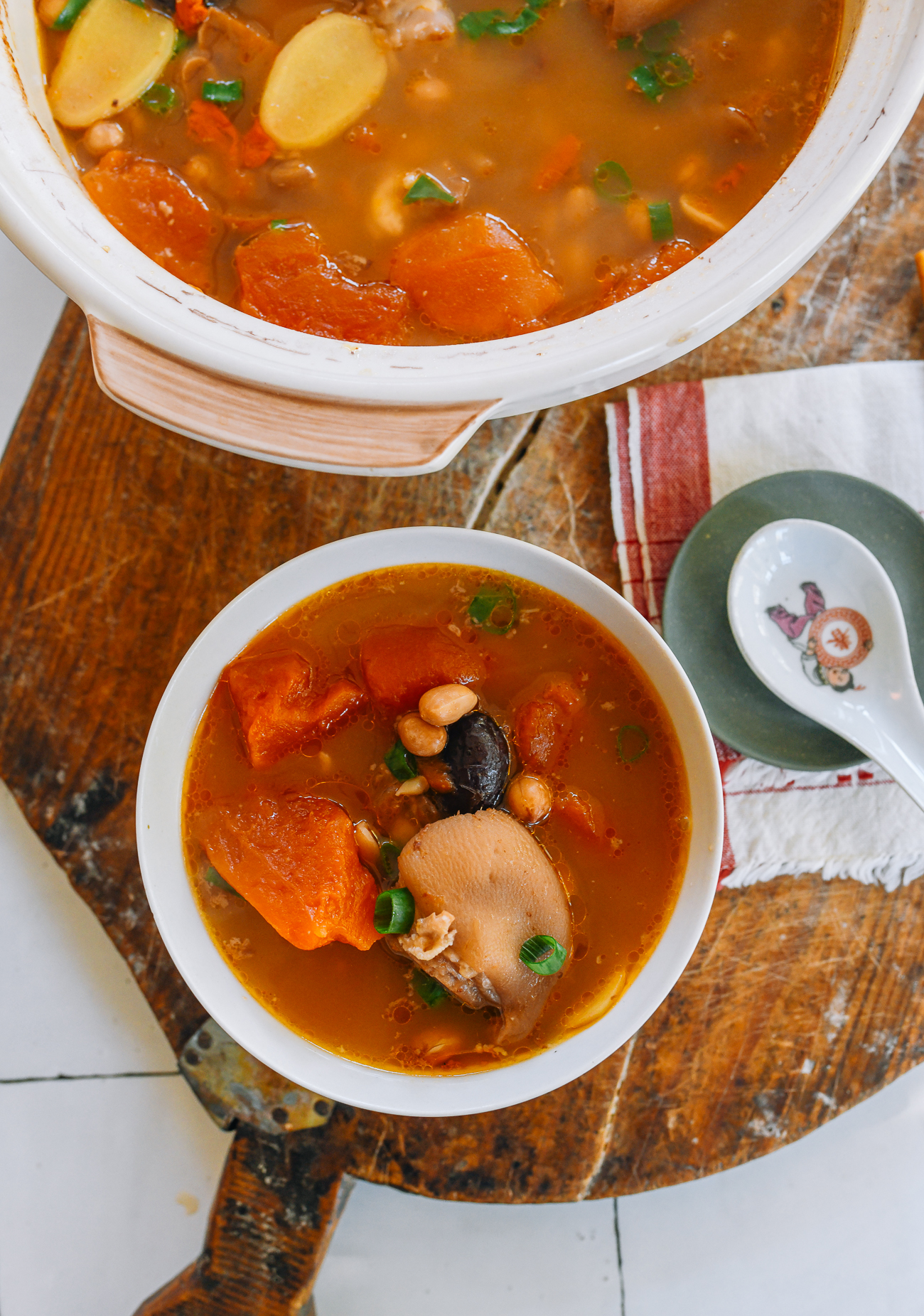
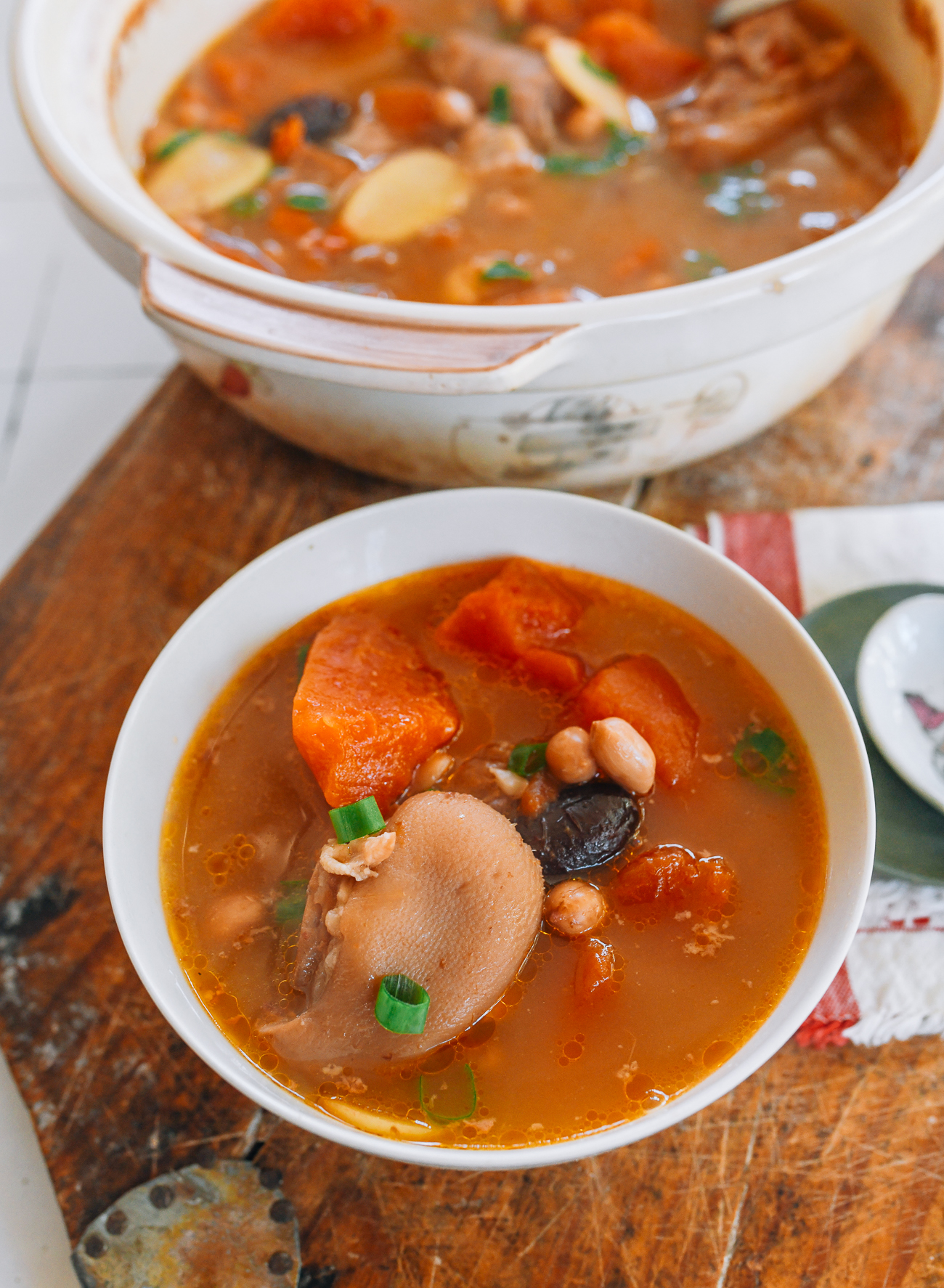
This soup can be frozen in airtight containers for later. It’ll last at best quality for about 3 months in the freezer.
Looking for more authentic recipes? Subscribe to our email list and be sure to follow us on Pinterest, Facebook, Instagram, and Youtube!
Recipe

Postpartum Pig Feet Papaya Soup
Ingredients
- 2 pounds pig feet/pork trotters (cut into large pieces)
- 1 cup raw peanuts with skin on (rinsed)
- 6-10 slices ginger
- 12 dried Chinese red dates (also known as dried jujubes)
- 13 cups water
- 1 pound papaya (peeled, deseeded, and cut into large chunks)
- ¼ cup dried goji berries
- Salt (to taste)
- 1 scallion (white and green parts finely chopped)
Instructions
- Have your butcher cut the pig feet into large chunks. It’s quite difficult to do at home without a heavy duty meat cleaver, and can result in bone shards. Rinse them clean of any bits of bone or blood and transfer to a pot with enough water to submerge the pig feet.
- Bring to a boil, and boil for two minutes. Turn off the heat, drain, and rinse the pieces clean of any impurities. Transfer the pig feet to a large soup pot (if using the same pot you boiled them in, wash the pot first), along with the peanuts, ginger, dates, and 13 cups water. Cover and bring to a boil. Reduce the heat to a simmer, cover, and cook for 90 minutes.
- After 90 minutes, add the papaya and goji berries, and bring to a boil. Reduce the heat and simmer for another hour, until the pork trotters are tender and gelatinous. Salt to taste and sprinkle with scallions just before serving.