In this fascinating recipe, I show you how to turn chickpeas into tofu! The result is a chickpea tofu that is a great alternative for anyone who has a soy allergy!
Wait, Did You Say Chickpea Tofu???
Chickpea tofu is an uncanny discovery that I stumbled upon on the Chinese internet. I then found out that it is also called Burmese tofu, as it is a traditional food in that part of the world. Upon closer inspection, I also found it available in a specialty grocery store. I wouldn’t say it’s a common ingredient yet these days, but it’s certainly out there!
It got me thinking, if soybeans can make soy tofu, why can’t chickpeas make chickpea tofu? You might ask why anyone would be interested in such a thing, but if you’ve got a persistent soy allergy or a glut of dried chickpeas, you may see this recipe as a bit of a godsend!
How does it taste?
Chickpea tofu definitely does not taste quite as smooth as soybean tofu. It retains more of its starchy bean character, and has a slightly more paste-like texture.
I say, if you can eat soy-based tofu, that’s still the preferred, but for anyone avoiding soy—or who likes a good kitchen experiment to try something new—this is a very good alternative. It’s still high in protein and has more fiber!

How to Use This Chickpea Tofu:
This recipe makes an equivalent to silken tofu. It’s very smooth and soft. Another key difference from soy-based tofu is apparent when it comes to cooking it. Chickpea tofu is more delicate and doesn’t stand up to longer cooking times like regular tofu. Cook it at too high a heat, and it will start to fall apart.
That said, you can cook it just until it warms through and then serve it. This chickpea tofu works well for cold tofu dishes, like our Spicy Cold Tofu and Tofu Avocado Salad.
It’s not quite firm enough to use in stir-fries, however, unless you adjust this recipe to make the tofu extra firm. Since the chickpea tofu is “formed” from its own starch, the longer you cook it to reduce the water content, the firmer your end result becomes. Cook times range from 8-20 minutes using medium-low heat.
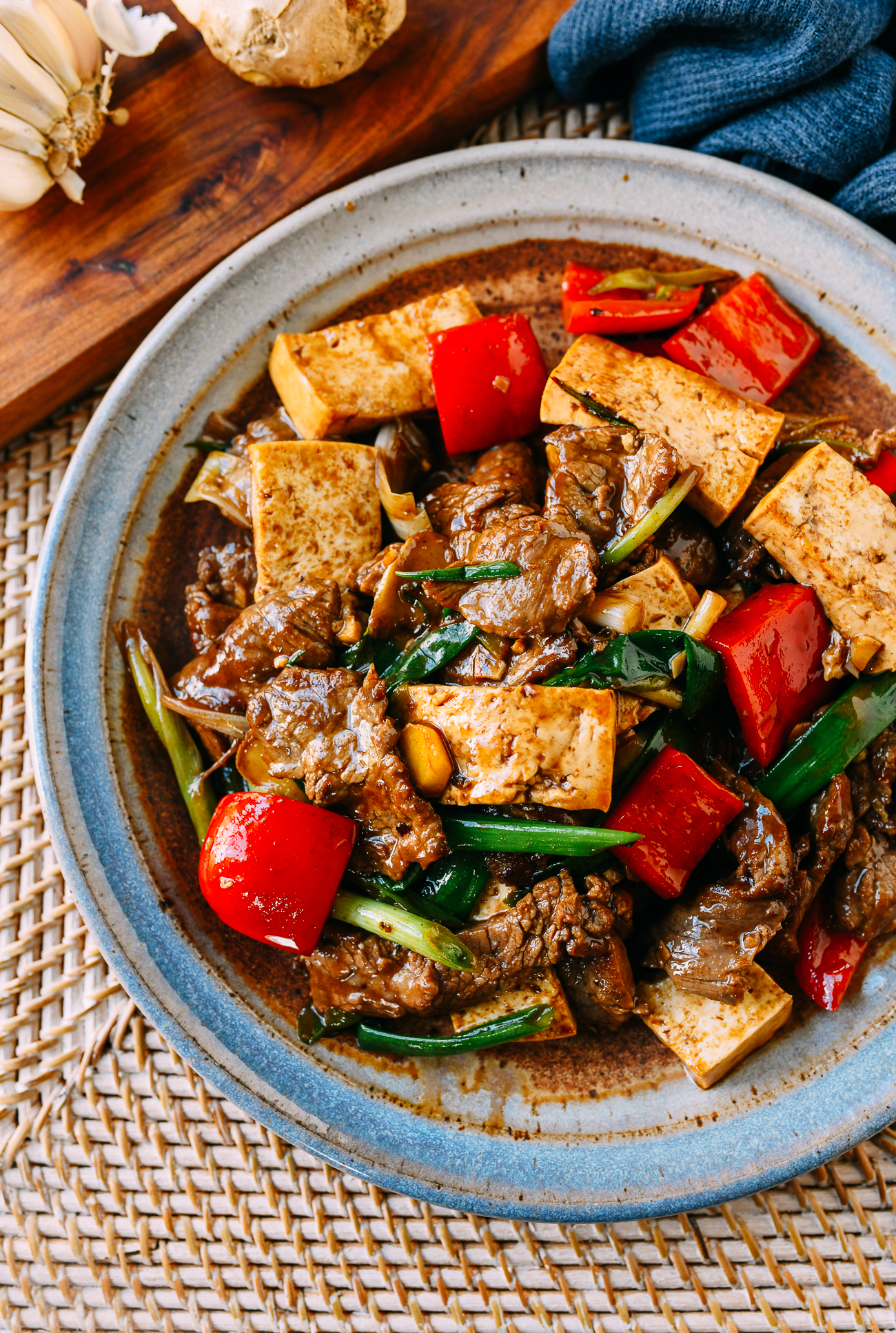
Recently, Bill cooked Mapo Tofu using the chickpea version, and it was very good! That said, he didn’t cook the tofu for very long, just letting it warm up. I also made miso soup, adding it at the end, and again, it held up well.
How to make chickpea tofu?
You need to start with dried chickpeas (chickpeas that are cooked and ready to eat out of the can will not work).
While that might already have some of you disappointed, this recipe just requires water and dried chickpeas—no additives needed!
After soaking, you blend the chickpeas and then separate the liquid from the pulp. You’ll also need a tightly woven cotton cheesecloth bag, which is a must for separating the chickpea liquid from the pulp. That chickpea liquid then solidifies after it is cooked, forming a block of tofu once cooled.
Let’s get to the recipe!
Chickpea Tofu Recipe Instructions
Rinse the dried chickpeas in a colander. Add them to a bowl, and cover with 2 inches of water. Soak overnight in the refrigerator.

The next day, drain off the water, and transfer the chickpeas to a blender along with 2 cups of fresh water. Before you blend the chickpeas, prepare a cheesecloth bag set inside a large bowl. Now, blend the chickpeas until totally smooth. For reference, in my Vitamix blender, I pureed the chickpeas at speed 8 for 1 minute.


Immediately pour the chickpea puree into the cheesecloth bag. The bean starch settles quickly. If you let it sit for more than even 30 seconds, pulse the liquid in the blender to redistribute the liquid and solids.

Strain the liquid out of the cheesecloth bag, squeezing with your hands to get every drop of liquid. Set aside the chickpea pulp.


Transfer the chickpea liquid to a medium pot. Set it over medium high heat, and heat until you see small bubbles around the edge of the pot. Reduce the heat to medium and cook for 6-8 minutes, stirring continuously until the liquid thickens into a thick gravy-like consistency that coats the back of a spoon. This whole cooking process takes about 10-12 minutes.


Next, immediately transfer the cooked liquid to a heatproof container, ideally something that will yield a tofu block shape.

Cover and cool slightly before transferring to the refrigerator overnight to set.

The next day, flip the tofu container onto a flat plate. It should come out very easily and is ready to use!

Looking for more authentic recipes? Subscribe to our email list and be sure to follow us on Pinterest, Facebook, Instagram, and Youtube!
Recipe

Chickpea Tofu
Equipment
- a tightly woven cotton cheesecloth bag
Ingredients
- 1/2 cup dried chickpeas (200g after soaking)
- 2 cups water (plus more for soaking)
Instructions
- Rinse the dried chickpeas in a colander. Add them to a bowl, and cover with 2 inches of water. Soak overnight in the refrigerator.
- The next day, drain off the water, and transfer the chickpeas to a blender along with 2 cups of fresh water. Before you blend the chickpeas, prepare a cheesecloth bag set inside a large bowl. Now, blend the chickpeas until totally smooth. For reference, in my Vitamix blender, I pureed the chickpeas at speed 8 for 1 minute.
- Immediately pour the chickpea puree into the cheesecloth bag. The bean starch settles quickly. If you let it sit for more than even 30 seconds, pulse the liquid in the blender to redistribute the liquid and solids.
- Strain the liquid out of the cheesecloth bag, squeezing with your hands to get every drop of liquid. Set aside the chickpea pulp. Transfer the chickpea liquid to a medium pot. Set it over medium high heat, and heat until you see small bubbles around the edge of the pot. Reduce the heat to medium and cook for 6-8 minutes, stirring continuously until the liquid thickens into a thick gravy-like consistency that coats the back of a spoon. This whole cooking process takes about 10-12 minutes.
- Next, immediately transfer the cooked liquid to a heatproof container, ideally something that will yield a tofu block shape. Cover and cool slightly before transferring to the refrigerator overnight to set.
- The next day, flip the tofu container onto a flat plate. It should come out very easily and is ready to use!
Nutrition Facts

FAQs
This tofu will keep for 1 week in the refrigerator, stored submerged in cold water. Change the water every other day to keep it fresh.
Similar to when you make soy milk, you will end up with a lot of bean pulp with this chickpea tofu. My advice is not to throw it away—you can use it in recipes like my Winter Vegetable Soup, or even in your morning oatmeal as a thickening agent. It really thickens beautifully!