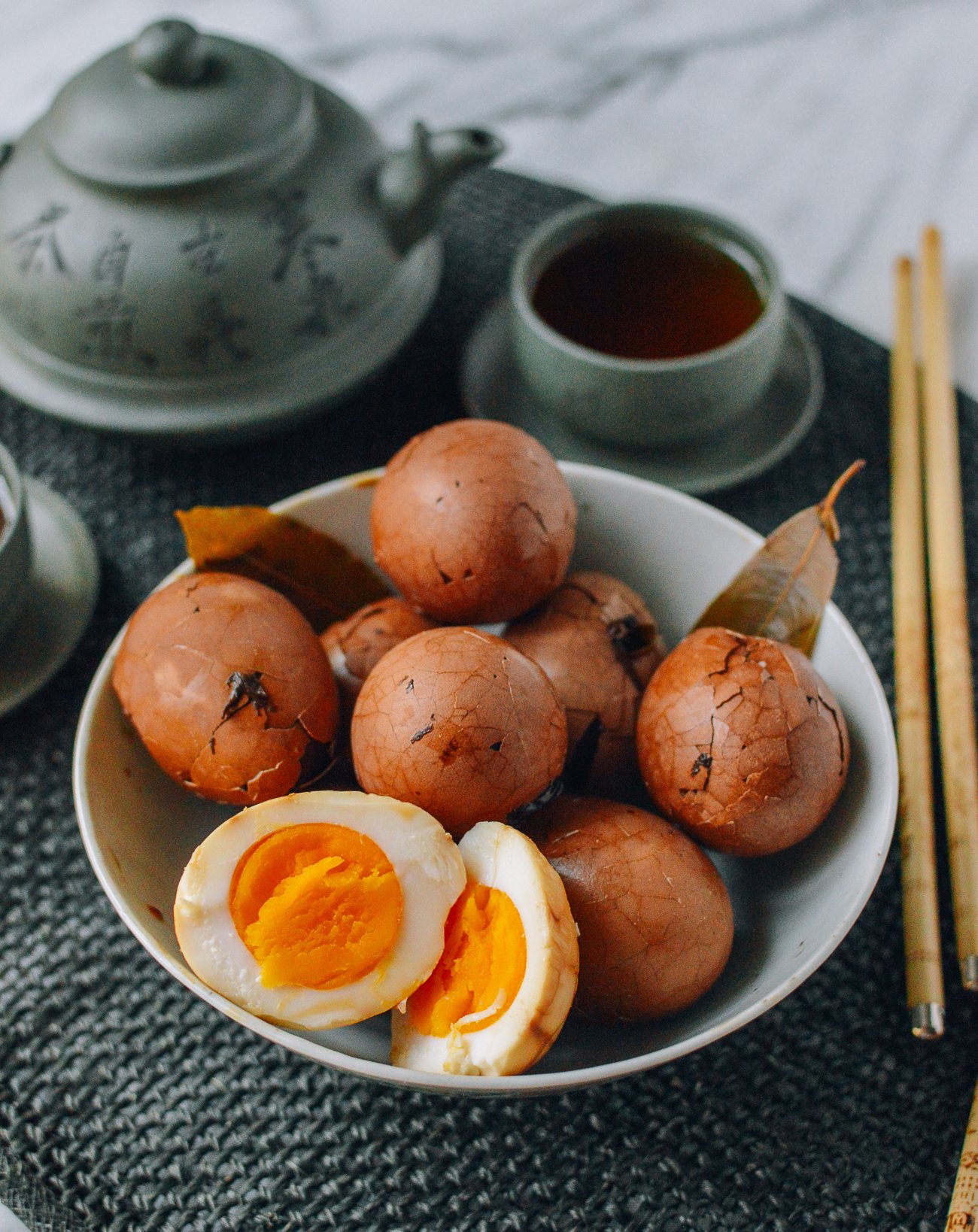
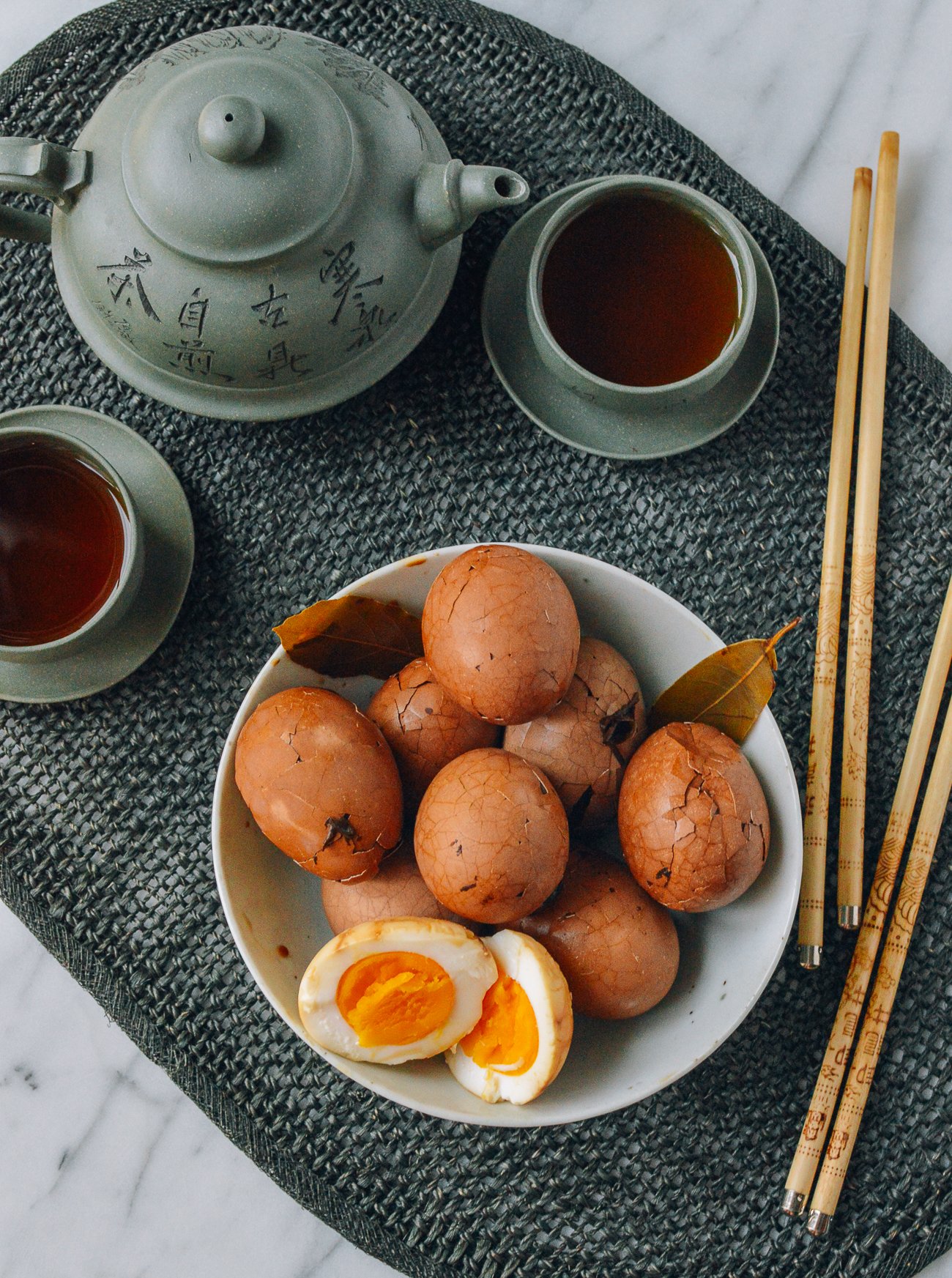
Chinese tea eggs are a savory snack that you might find sold by street vendors across China (often in the morning, though you can also find them any time of day).
First, you hard-boil the egg. Then, you crack the shells to allow a briny tea and spice mixture to seep in to the egg within, creating a marble pattern and a tasty flavor.
Particular About Food
I’m very particular about my food. No surprise there. I like my own cooking, that goes without saying, but when I eat out in restaurants, I have the worst luck.
Somehow it happens to me all the time. When we go out as a family, I’m the one who ends up with the rotten lettuce leaf in my salad, or a dish that tastes like salt is the #1 ingredient. When the waiter comes around to ask how the meal is, I tell them the truth!
What I’m trying to say is, I understand being picky about say, how you like your tea egg! And that’s why it makes sense to make them yourself—so you can control the outcome.
How Cooked Should the Yolk Be?
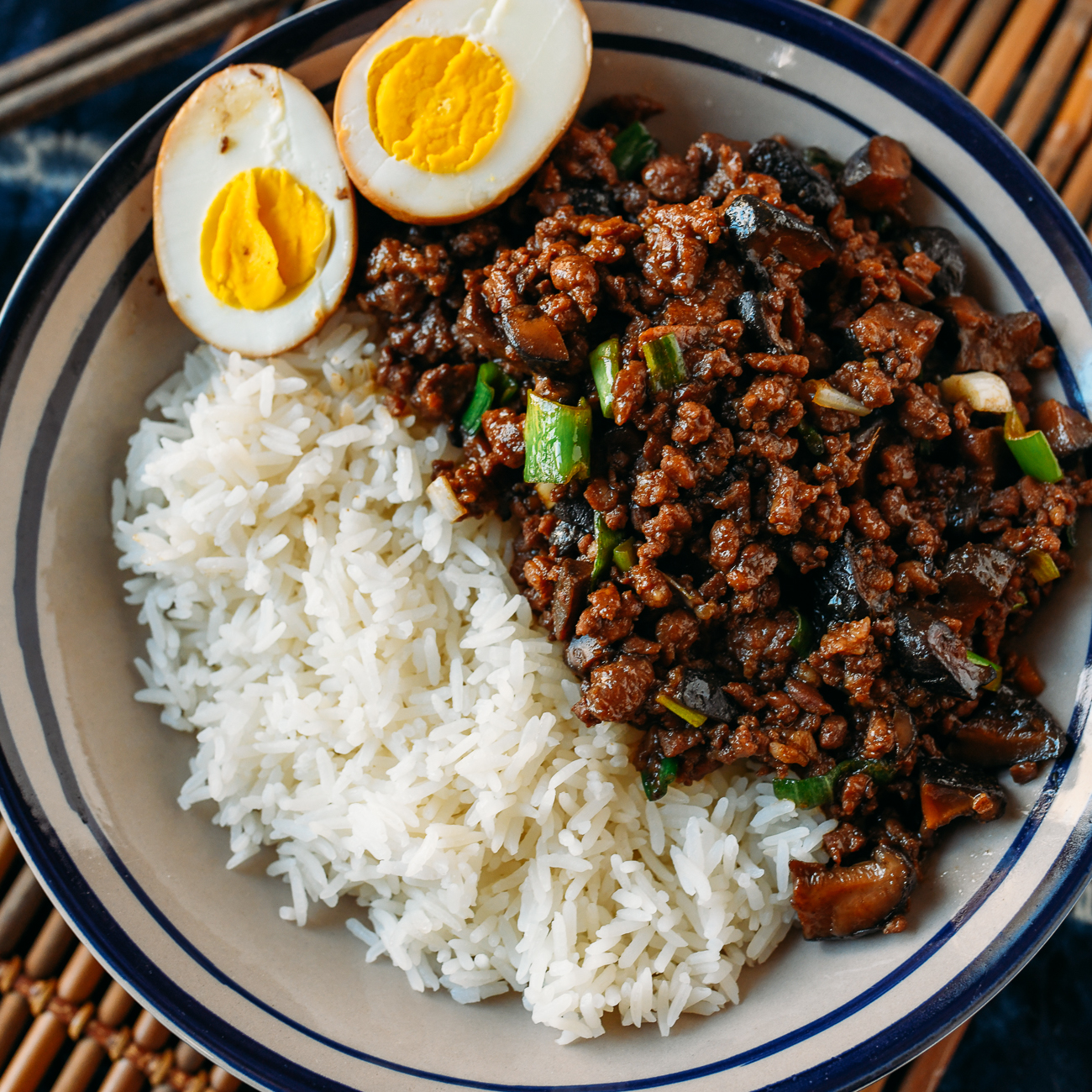
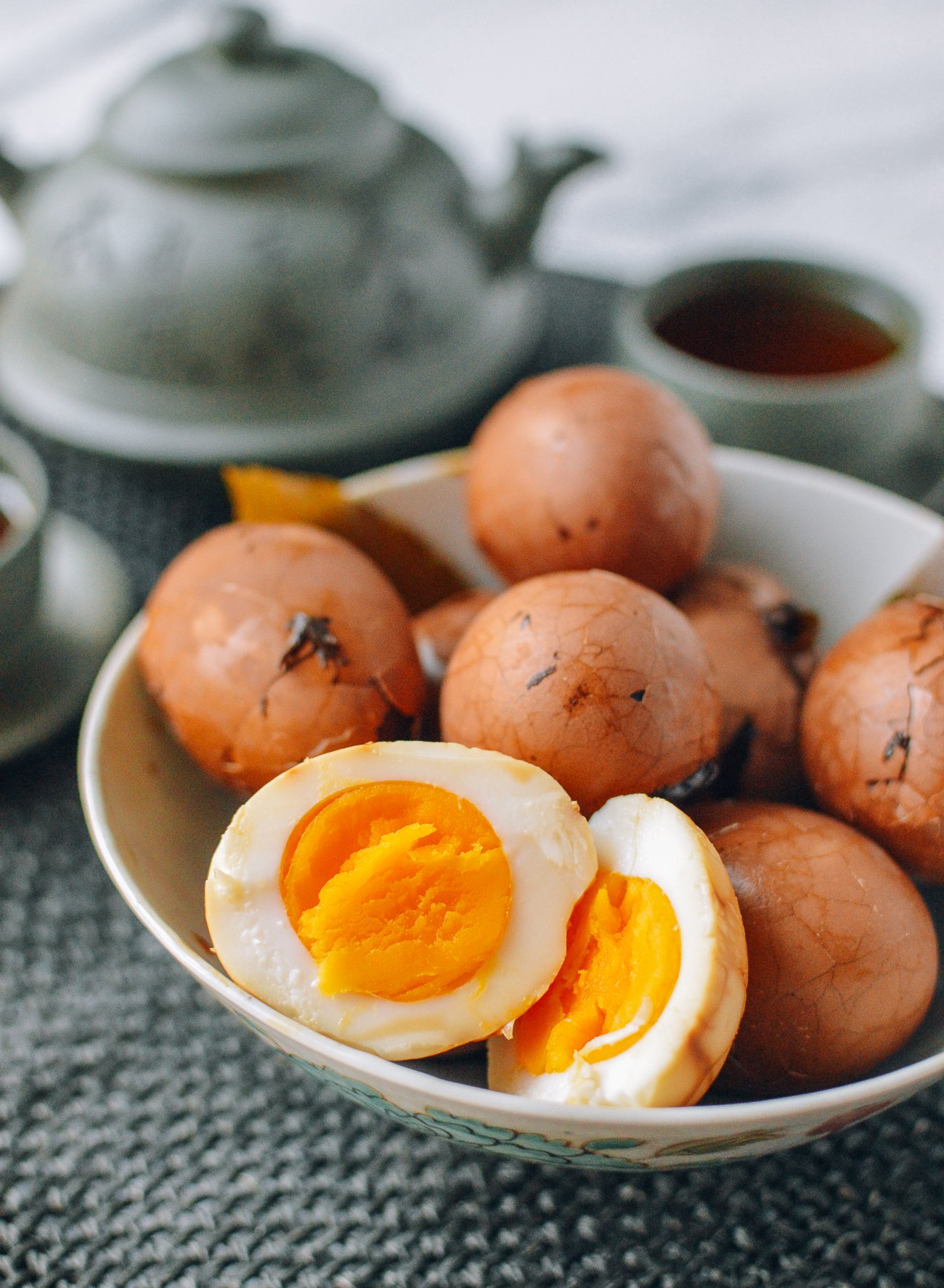
Now, most tea eggs in China are cooked for quite a long time, long enough to really impart flavor to the egg. As a result, the yolk inside is often VERY cooked, rather than runny or bright orange, like you might find in a ramen egg.
This is the traditional way of making a tea egg, and some of us actually enjoy the crumbly texture of the cooked yolk.
However, some people aren’t a fan of that yolk texture or the green tinge that the outside of the yolk gets when cooked this long.
While we already posted a Chinese tea egg recipe years ago, in this version, I have a method for making Chinese tea eggs with softer yolks using a method similar to how you would make a Japanese ramen egg.
The cooking method is pretty ingenious, as these eggs turn out flavorful yet soft in the middle. I decided to borrow the technique and did a revamp on traditional Chinese tea eggs.
That said, if you want your tea eggs to be super traditional, you can cook them longer in the brine, which will yield a tastier egg, but with a very hard-cooked yolk. Simply follow our first tea egg recipe.
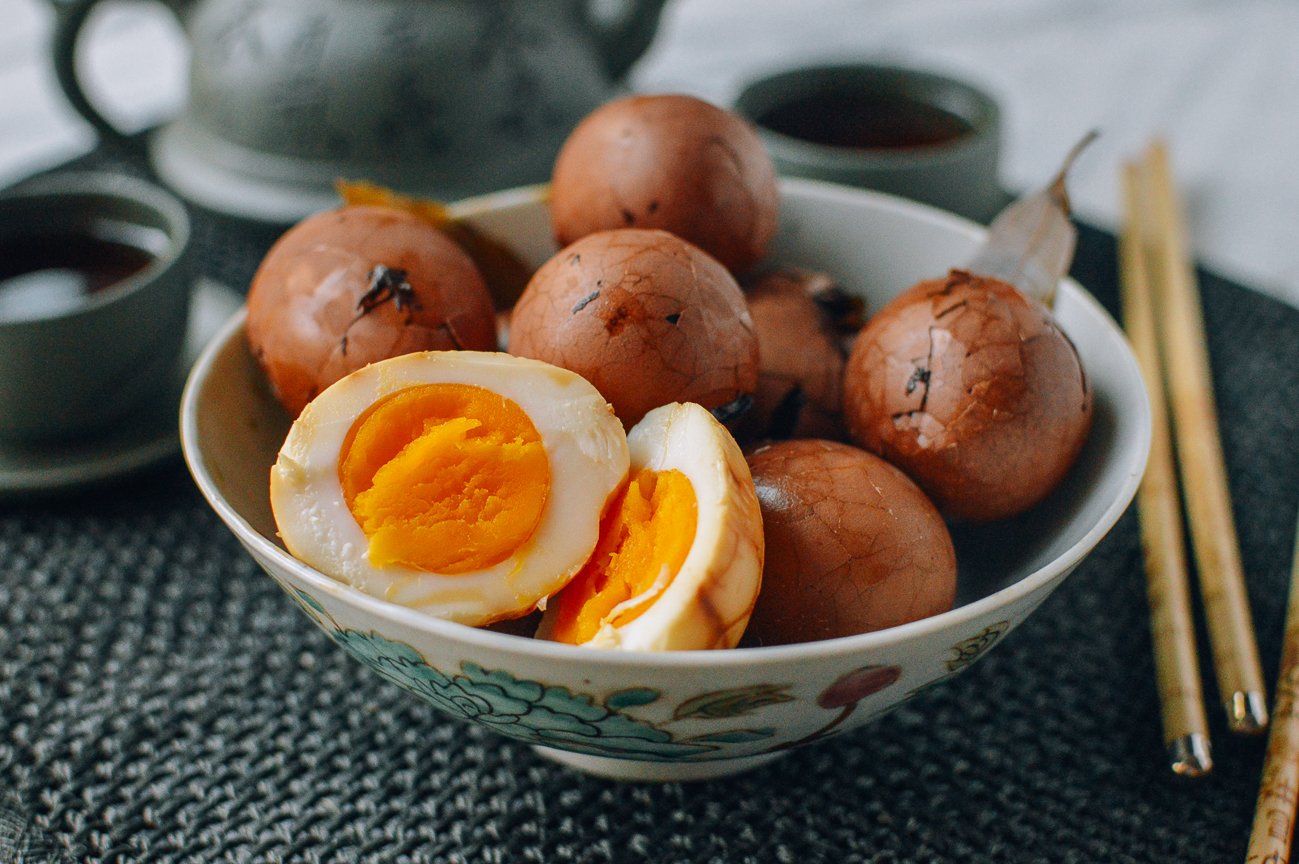
Whatever your preference, let’s learn how to make these Chinese tea eggs from scratch!
Chinese Tea Eggs: Recipe Instructions
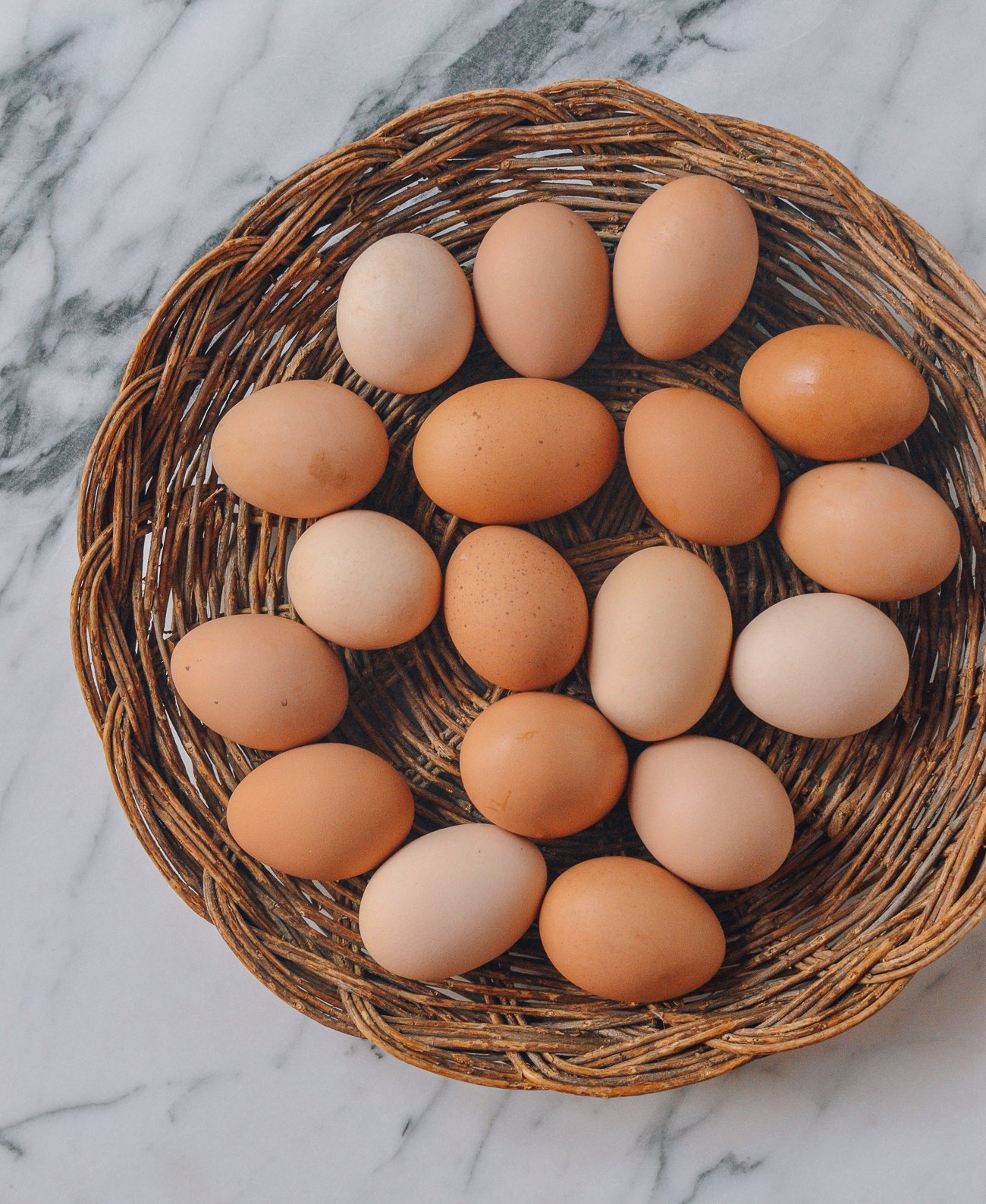
Bring the eggs to room temperature by leaving them out of the refrigerator for a couple hours.
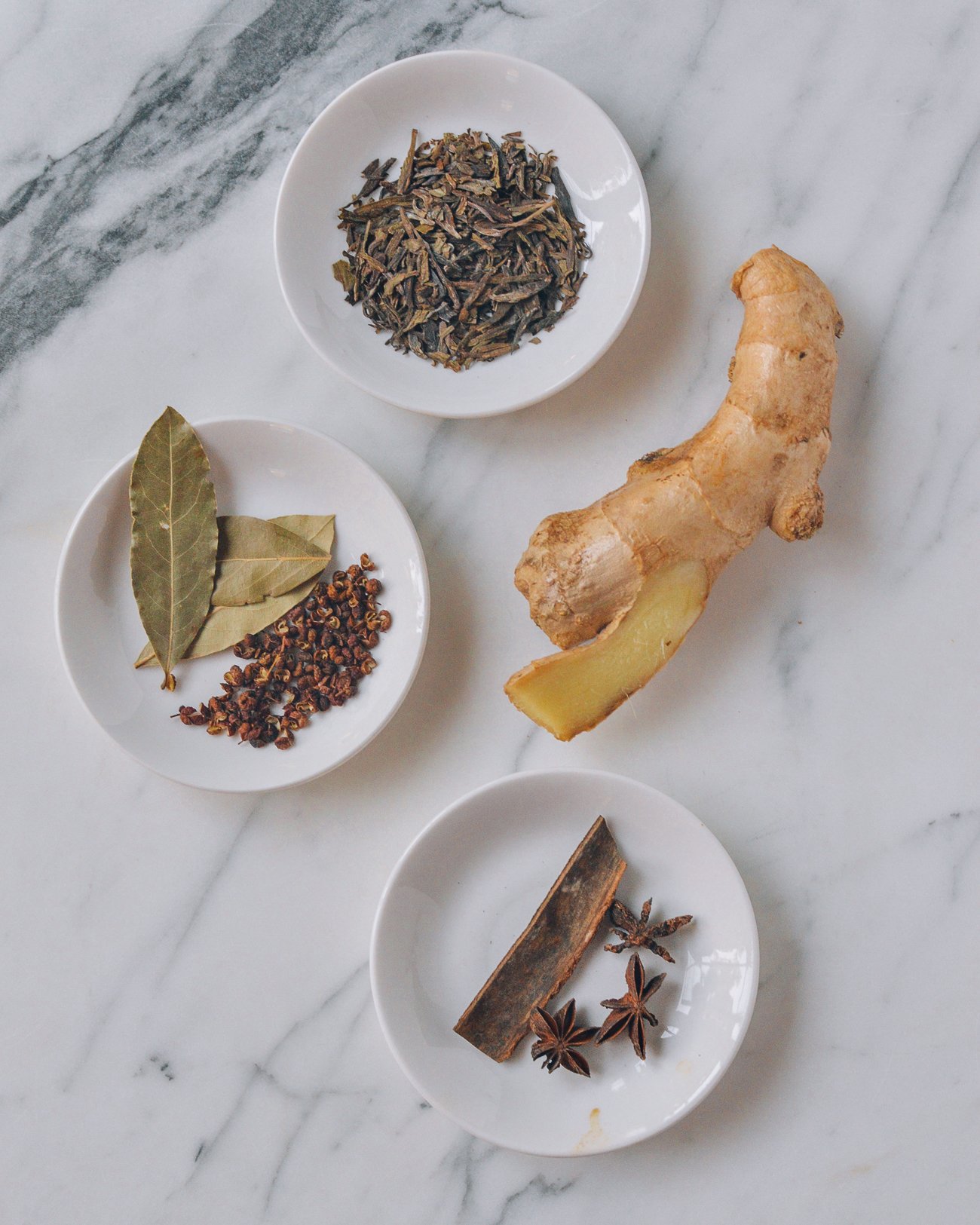
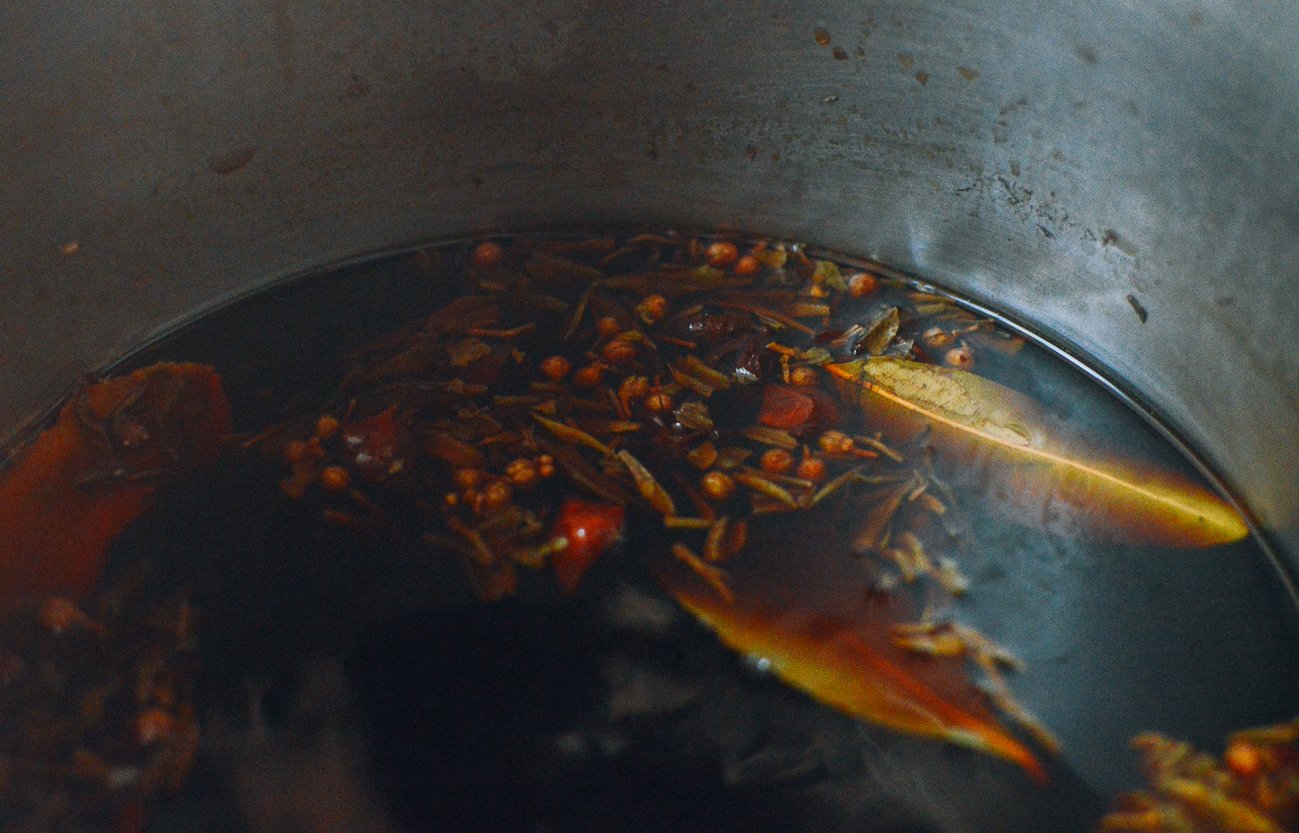
In the meantime, prepare the sauce base by adding the rest of the ingredients (the ginger, star anise, cinnamon stick, bay leaves, tea, Sichuan peppercorns, light soy sauce, dark soy sauce, sugar, salt, Shaoxing wine, and 4-5 cups water) to a medium pot.
Bring the mixture to a boil, and the turn the heat down to a simmer. Cover and simmer for 10 minutes. Then turn off the heat, open the lid, set it aside, and let it cool completely.

A recipe update
If you’ve made this recipe before, the original called for 7 cups of water in the soaking liquid. We’ve reduced that to 4-5 cups to help ensure an even more concentrated tea egg flavor.
Bring another pot of water to a boil for the eggs. Once boiling, gently and quickly lower the eggs into the boiling water using a large spoon. You want to avoid dropping them and cracking them on the bottom of the pot.
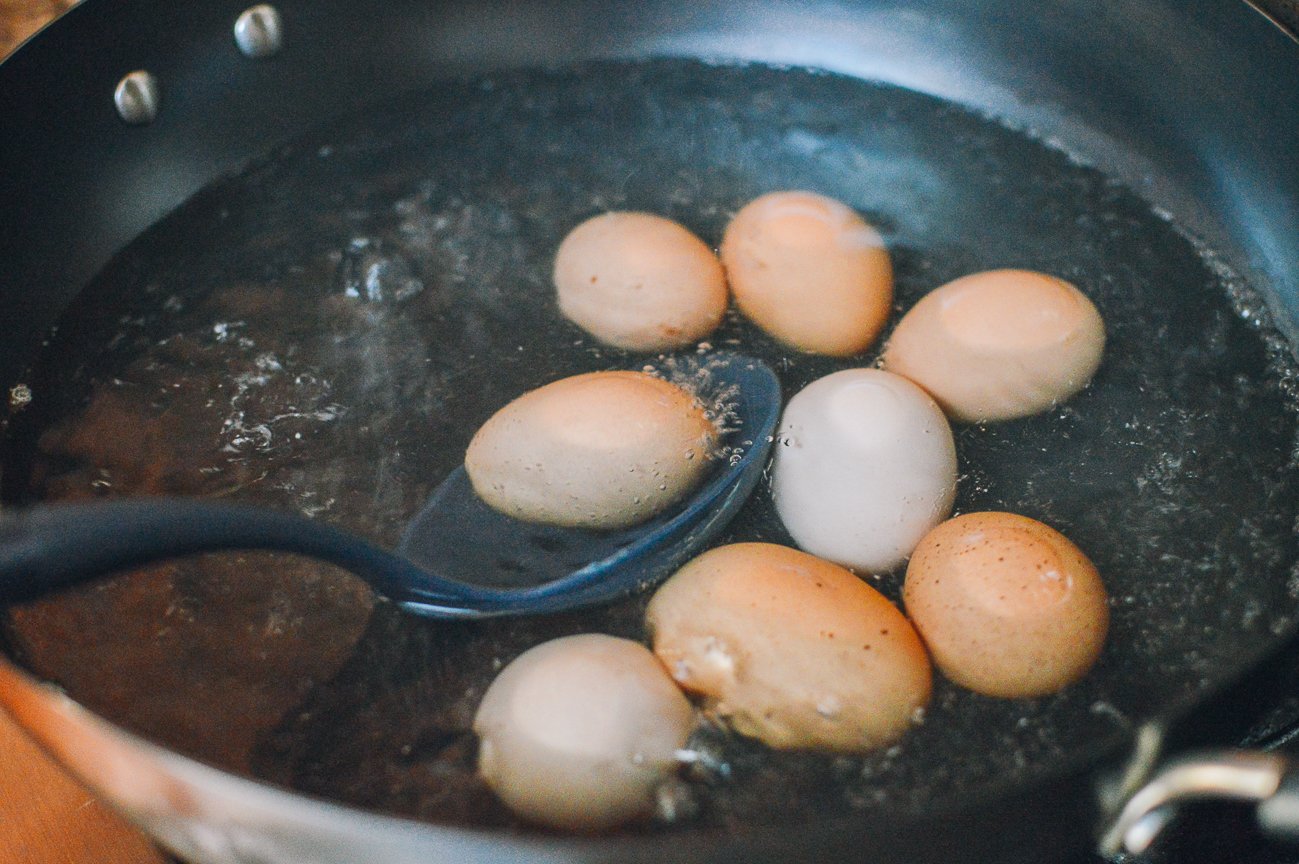
Let the eggs cook in the boiling water for 7 minutes (it’s a good idea to set a timer). Once the timer goes off, turn off the heat, quickly scoop out the eggs, and transfer to an ice bath. Allow them to sit in the ice bath until they are completely cool to the touch. The purpose here is to stop cooking the eggs any further.
Once the eggs are cooled, lightly crack the egg shells. The goal here is to make enough cracks to allow the flavor of the sauce base to seep into the egg. I like to use a small spoon to tap the eggs, but be careful!
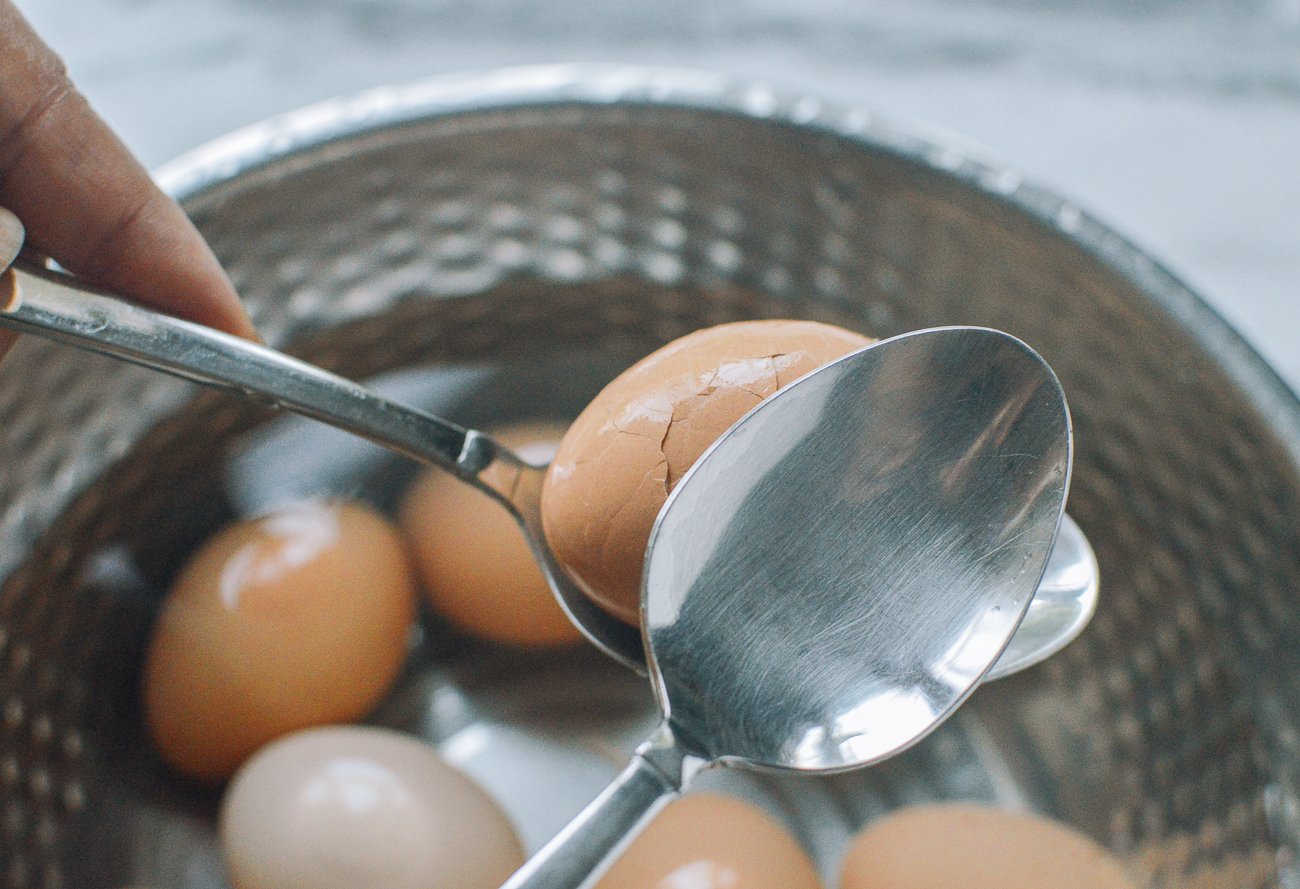
It you tap or crack too hard, you might crack open the egg, since the egg yolk is still very soft.
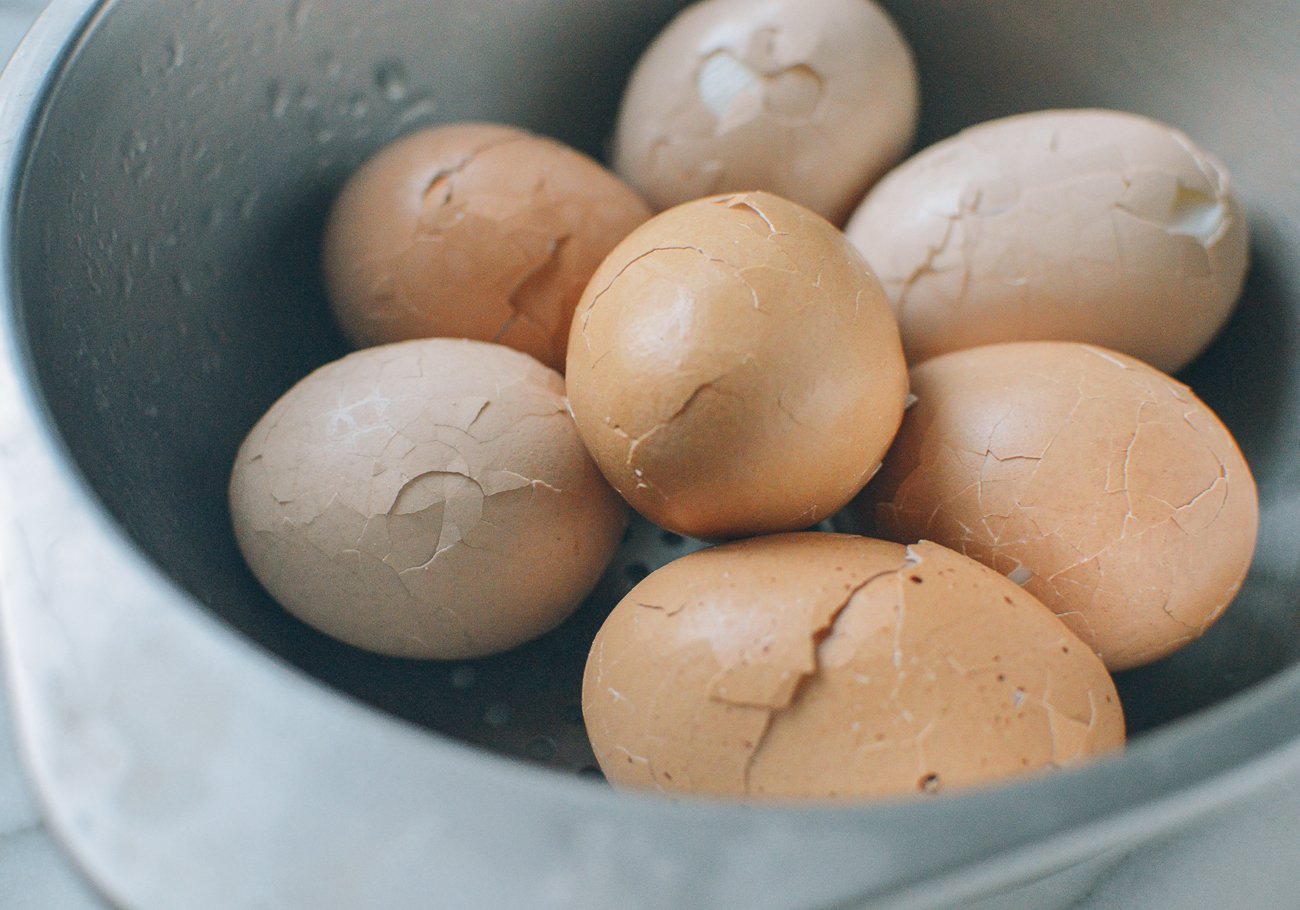
Soak the cracked eggs in your sauce base for 24 hours in the refrigerator, making sure all the eggs are completely submerged in the sauce base.
After 24 hours, they’re ready! You can also soak them longer for a stronger flavor. These Chinese tea eggs last for 3 to 4 days in the refrigerator.
Looking for more authentic recipes? Subscribe to our email list and be sure to follow us on Pinterest, Facebook, Instagram, and Youtube!
Recipe

Chinese Tea Eggs, An Authentic Recipe
Ingredients
- 12 eggs
- 2 slices ginger
- 3 star anise
- 1 cinnamon stick
- 2 bay leaves
- 2 tablespoons black tea leaves
- 1 teaspoon Sichuan peppercorns
- 3 tablespoons light soy sauce
- 4 teaspoons dark soy sauce
- 1 teaspoon sugar
- 2 teaspoons salt
- 2 tablespoons Shaoxing wine
- 4-5 cups water (enough so all eggs are submerged)
Instructions
- Bring the eggs to room temperature by leaving them out of refrigerator for a couple hours.
- In the meantime, prepare the sauce base by adding the rest of the ingredients to a medium pot. Bring the mixture to a boil, and the turn the heat down to a simmer. Cover and simmer for 10 minutes. Then turn off the heat, open the lid, set it aside, and let it cool completely.
- Bring another pot of water to a boil for the eggs. Once boiling, gently and quickly lower the eggs into the boiling water using a large spoon. You want to avoid dropping them and cracking them on the bottom of the pot. Let the eggs cook in the boiling water for 7 minutes (it’s a good idea to set a timer). Once the timer goes off, turn off the heat, quickly scoop out the eggs, and transfer to an ice bath. Allow them to sit in the ice bath until they are completely cool to the touch. The purpose here is to stop cooking the eggs any further.
- Once the eggs are cooled, lightly crack the egg shells. The goal here is to make enough cracks to allow the flavor of the sauce base to seep into the egg. I like to use a small spoon to tap the eggs, but be careful! It you tap or crack too hard, you might crack open the egg since the egg yolk is still very soft.
- Soak the cracked eggs in your sauce base for 24 hours in the refrigerator, making sure all the eggs are completely submerged in the sauce base. After 24 hours, they’re ready! You can also soak them longer for a stronger flavor. These eggs last for 3 to 4 days in the refrigerator.