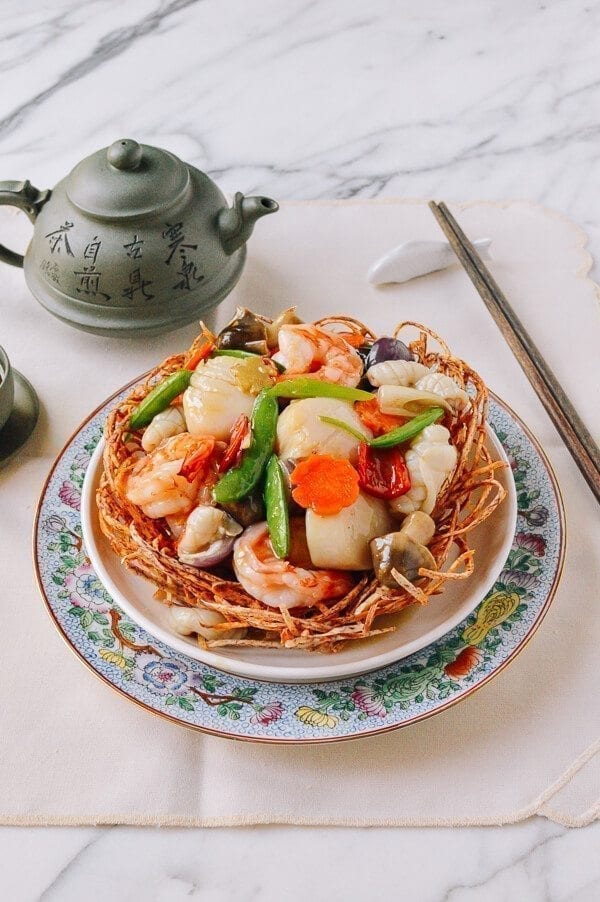
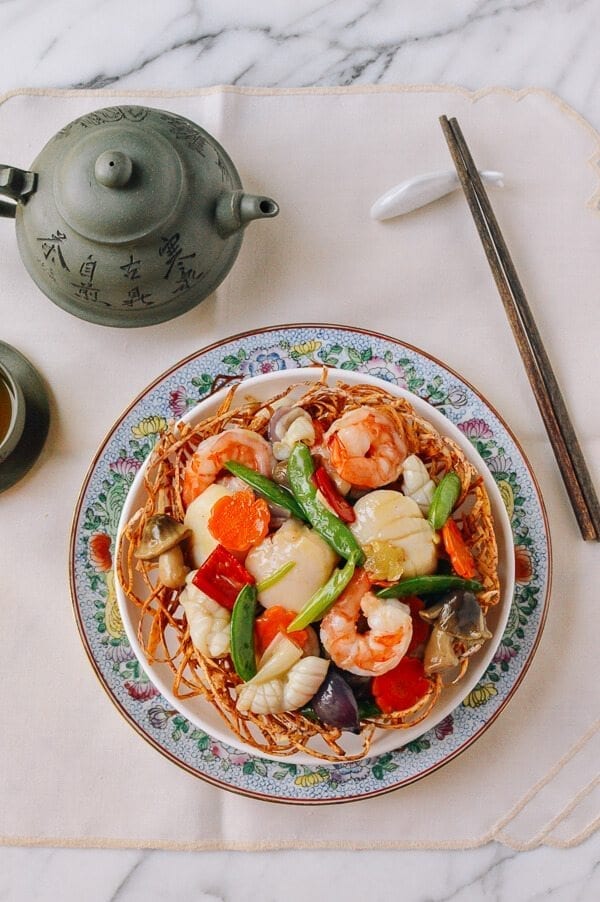
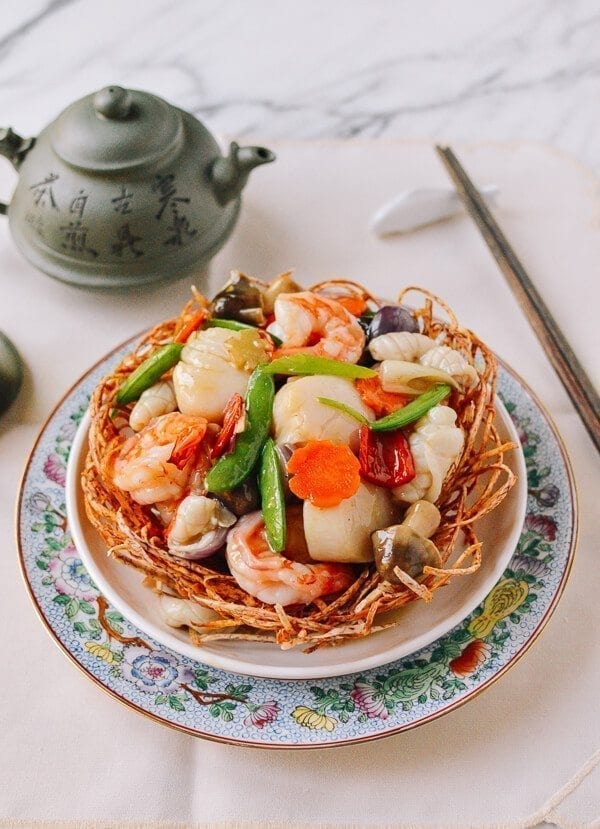
The Chinese seafood bird nest is a seafood lover’s delight, usually served at high-end Chinese restaurants specializing in Cantonese cuisine. It may also be seen at a traditional 10-course Chinese banquet for weddings, Lunar New Year’s meals, birthdays, anniversaries, and baby showers.
Regardless of the occasion, this is the perfect seafood dish to celebrate your special occasion. As for us, we’re planning our Chinese New Year menu.
A Medley of Seafood
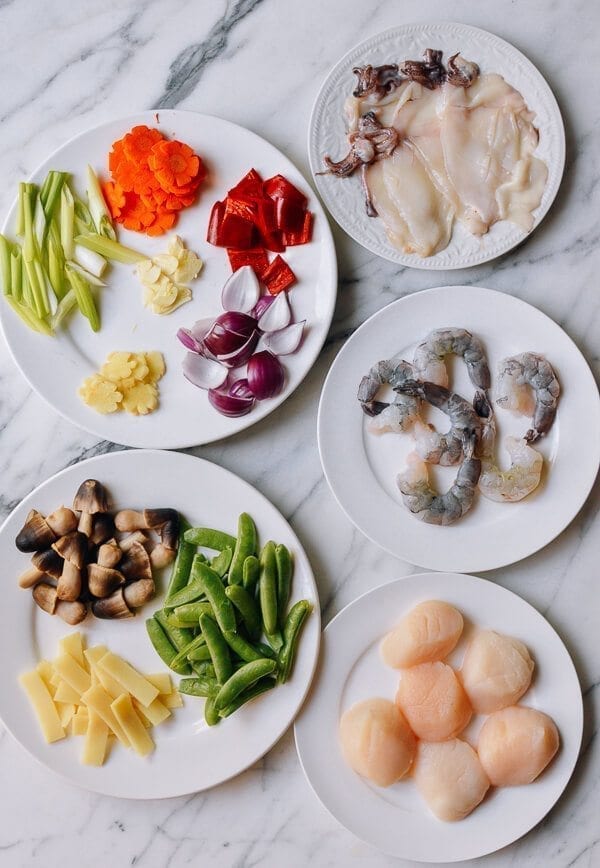
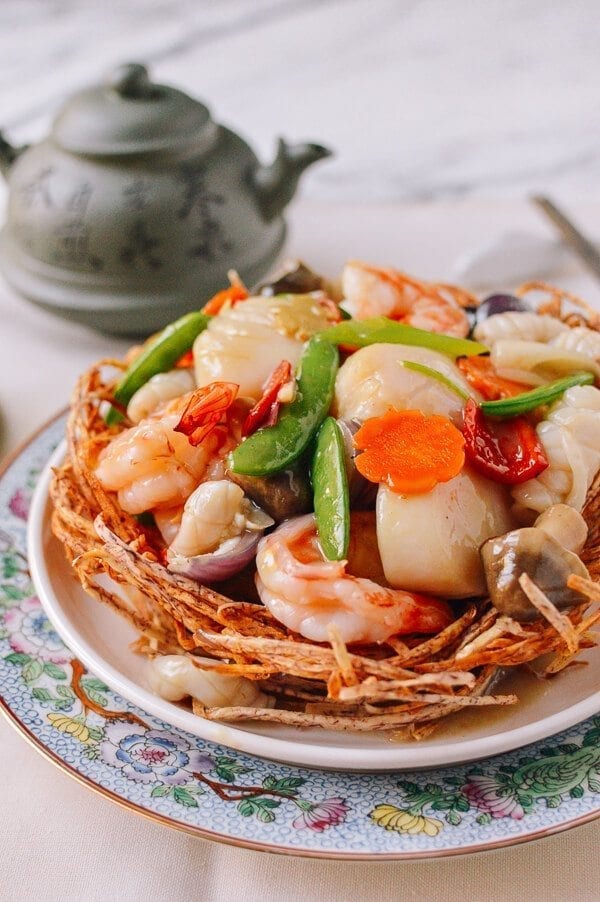
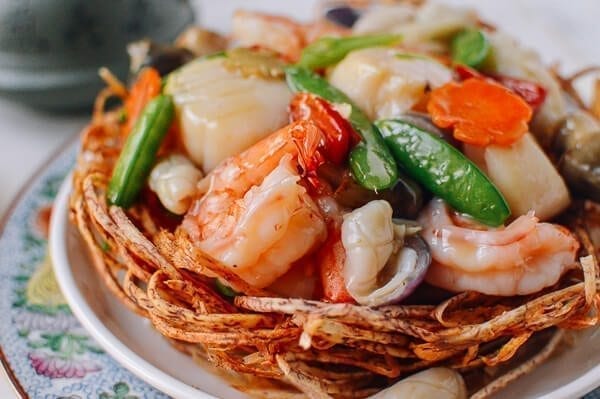
The trio of jumbo shrimp, scallops, and squid are the traditional medley in this Chinese Seafood Bird Nest.
Cooked in a white sauce similar to say, a Moo Goo Gai Pan, the contents of the bird’s nest are stir-fried with decoratively cut, colorful fresh vegetables, and aromatic garlic, ginger, and scallions. These are the flavors at the core of Cantonese cooking.
What is the “Nest” Made Of?
So let’s talk about the burning question concerning what the bird nest—the chalice of seafood!—is made of. Yes, it’s one of The Woks of Life’s favorite tubers: taro!
Taro has a wonderful earthy aroma and taste when fried and also becomes sturdy enough to make an edible basket that can hold all of that delicate, saucy seafood.
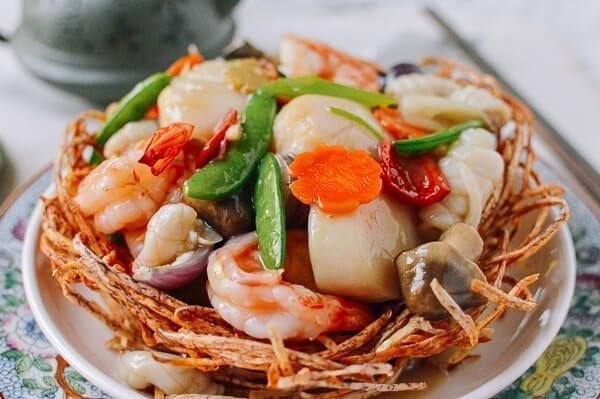
The preparation of the taro seafood bird nest takes some tender loving care and plenty of oil for deep frying, but it will impress everyone at the dinner table. It’s definitely worth it for special occasions to make a statement to family, friends, significant others, in-laws, and, of course, any naysayers who claim that your cooking skills end at cold cereal and toast!
If you too are planning for a Chinese New Year dinner or selecting dishes to whip up a Chinese banquet, we’ve got plenty of choices: Ginger Scallion Lobster, Steamed Whole Fish, and Banquet Fried Rice, to name a few.
Pick a handful, including this Chinese Seafood Bird Nest, and you’ll have a dinner for the history books.
Chinese Seafood Bird’s Nest: Recipe Instructions
For the seafood bird nest taro basket:
Spread the julienned taro in a criss-cross pattern over a large steel mesh strainer, letting some of the taro hang over the edges.
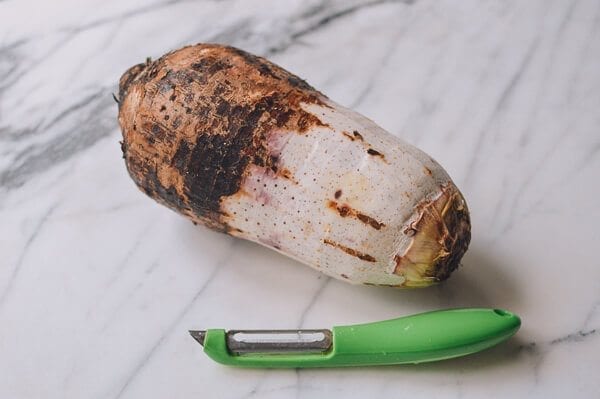
I peeled the taro using a standard peeler pictured but I did used a julienne peeler which we apparently forgot to get a picture of. I highly recommend a julienne peeler for your kitchen drawer because it is a real time save and works great!
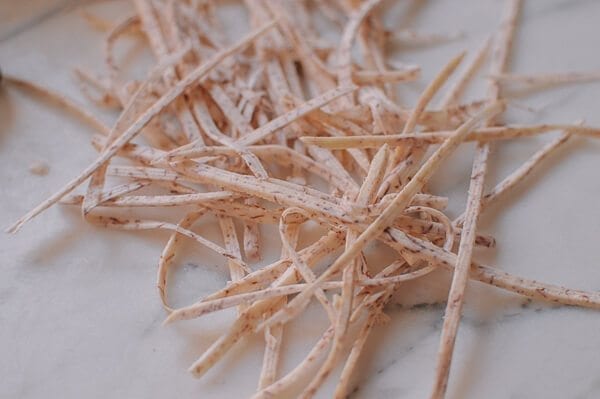
The taro will be slightly wet and starchy after it is julienned, which is exactly what you want for maximum adhesion. Take another steel mesh strainer of the same size and place it over the top so the taro strands are sandwiched between the two strainers.
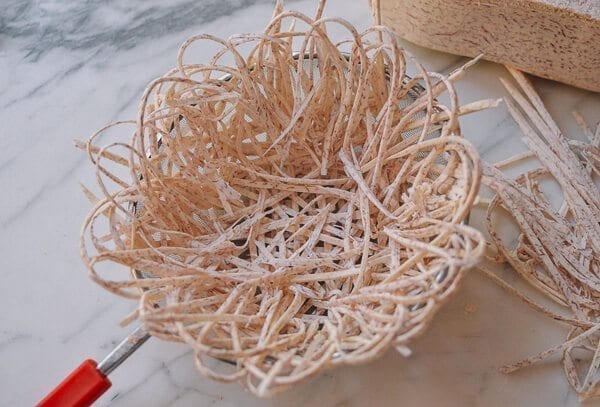
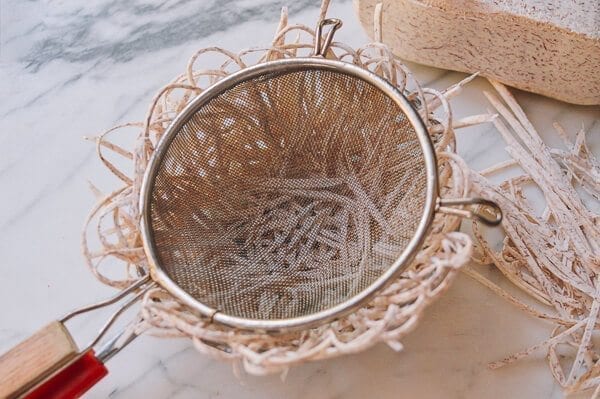
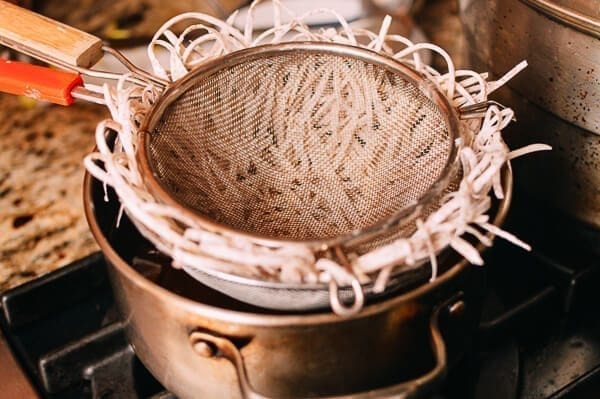
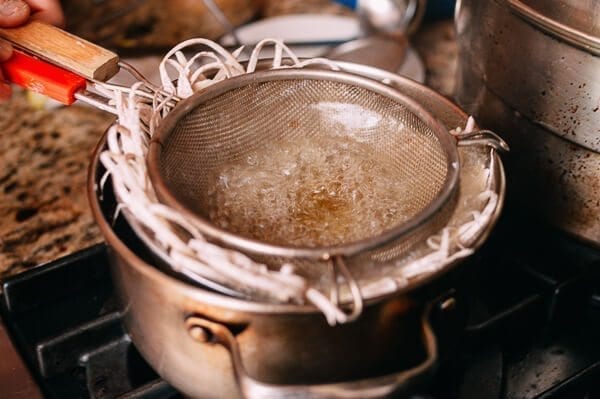
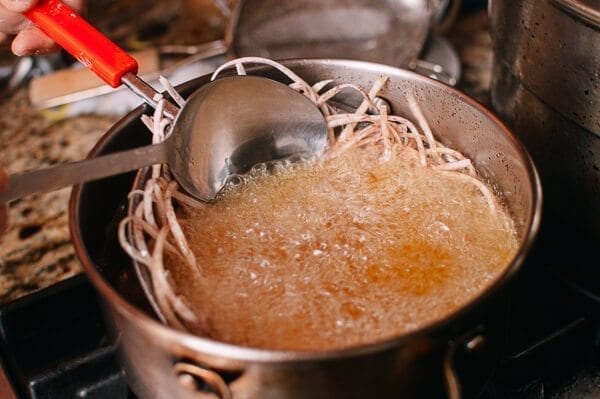
In a wok or pot, heat 6 cups of oil to 325 degrees F (use a thermometer to check the temperature), and place the “nest,” still sandwiched between the two strainers, in the oil.
Fry until golden brown, tilting the basket in different angles so the entire taro basket is fried evenly. Using a wok for frying is ideal, as you will have more room without having to use excessive amounts of oil, but a deep pot large enough for the basket will work also.
Be sure to place the taro basket in the pot slowly and use the utmost caution! Using a deeper pot or wok also makes frying safer since the taro basket, when first placed into the oil, will cause the oil to expand and overflow if your pot is too small and if your oil is too close to the top of the pot.
I am experienced in the kitchen, so I used a smaller pot but take special precautions I suggested above and enlist the help of a more experienced friend or family member!
For the seafood:
Make sure your shrimp and scallops are cleaned.
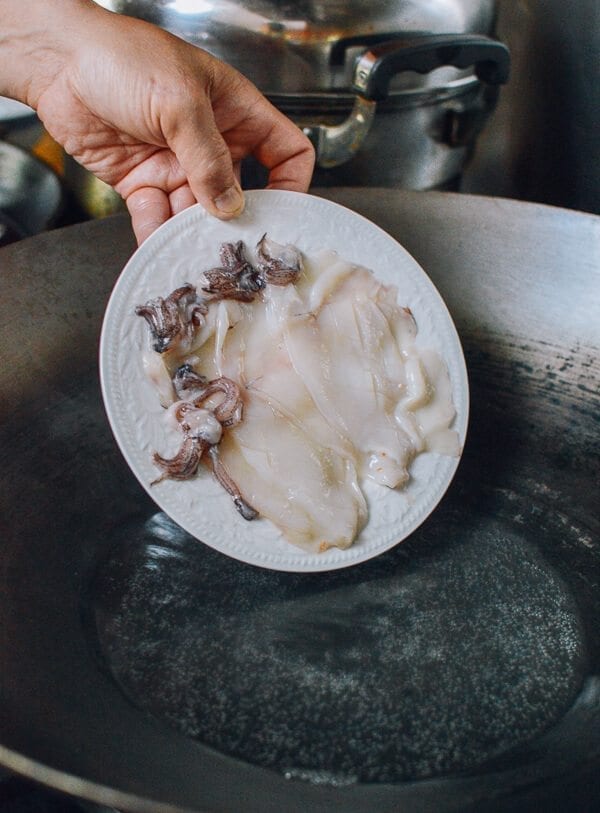
Prepare the squid by separating the tentacles and body and removing the hard skeleton parts. Use the tentacles as is, and set them aside to drain. Cut the mantle so you have flat pieces, and remove the inside skeleton. Cut the flat pieces into 2 by 3 inch rectangles, and score them diagonally in a criss-cross pattern, making sure not to cut the squid all the way through.
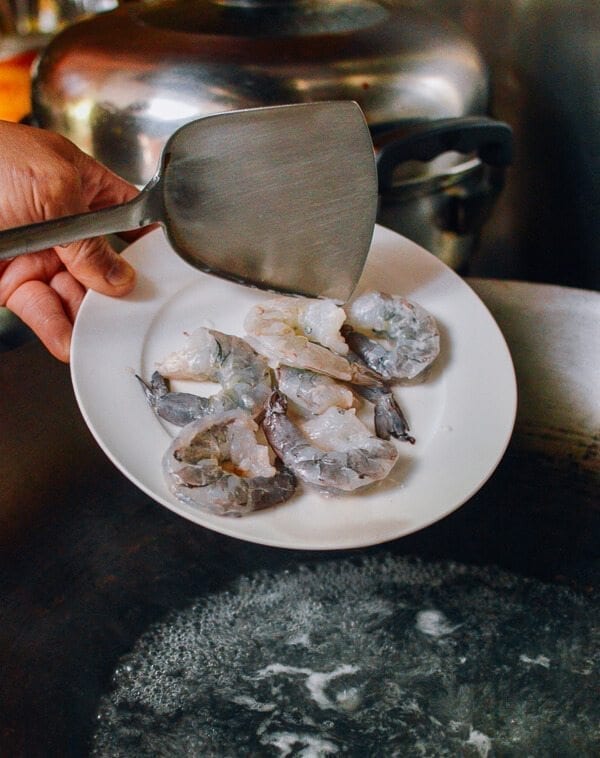
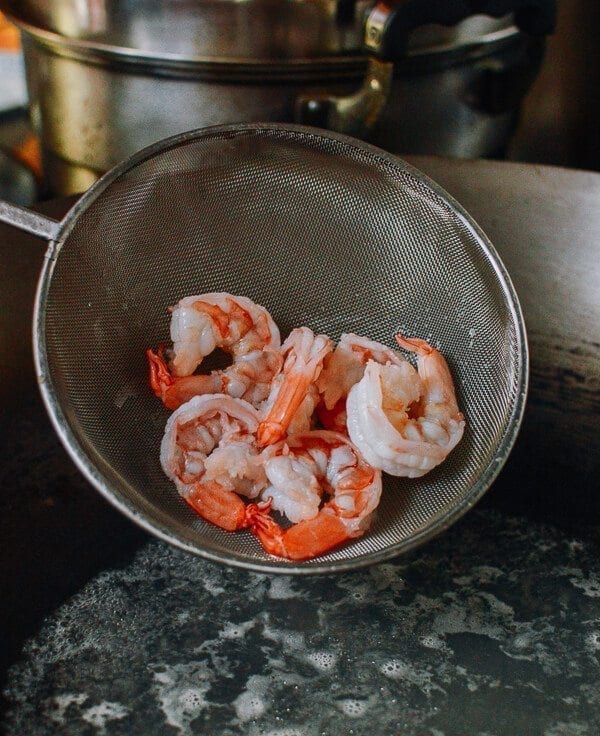
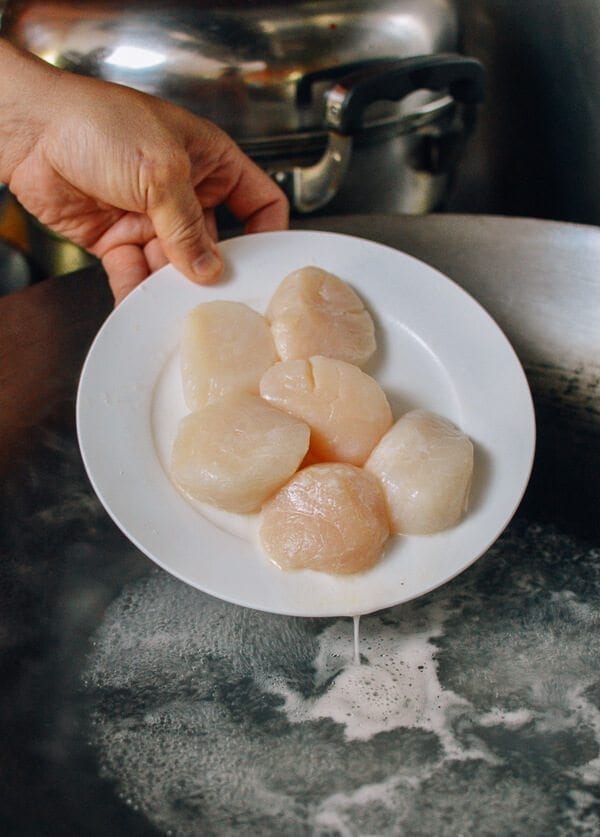
Bring 6 cups of water to a boil in your wok, and blanch the shrimp and scallops by slowly stirring them in the water until just opaque (about 20 seconds), and transfer to a plate. The shrimp and scallops should be just 70% cooked, since they will be cooked again in the stir-fry step of the dish.
Add the squid to the hot water, and blanch until they are curled, or about 10 seconds, and transfer these to a plate.
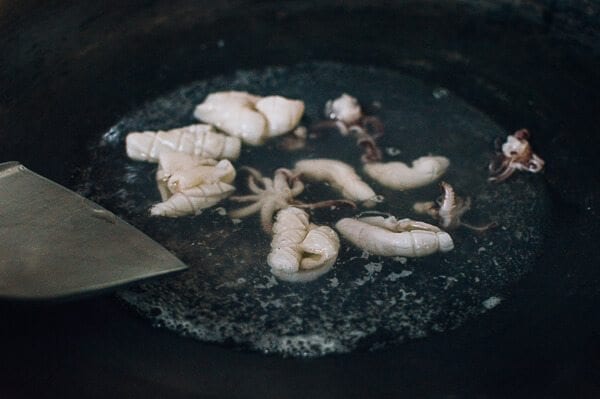
Asian grocery stores sometimes stock prepared squid that is cut and blanched into curls in the freezer section; if you have access, it’s a handy shortcut!
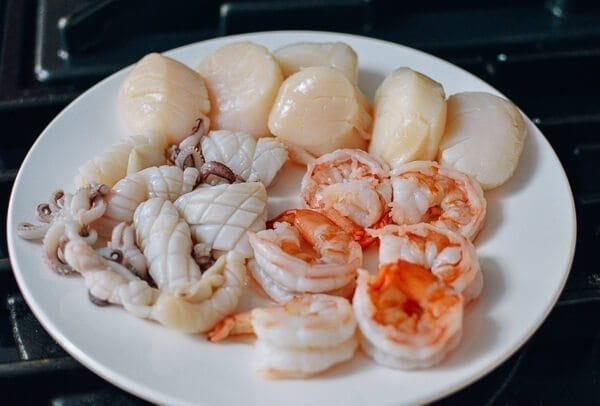
For putting together the full dish:
Heat your wok over medium-high heat, and coat the perimeter of the wok with two tablespoons of oil. Heat until the oil slides easily around the wok and starts to shimmer.
Add the ginger slices to the wok, and let fry for about 10 seconds.
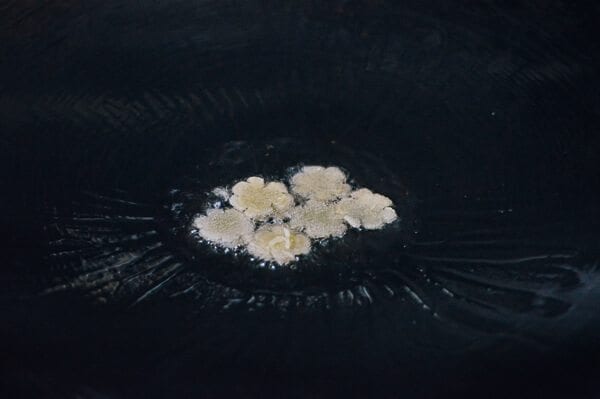
Add the scallions and garlic, and stir-fry for another 10 seconds.
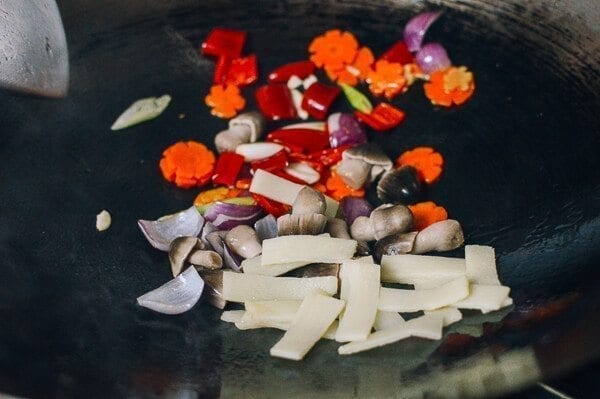
Next, add the carrots, bamboo shoots, and peppers, and turn the heat up to high. Give everything a good stir-fry for 30 seconds, and then add the straw mushrooms, snap peas, and onion.
Next, stir in the seafood, and add the Shaoxing wine. Stir-fry everything for another minute and add the hot chicken stock.
It’s important to add hot or even boiling chicken stock to keep the wok up to temperature, especially since most average stoves can have trouble generating enough heat for a good stir fry in the first place. You can also add more or less chicken stock depending on how much sauce you want in the dish.
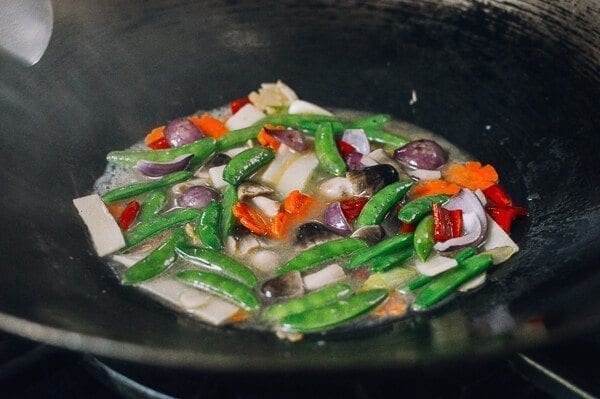
While the mixture is coming up to a boil, add the salt, sugar, white pepper, and sesame oil, and stir everything until well combined. Taste the sauce with a spoon, and add more seasonings to your preference, but be quick about it, or your seafood may overcook!
Mix together the cornstarch and water so that it’s uniformly combined, and add to the wok slowly while stirring. Again, you can add more, less, or leave it out entirely depending upon your taste preferences, but it’s best to get to a consistency so that the sauce coats all of the ingredients.
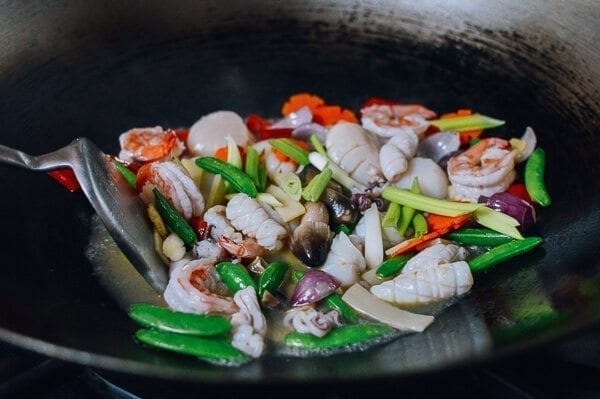
Carefully spoon the mixture into your taro basket, and serve your seafood bird best dish immediately!
Fish and seafood should always be the last dish you cook in a family-style meal, because it should be served hot. Banquet-style dishes usually taste better at the restaurant because servers rush each course out once it is plated from the wok!
This Chinese style seafood bird nest is delicate, tasty and will impress your guests so plan it for your next Chinese New year feast or special gathering!
Looking for more authentic recipes? Subscribe to our email list and be sure to follow us on Pinterest, Facebook, Instagram, and Youtube!
Recipe

Chinese Seafood Bird Nest Banquet Dish
Ingredients
For the taro basket:
- 4 cups taro (julienned)
- 6 cups canola oil (for frying)
For the seafood:
- 6 large shrimp (16 to 20 size, about 6 ounces/170g by weight; peeled and deveined)
- 6 large diver or sea scallops (about 6 ounces/170g by weight)
- 6 ounces whole squid (170g, cleaned)
For the rest of the dish:
- 3 tablespoons canola oil (divided)
- 8 fresh ginger slices (⅛-inch thick)
- 2 scallions (white parts only, sliced at an angle into 1½-inch pieces)
- 2 cloves garlic (thinly sliced)
- ½ of a carrot (cut into a star pattern about ⅛-inch thick)
- ½ cup bamboo shoots (rinsed and drained)
- ¼ of a whole red bell pepper (cut into 1-inch slices)
- ½ cup straw mushrooms (fresh or canned)
- 1 cup sugar snap peas (tips removed)
- 1 small red onion (cut into 1-inch pieces)
- 2 teaspoons Shaoxing wine
- 1 cup hot chicken stock
- 1 teaspoon salt
- ¼ teaspoon sugar
- 1/8 teaspoon ground white pepper
- ½ teaspoon sesame oil
- 1½ tablespoons cornstarch (mixed with 1½ tablespoons warm water, optional)
Instructions
- For the taro basket, spread the julienned taro in a criss-cross pattern over a large steel mesh strainer, letting some of the taro hang over the edges. The taro will be slightly wet and starchy after it is julienned, which is exactly what you want for maximum adhesion. Take another steel mesh strainer of the same size and place it over the top so the taro strands are sandwiched between the two strainers.
- In a wok or pot, heat 6 cups of oil to 325 degrees F (use a thermometer to check the temperature), and place the “nest,” still sandwiched between the two strainers, in the oil. Fry until golden brown, tilting the basket in different angles so the entire taro basket is fried evenly. Using a wok for frying is ideal, as you will have more room without having to use excessive amounts of oil, but a deep pot large enough for the basket will work also. Be sure to place the taro basket in the pot slowly and use the utmost caution! Using a deeper pot or wok also makes frying safer since the taro basket, when first placed into the oil, will cause the oil to expand and overflow if your pot is too small and if your oil is too close to the top of the pot.
- For the seafood, make sure your shrimp and scallops are cleaned.
- Prepare the squid by separating the tentacles and body and removing the hard skeleton parts. Use the tentacles as is, and set them aside to drain. Cut the mantle so you have flat pieces, and remove the inside skeleton. Cut the flat pieces into 2 by 3 inch rectangles, and score them diagonally in a criss-cross pattern, making sure not to cut the squid all the way through.
- Bring 6 cups of water to a boil in your wok, and blanch the shrimp and scallops by slowly stirring them in the water until just opaque (about 20 seconds), and transfer to a plate. The shrimp and scallops should be just 70% cooked, since they will be cooked again in the stir-fry step of the dish.
- Add the squid to the hot water, and blanch until they are curled, or about 10 seconds, and transfer these to a plate. Asian grocery stores sometimes stock prepared squid that is cut and blanched into curls in the freezer section; if you have access, it’s a handy shortcut!
- Heat your wok over medium-high heat, and coat the perimeter of the wok with two tablespoons of oil. Heat until the oil slides easily around the wok and starts to shimmer.
- Add the ginger slices to the wok, and let fry for about 10 seconds. Add the scallion and garlic, and stir-fry for another 10 seconds.
- Next, add the carrots, bamboo shoots, and peppers, and turn the heat up to high. Give everything a good stir-fry for 30 seconds, and then add the straw mushrooms, snap peas, and onion.
- Next, stir in the seafood, and add the Shaoxing wine. Stir-fry everything for another minute and add the hot chicken stock. It’s important to add hot or even boiling chicken stock to keep the wok up to temperature, especially since most average stoves can have trouble generating enough heat for a good stir fry in the first place. You can also add more or less chicken stock depending on how much sauce you want in the dish.
- While the mixture is coming up to a boil, add the salt, sugar, white pepper, and sesame oil, and stir everything until well combined. Taste the sauce with a spoon, and add more seasonings to your preference, but be quick about it, or your seafood may overcook!
- Mix together the cornstarch and water so that it’s uniformly combined, and add to the wok slowly while stirring. Again, you can add more, less, or leave it out entirely depending upon your taste preferences, but it’s best to get to a consistency so that the sauce coats all of the ingredients.
- Carefully spoon the mixture into your taro basket, and serve immediately!
Nutrition Facts