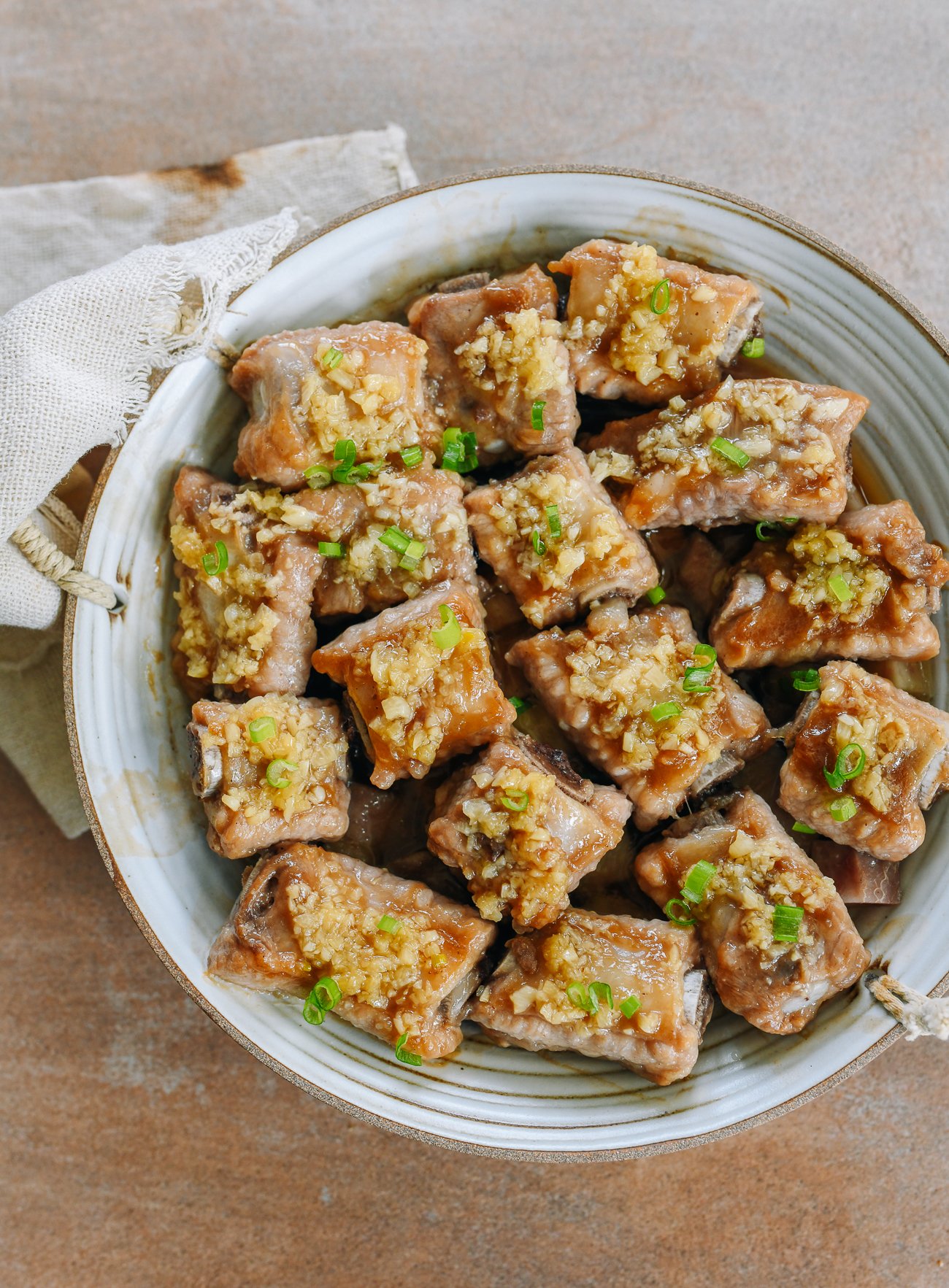
Steamed Pork Ribs with Fermented Red Bean Curd is the perfect make-ahead Chinese dish for a busy weeknight.
Marinate the ribs the night before, and put them in the refrigerator. When you get home from work, place them into the steamer, fire up the rice cooker, blanch some green veggies, and you have a super-delicious quick and easy meal!
Never Steamed Ribs?
While pork ribs are often roasted, grilled, or smoked, Cantonese cooks love to steam them. Steamed pork ribs (zing paai gwat in Cantonese) is a delicious dish—and a quick and easy preparation. (For tips on your steamer setup, check out our post on How to Steam Food – 3 Ways to Set up a Steamer).
Left overnight to marinate, the ribs tenderize and soak up flavor. They also cook in just 20 minutes, as they are small bite-size pieces.
It’s important to note that steamed ribs do not have the fall-apart texture that many Americans are looking for in their grilled, roasted, and smoked ribs. Rather, the ribs still have some bite to them, which is what we prefer (see Judy’s grilled ribs recipe for more thoughts on this)! They’re juicy, and the cornstarch in the marinade gives the pork a silky texture after cooking.

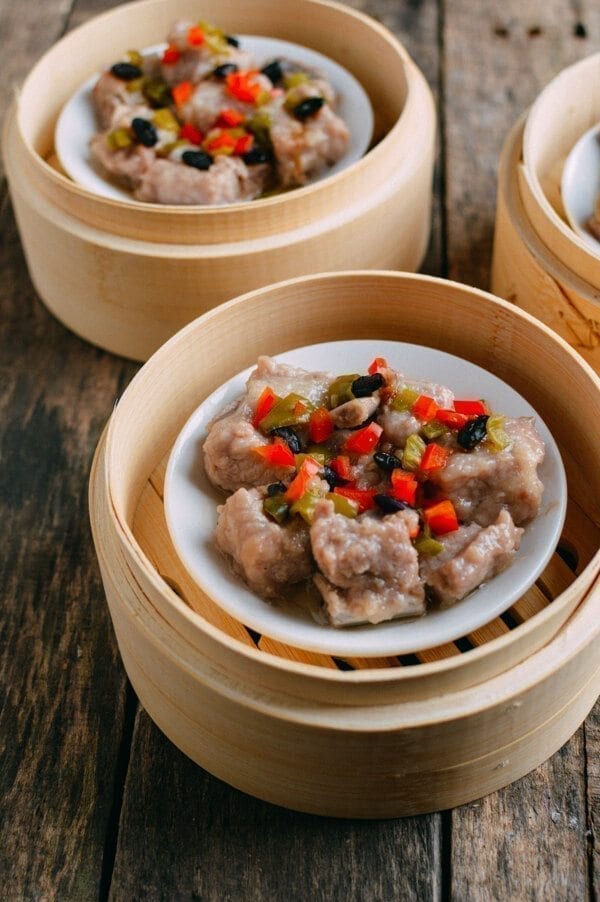
Most of you have heard of Dim Sum Steamed Spare Ribs with Black Beans. It’s by far the most common and popular version of steamed ribs. Our recipe was one of the first to hit the internet back in 2014, and yes, it tastes just like what you get at dim sum restaurants on the weekend!
I also posted a recipe for Steamed Garlic Ribs with Taro, a delicious variation. This recipe is our latest version, and it’s flavored with fragrant red fermented bean curd.
Different Cuts of Pork Ribs Explained
You may be a little confused by all the rib cuts available at the grocery store, so let’s clear that up now.
There are two main types of pork ribs: baby back ribs and spare ribs.
Baby back ribs are cut from the section of the ribs closer to the backbone. Spare ribs, on the other hand, are cut closer to the belly of the pig—from where the baby back ribs end, all the way to the tips of the ribs.
Baby back ribs are smaller, more tender, and generally more expensive than spare ribs.
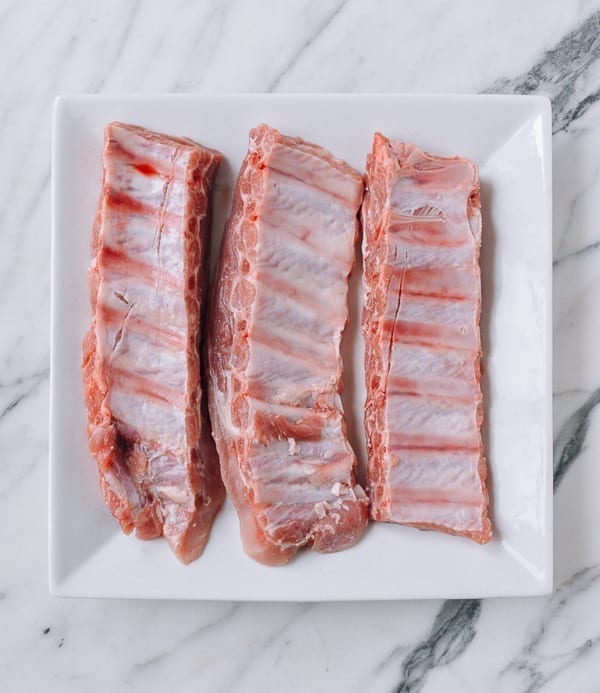

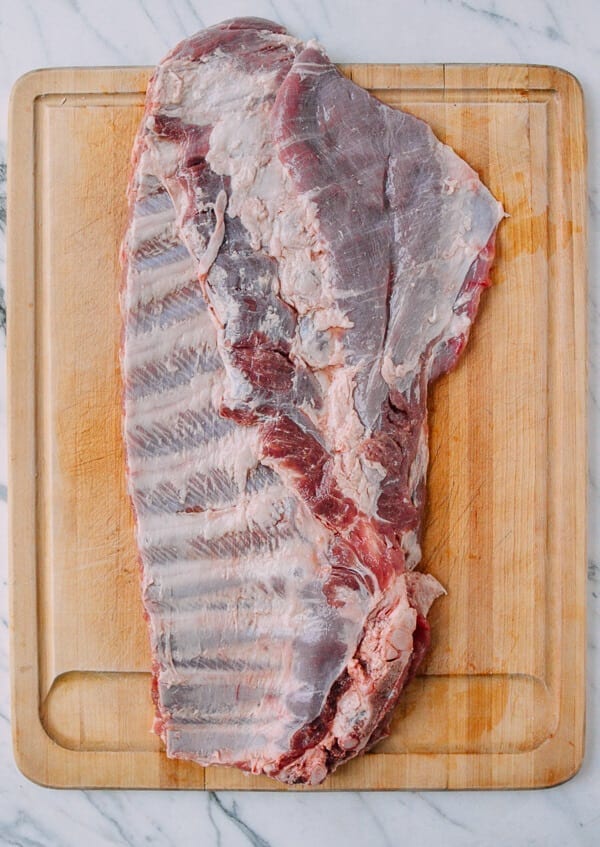
Spare ribs are larger and fattier. They have an attached flap of meat known as the “skirt,” as well as the cartilaginous rib tips where the bones meet cartilage. (See our Chinese takeout-style rib tips for a delicious way to use the tips—they are a prize in themselves!) They may also have the breast bone (or sternum bone) still attached.
The term “St. Louis style ribs” refers to spare ribs with these pieces trimmed away, leaving a neat rectangular rack of ribs.
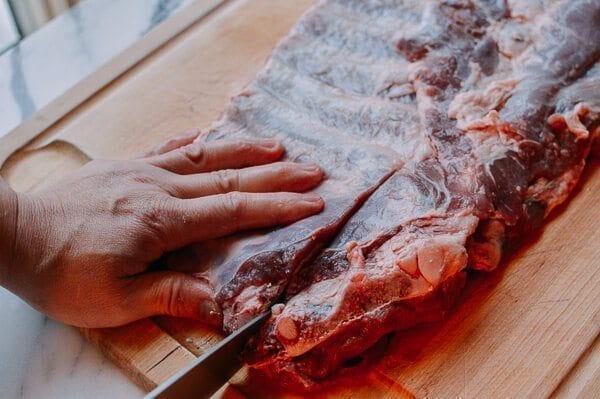
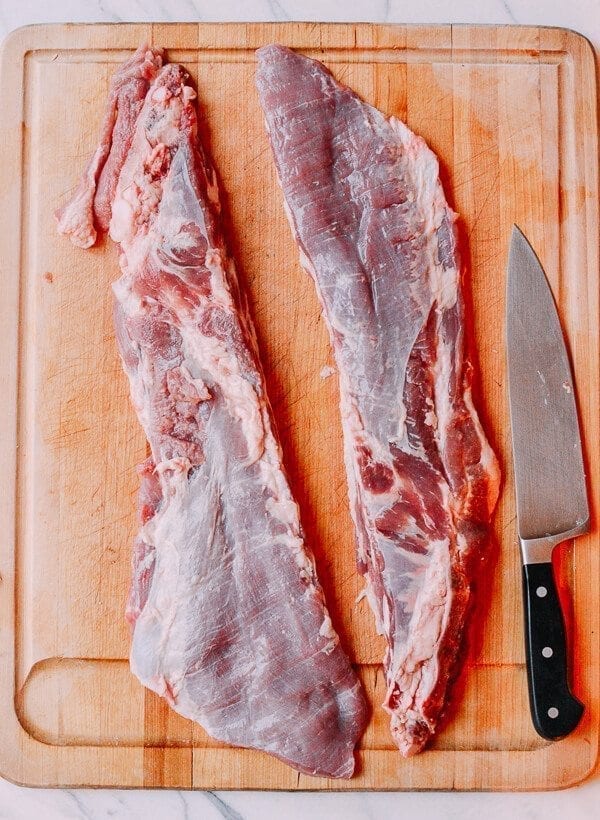
Finally, if you’ve seen “Country Style Ribs” at your grocery store and wondered what those were, they are actually not ribs at all. They are a boneless cut from the shoulder of the pig, cut thickly into short lengths that resemble ribs.
What Type of Pork Ribs Do I Use?
For any of our steamed rib recipes, you can use St. Louis ribs or the soft cartilage rib tips in bite-size pieces.

You could also use baby back ribs that have been cut into small pieces, but as they are generally more expensive, we don’t usually go that route.
If you prefer boneless meat, you can use small nuggets of country-style ribs or chunks of pork butt, though we recommend cutting them into smaller 3/4-inch (2cm) pieces.
Some Chinese restaurants use the rib tips cut into small pieces for steaming because, as a byproduct of the trimming process, they are more economical. (And many folks like to chew on the soft cartilage!)
As you can see below, at this Chinese market, the rib tip pieces and spare rib pieces are being sold separately, though at the same price! (The store seems to have caught on to the fact that people love the rib tips as much as the ribs themselves.)

You may also see “cross-cut” ribs, which are cut through the bone, to make separating them into small pieces easy for the home cook, as the hard work of cutting through bone has already been done by the butcher.


Steaming times do vary depending upon the size of the pieces you use, so try to get similar size pieces.

Tip!
You can usually find pre-cut ribs for steaming at a Chinese grocery store. Otherwise, you can even ask your local butcher to prepare them. If you’re more ambitious and own a nice bone cleaver and a thick cutting board, you can cut your own! Partially frozen ribs are easiest to handle and chop.
That said, we only recommend this for experienced cooks! Do not attempt it with a regular knife, or you may chip/damage it.
What is Red Fermented Bean Curd?
Fermented bean curd (腐乳 – fǔrǔ in Mandarin or foo yee in Cantonese) is a type of preserved tofu made with salt, rice wine, and other flavorings. There is a white type and a red type. The red type gets its color from a type of fermented rice.
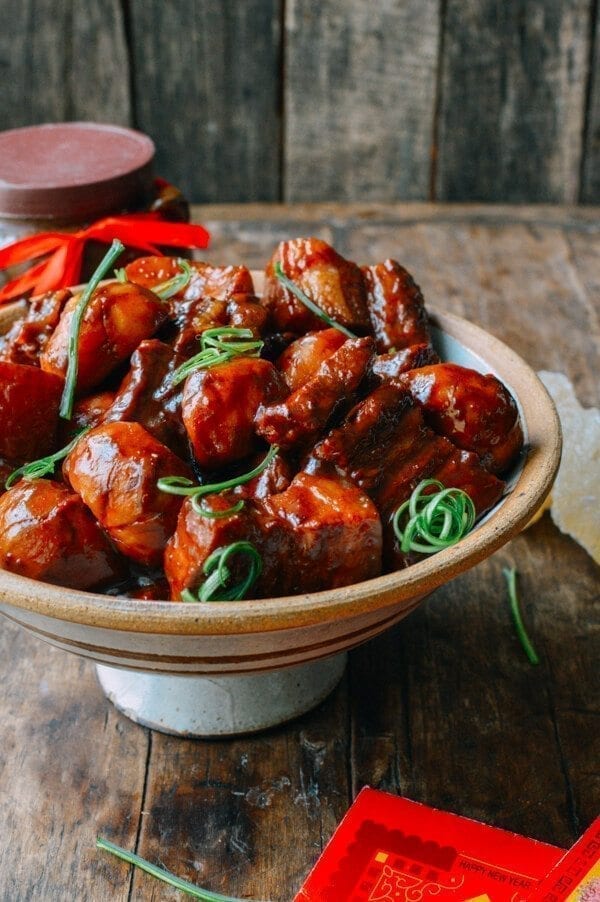

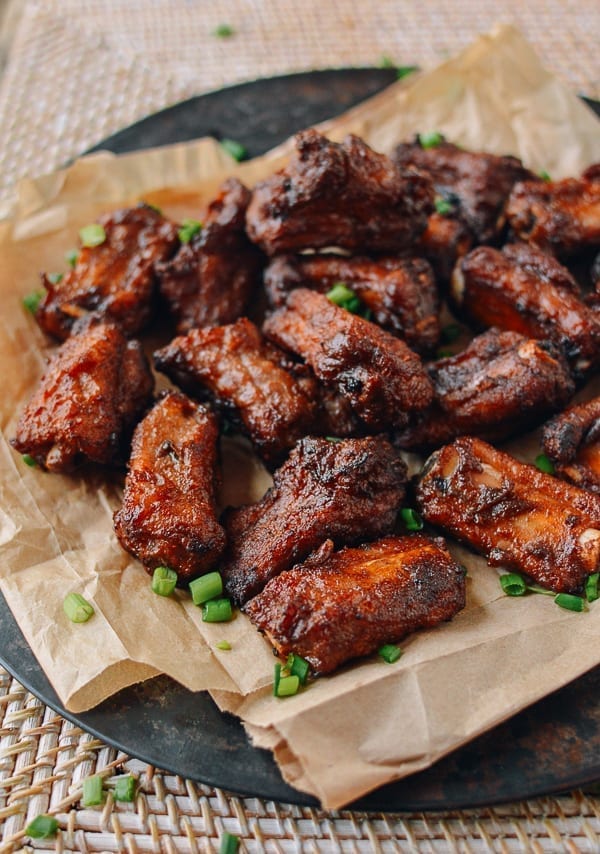
This ingredient is quite simply loaded with umami. As we write in our article on fermented bean curd, red fermented bean curd’s “flavor is stronger than that of the white fermented bean curd, with a more pronounced taste of rice wine, making it more well-suited to braised meat dishes and sauces.”
We use this special ingredient in dishes like:
- Cantonese Style Braised Pork Belly with Arrowhead Root
- Steamed Pork Belly with Taro
- Chinese Fried Ribs with Red Fermented Bean Curd
- Steamed Sticky Rice wth Ribs
- Buddha’s Delight – Lo Han Jai
It’s no accident that many of these are pork recipes. Pork and red fermented bean curd complement each other very well, which is why I decided to use it in this new version of steamed ribs!

Possible Recipe Variations
Chinese restaurants continue to innovate, and their steamed rib dishes have evolved. We’ve seen restaurants sometimes add small chunks of taro, pumpkin, or kabocha squash below the ribs soak up the juices. They are a welcome and delicious addition!
You can add any of those ingredients, cut into small ¼- to ½-inch (1cm) pieces. Place them evenly in a single layer on the dish before adding your ribs on top.
Recipe Instructions
Place the ribs in a large bowl and cover them with cold water. Stir and agitate the ribs to rinse them well. Pour out the water, and rinse the ribs again under cold running water. Once the water is clear, leave enough water to submerge the ribs. Stir in the baking soda (this will tenderize the ribs and give them a cleaner flavor). Soak for 30 minutes to 1 hour.

After soaking, rinse and drain the ribs thoroughly.

Transfer the ribs to a mixing bowl, along with the garlic, ginger, sugar, salt, white pepper, five spice powder, red fermented bean curd, Shaoxing wine, sesame oil, oyster sauce, and dark soy sauce. Mix to coat the ribs evenly. Cover and marinate in the refrigerator overnight.


Strapped for time?
Marinate overnight for best results, but if short on time, you can marinate them for a minimum of 30 minutes.
Just before steaming, toss the ribs with the cornstarch, incorporating it evenly. The marinade should be clinging to the ribs, with little to no standing liquid.
Spread the ribs evenly across a shallow heatproof dish that will fit into your steamer (or wok with a steaming rack—see our post on how to set up a steamer for more details). A round ceramic or glass pie plate works well.

Next, bring some water to a simmer in a metal steamer or wok with a steaming rack set in the bottom. Place the dish of ribs onto the rack. Cover,and steam over medium heat for 15-20 minutes, until the ribs are opaque and cooked through.
The water should be at a constant simmer to generate enough steam for cooking. Cooking time will depend on the size/thickness of your ribs. They will have a reddish tint from the fermented bean curd.
Sprinkle the ribs with chopped scallion, if using, and serve with steamed rice!

Looking for more authentic recipes? Subscribe to our email list and be sure to follow us on Pinterest, Facebook, Instagram, and Youtube!
Recipe

Steamed Pork Ribs with Fermented Red Bean Curd
Ingredients
- 1 pound pork ribs cut into 1-inch pieces (450g)
- 1 teaspoon baking soda
- 2 cloves garlic (minced)
- ¼ teaspoon fresh ginger (minced or grated)
- 1 ½ teaspoons sugar
- 1 teaspoon salt
- ⅛ teaspoon white pepper
- 1 large pinch five spice powder
- 1 tablespoon red fermented bean curd
- 1 tablespoon Shaoxing wine
- 1 teaspoon sesame oil
- 2 teaspoons oyster sauce
- ½ teaspoon dark soy sauce
- 2 teaspoons cornstarch
- 1 tablespoon chopped scallion (optional garnish)
Instructions
- Place the ribs in a large bowl and cover them with cold water. Stir and agitate the ribs to rinse them well. Pour out the water, and rinse the ribs again under cold running water. Once the water is clear, leave enough to submerge the ribs, and stir in the baking soda (this will tenderize the ribs and give them a cleaner flavor). Soak for 30 minutes to 1 hour. After soaking, rinse and drain the ribs thoroughly.
- Transfer the ribs to a mixing bowl, along with the garlic, ginger, sugar, salt, white pepper, five spice powder, red fermented bean curd, Shaoxing wine, sesame oil, oyster sauce, and dark soy sauce. Mix to coat the ribs evenly. Cover and marinate in the refrigerator overnight, or at least 30 minutes.
- Just before steaming, toss the ribs with the cornstarch, incorporating it evenly. The marinade should be clinging to the ribs, with little to no standing liquid.
- Spread the ribs evenly across a shallow heatproof dish that will fit into your steamer. Bring water to a simmer in a metal steamer or wok with a steaming rack set in the bottom. Place the dish of ribs onto the rack, cover, and steam over medium heat for 15-20 minutes, until the ribs are opaque and cooked through. Garnish with chopped scallion, if using.