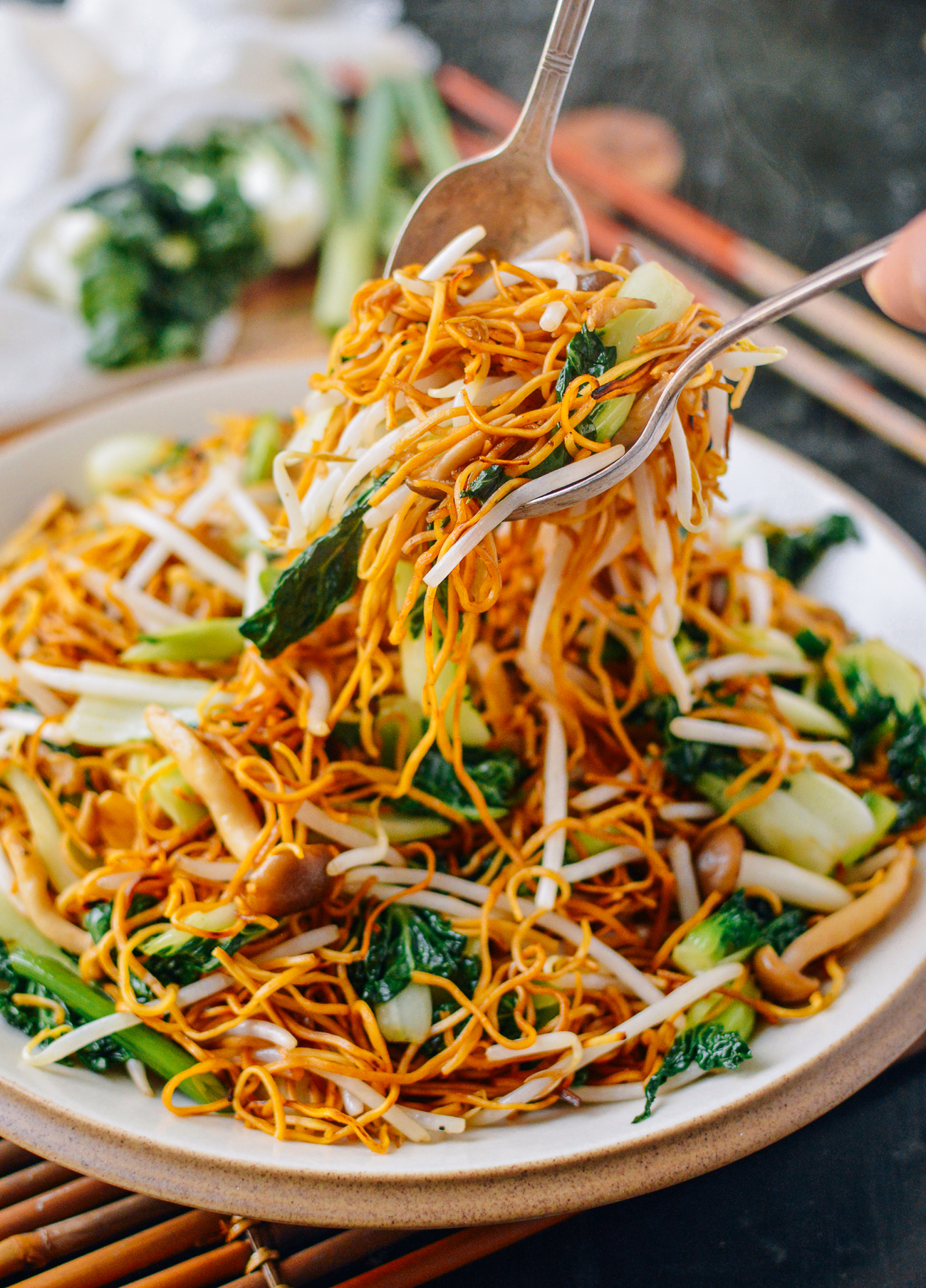
This Vegetable Chow Mein recipe is a truly delicious meatless option for all you vegetarians out there. It’s also a light and satisfying side dish or meal for anyone looking for a veggie-forward Chinese noodle recipe.
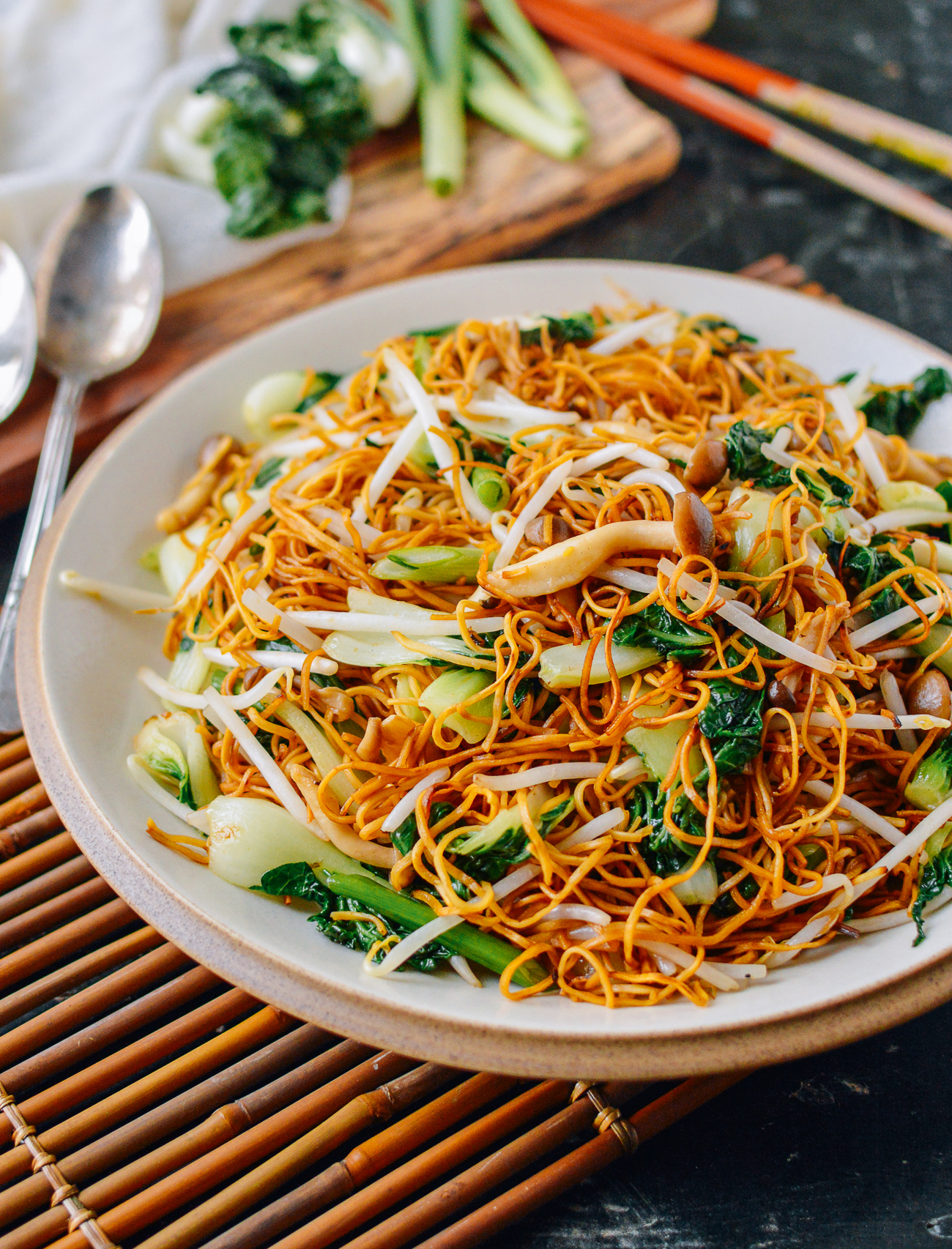
While many recipes on the internet for Vegetable Chow Mein feature soft noodles (similar to lo mein), this recipe makes a proper chow mein. That means we’re using crispy and chewy Hong Kong-style Cantonese pan-fried noodles, with a mix of bok choy, mushrooms, and bean sprouts.

Note:
This recipe was originally published on June 23, 2018. It has since been updated with more information, clearer photos, metric measurements, and nutrition information. The recipe itself remains the same. Enjoy!
What’s the Difference Between Chow Mein and Lo Mein?
So for anyone who gets confused between “chow mein” and “lo mein,” what’s the difference, you might ask? Answer: it’s all about the noodles.
Vegetable Lo Mein uses thicker, softer Chinese lo mein noodles, which is what most people are familiar with.
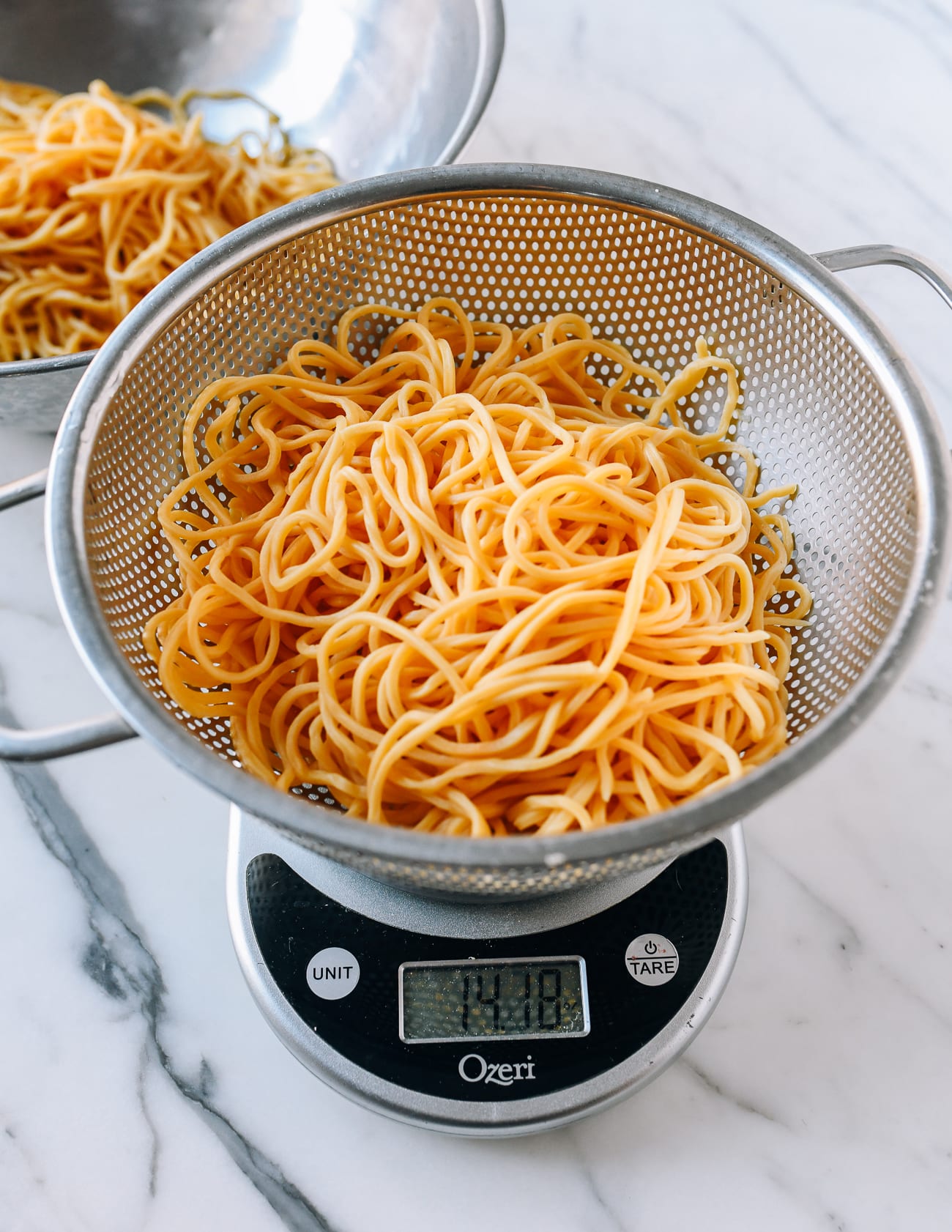
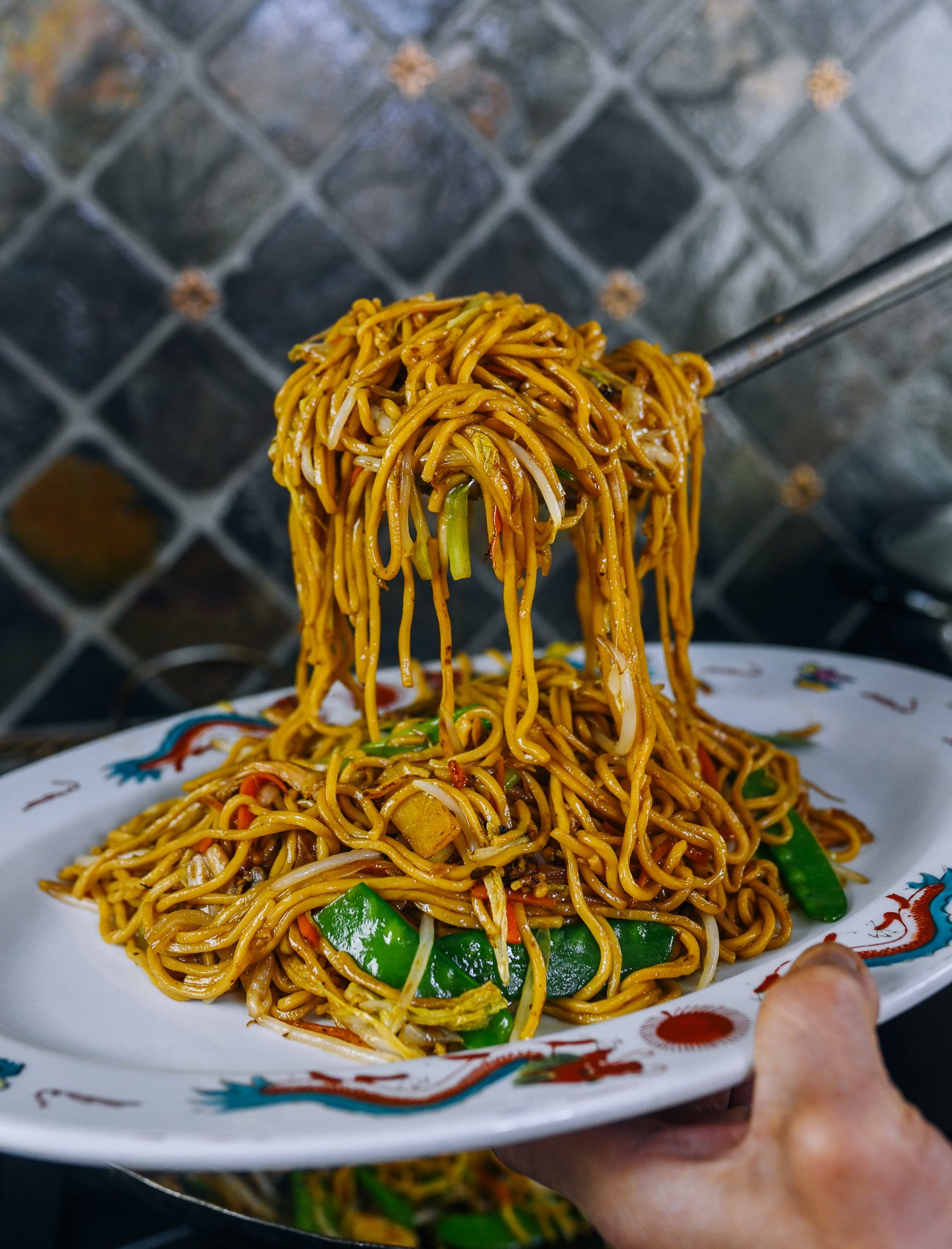
To see the difference between lo mein and chow mein noodles (and a heck of a lot of other noodles), check out our Chinese Noodles and Wrappers page.
Vegetable Chow Mein––really any authentic Cantonese chow mein recipe––uses Hong Kong-style noodles, which are very thin and pan-fried until crispy.
This vegetable chow mein is crispy, like our Hong Kong-style Shrimp Chow Mein, but feel free to make a saucier version. If you want guidance on what that should look like, check out our Gai See Chicken Chow Mein.
A Note on Pan-fried Noodles
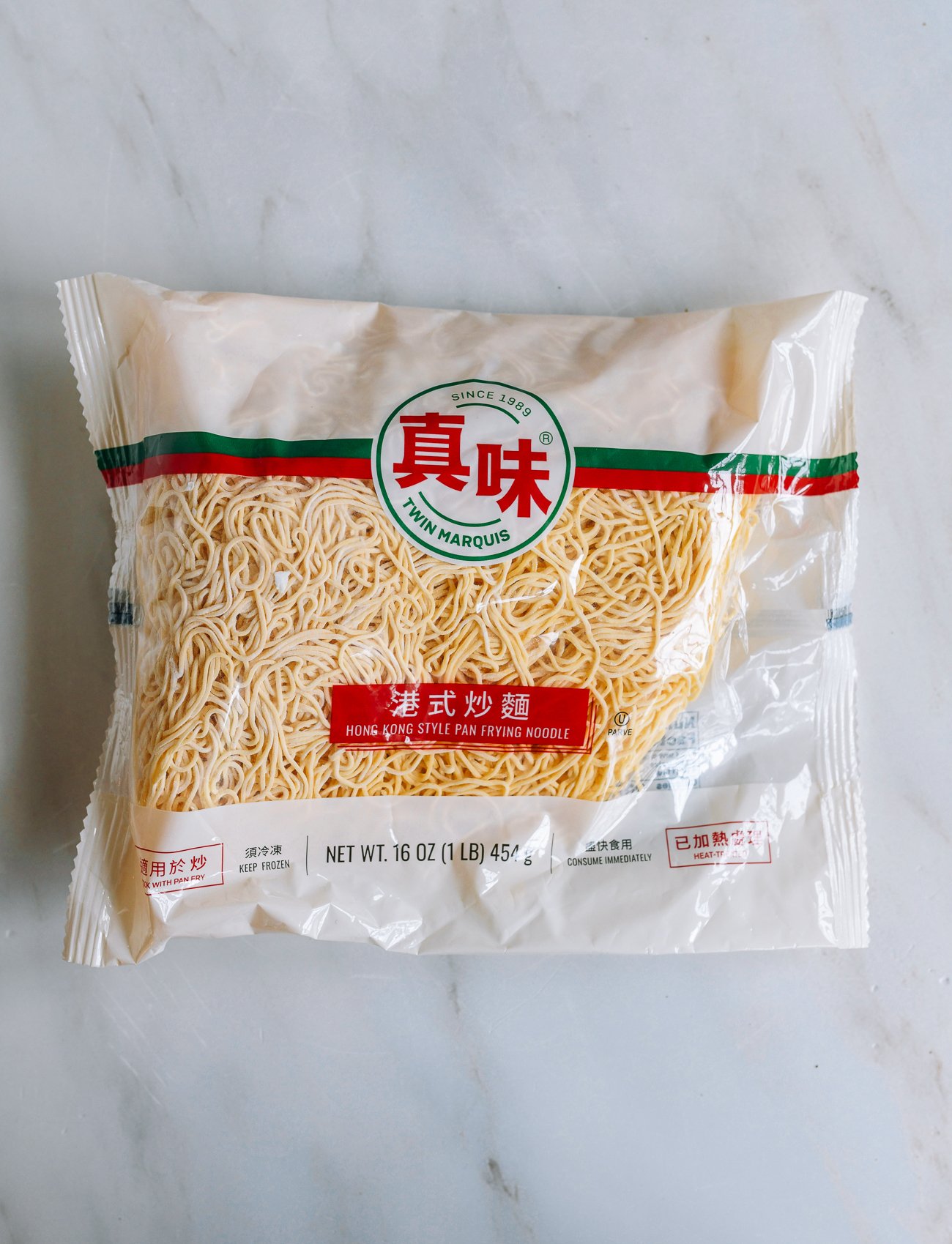
You can find fresh Hong Kong Style Pan-fried Noodles in Chinese grocery stores in the refrigerated fresh noodle section. Don’t confuse them with Hong-Kong-Style wonton noodles, which are meant to be used in soup.
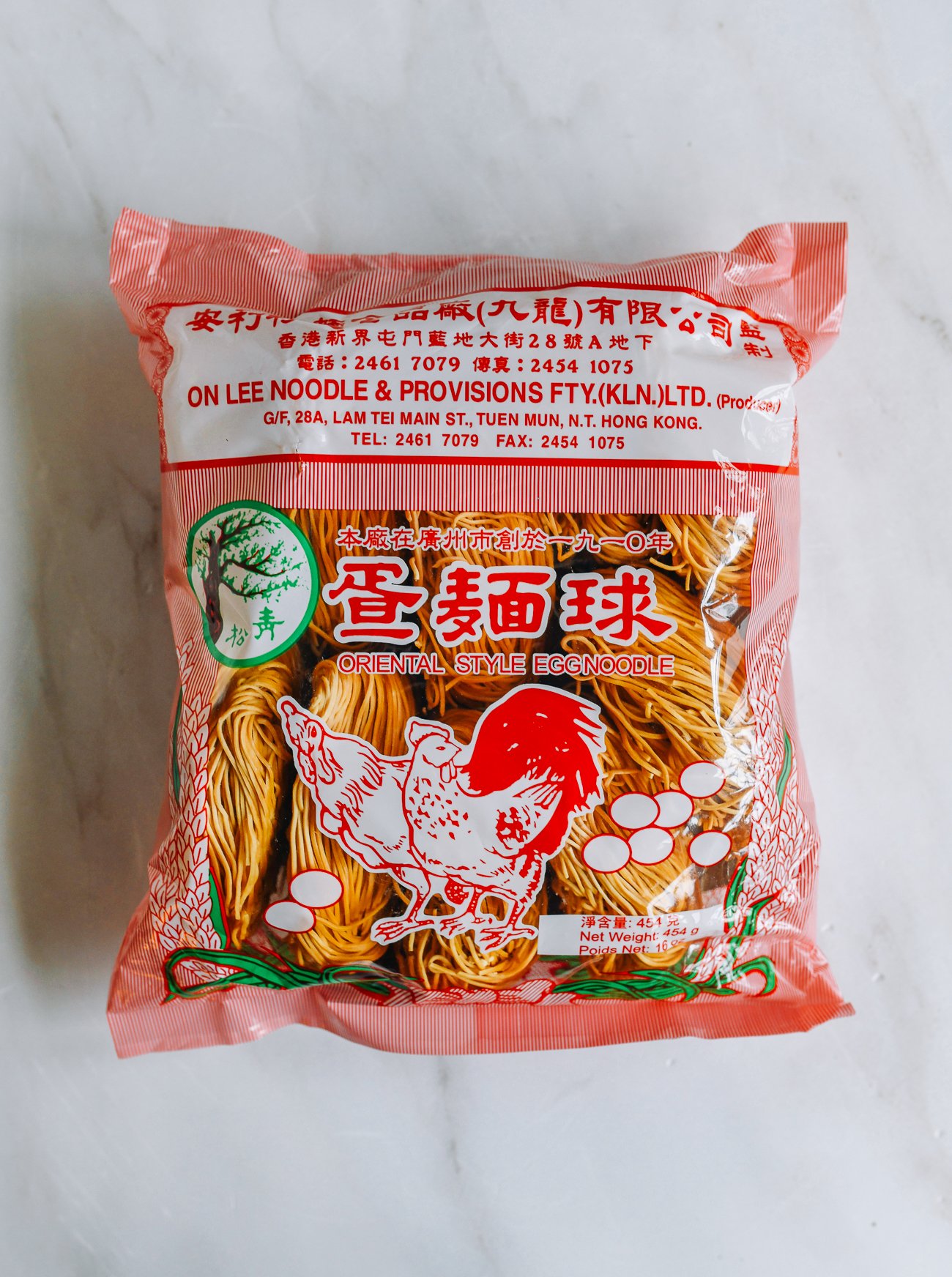
If you can’t find these, you can also look for a dried version of pan-fried noodles in the dried noodle aisle.
Look below at the photos of the two types so you can identify them! You may not find the exact same brands, but this is what they look like:
A Fridge Clean-out Opportunity
The best thing about this dish may be that it’s what we like to call a “fridge clean-out.” There are no rules for what you can include in your Vegetable Chow Mein!
That means whatever fresh vegetables (or even canned veggies like bamboo shoots) you have at the bottom of your crisper drawer will work: carrots, celery, any leafy green. Whatever you’ve got or can get will do the trick!
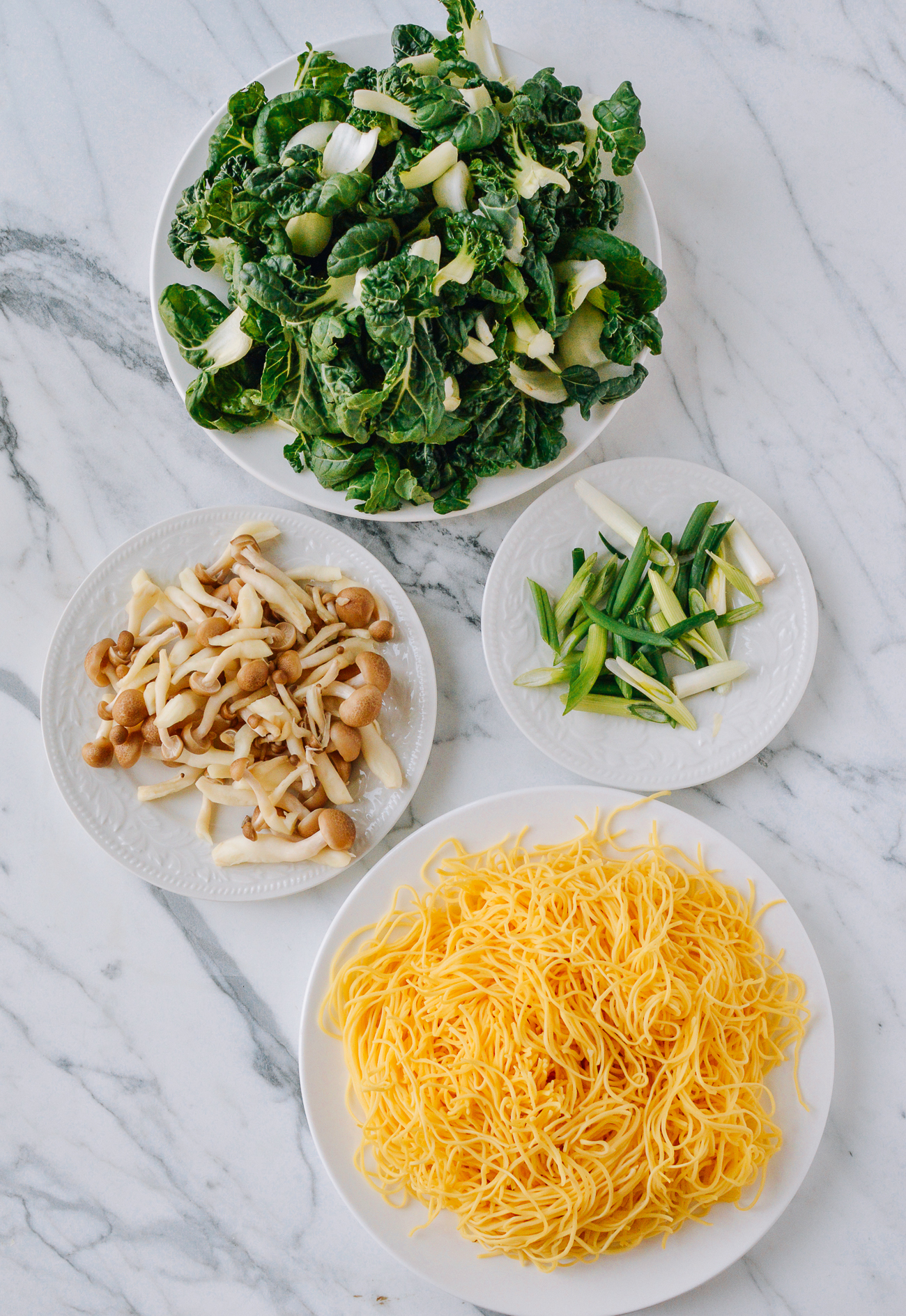
For this dish, we kept things simple and used a vegetable trio of bunashimeji mushrooms, mung bean sprouts, and dwarf bok choy.
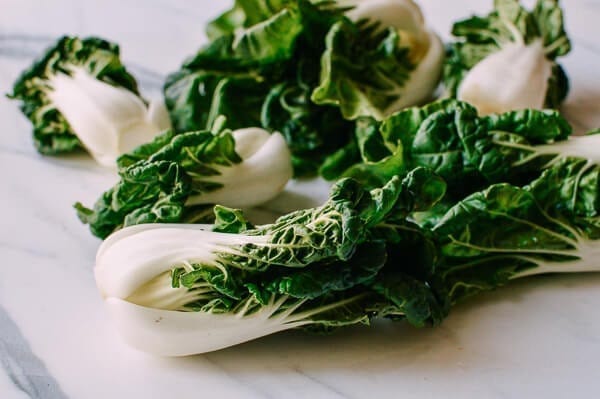
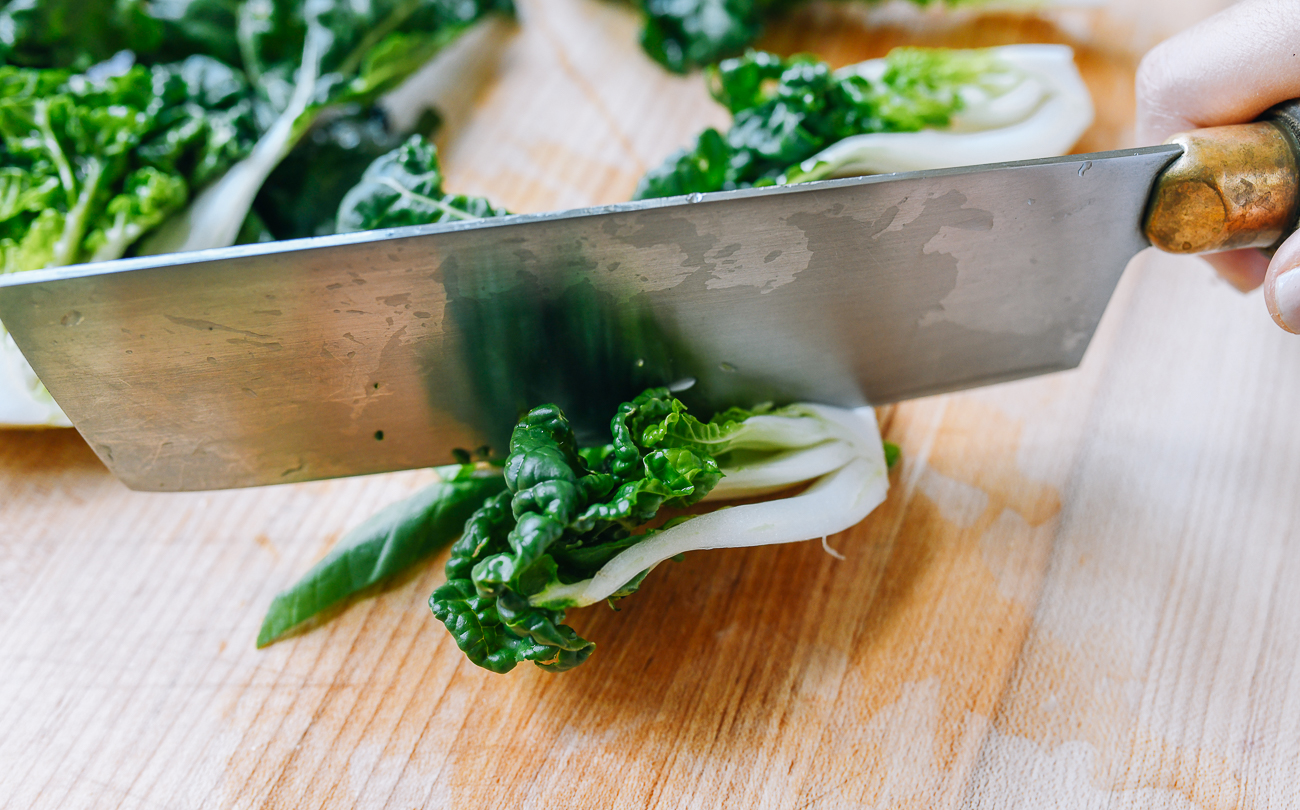
Dwarf bok choy is smaller than even a small Shanghai bok choy, and has curled, glossy, dark green leaves with short, thick white stems. They are tender and sweet-tasting and have a great look and texture.
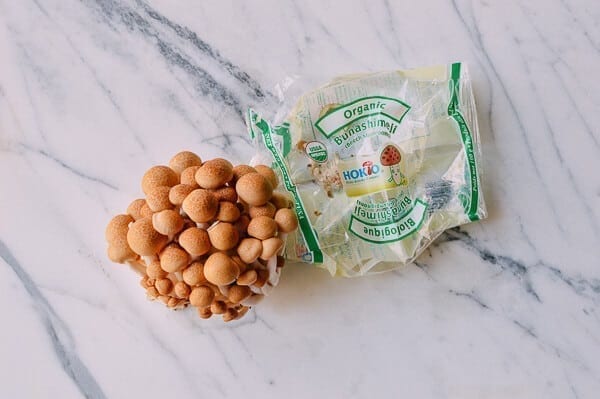
As for our choice of mushrooms, Bunashimeji (AKA beech mushrooms) are one of the newer varieties we have recently starting seeing in stores.
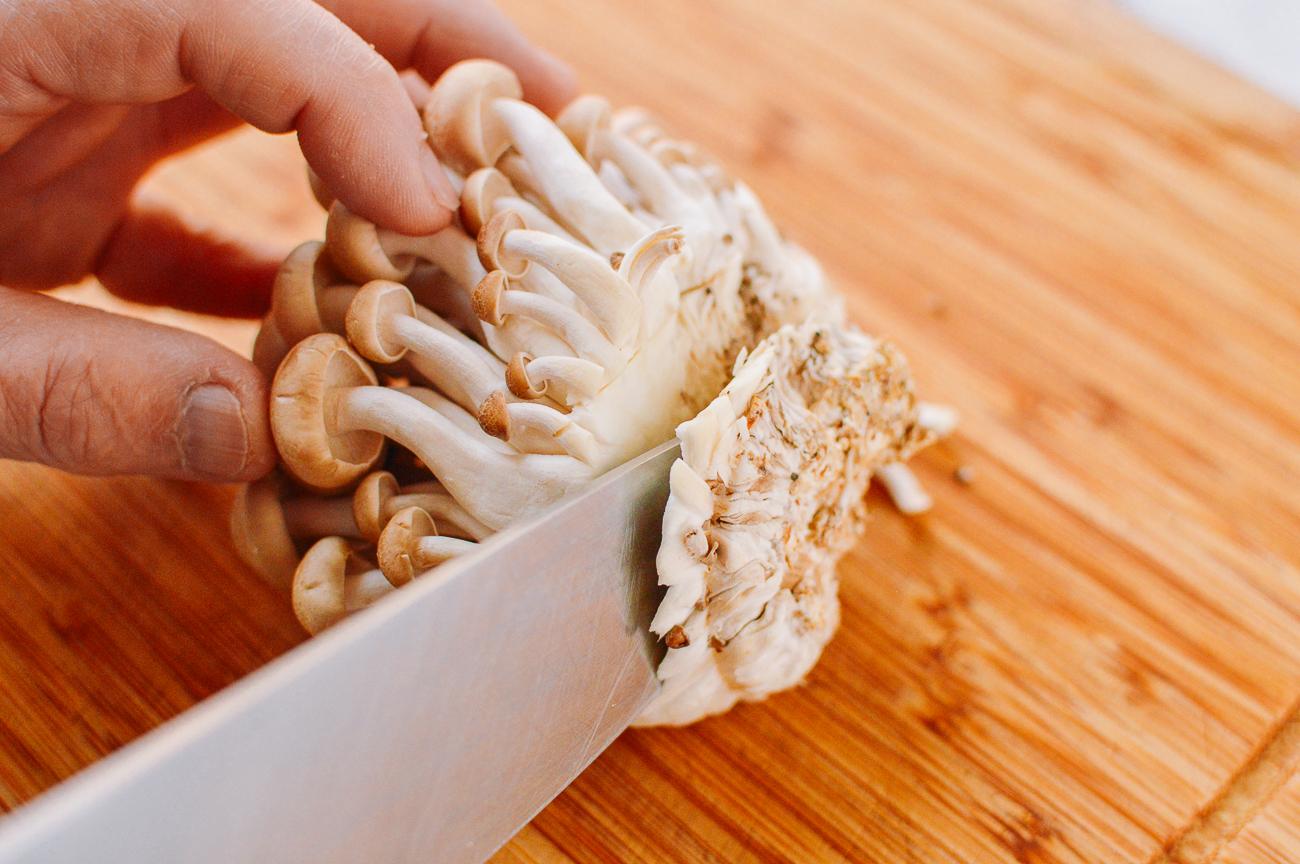
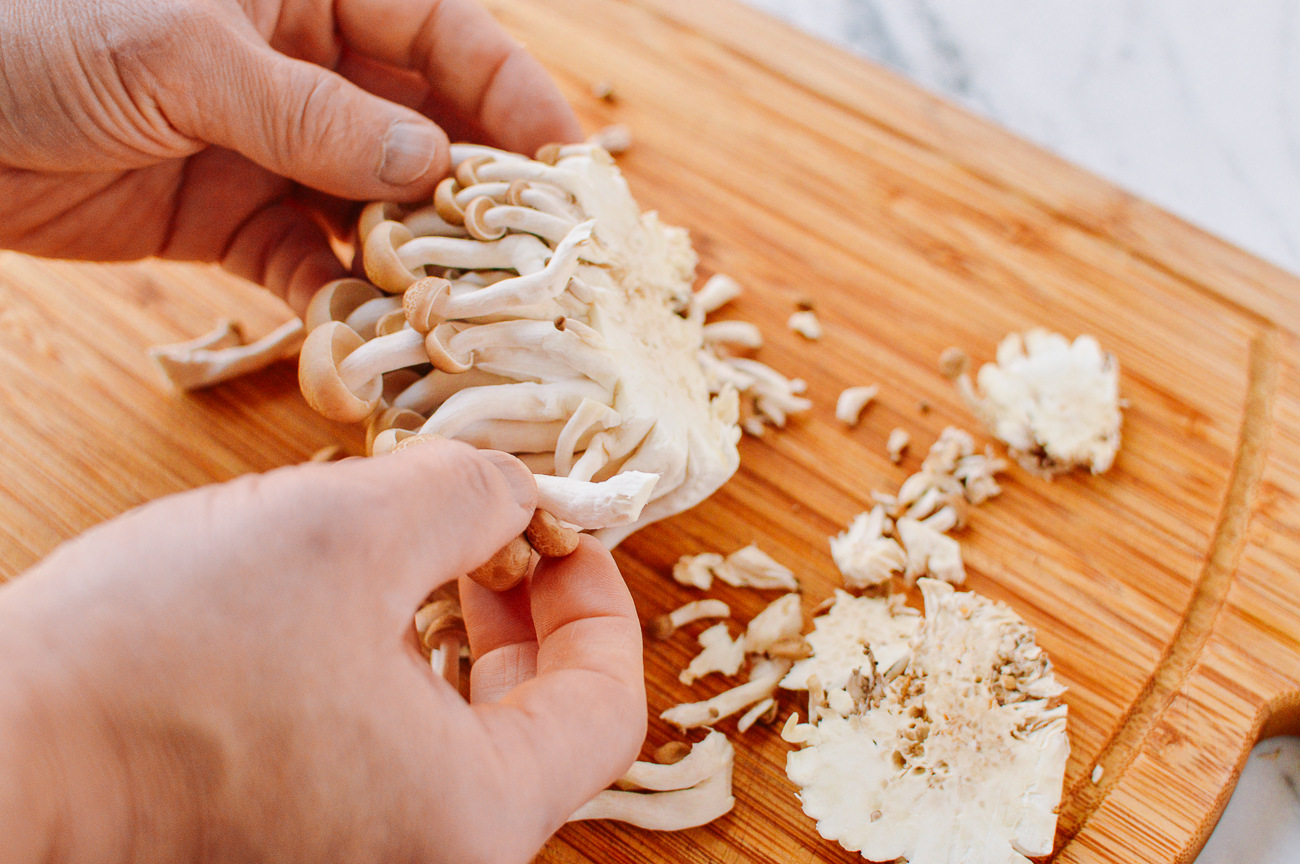
They come neatly packaged and have a great earthy flavor and a slightly crunchy texture. What’s more, the prep is a snap. They come in clusters, so all you have to do is cut off the base to separate the individual mushrooms, then give them a quick rinse.
Now that the formalities are over with, let’s cook!
Vegetable Chow Mein: Recipe Instructions
Bring 2 quarts of water to a boil (we use our wok because it heats quickly), and add the Hong Kong-style noodles.
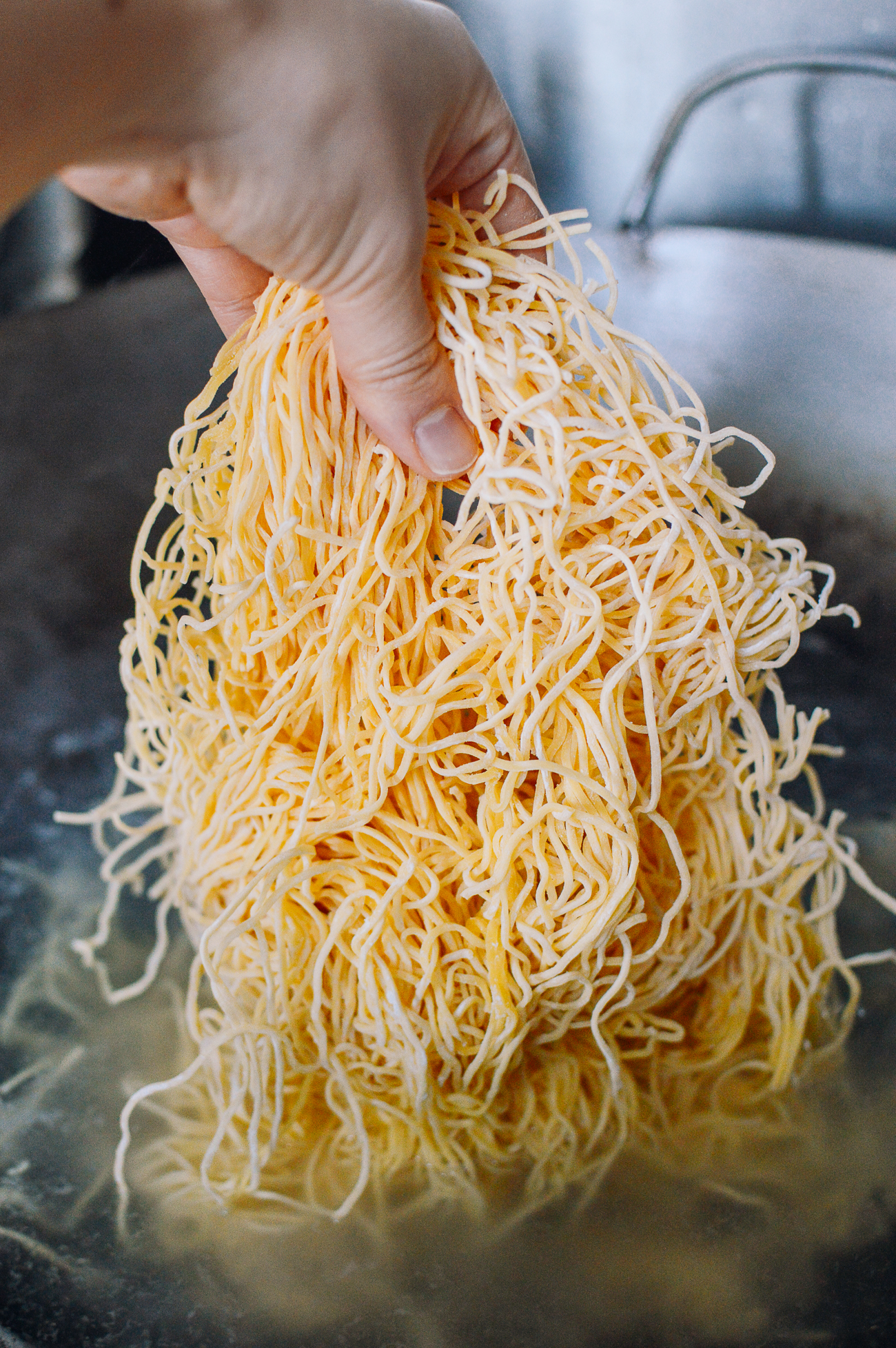
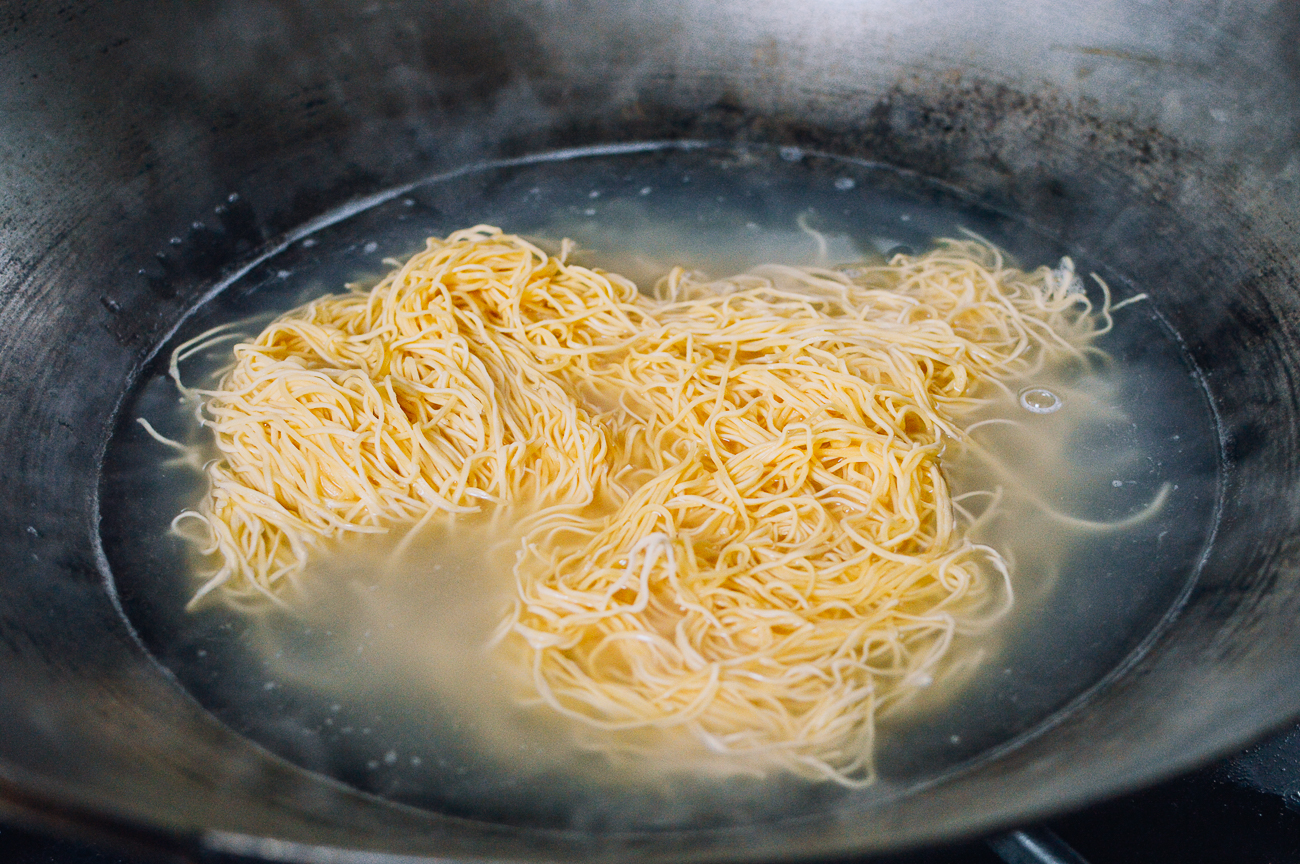
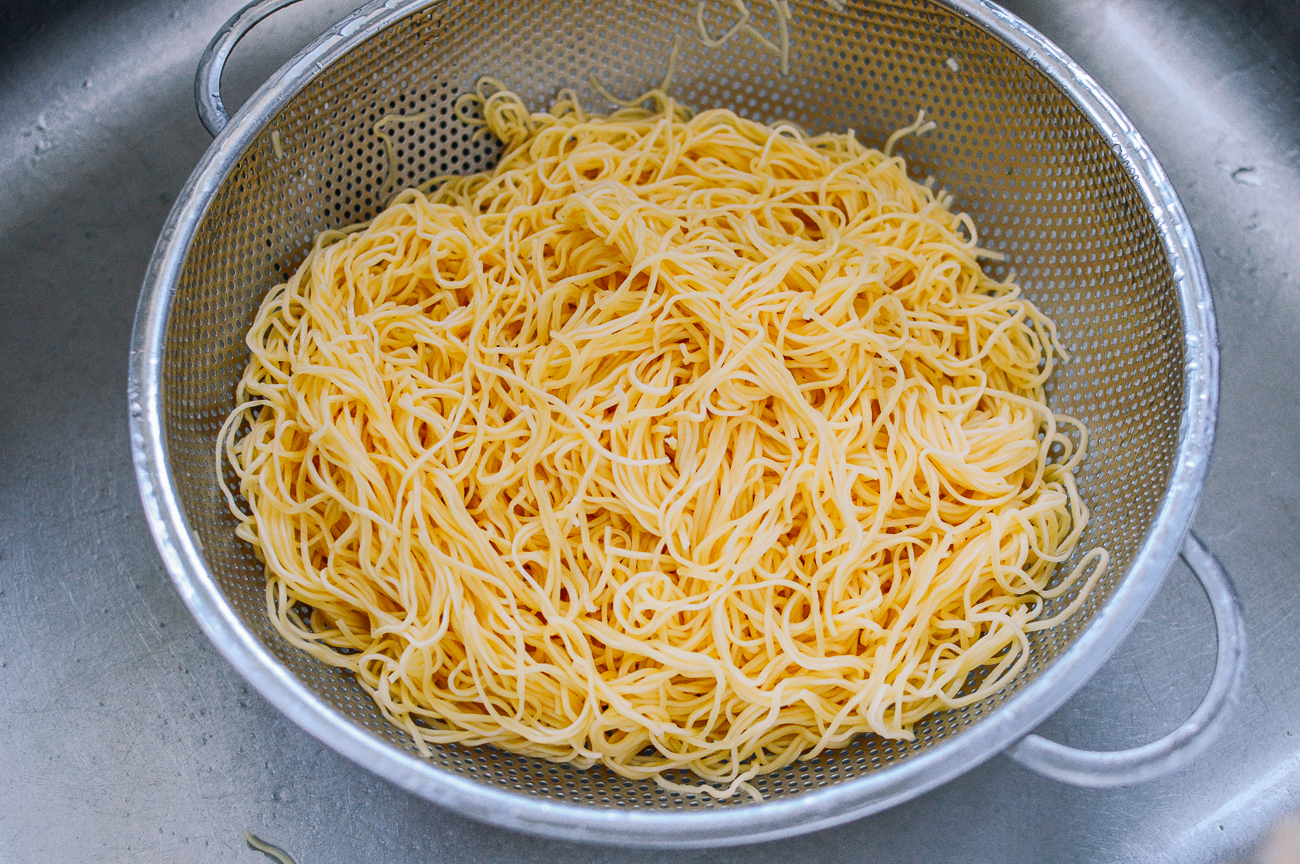
Boil fresh noodles for about 1 minute. For dried noodles, boil for about 2 minutes. (We find that suggested cooking times on package instructions are sometimes too long.) Rinse in cold water and drain very thoroughly.
Rinse the mung bean sprouts in cold water twice to ensure they are cleaned. Drain just before you are ready to cook the dish, so they stay hydrated and crunchy.
In a small bowl, mix the hot water and sugar, light soy sauce, dark soy sauce, sesame oil, sugar, 2 teaspoons Shaoxing wine and white pepper. Set aside.
Place your wok over high heat, and add 2 tablespoons of oil to coat the wok. Spread the Hong Kong noodles in a thin, even layer. Let the noodles cook for 1-2 minutes. Adjust the heat lower if the noodles start to scorch or higher if the noodles are not turning golden brown.
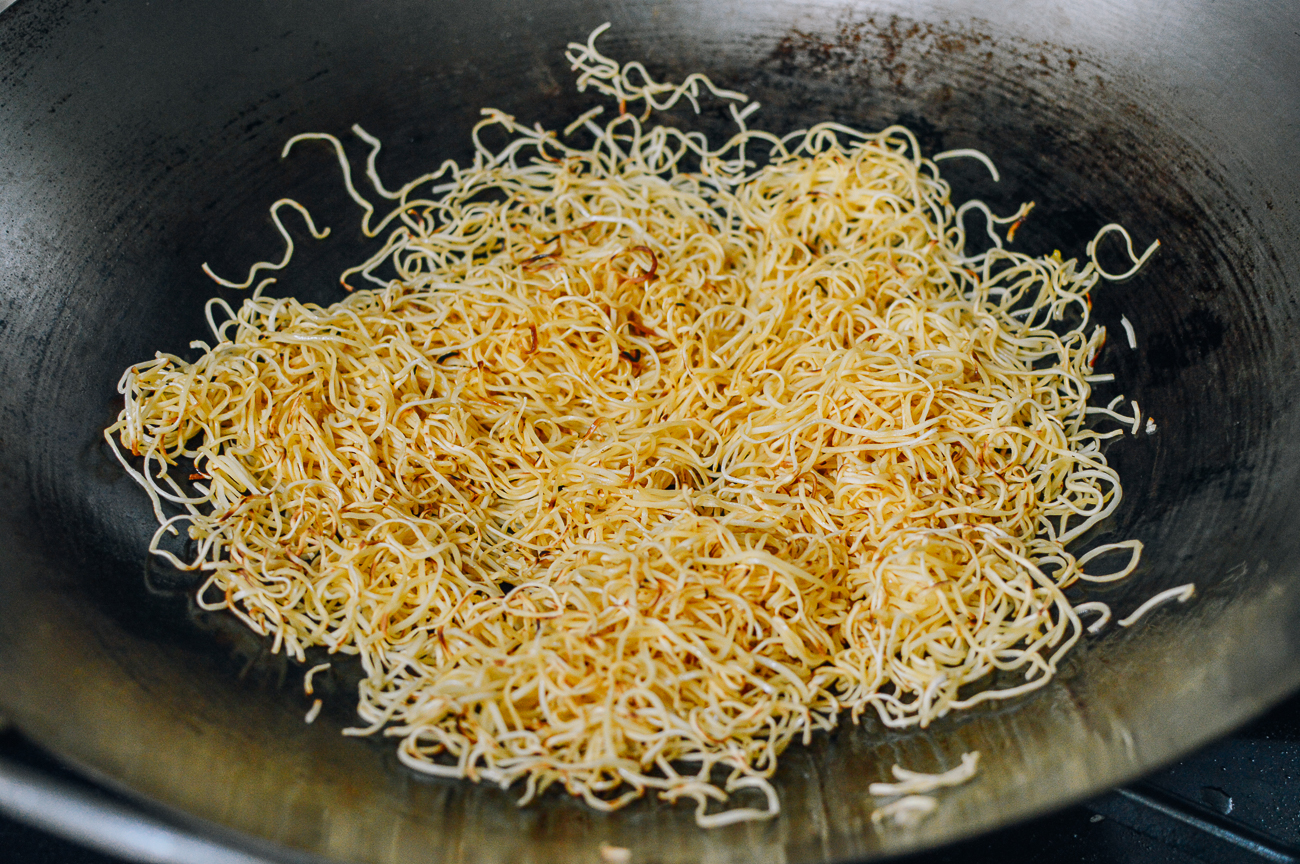
Flip the noodles over, and add another tablespoon of oil around the perimeter of the wok. Let the other side of the noodles crisp up.
During this stage, the goal is to crisp and lightly brown the noodles as evenly as possible. After 90 seconds, flip the noodles again. Once they’re golden brown and crispy to your liking, gather the noodles to the middle of the wok and pour in the sauce mixture.
Next, use an upward scooping motion to mix the noodles until the noodles are coated (almost glazed) in the sauce mixture – about 30 seconds.
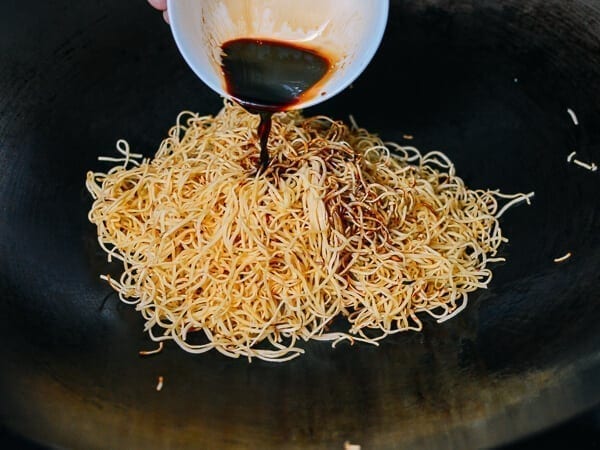
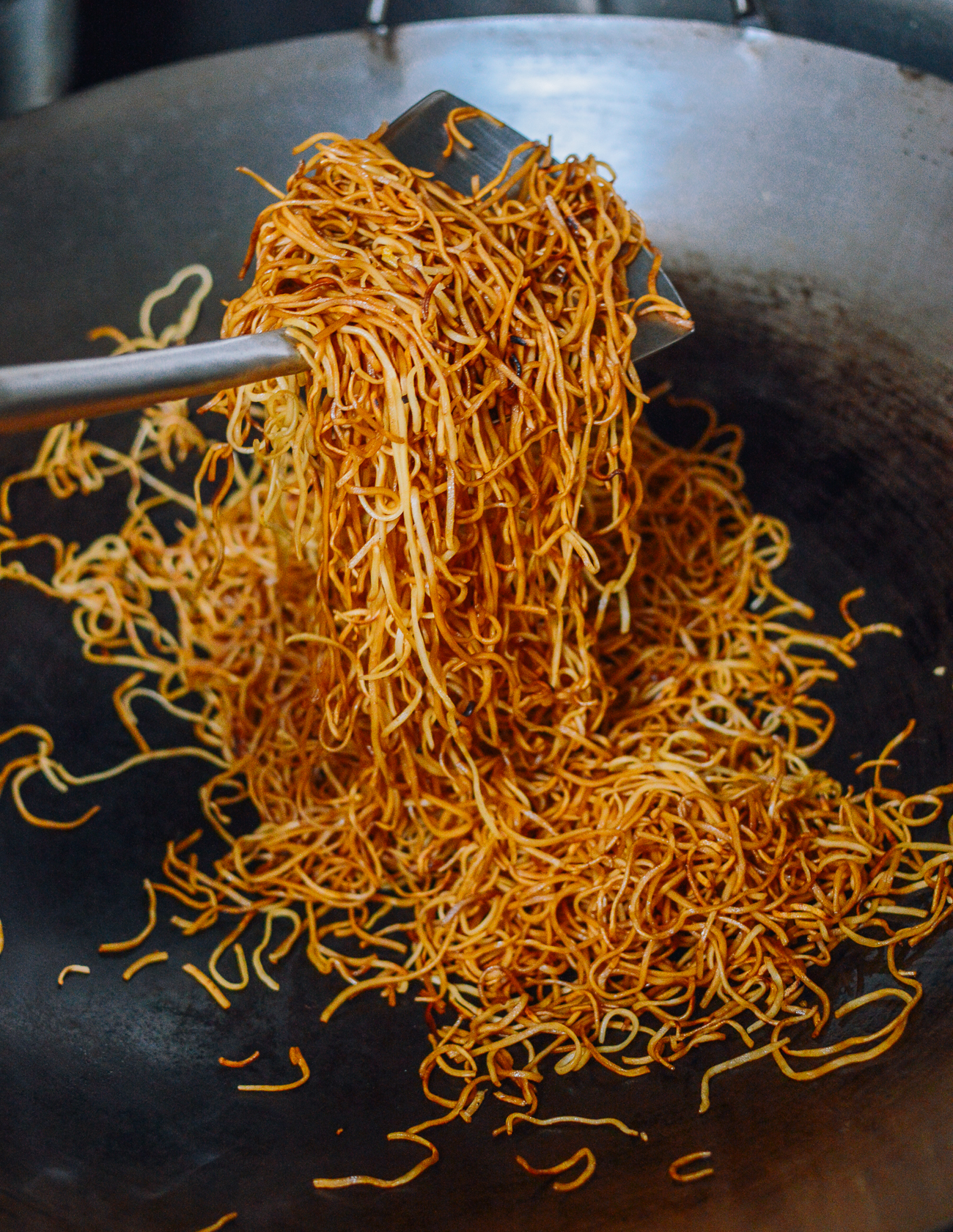
Transfer your noodles to a plate and set aside.
Heat your wok once again over high heat, and add a ½ tablespoon of oil to coat the wok.
Stir-fry the mushrooms for about a minute…
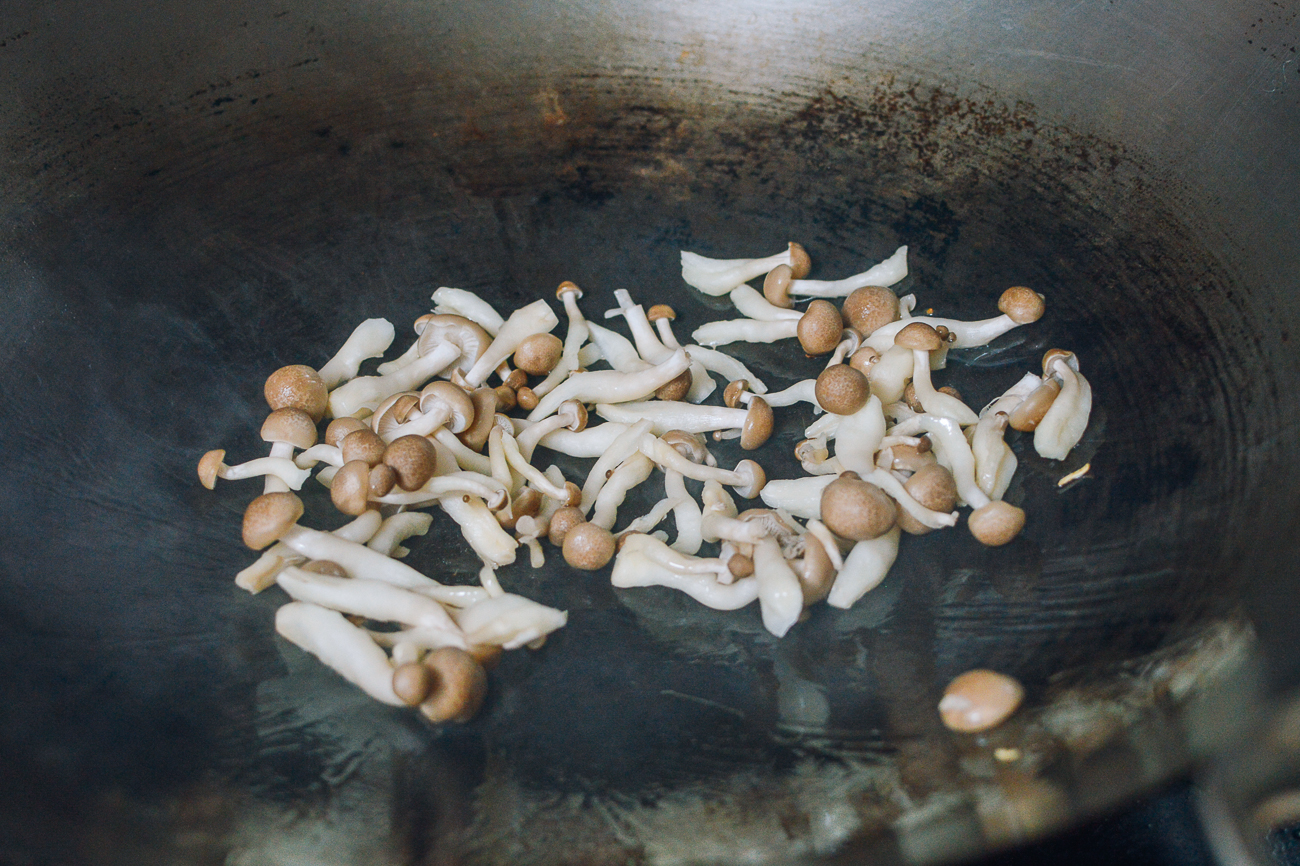
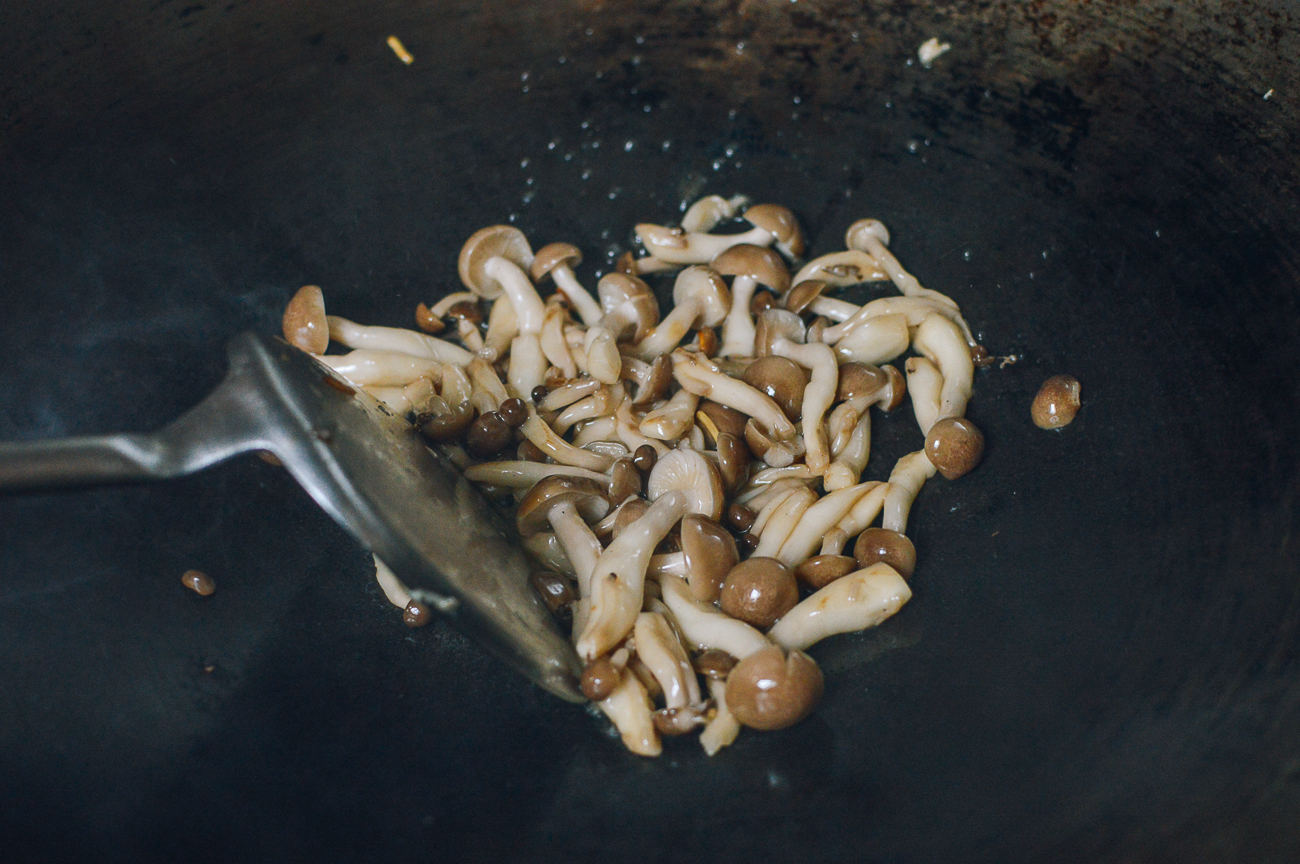
And transfer to a plate. (You can use the same plate you used for the noodles.)
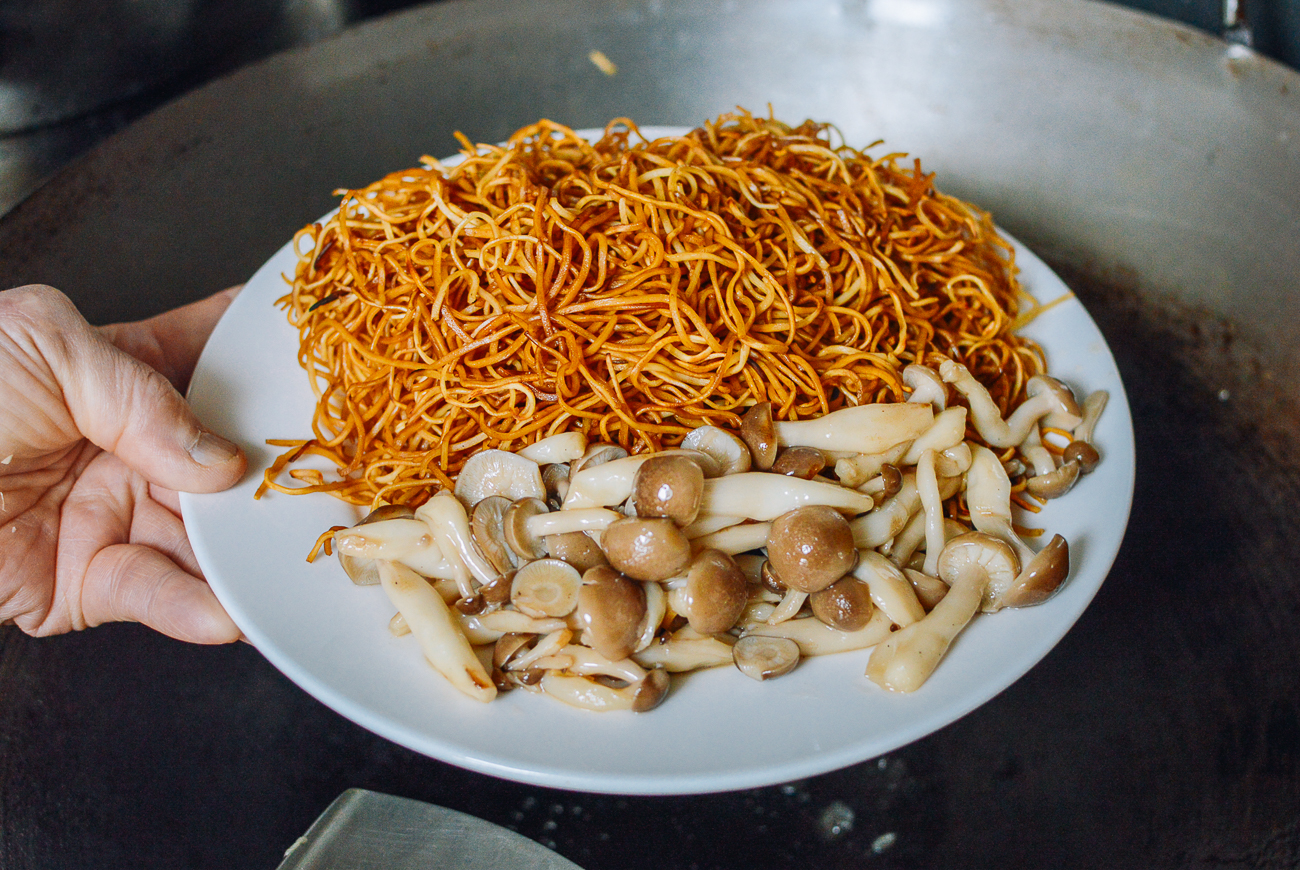
Heat the wok over high heat, and add a final tablespoon of oil to coat the wok. Add the garlic. After 5 seconds, add the bok choy and the remaining 2 teaspoons of Shaoxing wine, and stir-fry for 1 minute.
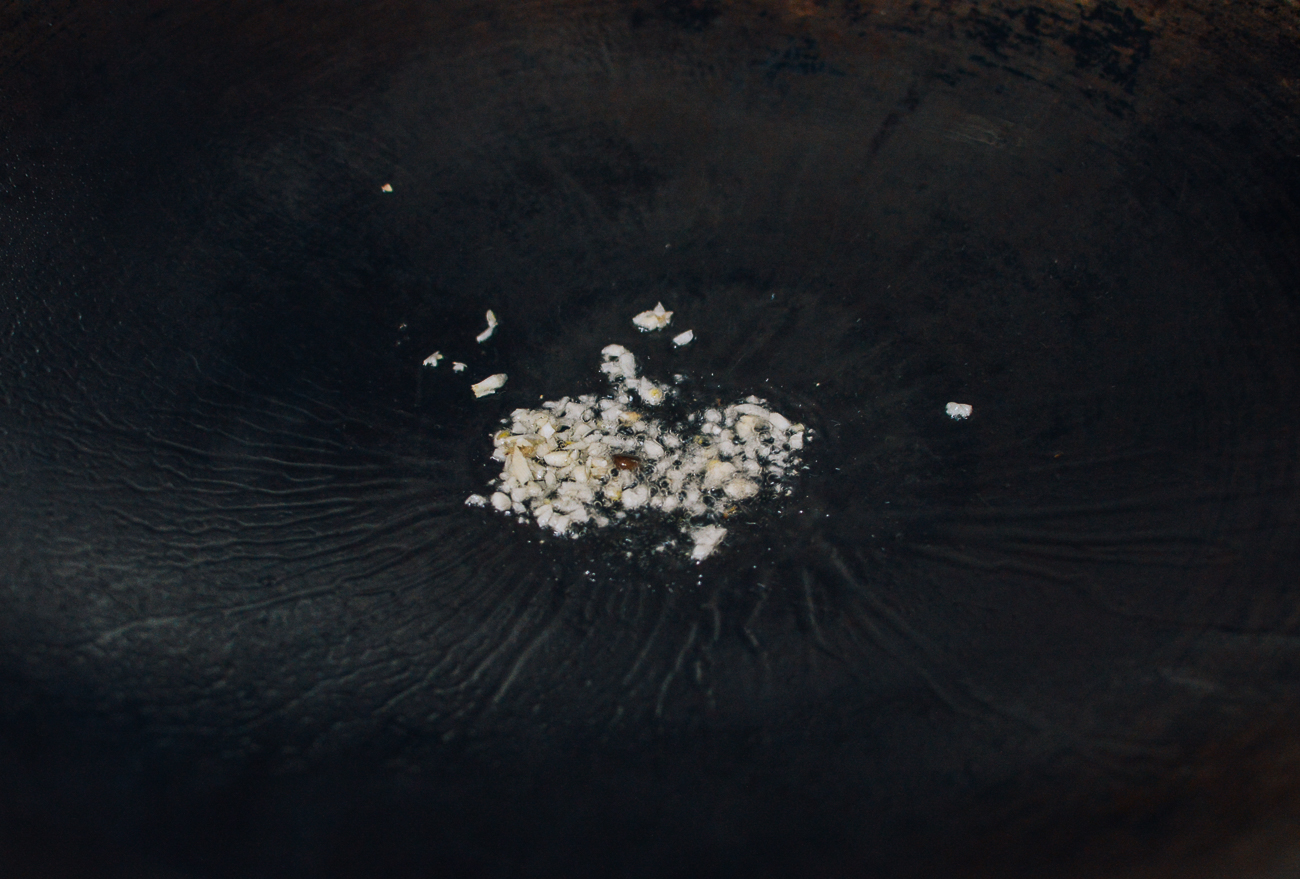
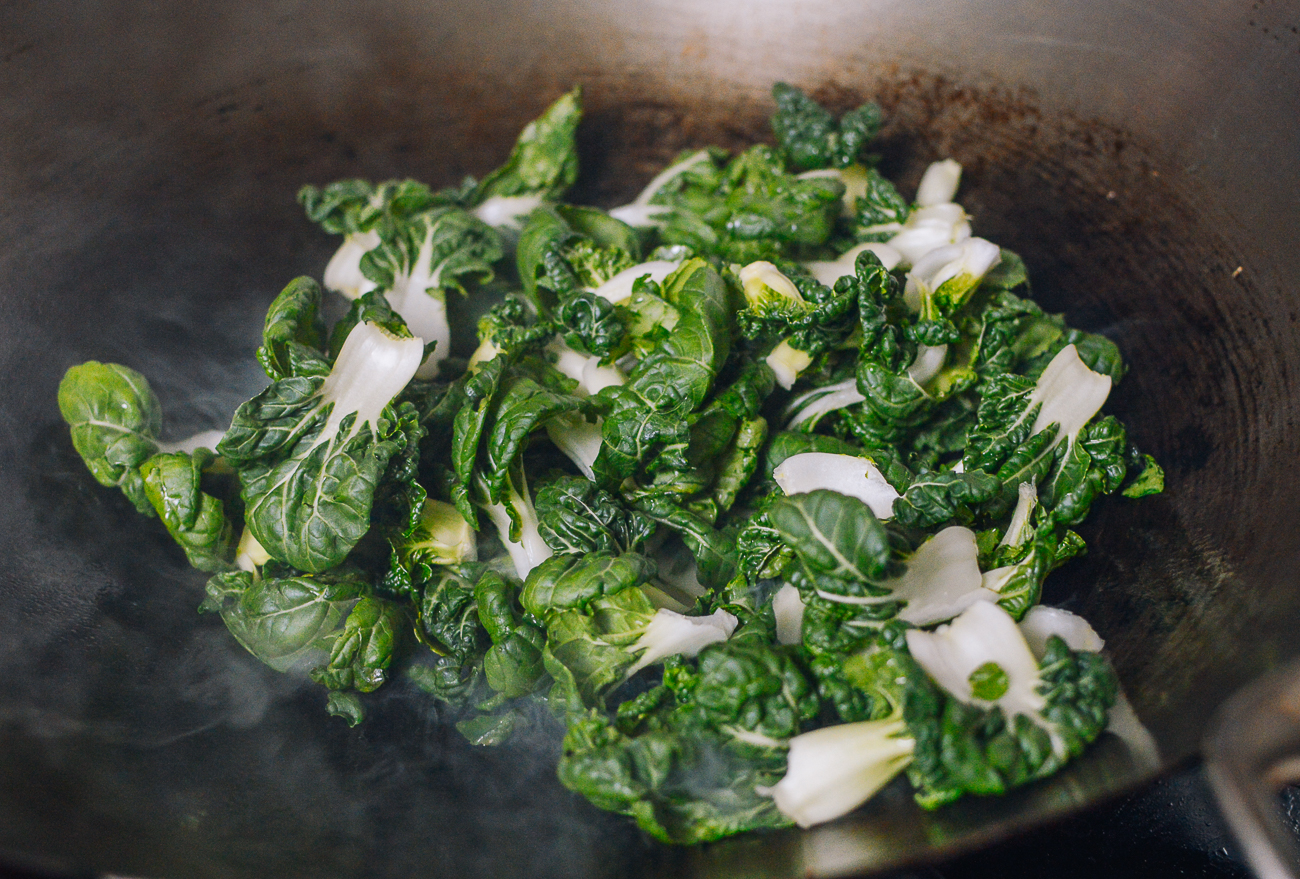
Add ¼ teaspoon salt, the MSG if using, and vegetarian oyster sauce, and continue to stir-fry for another 15 to 30 seconds.
At this point, you can add the optional hot vegetable stock if you like a moist vegetable chow mein. Some folks like to eat this dish with dry and crispy noodles. Others like a softer, chewier noodle. The decision is yours!
If you use the extra stock, or if there is visible liquid cooking out of the vegetables, add the water and cornstarch mixture to thicken the liquid into a thin sauce. Continue to stir-fry on high heat for another 30 seconds.
Your wok should be really hot at this point. Add the mushrooms and noodles back into the wok. Toss everything together using a lifting motion. (This aerates the dish, rather than gunking up the noodles.) Mix well to incorporate the noodles, bok choy and mushrooms, about 30 seconds.
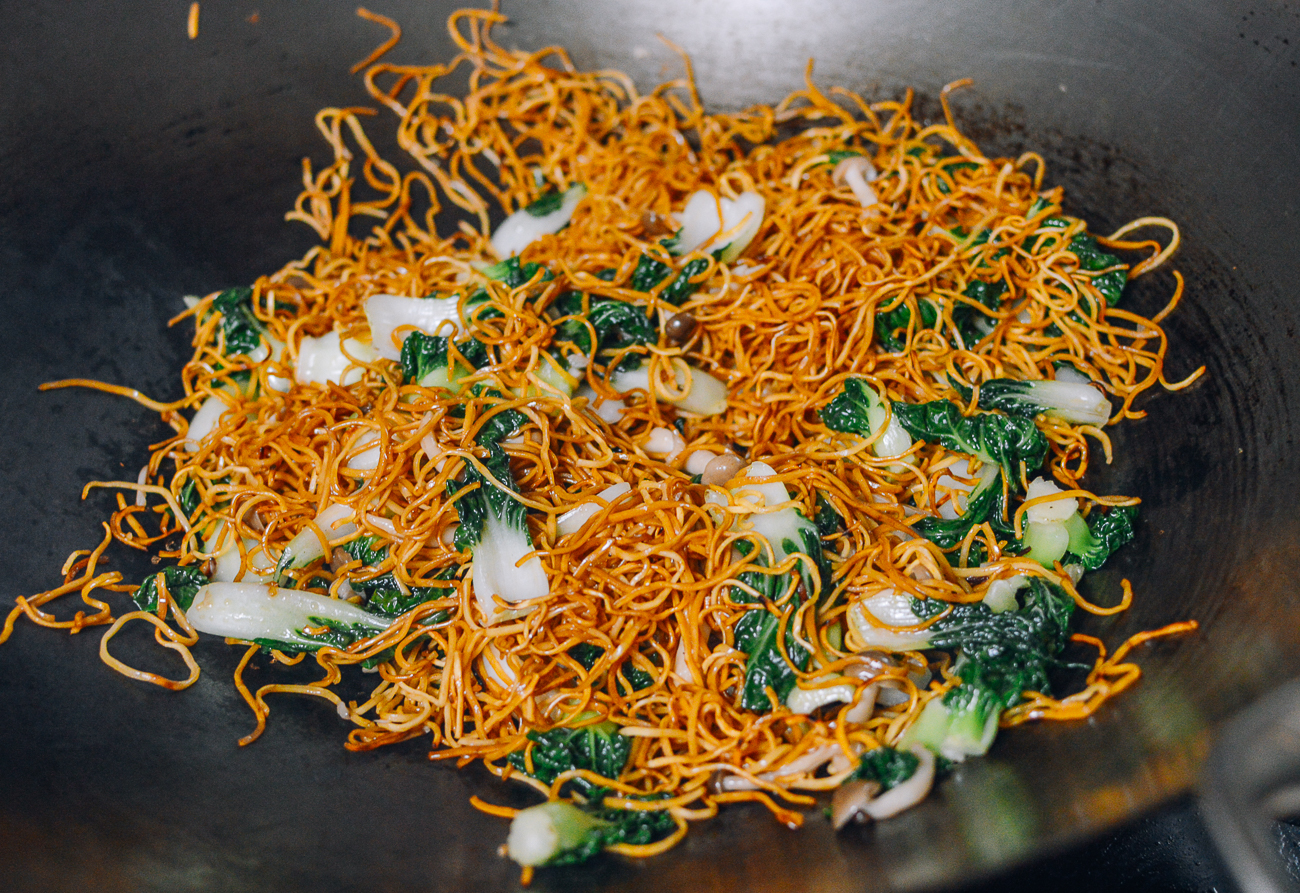
Toss in the scallions (green onions) and the mung bean sprouts.
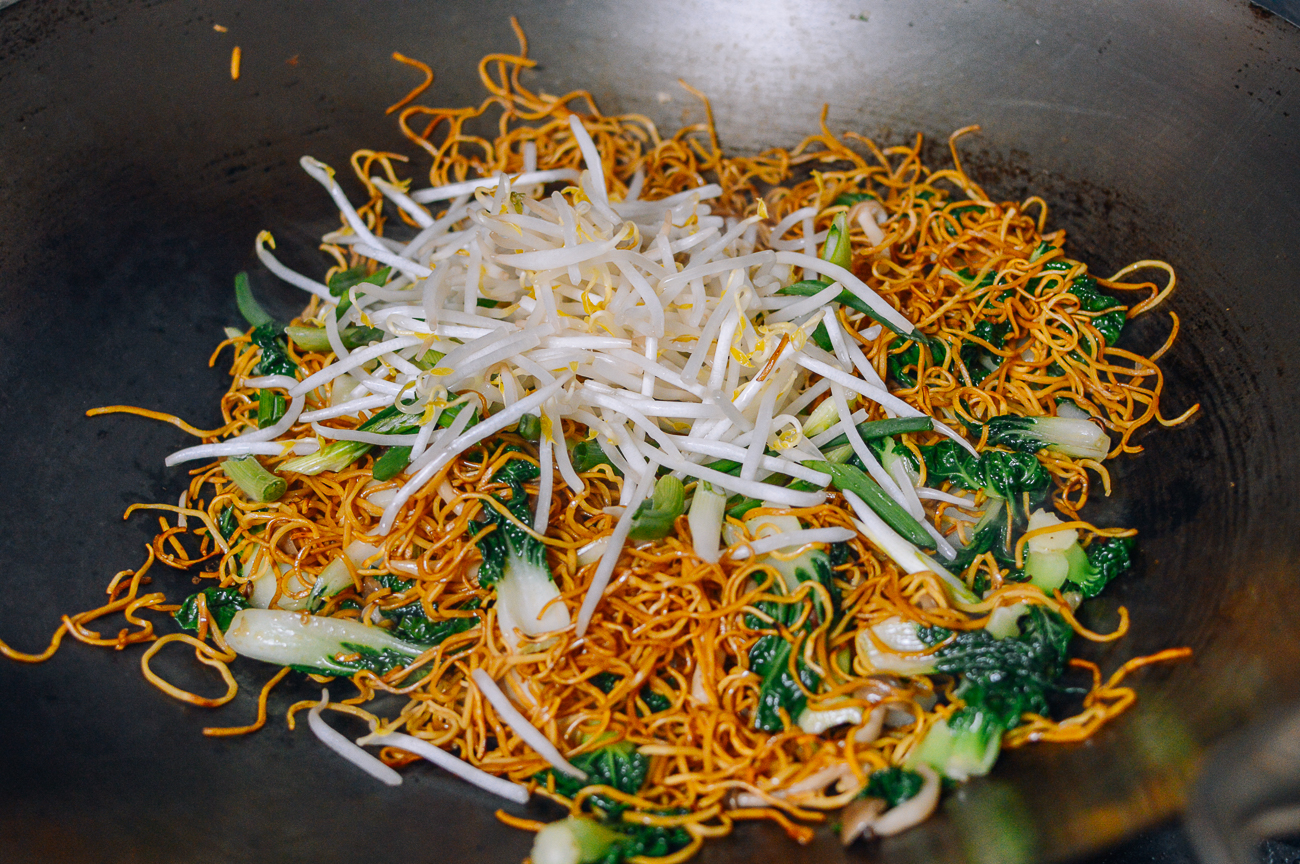
Stir-fry for another 30-60 seconds. The mung bean sprouts should be just cooked, but still crunchy.
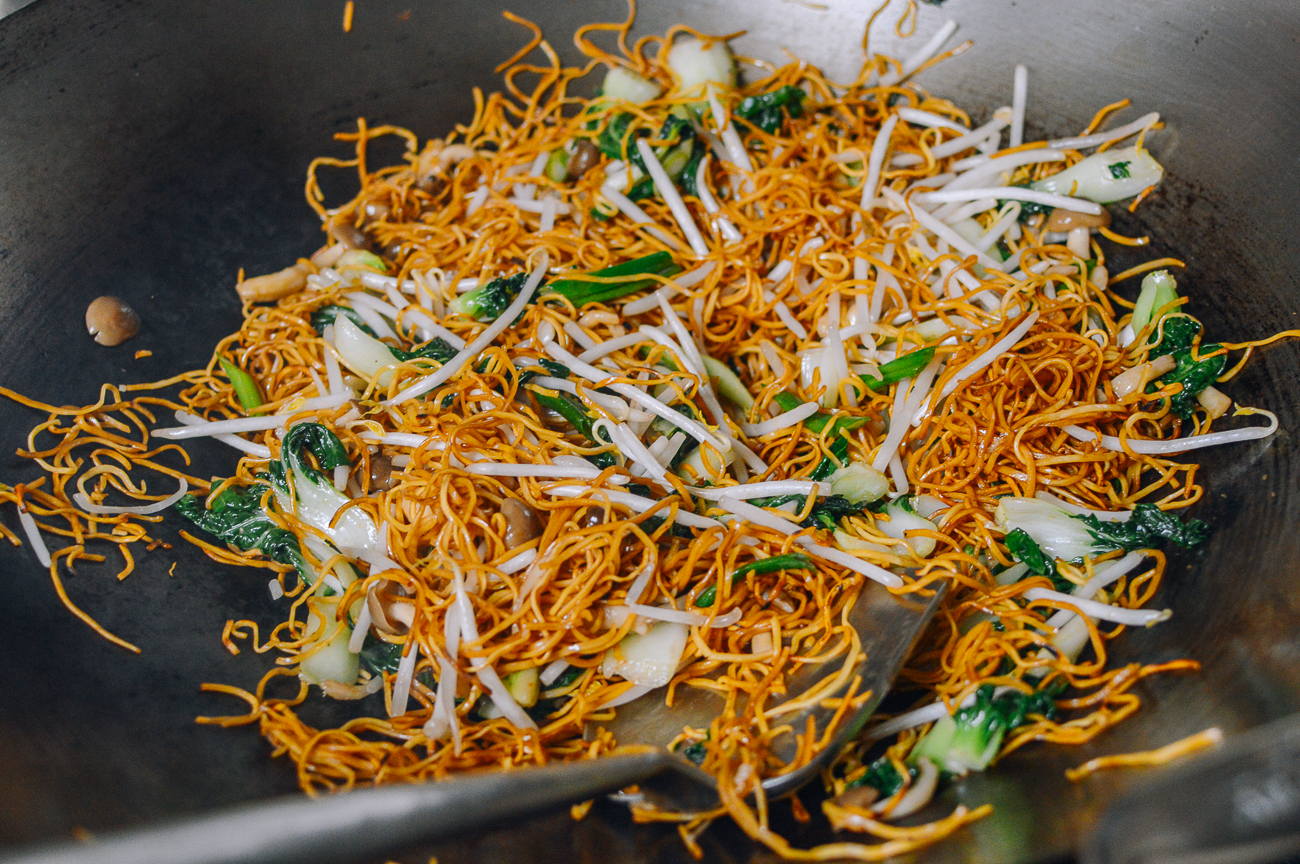
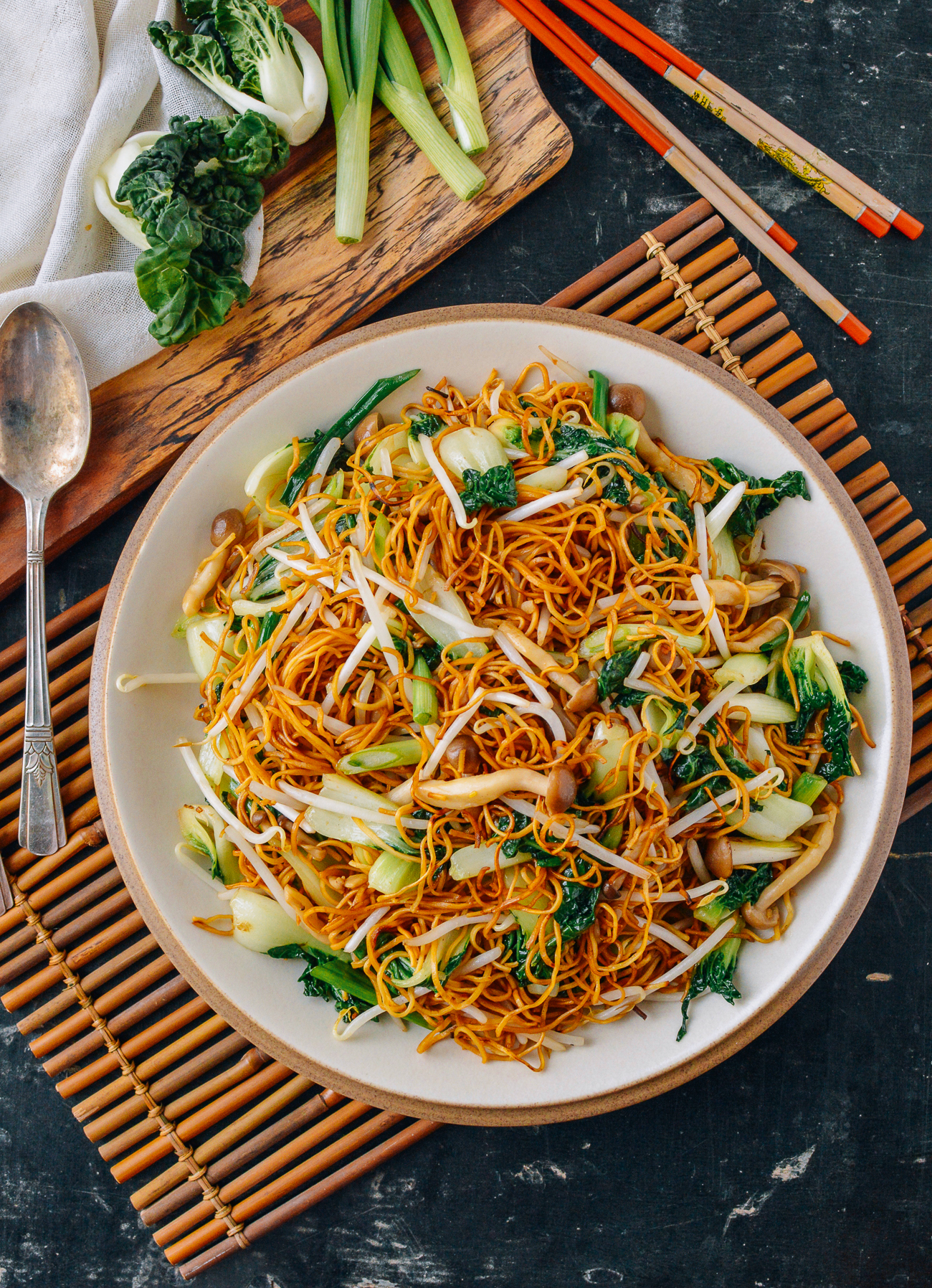
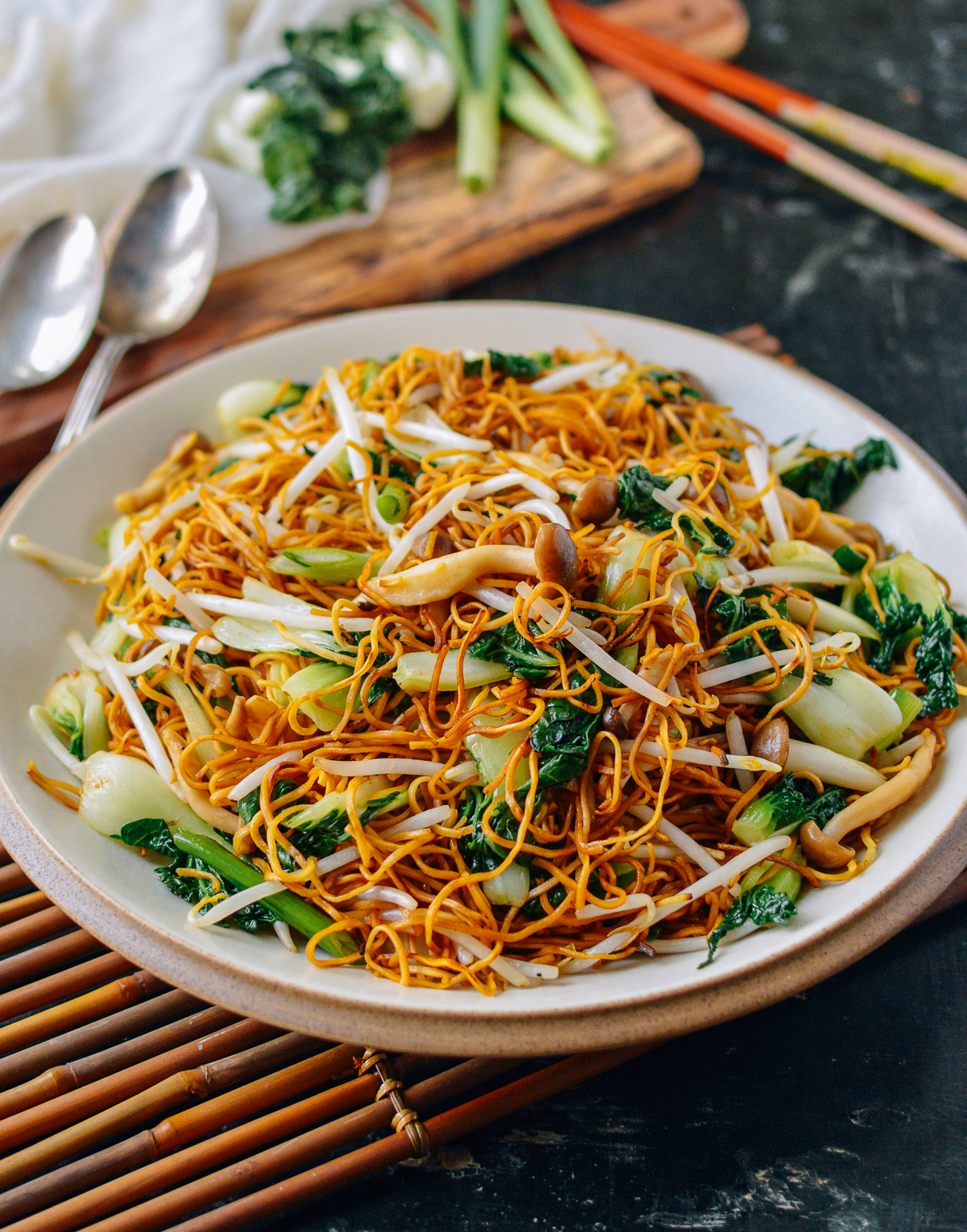
Plate and serve your vegetable chow mein noodles with your favorite hot chili oil!
Looking for more authentic recipes? Subscribe to our email list and be sure to follow us on Pinterest, Facebook, Instagram, and Youtube!
Recipe

Vegetable Chow Mein Noodles: Hong Kong Cantonese Style
Ingredients
If you have questions about any of the ingredients used here, click for details and explanations!
- 8 ounces fresh Hong Kong Style Pan-Fried Noodles (or 5 ounces/140g dried)
- 1½ cups mung bean sprouts
- 1 tablespoon hot water
- ¼ teaspoon sugar
- 2 teaspoons light soy sauce
- 1 teaspoon dark soy sauce
- ½ teaspoon sesame oil
- 4 teaspoons Shaoxing wine (divided)
- ¼ teaspoon white pepper
- 4½ tablespoons vegetable oil (divided)
- 1½ cups beech mushrooms (or any other mushroom, sliced)
- 1 clove garlic (minced)
- 3-4 cups bok choy (cut into 3-inch/8cm pieces)
- ¼ teaspoon salt
- 1 pinch MSG (optional)
- 2 teaspoons oyster sauce (or vegetarian oyster sauce)
- ¼ cup vegetable stock (or water with salt to taste, optional)
- 1 1/2 teaspoons cornstarch (mixed in to a slurry with 2 teaspoons water; only if you added stock for a moist chow mein)
- 2 scallions (julienned)
Instructions
- Bring 2 quarts of water to a boil (we use our wok because it heats quickly), and add the Hong Kong-style noodles. Fresh noodles should be boiled for about 1 minute. For dried noodles, boil for 2 minutes. Drain thoroughly.
- Rinse the mung bean sprouts in cold water twice to ensure they are cleaned. Drain just before you are ready to cook, so they stay hydrated and crunchy.
- Next, make the sauce mixture. In a small bowl, mix the hot water, sugar, light soy sauce, dark soy sauce, sesame oil, 2 teaspoons Shaoxing wine, and the white pepper.
- Place your wok over high heat, and add 2 tablespoons of oil to coat the wok. Spread the Hong Kong noodles in a thin, even layer, and let the noodles cook for 1-2 minutes. Adjust the heat lower if the noodles start to scorch or higher if the noodles are not turning golden brown.
- Flip the noodles over, and add another tablespoon of oil around the perimeter of the wok. Let the other side of the noodles crisp up. During this stage, the goal is to crisp and lightly brown the noodles as evenly as possible. After 90 seconds, flip the noodles again. Once they’re golden brown and crispy to your liking, gather the noodles to the middle of the wok and pour in the sauce mixture.
- Use an upward scooping motion to mix the noodles until the noodles are coated in the sauce, about 30 seconds. Transfer your noodles to a plate and set aside.
- Heat your wok once again over high heat, and add a ½ tablespoon of oil to coat the wok. Stir-fry the mushrooms for 1 minute and transfer to a plate.
- Over high heat, add a final tablespoon of oil to coat the wok. Add the garlic. After 5 seconds, add the bok choy and the remaining 2 teaspoons of Shaoxing wine, and stir-fry for 1 minute.
- Add the salt, MSG (if using), and the oyster sauce, and continue to stir-fry for another 15 to 30 seconds.
- At this point, you can add the optional hot vegetable stock if you like a moist vegetable chow mein or skip to the next step if you like it crispy. Some folks like to eat this dish with dry and crispy noodles. Others like a softer, chewier noodle, so the decision is yours. If you use the extra stock or if the there is visible liquid cooking out of the vegetables, add the cornstarch slurry mixture to thicken the liquid into a thin sauce. Continue to stir-fry on high heat for another 30 seconds.
- Your wok should be really hot at this point. Add the mushrooms and noodles back to the wok, and toss everything together using a lifting motion (this aerates the dish, rather than gunking up the noodles) until the noodles, bok choy and mushrooms are well incorporated, about 30 seconds.
- Toss in the scallions and the mung bean sprouts, and stir fry for another 30-60 seconds, or until the bean sprouts are just cooked but still crunchy. Plate and serve your vegetable chow mein with your favorite hot chili oil!