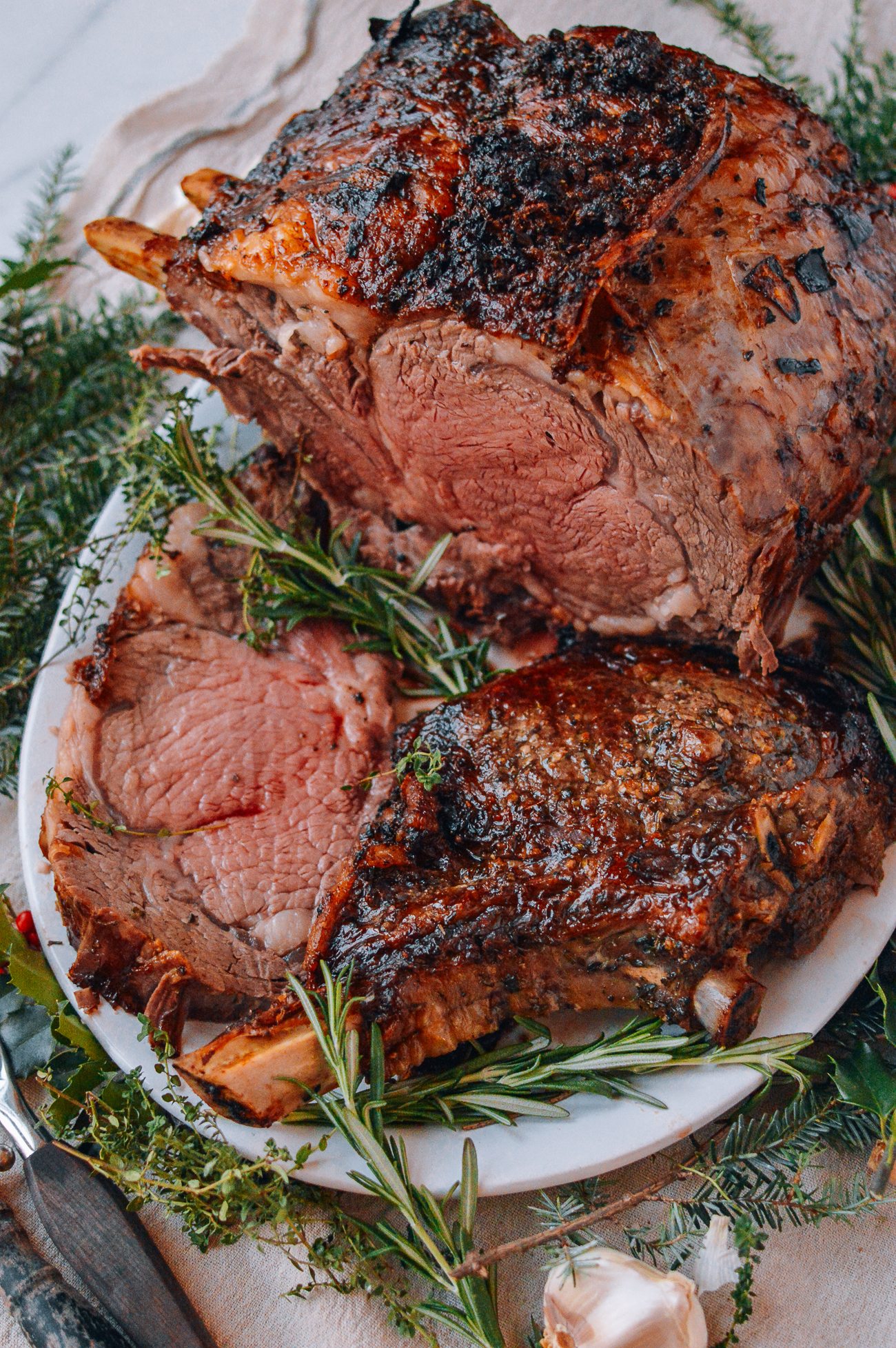
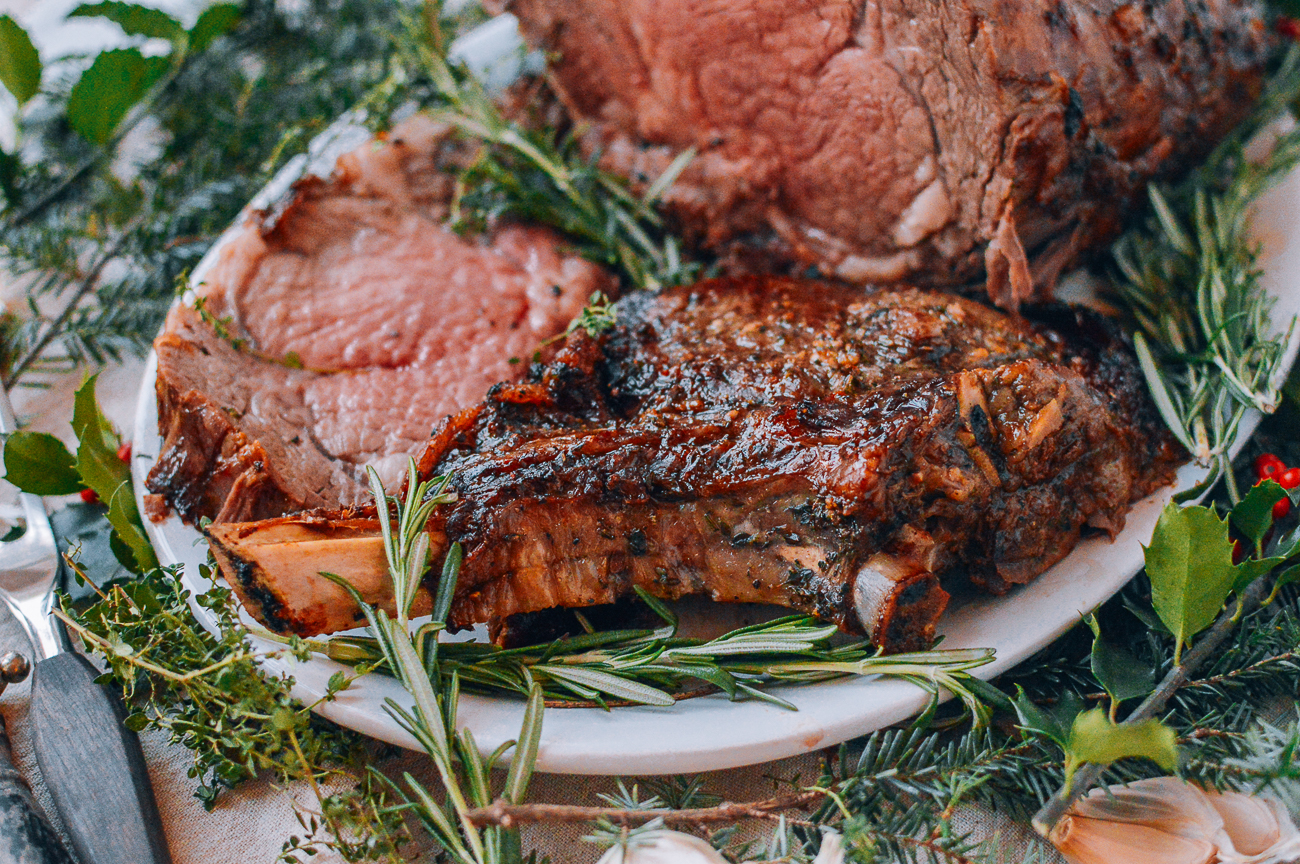
A Prime Rib Roast is almost always our choice for a crowd-pleasing holiday dinner. Turkey is for Thanksgiving, and we’ve never been a big ham family, so prime rib is often our choice!
Now we’re bringing you into our home to show you how to make the perfect prime rib roast for the holidays. Or any special occasion. This recipe comes from my father, a hotel restaurant chef who once cooked prime rib for thousands of people. It has since become a holiday go-to for many of our readers. We hope you love it too!
Note: We originally published this recipe on December 17, 2016. We have since updated it with higher-res photos and nutrition information. The recipe—a reader favorite—remains the same. Enjoy!
My Father’s Restaurant Recipe
This cooking method originated from my father. It has been passed down over the years with some diligent observations and discussion from subsequent generations.
To some of the more traditional folks out there, it may sound strange that I learned this recipe from my father and not my mother. But in a Chinese family from my parents’ generation, it was common that Western recipes came from dad and traditional Chinese recipes came from mom.
Men were generally more likely to work in restaurants and hotel kitchens. My father worked as a roast cook in the famed Grossinger’s Catskill Resort Hotel (one of the largest Borscht Belt resorts of that era) for years.
Eventually, he became head chef at the local Holiday Inn, and later opened his own Chinese restaurant with my mother. (Read more about it in our cookbook, where I share some stories from that time!)
This also explains why the girls dubbed our go-to turkey recipe, “Grandpa’s Perfect Thanksgiving Turkey.” He had all the best restaurant secrets!
My father would tell me stories about the massive roasting ovens in the resort kitchen, where he’d make prime rib for a thousand guests on a busy weekend.
Every once in a long while, he‘d bring a small prime rib end cut home for the family. It was always delicious! We kids would be so excited on those rare occasions. (We’re a food family all around!)
Of all the memories of food my father brought home from those kitchens, prime rib was by far the best.
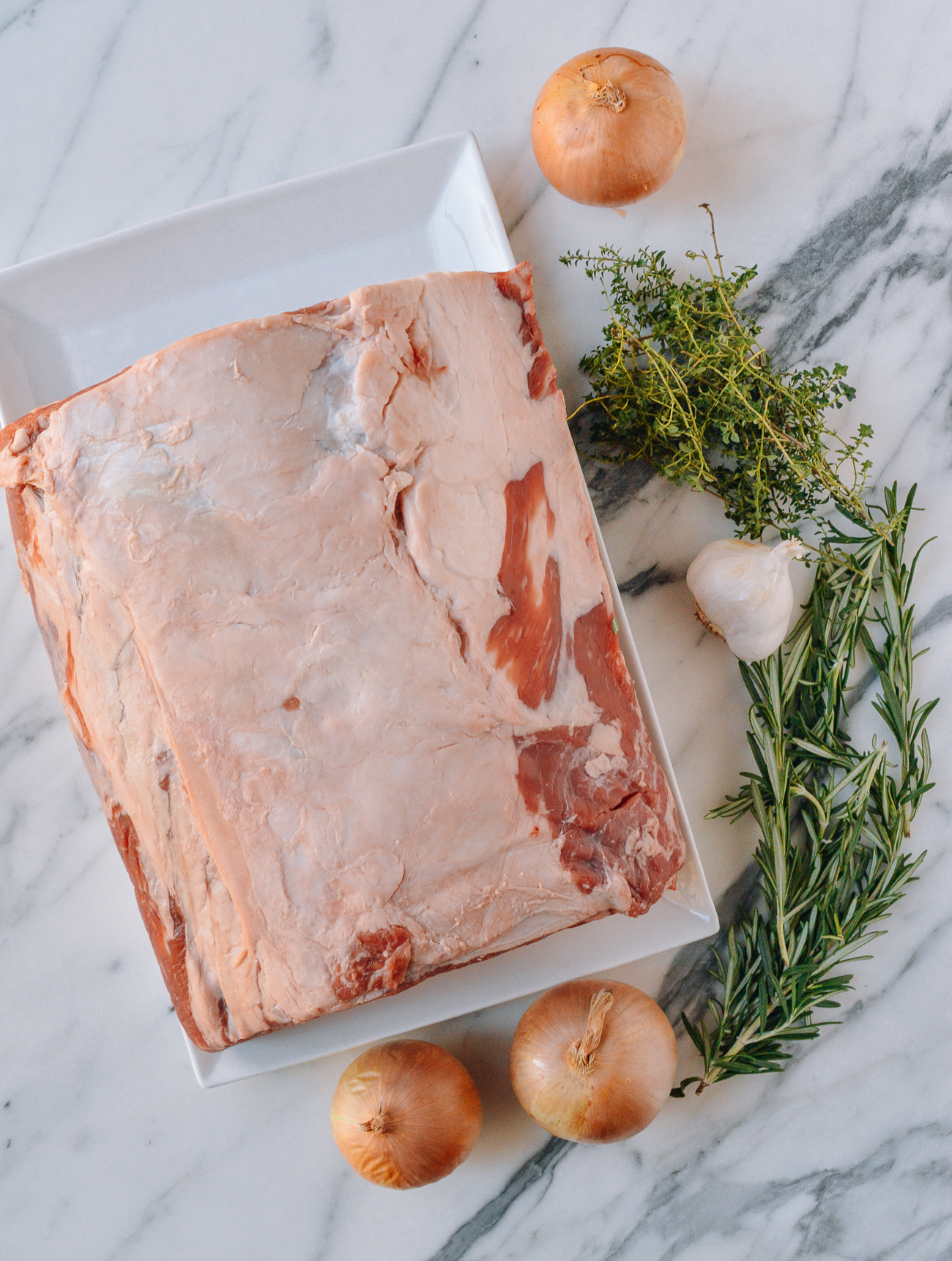
Watch: Bill makes our 5-star Prime Rib Roast recipe!

Buying Prime Rib
First, you must get a good prime rib roast from your grocery store or butcher, also called a standing rib roast. Wherever you go, take the time to talk to your meat guy so you can get the best cut for your budget.
While “prime” is in the name, this is actually referring to the “primal rib,” a cut of beef, not the USDA grade. In fact, not all prime rib roasts are USDA Prime!
USDA Choice is the most common grade, which varies between $13 to $16 a pound. Your butcher can also advise you on the merits of an Angus cut or USDA Prime grade cut, which makes the price skyrocket to over $20 per pound.
In the end, you can make a delicious prime rib roast with USDA Choice beef. (Who’s to know what grade you bought? ) That said, when I choose my prime rib, I’m often looking for a USDA Choice cut that has enough marbling to be borderline/close to prime. This trick applies to any beef cut—steaks, other roasts, etc.
(If you ever bump into me at a our local NJ Costco, you might find me carefully inspecting various USDA choice cuts of beef, trying to find the best bang for the buck!)
Our roast was a USDA Choice cut with 5 bones near the loin end of the rib, which the butcher told me is the most tender, though not as fatty as the other end near the shoulder. This is the difference between the “first cut” prime rib (less connective tissue, more tender) and “second cut” (fattier, more marbled). You choose what you’d like to prioritize!
How Much Prime Rib to Prepare Per Person
A general rule of thumb is that 1 rib bone serves 2 people, so our 12-pound roast with 5 ribs would serve 10 people, depending on how many super hungry eaters you have at the dinner table.
That said, know your guests! My nephew Chris can take down a 24-ounce prime rib without missing a beat! On a good eating day like Christmas, I can probably down an 18-ounce prime rib myself. Holiday decadence? You bet. It’s always best to have too much rather than too little.
The size of your roast also depends on what else you’re serving, and how many sides you have. We generally keep things pure and simple, serving our roast with roasted cauliflower or other vegetables, greens, baked or mashed potatoes, and freshly baked rolls, so the roast is the clear star of the meal.
If you end up having leftovers, don’t worry. Thinly sliced prime rib is great for sandwiches over the next few days!

A Flexible recipe
We know that not everyone is looking to cook prime rib for 10 people—or perhaps your party/roast is even bigger than that!
That’s why we wrote this recipe with flexibility in mind. You’ll notice in the recipe card that the ingredient amounts are given per pound (450g) of roast.
This way, you can simply multiply the amounts by the weight of your roast to get the proper proportions. We also give cooking times by the pound!
(Note: you can click on the servings slider in the recipe card, where it currently says ‘1 pound’ and move the slider to the weight of your roast. The ingredient quantities will scale up accordingly. The ingredients list will still say “per pound” even after you scale up the recipe, so stay alert there, and don’t accidentally add 15 teaspoons of salt to the marinade or something!)
Another tip, if your crowd enjoys end cuts, is to cook two prime ribs for a larger crowd, rather than one giant roast!
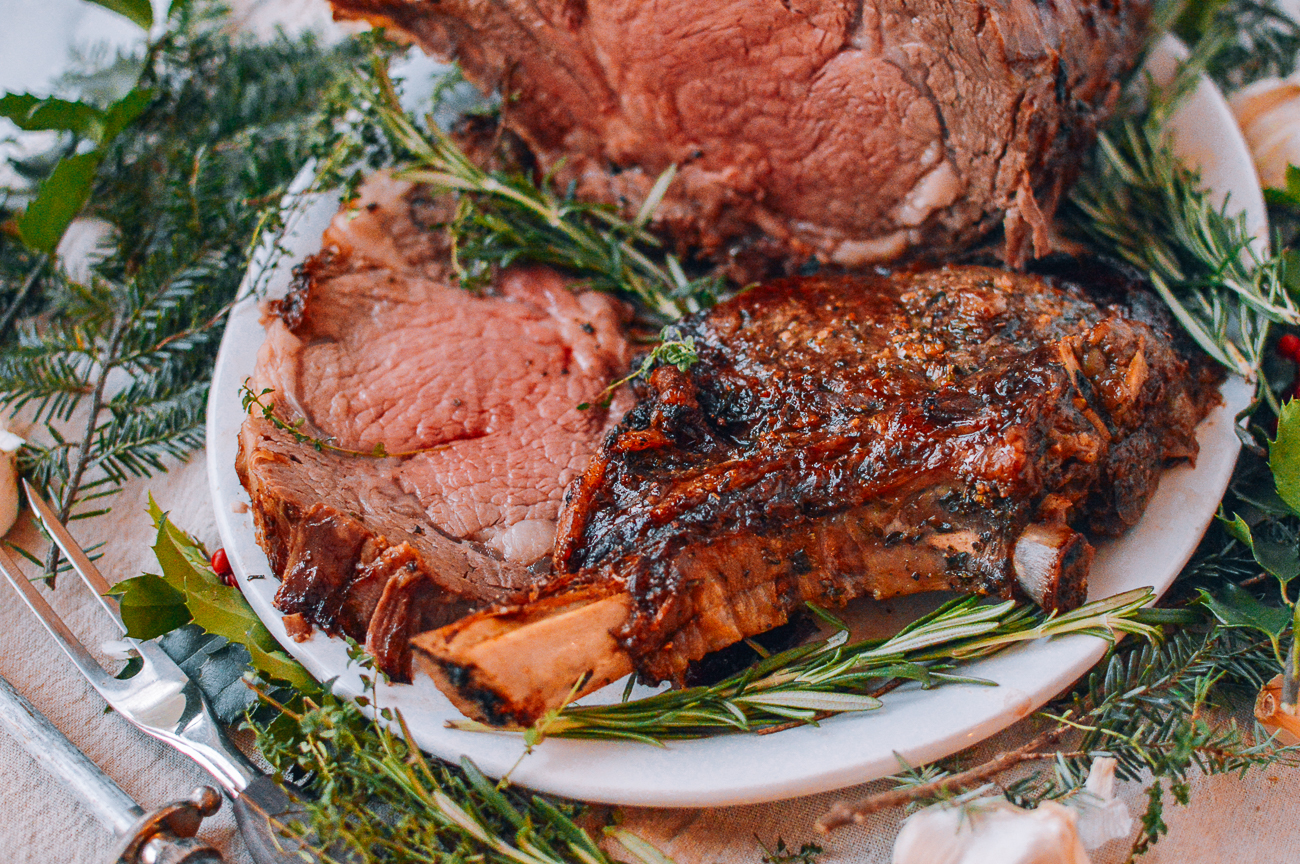
Enough talking, let’s jump in!
Prime Rib Roast Recipe Instructions
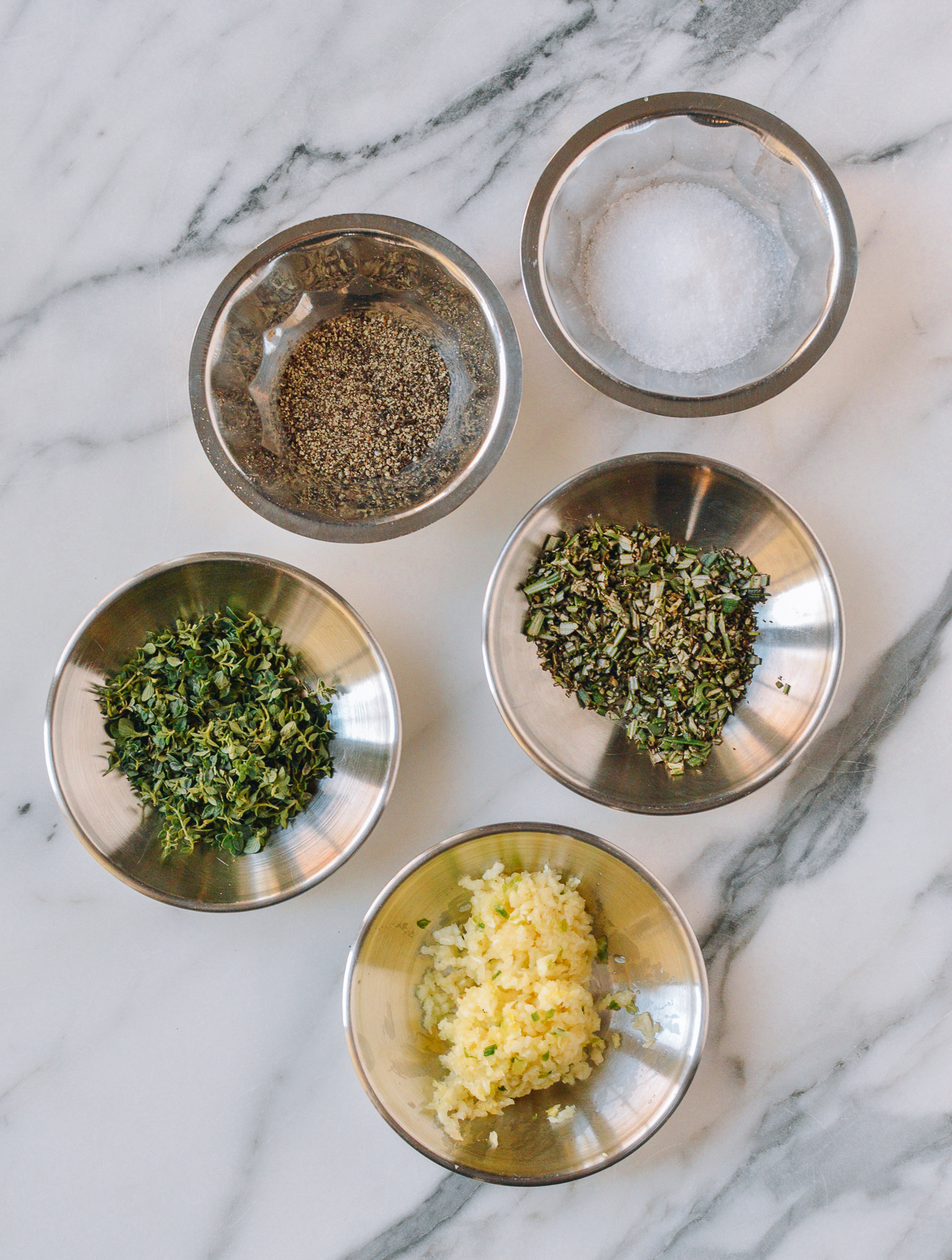
Marinate the Roast:
A good butcher knows how much fat to leave on the roast, so no additional trimming is generally needed. Your prime rib roast should have a nice layer of fat on top, so it will baste itself.
Before marinating, give your roast a quick rinse with cold water, and pat it dry with paper towels.
Place a flat roasting rack inside a roasting pan or sheet pan large enough to fit your roast, and spread the onions on top of the rack. This keeps the roast elevated off the pan, so it’s not sitting in any rendered fat/grease as it cooks. 3-4 onions will work for most size roasts. If you have a very large roast, you can add 1-2 more.
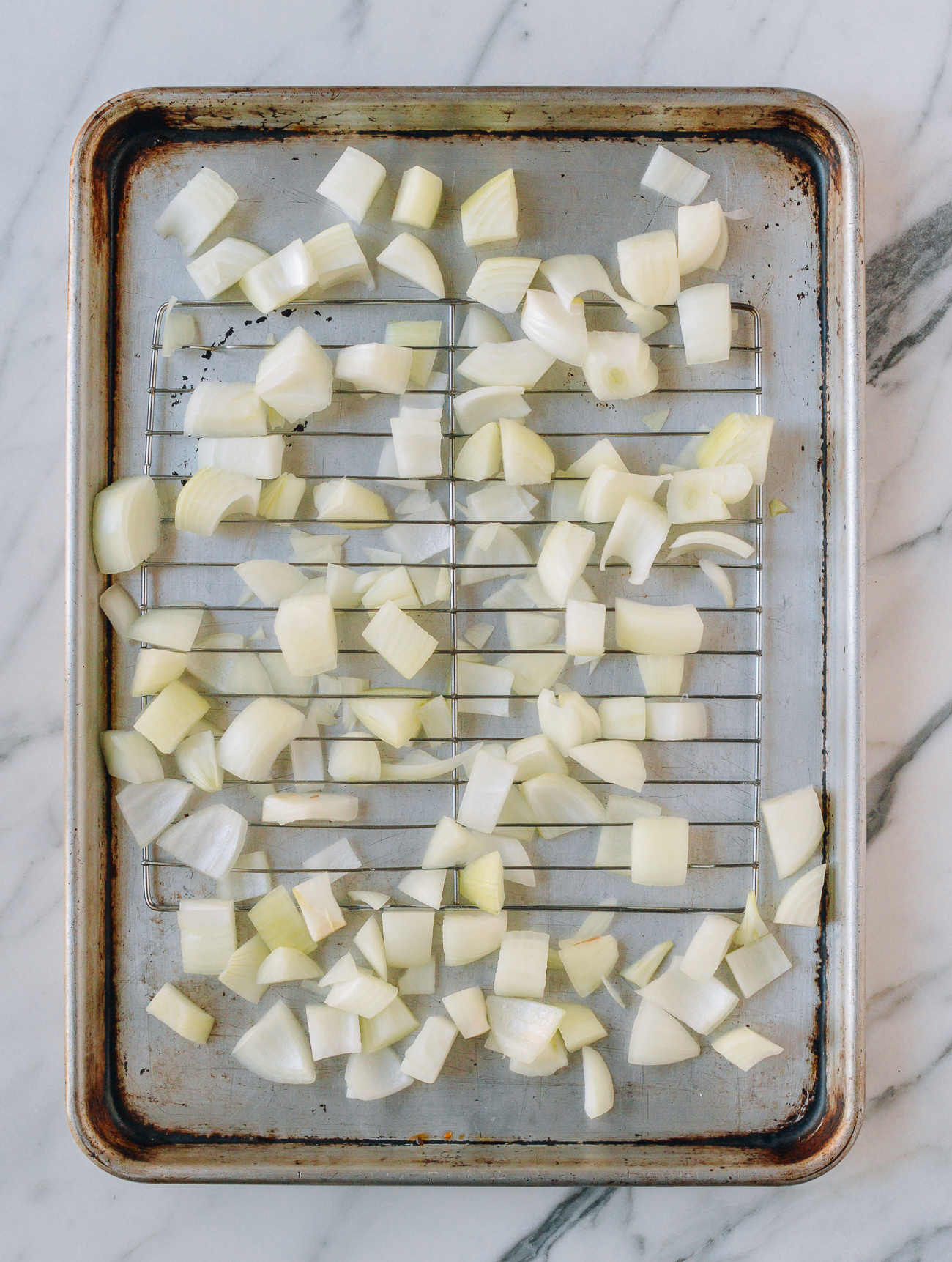
It’s ok if you don’t have a roasting rack. Resting the roast directly on the onions works also. Place the roast in the pan.
Mix the salt, pepper, garlic, herbs and olive oil in a bowl until well-combined.
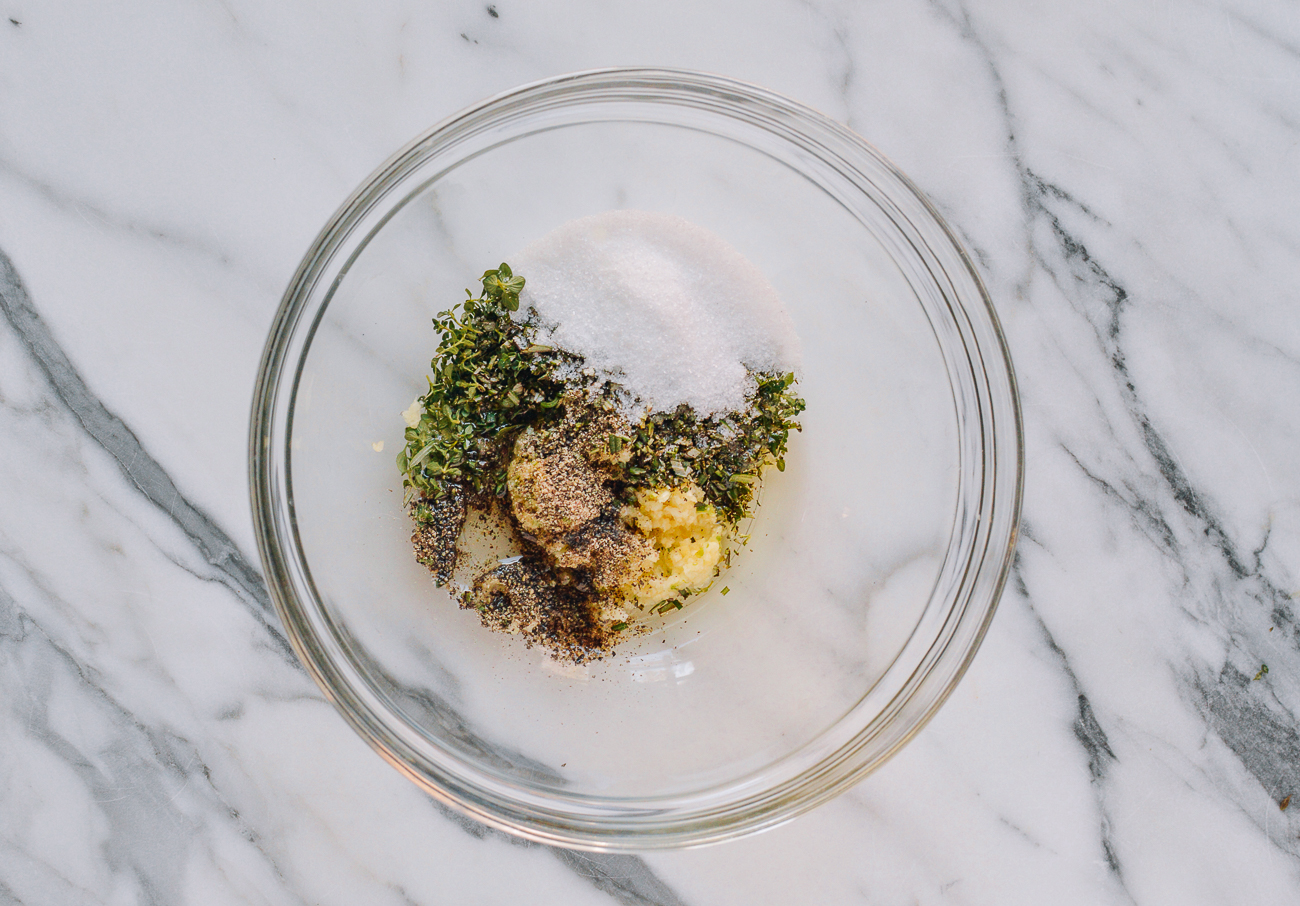
Use your hands to rub the roast all over with the marinade mixture, coating the surface evenly. It will form a delicious crust after roasting!
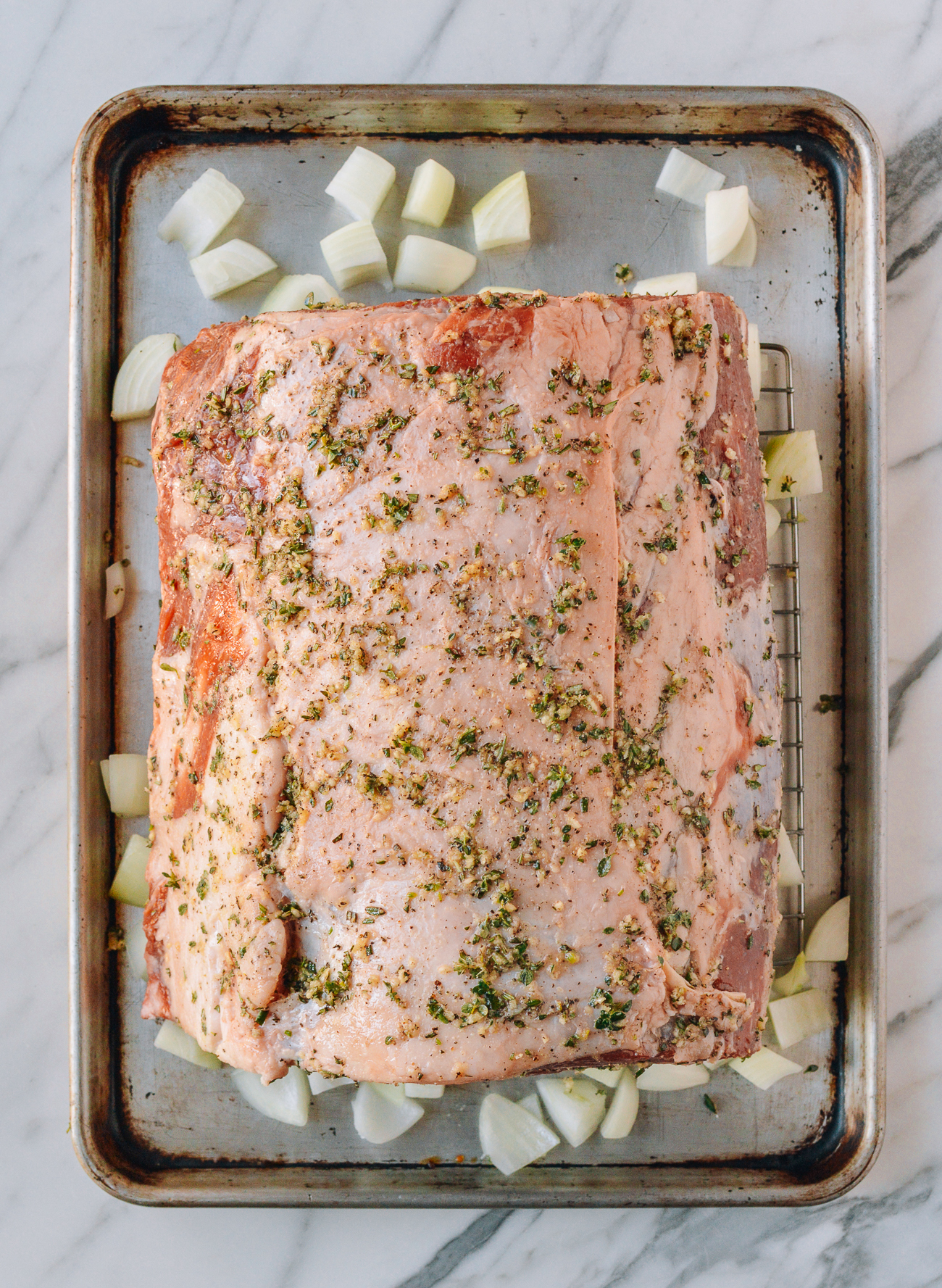
Use plastic wrap to cover the roast, and let it marinate overnight (at least 8 hours) in the refrigerator.
We don’t expect the flavors to penetrate the roast completely, but it will work its way into the fatty collar portion of the roast.
DON’T BE TEMPTED TO SKIP THE OVERNIGHT MARINATING!
Skipping this step makes a big difference in flavor. We’ve had some mediocre roasts due to a lack of marinating time, so take my word for it!
Cook the roast:
Take the roast out of the refrigerator 2 hours before cooking time, so it’s not stone cold when you transfer it to the oven.
Preheat the oven to 450°F (230°C), and place your roast on a lower oven rack. You may want to put the roast at the bottom of the oven for the first hour. Placing the oven rack too high up will cause your roast to brown too quickly and burn!
After 30 minutes in the oven, add a ½ cup of water to the bottom of the roasting pan.
The key is to allow the onions to brown and caramelize while roasting, but not to burn and smoke in the fat. Adding water also prevents any rendered fat from smoking and burning. Adding water 1/2 cup at a time prevents too much steam from building up in the oven. You want your beef to roast, not steam.
Rotate the roast 180°, and cook for another 30 minutes, until it begins to brown. If there is more fat on one side that has not browned yet, make sure you position that side of the prime rib roast toward the inside of the oven. Use your own judgement on this one!
Once the prime rib roast is browned on the outside (1 hour total should do it, but times may vary depending on your oven and roast size), lower the heat to 350°F (175°C). Continue roasting the prime rib for another 90 to 120 minutes. Baste 30 minutes if desired, and add hot water ½ cup at a time if the roasting pan does dry up.
If the top of the roast starts to char, put a small piece of foil to lightly cover the top, leaving the sides exposed. Again, turn the roast 180° if needed for even roasting.
when is a Prime Rib Done?
A general rule I use to approximate roasting time is a total of 15 minutes per pound, so for this 12 pound roast, the total roasting time should be 180 minutes. With temperature changes, that means roasting at 450°F/230°C for 60 minutes followed by 120 minutes at 350°F/175°C.
Important Cooking NOTES:
- Temps and cooking times in this recipe are for a conventional oven, not a convection or fan-assisted oven.
- If you have a very small roast (6 pounds or less), reduce the initial high heat cooking time (at 450°F/230°C) to 40 minutes. Then reduce the temperature to 325°F/160°C, and still follow the 15 minutes per pound rule. For a 6 pound roast, you would cook it at 450°F for 40 minutes, then at 325°F for 50 minutes, for a total of 90 minutes. Ovens vary, so be sure to use your meat thermometer (we use the Thermoworks Thermapen® ONE Instant Read Thermometer) to confirm the beef is at your desired doneness. (More on the Thermapen® ONE: It gives a temperature reading in one second and is accurate to ±0.5°F / ±0.3°C. It’s a staple in our kitchen! If you’re interested in purchasing one, note we are a Thermoworks affiliate partner, and we do earn a small commission if you purchase through the affiliate link above.)
- Have a boneless roast? Check it with your meat thermometer earlier, as it will cook faster without the bone.
That said, these times are approximate. Using a meat thermometer is a must. You don’t want to overcook it!
We always cook for medium-rare prime rib, so the time will be closer to 90 minutes, or when the prime rib roast reaches an internal temperature of 120 to 125°F.
This gives you two more well-done Prime Rib end cuts and a couple medium pieces mixed in with the medium rare cuts. If you like it rare, roast for less time. Take the roast out of the oven when the internal temperature reaches 120°F. If you like it super-rare, then 115°F may be for you.
Just remember that the meat thermometer is your guide and that the roast will continue to cook a bit (about 5°-7° rise in internal temperature) while it rests. These temperature guidelines have taken that into account.
Always Rest your prime rib
Set your prime rib on a cutting board or serving platter. Lightly cover it with a piece of aluminum foil to rest for 20 minutes.
While the prime rib is resting, pour the pan juices through a fine mesh strainer into a fat separator. If there’s not enough liquid, add a ½ cup of water to the hot pan, and stir.
Pour the juices from the fat separator into a small pot or sauté pan, and set aside. Warm up the au jus, and serve alongside the prime rib. You can further dilute it with some hot water to taste if it’s too salty. If it suits your fancy, you can also serve some horseradish or horseradish sauce alongside.
Slice and serve immediately! Happy holidays, all!
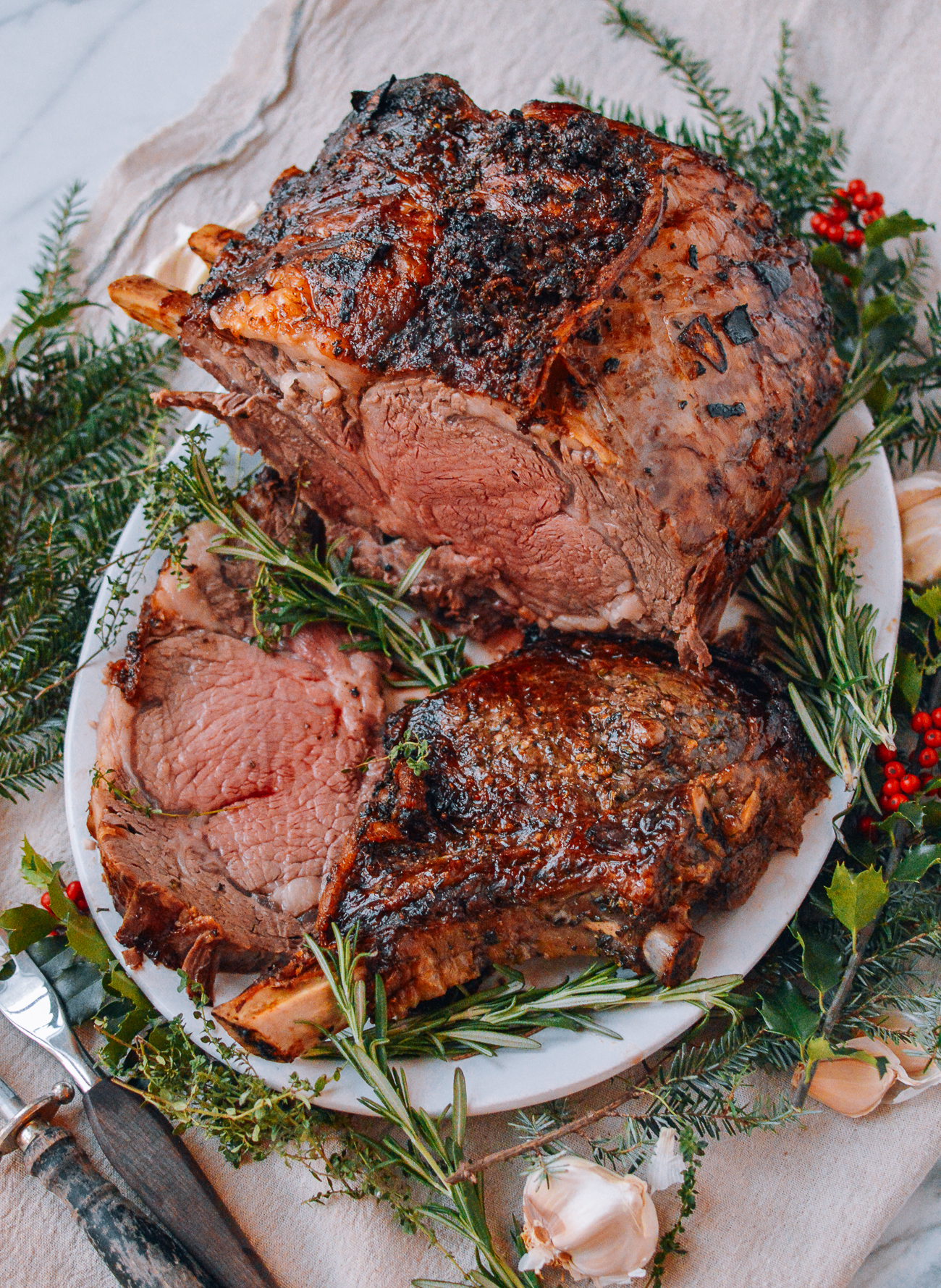
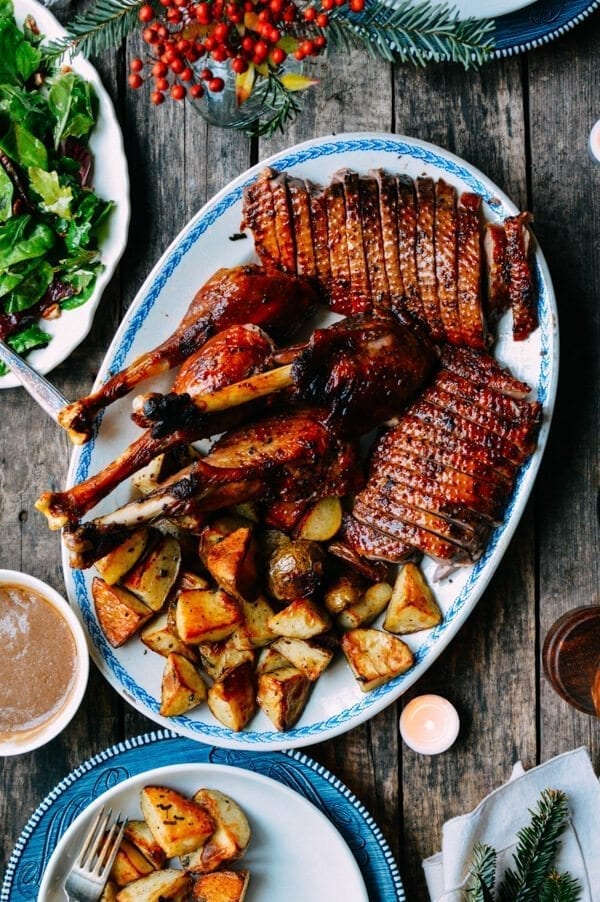
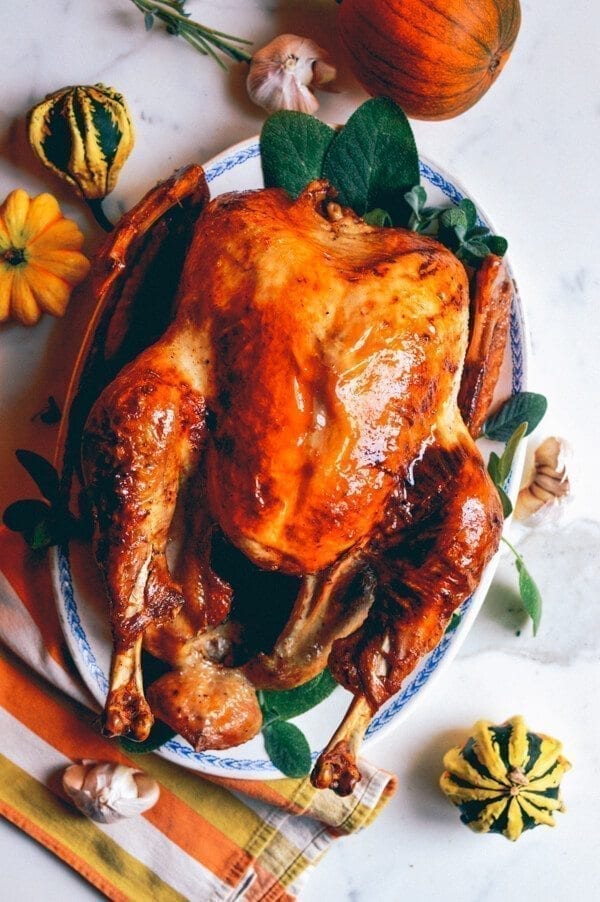
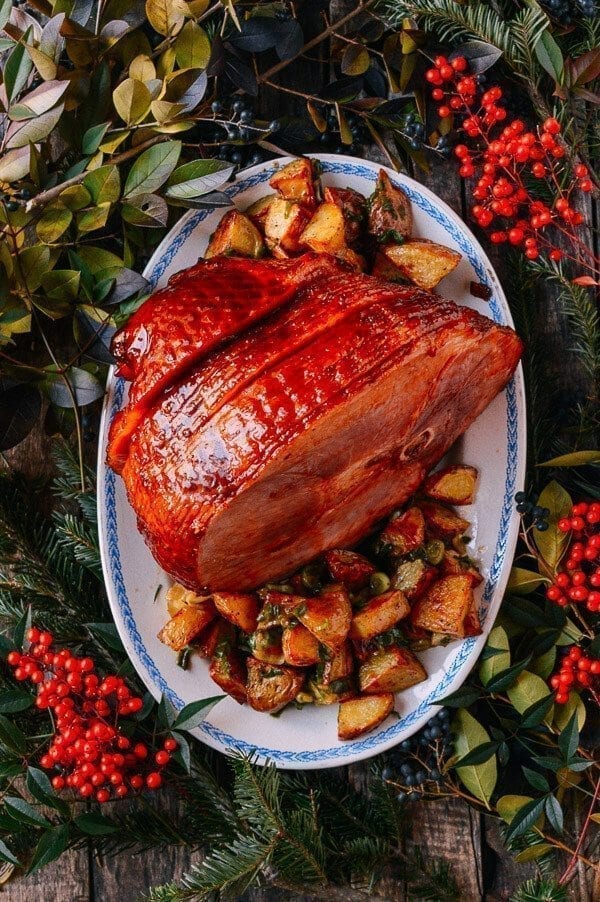
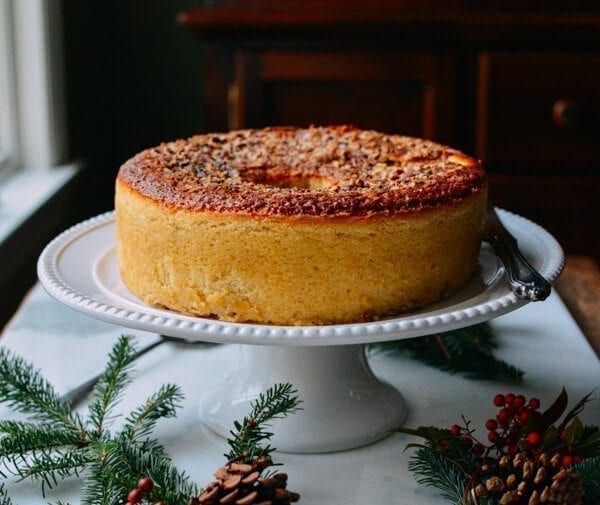
For other holiday recipes, check out this incredible roast goose, Grandpa’s recipe for roast turkey (we use it EVERY Thanksgiving), or this ham with sour plum glaze. Also be sure to check out this pecan rum cake recipe from Kaitlin. It’s the perfect dessert to go with this meal!
Looking for more authentic recipes? Subscribe to our email list and be sure to follow us on Pinterest, Facebook, Instagram, and Youtube!
Recipe

The Perfect Prime Rib Roast Family Recipe
Ingredients
- A bone-in prime rib roast (see note 2 if your roast is 6 lbs or less)
- 1/3 medium onion (large dice or thickly sliced; approx. 1/3 medium onion per pound, up to 4-5 onions total; see note 3)
- 1 teaspoon Kosher or coarse sea salt per pound (1 tsp per lb/450g)
- ½ teaspoon freshly ground black pepper per pound (1/2 tsp per lb/450g)
- 1 teaspoon minced garlic per pound (1 tsp per lb/450g)
- 1 teaspoon fresh rosemary per pound (1 tsp per lb/450g)
- 1 teaspoon fresh thyme per pound (1 tsp per lb/450g)
- ½ teaspoon olive oil per pound (1/2 tsp per lb/450g)
Instructions
Marinate the roast:
- The butcher knows how much fat to leave on the roast, so no additional trimming is generally needed. Your prime rib roast should have a nice layer of fat on top, so it will baste itself. Before marinating, give your prime rib roast a quick rinse with cold water, and pat it dry with paper towels.
- Place a flat roasting rack inside a roasting pan large enough to fit your roast, and spread the onions on top of the rack (you can also forgo the rack, and rest the roast directly on the onions). Place the roast in the pan.
- Mix the salt, pepper, garlic, herbs and olive oil in a bowl until well-combined. Rub the roast all over with the marinade mixture, coating the surface evenly.
- Use plastic wrap to cover the roast, and marinate overnight (at least 8 hours) in the refrigerator. We don’t expect the flavors to penetrate the roast completely, but it will work its way into the fatty collar of the roast.
Cook the roast:
- Take the roast out of the refrigerator 2 hours before cooking time, so it's not stone cold when you transfer it to the oven. Preheat the oven to 450°F/230°C, and place your roast on a lower oven rack. You may want to put the roast at the bottom of the oven for the first hour. Placing the oven rack too high up will cause your roast to brown too quickly and burn.
- After 30 minutes in the oven, add ½ cup water to the bottom of the roasting pan. The key is to allow the onions to brown and caramelize while roasting, and to prevent the fat/drippings from burning and smoking. Adding the water gradually limits the steam in the oven—you want the beef to roast, not steam.
- Turn your roast 180° and cook for another 30 minutes, until it begins to brown. If there is more fat on one side that has not browned yet, make sure you position that side of the prime rib roast toward the inside of the oven. Use your judgement!
- Once the prime rib roast is browned on the outside (1 hour total should do it, but times may vary depending on your oven and roast size; see note 2), lower the heat to 350°F/175°C.
- Continue cooking for 90-120 minutes, basting every 30 minutes and adding hot water 1/2 cup at a time if the roasting pan gets dry. A general rule I use to approximate roasting time is a total of 15 minutes per pound, so for a 12 pound roast, the total roasting time should be 180 minutes. With temperature changes, that means roasting at 450°F/230°C for 60 minutes followed by 120 minutes at 350°F/175°C. That said, these times are approximate; using a meat thermometer is a must. We always cook for medium rare, or when the prime rib roast reaches an internal temperature of 125°F/51°C. This gives you two more well-done Prime Rib end cuts and a couple of medium pieces mixed in with the medium rare cuts. If you like it rare, then roast for less time, taking the roast out of the oven when the internal temperature reaches 120°F/49°C. If you like it super-rare, then 115°F/46°C may be for you. The roast will continue to cook a bit while it rests on the kitchen counter, raising the temp another 5-7 degrees, so these temperature guidelines have taken that into account.
- If the top of the roast starts to char, put a small piece of foil to lightly cover the top, leaving the sides exposed. Again, turn the roast 180° if needed for even roasting.
Rest & Serve:
- When ready, set your prime rib on a cutting board or serving platter, and lightly cover it with a piece of aluminum foil to rest for 20 minutes. While the prime rib is resting, pour the pan juices through a fine mesh strainer into a fat separator. If there is not enough liquid, add a ½ cup of water to the hot pan, and stir lightly. Pour the juices from the fat separator into a small pot or sauté pan and set aside. Warm up the au jus, and serve alongside the prime rib. You can further dilute it with some hot water to taste if it’s too salty.