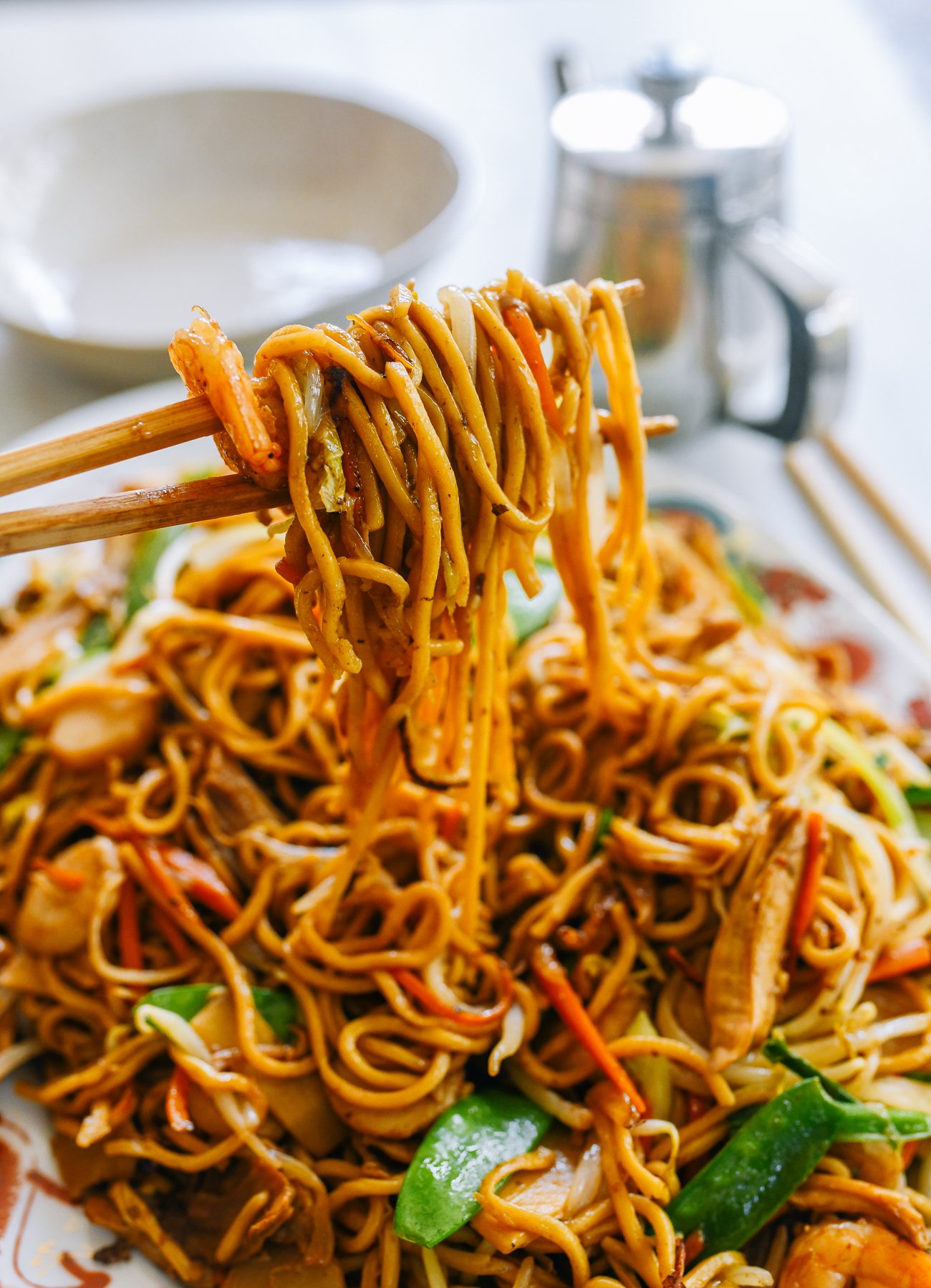
We have quite a few lo mein recipes in our recipe collection. In fact, searching for lo mein in our archives yields a list like you would see on a Chinese restaurant menu! You can take your pick of your favorites, including beef, chicken, shrimp, pork, vegetable, or even turkey lo mein.
Suffice it to say, I have cooked a lot of lo mein in my days, both in a restaurant kitchen and at home. It really is a dish where I’m on autopilot when I make it. However, after reading many comments from our readers over the years, I have seen people run into issues cooking that I simply never encountered.
People would describe sticky or raw noodles, or a version that was too dry. Or they would attempt to double or triple the recipe and find that their dish turned out bland. I realized thatI was unconsciously making small and automatic adjustments to avoid these types of problems.
That’s where this post comes in. Today, we have a basic lo mein recipe that will teach you how to make lo mein the right way. With this post (and video!), we’re setting everyone straight and sharing those tips to avoid disappointment in the kitchen.

What is Lo Mein?
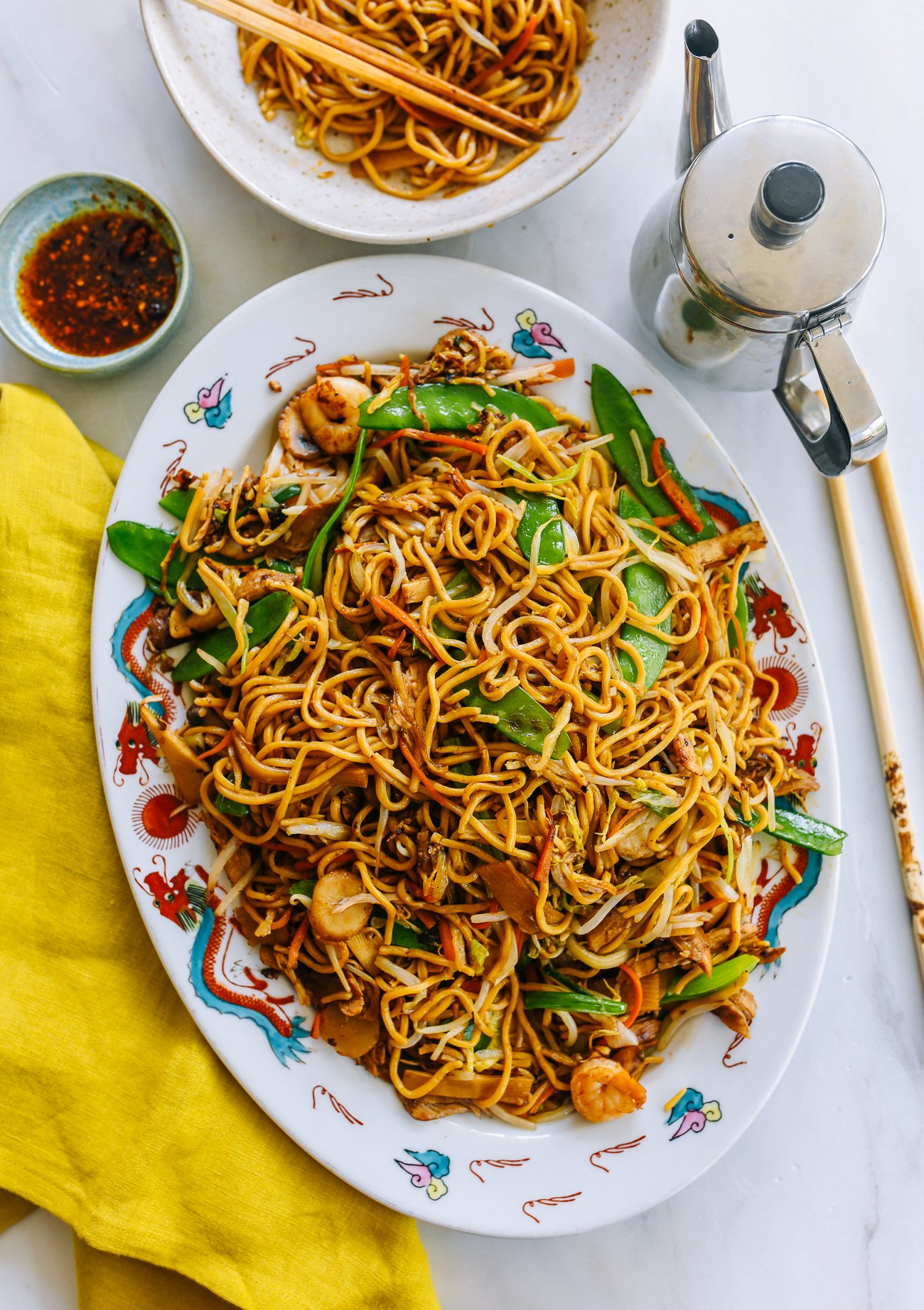
Lo mein (捞面), pronounced lāo miàn in Mandarin or lou meen in Cantonese, is a Chinese noodle made with egg and wheat flour. The somewhat thick noodles are first cooked in hot water, thoroughly drained, and then stir-fried in a hot wok with meat, vegetables, and a tasty sauce.
Lo mein (捞面) literally means stirred, mixed or scooped noodles. This essentially describes what you do when cooking the dish—what I call “stir-frying with a scooping motion.”
It has gained popularity in the U.S. as a common Chinese takeout dish. Loved by everyone, I’ve never met anyone who refused a good lo mein, and we also order it when we get Chinese takeout!
Chow Mein vs Lo Mein
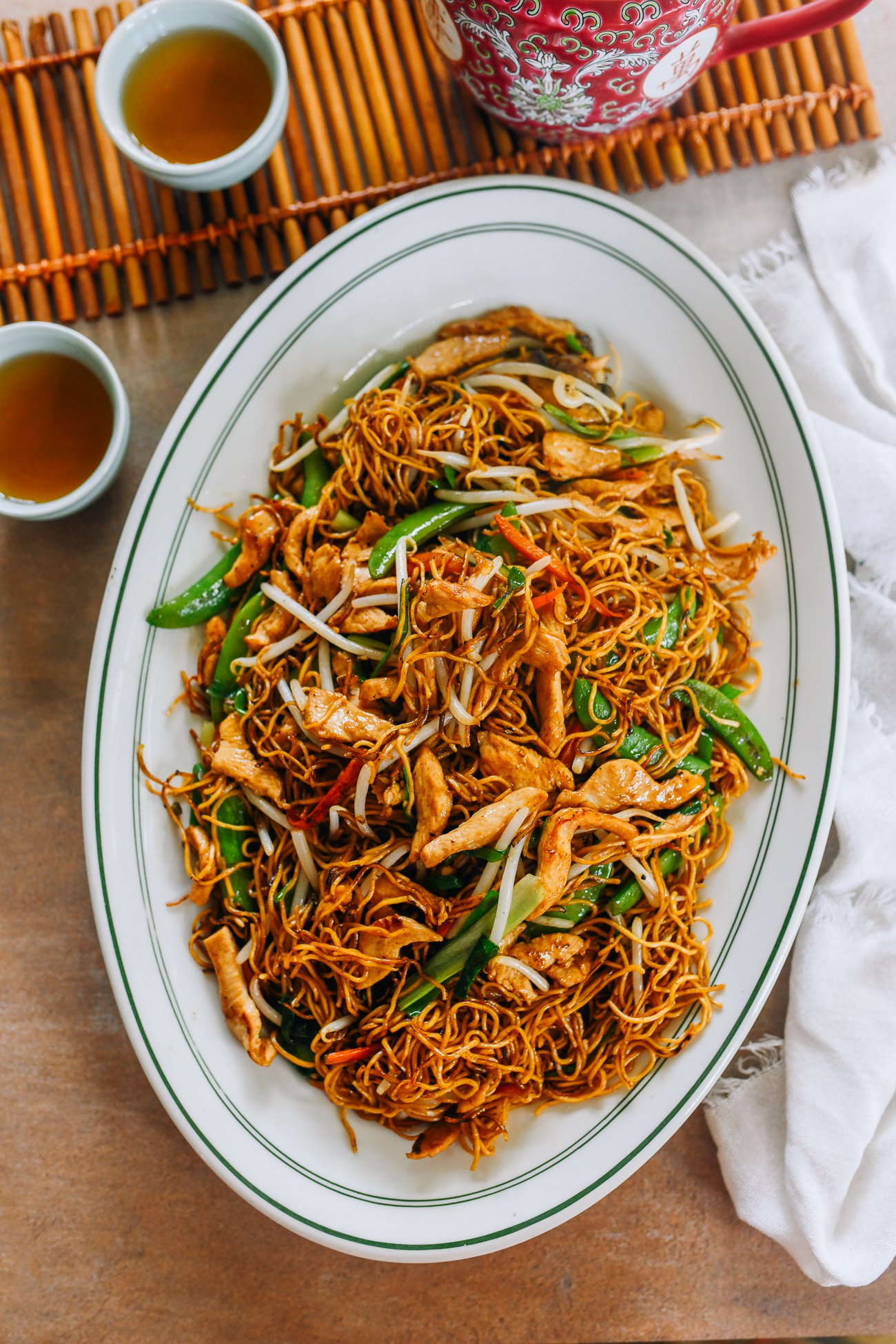
The difference between chow mein vs. lo mein can be confusing, unless you have had both. Then it’s abundantly clear that they are different dishes, and both have their merits. Chow mein literally means “stir-fried noodles.” They are usually wok or pan-fried and a little crispy rather than soft like a lo mein noodle.
Chow mein noodles are also much thinner than their lo mein cousin, so when they are pan-fried, you get a lighter texture like in our Chicken Gai See Chow Mein, Seafood Chow Mein, and Chicken Chow Mein recipes. Both dishes are delicious—it just depends what you’re in the mood for!
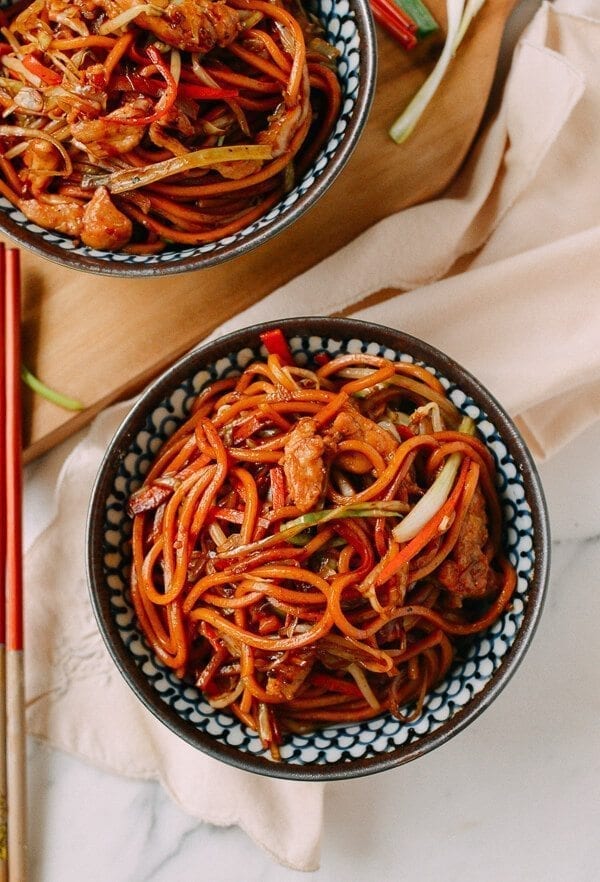
To confuse things even more, especially for you older baby boomers and GenXers like me, the term “chow mein” was also used to refer to not a noodle dish, but a mixture of celery, onions, bamboo shoots, water chestnuts, and mushrooms with a protein, served over rice and topped with a crispy deep-fried noodle as a garnish. You can see what I mean in our American Chicken Chow Mein recipe.
Un-Cooked or Pre-Cooked Noodles?
Another point of confusion that often leads to mistakes when making lo mein is that lo mein noodles can come both pre-cooked and uncooked. Make sure you check the package carefully before you buy them to see which type you have.
Personally, I like the uncooked lo mein noodles that you have to boil before stir-frying, because I think they have a slightly better texture than the cooked version. The pre-cooked noodles can sometimes be stubbornly stuck together, which can cause breakage while stir-frying.
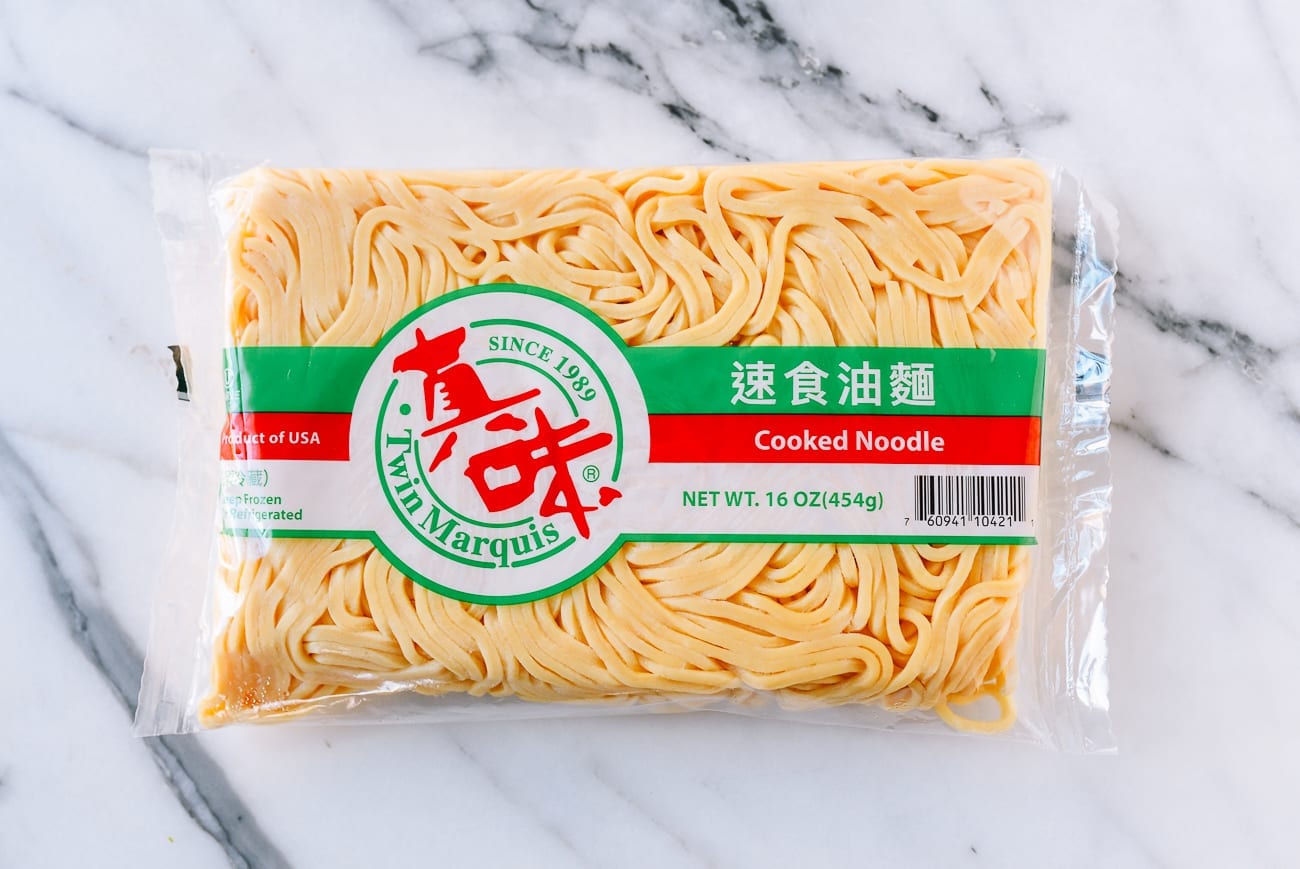
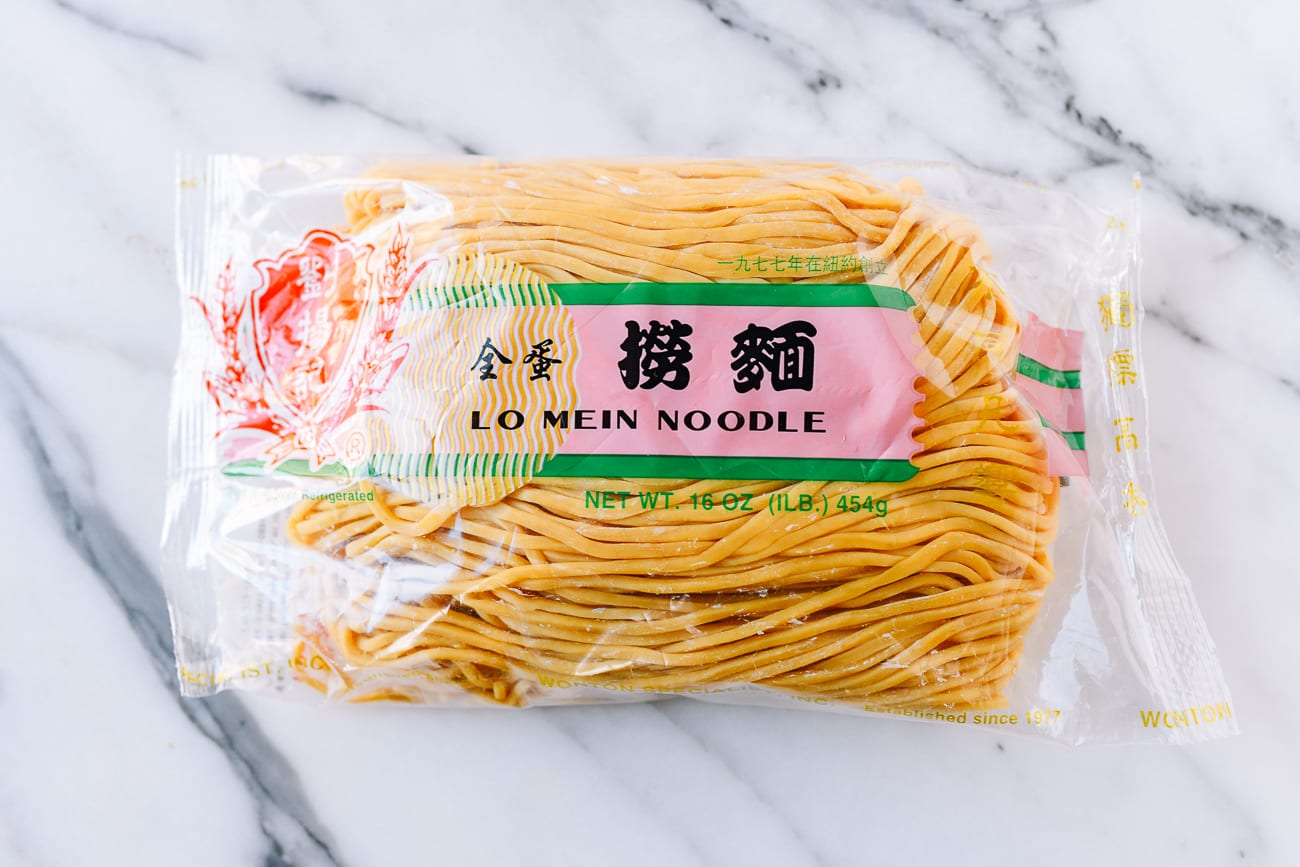
That said, it can be very convenient to use cooked lo mein noodles right out of the package, without the extra step of boiling them.
Check out our Chinese Noodles and Wrappers ingredients page and our Lo Mein Noodles prep post for more detail on the pre-cooked and uncooked versions.
Is There a Substitute for Lo Mein Noodles?
Lo mein noodles should be readily available in any Chinese or Asian grocery store. They are usually stocked in the refrigerated section where all of the fresh noodles, dumpling wrappers, and wonton wrappers are kept.
If you haven’t found them, try looking a little harder. You may also find them in the freezer section if your Chinese grocery is less trafficked. But what do you do if you don’t have access to an Asian market?
Your first thought may be to give up and make something else, but my answer to that is “what is life without a good home-cooked lo mein?” Instead, just use dried spaghetti! I don’t share the view of purists that say it’s real lo mein noodles or bust. Use what you have today, and try harder to find lo mein noodles tomorrow! Remember to use half the weight called for in the recipe if using dried pasta. You’ll need to pre-boil them until al dente before stir-frying.
What Do You Put in Lo Mein?
The beauty of making lo mein at home is that you can use just about anything you like or have in the fridge. In general, the main ingredients—aside from the noodles—are a protein, napa or green cabbage, mung bean sprouts, and scallions.
In particular, cabbage and bean sprouts are important, because these vegetables have a lot of moisture and help create a moist lo mein. They are also very fresh tasting, which adds a lot of natural sweetness to the dish.
You can also make a fridge cleanout version with any languishing vegetables and leftover roast chicken, beef, or pork.
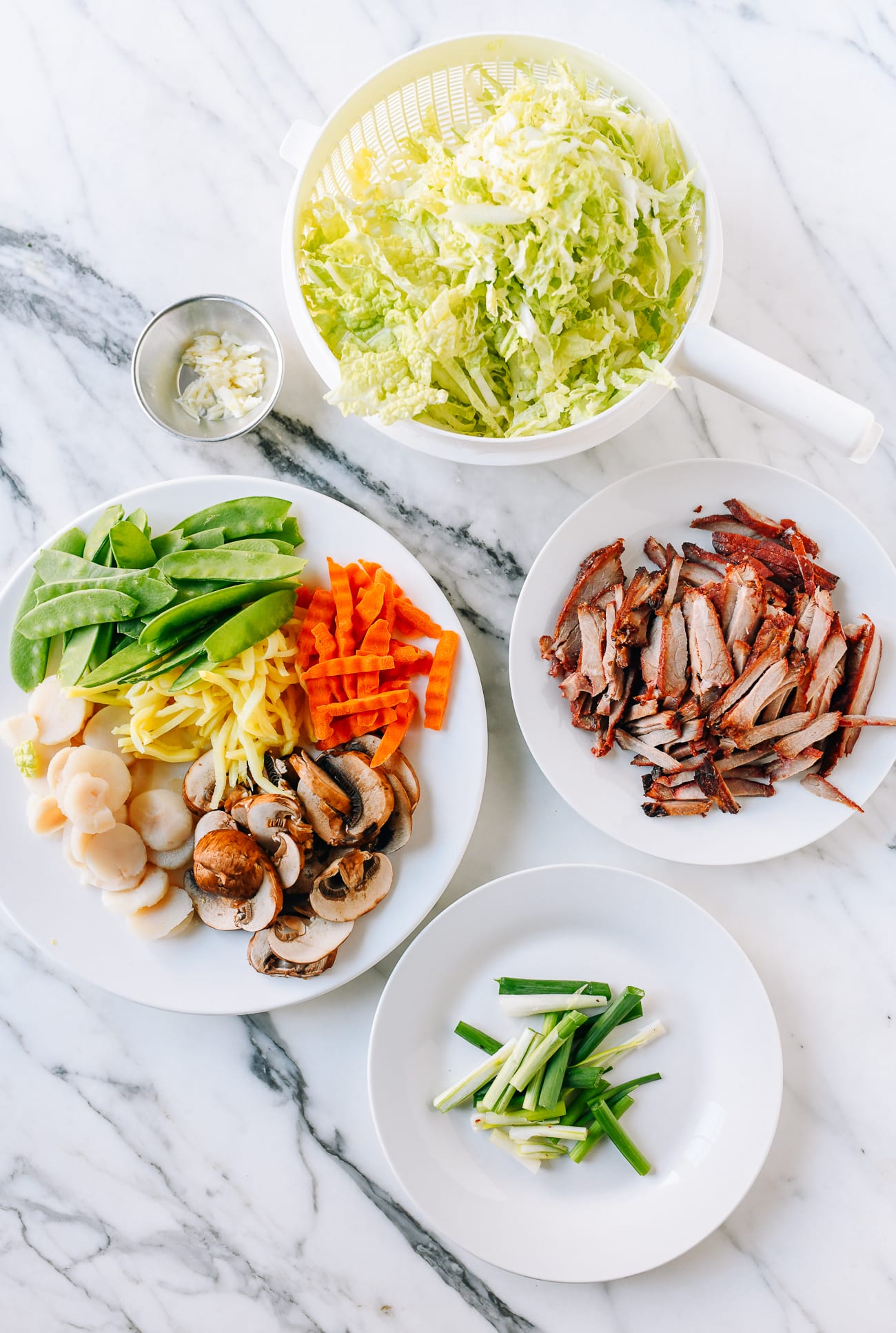
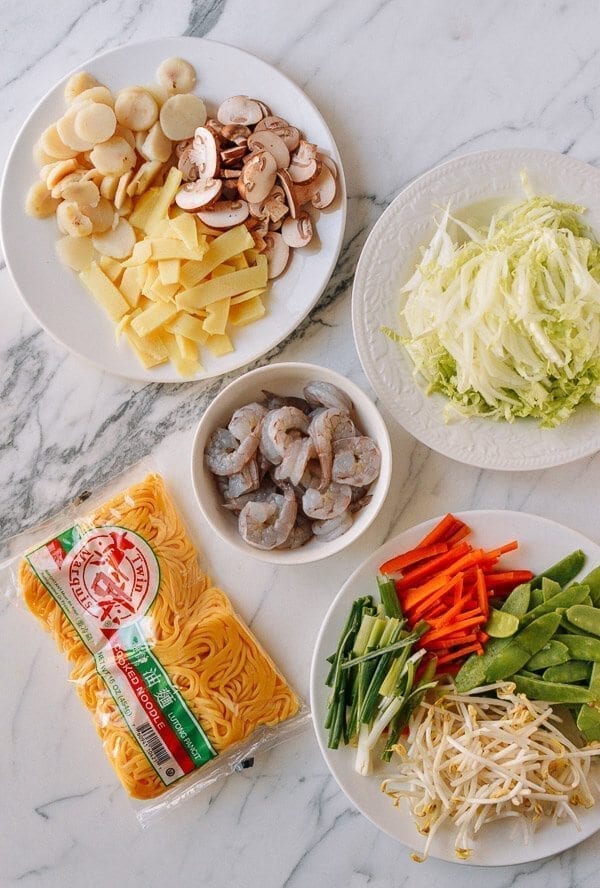
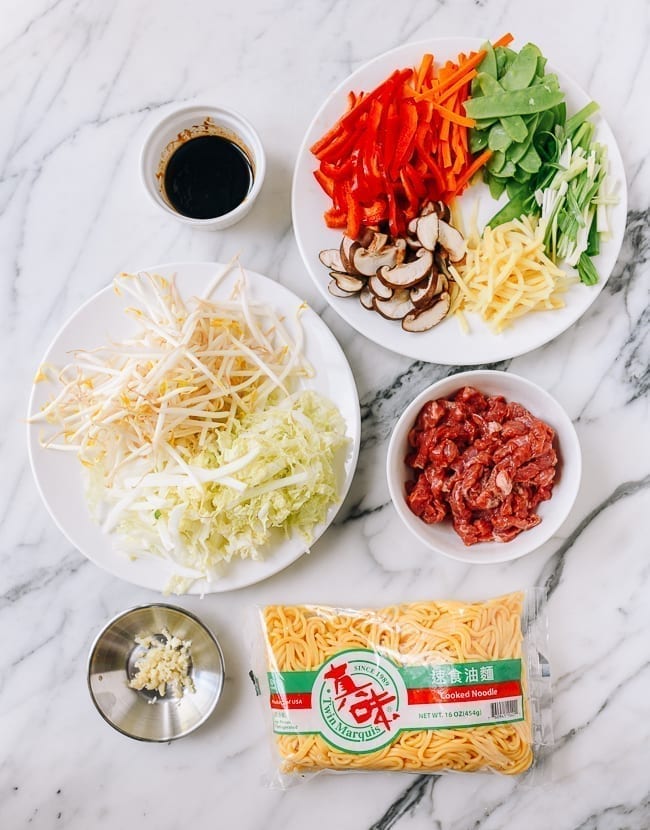
Aside from that, here is a list of ingredients great for making lo mein:
- Julienned carrots
- Sliced mushrooms
- Sliced bamboo shoots
- Snow peas or snap peas
- Julienned bell peppers
- Sliced water chestnuts

Velveting Meat:
If you’re adding an uncooked protein to your lo mein, don’t forget to velvet it! Velveting beef, chicken, pork or even shrimp are important steps to making the dish the tastiest it can be.
Using cooked meats? Add them later, so they don’t get overcooked. If you’re a vegetarian or vegan, then just make sure you add the harder vegetables (like carrots, broccoli, etc.) first, so all of your veggies are perfectly cooked by the time you’re done cooking.
Lo Mein Sauce
Here are the seasoning sauces and spices you may need to mix up a lo mein sauce (click on the ingredient link below to read more about that ingredient!):
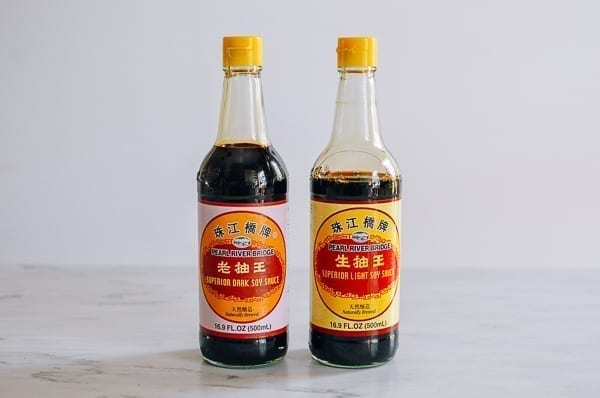
- light soy sauce: this is regular Chinese soy sauce—the most common seasoning ingredient in the Chinese pantry. Not to be confused with low sodium soy sauce.
- dark soy sauce: provides added richness and color to the dish
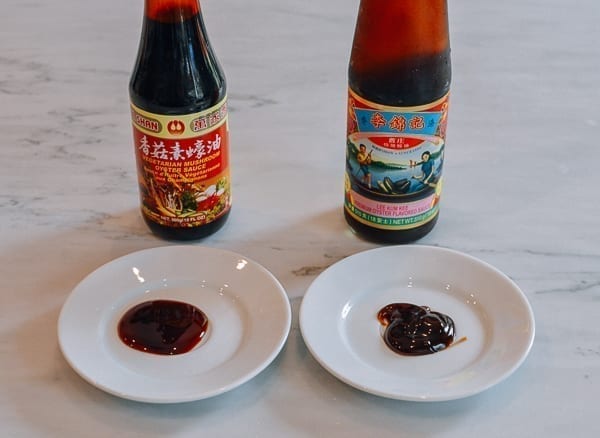
- oyster sauce: packed with umami, oyster sauce is a must! Vegetarians or those with shellfish allergies can use a mushroom-based vegetarian oyster sauce
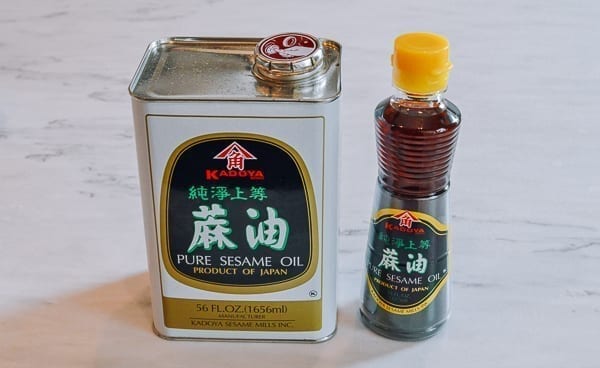
- sesame oil: this is toasted sesame oil, which has a dark amber color. Be sparing with it, as it can quickly overpower a dish.
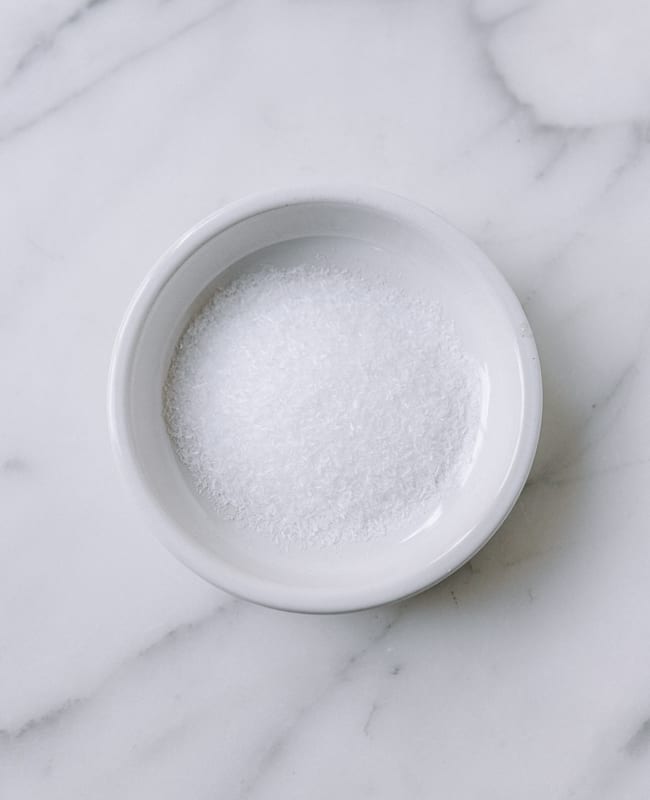
- salt: you may or may not need it depending on how many other seasonings you add and your taste preferences, but it can enhance other flavors (like the sweetness of vegetables) without muddying the overall flavor of the dish.
- sugar: a small amount can balance and enhance the salt and other savory flavors in the dish
- MSG or mushroom powder: totally optional, but elevates the umami factor!
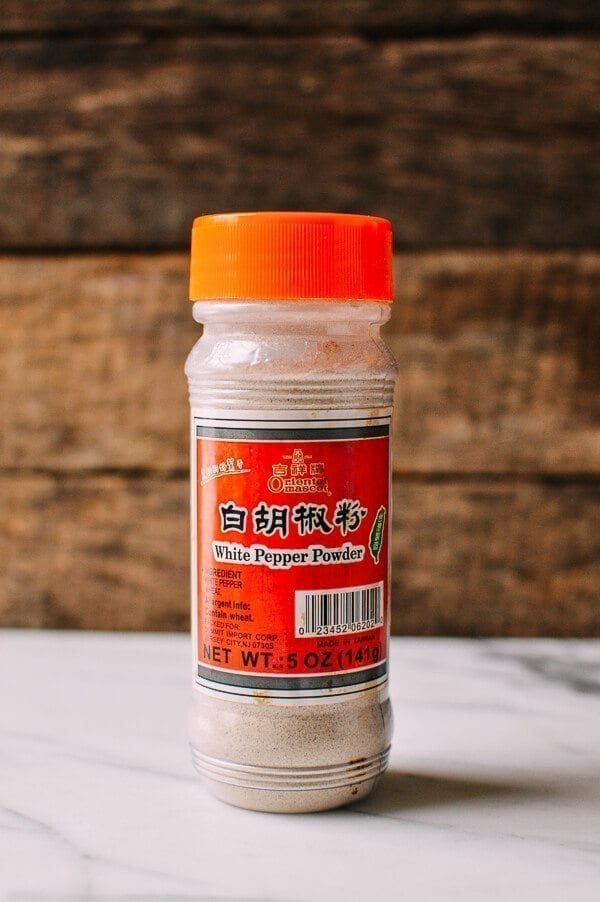
- white pepper: much more commonly used in Chinese cooking than black pepper
- Hot chicken stock or water: use hot chicken stock or water as needed if your noodles look dry. Emphasis on hot, so you don’t cool off your hot wok party!
Cooking Tips
- Have all your ingredients prepared and within reach, so you don’t forget anything and can move fast while cooking
- Pre-mix your sauce
- Generate wok hei (which describes that seared wok flavor you get when you cook at high heat) by not cooking batches that are too large, and using the highest heat your stove will put out!
- Don’t let your noodles dry out in the wok! You want them to be moist and slippery, not dry and sticky. As mentioned previously, hot water/chicken stock can help with this.
You can apply these tips when making our other lo mein recipes as well. Check out our recipe index or search for “Lo Mein” in our search bar to find your favorites!
Lo Mein Recipe Instructions
If you’re using an uncooked protein, follow our instructions for velveting chicken, beef, pork, or shrimp.
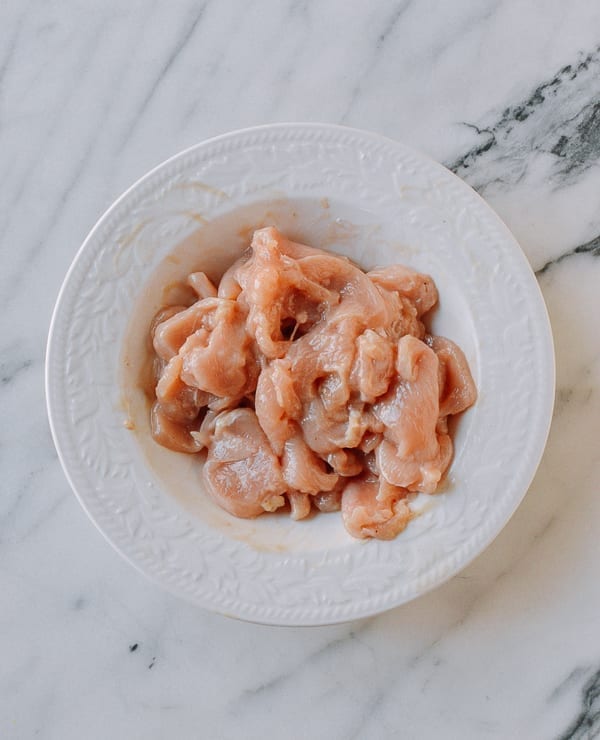
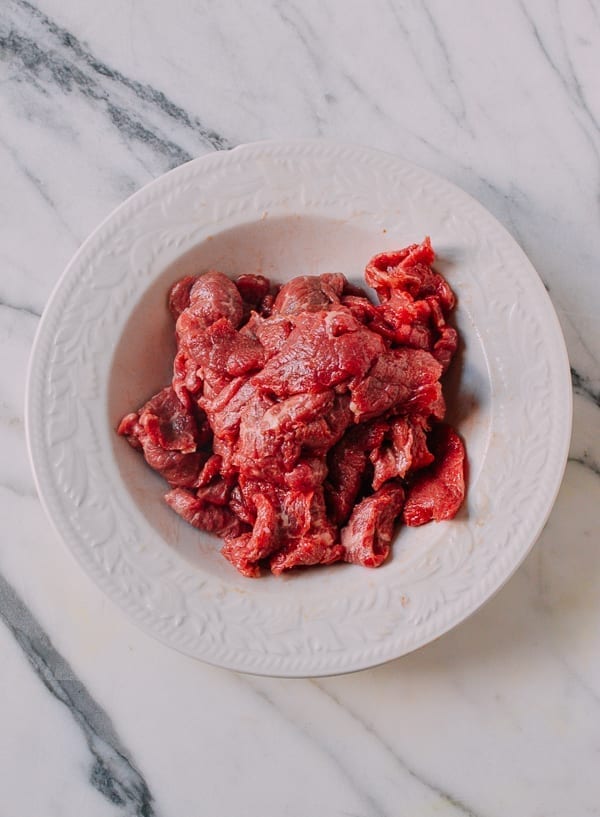
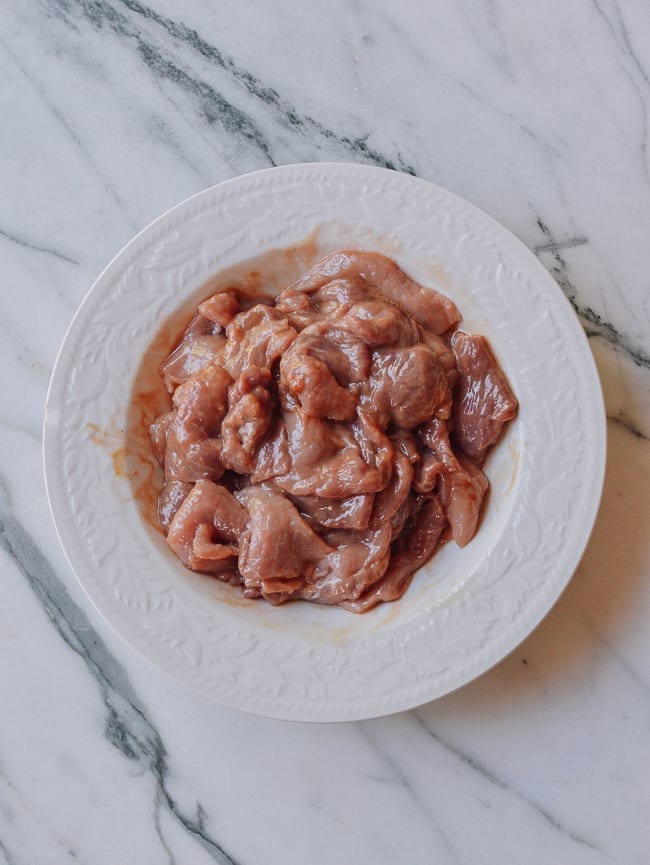
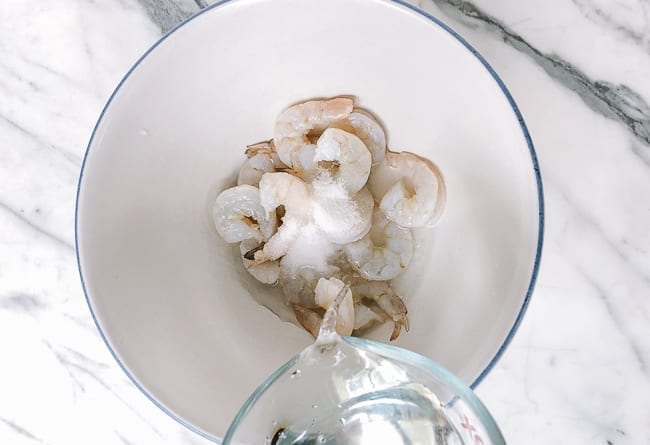
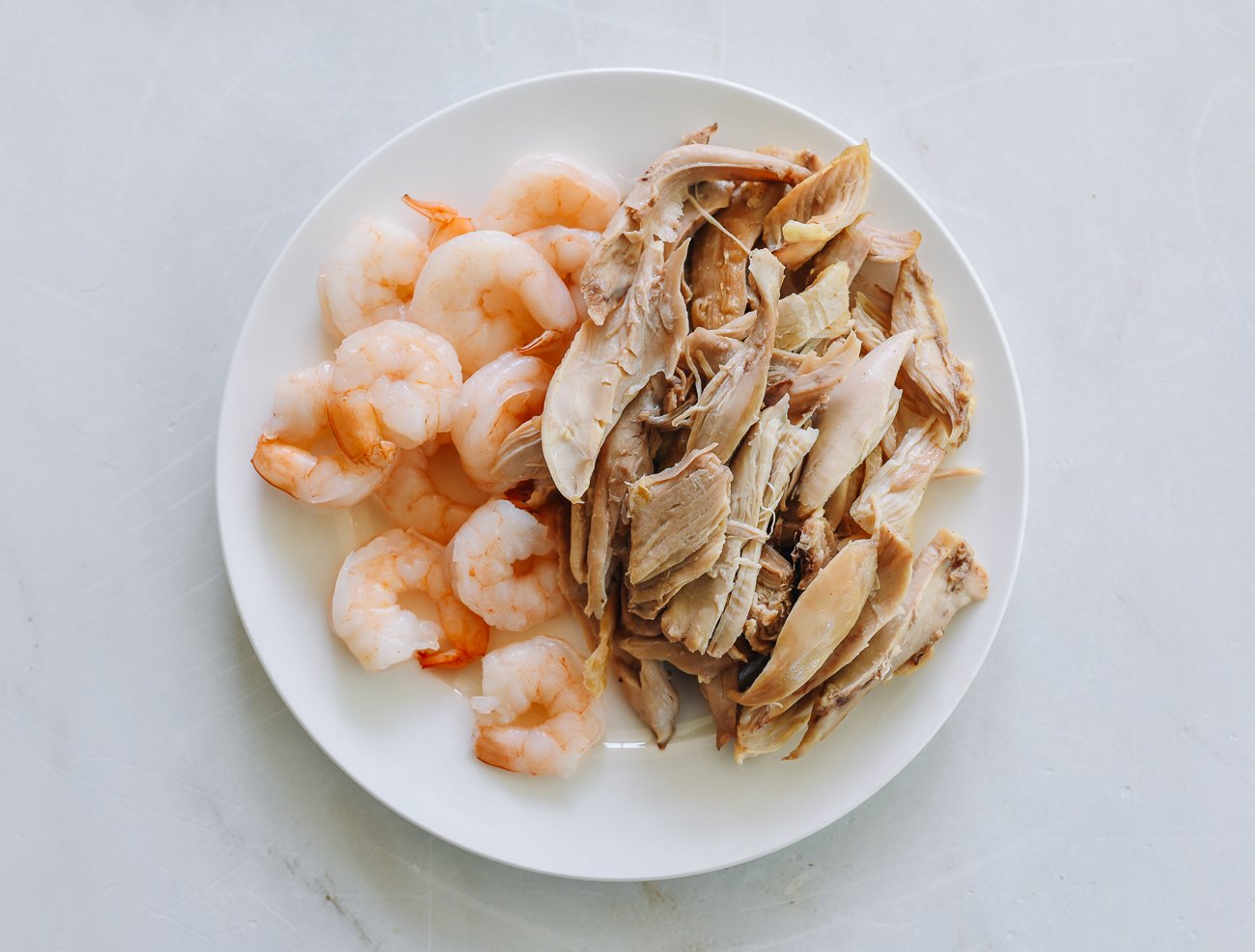
If using a cooked protein, like Chinese BBQ Pork (Char Siu), you can slice it or julienne it. When we photographed this recipe, we decided to use cooked shrimp and leftover cooked chicken.
Prepare the sauce by combining 2 tablespoons of hot stock/water, the oyster sauce, light soy sauce, dark soy sauce, salt, sesame oil, sugar, and white pepper in a measuring cup or medium bowl.
If using cooked noodles, rinse them under hot tap water to loosen them and drain thoroughly. If using uncooked noodles, boil them in a large pot of water until they’re al dente, drain, and rinse thoroughly in cool water. Learn more about preparing lo mein noodles here!
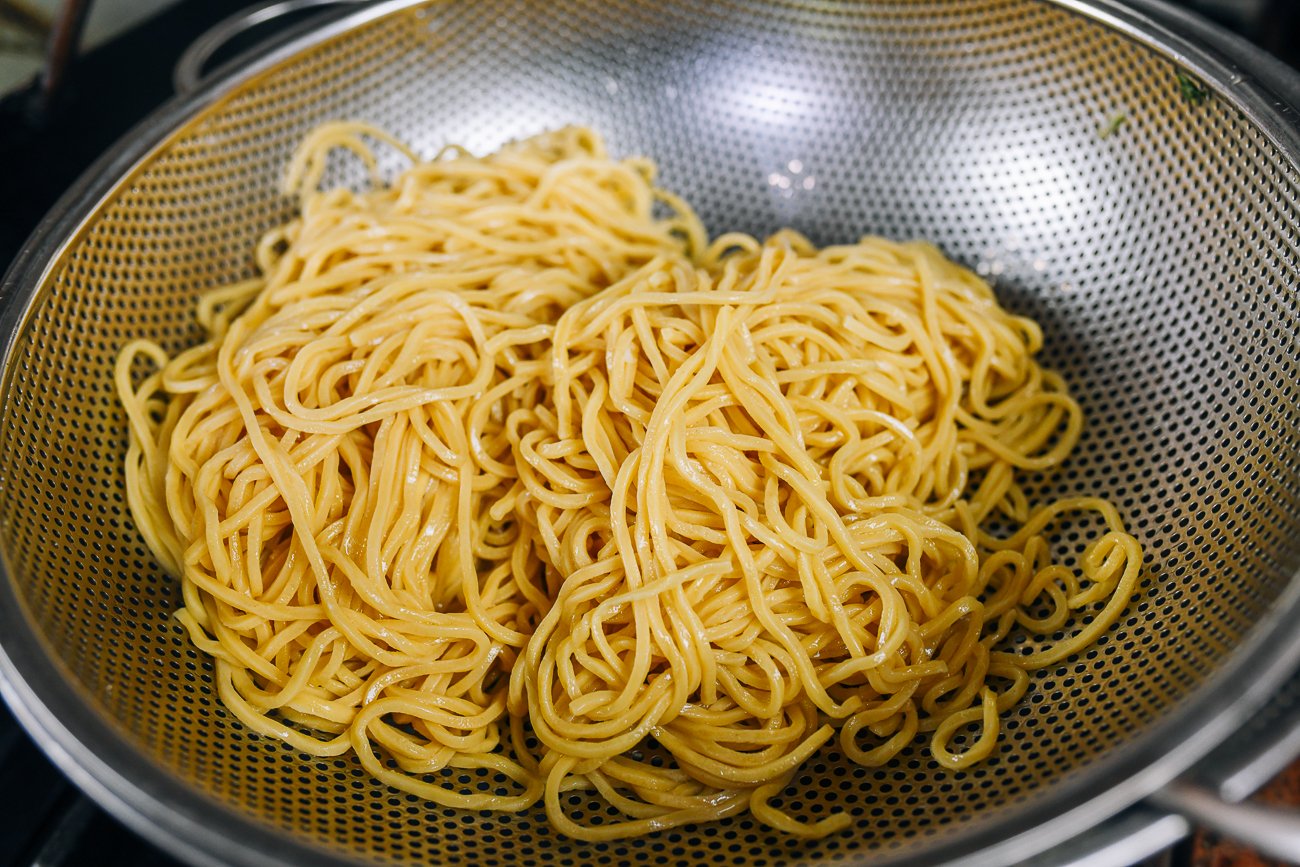
Drain thoroughly and set aside. Prepare the garlic and all the vegetables to have them ready for cooking.
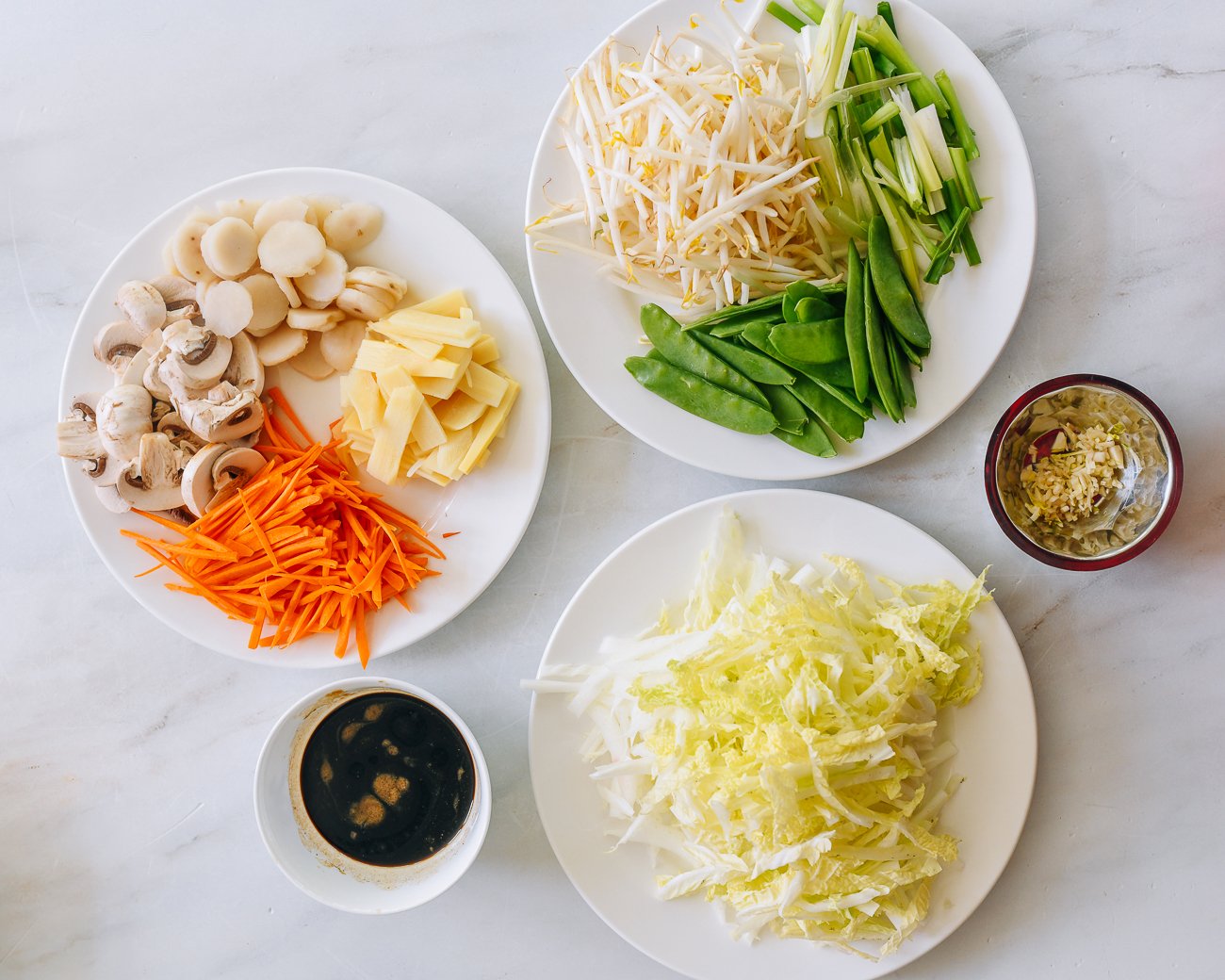
Place your wok over medium-high heat until it just starts to smoke, and add the oil. If using a raw protein, add it to the wok in one layer, and allow it to sear. Stir-fry until it’s about 80% done, and remove from the wok, leaving behind any oil/fat.
Add the mushrooms, carrots, bamboo shoots, water chestnuts, and garlic (this would be your first step if you’re not using any uncooked protein). Increase the heat to high, and stir-fry for 1 minute.
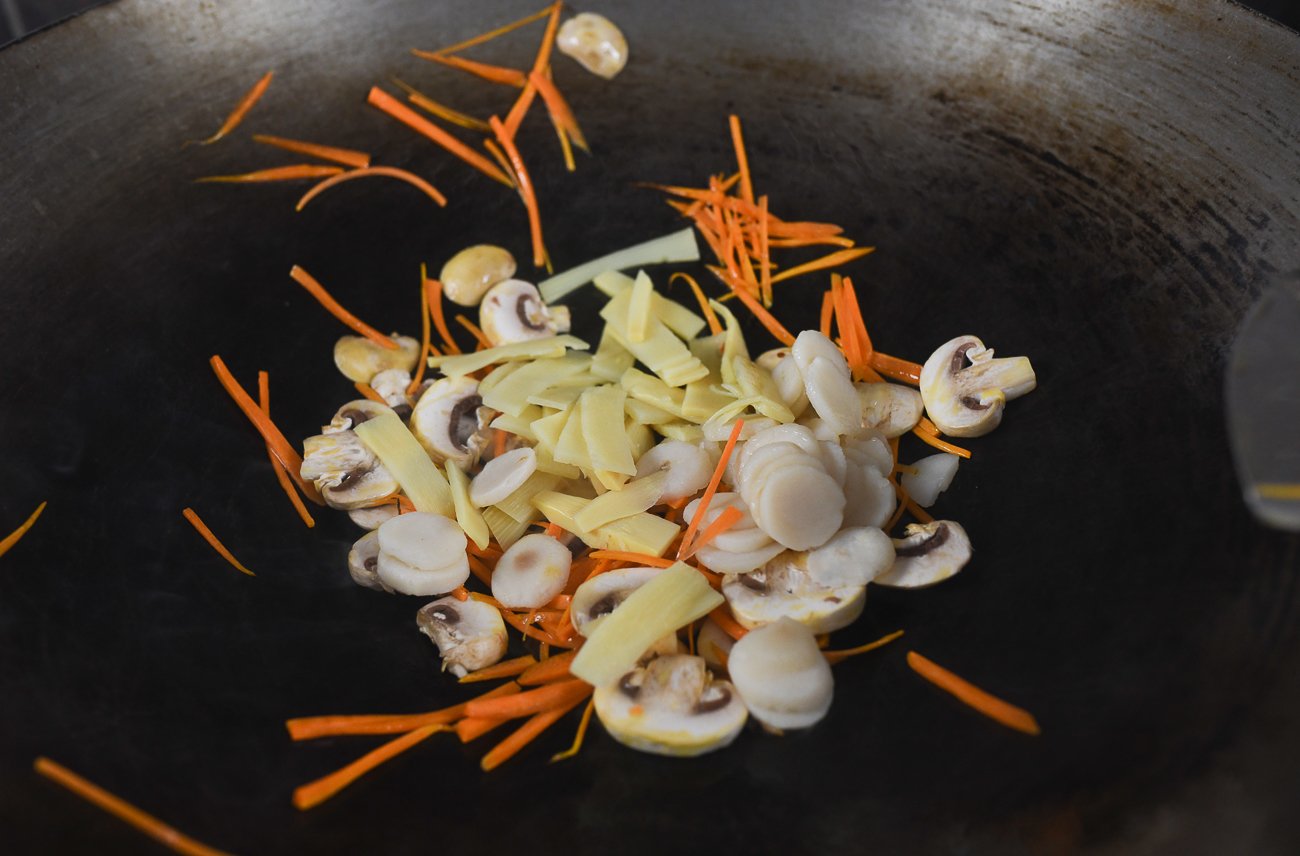
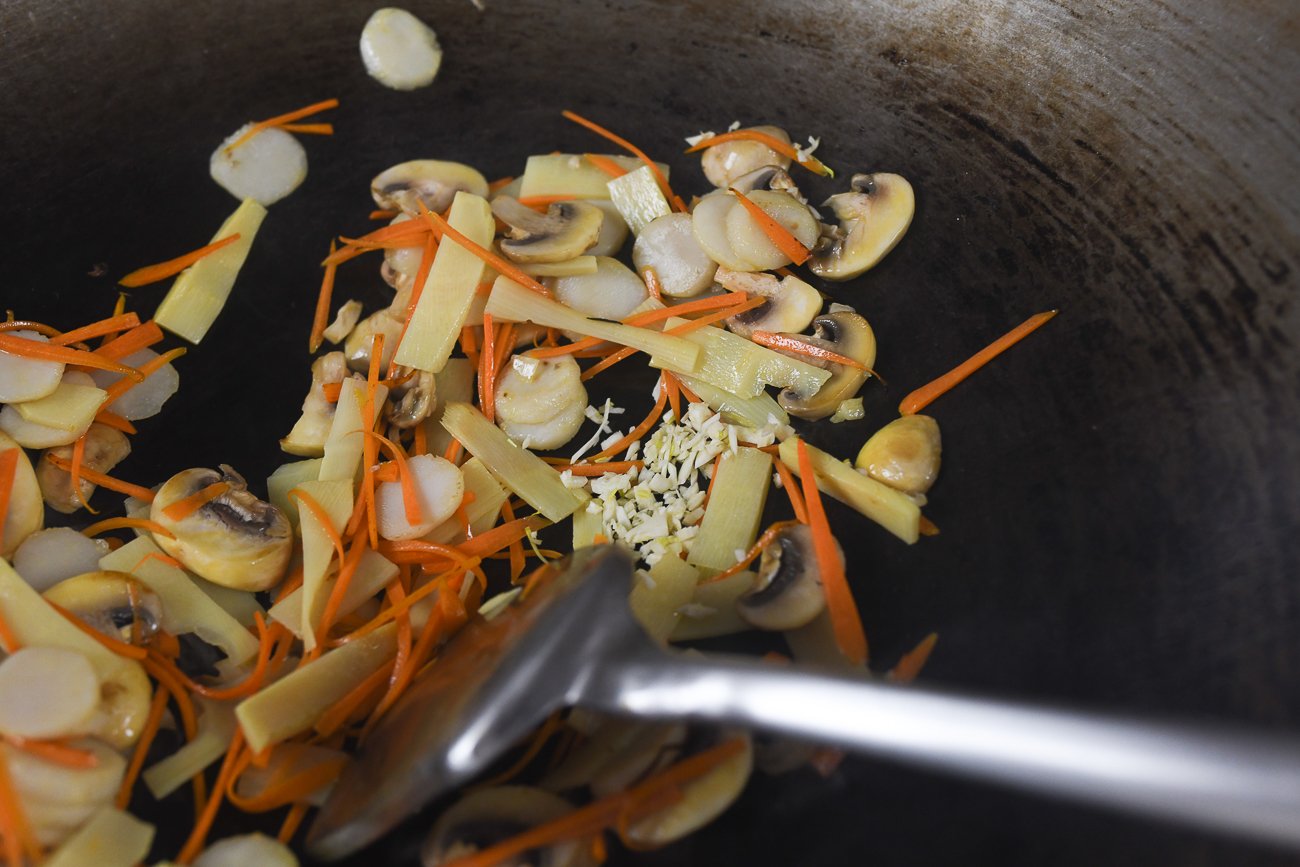
Add the Shaoxing wine around the perimeter of the wok. Give everything a quick stir, and add the napa cabbage and—if using—any cooked protein.
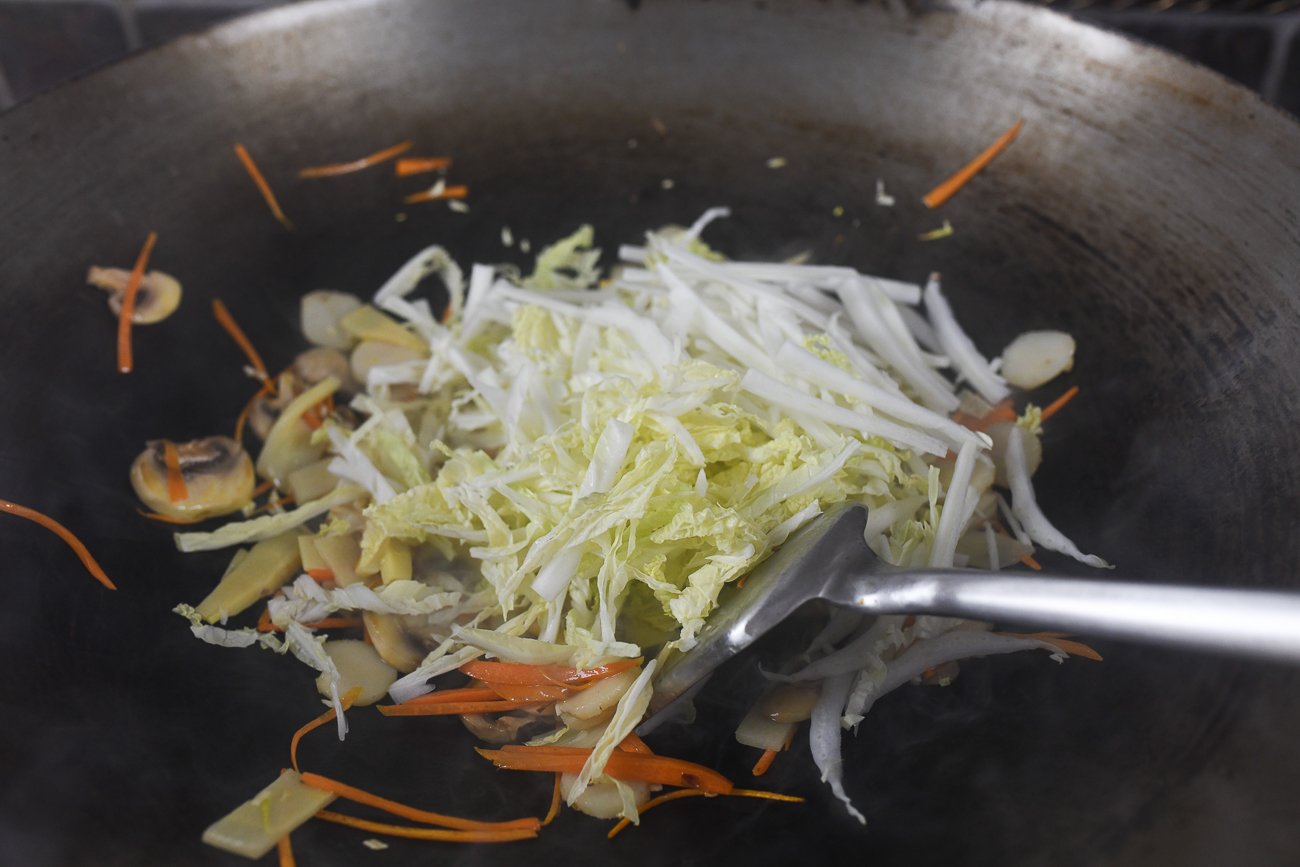
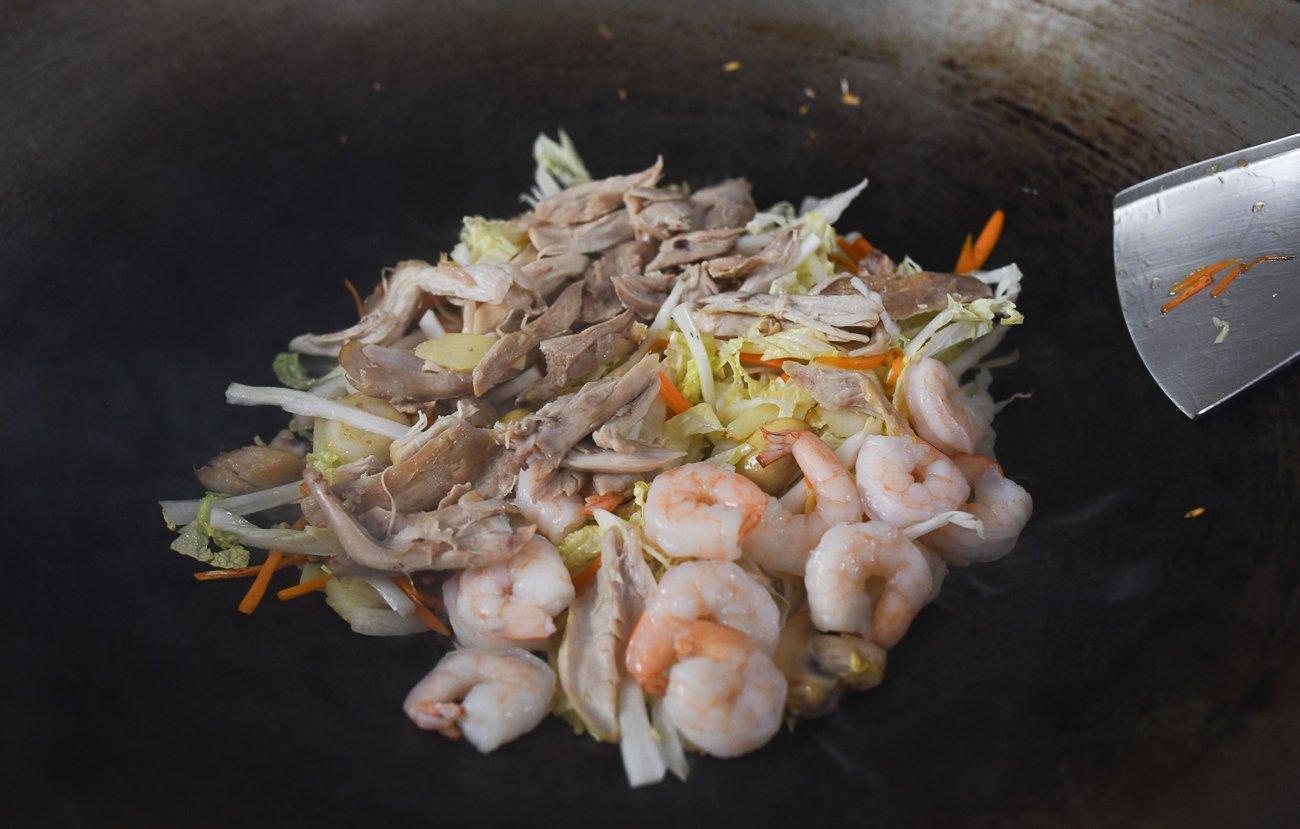
Stir-fry for 20 seconds, and add the lo mein noodles. The noodles should be warm or at room temperature, not stuck together! If they are, just rinse them in warm water to loosen them up.
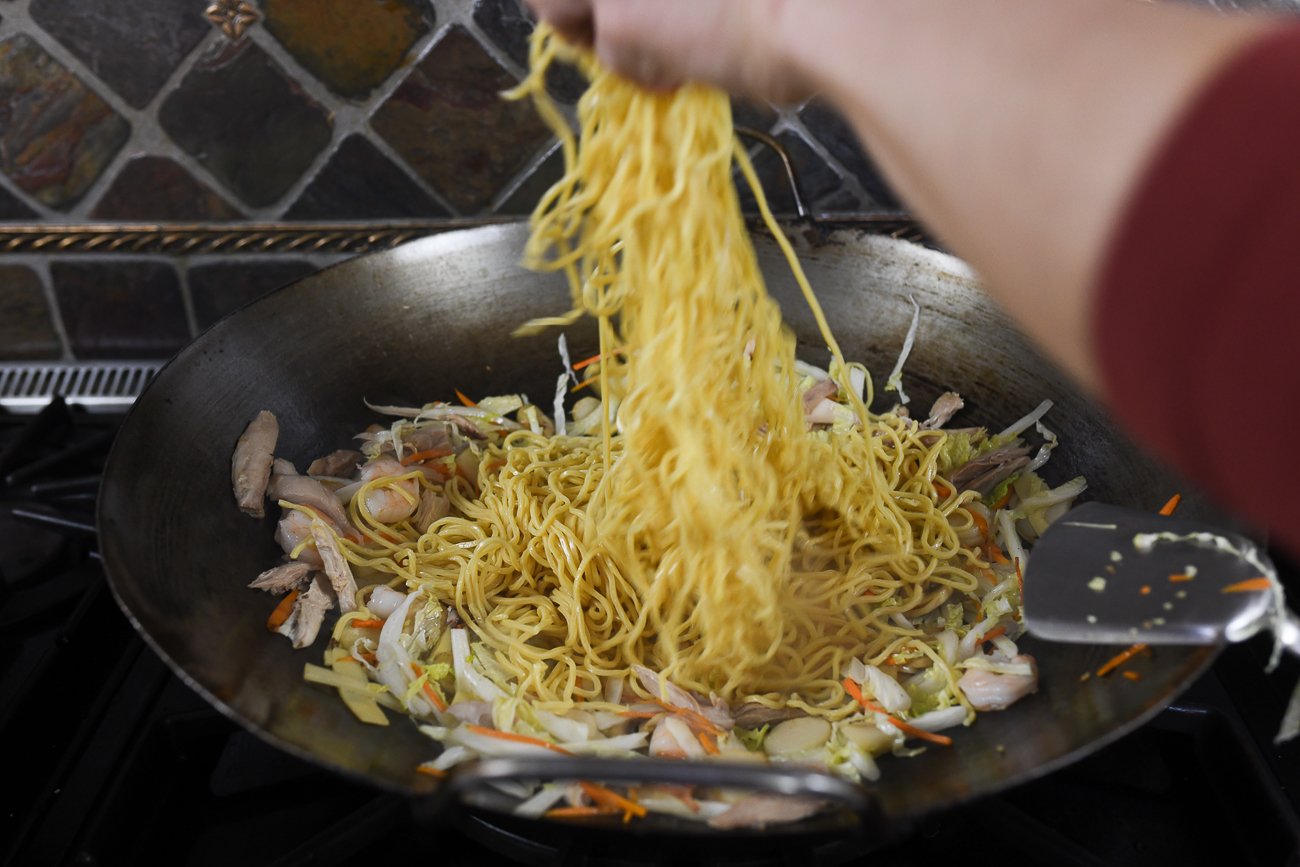
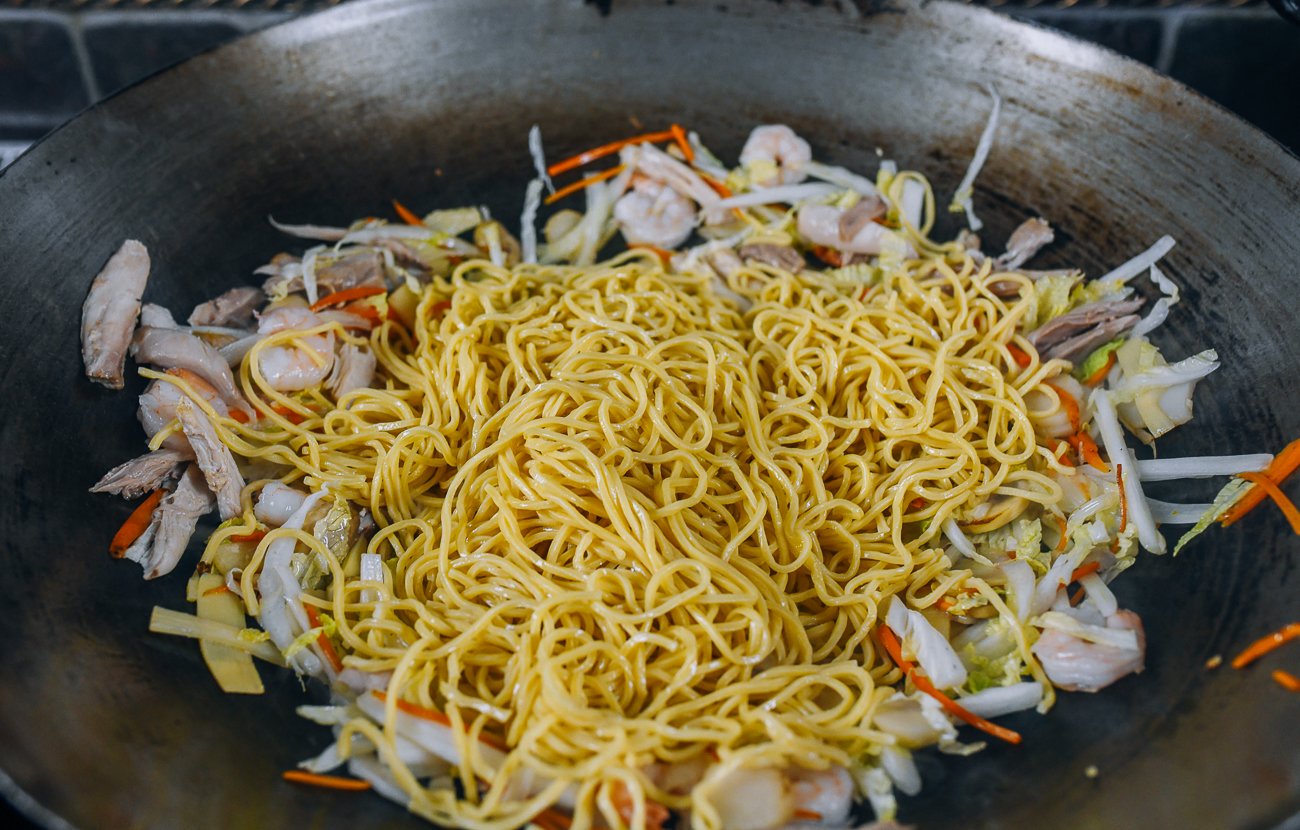
Pour your pre-mixed sauce evenly over the noodles.
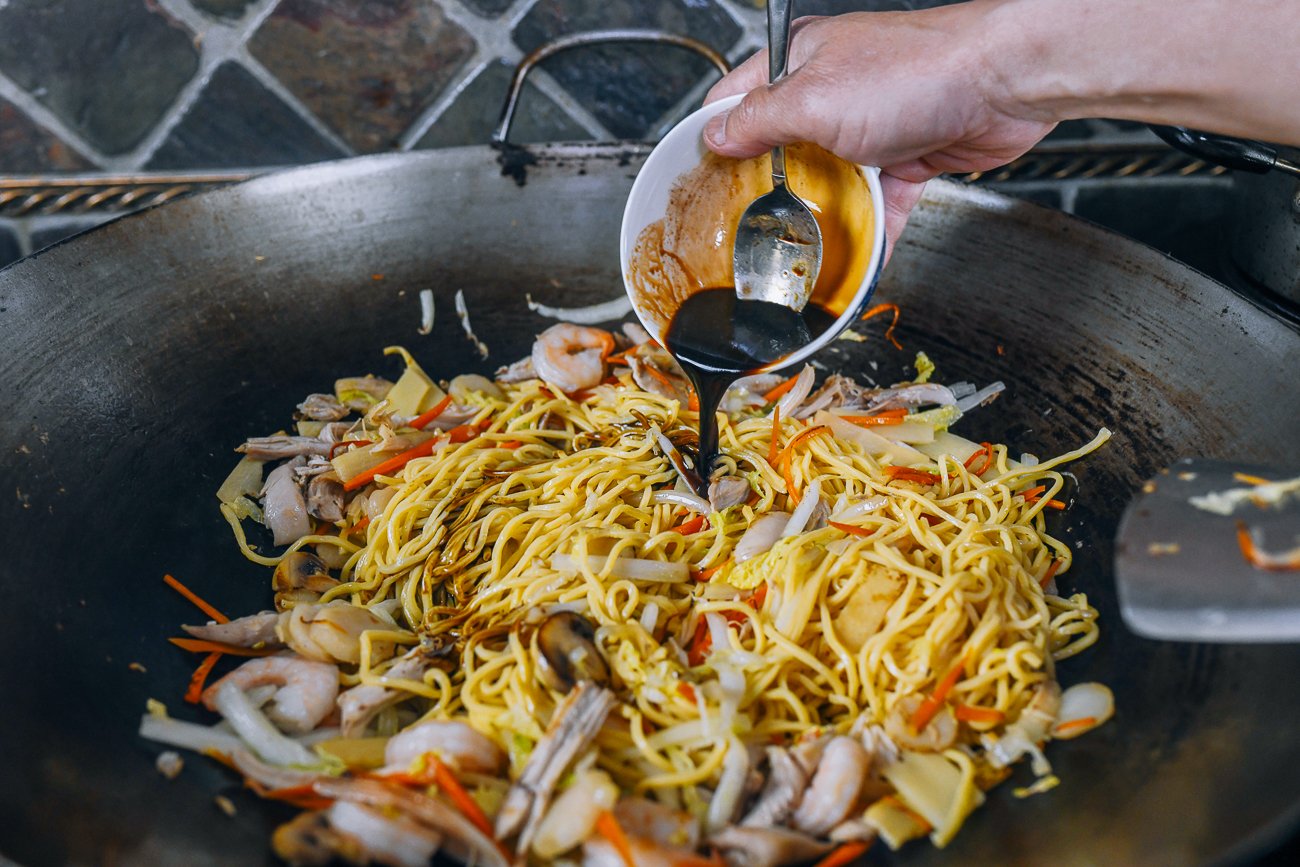
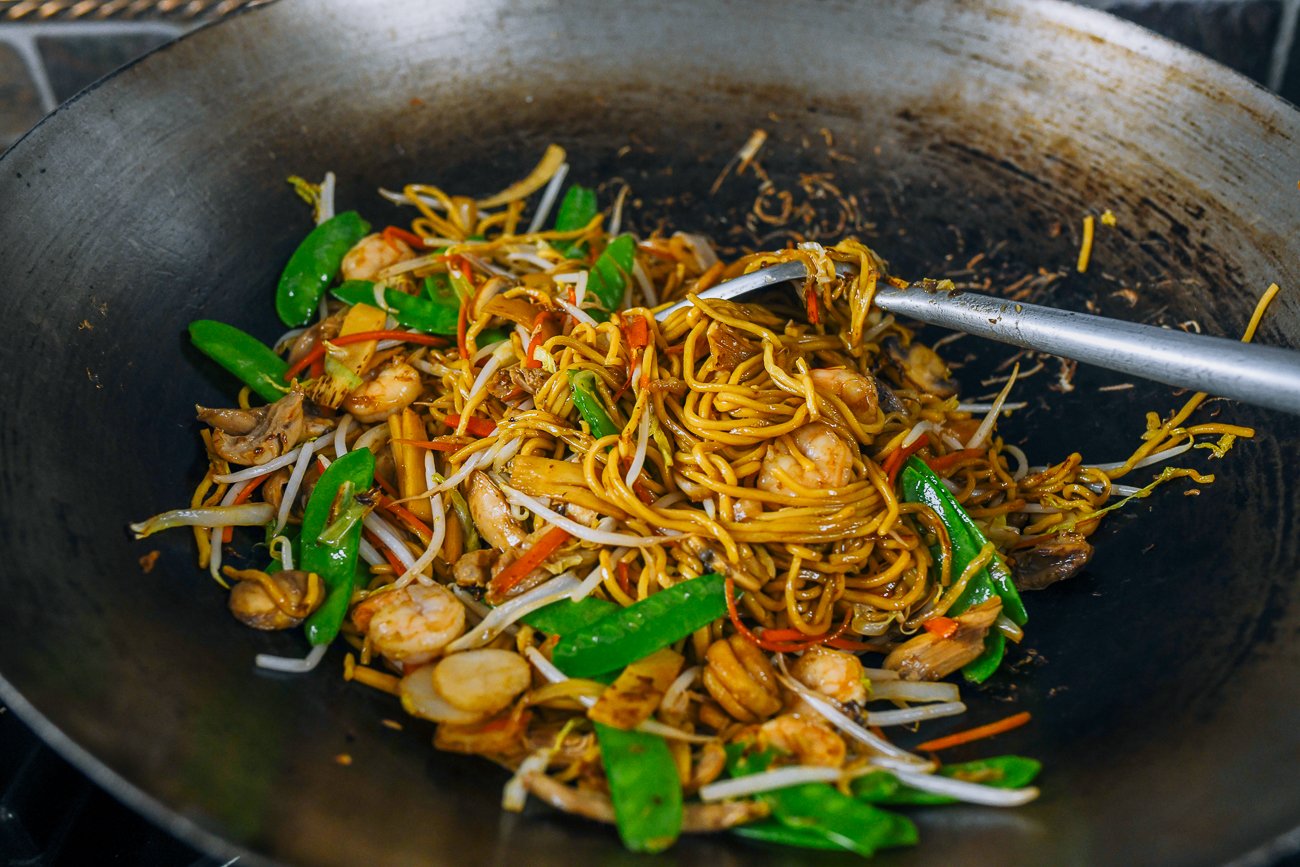
Stir-fry with a scooping motion for 1 to 2 minutes, or until the sauce is evenly distributed. Make sure to scrape the bottom of the wok to prevent the noodles from sticking. High heat and a well-seasoned wok should also prevent sticking.
Next, add the snow peas and bean sprouts (and the stir-fried protein, if you pre-cooked a raw protein at the beginning of the recipe) back to the wok.
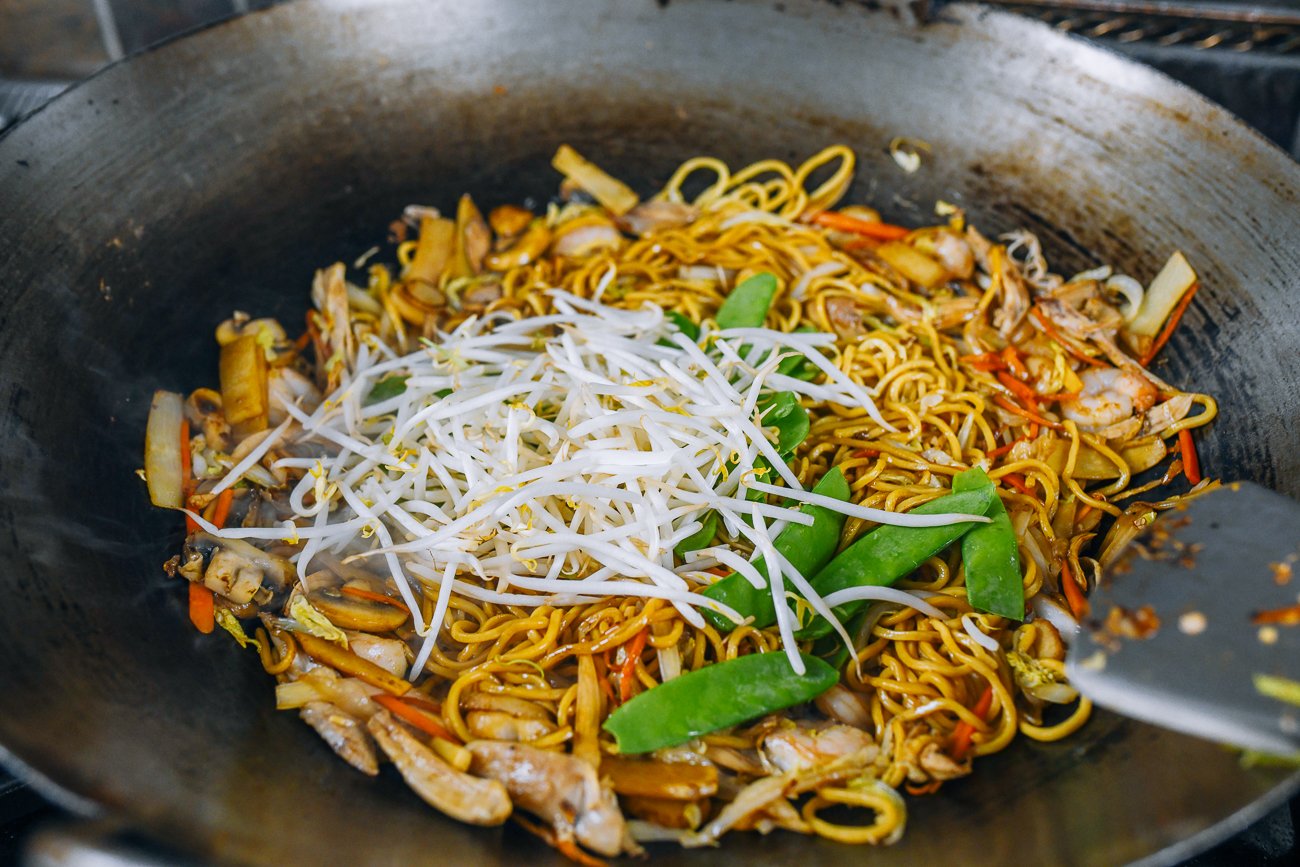
Continue stir-frying until you’ve thoroughly mixed everything together. If the noodles become sticky, add 2 or more tablespoons of hot water until the noodles loosen up.
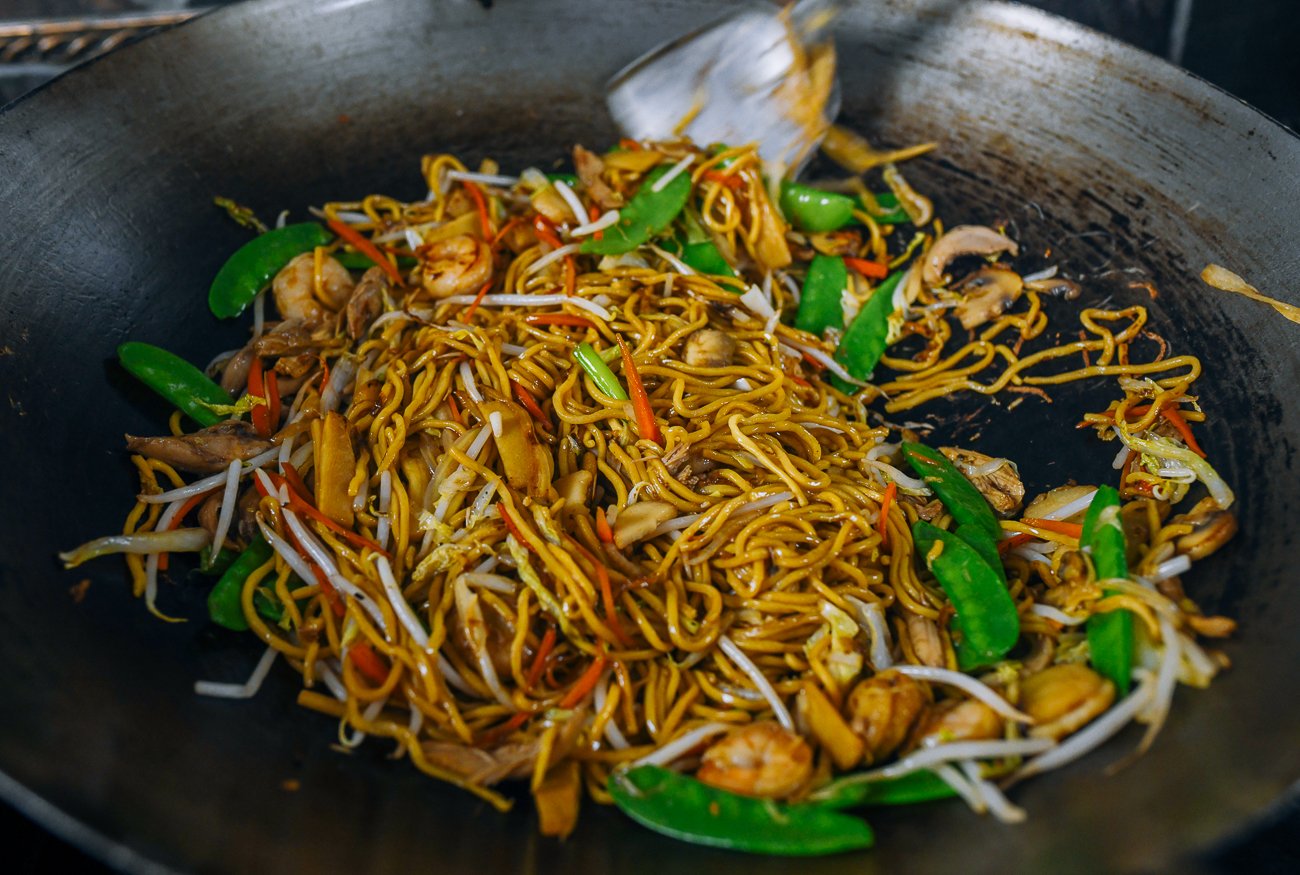
Add the scallions. Give everything a quick taste, and adjust the seasoning to your liking. Add more salt, soy sauce, oyster sauce, sesame oil, or white pepper according to your preference. Again, if your lo mein looks dry, add more water or chicken stock but remember it has too be very hot or boiling so it doesn’t cool off the dish!
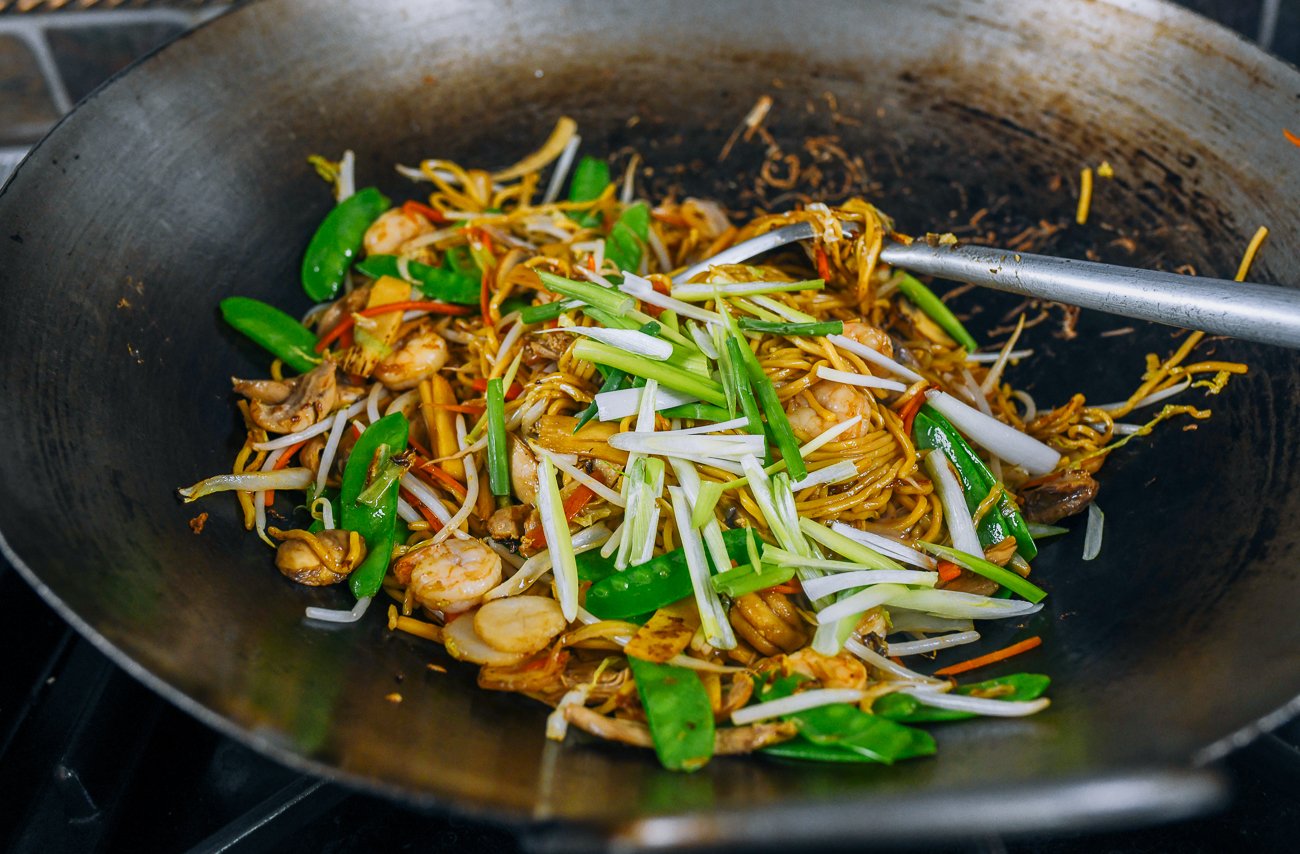
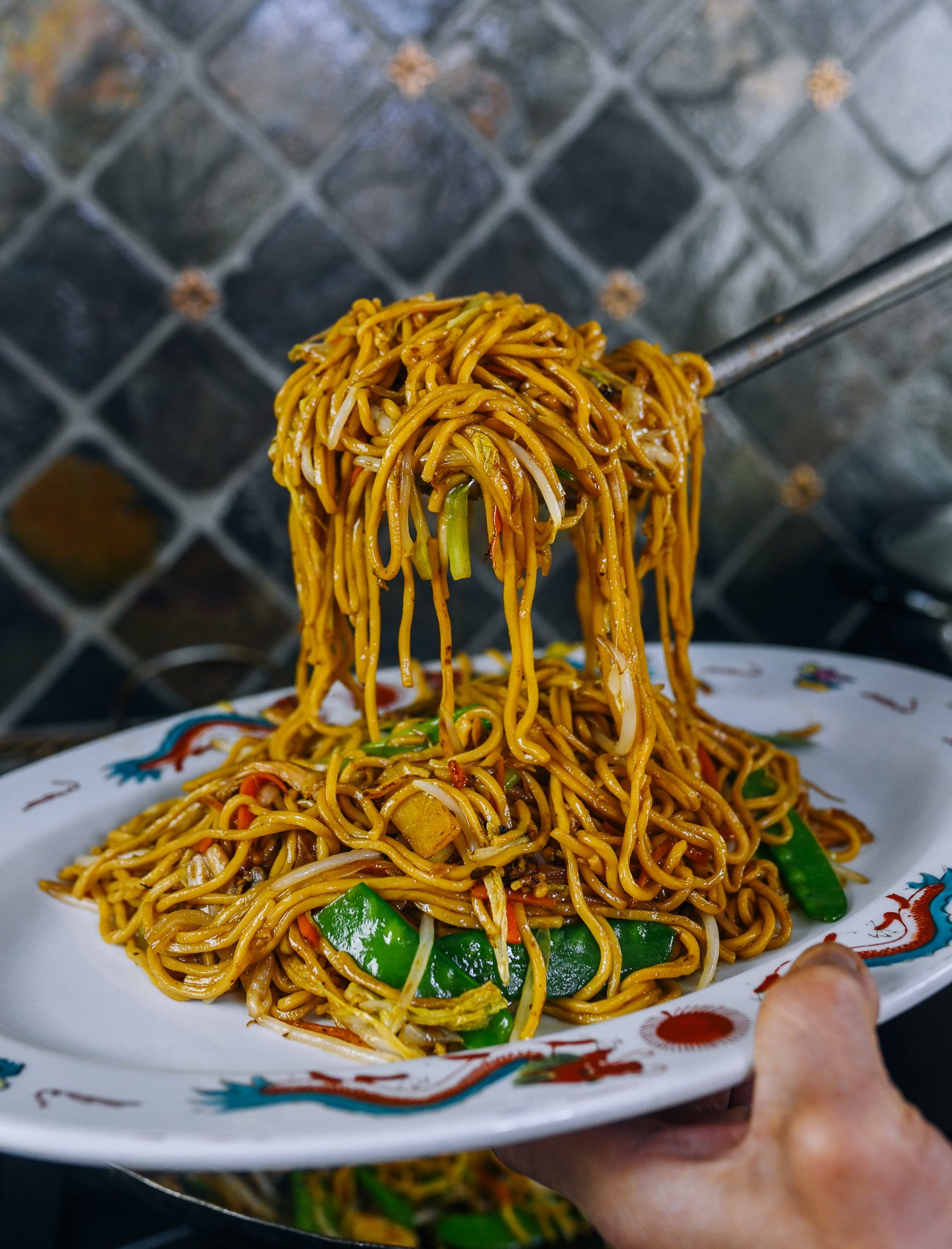
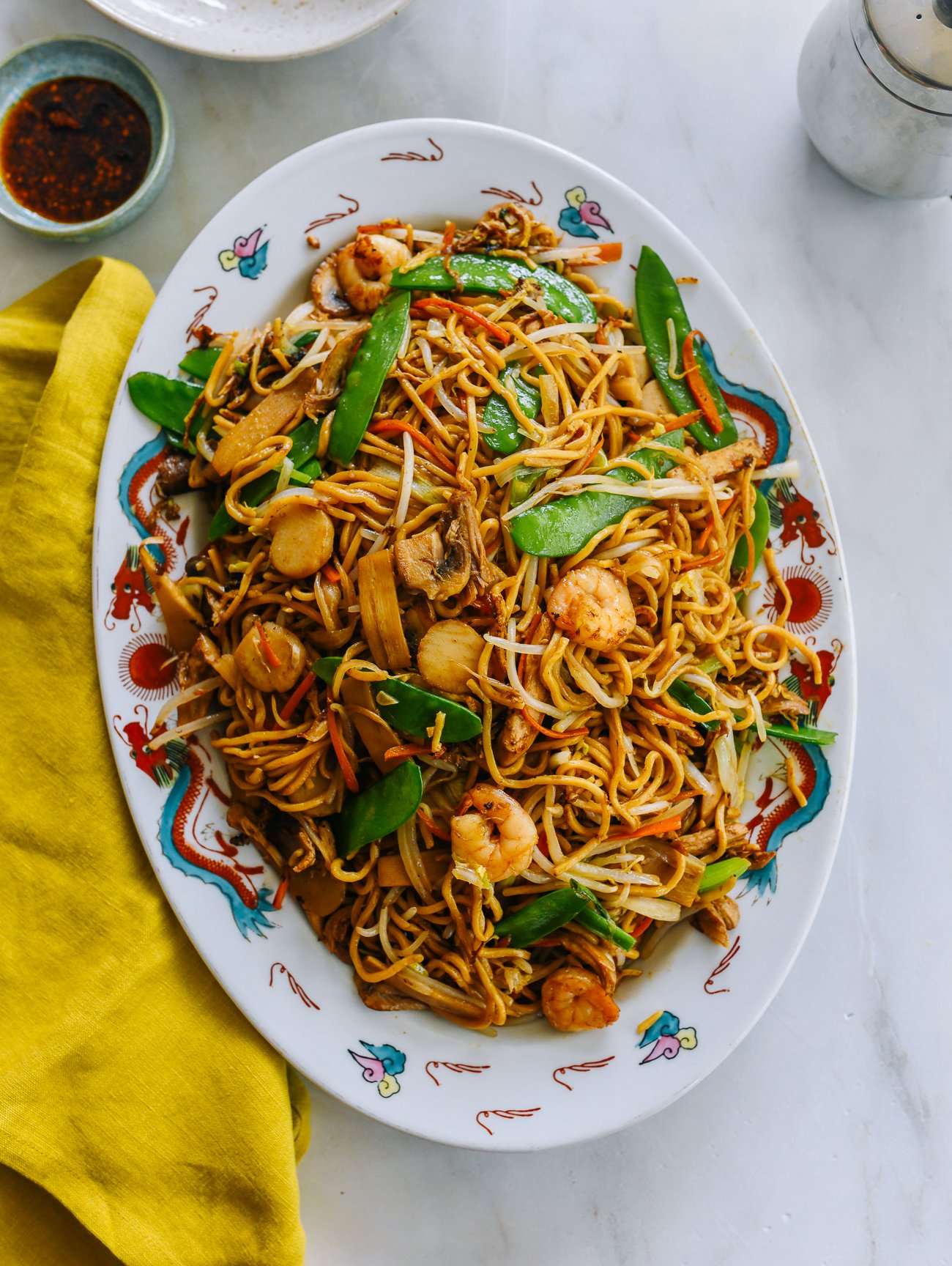
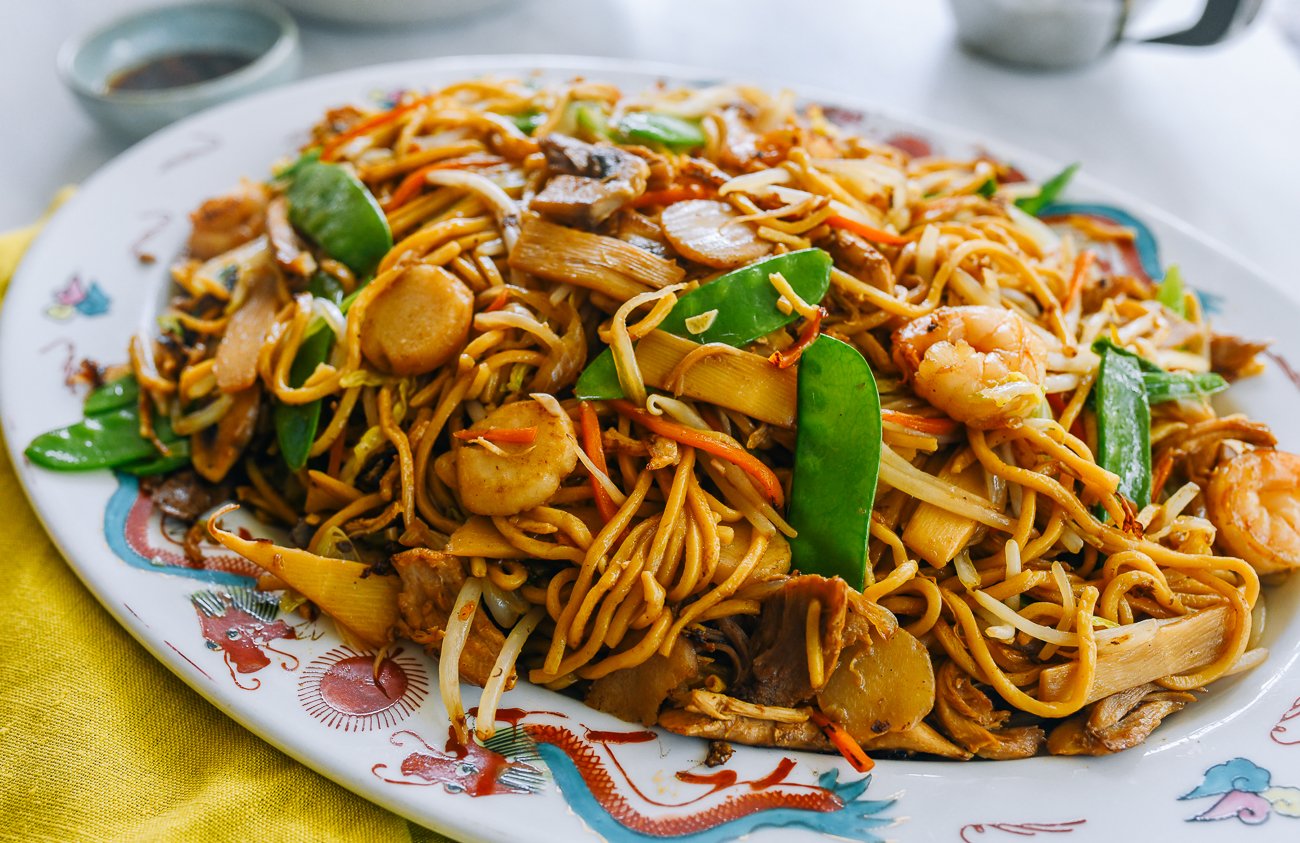
Plate and serve with homemade chili oil or hot sauce on the side!
Looking for more authentic recipes? Subscribe to our email list and be sure to follow us on Pinterest, Facebook, Instagram, and Youtube!
Recipe

Lo Mein: How to Cook It The Right Way!
Ingredients
- 12 ounces raw velveted protein (sliced chicken, beef, or pork, or shrimp; or 8 ounces/225g pre-cooked sliced or julienned protein)
- 2 tablespoons hot chicken stock or water (plus additional if needed later in cooking)
- 1½ tablespoons oyster sauce
- 1½ tablespoons light soy sauce
- 1 tablespoon dark soy sauce
- ½ teaspoon salt (or to taste)
- ½ teaspoon sesame oil
- ¼ teaspoon sugar
- ⅛ teaspoon white pepper
- 1 pound fresh lo mein noodles (pre-cooked or uncooked)
- 2 cloves garlic (minced)
- 1 cup fresh mushrooms (sliced)
- ¾ cup carrot (julienned)
- ½ cup bamboo shoots (julienned or sliced)
- ½ cup sliced water chestnuts
- 3½ cups napa cabbage (shredded)
- 1 cup snow peas
- 2½ cups mung bean sprouts
- 2 tablespoons neutral oil (such as vegetable, canola, peanut, or avocado oil)
- 1 tablespoon Shaoxing wine
- 2 scallions (julienned)
Instructions
- Follow the instructions for velveting chicken, beef, pork, or shrimp. If using a cooked protein, like Chinese BBQ Pork (Char Siu), you can slice it or julienne it.
- Prepare the lo mein sauce by combining 2 tablespoons of hot stock/water, the oyster sauce, light soy sauce, dark soy sauce, salt, sesame oil, sugar, and white pepper in a measuring cup or medium bowl.
- If using cooked lo mein noodles, rinse them under hot tap water to loosen them and drain thoroughly. If using uncooked noodles, boil them in a large pot of water until they’re al dente, drain, and rinse thoroughly in cool water. Drain thoroughly and set aside. Prepare the garlic and all the vegetables to have them ready for cooking.
- Place your wok over medium-high heat until it just starts to smoke, and add the oil. If using a raw protein, add it to the wok in one layer, and allow it to sear. Stir-fry until it’s about 80% done, and remove from the wok, leaving behind any oil/fat.
- Add the garlic, mushrooms, carrots, bamboo shoots, and water chestnuts (this would be your first step if you’re not using any uncooked protein). Increase the heat to high, and stir-fry for 1 minute.
- Add the Shaoxing wine around the perimeter of the wok. Give everything a quick stir, and add the napa cabbage and, if using, any cooked protein.
- Stir-fry for 20 seconds, and add the lo mein noodles. The noodles should be warm or at room temperature—not stuck together! If they are, just rinse them in warm water to loosen them up.
- Pour your pre-mixed sauce evenly over the noodles, and stir-fry with a scooping motion for 1 to 2 minutes, or until the sauce is evenly distributed. Make sure to scrape the bottom of the wok to prevent the noodles from sticking. High heat and a well-seasoned wok should also prevent sticking.
- Next, add the snow peas and bean sprouts (and the stir-fried protein, if you pre-cooked a raw protein at the beginning of the recipe) back to the wok. Continue stir-frying until everything is thoroughly mixed. If the lo mein becomes sticky, add 2 or more tablespoons of hot water until the noodles loosen up.
- Add the scallions. Give your lo mein a quick taste and adjust the seasoning to your liking. Add more salt, soy sauce, oyster sauce, sesame oil, or white pepper according to your preference.
- Plate your lo mein and serve with homemade chili oil or hot sauce on the side!