Chinese water spinach, known in our family as “hollow vegetable,” is one of our favorite Asian leafy greens. We love ordering it at restaurants as well as making it at home.
In this article, we’ll talk about what this vegetable is, different types, and how to prepare it!
What is Water Spinach?
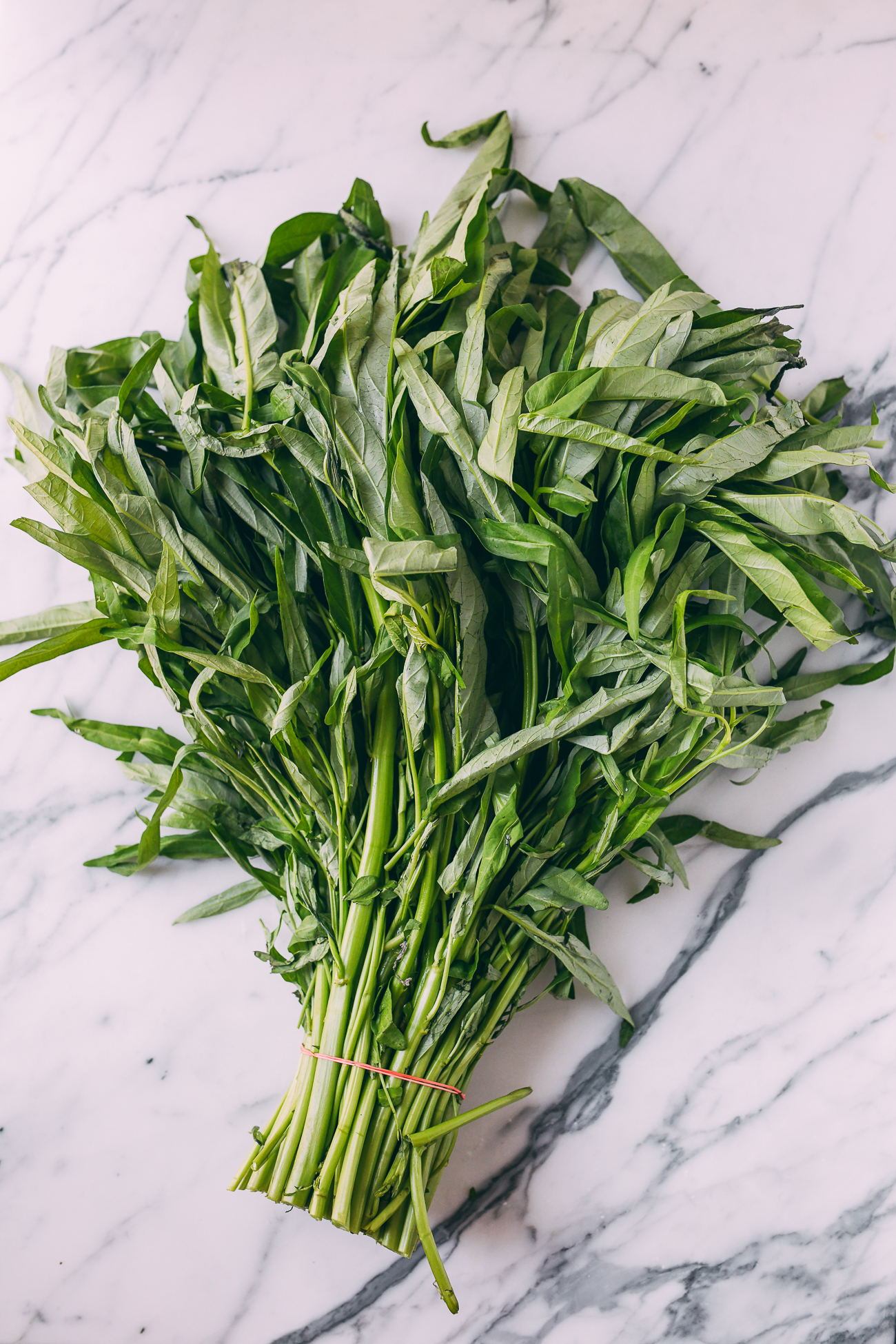
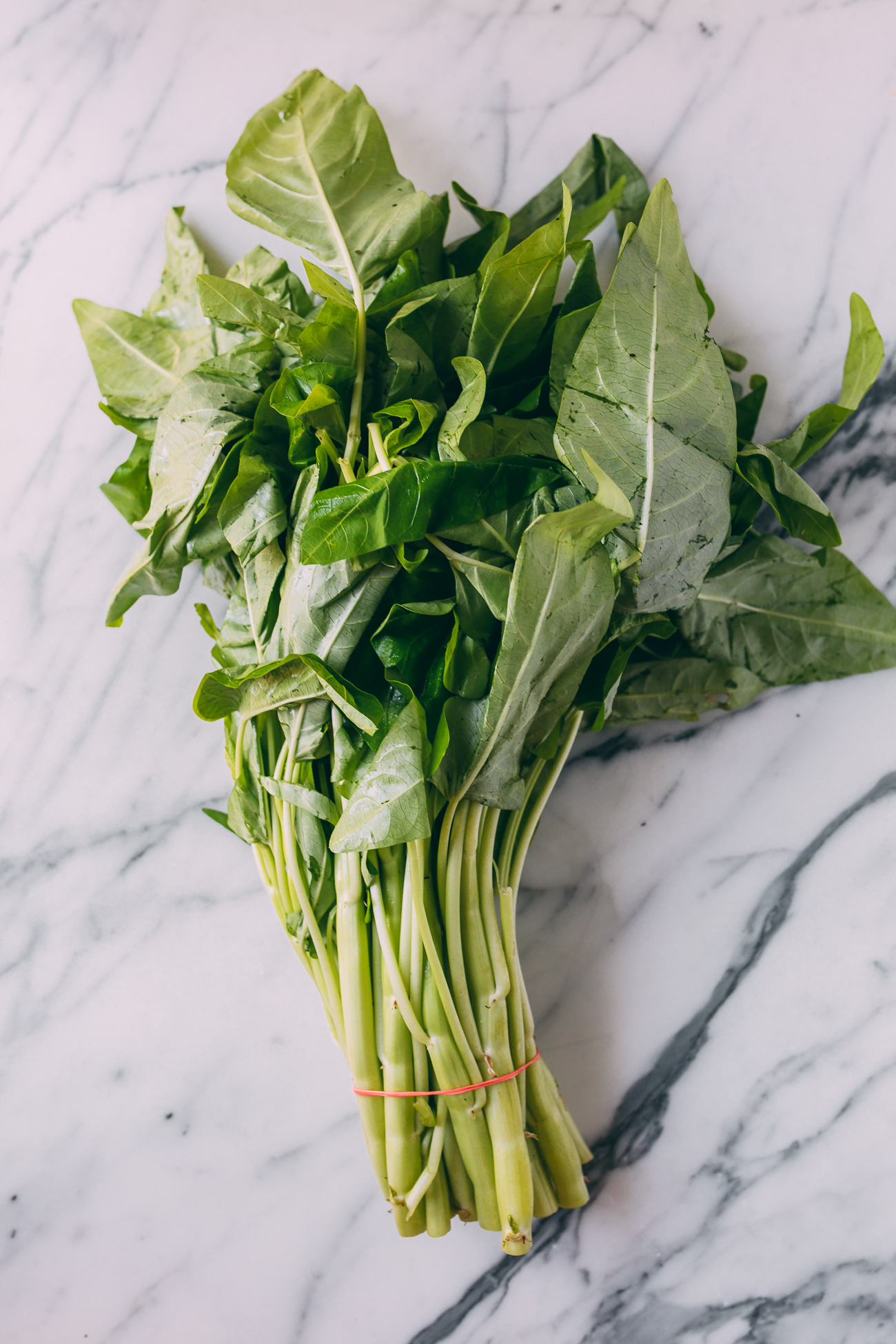
Water spinach is a long, leafy green vegetable with hollow stems that grows in water or damp soil. It goes by the name of ong choy in Cantonese or kōng xīn cài (空心菜) in Mandarin, which translates to “hollow heart vegetable.”
In Malaysia and Indonesia, it is also known as kangkung. It’s known as phak bung in Thailand, rau muong in Vietnam, trokuon in Cambodia, and kangkong in the Philippines.
Despite its English name, water spinach is not really spinach, nor is it botanically related to it. It (ipomoea aquatica) is a member of the convolvulaceae (morning glory) family. Other English names for it include: swamp spinach, river spinach, and Chinese spinach.
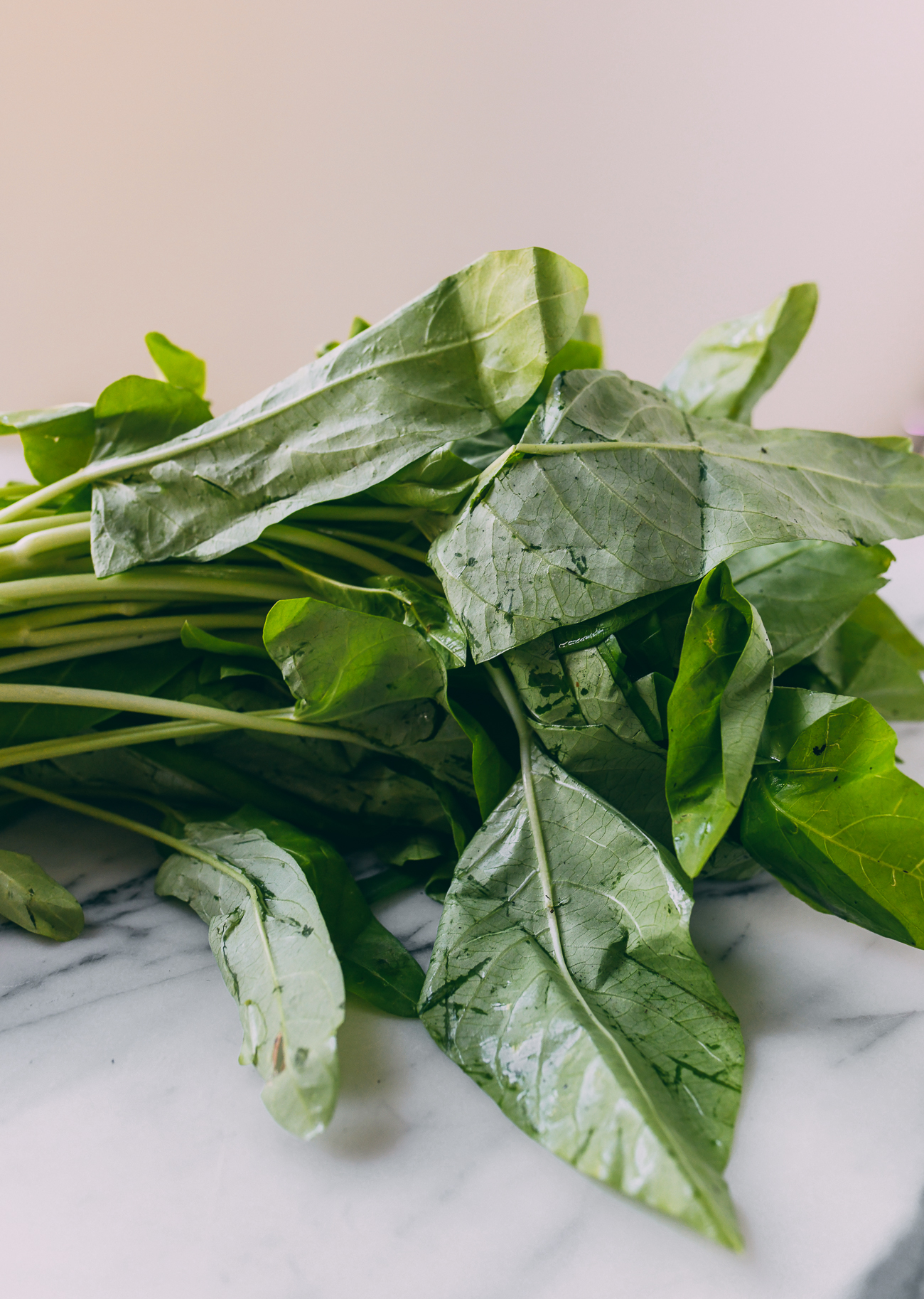
As a semi-aquatic tropical plant, it grows abundantly in natural waterways in Southeast Asia, where it is native. Here in the U.S., it is cultivated in California, Florida, Hawaii, Texas, and the U.S. Virgin Islands.

Fast Facts: The 2 Types of Water Spinach
The “green stem” variety has narrow leaves and as the name suggests, a more vibrant green color. It grows primarily in moist soil.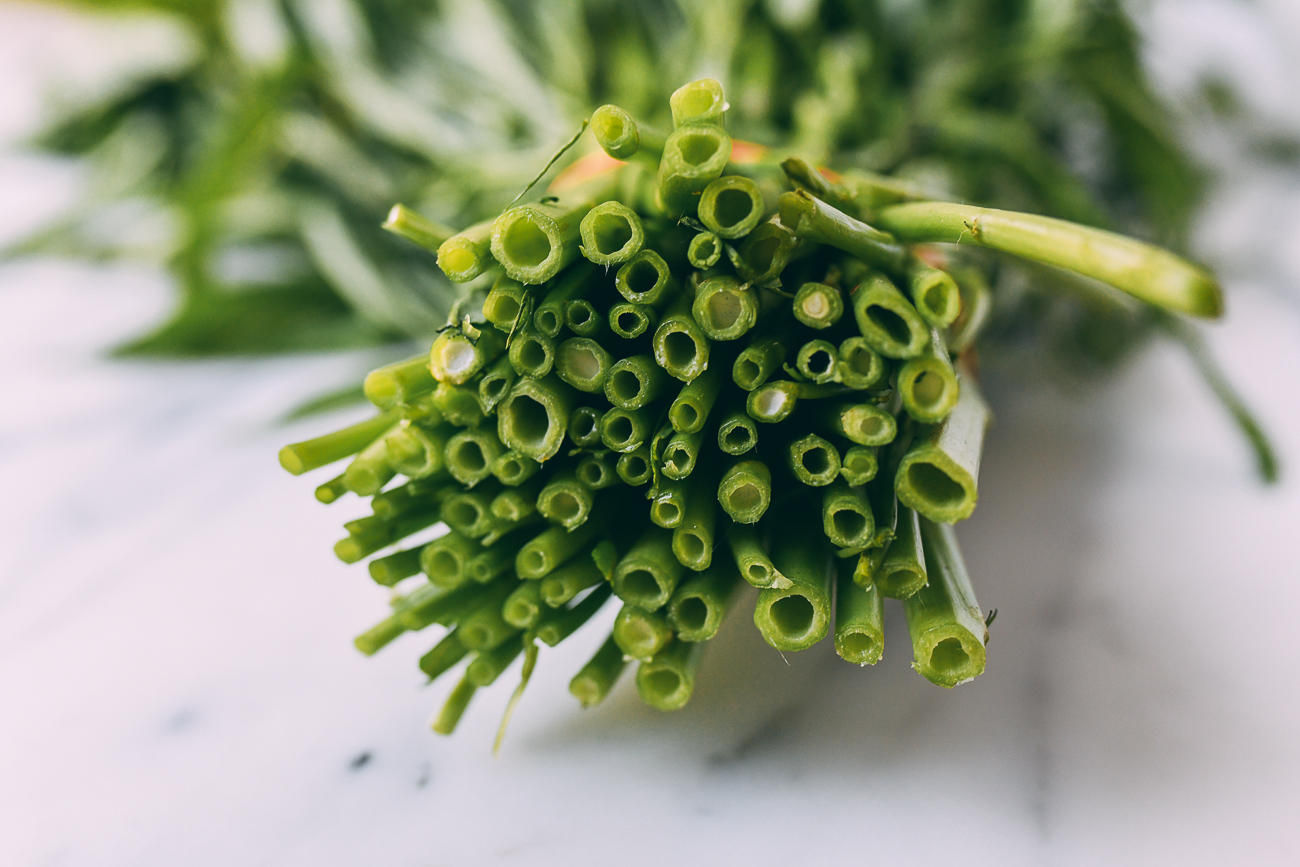
The “white Stem” variety has arrow-shaped leaves, wider hollow stems, and a light green color. It primarily grows in water, similar to rice plants.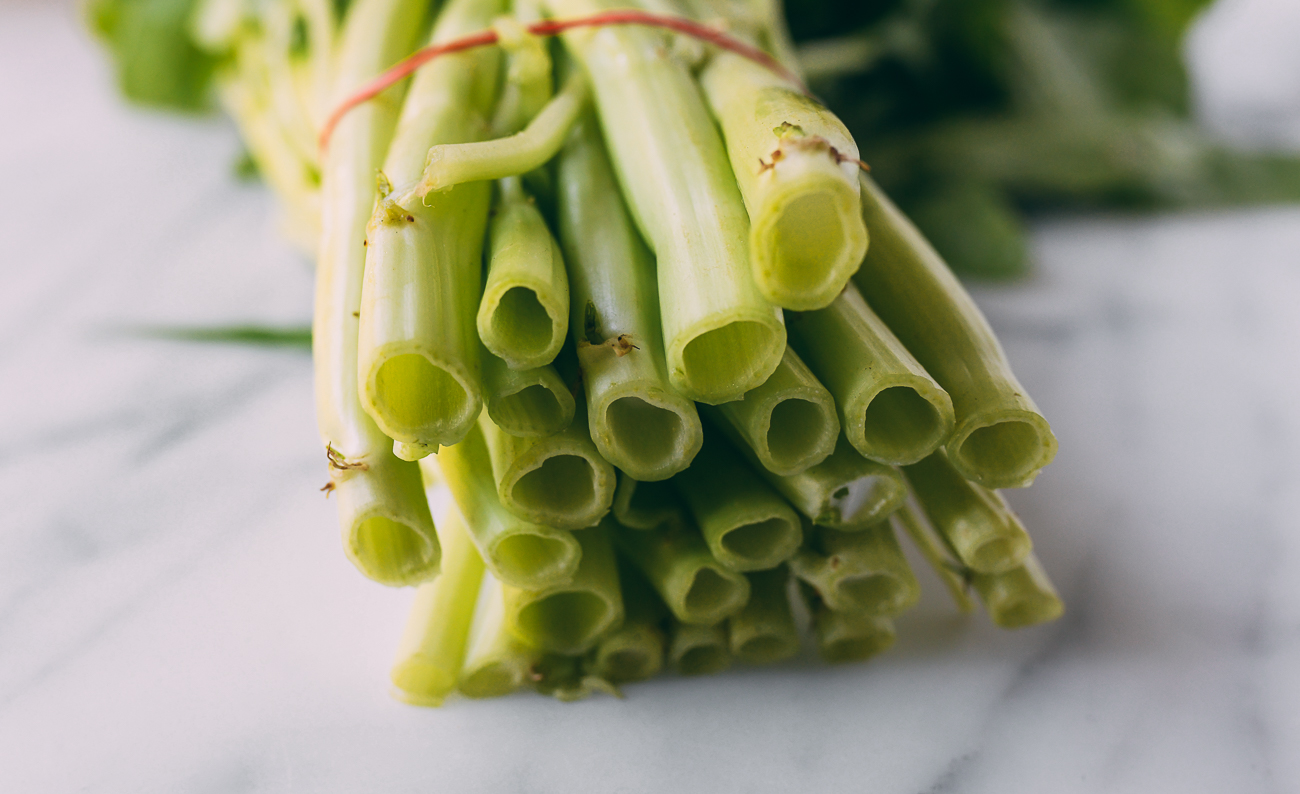
In short, no. We buy both kinds—whichever looks fresher in the market is the standard we go by. Usually, the white stem kind is more tender than the green stem variety. They are both tasty, but when preparing green stem water spinach, just be sure to take more care when trimming, and discard the tougher portions of the stem.
Is Water Spinach Invasive?
In its ideal natural environment of muddy, moist soil on the banks of waterways, water spinach grows aggressively and abundantly. In America, the Department of Agriculture has officially designated it a noxious weed, and heavily regulates its cultivation, requiring growers and sellers to have a noxious weed permit!
While Florida in particular has been trying to eradicate it from its swampy environment to protect native plant species, for now, its cultivation and sale is still allowed in the U.S. We all just have to do our part to eat them up!
We have read that the plant can flourish in well-watered containers with lots of sun, which can be a great way to keep it in check if you’re thinking about cultivating your own.
All you have to do is take some cuttings (make them about 6 inches long, just below a node), and root them in water.
How to Prepare for Cooking
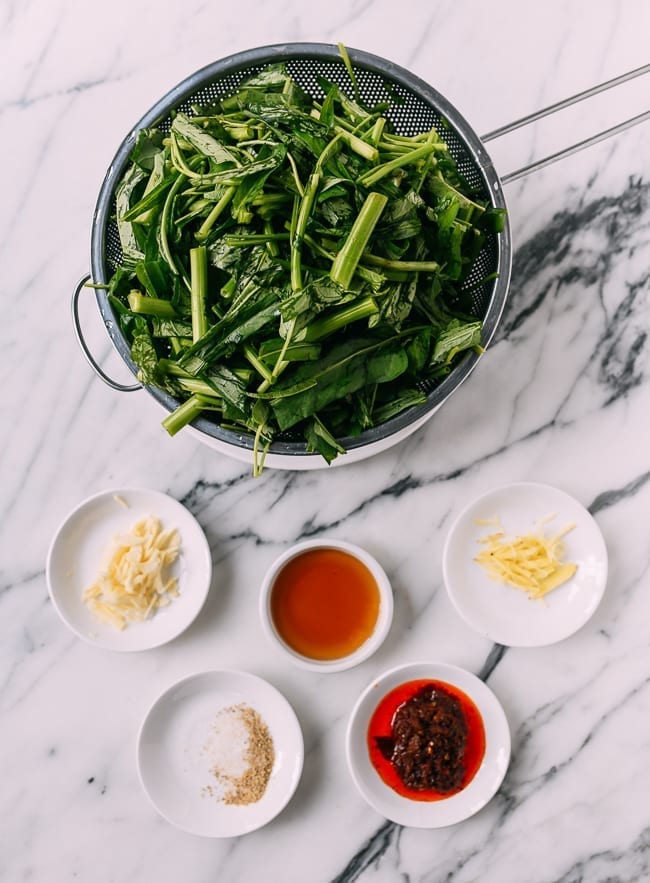
To prepare water spinach, you must wash it, trim it, and cut it down into manageable lengths.
You can eat both the leaves and stems. Surprisingly, even the hollow stems are quite tender. Just trim away the lower 1-2 inches of the stalk, which can be a little fibrous.
If you see very young and tender water spinach in the market, just give it a quick rinse. Little trimming is needed since everything is tender and edible—a delight to prepare and eat!
After determining whether or not to trim it, cut the stalks into 3 inch lengths, including the stems. Soak in a large basin of cold water to remove sand and dirt (any grit will settle to the bottom of the basin). Change the water 3 times.
Be sure to lift the vegetables out of the water each time, rather than pouring the vegetables into a colander, or you’ll just end up pouring all that sand back onto the vegetables.
How to Cook Water Spinach
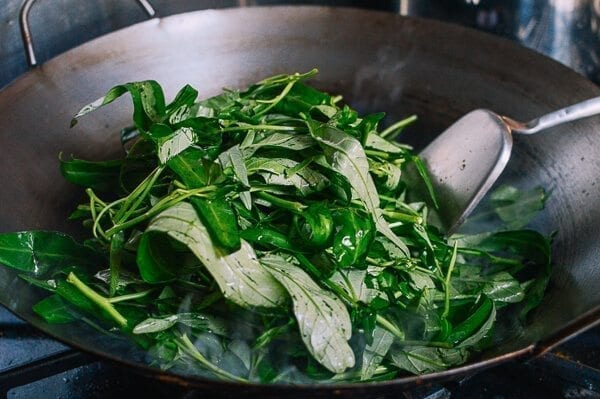
There are many ways to cook this vegetable, but the most popular way is to stir-fry it in a searing hot wok.
In Chinese cooking, there are three key preparations:
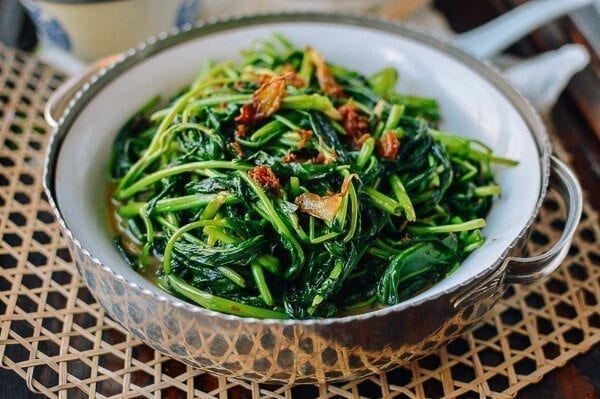
- 清炒 (qīng chǎo): “clear stir-fry,” i.e. stir-fried with salt and a hint of garlic (and perhaps ginger) to highlight the natural sweetness of the vegetable, enhanced by pure wok hei flavor
- 蒜蓉 (suàn róng): “garlic” stir-fry, i.e. stir-fried with lots of garlic, to give the vegetables a garlicky kick
- 腐乳 (fǔrǔ): fermented tofu stir-fry. The fermented tofu has its own umami, wine-soaked flavor that compliments water spinach especially well.
One of our other favorite preparations is kangkung belacan, or water spinach stir-fried with shrimp paste or belacan sauce. This Malaysian preparation is incredibly delicious, and again, water spinach is the perfect vegetable for it.
Similarly, some restaurants in Hong Kong and southern China stir-fry water spinach with seafood-based ingredients like XO sauce or dried scallops. We have an XO Sauce recipe and an Ong Choy with XO Sauce recipe on our blog!
Buying and Storing
You can find water spinach in large bunches in Chinese markets. Look for the long stalks—they can be as long as 18 inches!
You may find the green stem variety, white stem variety, or both, usually neatly wrapped in plastic bags. Like any vegetable, prices vary depending on the season, though it is available year-round.
Store it in the crisper section of the refrigerator, in the plastic bag it came in. It’s actually a relatively delicate vegetable, so cook within 1-2 days of purchase for best results, but no more than 4-5 days after purchase, depending on how fresh it was when you bought it.
Looking for more authentic recipes? Subscribe to our email list and be sure to follow us on Pinterest, Facebook, Instagram, and Youtube!
Recipe

How to Cook Water Spinach
Equipment
- Wok
Ingredients
- 1 pound fresh water spinach
Instructions
- With the water spinach still bunched, trim away the lower 1-2 inches of the stalks, unless it is very young and tender. Cut the water spinach into 3 inch lengths, including the stems.
- Soak the vegetables in a large basin of cold water to remove sand and dirt. Change the water 3 times, being sure to lift the vegetables out of the water each time to avoid agitating the grit that’s settled at the bottom of the basin. Drain thoroughly, shaking off any excess water.
- Prepare using your favorite recipe: Stir-fried Chinese Water Spinach or Stir-fried Ong Choy with XO Sauce