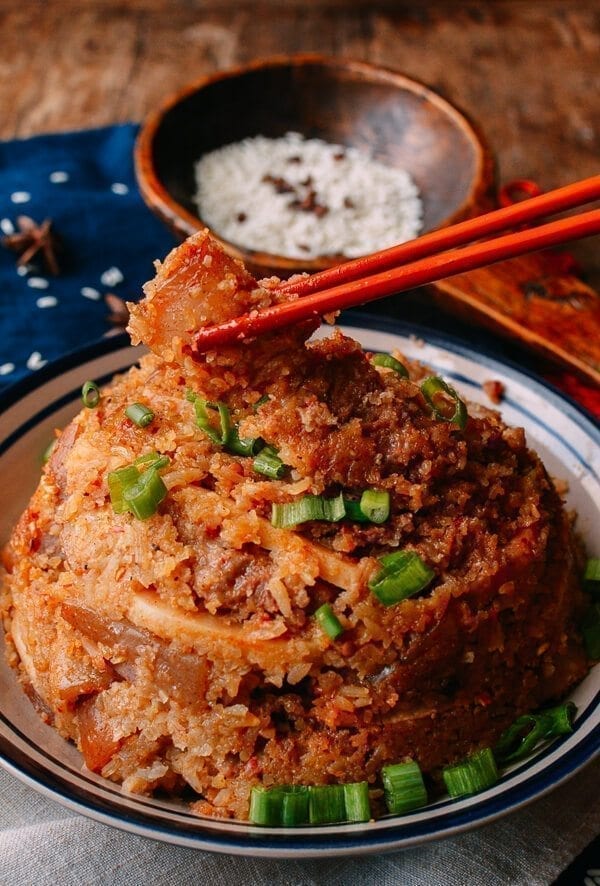
I know many of you are planning special dishes for the upcoming Chinese New Year festival. Today, I want to talk about a distinctive Chinese New Year dish: Steamed Pork with Rice Powder, or Fen Zheng Rou (粉蒸肉).
This is not a dish that appears on restaurant menus. Not even in China. Nor is it a dish that appears regularly on home dinner tables. It IS a homestyle dish, but it’s reserved for special occasions like Chinese New Year and other holidays.
A Unique & Fragrant Dish
Fen Zheng Rou is popular in many parts of China, like Sichuan, Hubei, and Jiangxi. I don’t have too many memories from my earlier childhood growing up in Hubei, but I can still see the individual plates of Fen Zheng Rou revealing themselves as the chef lifted open the lid from the giant steamer at the village cafeteria during the holidays.
As the steam swirled upwards, the sight and the smell was incredible. It was one of those blissful moments that has stuck with me all these years later.
What makes this dish special is the spiced rice powder. The pre-packaged rice powder may be available at your local Asian stores, but you can make it at home just as easily.
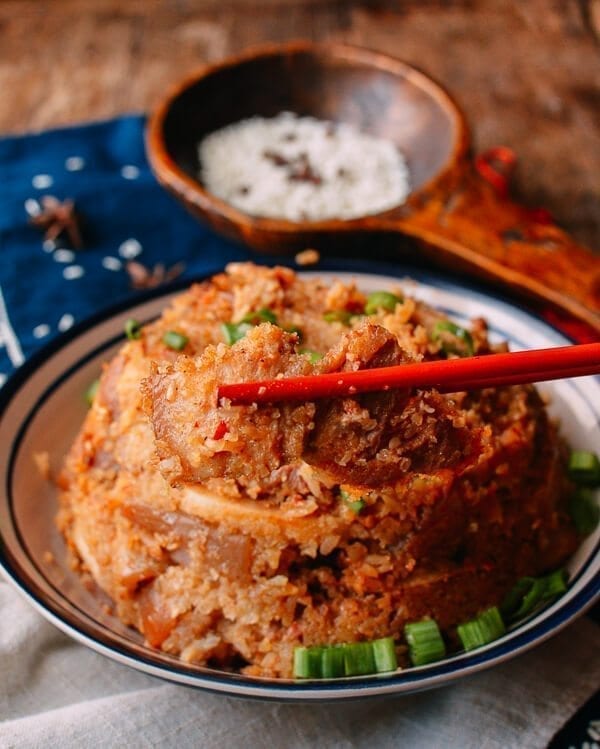
Each region makes this dish slightly differently, varying the pork marinade, but the rice powder mixture and its preparation are pretty consistent. The coating of the spiced rice powder and a turn through the steamer results in a robustly flavored, nutty steamed pork belly with a silky texture.
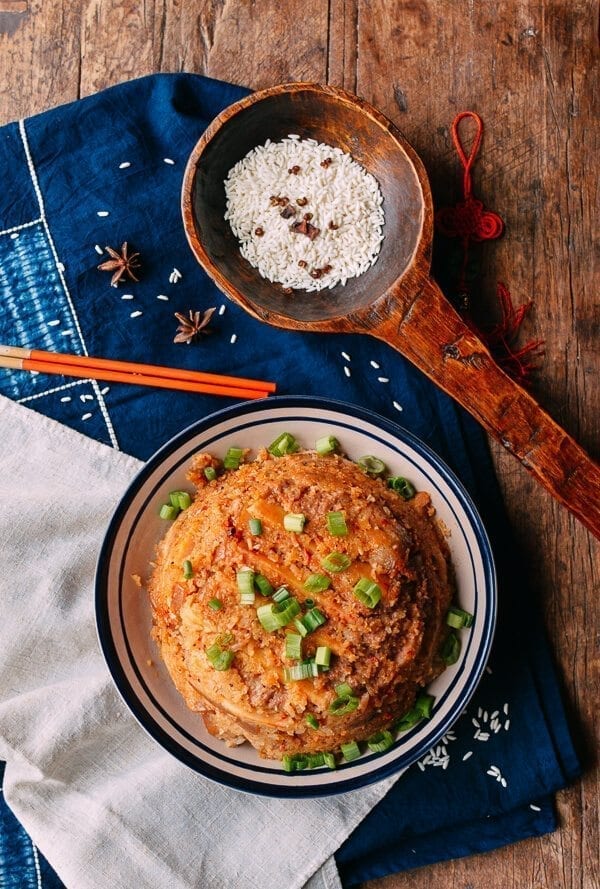
For this dish, I used a piece of leaner pork belly with less fat, but the fat is much needed to help enrich the taro and the rice while steaming. A healthier option would be pork ribs; I’ve tried the recipe with both options, and they are both delicious. Moreover, if taro isn’t your favorite, this dish is also made with potatoes, pumpkin, and yams.
To me, cooking is an art, and this innovative dish is a true representation of the wisdom and ingenuity of Chinese culinary culture. I’m looking forward to preparing this steamed pork dish again for our family’s New Year’s dinner (with the extra spiced rice powder I prepared!). This steamed pork belly dish is actually pretty easy in the grand scheme of all the festive Chinese dishes that are prepared around this time of year.
Also, I want to take this opportunity to wish you all a healthy, happy, and prosperous New Year! Gong Hei Fat Choy!
Recipe Instructions
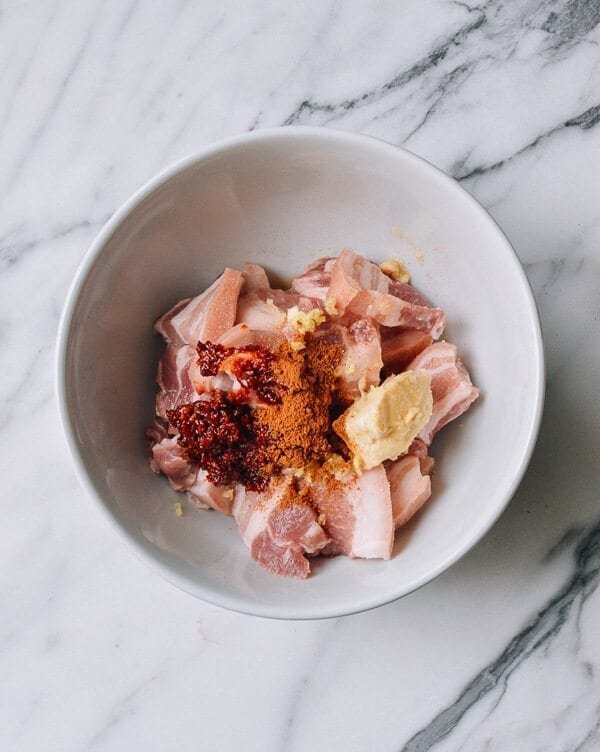
First, marinate the pork belly. Wash the pork belly and pat it dry with paper towels. Slice it into ¼-inch thick pieces. In a large bowl, mix the sliced pork belly with the minced ginger, Shaoxing wine, fermented bean curd (white or red), spicy bean sauce (or regular bean sauce), five spice powder, and sugar.
Use your hands to combine everything together well. Cover and marinate for about 1 hour in the refrigerator.
While the pork is marinating, prepare the rice mixture. In a clean, dry wok over medium-low heat, add the long grain rice, sweet rice, Sichuan peppercorns, and the star anise.
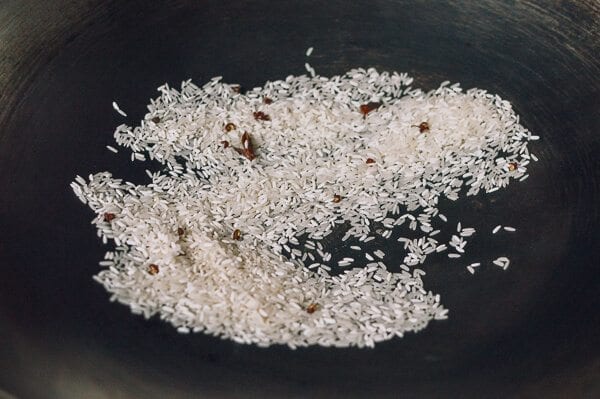
Cook it for about 5 minutes until the rice turns a light brown color. After 5 minutes, turn off the heat, and let the mixture cool slightly.
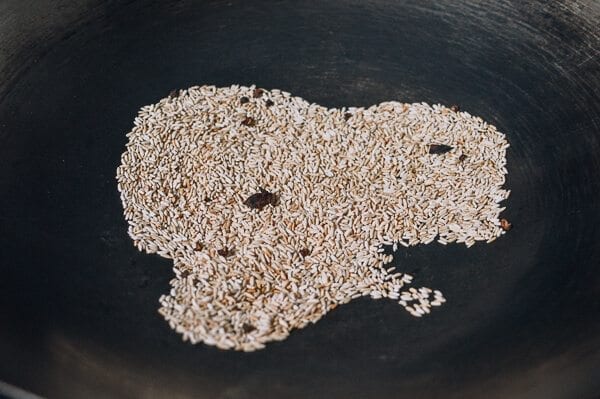
Next, use a food processor or mortar and pestle to mill the mixture into a coarse grind. When using the food processor, pulse the mixture a couple of times. The rice shouldn’t be too finely ground.
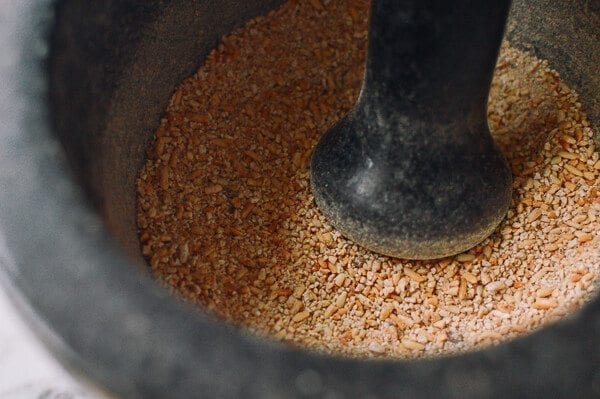
It’s also a great idea to double or triple the rice mixture, and store the leftovers in the refrigerator, so it’s readily available if and when you want to make this steamed pork dish again. The rice mixture should last a few months in the fridge.
Next, we’ll assemble and cook the dish. Peel the taro skin, rinse, and cut it into pieces roughly the same size as the pork belly pieces.
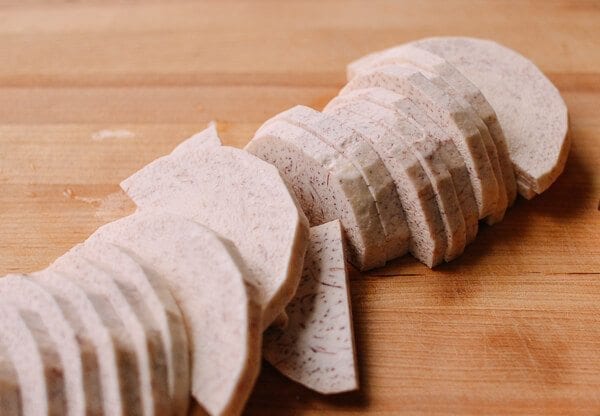
Add the taro to the marinated pork. In a different bowl, mix the ground rice mixture with ½ cup water to create a thick paste. Then combine the rice paste with the marinated pork belly, taro, and 2 teaspoons of light soy sauce.
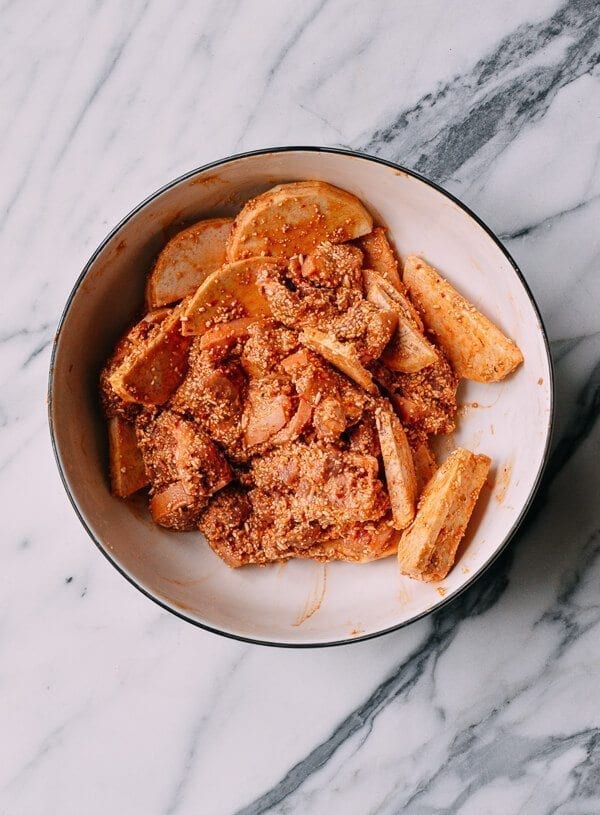
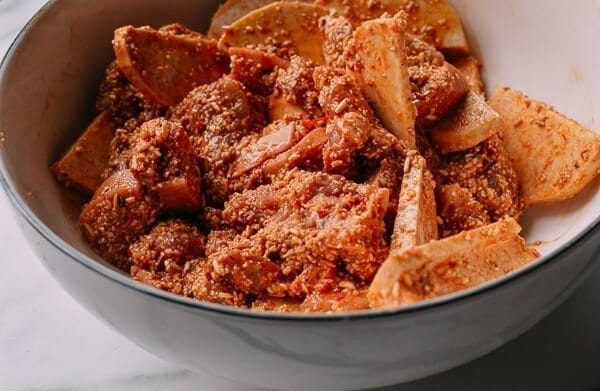
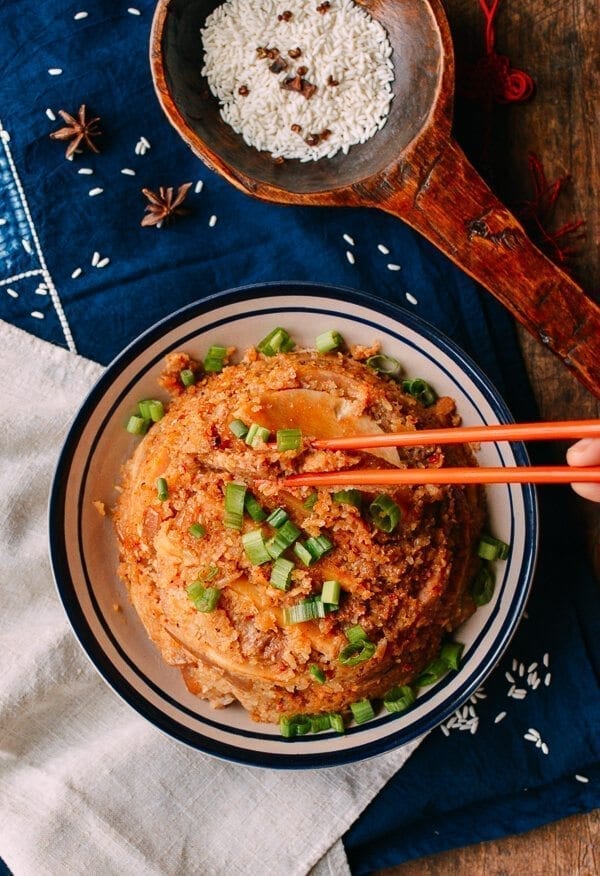
Transfer the mixture to a heat-resistant bowl or casserole dish that will fit into a steamer. Remember that the ground rice will expand after steaming, so make sure the dish is big enough. You can arrange the dish neatly like I did, or not–it won’t affect the taste!
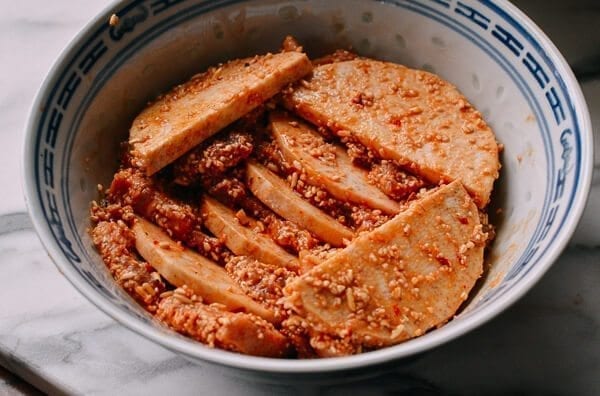
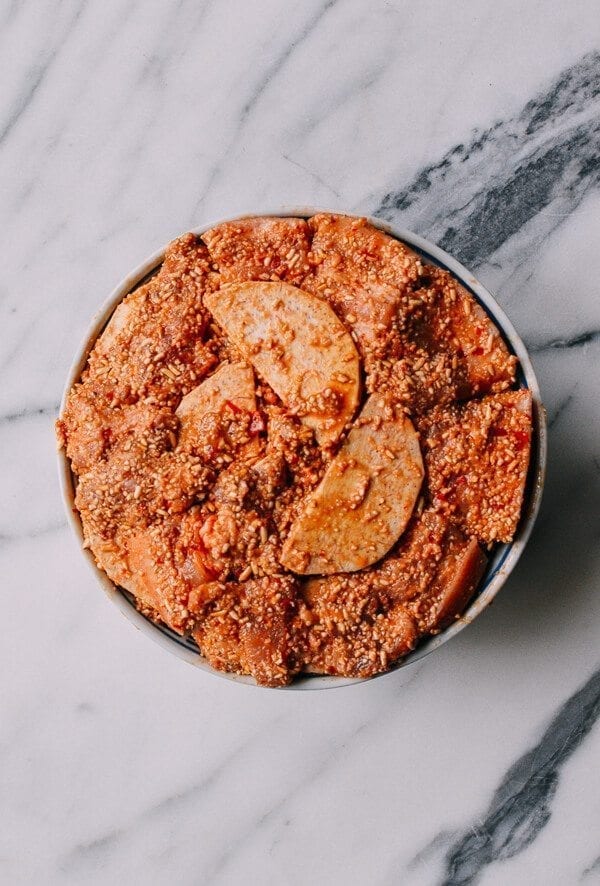
Prepare your steamer, filling it with 2-3 quarts of water. See our post on how to set up a steamer if you’re not familiar with steaming foods in Chinese cooking.
Set the dish in the steamer, and cover it tightly with the lid. Bring the water to a boil using high heat, then turn the heat down to medium low, and steam the pork and taro for 70 to 90 minutes. Periodically check the steamer to make sure the water hasn’t burned off.

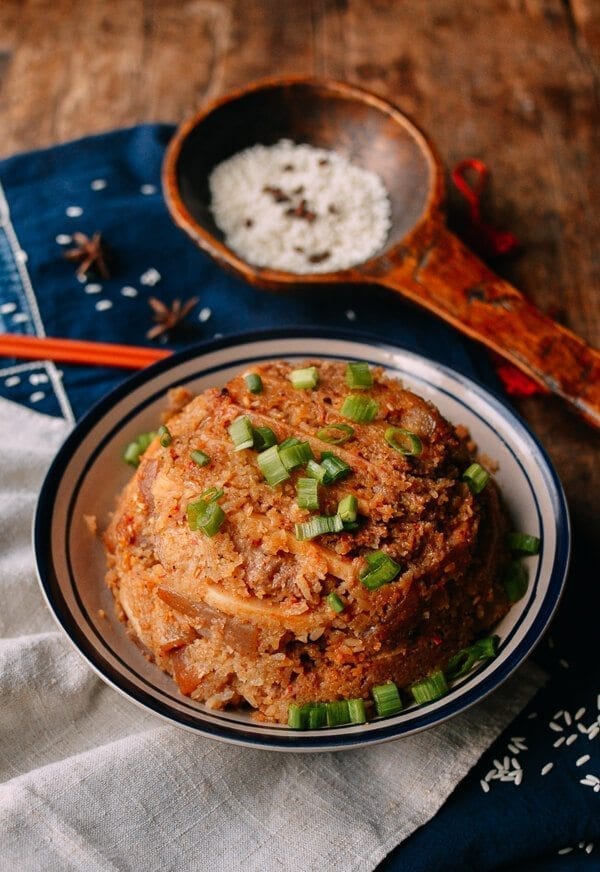
Garnish with chopped scallions and serve your steamed pork Fen Zheng Rou hot from the steamer!

Looking for more authentic recipes? Subscribe to our email list and be sure to follow us on Pinterest, Facebook, Instagram, and Youtube!
Recipe

Steamed Pork with Rice Powder (Fen Zheng Rou – 粉蒸肉)
Ingredients
- 1 pound pork belly (450g)
- 1 teaspoon ginger (minced)
- 2 teaspoons Shaoxing wine
- 1 piece fermented bean curd (white or red)
- 1 tablespoon spicy bean sauce (or regular bean sauce)
- 1 teaspoon five spice powder
- ½ teaspoon sugar
- 6 tablespoons long grain rice
- 3 tablespoons sweet rice
- ¼ teaspoon Sichuan peppercorns
- ¼ of a star anise
- 1 pound taro (or potato, 450g)
- ½ cup water
- 2 teaspoons light soy sauce
- 1 scallion (finely chopped)
Instructions
- First, marinate the pork belly. Wash the pork belly and pat it dry with paper towels. Slice it into ¼-inch thick pieces. In a large bowl, mix the sliced pork belly with the minced ginger, Shaoxing wine, fermented bean curd, spicy bean sauce, five spice powder, and sugar. Use your hands to combine everything together well. Cover and marinate for about 1 hour in the refrigerator.
- While the pork is marinating, prepare the rice mixture. In a clean, dry wok over medium-low heat, add the long grain rice, sweet rice, Sichuan peppercorns, and the star anise. Cook it for about 5 minutes until the rice turns a light brown color. After 5 minutes, turn off the heat, and let the mixture cool slightly. Next, use a food processor or mortar and pestle to mill the mixture into a coarse grind. When using the food processor, pulse the mixture a couple of times. The rice shouldn’t be too finely ground.
- It’s also a great idea to double or triple the rice mixture, and store the leftovers in the refrigerator, so it’s readily available if and when you want to make this dish again. The rice mixture should last a few months in the fridge.
- Next, we’ll assemble and cook the dish. Peel the taro skin, rinse, and cut it into pieces roughly the same size as the pork belly pieces. Add the taro to the marinated pork. In a different bowl, mix the ground rice mixture with ½ cup water to create a thick paste. Then combine the rice paste with the marinated pork belly, taro, and 2 teaspoons of light soy sauce. Transfer the mixture to a heat-resistant bowl or casserole dish that will fit into a steamer. Remember that the ground rice will expand after steaming, so make sure the dish is big enough. You can arrange the dish neatly like I did, or not–it won’t affect the taste!
- Prepare your steamer, filling it with 2-3 quarts of water. Set the dish in the steamer, and cover it tightly with the lid. Bring the water to a boil using high heat, then turn the heat down to medium low, and steam the pork and taro for 70 to 90 minutes. Periodically check the steamer to make sure the water hasn’t burned off. Garnish with chopped scallions and serve hot!
Nutrition Facts