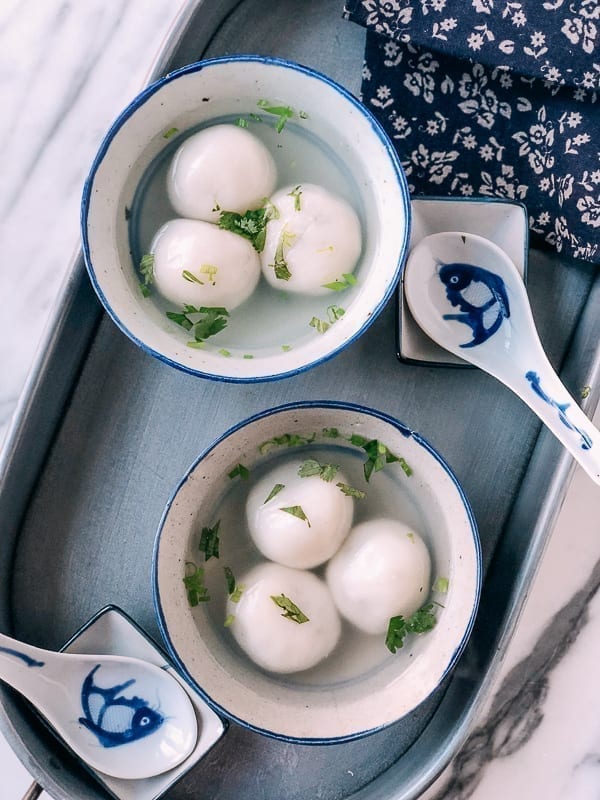
The Chinese Lantern festival, or yuánxiāo jié (元宵节) falls on the 15th day of the first lunar month. It comes two weeks after Chinese New Year’s Day, which the first day of the 15-day Spring Festival celebration period.
It marks the first full moon of the new year, and the end of the Spring Festival.
Is The Lantern Festival an OFFICIAL Chinese Holiday?
The Lantern Festival is not actually a Chinese public holiday, so the official public calendar does not allow for the day off. However, it is considered part of the Chinese Spring Festival.
Those who are fortunate enough to do so take 2 to 3 weeks off so that they can spend the entire Spring Festival, including Yuanxiao Jie, with family, and also have time to travel back and forth between cities and their home villages.
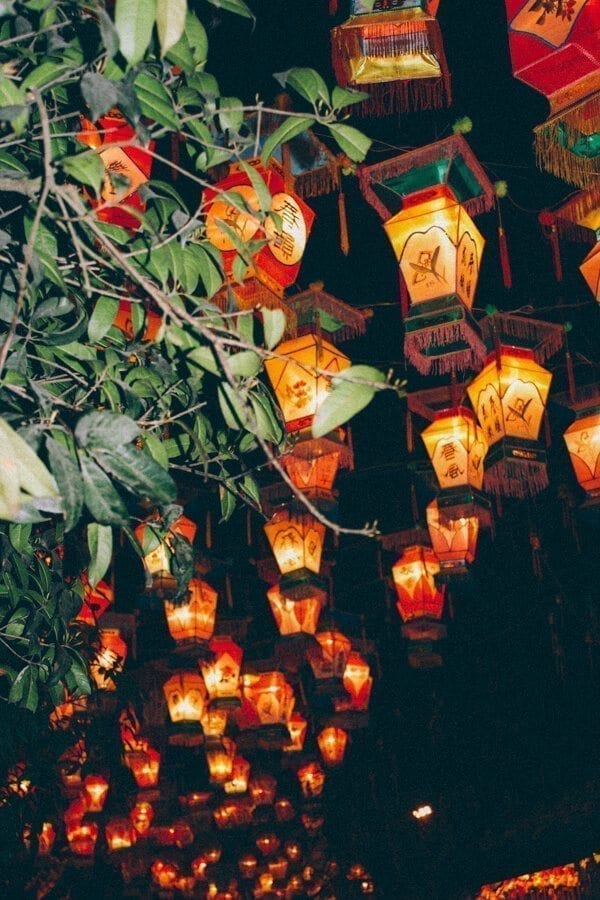
It is an evening to celebrate by gathering with family to eat glutinous rice balls, known as yuánxiāo (元宵) or tāngyuán (汤圆) and enjoy night views of colorful and brightly lit lanterns.
How do Chinese celebrate Lantern Festival?
Chinese celebrate the Lantern Festival by…you guessed it—lighting and enjoying lanterns. In China, temple fairs are a great place to see lantern displays. Watching lion and dragon dances are another Lantern Festival activity.
Fireworks seem to come alive again on the day of the Lantern Festival, maybe because of parades, or perhaps because it’s the final day of official Chinese New Year celebrations, and people take the opportunity to light up any firecrackers or fireworks they have left!
Perhaps the most common and most significant traditions, however, are related to food.
Lantern Festival Food: Glutinous Rice Balls
Eating yuánxiāo (元宵), also known as tāngyuán (汤圆), is an important Lantern Festival custom.
They are round glutinous rice dumplings with sweet black sesame or peanut pastes as filling. Other possible fillings include chocolate, red bean, fruits, lotus paste, and even custard. There are also savory versions.
Check out our homemade black sesame tang yuan and our savory tang yuan recipe!
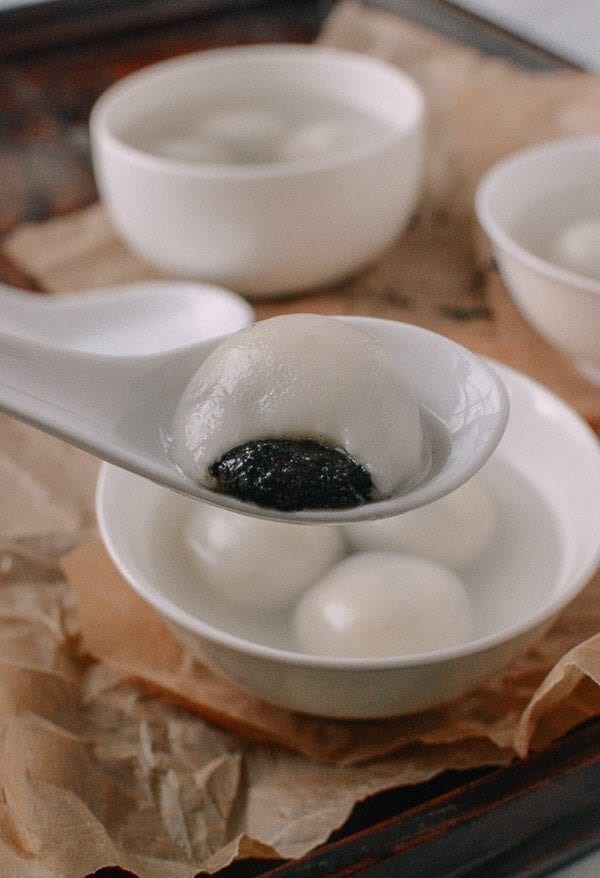
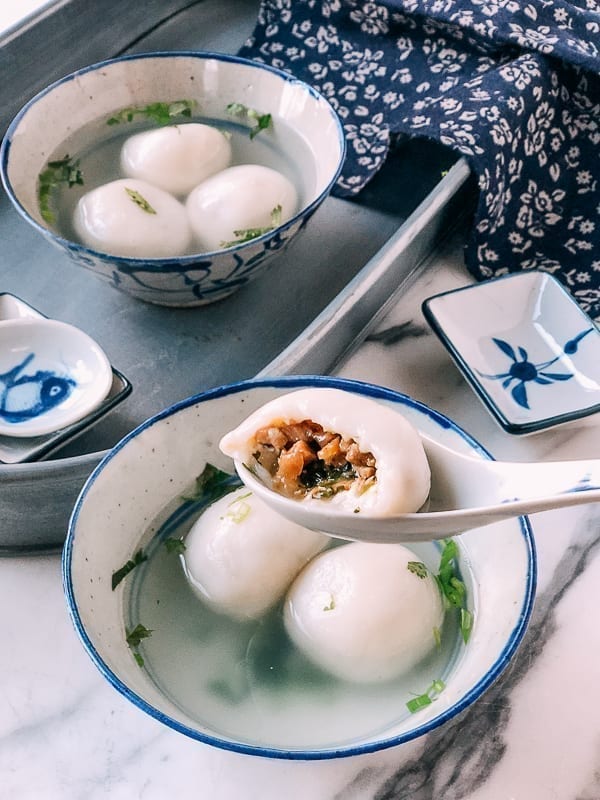
Glutinous rice is another term for sticky rice, so these dumplings are sticky and chewy in texture. The fillings may be solid, or soft and liquid-y.
The round shape of the rice balls symbolize wholeness and togetherness. Like other symbolic Chinese New Year foods, tang yuan are symbolic due to the fact the word is a homonym for another positive Chinese word or expression. It sounds like tuányuán (团圆) which means ‘reunion’ and ‘completeness.’
We usually enjoy them on the evening of the Lantern Festival for dessert, and occasionally throughout the Spring Festival period!
What is the difference between Yuan Xiao and Tang Yuan?
For most people, yuánxiāo and tāngyuán are virtually the same—filled glutinous rice balls.
However, after living in China for some years, we found out that there are some subtle differences.
Regional differences:
The first and foremost difference is the name. Yuánxiāo is generally used in Northern China, whereas tāngyuán is generally used in Southern China.
Sweet and savory fillings:
Both usually have some sort of filling inside, but yuan xiao usually have sweet fillings, while you can make tang yuan with both sweet and savory fillings.
Savory fillings vary depending upon the region. Be sure to check out our Savory Tang Yuan recipe, which we make with ground pork, salted radish, and mushrooms.
Preparation:
There are also differences in preparation. Yuánxiāo are made by rolling layers of rice flour around a solid piece of filling, resulting in an appearance similar to a powdered doughnut hole!
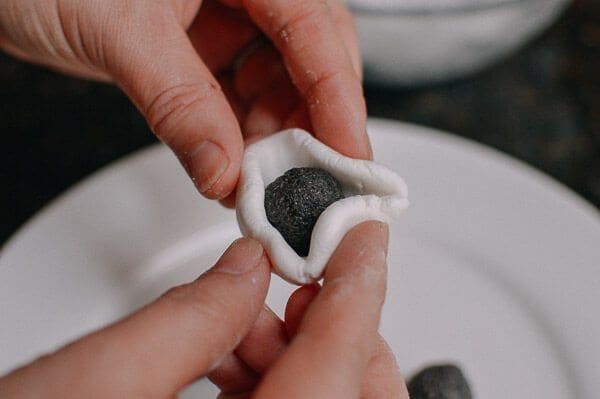
On the other hand, you make tāngyuán by kneading a glutinous rice dough and wrapping it around filling much like a dumpling. They have a smooth appearance.
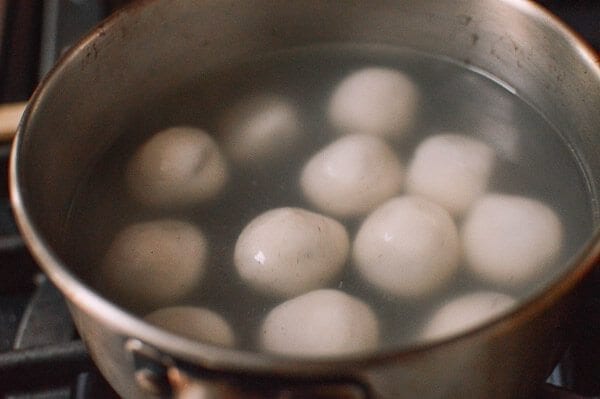
Both are cooked in boiling water and served in a bowl of the cooking liquid. However, yuánxiāo can take longer to cook, and the cooking water you serve them in is a bit thicker and starchier.
Tang yuan can also be smaller rice balls without fillings. In this case, people serve them in sweet soups with sweet fermented rice (jiu niang), fruit, and other ingredients (varying according to region and family tradition).
In either case, the leftover water is frequently served alone as a nice warm drink— sort of like a tea with some substance. It is light and hydrating, with a hint of cooked rice flavor. Growing up, we considered it a nutritional drink that should never be wasted!
Happy Lantern Festival!