Most Chinese holidays center around food and family, and the Qingming Festival, or Qīngmíng jié (清明节) is no different. Also known as the Tomb-sweeping Festival or Ancestors’ Day in English, this is an important annual spring tradition with many symbolic customs.
In this article, we’ll explain how to celebrate it, what you’ll need to carry out these 2,500 year old customs, and why it’s a holiday that we try to observe every year.
What is the Qingming Festival?
Anyone who’s ever seen the Disney movie Mulan (the original animated version, naturally) knows ancestor worship is a key component of Chinese culture and family life.
You may have seen in Chinese homes portraits of grandparents and great-grandparents who’ve passed on, with incense and bowls of oranges, as a quiet way to pay respects, perhaps alongside a few statues of Chinese deities.
While some families have such tributes up year round, the Qingming Festival is a springtime holiday dedicated to paying respects to your ancestors. Families set aside time to visit with their departed loved ones, whether they are physical tombstones, in temples, or in spirit.
It’s why it’s referred to in English as the “tomb sweeping festival,” because families tend to graves, cleaning weeds and debris and perhaps even planting flowers to usher in spring, while also offering tributes of food and gifts.
Chinese believe the feng shui of their ancestors’ graves have a direct relationship with the feng shui of their offspring.

An aside: on Chinese Deities
Worshiping one’s ancestors is rooted in Confucianism, an ancient Chinese belief system that in part emphasizes the importance of family and concept of filial piety: respect for one’s elders and ancestors.
In addition to one’s ancestors, however, many Chinese also worship deities stemming from Chinese folk religion and Chinese buddhism.
The most commonly seen Chinese deities in the home are Fu 福, Lu 禄, and Shou 寿. Together they are referred to as Sanxing, 三星, or “three stars.” They represent good fortune, prosperity, and longevity, respectively. Having Sanxing statues is a lucky way to usher all three into the home.
Guanyin is another popular deity, the goddess of mercy or compassion. You’ll also often see statues of a laughing Buddha, representing happiness and abundance. Some Buddha figures are surrounded by children, representing fertility.
When is the Qingming Festival?
The Qingming Festival falls on the 15th day after the Spring Equinox (the first day of spring). This means that it’s on a slightly different date each year, usually falling on April 4th, 5th, or 6th. Here are some past and upcoming dates!
| Year | Date |
| 2025 | Friday, April 4 |
| 2026 | Sunday, April 5 |
| 2027 | Monday, April 5 |
| 2028 | Tuesday, April 4 |
| 2029 | Wednesday, April 4 |
| 2030 | Friday, April 5 |
How do families celebrate the Qingming Festival?
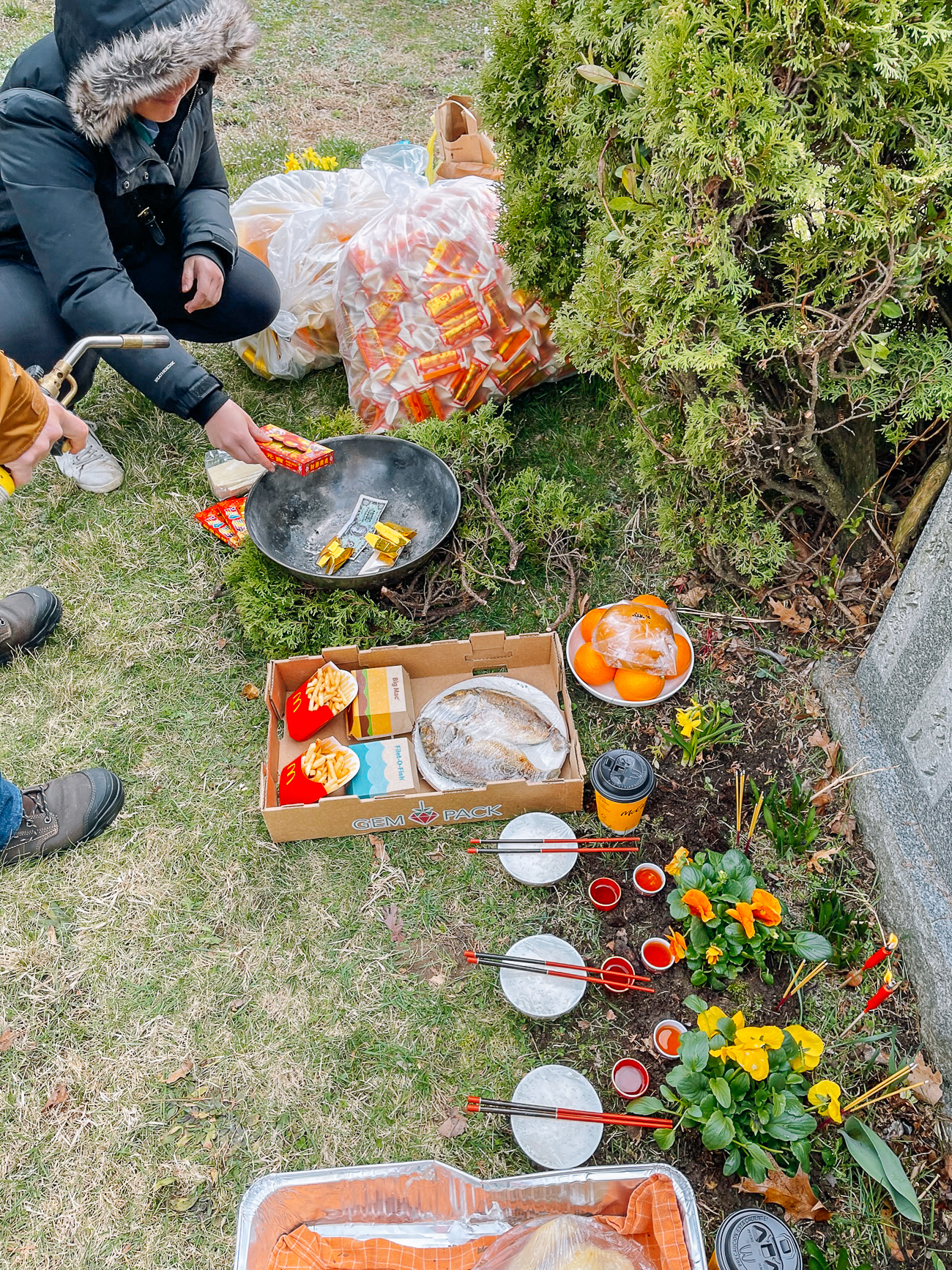
Like most Chinese festivals and holidays, food plays a central role. Families will prepare foods to serve their ancestors. After praying to ancestors, some families serve this meal as an open-air picnic. Others take the food home to enjoy later.
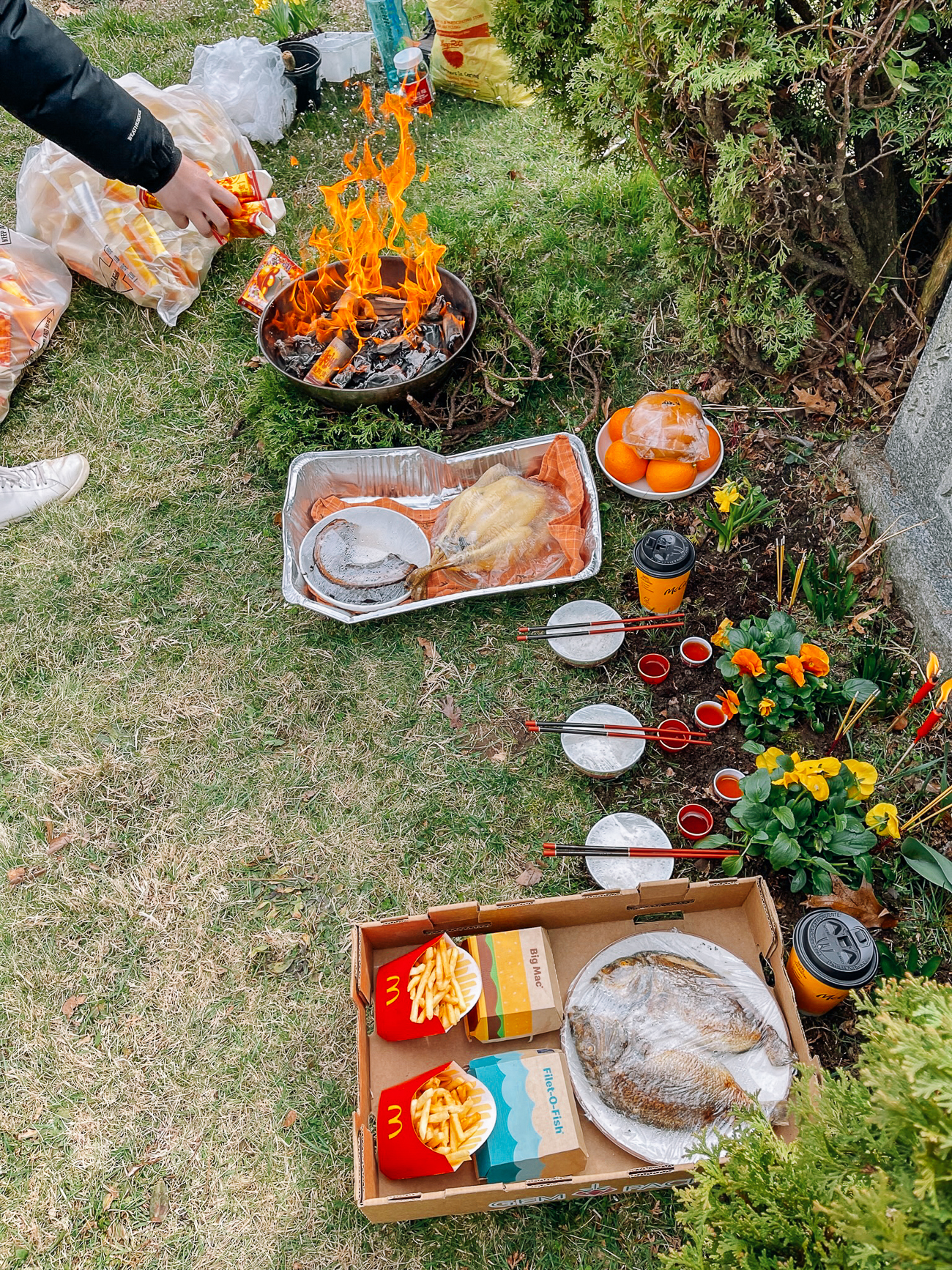
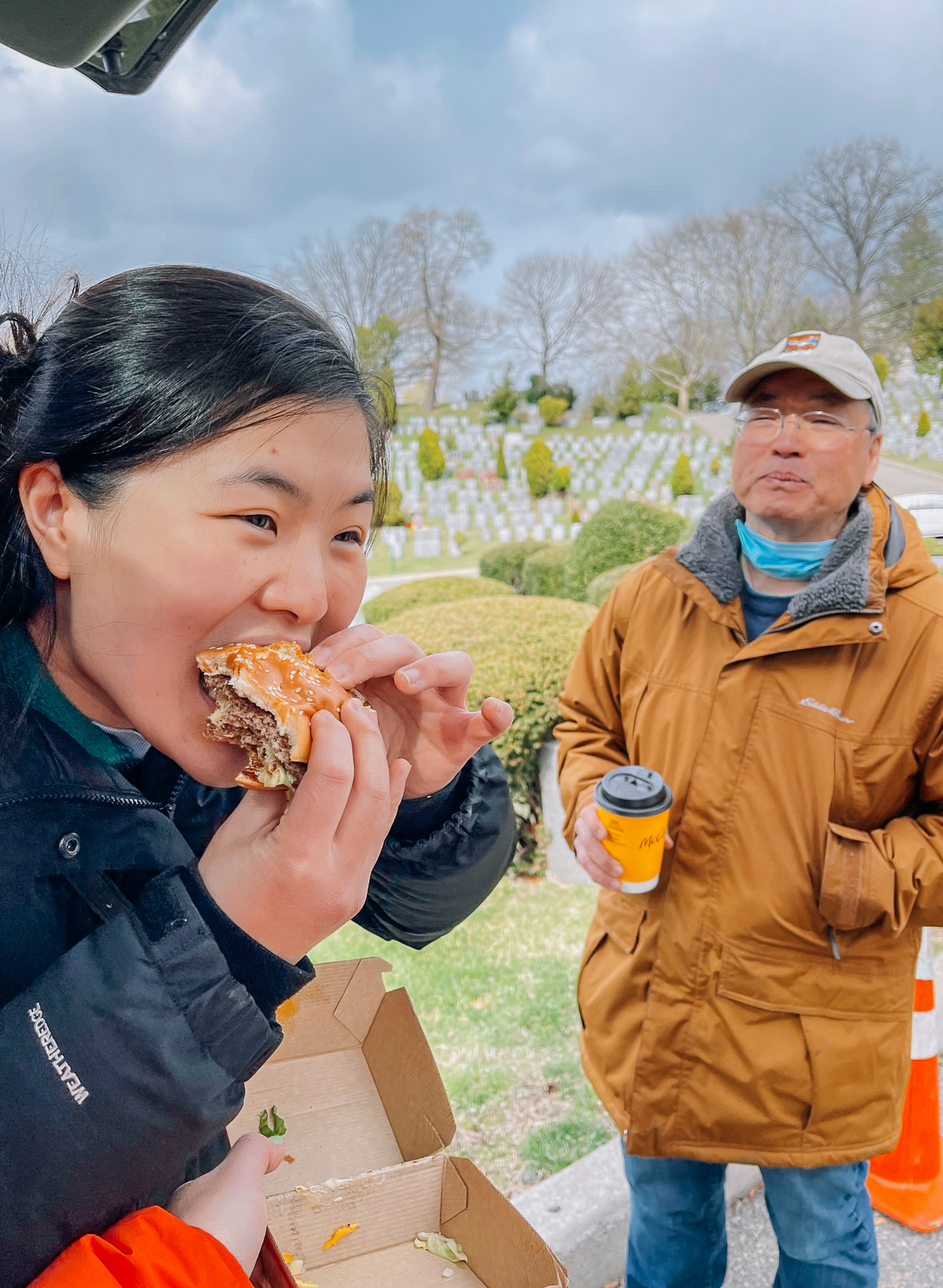
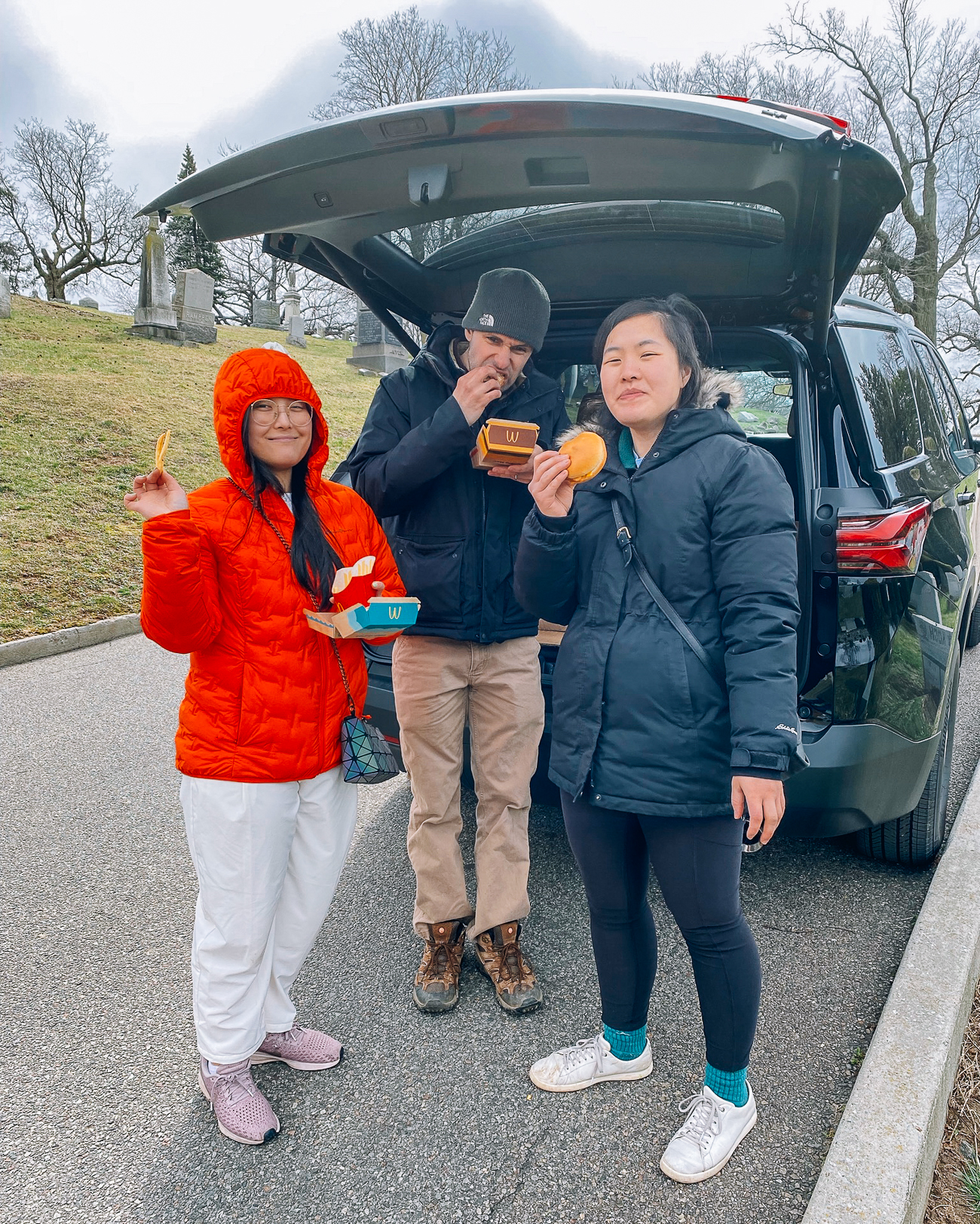
For the most part, we take the food home and have a meal together. Though a couple of years ago, these (by then stone cold) McDonald’s sandwiches didn’t stand a chance and were enjoyed by the car.
Every region and every family has their own traditions!
Oftentimes, different regions of China will have their own ways of celebrating holidays and festivals. What we’re sharing today is what our grandparents passed down to our parents.
This is what we learned was the “proper” way, but other families may have different practices. Ultimately, you can shape the Qingming Festival in a way that feels meaningful, practical, and doable for you.
What Do You Need?
When celebrating the Qingming Festival, you actually need a fair bit of planning to prepare the right foods and supplies!
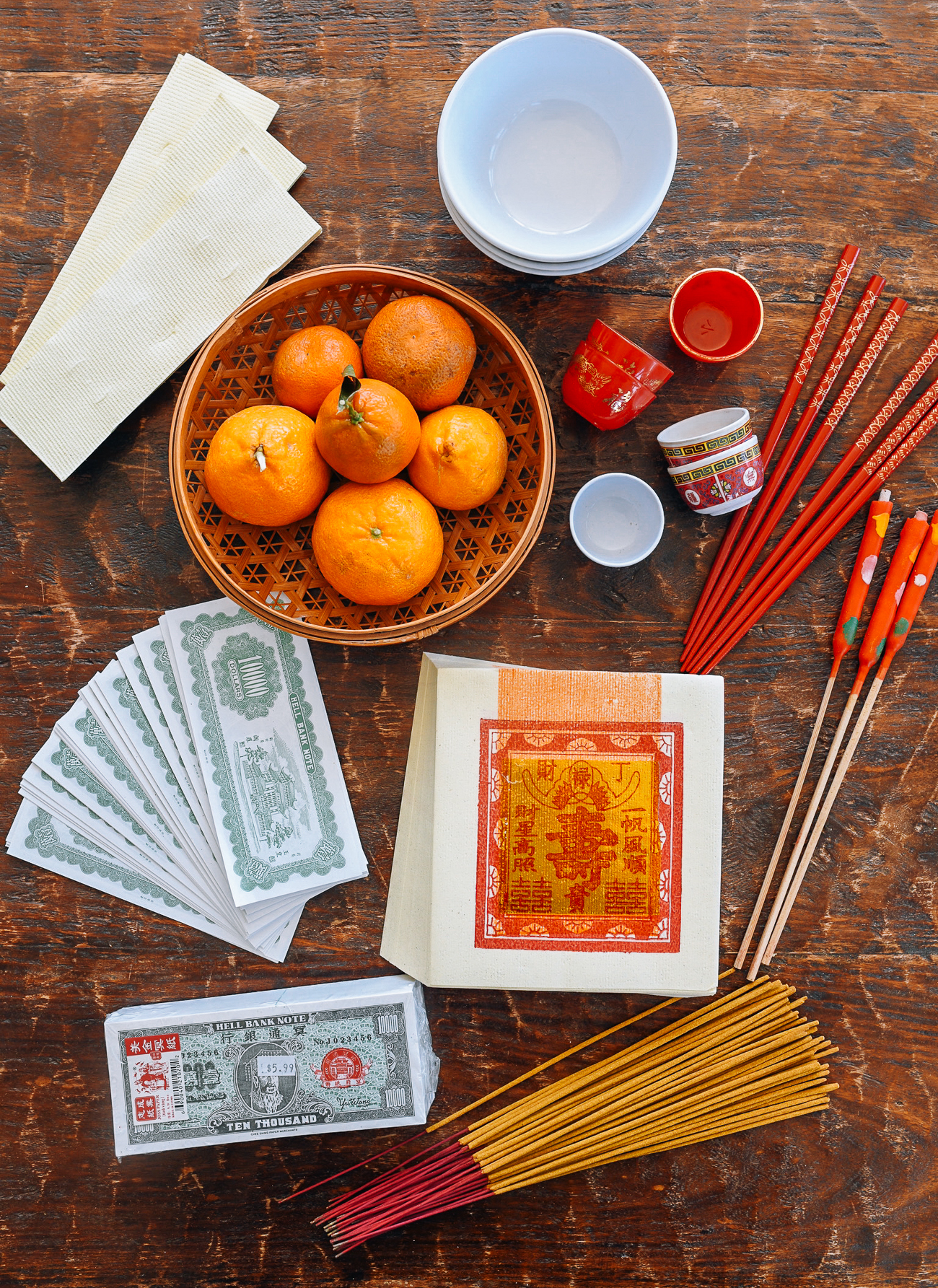
Here’s what we usually bring:
Supplies and Materials
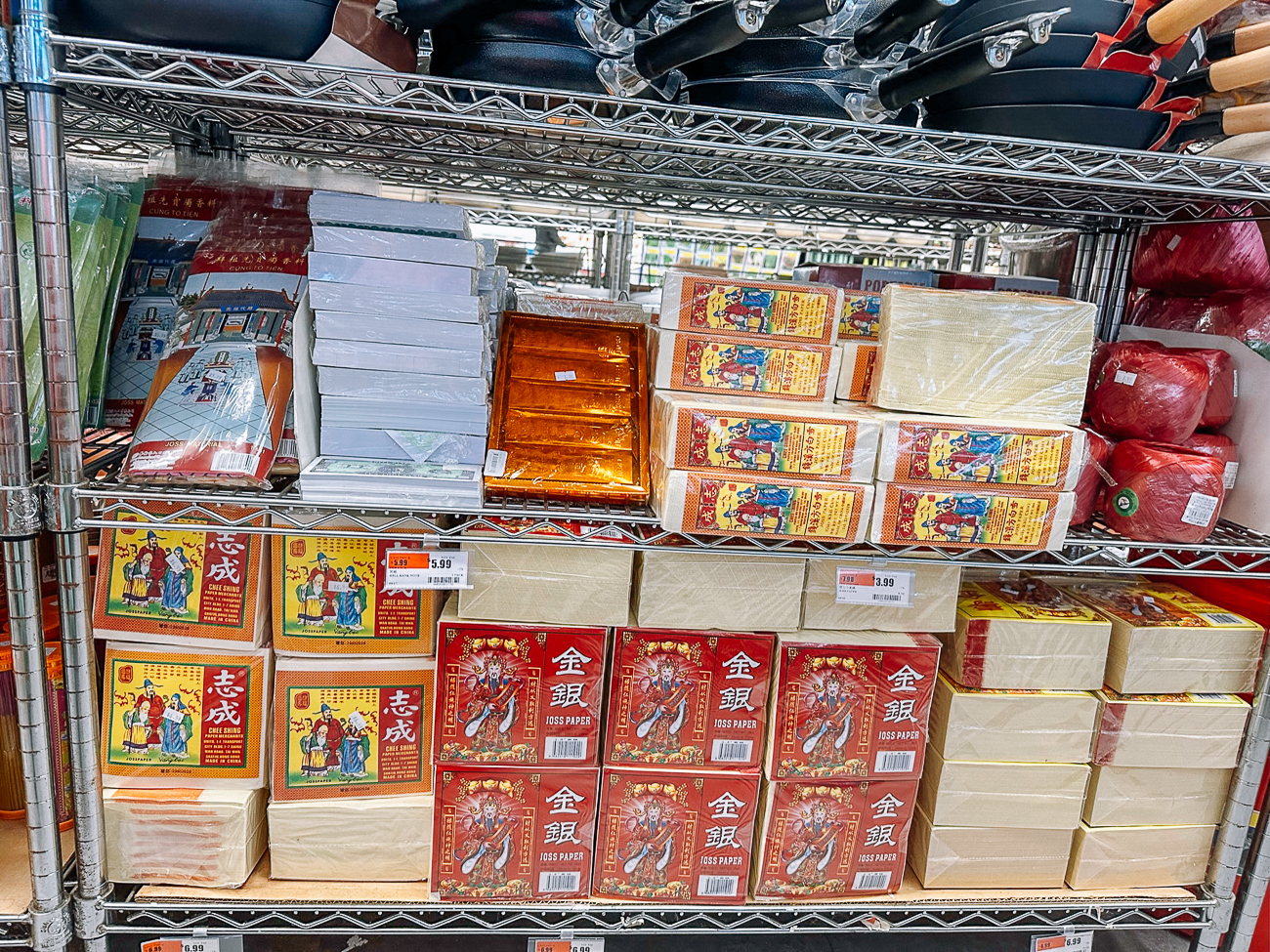
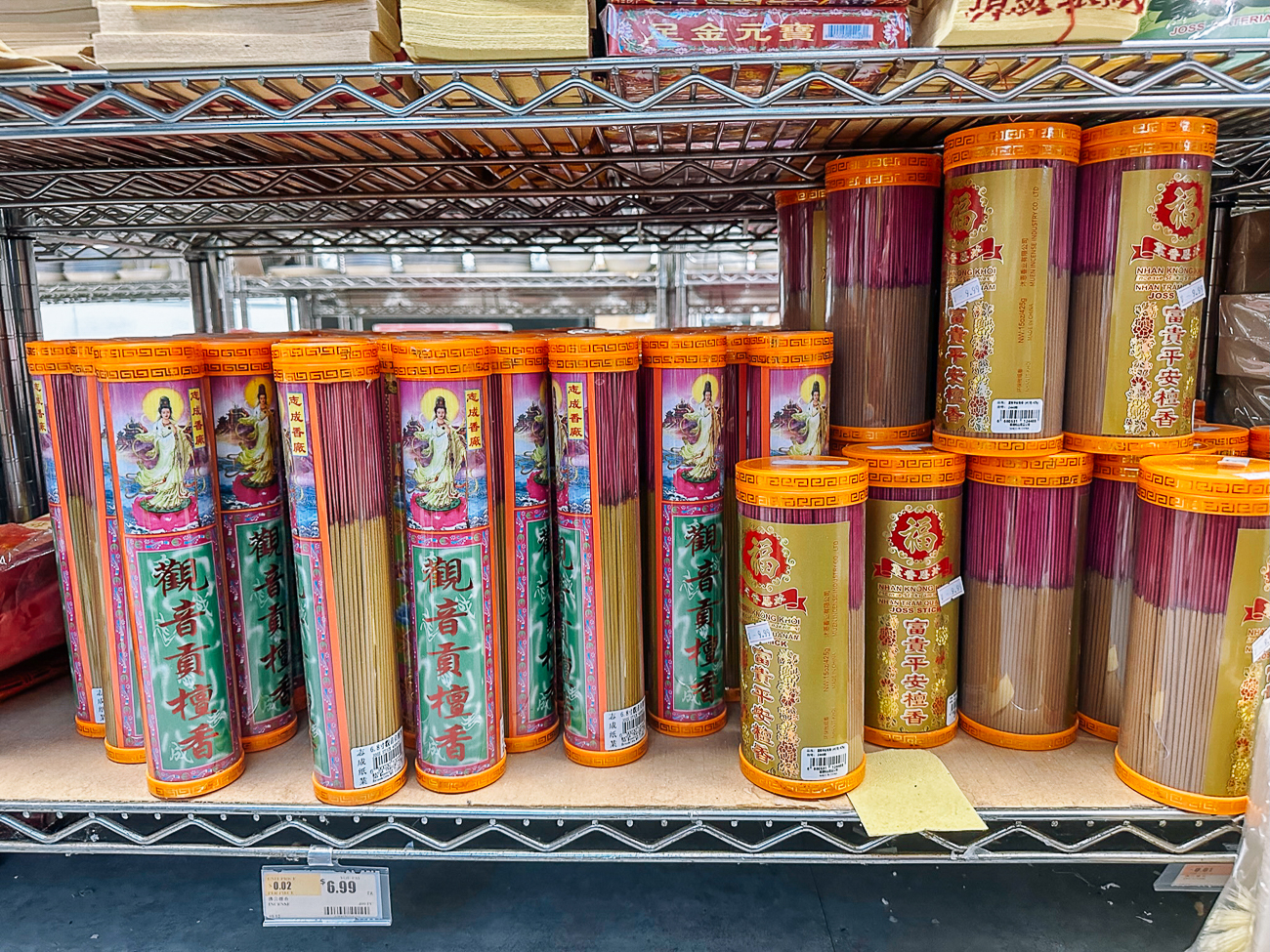
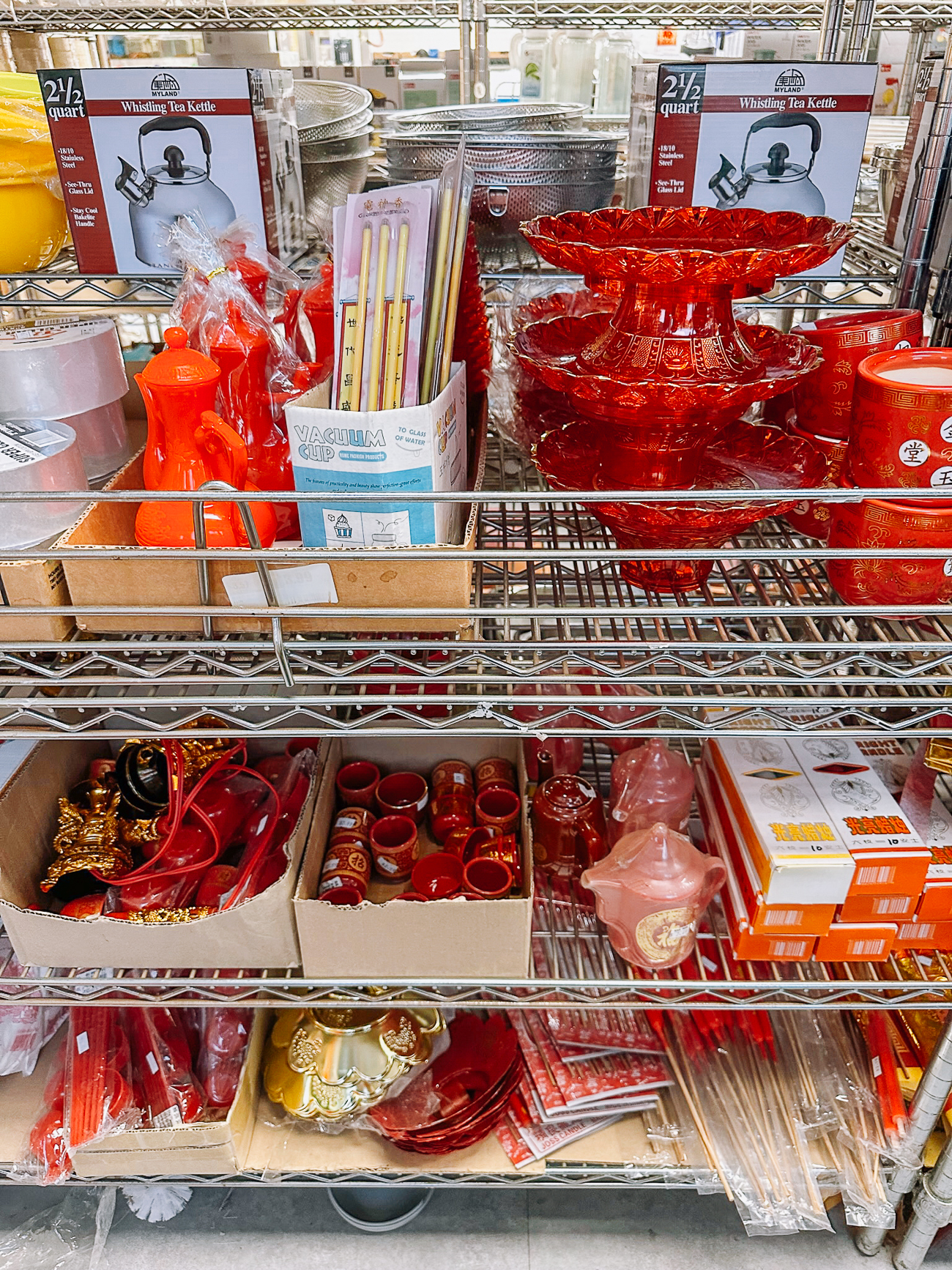
You can find many of these supplies at your local Chinese grocery store! See below the shelves at our local market:
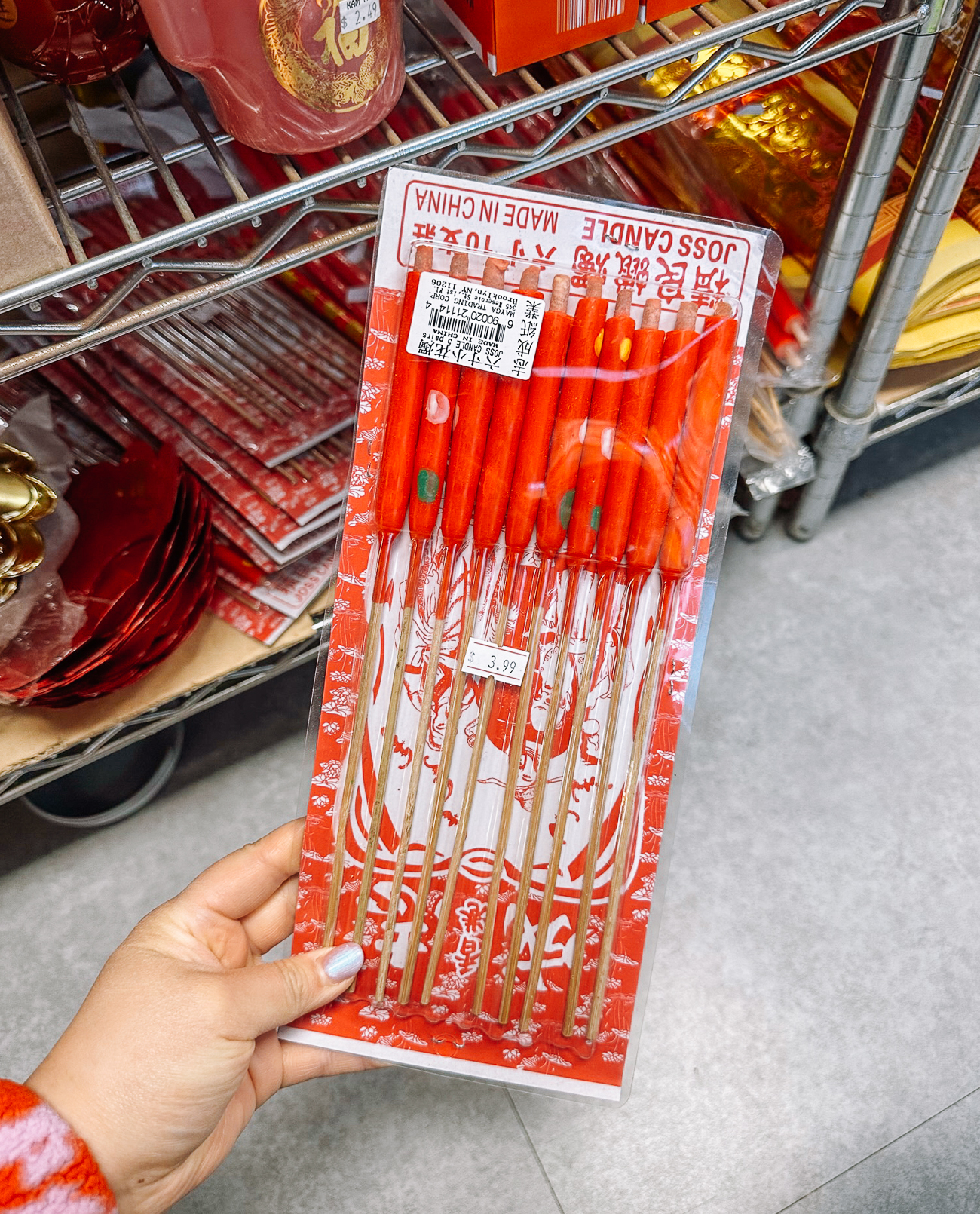
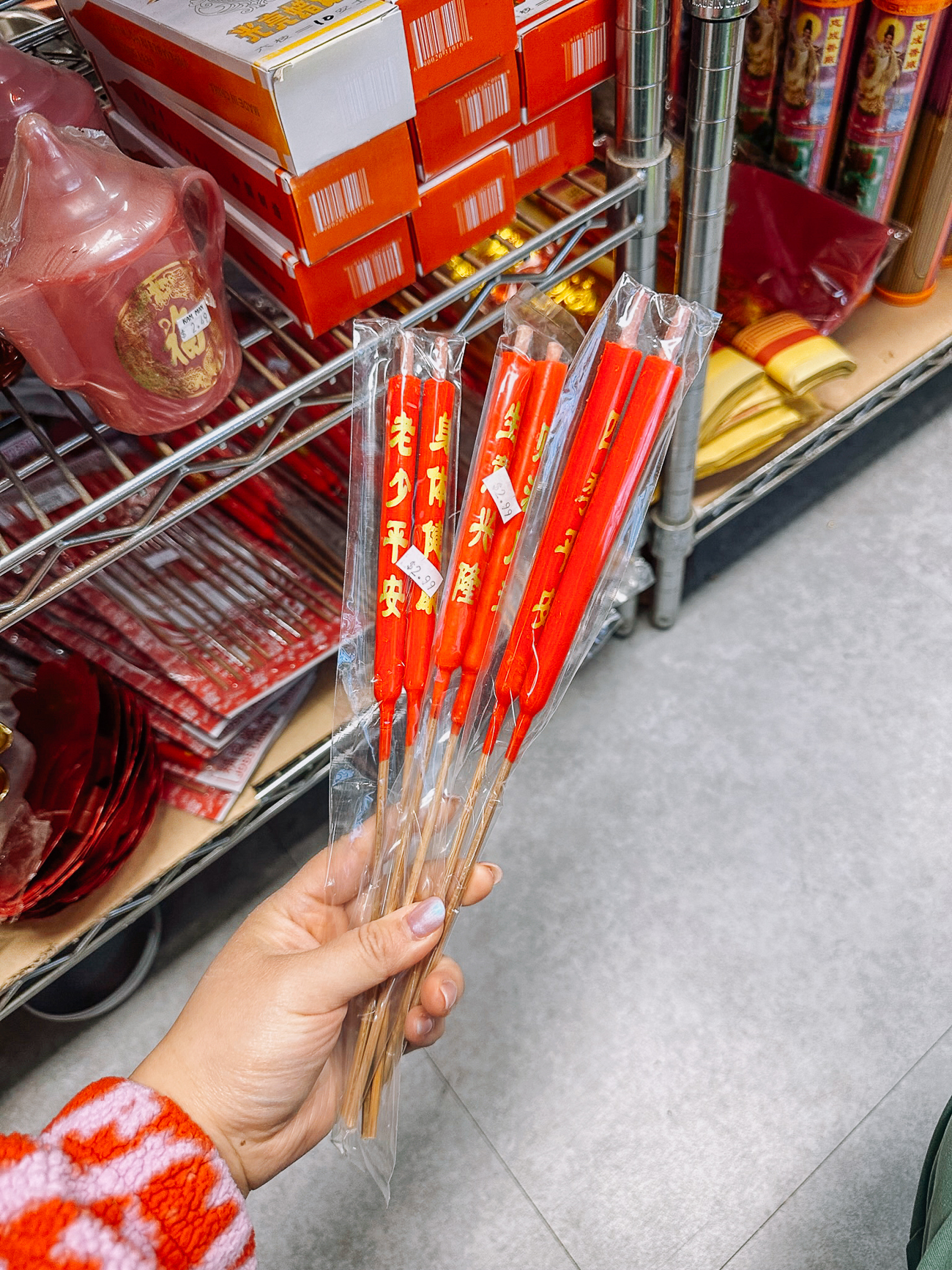
- 3 red joss candles
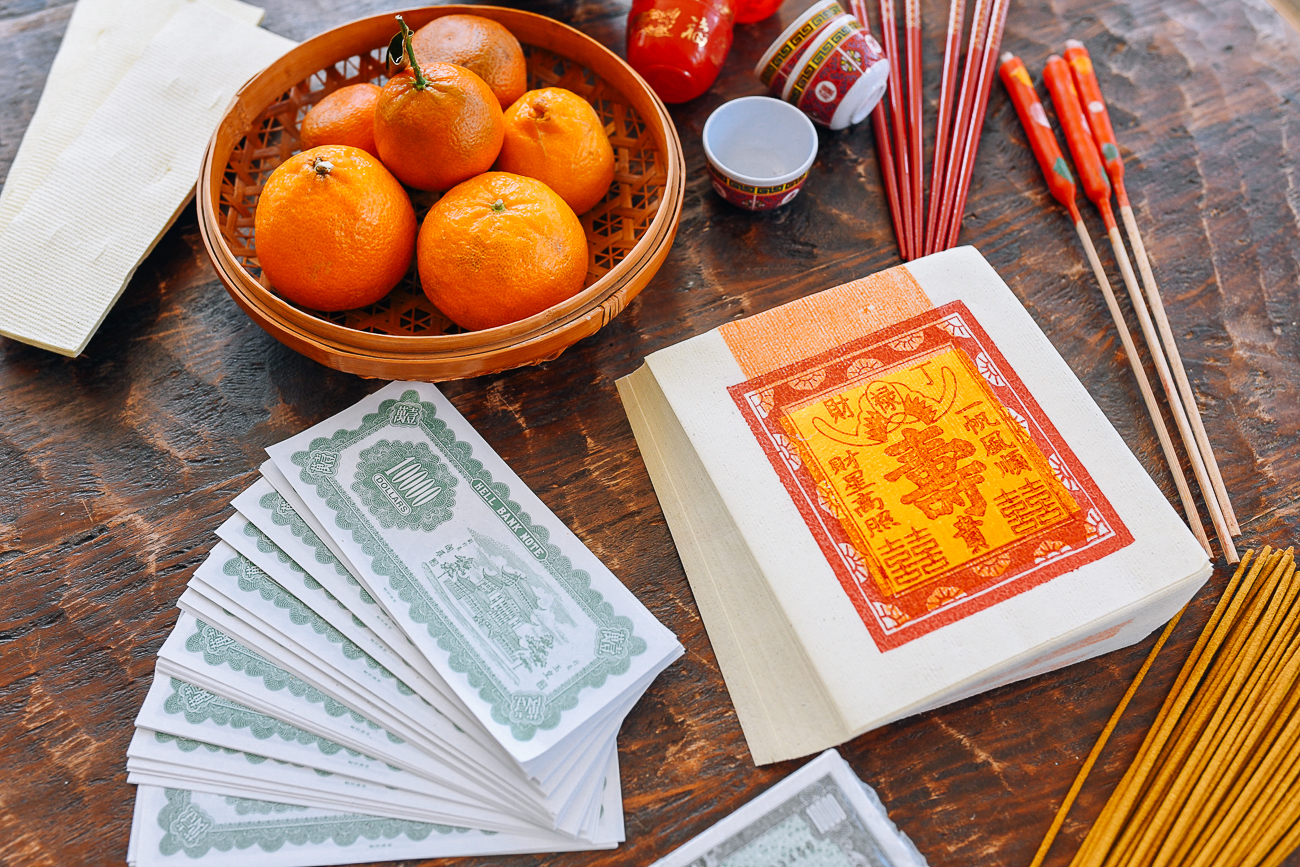
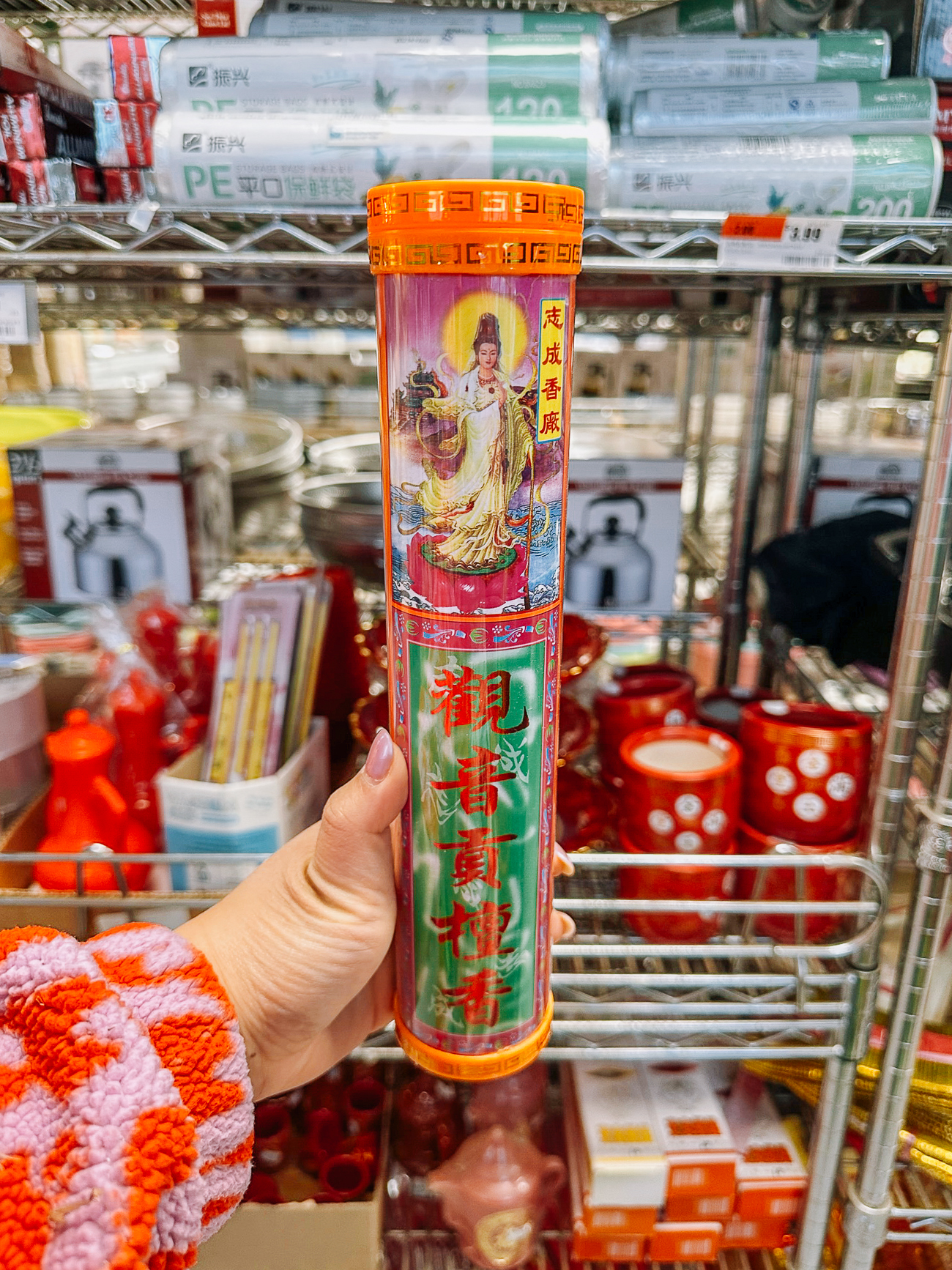
- Chinese sandalwood joss incense. Each attendee needs three sticks to pay respects to ancestors, and it’s customary to put bunches of three in a row alternated with the red candles in front of the gravestone as seen in the pictures we’re sharing in this post.
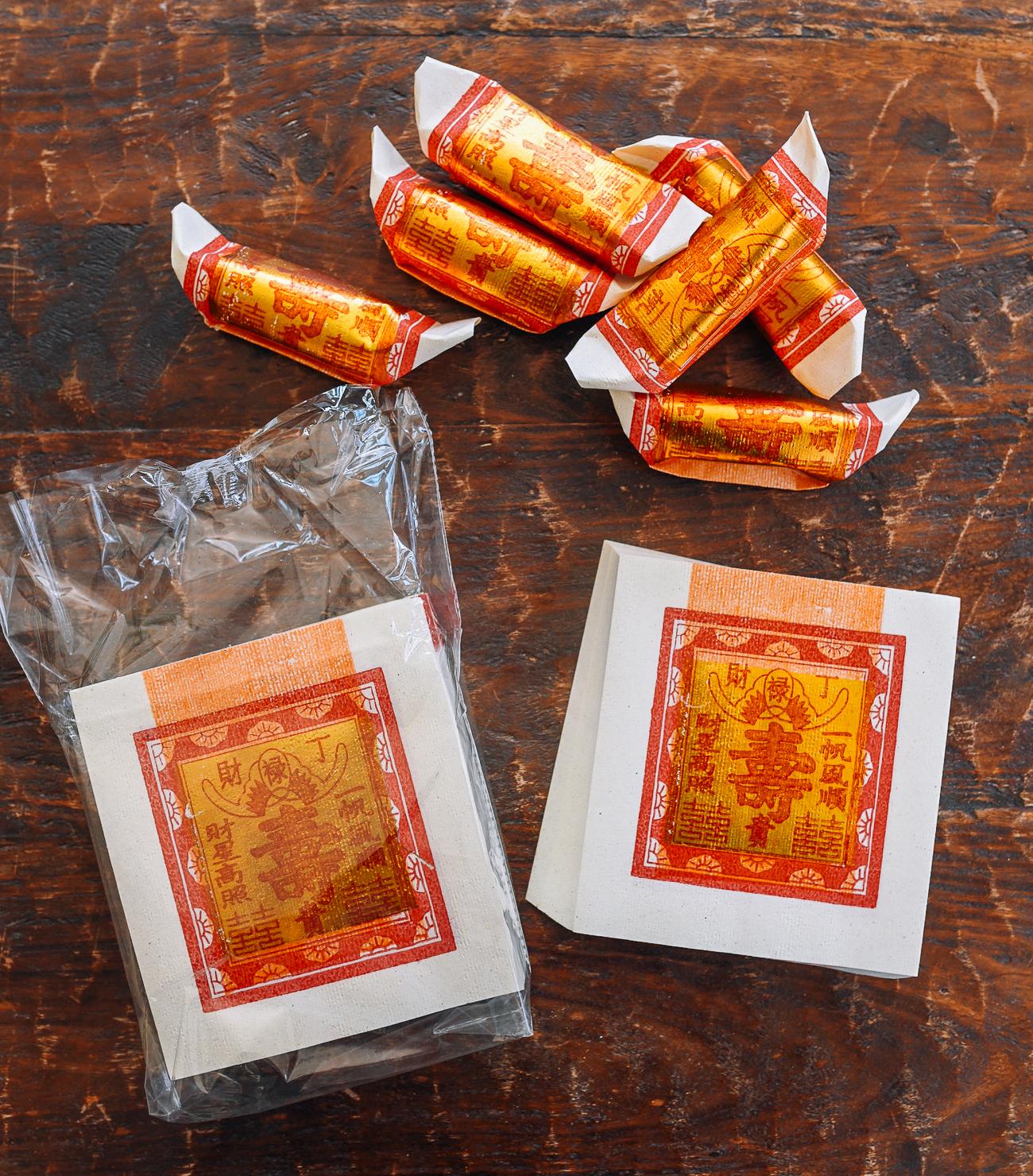
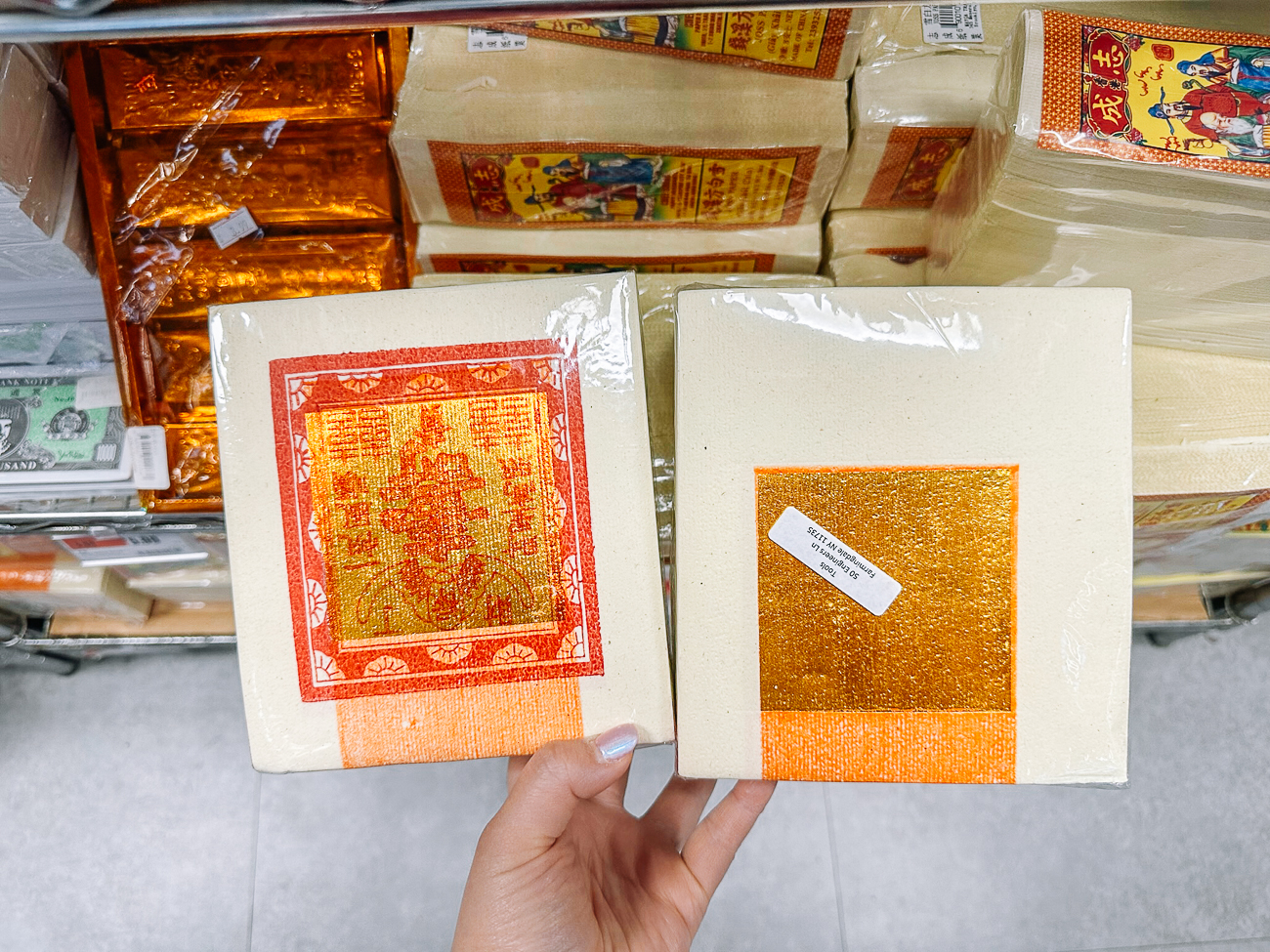
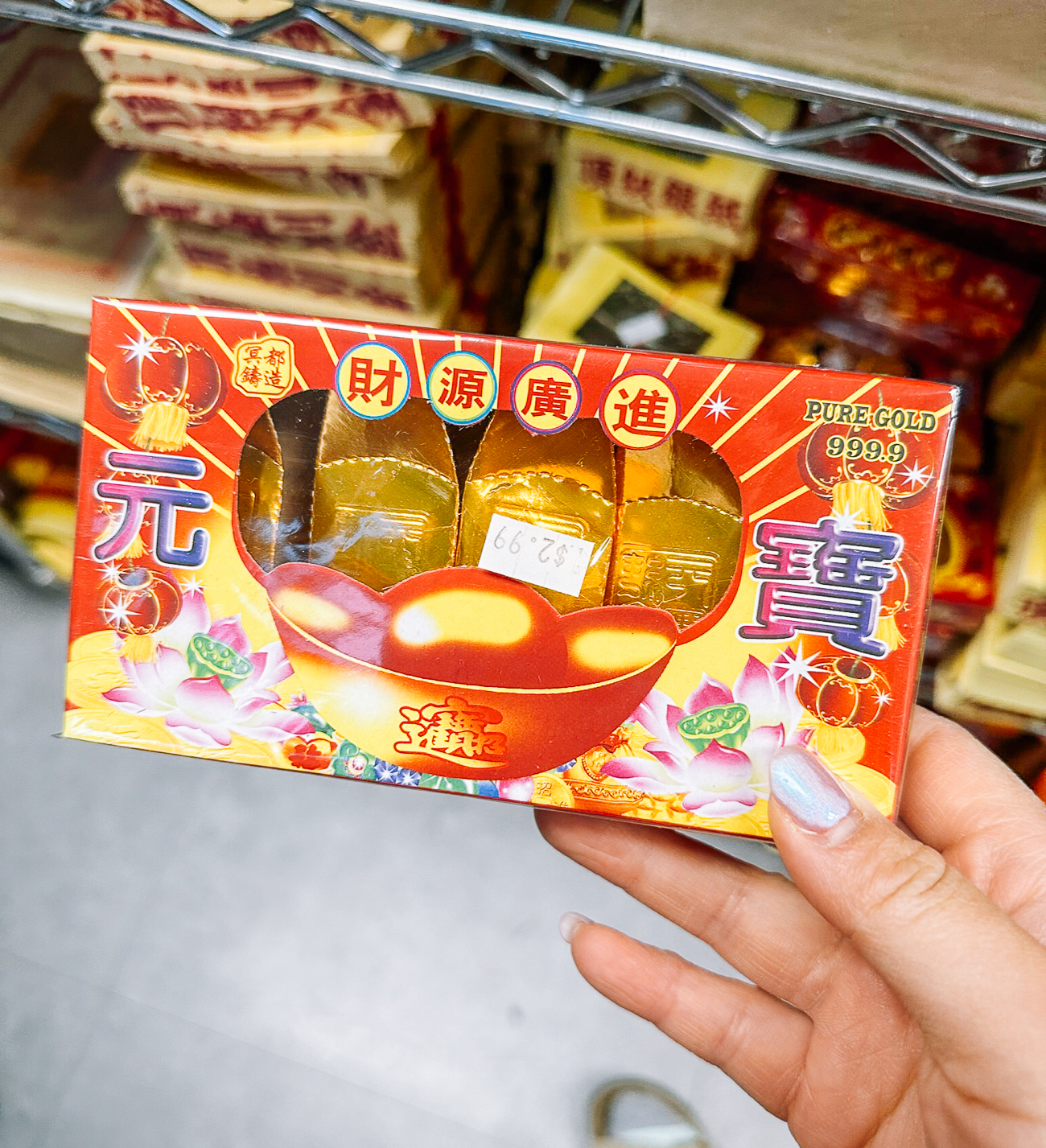
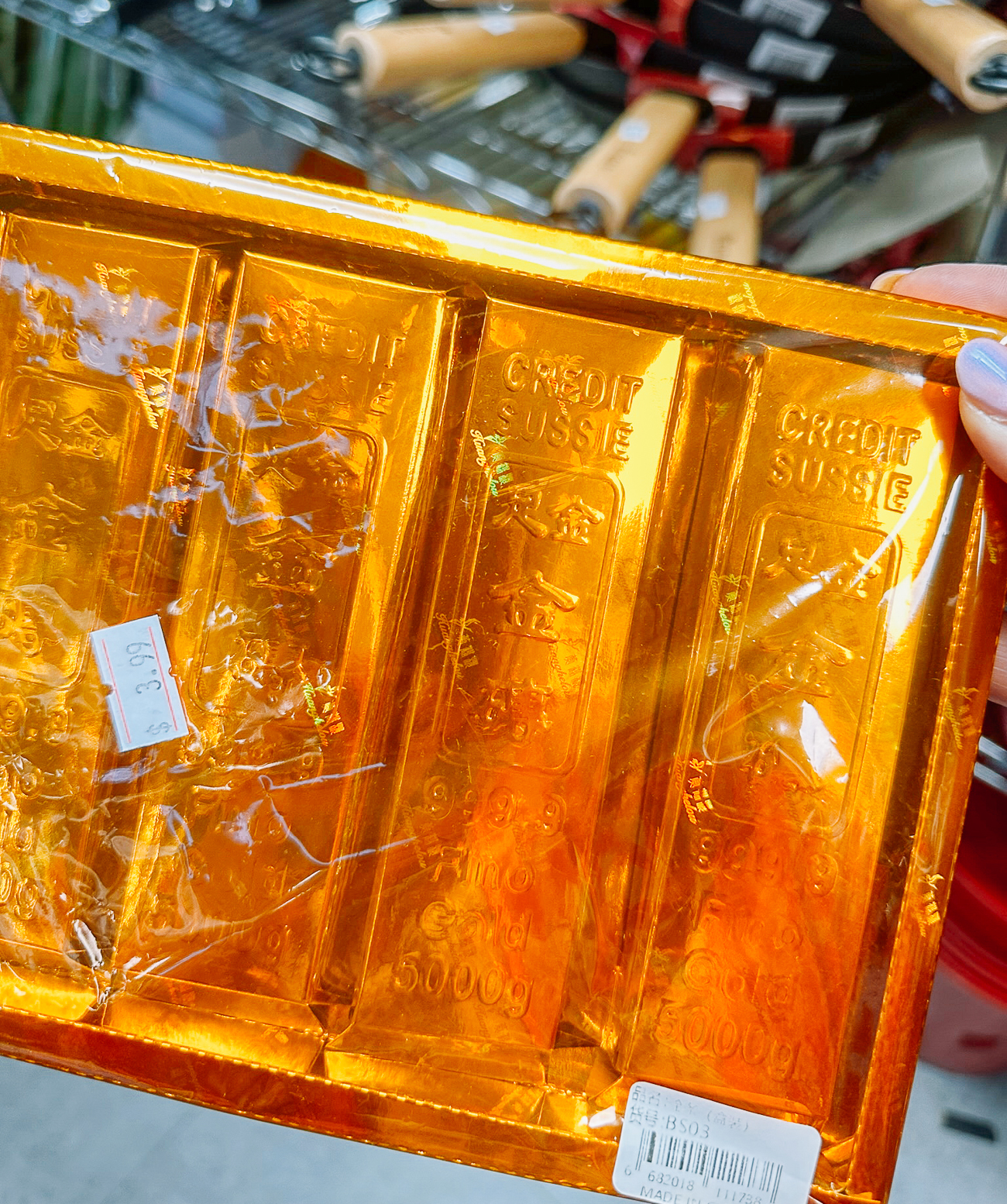
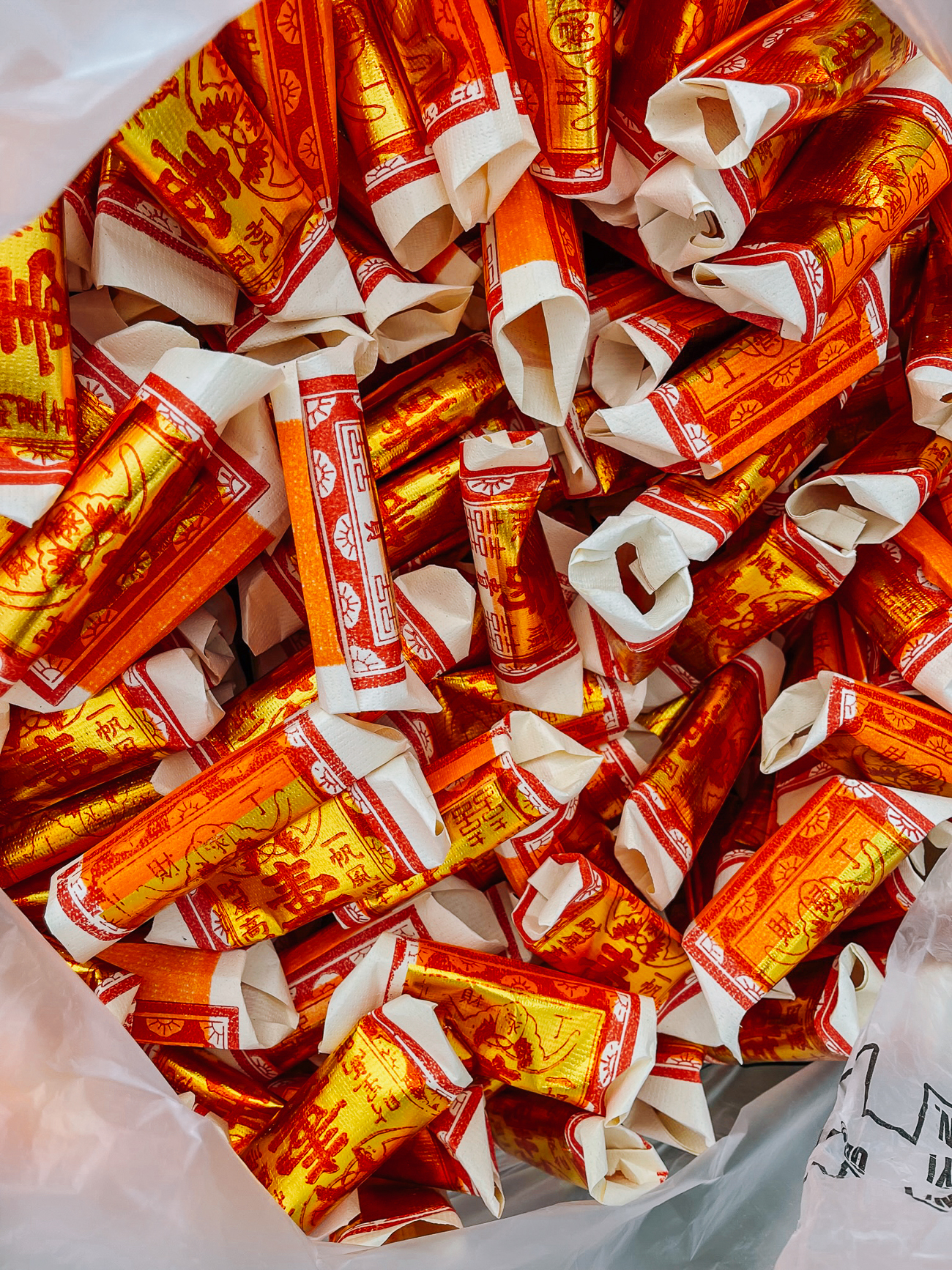
- Joss papers (e.g., paper money and gold and silver bars, to be burned as offerings of spirit money so that one’s ancestors have what they need in the afterlife). Look closely at the gold bars. Credit Suisse = “Credit Sussie” 😂
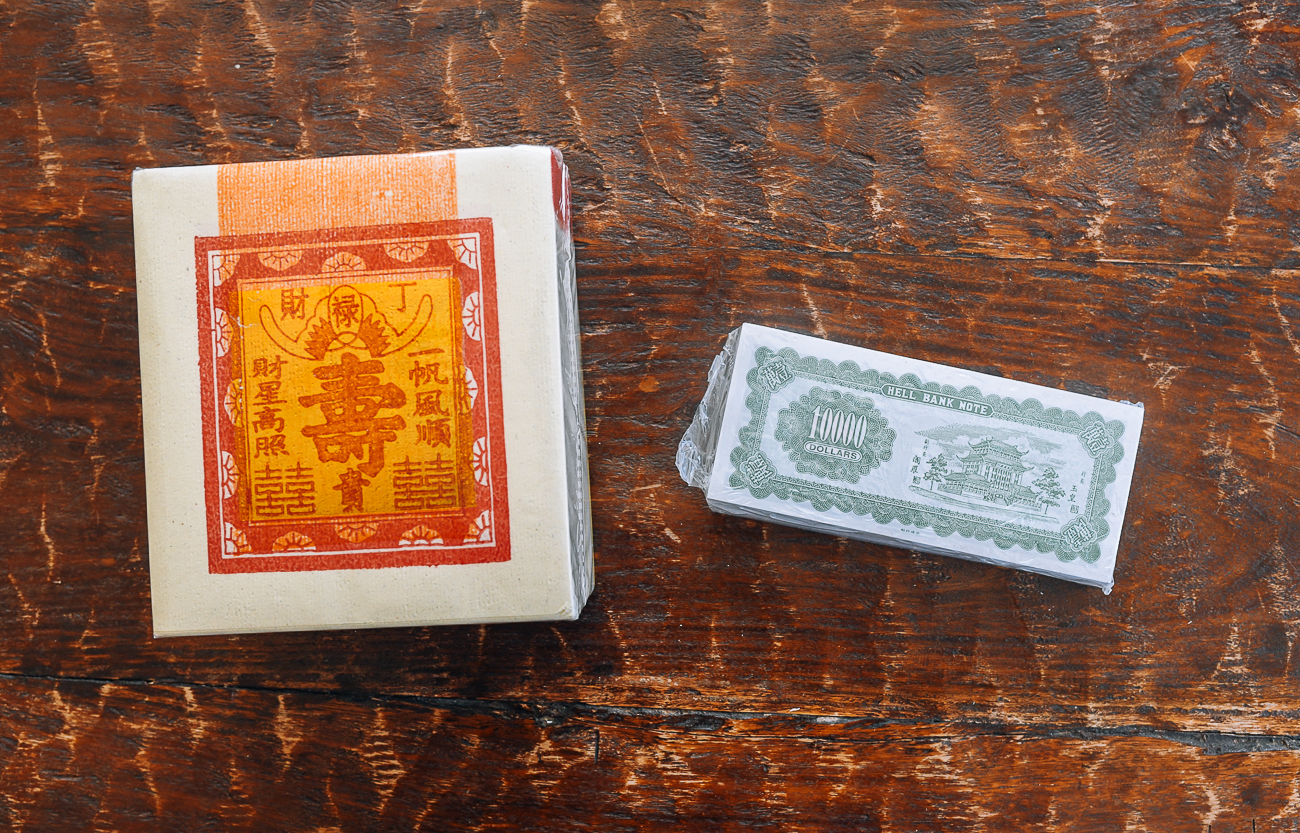
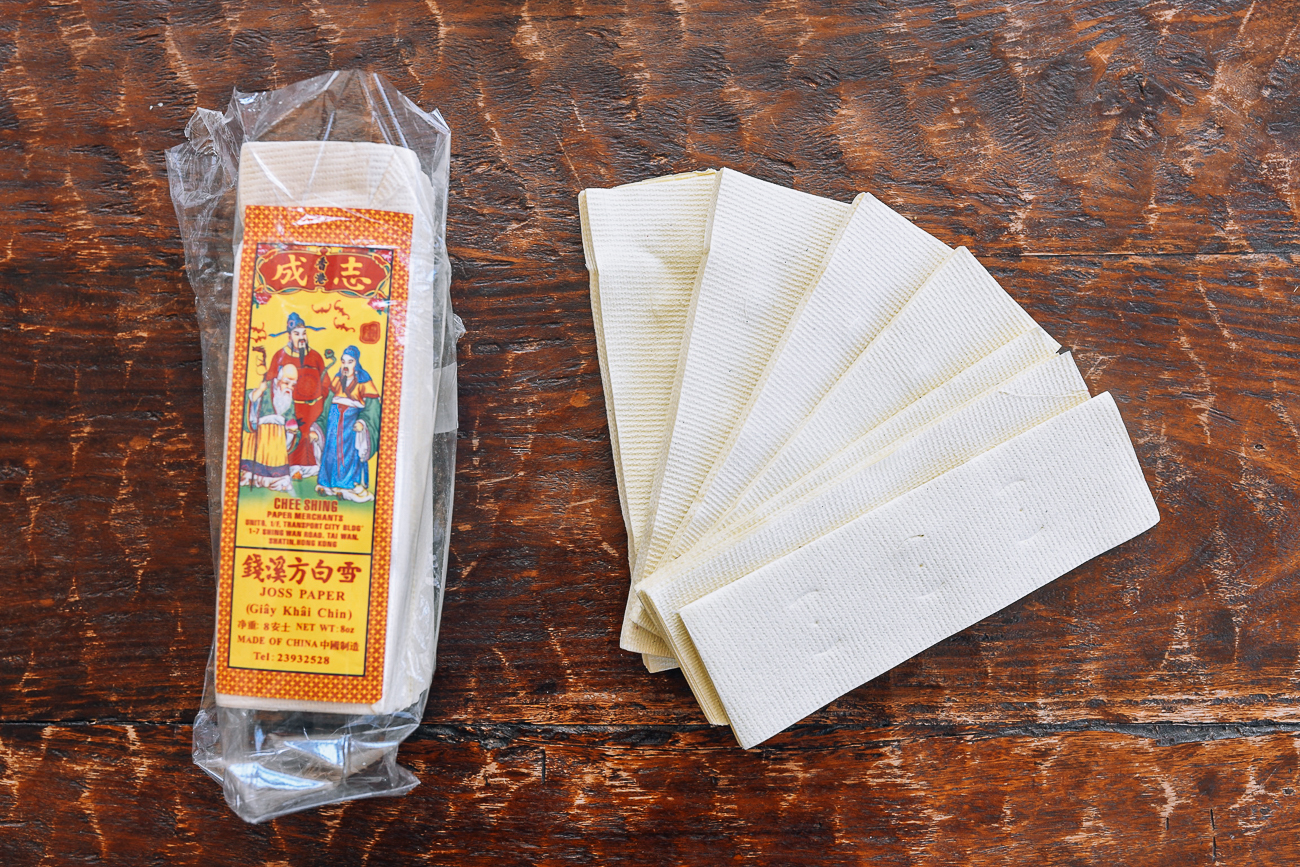
- Plain white joss papers – These are “tickets” or “tolls” for ancestors to come to the physical realm to enjoy the meal with family and, most importantly, return to the afterlife. So it’s important not to forget these!
What does “joss” mean?
If you grew up in a Chinese American family, you probably never thought much about the technical term for the Chinese incense and paper money that you burn during the Qingming Festival.
“Joss sticks” and “joss paper” are a key part of Qingming traditions, and “joss” refers to “a Chinese god worshiped in the form of an idol.” It can also refer to Chinese religious objects, like the papercrafts we make to burn and the incense we use to pray.
We’re not sure what the etymology of the word is, but it seems to be the accepted English term.
- A vessel to burn the joss papers in, and a fire stick – We use an old, lightweight fire pit. Back in the day, we used a giant popcorn tin. It’s often windy, so something deep and with high sides is ideal. Any sturdy long stick that you might find in the woods or on your lawn will do! You could also use a fireplace poker.
- A lighter with a long handle (You can bring matches, but often the wind is kicking up, and it’s nice to have a long lighter for the candles and joss papers!)
- Some spare paper or plastic bags to dispose of and/or carry out garbage
- Flower bouquets or live flowers to plant (if you have space). We usually bring spring bulbs like daffodils, hyacinths, and tulips. They last much longer, and they come back every year! If you have limited space, miniature daffodils, like tete-a-tete daffodils, can be found at many garden centers this time of year and are a great option! If you’re running out of planting space or you have too many spring bulbs popping up from previous years, opt to plant hardy annuals available in early spring, like pansies and violas. Choose bright colors, and avoid white flowers. If you’re worshiping at a temple or indoor location, cut flowers are fine, or you can forgo the flowers entirely.
- If you’re doing some light gardening, you’ll need a garden trowel, gardening gloves, garden shears, and a large jug of water to water newly planted flowers.
How to fold Joss papers
Usually, we fold these into gold bars in the couple of days before going to the cemetery. It’s a good family activity or something to do in front of the television. The idea behind this custom is that you’re giving your ancestors money for the afterlife.
See here for video tutorials, but here’s how we do it:
Loosely fold the square paper in half, then fold the bottom edge up (just to about 1/2 an inch) to form a tube. Fold up the bottom edge again to secure the tube shape.
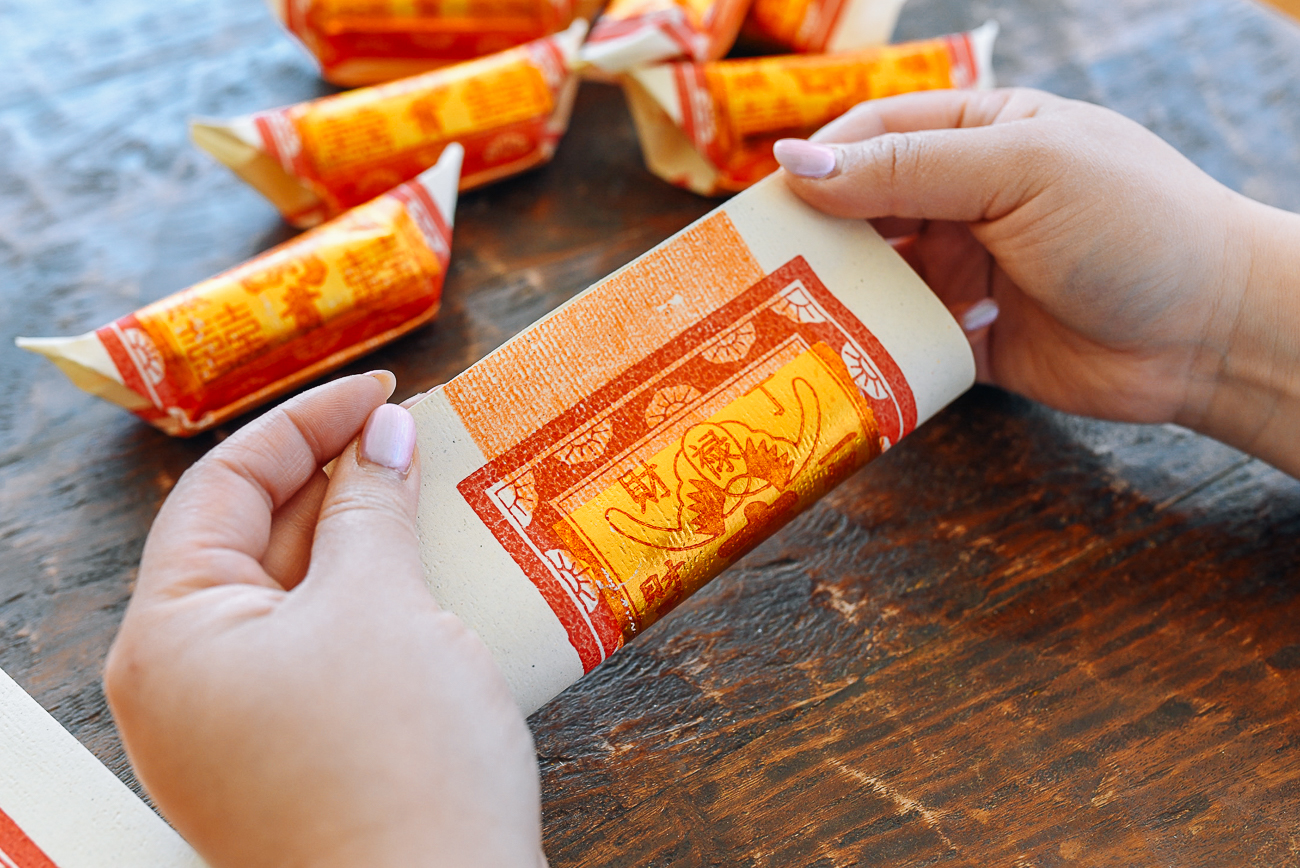
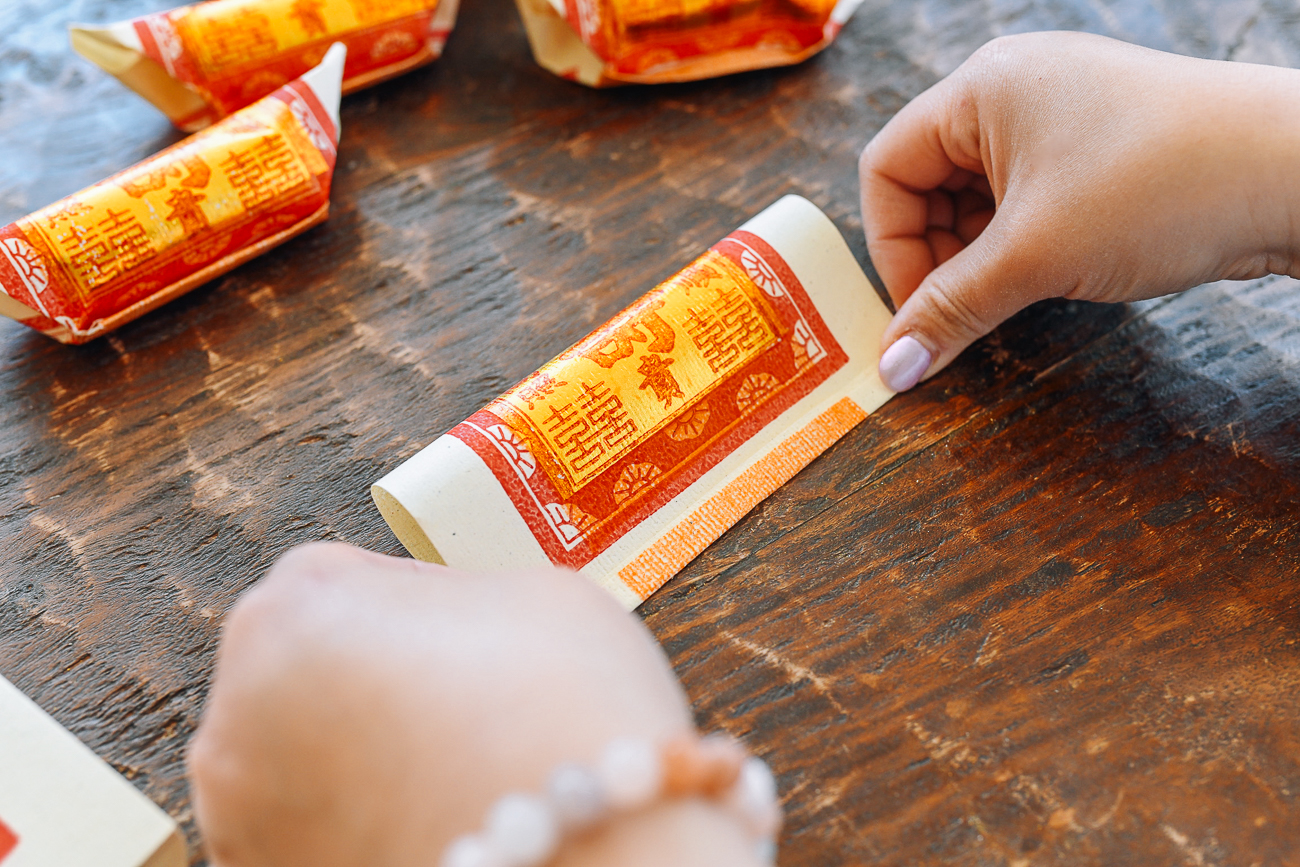
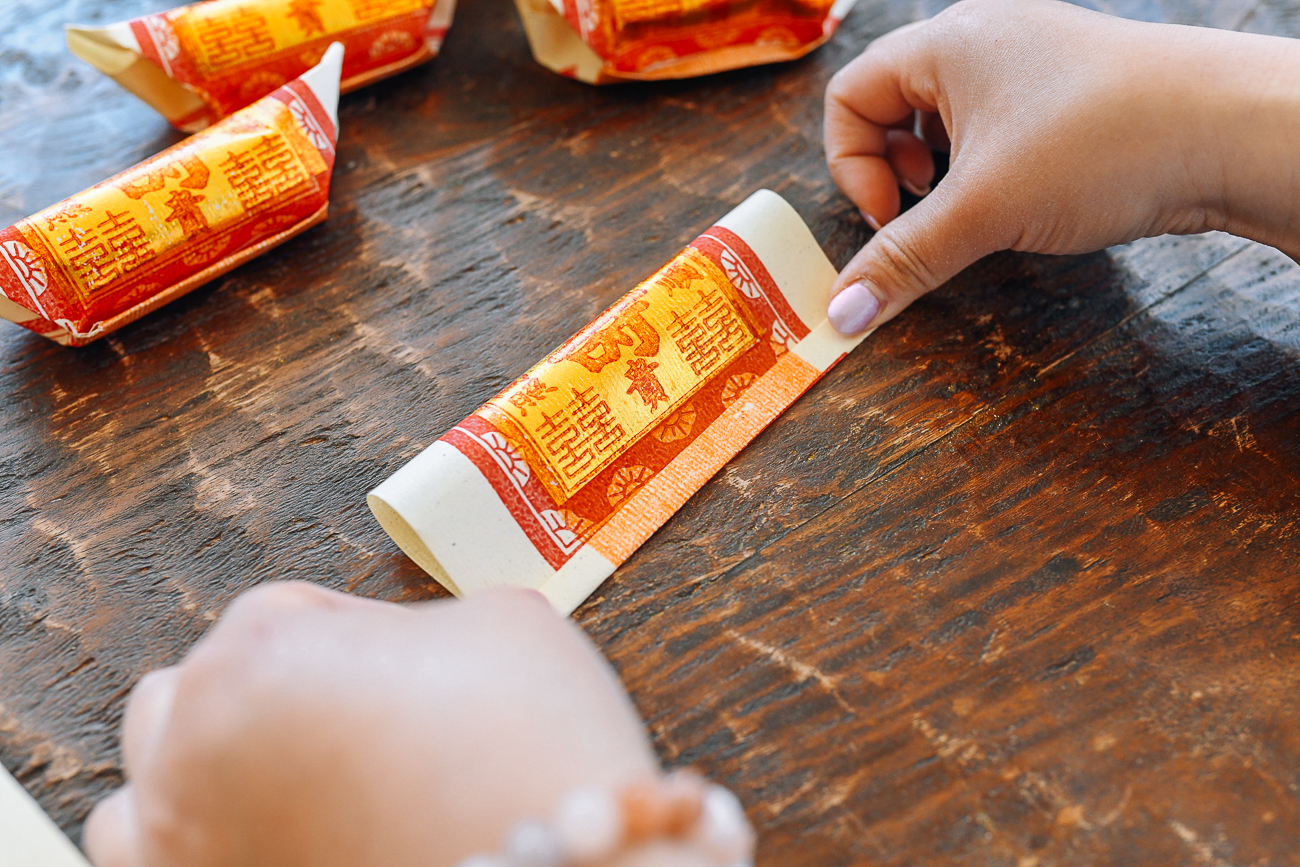
Then use your index fingers on each side to tuck the outer bottom edges in—to form a trapezoidal tube shape.
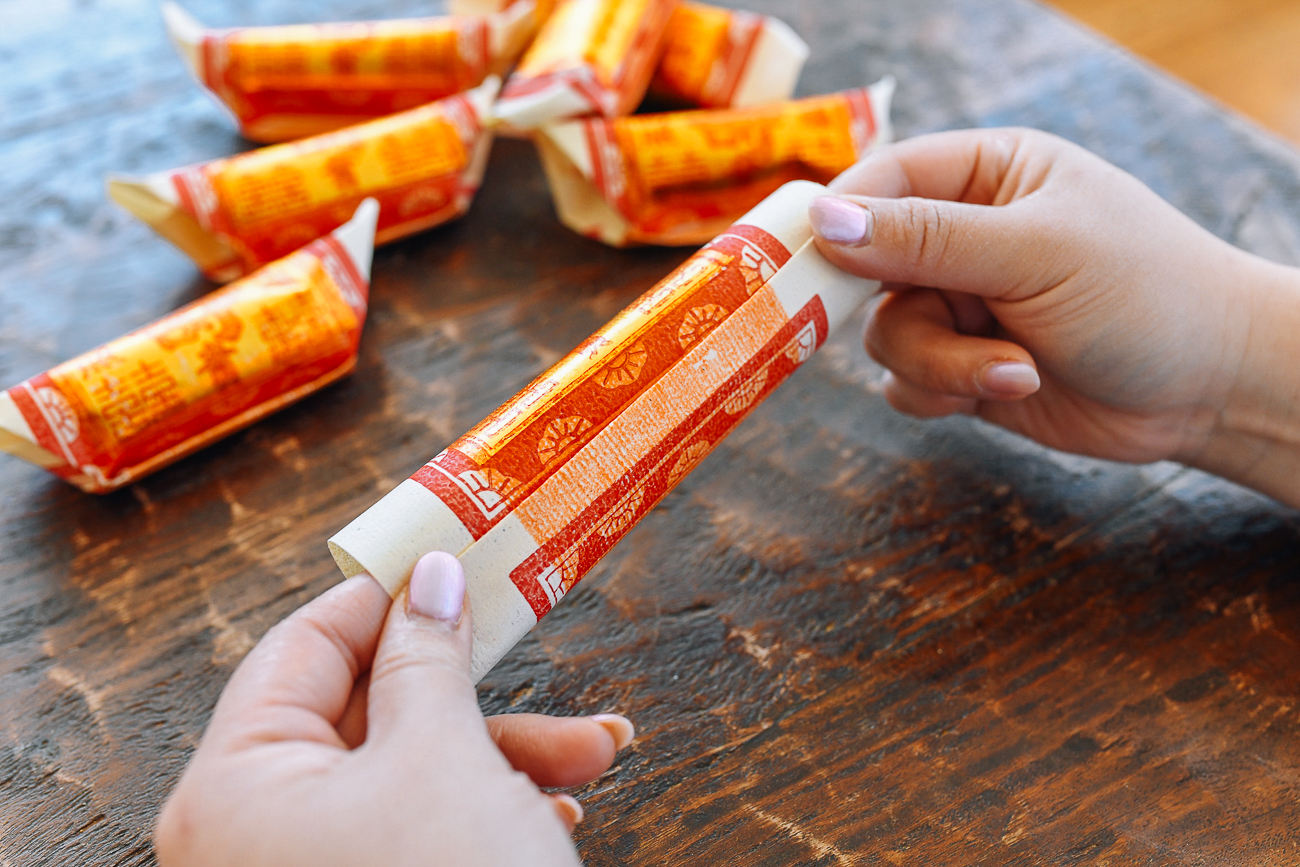
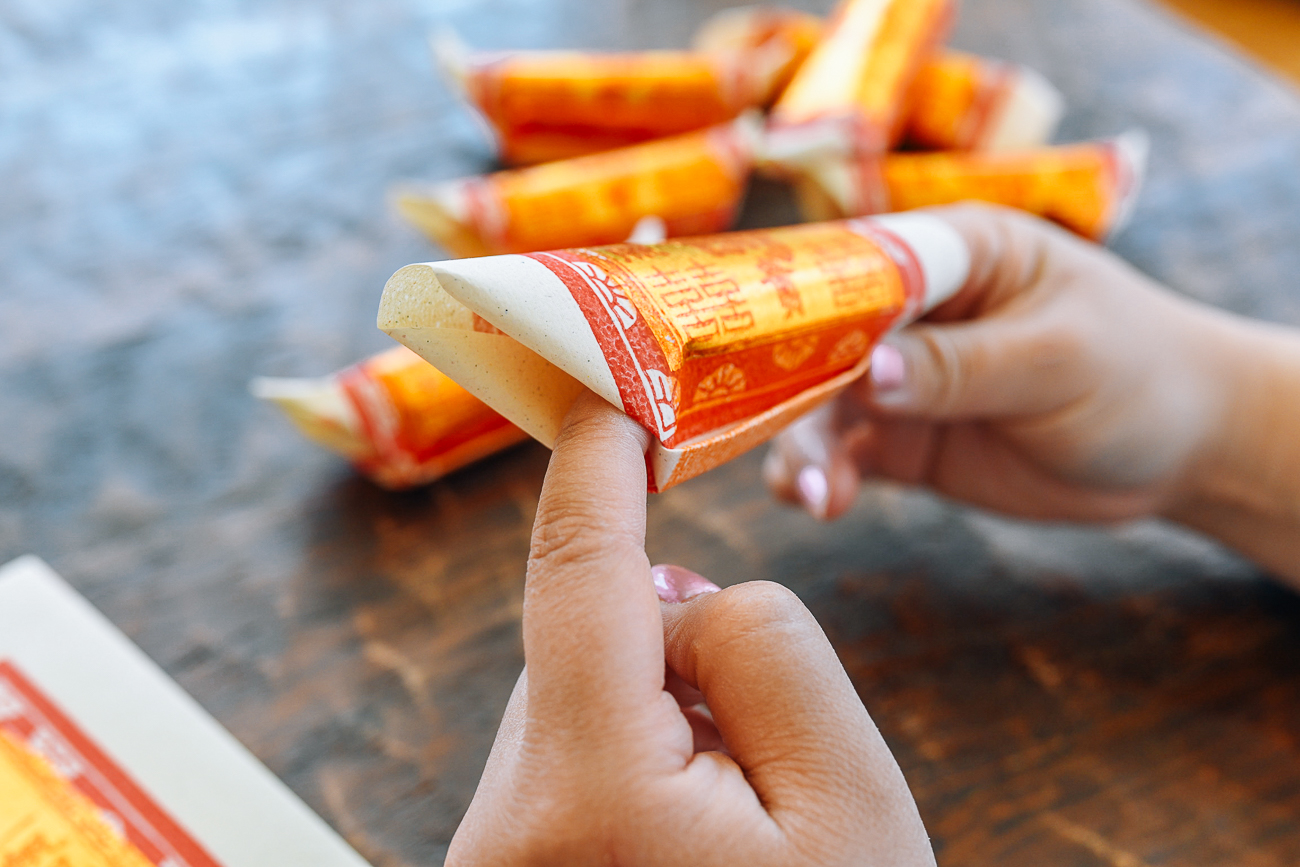
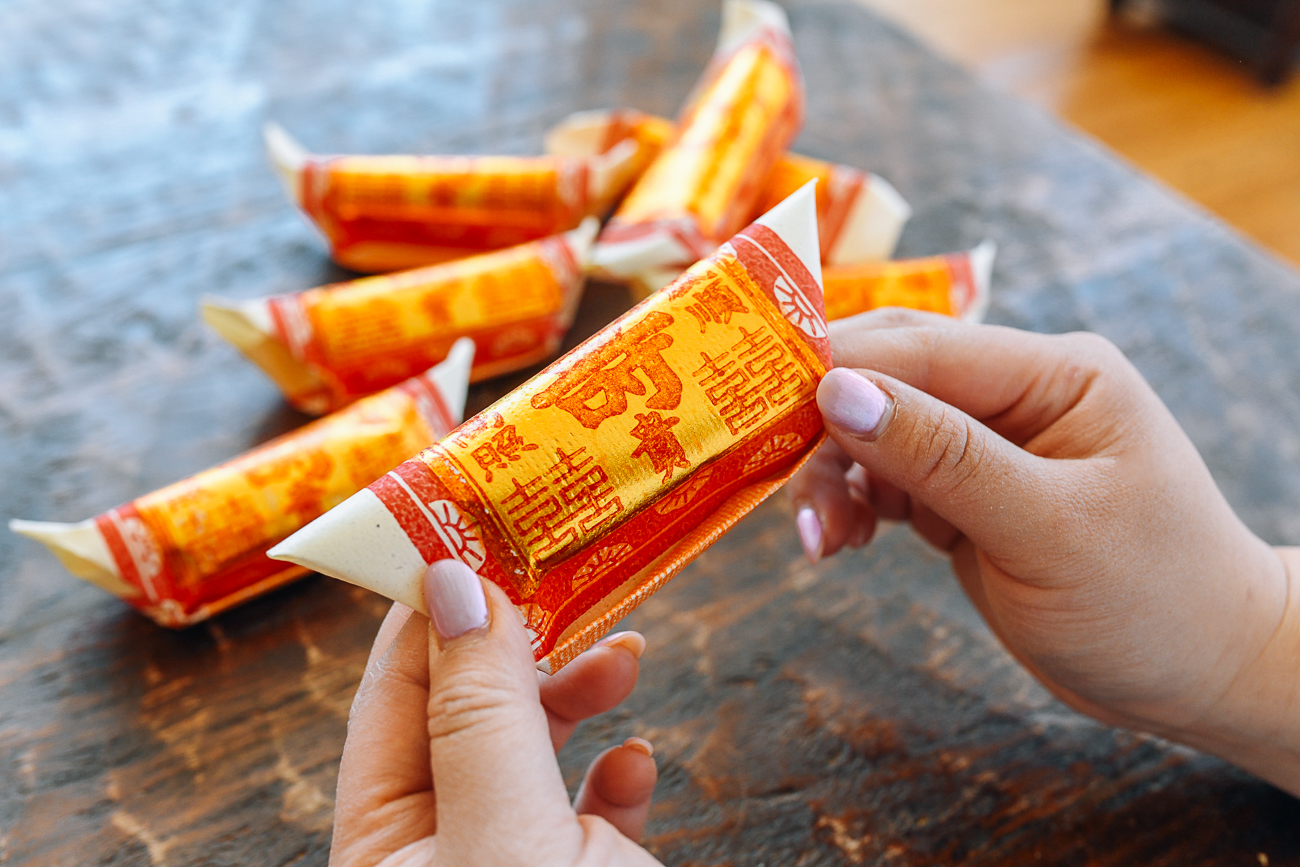
Finally, bend up the pointed ends, and there’s your gold bar!
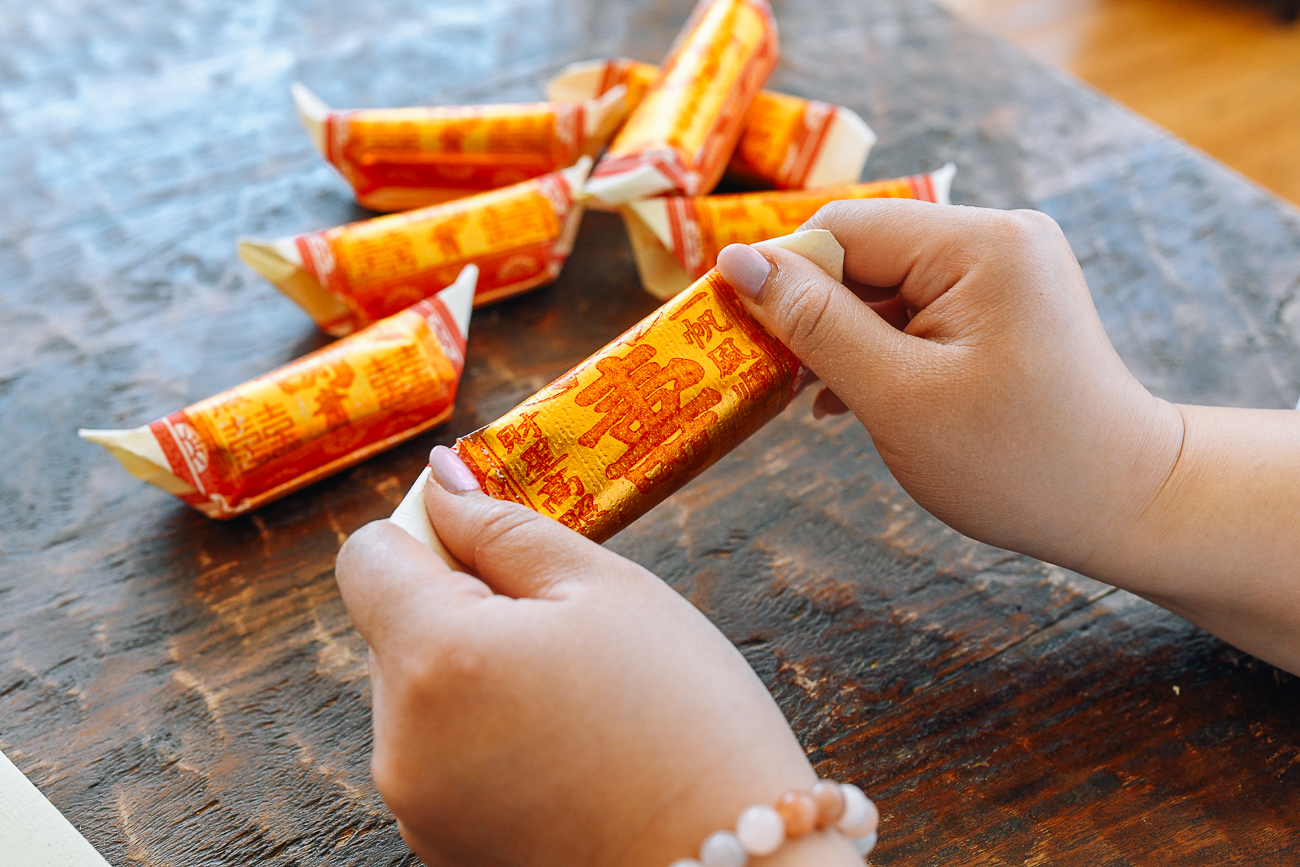
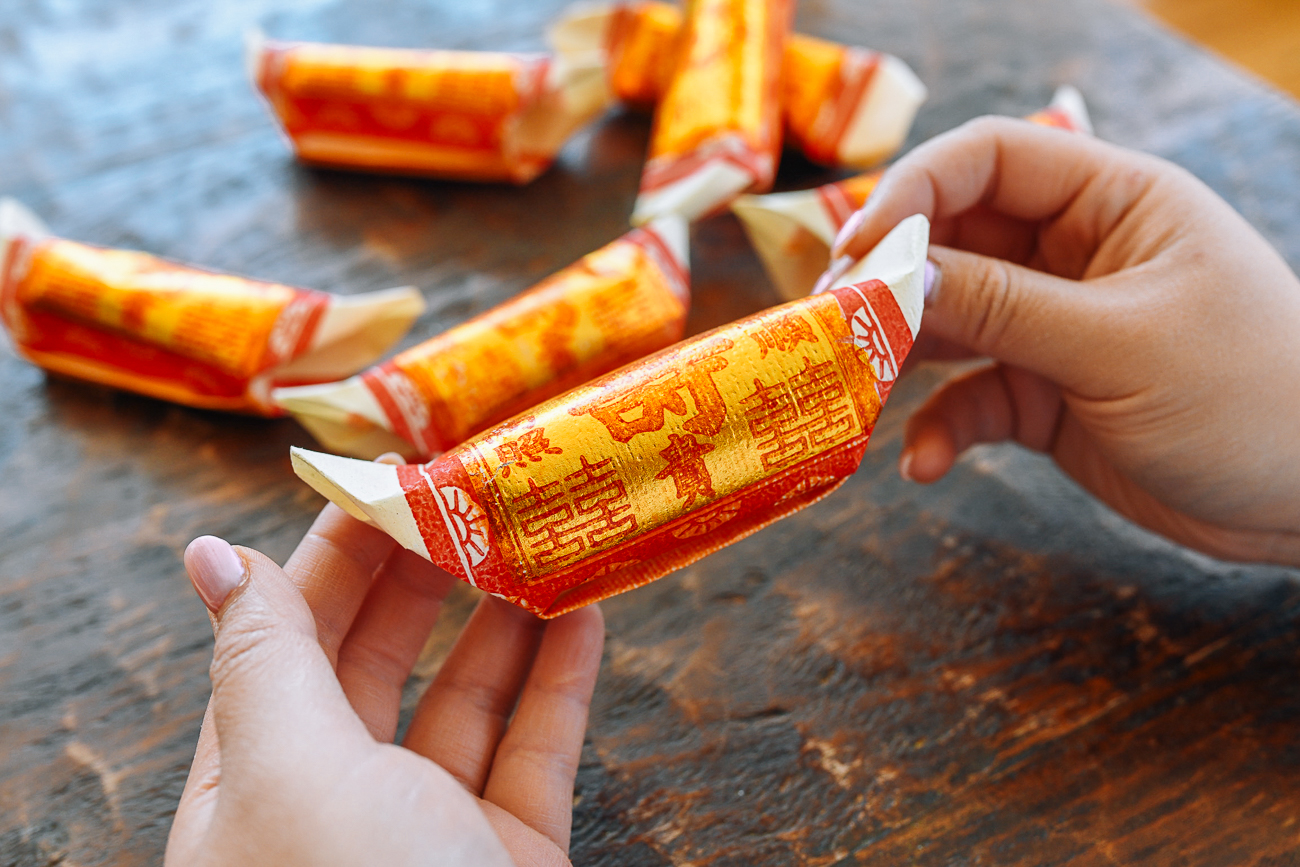
One of Bill’s father’s relatives once noted that there is significance in leaving the ends pointy or curling them up, but we’re not sure what it was—if anyone knows, please share down in the comments.
Food and Drink
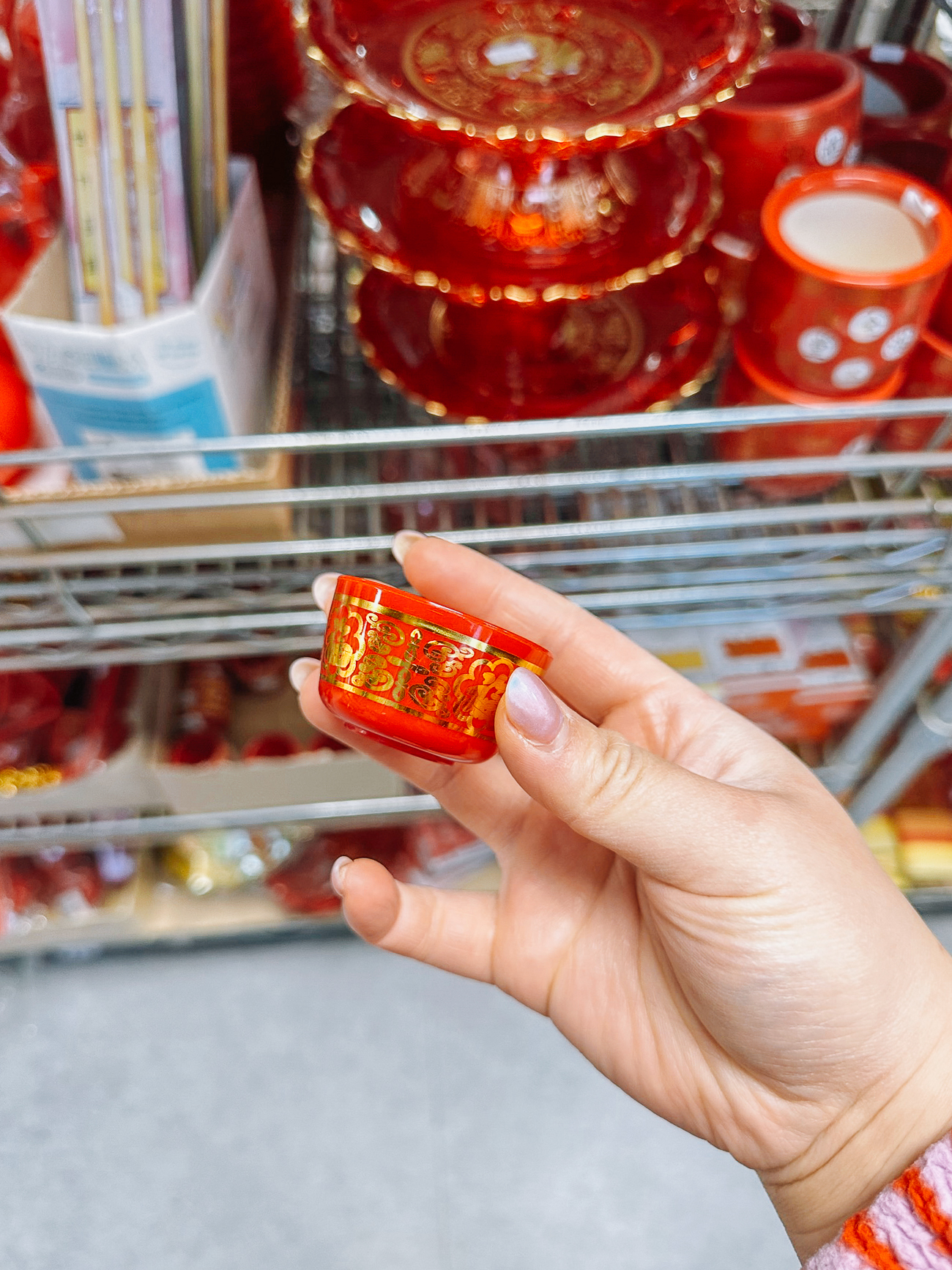
- Three miniature Chinese wine cups and wine of your choice. We opt for Shaoxing wine, as the wine is mostly symbolic. You don’t need to crack open your finest vintage here.
- Three small (miniature) Chinese tea cups and tea of your choice. We usually prepare the tea at home and bring it in a thermos or mason jar.
- Three sets of chopsticks (It’s nice to use something that feels a bit nicer than your standard bamboo chopsticks—ideally, three matching sets.)
- Three bowls of steamed rice
- A whole chicken (e.g., a White Cut Whole Poached Chicken / Bai Qie Ji is a good candidate), representing air.
- Pork belly (usually Cantonese Roast Pork Belly Siu Yuk or hong shao style; some families will also splurge on a whole roasted suckling pig with crispy skin). The pork represents earth or land.
- One or two pan-fried whole fish, representing the sea.
- Oranges and/or other in-season fruits
- Chinese bakery buns
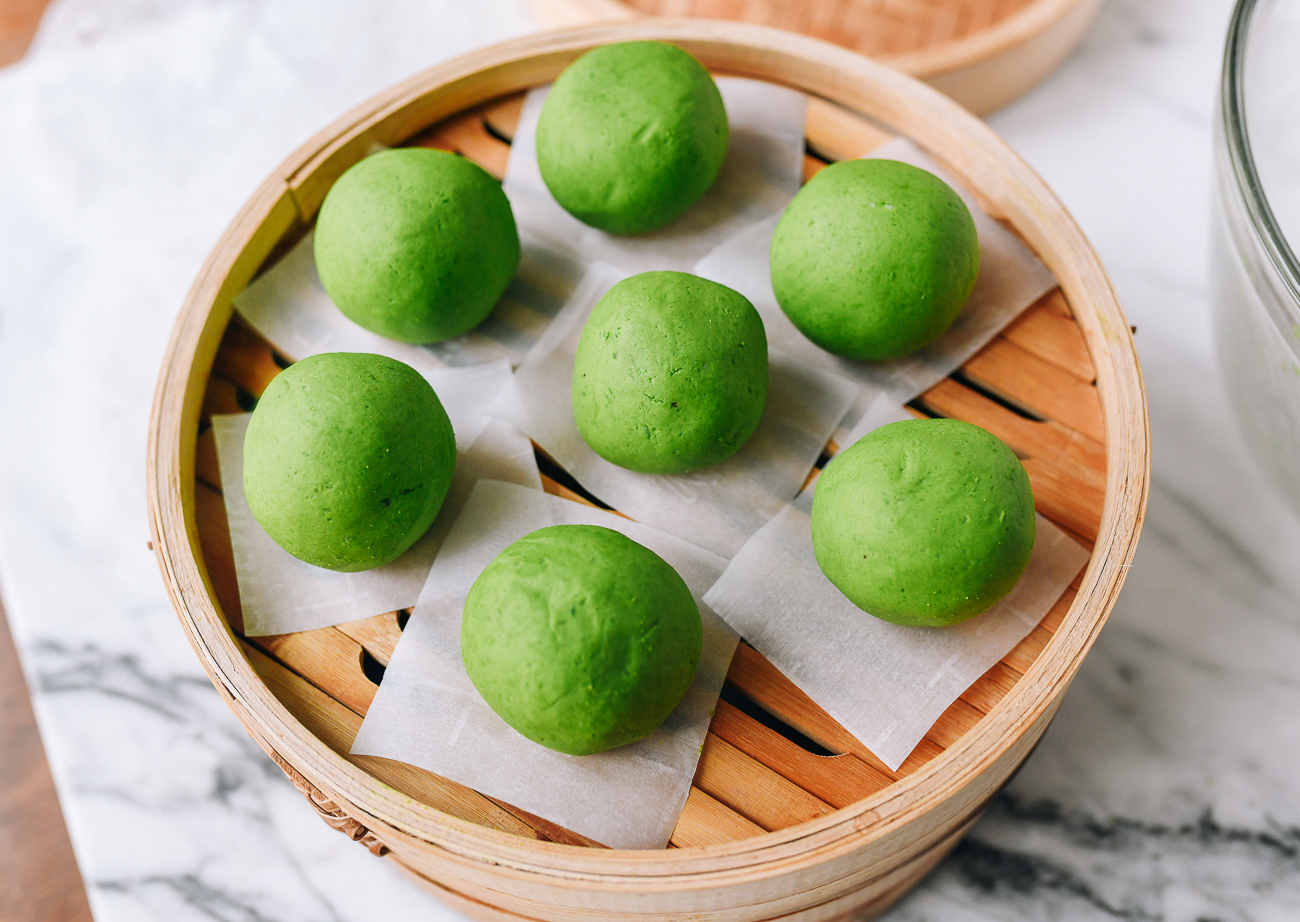
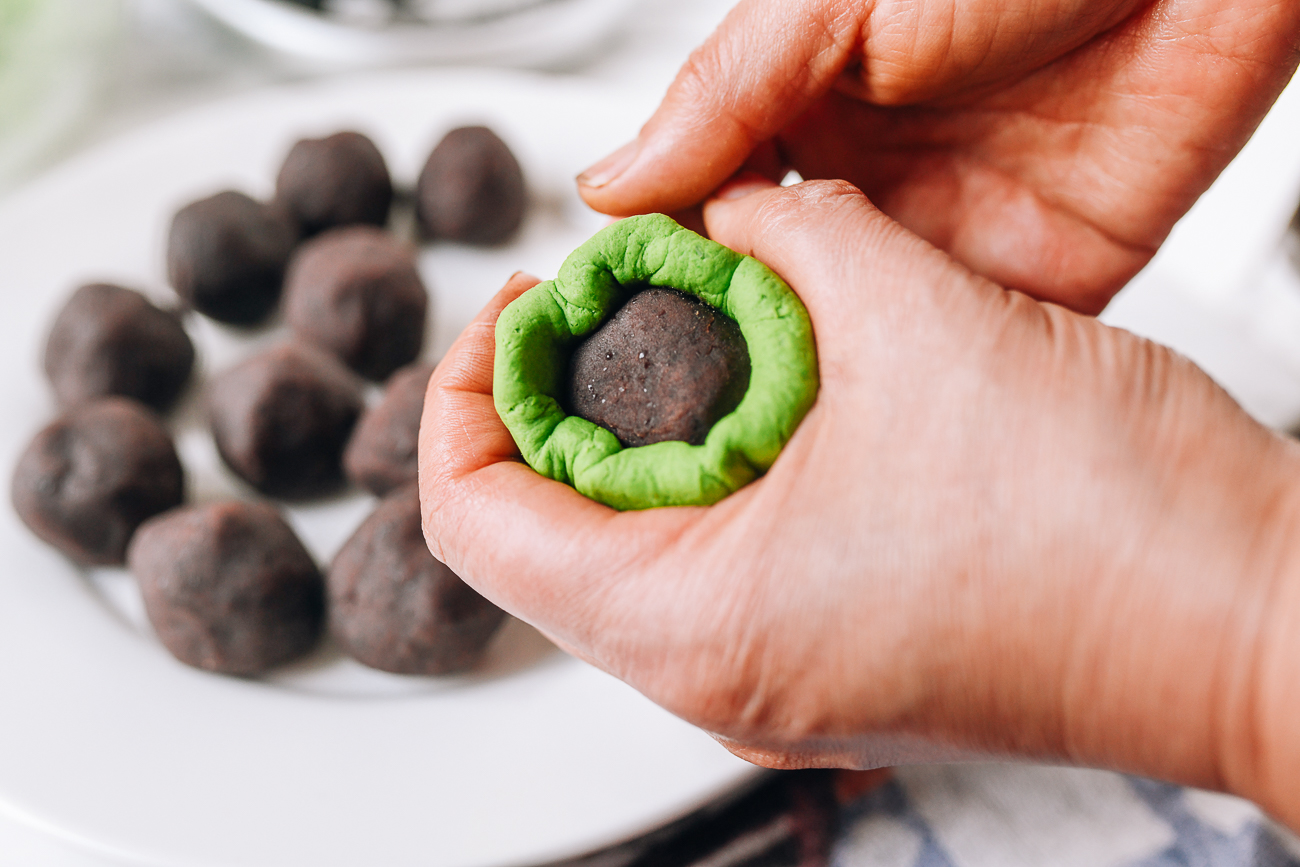
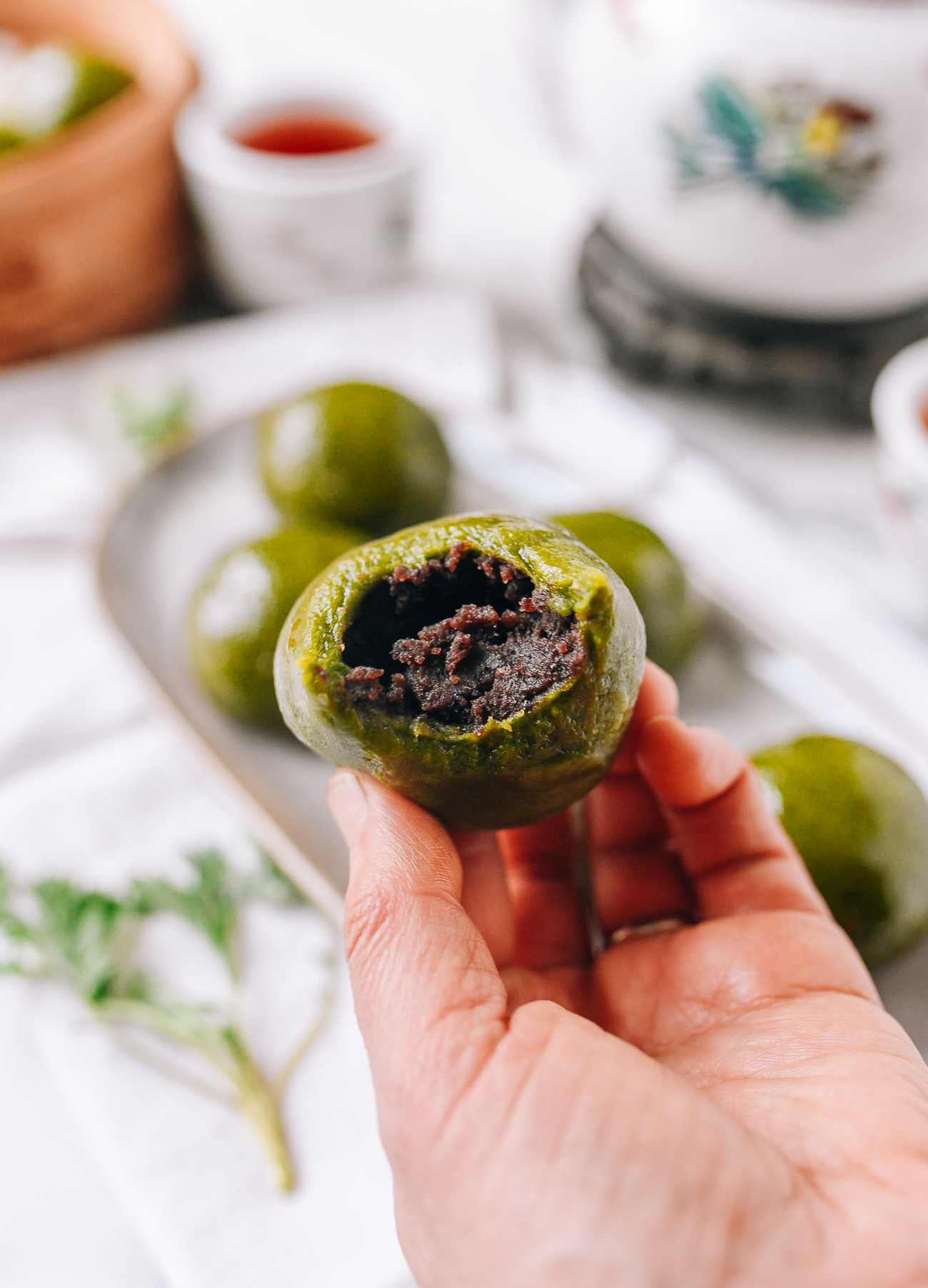
- In some regions, mugwort mochi, or Qingtuan, is a key Qingming food. Learn how to make homemade Qingtuan using our recipe!
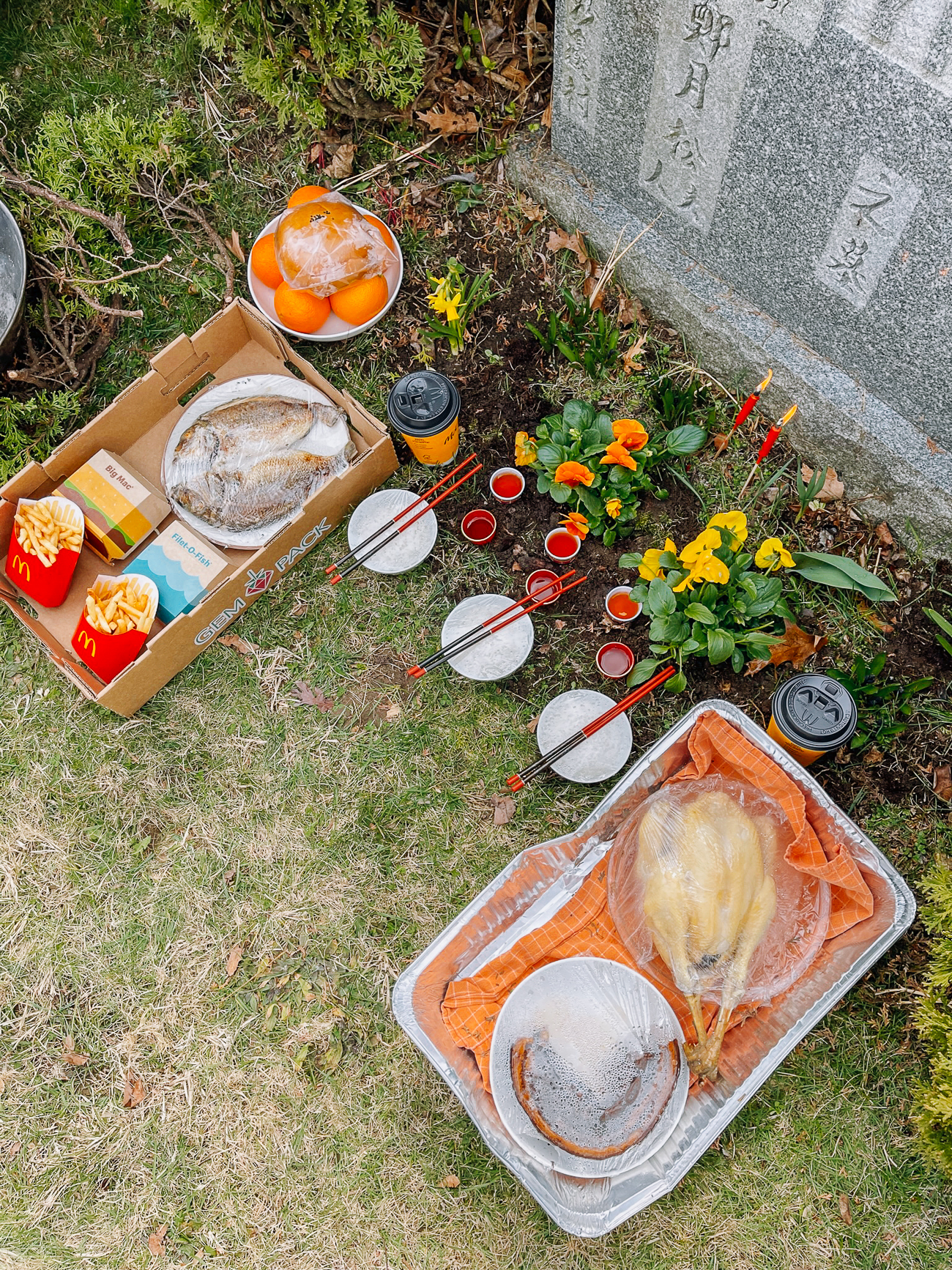
- Any other notable favorite foods of the ancestor you’re visiting. (See the McDonald’s Filet-O-Fish sandwich, Big Mac with fries, and McDonald’s coffee we picked up for our grandparents. Judy’s father loved red bean buns, so we always pick one up for him.) You can be creative and personalize the fruits, snack, dessert, and drink choices.
We are not sure why everything comes as a trio, though the number three is considered lucky in Chinese culture.
There may be some relationship to the fact that threes represent the three stages of life: birth, marriage, and death. Again, these are the customs and practices that were taught to us through the generations!
The exact preparation of the meat and seafood is not as important as having a symbolic trio of poultry, pork, and fish. On a practical note, white cut chicken is normally eaten at room temperature, and the fish and pork can also be enjoyed at room temp or easily reheated.
You’ll also notice that we wrap everything in plastic wrap (one of the very few times we still use it) to keep the food clean and free of ash from burning the joss papers! We also put everything onto half sheet pans (foil lasagna pans also work well) for transport and to keep things clean if the ground is damp.
Here are some links to key Qingming recipes:
A step-by-step guide to celebrating Qingming
Step 1: Upon arrival, “sweep the tomb” by removing weeds and debris. Trim back any overgrowth, and dust and clean the tombstone.
Step 2: If there are live plants/flowers to plant in front of the tombstone as offerings, do it now. We prefer live plants over cut flowers, as they beautify the area for years to come, and don’t leave plastic wrappings behind. Don’t forget to water the flowers after planting them!
Step 3: Lay a small stack of plain white joss papers on the tombstone with a rock on top to keep them in place so they don’t fly away. Once again, these symbolize the tickets to/from the afterlife. They’re also an indication that families have visited the tomb for Qingming.
Step 4: Put out all the food and offerings, and arrange them neatly and formally. The order is important: place the three candles in a horizontal line directly in front of the tombstone, leaving space for the incense later. Place the three cups of tea in front of them, staggered with the line of three cups of wine in front of those. Then put out the three rice bowls with chopsticks, and then the food. Lay the chopsticks on top of or next to the rice bowls (never stuck upright).
Step 5: Light the 3 joss candles. If it’s windy, they may go out. You’ll have to relight them if this happens.
Step 6: With the incense kept in one large bunch for ease, light them and distribute three to each attendee.
Step 7: In the order of seniority, everyone takes turns standing in front of the grave. Bow three times to pay your respects. You can pause to share thoughts or prayers as well. Place the incense into either an incense holder or stick them directly into the soil in front of the joss candles. During this time, it is okay and encouraged to talk, chit chat, and share any thoughts or feelings that might come up.
Step 8: While Step 7 is happening, you can start burning the joss papers. It’s easiest if one person is in charge of stirring the fire to control it.
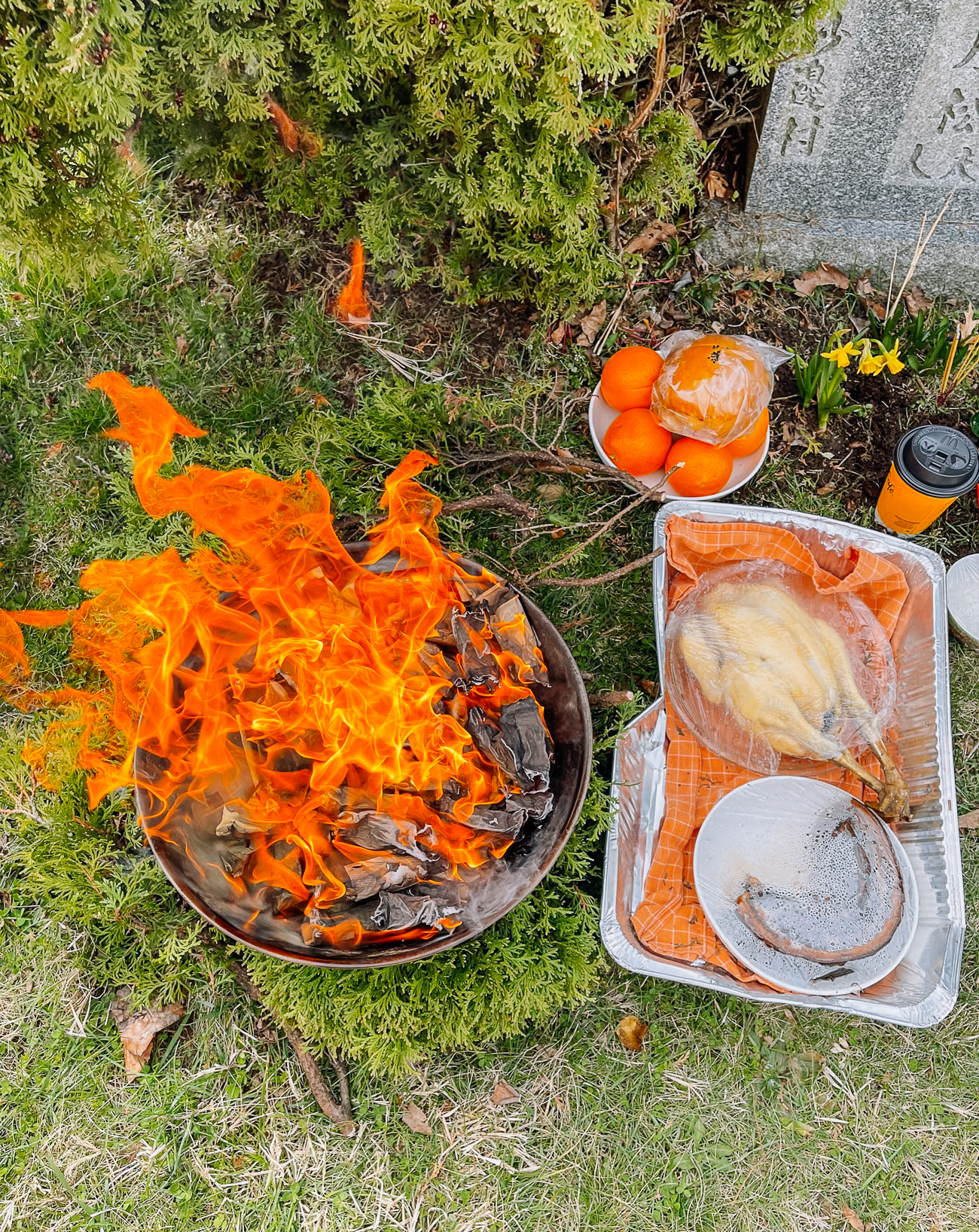
The ceremony is done when the candles and incense are done burning completely and all the joss papers have been burned.
Step 9: When the ceremony is complete, pour all the wine and tea in front of the tombstone in a line in front of the incense, one cup at a time.
Step 10: Remove all the food offerings and set aside to bring home. Dispose of the burned candles and incense sticks and safely dispose of ash, allowing it to cool down first. (Use water to be sure the flame is fully out.) Be careful to follow safe fire practices depending on your area climate and regulations. **If you live in a dry area, forego the burning portion of the ceremony to avoid wildfires.**
When you’re ready to head out of the cemetery, the gravesite should be clean and tidy (after all, it is the “tomb sweeping” holiday), and the only remnants that will be left are the plain white joss papers (topped with a stone to keep them in place) on the tombstone and the plants or flowers.
Note: Many of these steps assume an outdoor environment. However, if you’re in a temple, columbarium, or other indoor space, you can adapt these practices as needed.
For instance, you may want to bring a small folding table to present your offerings, skip the burning portion or do so outside if allowed, and bring an empty coffee can filled with sand to place your incense and joss candles in.
And lastly, make a stop at a store, restaurant–anywhere with a lot of people before going home. It’s believed to confuse any spirits that may want to follow you home directly.
For over a decade, we’ve stopped at a nearby McDonald’s afterwards for a bathroom break (and maybe some fries). It continues to be part of our Qingming tradition today!

If you’ve been meaning to celebrate the Qingming Festival, we hope you found this guide helpful! If you have any questions, leave a comment below. We’ll do our best to answer your questions. Or if you want to share your family’s customs, we would love to hear them!