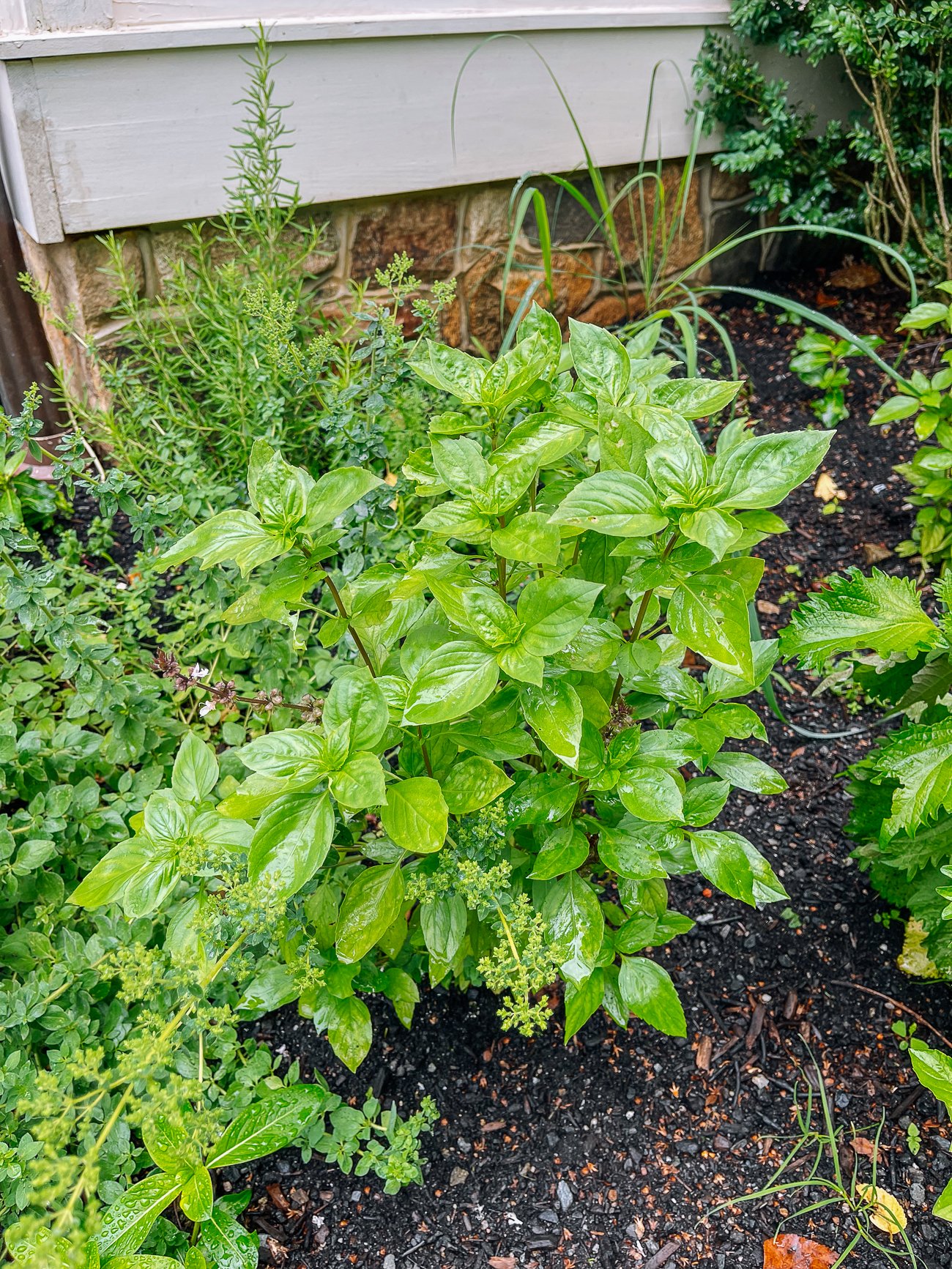
Today, let’s talk about one of my favorite ingredients: Thai Basil. We’ll learn how to grow Thai basil in your garden, different varieties, and the many recipes we love using it in!
Since Thai basil doesn’t take up much space, you can grow it easily in containers as well as in the ground, making it a great herb to grow on a bright windowsill, patio, or front porch. It’s a summer crop that loves heat, which we have in spades right now.

PAST POSTS!
We’re posting a new ‘how to grow’ article every month of the growing season, guided by Christina Chan at Choy Division, a regenerative Asian produce farm in Chester, NY. Christina has shared her best tips with us, which we are passing along to you!
If you’re new to this series but interested in learning more, check out our past posts on how to grow:
- Bok choy
- Napa cabbage
- Chinese eggplant
- Chilies
- Chinese garlic chives
- Daikon radish
- Garlic
- As well as our full Garden/Farm section of the blog, where we talk about raising backyard chickens and ducks for eggs, share farm updates, and more!
Thai Basil Varieties
While Italian basil is the most well-known basil variety here in the U.S., there are many types, including lemon basil, purple basil, tulsi, and more.
There are also multiple varieties that could be described as “Thai basil.” Today, we’re focusing on Thai sweet basil, as well as Thai holy basil.
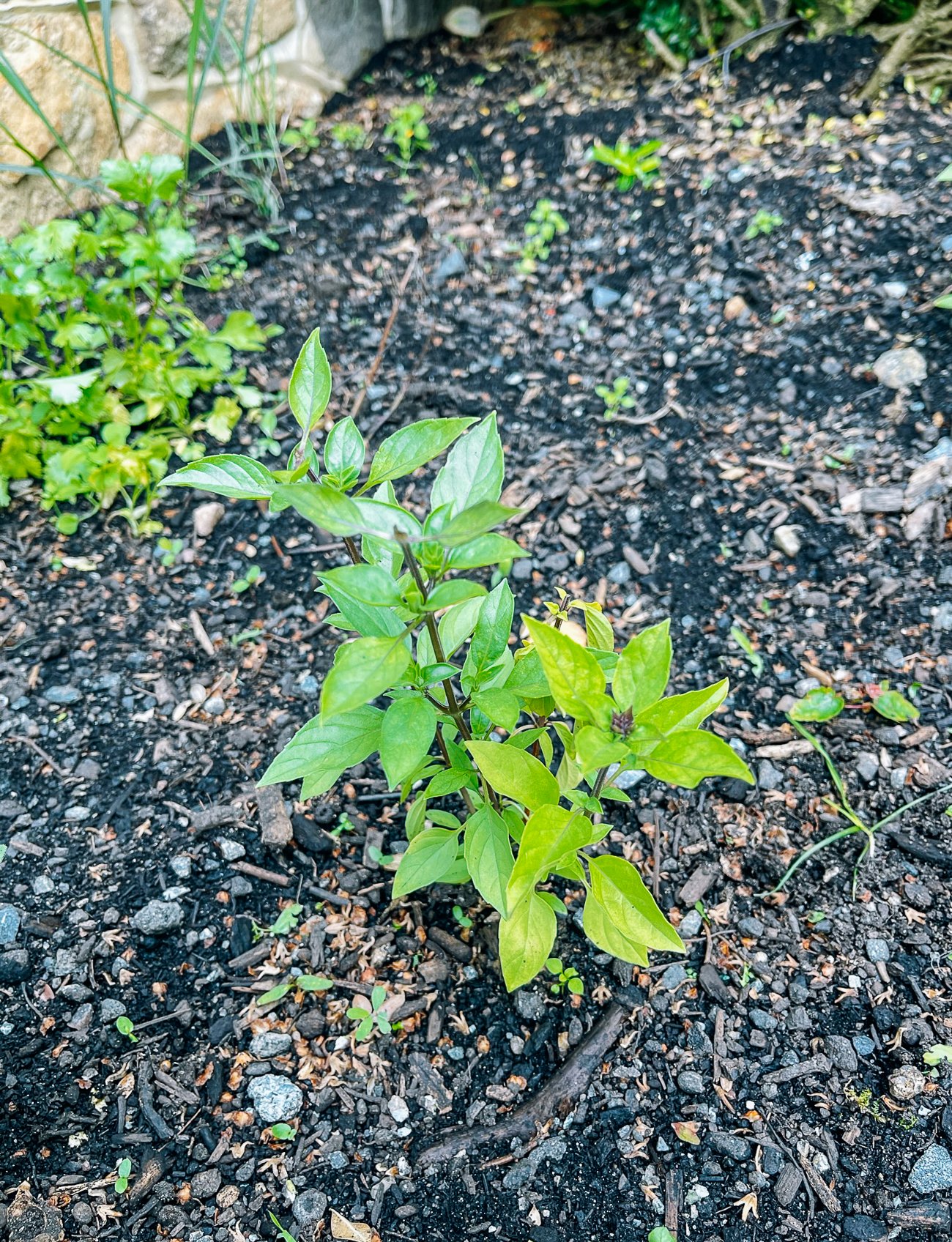
Thai sweet basil (Ocimum basilicum) and Thai holy basil (Ocimum tenuiflorum) are two different species. Thai sweet basil is in the same species as Italian, and Thai holy is same as tulsi.
The thai sweet basil is most commonly used in restaurants here in the U.S., while holy basil is harder to come by. It is rarely available in Asian markets, and generally, if you want to cook with it in key dishes, such as pad kra pao (stir-fried pork with holy basil), you’ll need to grow it yourself!
Holy basil has an even more pronounced licorice/anise flavor that some say is also spicy and reminiscent of cloves. You can tell holy basil apart from regular Thai sweet basil in that the leaves have a more obvious serrated edge, with a slightly different scent.
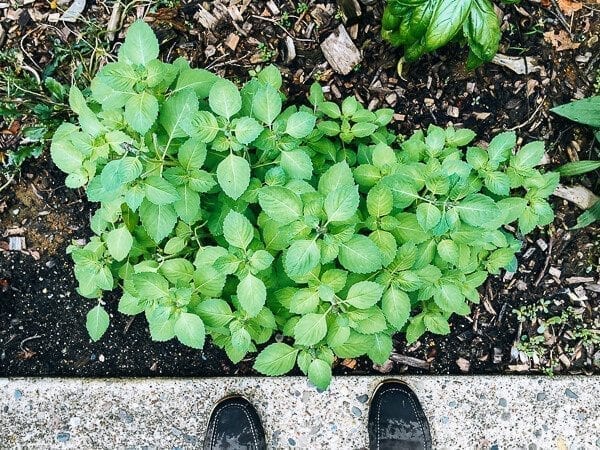
- Thai Sweet Basil: Below are some of Christina’s preferred Thai sweet basil varieties:
- Siam Queen: Available from Kitazawa Seed Co., this award-winning heirloom basil has strong licorice/anise notes and holds up to higher cooking temps.
- Sweet Large Leaf: Also from Kitazawa, this basil also has a nice licorice flavor.
- Cardinal: From Johnny’s Selected Seeds, this is Christina’s third choice, popular with many small market farmers. This variety has sweeter notes.
- Thai Holy Basil
- Holy Green Leaf Basil: Spicy and clove-like variety with bushy growing habit.
- Krapao Red: Available from True Love Seeds, this variety has dark red stems and purple flower stalks, with narrow leaves.
How to Grow Thai Basil
You may be able to find young Thai basil plants in your local garden center, but if you’re starting them from seed, start them indoors 4-6 weeks before the last frost.
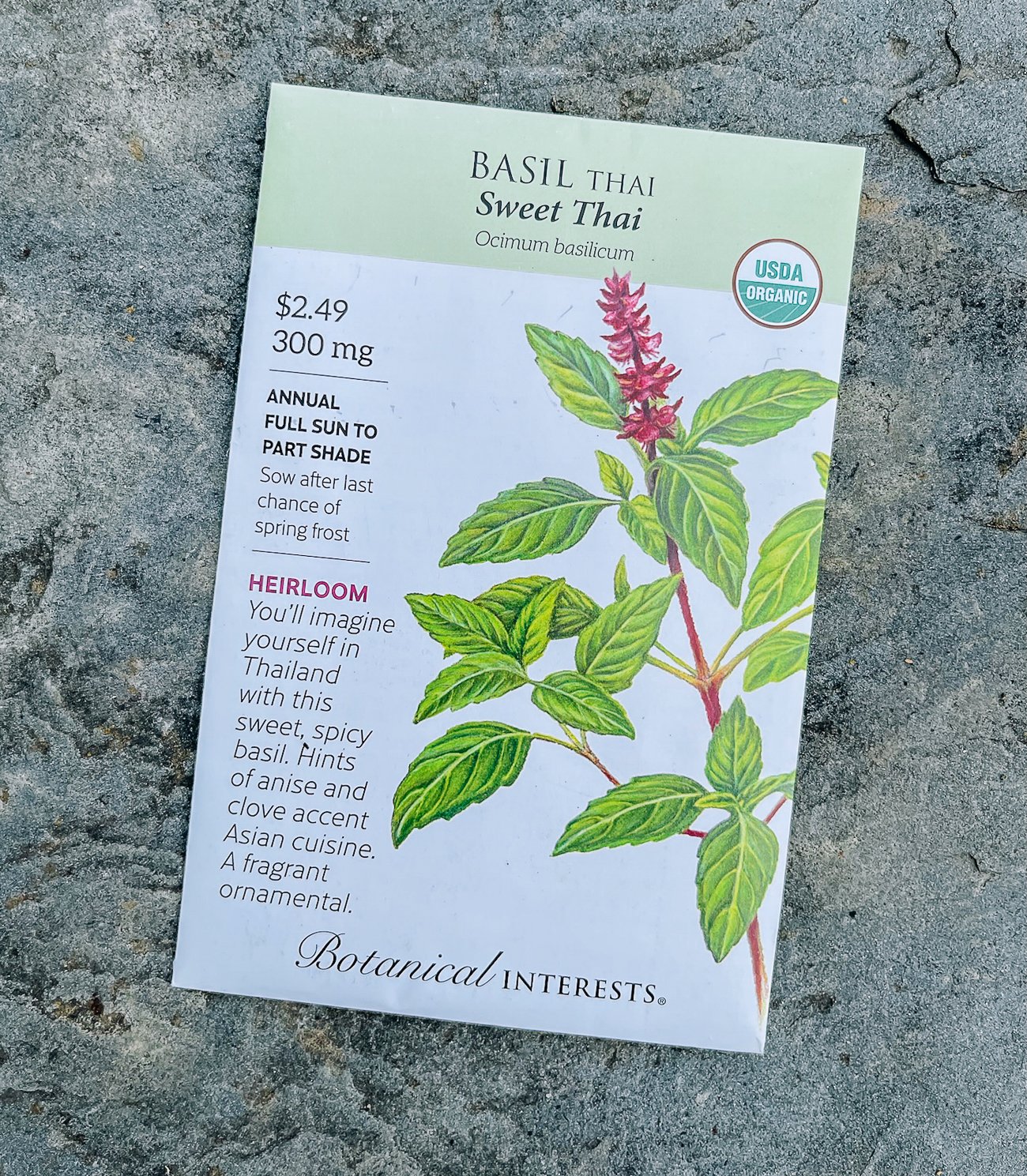
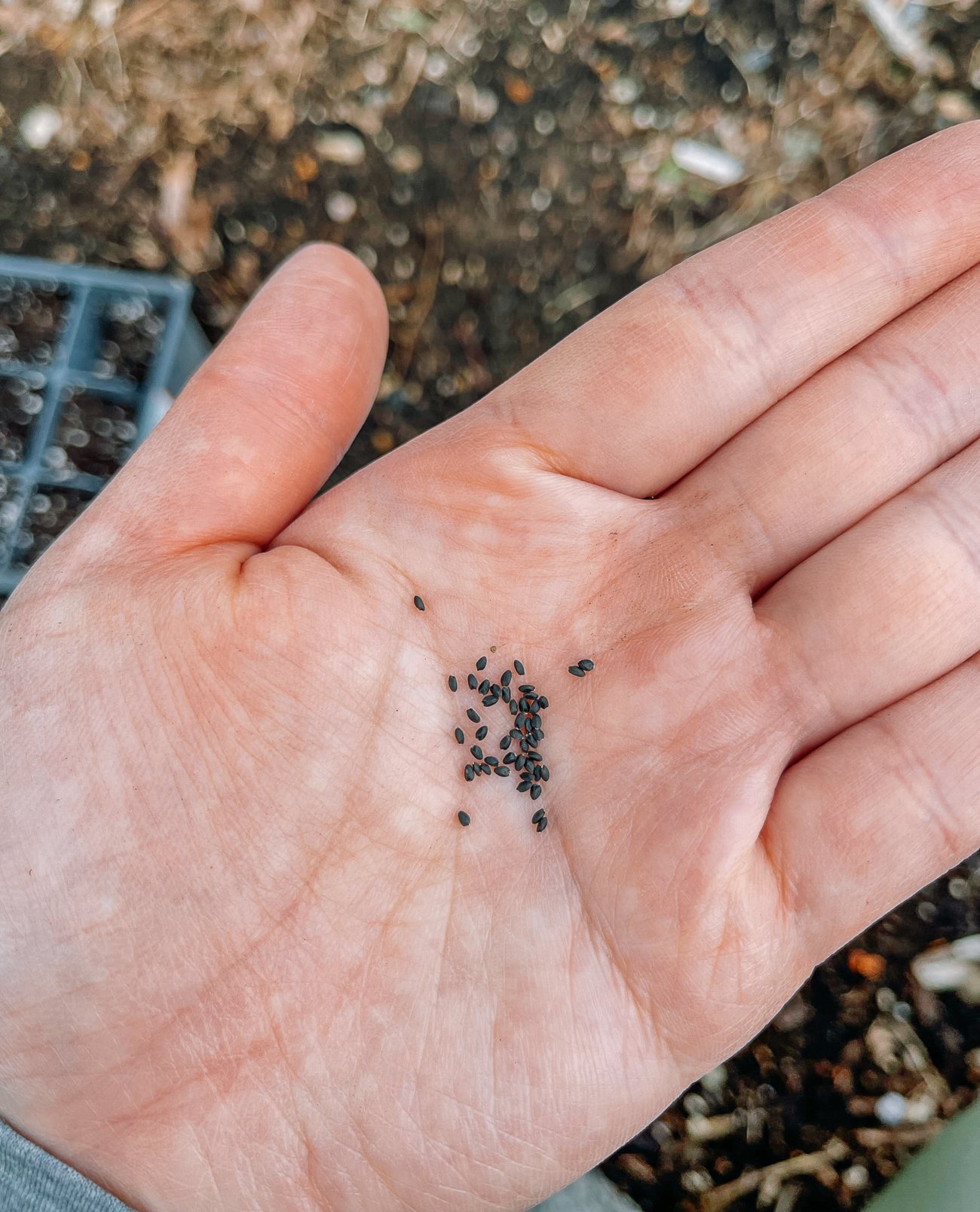
How to Start Seeds Indoors
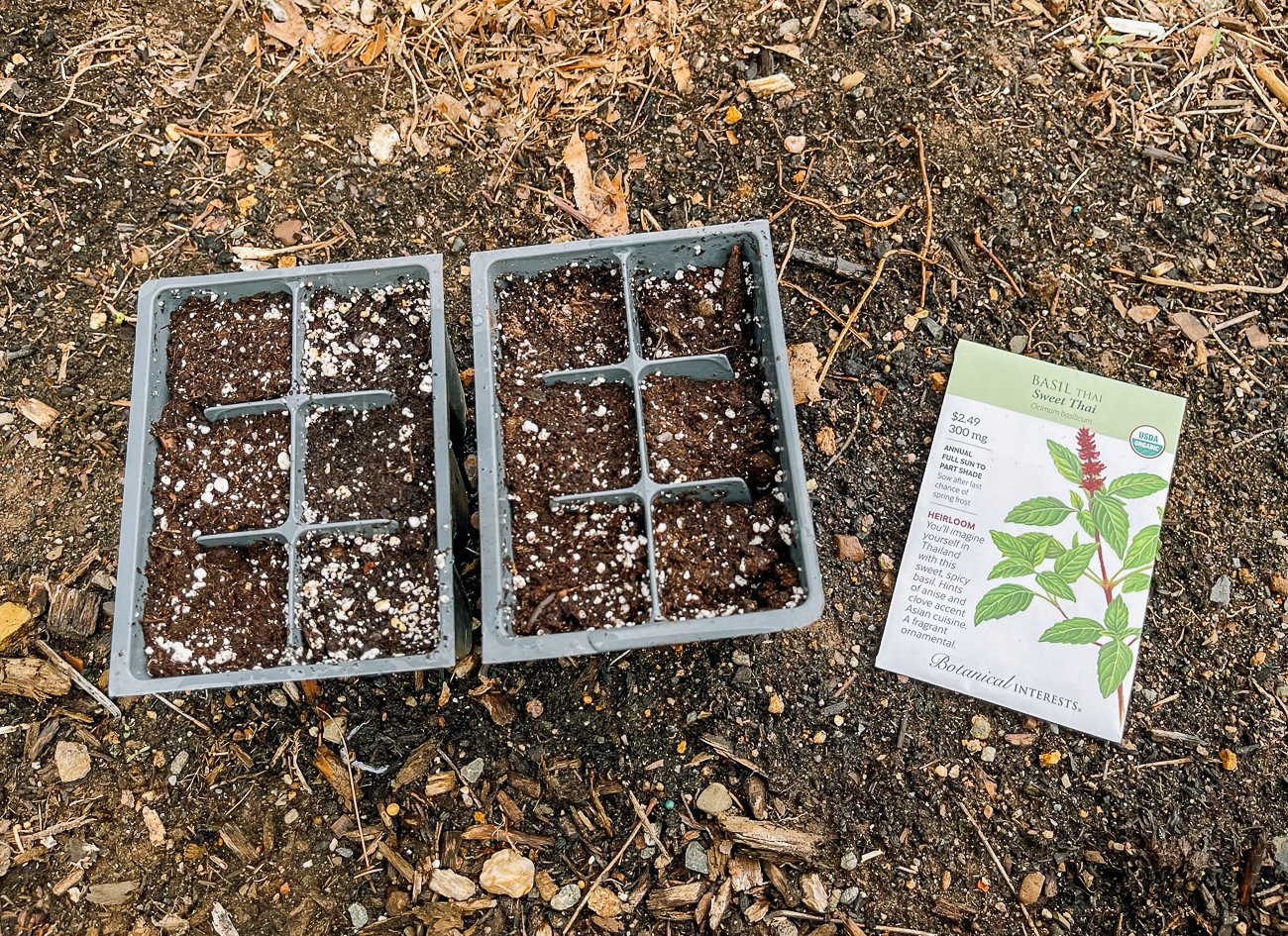
Here are Christina’s instructions for starting seeds:
- Grab your appropriately sized planting vessel with drainage holes.
- Fill to the top with a good quality potting mix or sterile seed starting mix. If not filled entirely, the container will cast shade onto the seedling and stunt growth.
- Use your finger or a pen and make an indent about ¼- to ½-inch deep (a good rule of thumb is to make a hole about 2X the diameter of the seed).
- Drop one seed per hole (some people drop 2 seeds and then thin down to 1 strong seedling, but this is optional).
- Lightly cover the seeds with additional soil, and level it out. This not only ensures the seed makes contact with the soil, it also prevents mounds and valleys that will cause water to pool.
- Water the seedlings. If the seeds are very small, you can bottom-water them by placing the seed tray into a tray of water, so the water can soak into the soil from below without disturbing the seeds.
- Label with the crop, variety, and date.
- Place in a sunny, warm location to germinate.
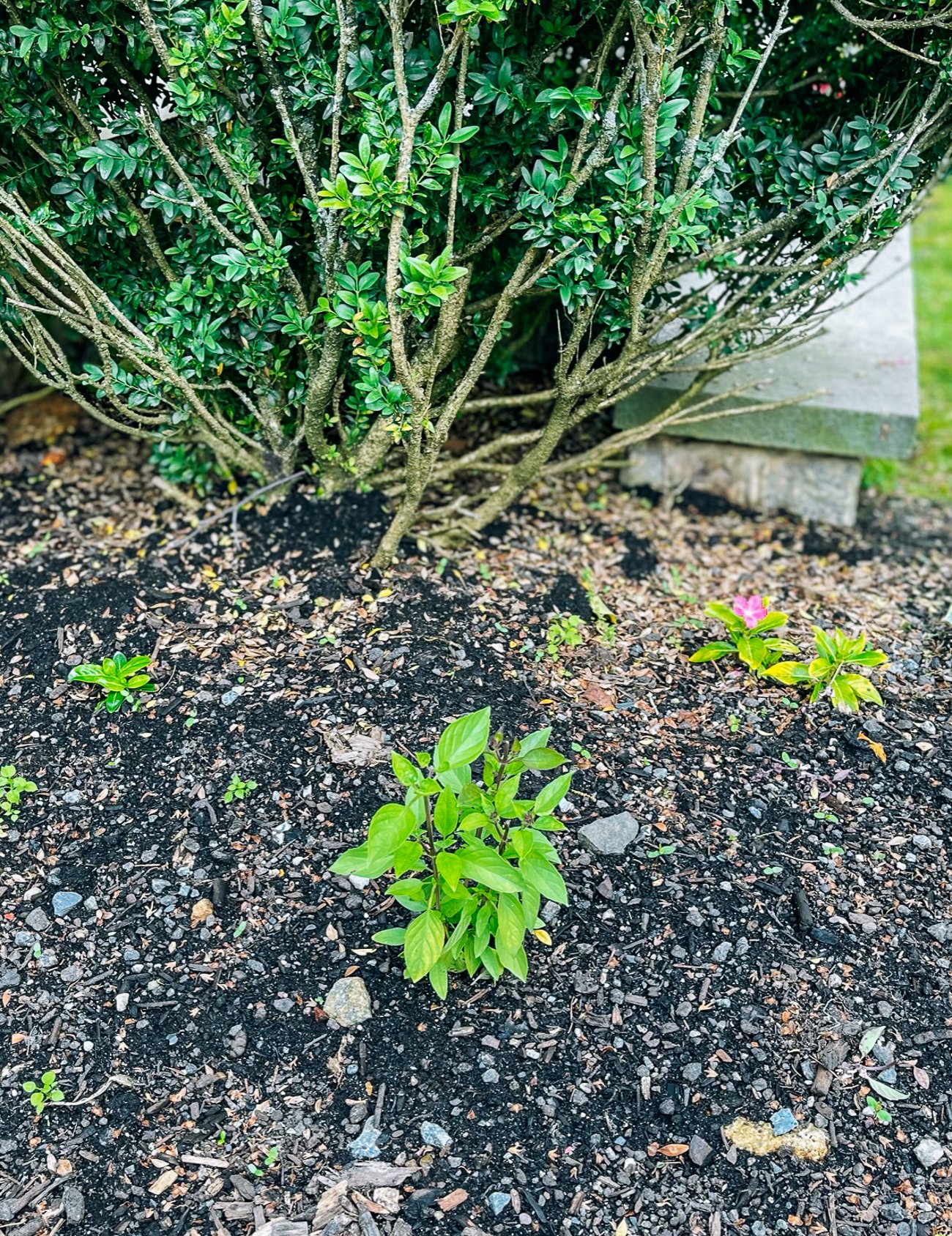
Once your Thai basil seedlings are a few inches tall and your last frost date has past, you can plant them outside—either in the ground or into a larger container. Choose a spot in full sun. Plants will grow leggy and weak if planted in shade.
Thai basil, like Italian basil, hates the cold, so be sure nighttime temperatures are consistently above 50°F/10°C before planting outside.
If you’re growing multiple plants in the ground, plant them about 10 inches (25cm) apart. They can be interplanted near tomatoes, eggplant, and other long season crops.
We’ve found that Thai basil plants last through the season, as long as we keep pinching off the tops and preventing them from flowering. Otherwise, you can succession sow seeds every few weeks to ensure you have a regular supply.
Once the weather has warmed, you can also direct sow seeds, and then thin plants to 6-10 inches (15-25cm) apart.

IDEAL GROWING CONDITIONS FOR Thai Basil
Thai basil enjoys hot weather, and can take some humidity, but very wet, humid weather can cause disease to spread. If you live in a humid climate, plant basil apart from other plants to allow for decent air flow.
Full sun.
Like most crops, Thai basil grows best in well-drained, fertile soils.
Keep soil relatively moist but not sodden. Avoid overwatering, or leaves will yellow.
About 6-10 inches (15-25cm) apart.
60-90 days
Pest & Disease Management
Thai basil doesn’t have many insect or mammalian pests, but it is susceptible to fungal disease, primarily due to humidity and excess moisture.
For a full run-down, check out this PDF Guide to Basil Diseases from Cornell University.
In our area, the most commonly seen issue with basil is downy mildew, which appears as slight fuzz or grey layer on top or underside of leaves.
Your greatest defenses against are the following:
- Harvest basil with clean, sharp shears to prevent disease spread
- Increase space between plants to provide good air circulation around the stems and leaves.
- Limit splashing water onto plants, and if you do water them, do so at the base of the plant to avoid moistening the leaves.
- Allow plants to dry out a bit between waterings (the soil shouldn’t be dry, but it also shouldn’t be constantly wet).
Harvesting Tips
Christina advises that you can start harvesting basil even from a young plant, as early stage growth is particularly pungent and flavorful.
However, if you’re looking to extend the harvest all season, wait until the plants are about 10 inches (25cm) tall, and have developed several branching stems.
To harvest, cut stems or pinch off sections of leaves, taking it down to a growth node (where new leaves are beginning to appear) to encourage branching. This harvesting is also a pruning process, and will create a bushier plant. It will also prevent the plant from flowering and going to seed too quickly.
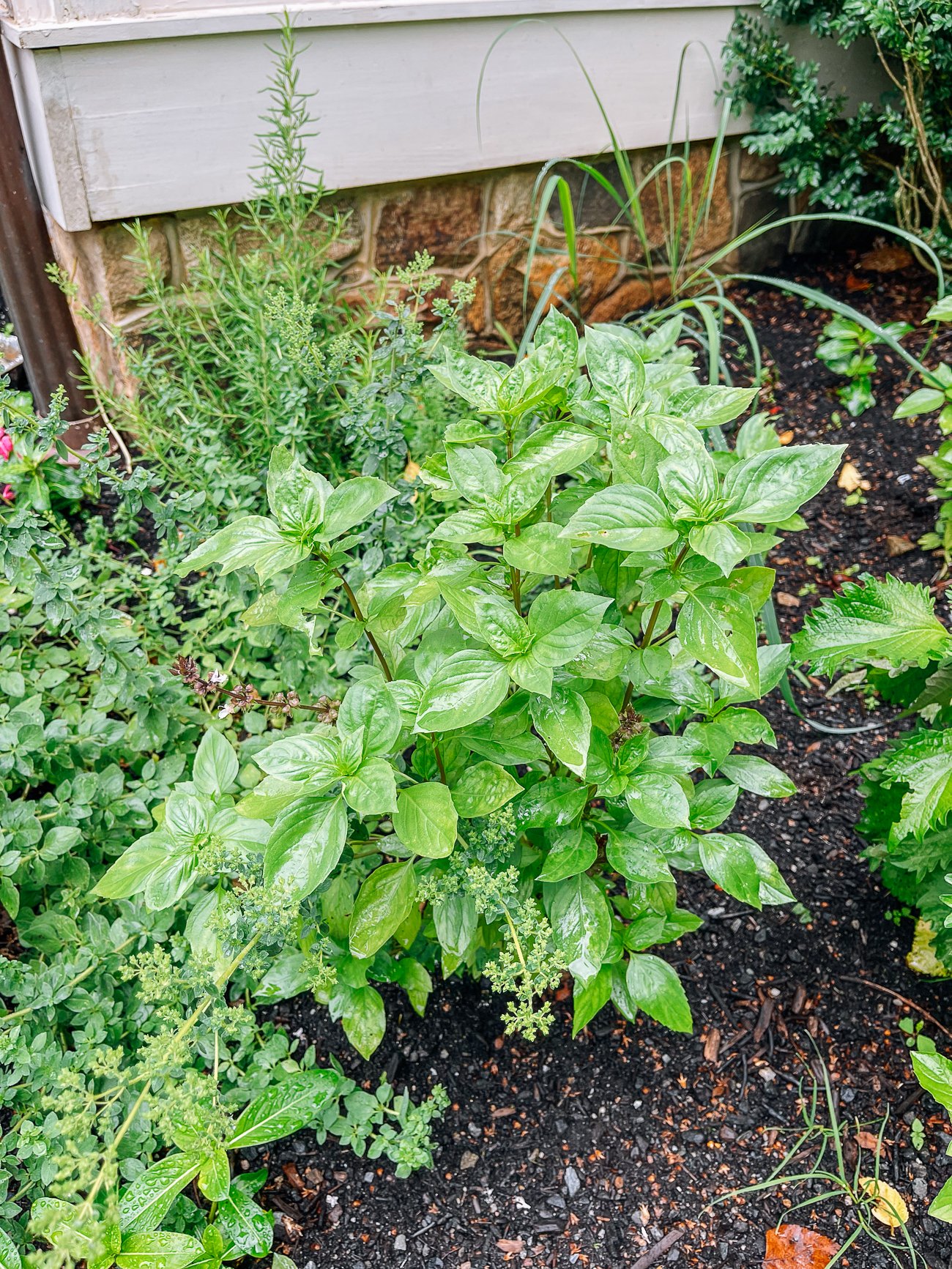
If your plant does flower, don’t worry. Flowering does not negatively affect flavor (which is untrue for Italian types, where flowering can sometimes cause a change in flavor). You can continue harvesting throughout the flowering. In fact, flowers should be regularly pruned off so seeds are not produced.
Origins & Migration
Basil has been cultivated for over five millennia, so its exact origin is debatable, though many say it is native to Asia. The word “basil” comes from Latin/Greek words that mean “royal plant.”
Thai basil, a tropical sweet basil variety native to Southeast Asia, is common not just in Thai cuisine, but also Vietnamese and Laotian cooking. Perhaps the reason it is referred to as “Thai basil” in the U.S. is that it was popularized in Thai restaurant dishes served to American clientele.
Ever wonder why there are so many Thai restaurants in the U.S. and around the world, even in areas where you wouldn’t expect it? The Thai government has actually made it a goal to increase the number of Thai restaurants worldwide, helping investors open these restaurants abroad. Read more about it here!
That said, many Thai restaurant menus abroad only scratch the surface of what is a complex traditional cuisine. Similarly, what we know as Thai basil (Thai sweet basil, bai horapa) is actually only one of three basic varieties used in Thai cooking.
Holy basil (bai gka-prow) and lemon basil (bai maeng-lak) are lesser known in the U.S., and not as often grown.
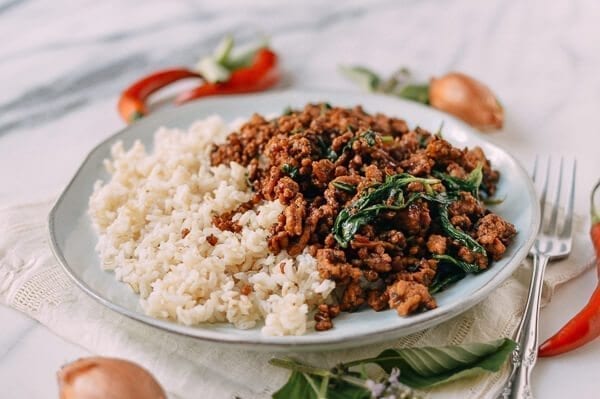
Many Thai restaurants make the dish pad gra-prow (stir-fry with holy basil) with Thai sweet basil rather than holy basil. While we are definitely in favor of substituting whatever basil you can get rather than not making the dish at all, we did grow holy basil in our garden for the first time specifically so we could develop our Holy Basil Stir-fry recipe with the real thing!
Thai Basil Recipes
In Southeast Asia, Thai basil is often used in large quantities—more as a vegetable than has an herb or garnish. You might see large amounts added to salads, stir-fries, curries, and soups.
We have several recipes that star Thai basil. Here are some of our favorites!
We hope you’ve enjoyed this post on how to grow Thai basil. Be sure to keep following along with our How to Grow Chinese Vegetables series!
Next month, we’re talking about Bitter Melon! Happy gardening and cooking everyone.