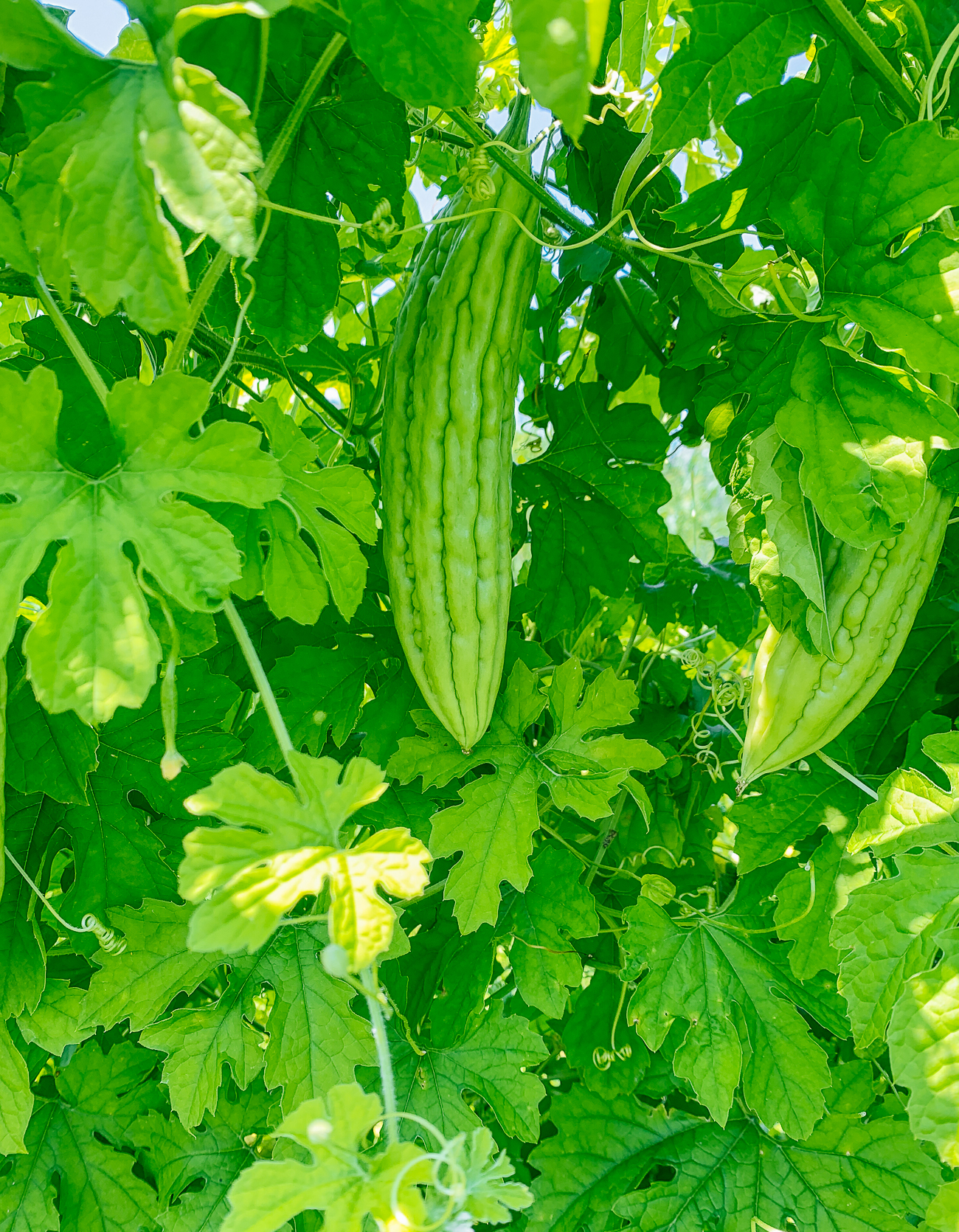
Hi everyone! It’s the end of August, and it’s time to talk about how to grow bitter melon in your garden.
Some of you out there may never have heard of bitter melon, and we’re sure many of you have heard of it, but shy away from it due to its (you guessed it) bitter flavor.
But we’re HUGE fans of bitter melon here at The Woks of Life. In fact, it’s one of the crops we look forward to most in our summer garden! I wasn’t a big fan of it as a kid, but as an adult, I love it. If you’ve spurned bitter melon in the past, perhaps it’s worth another taste!
While it does have a bitter flavor, there are some key dishes that we love to cook with it. When you pair it with other bold flavors like fermented black beans and garlic or rich ingredients like beef, pork, or eggs, this fruit really shines.
It’s also SUPER healthy. Don’t just take it from us. Check out this article from the National Library of Medicine describing bitter melon as a “panacea” with “anti-oxidant, anti-inflammatory, anti-cancer, anti-diabetic, anti-bacterial” properties.
You can find bitter melon at Chinese and Indian grocery stores. However, many of you don’t have access to ethnic groceries, so the only way to lay your hands on Asian produce is to grow it yourself! Let’s talk more about this ingredient, and how to grow it in your garden.

PAST POSTS!
We’re posting a new ‘how to grow’ article every month of the growing season, guided by Christina Chan at Choy Division, a regenerative Asian produce farm in Chester, NY. Christina has shared her best tips with us, which we are passing along to you!
If you’re new to this series but interested in learning more, check out our past posts on how to grow:
- Bok choy
- Napa cabbage
- Chinese eggplant
- Chilies
- Chinese garlic chives
- Daikon radish
- Garlic
- Thai basil
- As well as our full Garden/Farm section of the blog, where we talk about raising backyard chickens and ducks for eggs, share farm updates, and more!
What Is Bitter Melon?
Bitter melon is a member of the cucurbit family (which includes cucumbers, squashes, zucchini, melons, and loofahs). It’s in a different genus than cucumbers, melons, and winter squashes, however.
It’s the genus Momordica, which in Latin means, “to bite,” referring to the plant’s serrated leaves that looks like bites have been taken out of them. The plant’s full scientific name is momordica charantia.
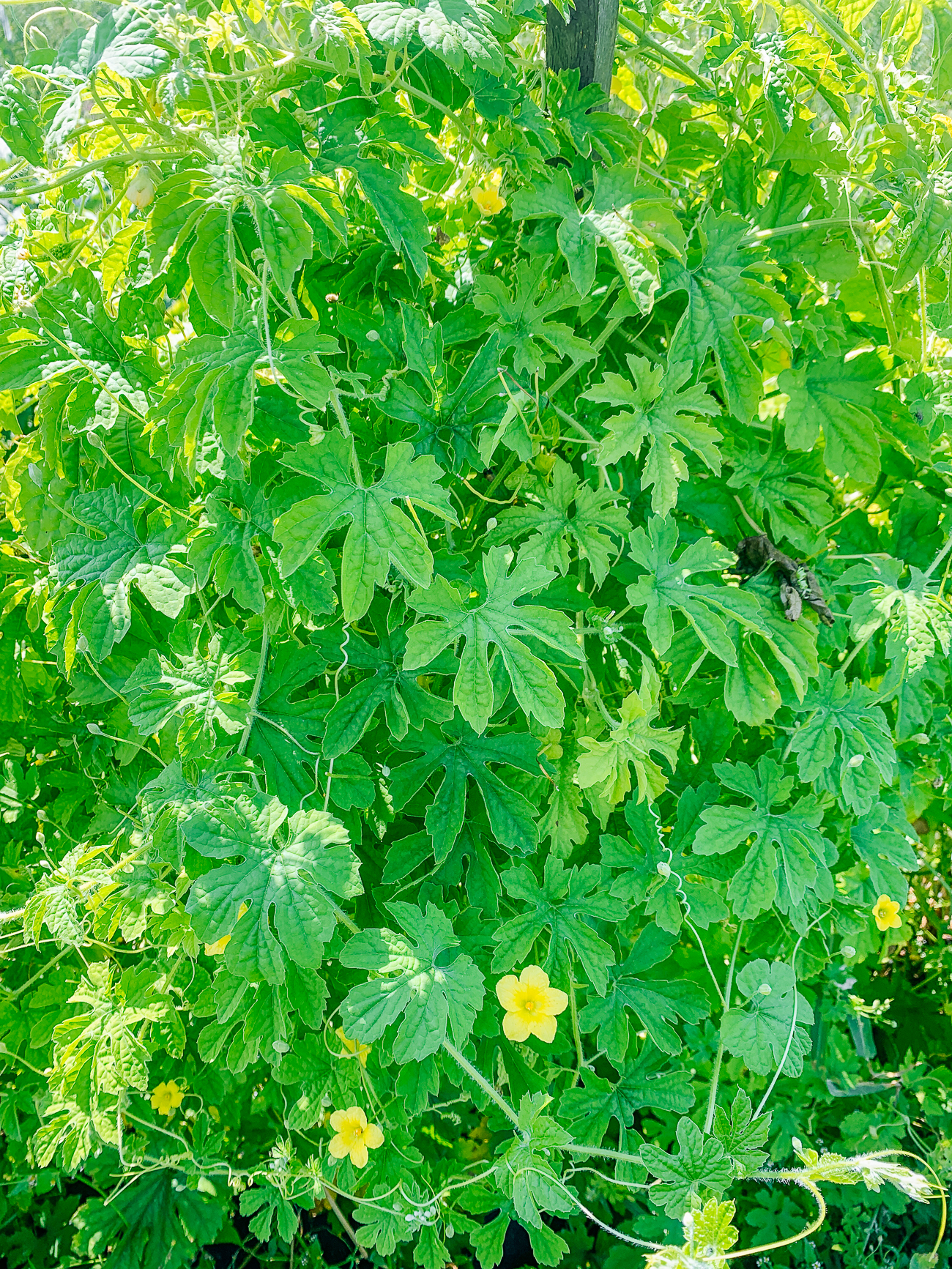
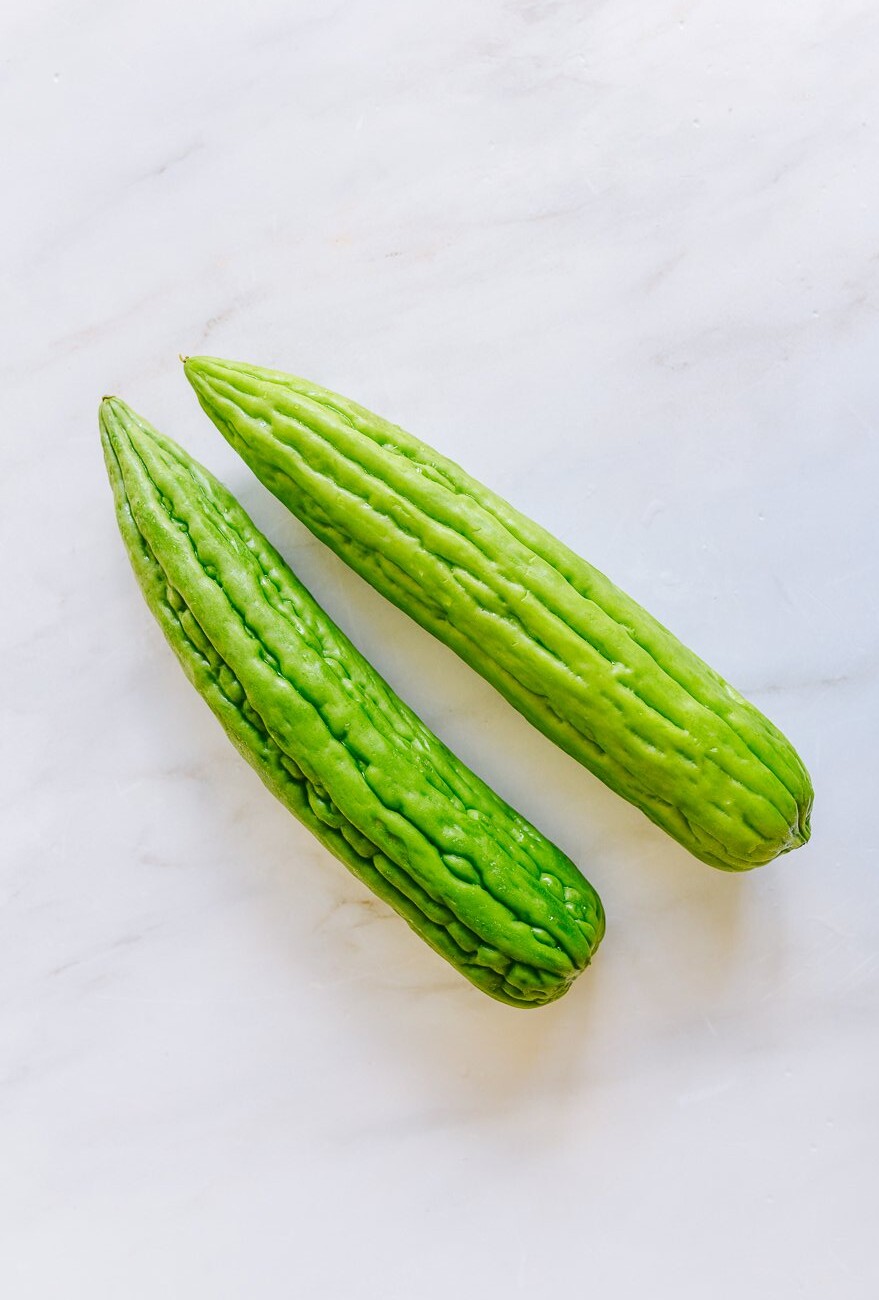
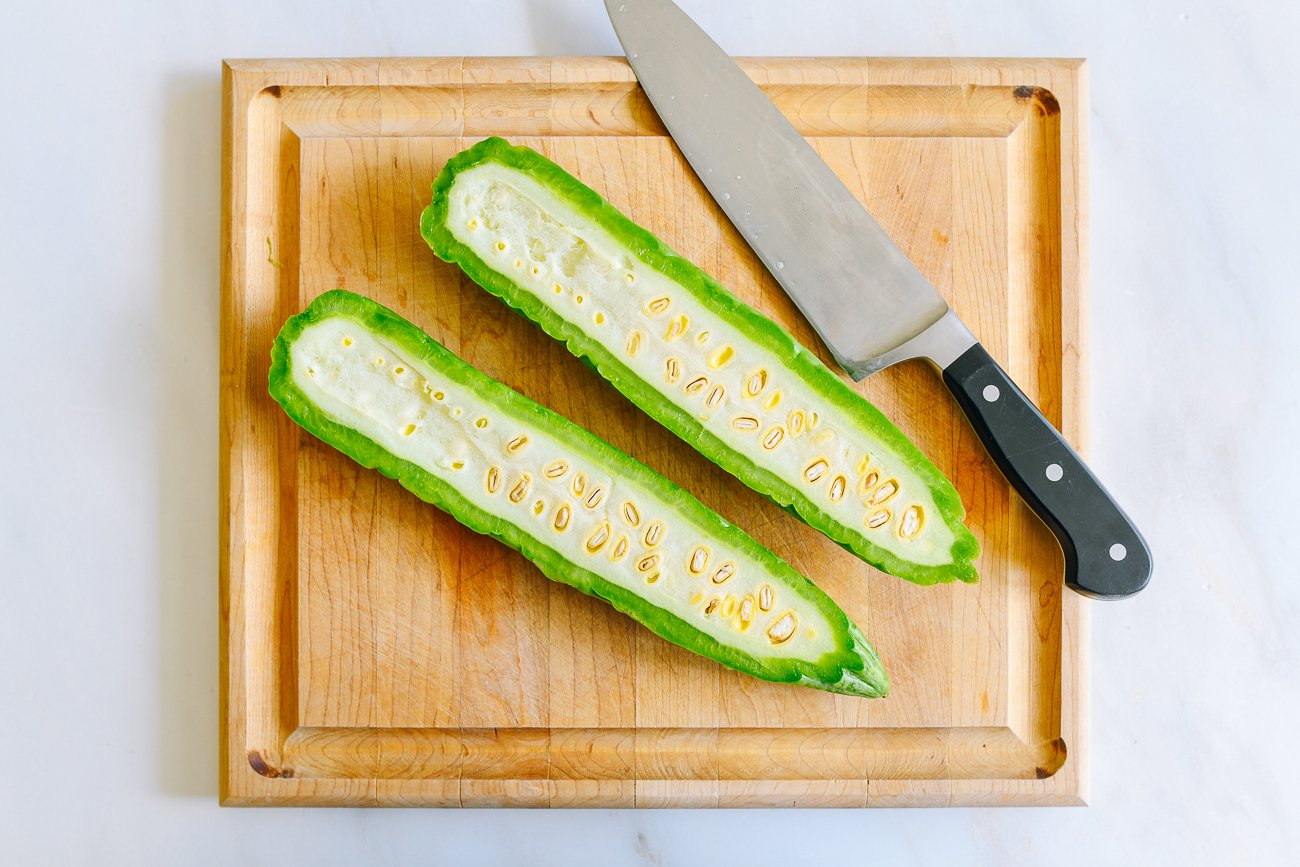
It ranges in color from white to light and dark green, with a bumpy appearance and crisp flesh. The fruits and leaves are both edible, and both have a bitter flavor.
You’ll find bitter melon in East Asia, South Asia, Southeast Asia, the Caribbean, and perhaps surprisingly, Africa—where the plant originated.
These regions feature tropical climates where the plant thrives. Bitter melon plants love heat and humidity. According to Christina, 80°F+ days (27°C+) are necessary for consistently good fruit production.
Bitter Melon Varieties
In our minds, there are two main varieties of bitter melon: the Chinese variety and the Indian variety.
Chinese bitter melons are larger, with a light green exterior and smoother bumpy skin. Indian bitter melons have more of a raised spiky appearance and pointier ends, and tend to be darker green (though some are white).
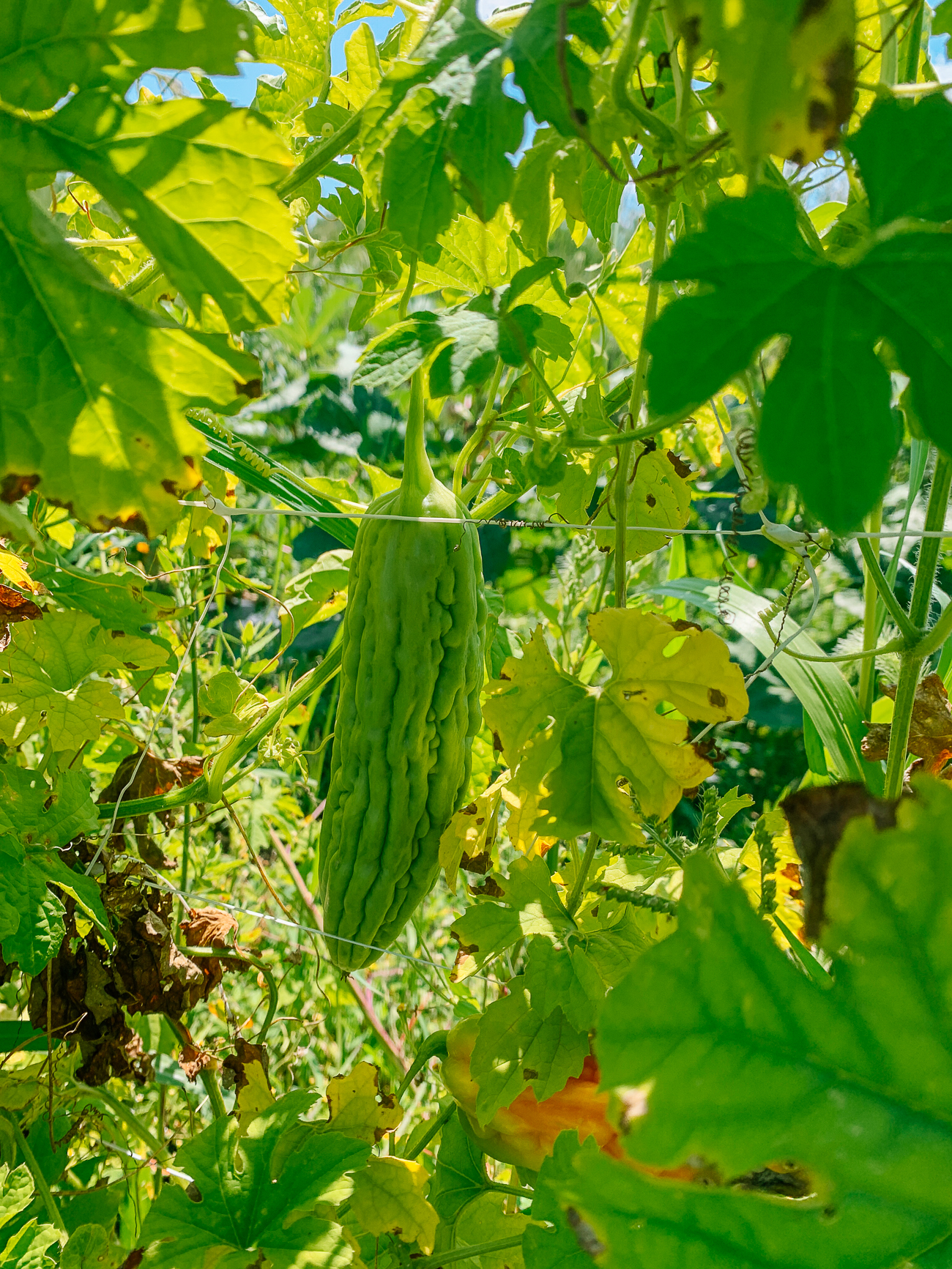
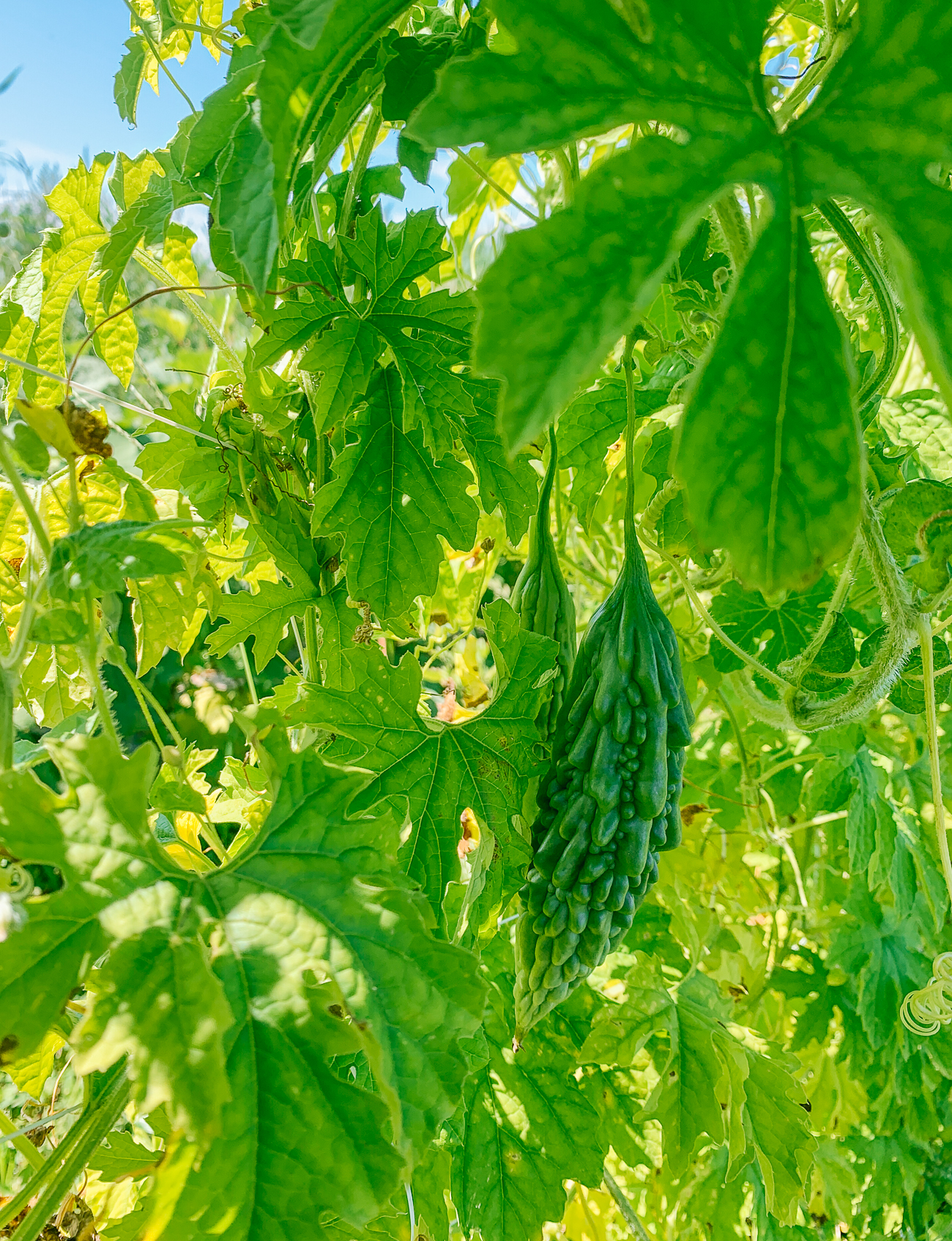
We generally prefer Chinese bitter melon, as it’s what we are most familiar with, but we grew both the Chinese and Indian varieties this year, courtesy of lovely seedlings hand-delivered by Christina to The Woks of Life HQ back in May. We actually found their flavor to be quite similar!
As you might imagine, certain varieties are preferred over others by different cultures. All have a bitter flavor, but the level of bitterness varies according to the variety and growing conditions. Different fruits from the same plant can also range in bitterness.
Here are some popular varieties and seed sources from Christina and our own research!
- Japanese: Futo Spindle (availabe from True Leaf Market, True Love Seeds, and Kitazawa Seed Co.): a Japanese heirloom variety with bumpy skin similar to Indian types. Also check out Okinawan Pure White (available from Rare Seeds), a mild (comparatively less bitter) Japanese bitter melon with pearly white, mellow-flavored fruit.
- Chinese: Green Skin Bitter Melon (available from True Leaf Market or Kitazawa Seed Co.), Smooth Bitter Melon (available from True Love Seeds), and Bitter Green (available from Kitazawa Seed Co.): these smooth light green Chinese varieties are what we use in our recipes!
- India, Philippines: Dark Jade (available from True Leaf Market and Kitazawa Seed Co.): an Indian variety with dark green skin and high yields.
- India, Southeast Asia: Bitter White (available from True Leaf Market): an India-type bitter melon hybrid with large 11-12 inch (28-30cm) white fruits.
How to Grow Bitter Melon
Unless you can find bitter melon seedlings at a local Chinese grocery store in late spring or a seedling sale, you’ll have to grow these plants from seed yourself!
Germinating bitter melon seeds can be tricky, as the seeds have a hard outer casing. Christina suggests starting seeds indoors 3-4 weeks before the last frost date in your area.
Here’s how:
- Soak the seeds overnight, starting in warm water.
- Once soaked, you can plant the seeds 3/4-inch/2cm deep in small pots or a seed tray on a heated mat. (We’ve found a heated mat to be essential to germination for these seeds.) If you don’t have one, you can put the pots/seed trays above a warm radiator. Cover with plastic lids or a plastic bag to maintain humidity in your pots or trays.
- Alternatively, after soaking, you can place the seeds in a single layer on a damp (not soaking wet, or seeds will rot) paper towel. Fold it over so that the seeds are encased by the paper towel. Place into a zip-lock bag, seal shut, and place in a consistently warm area (60°F+/16°C+). Check each day to see if seeds have begun germination. Once they have, you can plant them into small pots as usual. They will still require warmth, but can withstand more temperature fluctuation at this point.
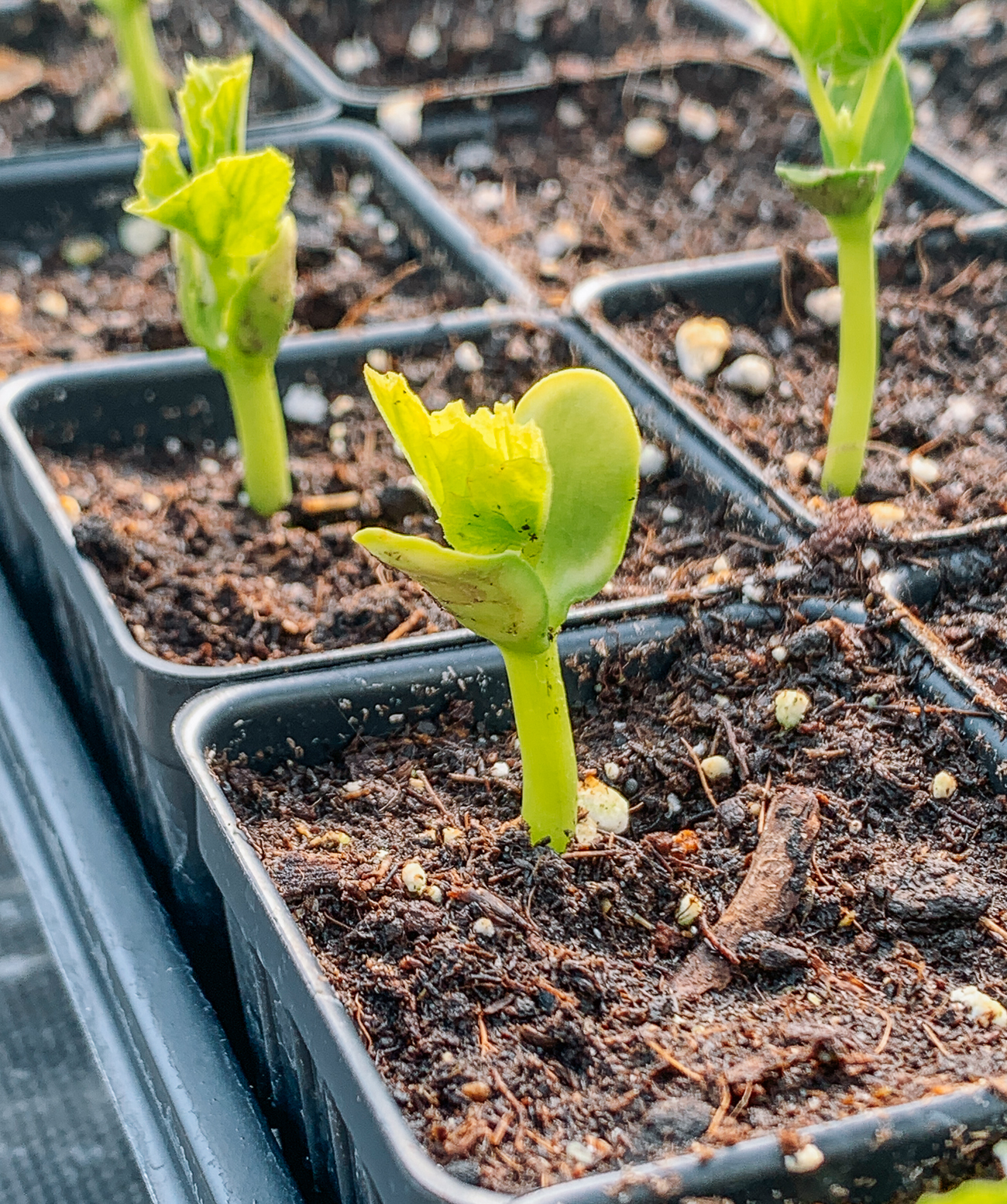
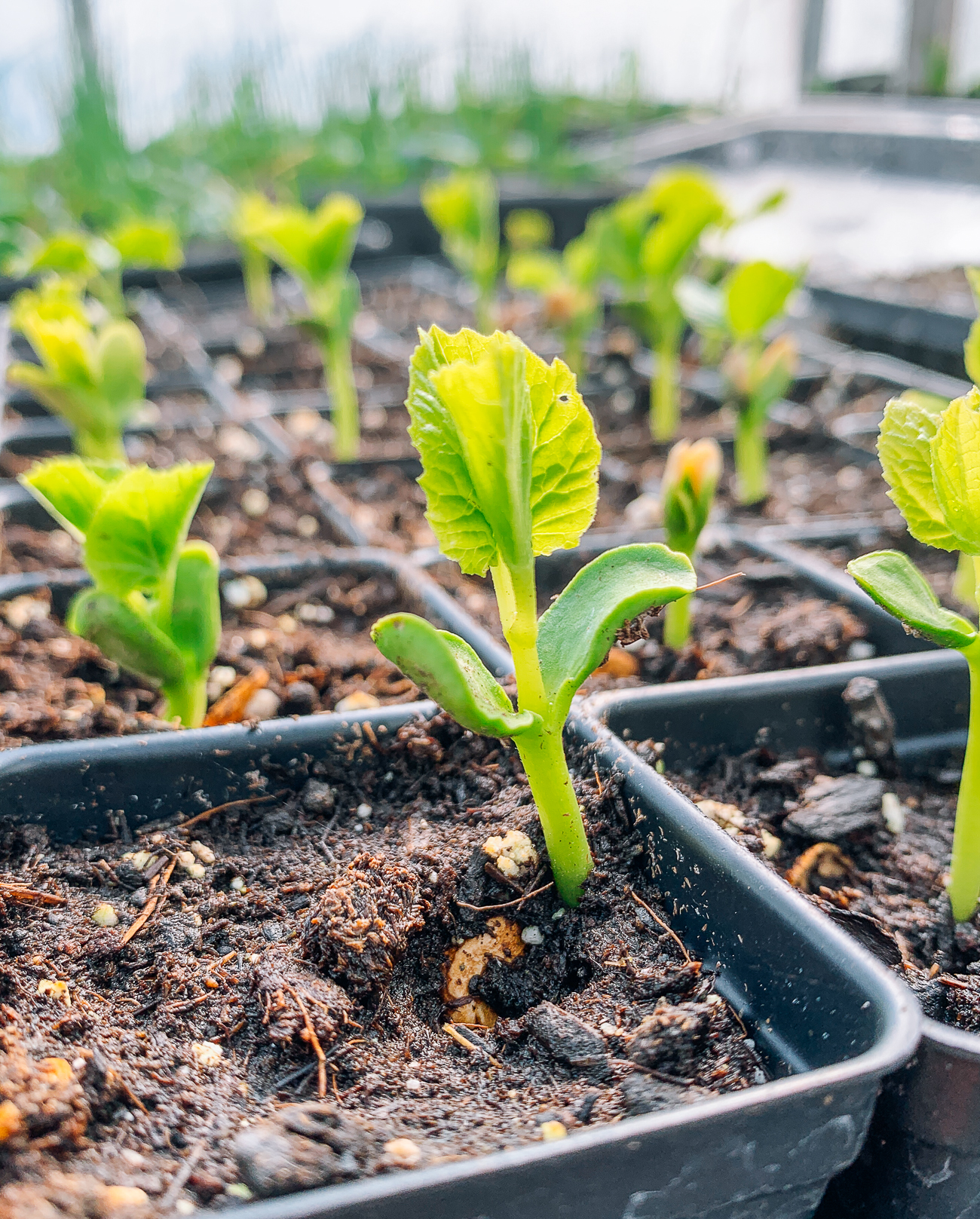
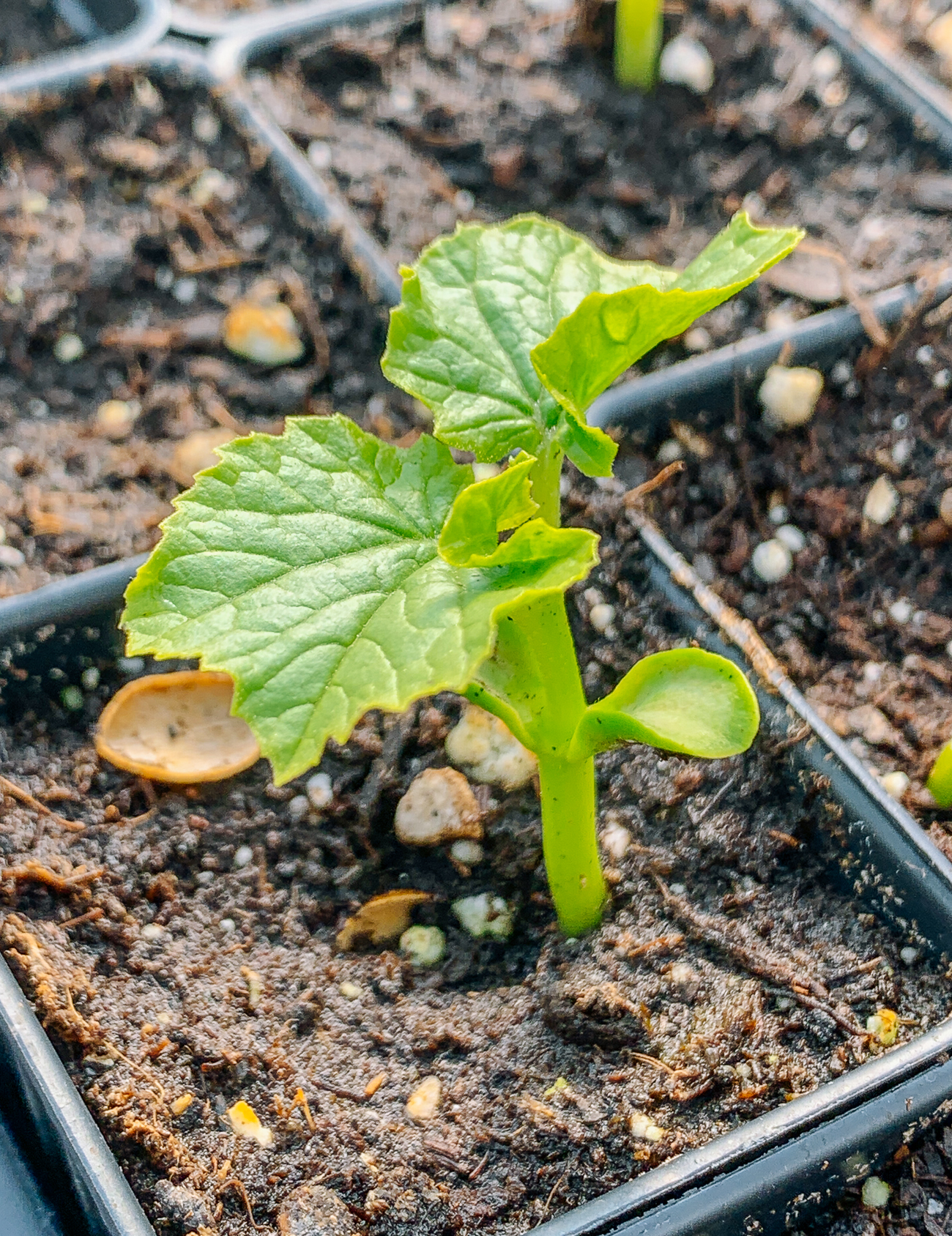
The hard part is over after the seeds have germinated! Once the danger of frost has passed, you can harden off the seedlings in a cold frame or other protected outdoor space for about a week.
“Hardening off” seedlings is simply the process of letting them get used to the elements before planting them in the ground.
Amend your planting area with organic material/compost (a 2-inch/5cm layer on top of your soil should do it!), and then plant the seedlings out into a sunny location in the garden, spaced 12 to 18 inches apart (30-45cm).
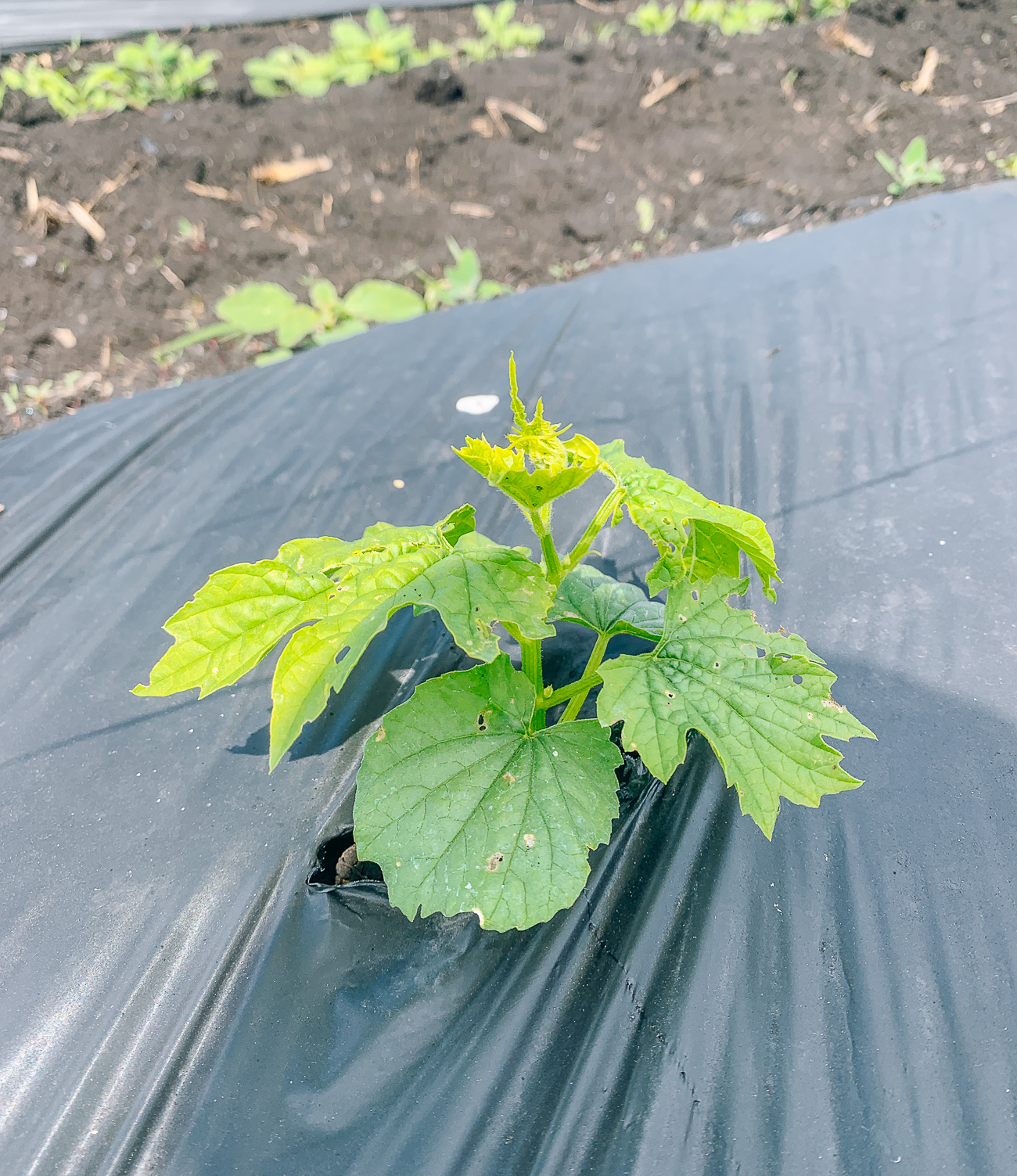
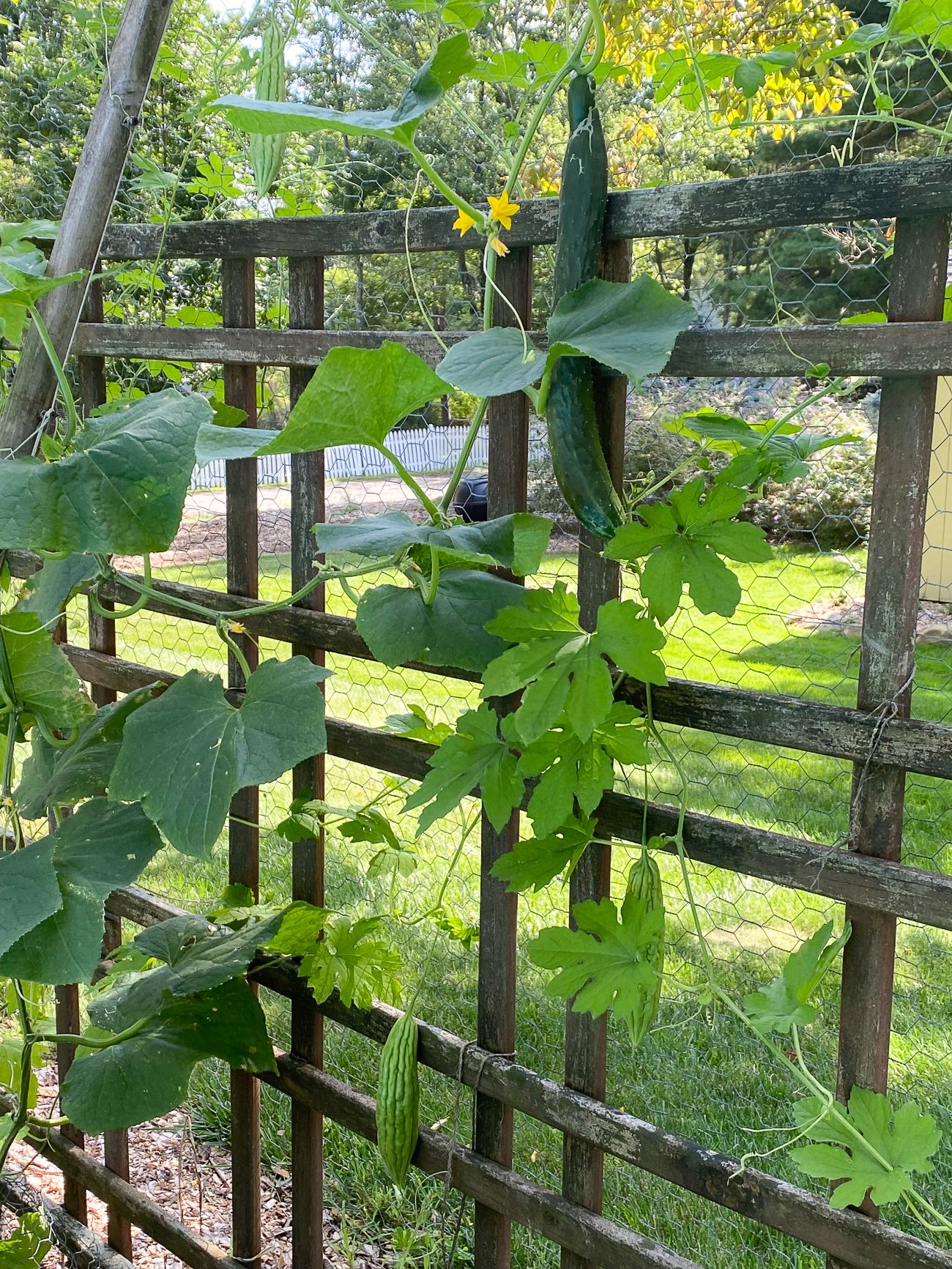
These are vining plants, so it’s a good idea to have some sort of sturdy trellising in place at planting time, or while the plants are still young.
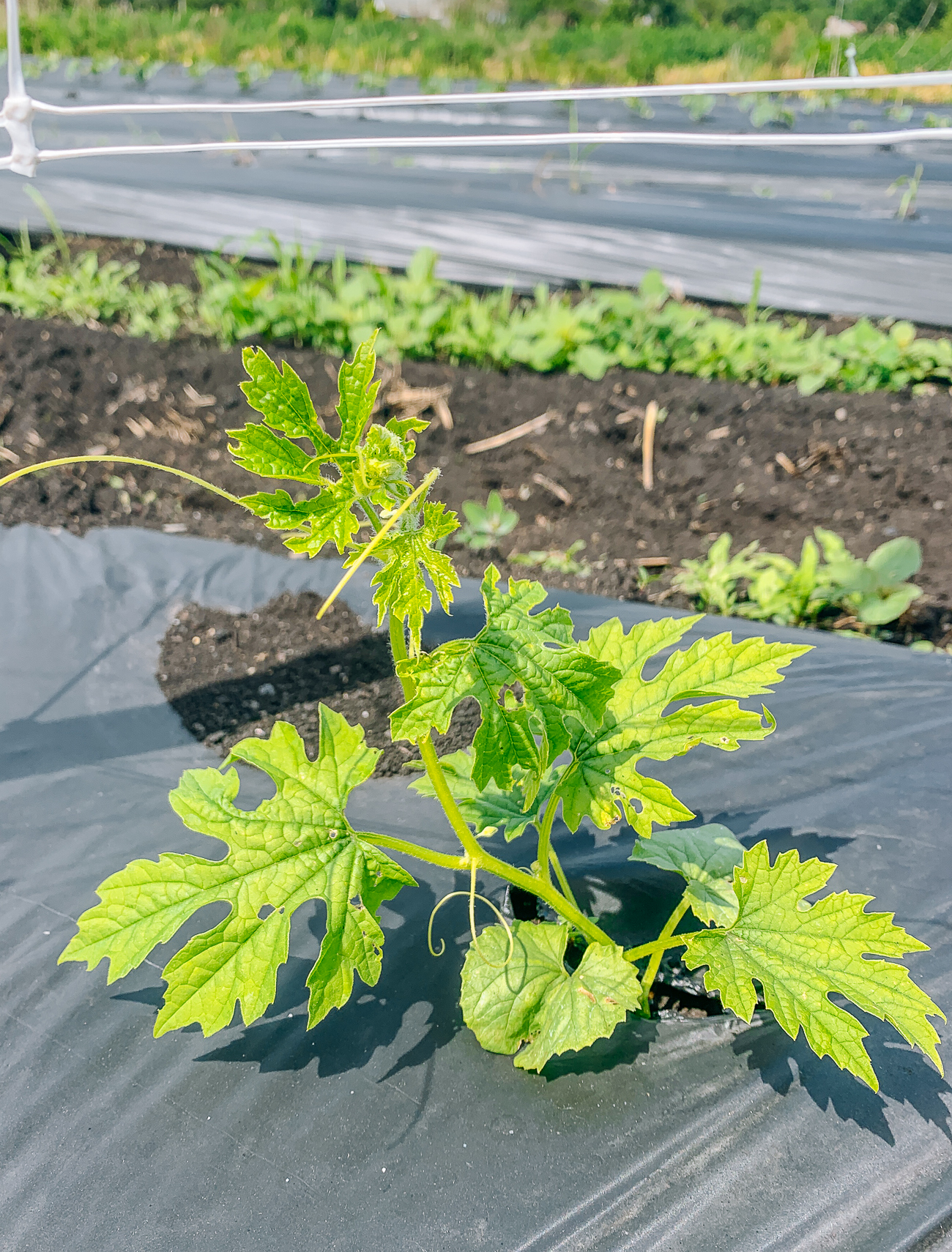
You can use stakes and cattle panel fencing, or plant against a sturdy chain link fence.
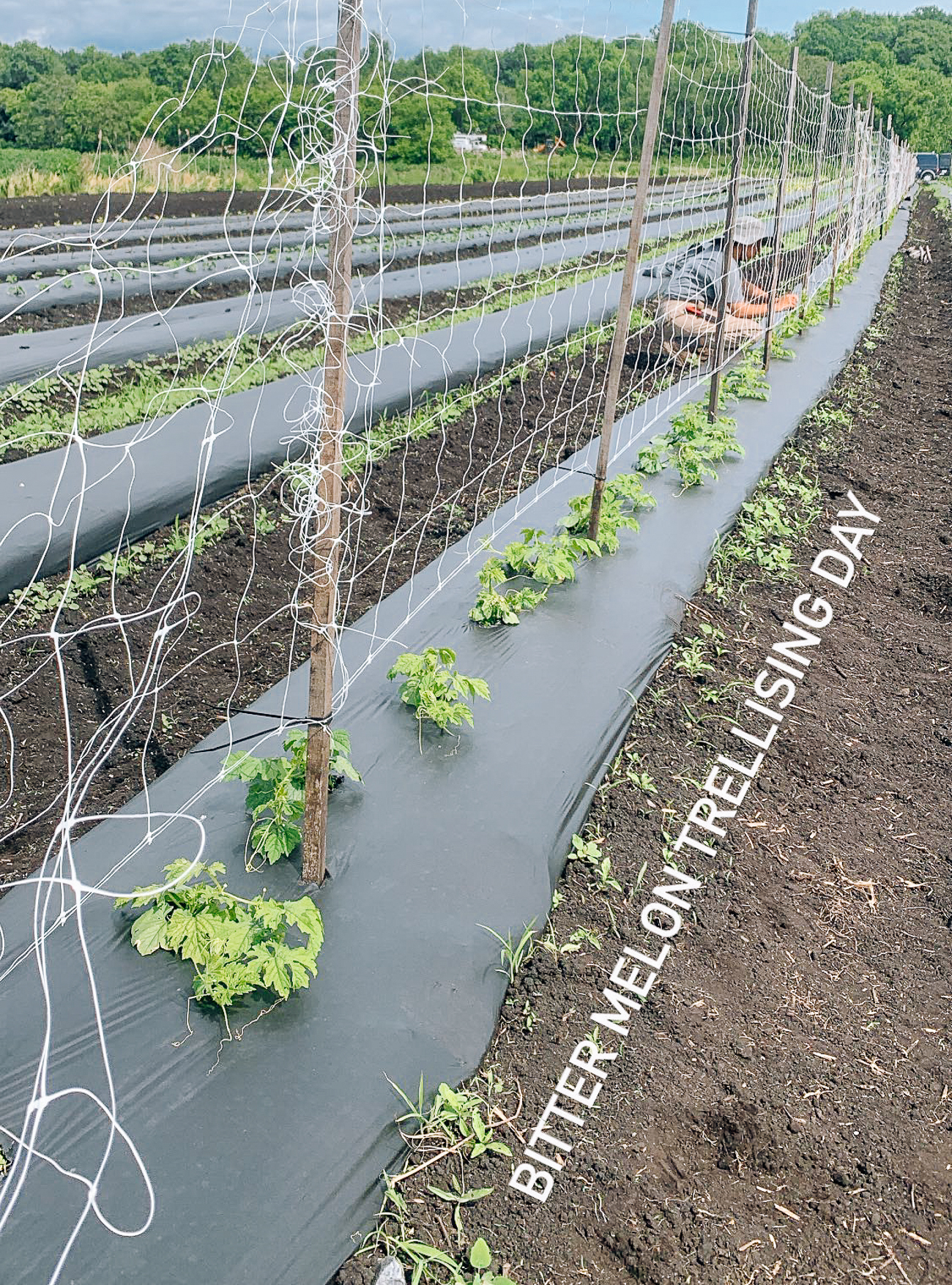
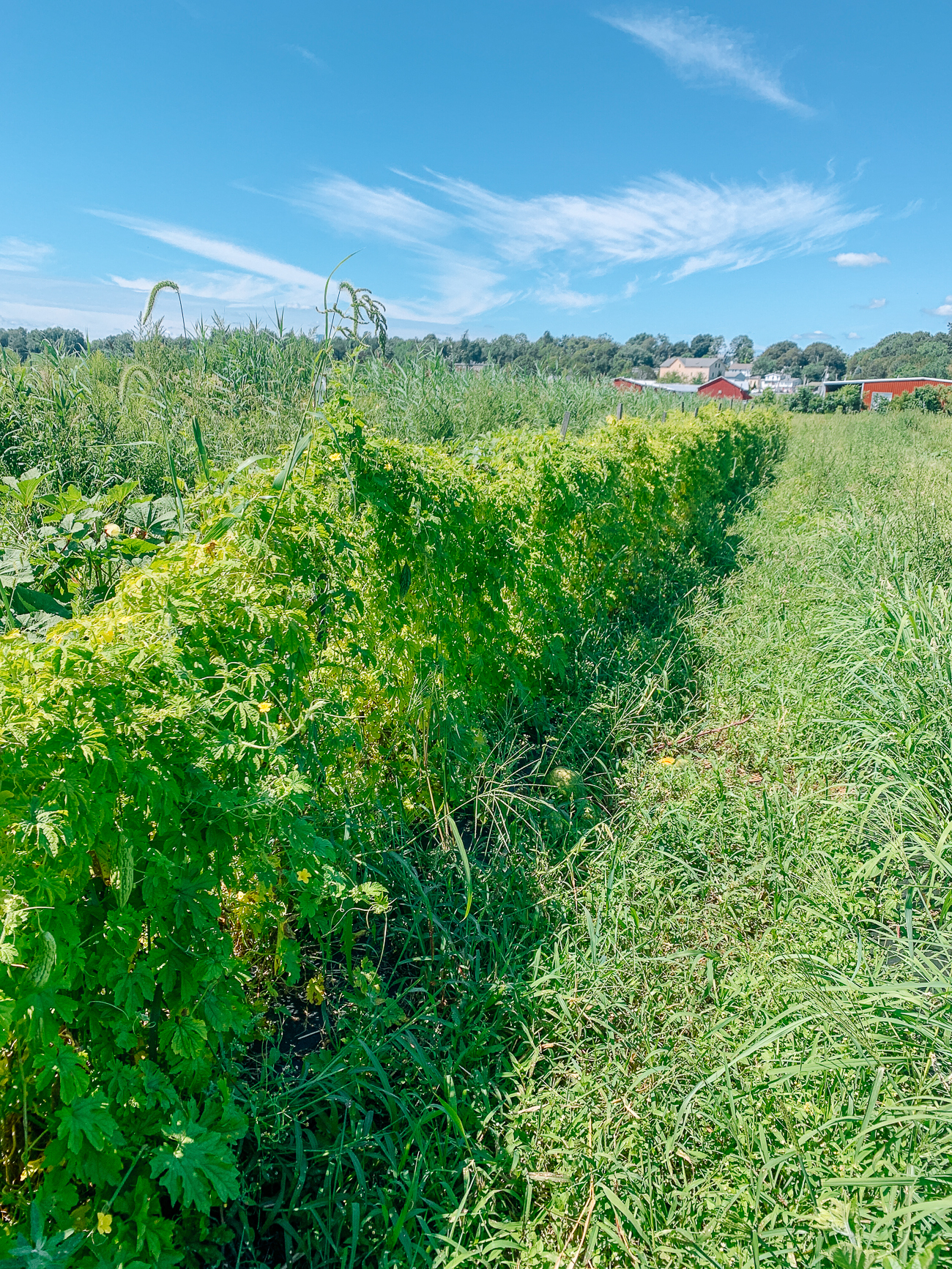
We usually plant our bitter melon plants right up against our garden fences, so we don’t have to put any additional trellis in place.
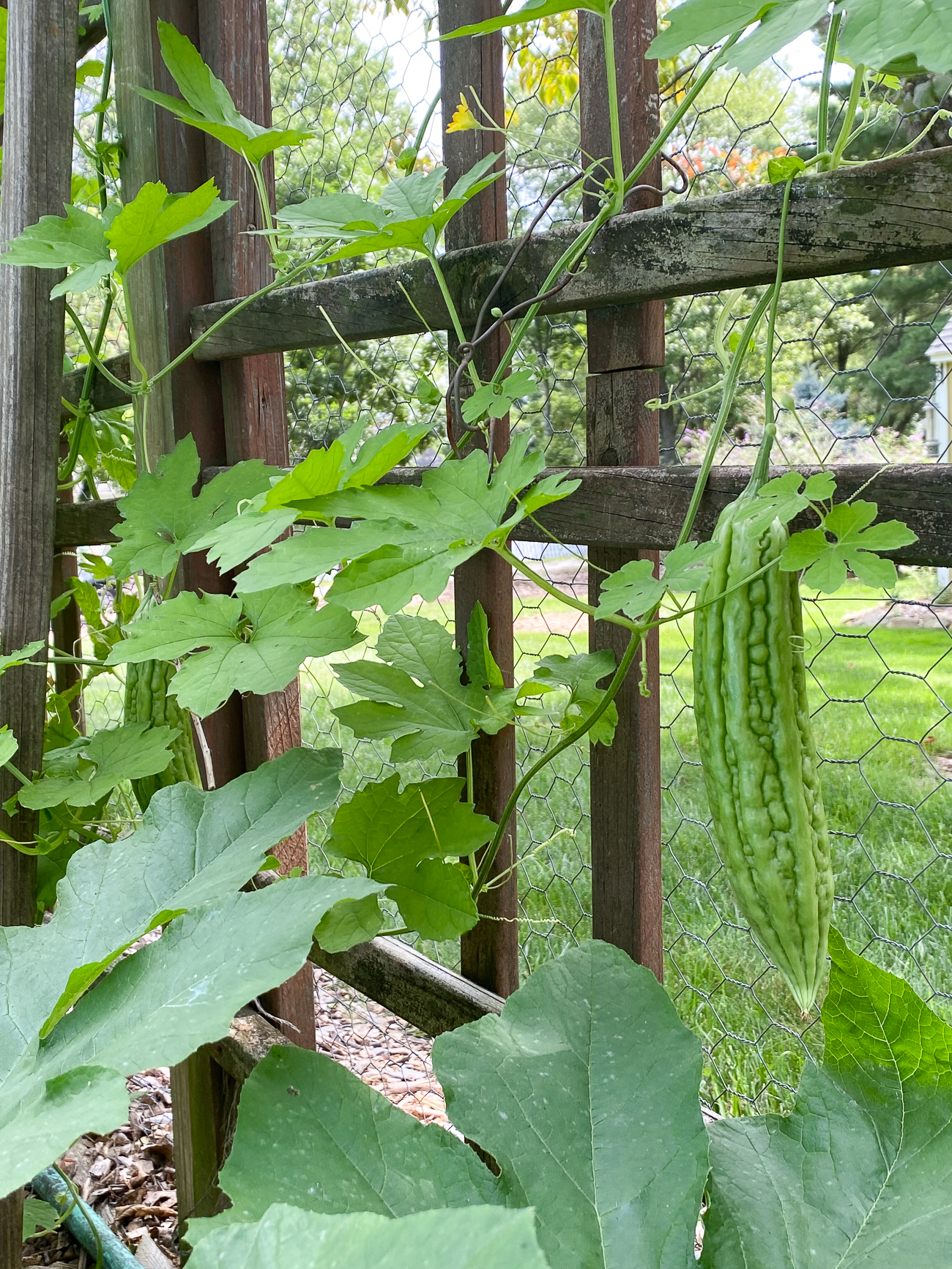
Once fruiting begins, the plants will get heavy and cause lightweight stakes and netting to fall over (especially in summer storms), so invest some time in ensuring your trellis will hold up!
Regarding pruning, Christina says that some growers swear by it (here’s a good video on it), but she generally doesn’t bother. In our years of growing bitter melon plants, we also have never pruned them.
That said, pruning can be a good option if you’re noticing that your plants aren’t producing many fruits. This directs the plant’s energy away from vines and leaves, and allows more energy to go into fruit production.

IDEAL GROWING CONDITIONS FOR Bitter Melon
Bitter melon plants require hot, humid conditions, with temperatures consistently above 80°F/26°C for best fruit production. We’ve noticed when the plants go out in late May/early June that they take a while to get going, but once the weather warms in late June/July, they really take off! Our generally muggy summers here in the Northeast are great for growing bitter melon.
Full sun. In hotter climates, partial shade might work, but plants should have at least 6 hours of sun each day.
Bitter melon is a fruiting and vining plant that requires a lot of nutrients, so fertile, moisture-retentive (not soggy) soil amended with organic matter is ideal!
Keep soil consistently moist, but not too wet. The plants can tolerate some periods of dryness. Avoid overwatering, or you’ll get root rot.
Bitter melon plants are vigorous and need at least 12-18 inches (30-45cm) of spacing to grow. They must also have sturdy trellising!
55-70 days, depending on the variety.
Pest & Disease Management
Gardeners rejoice! Bitter melon grows relatively free of pests and diseases. Christina says, “Bitter melon is perhaps the only crop we grow with no pest pressure!”
Unlike other cucurbits, bitter melon is unaffected by striped cucumber beetle (the destroyer of all things cucurbit). This pesky bug can take down Choy Division’s cucumbers, zucchini, and winter squash, either by eating the plants or through disease transfer.
As for avian and mammalian produce thieves, like your garden-variety pigeons, gophers, rabbits, squirrels, and deer, they’re not big fans of the bitter leaves or fruits and will also steer clear. For this reason, bitter melon is a great plant for the outer edges of your garden if you want to deter deer or other critters from treating your garden as an all-you-can-eat salad bar.
Garden pests aside, there are a couple of diseases in the Northeast that could affect your bitter melon, but again, they seem to have better resistance than their cucurbit cousins:
- Downy Mildew: Occurs during periods of high humidity and heavy summer rains and appears as yellow spots on top of leaves and powdery white substance on underside of leaves. Pruning leaves to increase air flow and ventilation can help prevent this!
- Fusarium Wilt: Plants show temporary wilting signs and then yellowing of leaves and vines and drooping, before dying.
Harvesting Tips
Bitter melon is an extremely prolific crop, given the right conditions. With a consistently warm summer and fertile soil, you can expect to harvest bitter melon every other day at a minimum.
Keep an eye on the progression of the fruit, as they will quickly go from baby, to full size, to over-ripe. You’ll know a bitter melon is over-ripe when it starts to turn yellow and orange and a bit mushy.
However, if you want to save seed, you can let it get to this stage. (The inner seeds, normally light brown or white in edible ripe fruit, will have a mushy red outer coating once the fruit is over-ripe.)
You’ll know that bitter melon is ready for harvest when the fruits are shiny and firm, with a full shape. These fruits will be at their juiciest and most tender. Underripe fruit will also be edible and nicely bitter, but smaller and perhaps with less of a juicy, crunchy texture.
To pick, simply pluck the fruit off the vine. The melon is attached by a very slender tendril that’s easily severed without use of a knife or pruners.
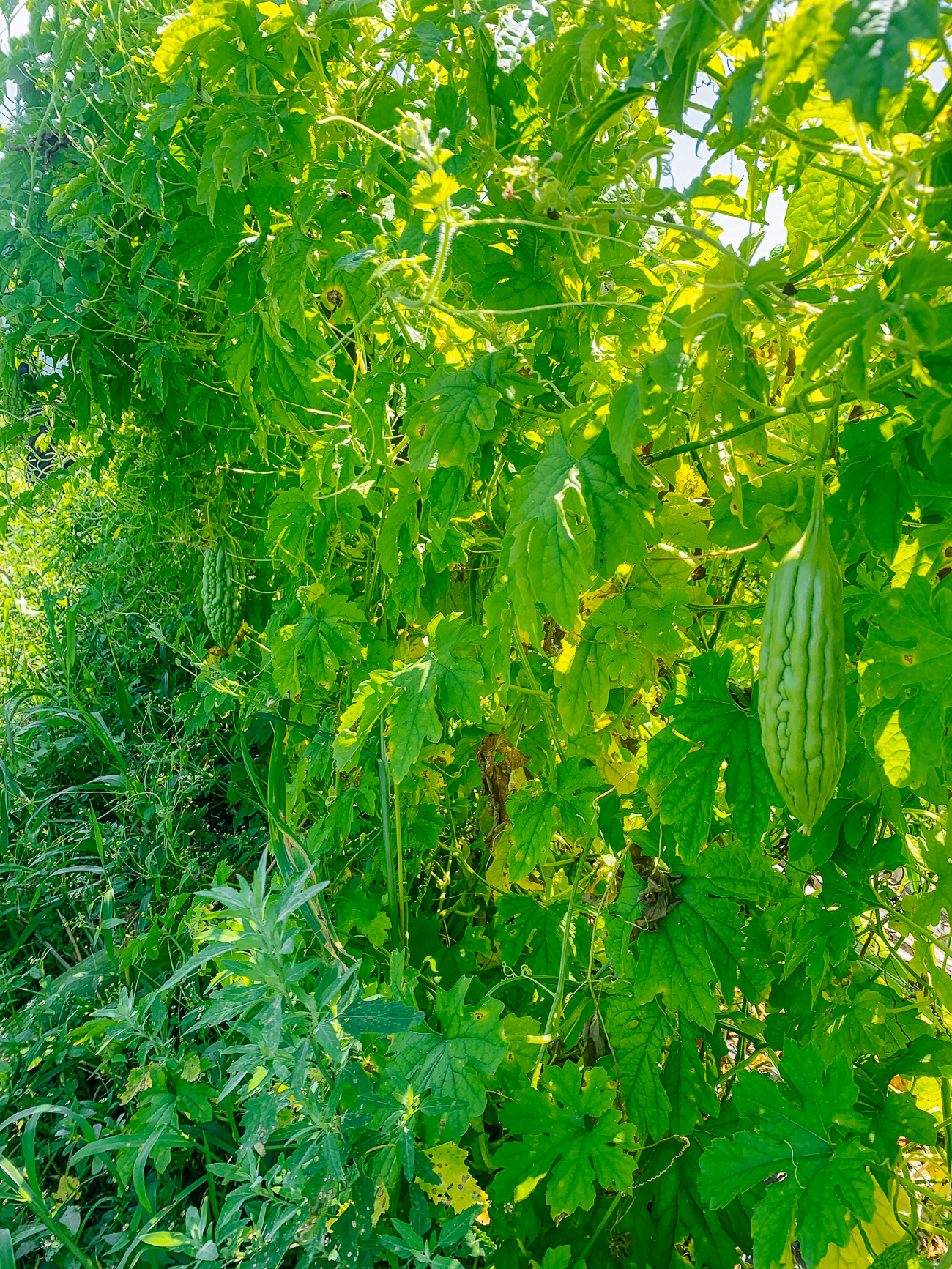
After harvesting, store in the fridge in a plastic bag, and use within 1 week. The skin is tender and easily damaged, so handle the fruits carefully to prevent cuts, nicks, and scrapes, which will affect shelf life.
Origins & Migration
Bitter melon, also known as bitter gourd, bitter squash, and balsam pear, as well as many other names in other languages, originated in tropical and subtropical regions of Africa. It was later domesticated in South Asia, and is widely used across the cuisines of Asia.
It’s believed that Chinese varieties of bitter melon were developed from the 1400s onwards. Through colonization, bitter melon also made its way to the Caribbean and South America, particularly to places with a history of indentured servants from Asia, like Trinidad & Tobago.
Today, there are two major varieties: the smoother pale green Chinese type, and the bumpier, more jagged looking Indian type. Regardless of types, the fruits are filled with vitamins and are believed to have medicinal properties. In Traditional Chinese Medicine, bitter melon is thought to have cooling properties, making it a good option for those with excessive yang, or heat, in the body.
Bitter Melon is known as 苦瓜 in Chinese (kǔguā in Mandarin or foo gua in Cantonese). In China, the saying 吃苦 (chīkǔ) or “eating bitterness”) means “to endure hardship.” It’s a phrase that teaches children to persevere through hardship. You may have heard this phrase at the dinner table if your parents were trying to get you to eat bitter melon!
In Vietnamese culture, a dish of stuffed bitter melon is eaten at the start of the Lunar new year meal (getting it out of the way first), which represents moving past the bitter parts of the last twelve months. In Chinese culture, bitter melon is best avoided during Chinese New Year/Spring Festival, to avoid bitterness in the coming year.
Bitter Melon Recipes
Okay, let’s talk about how to cook bitter melon. You can use it in stir-fries and soups, or stuff it and braise it.
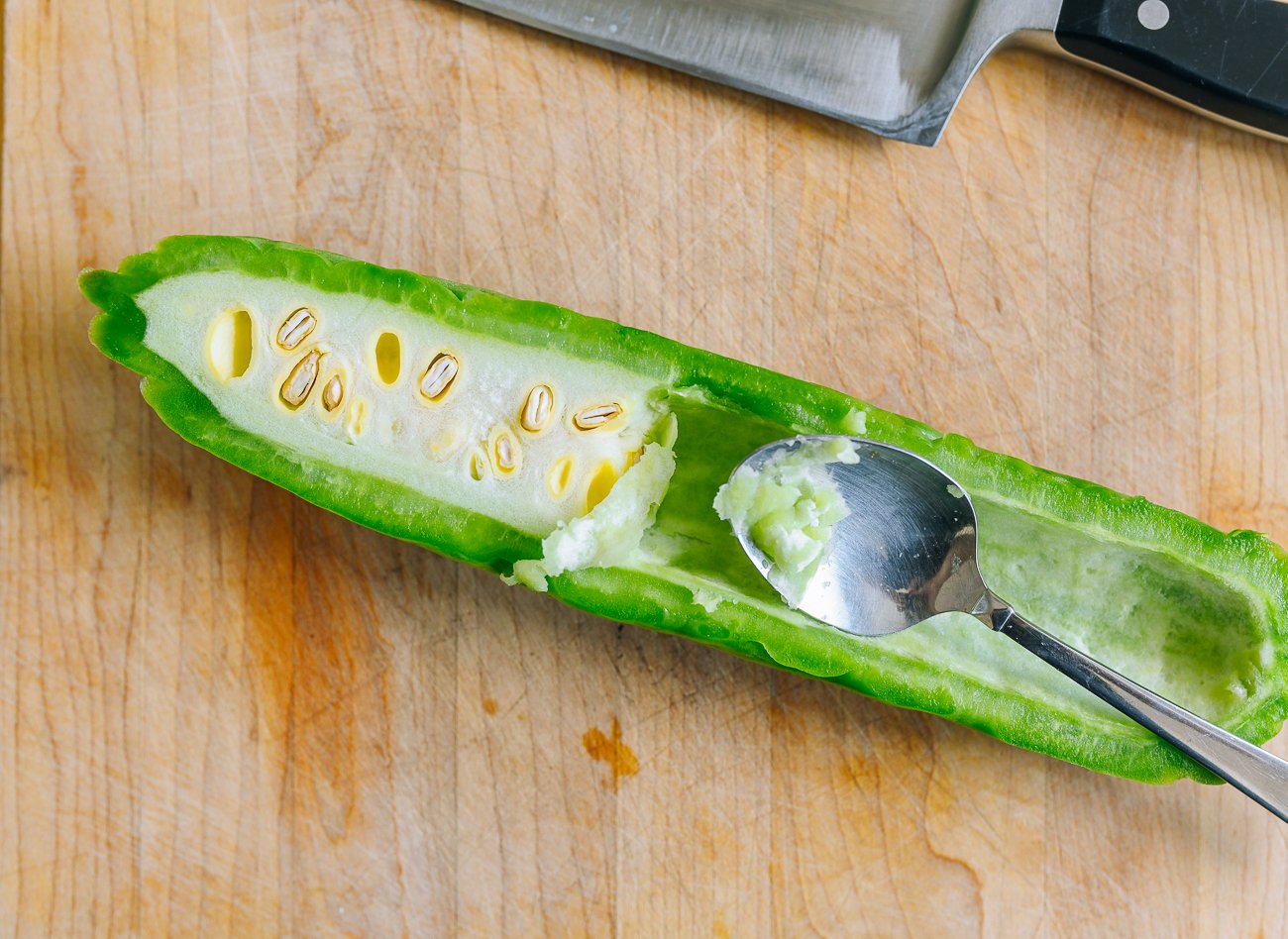
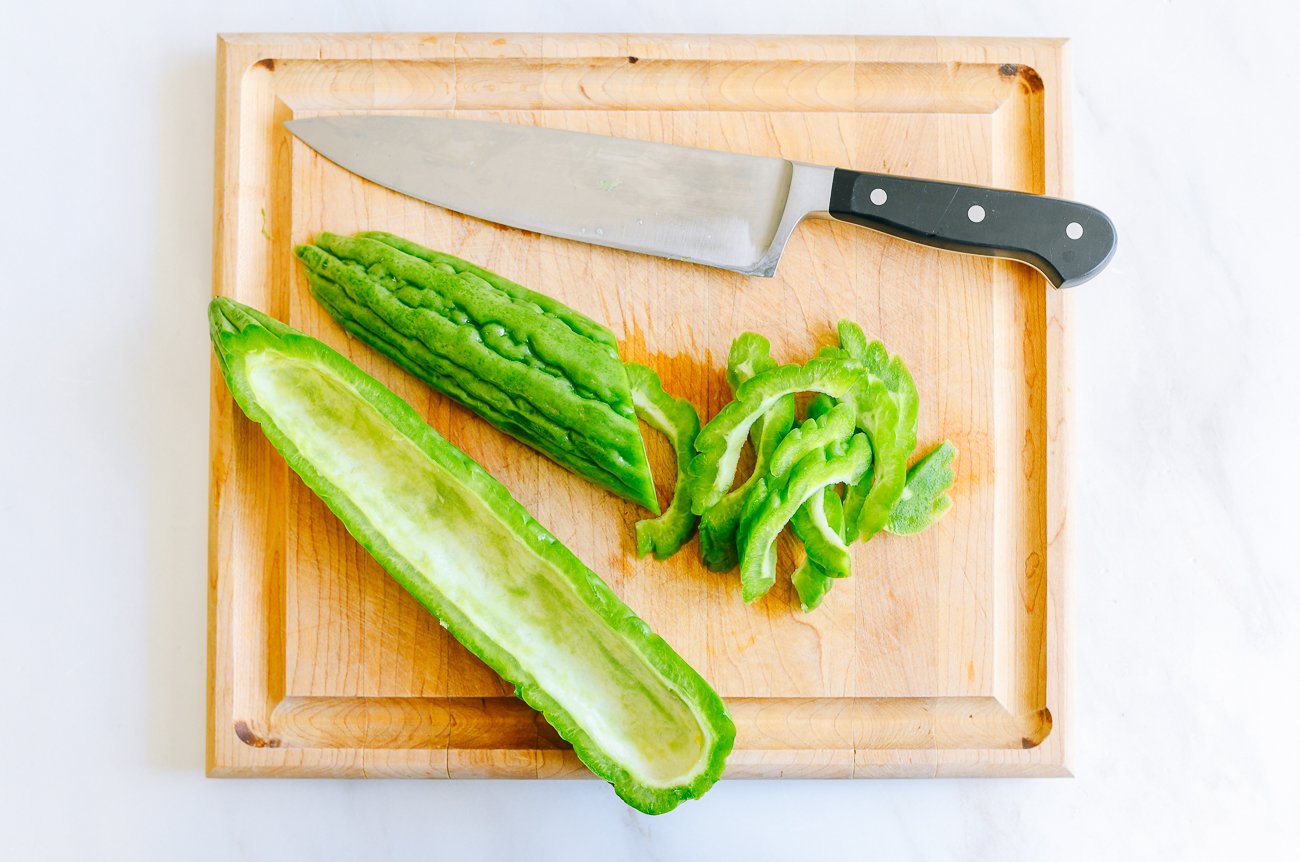
To prepare bitter melon, cut it in half lengthwise, and use a spoon to scrape out the seeds and white pith. Take care to scrape out as much of the pith as possible, as it is particularly bitter. Then you can slice it as needed for a stir-fry.
Stuffing Your Bitter Melon?
If stuffing bitter melon, you’ll want to cut it into rings and then remove the seeds, while maintaining that ring shape. You can either scrape out the seeds with a small spoon, depending on the size of your bitter melon, or use a paring knife to carefully cut the seeds out.
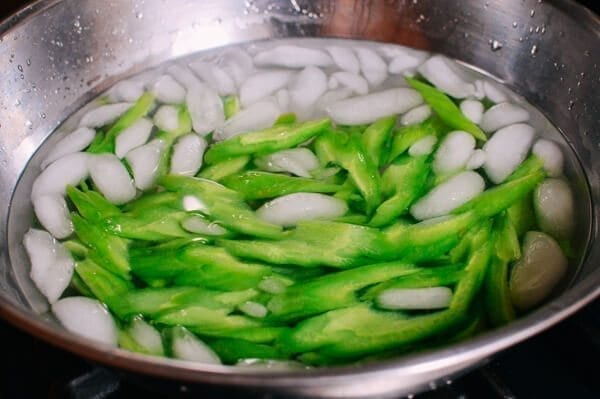
Sometimes, the bitter melon is blanched before stir-frying to mellow out its bitterness, though this step isn’t always necessary.
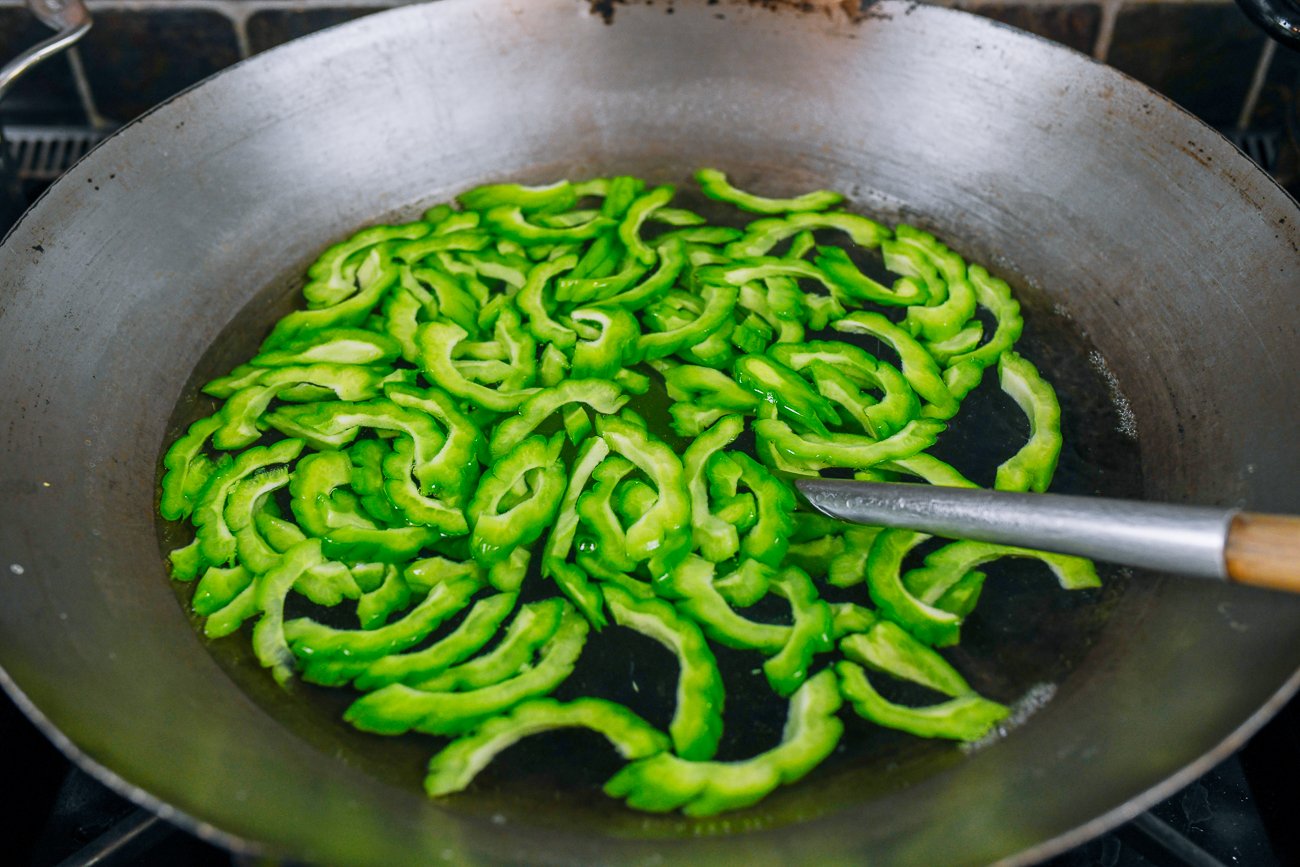
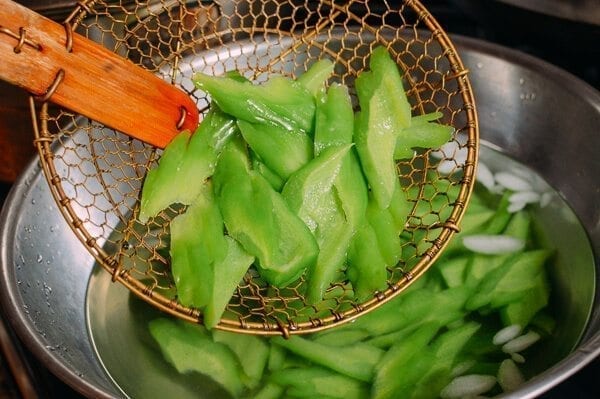
If you do decide to blanch, make sure to transfer it to an ice bath to help retain the melon’s green color.
We have a few bitter melon recipes on the blog that highlight this ingredient:
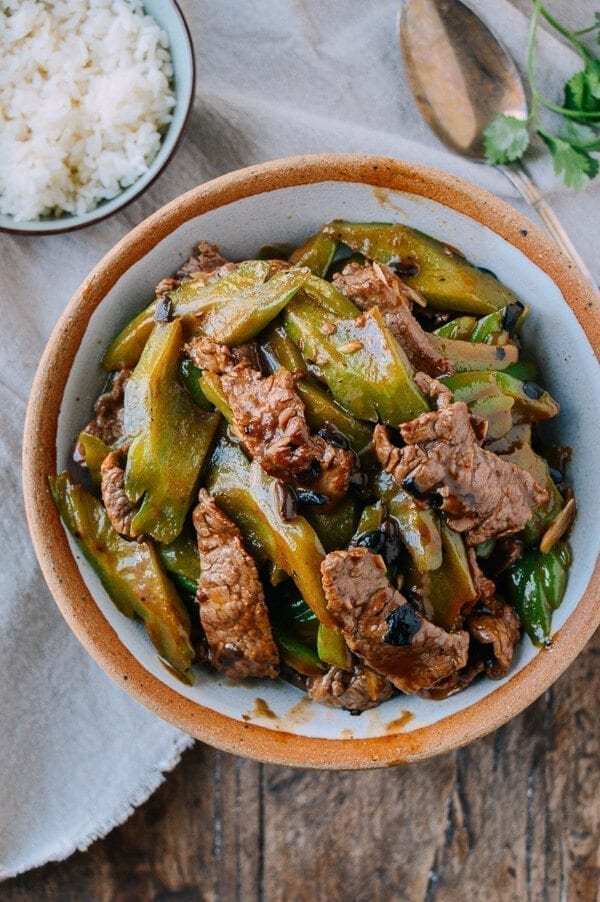
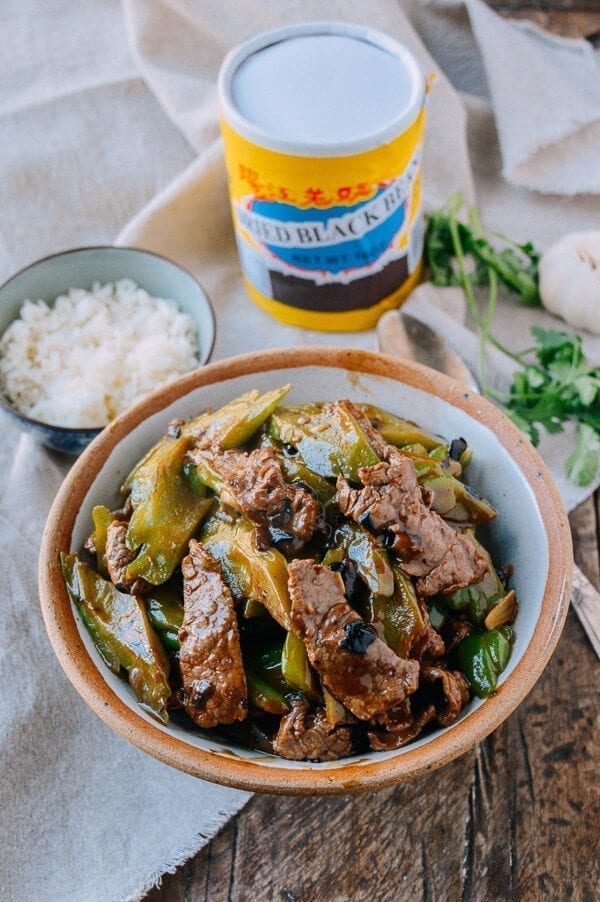
Beef with Bitter Melon
This is perhaps the best known Chinese bitter melon dish, especially in Cantonese families. The bitter melon is stir-fried with thin strips of marinated beef, fermented black beans, and garlic. It’s actually one of our all-time favorite dishes, and one that we enjoy often in the summer!
This dish was particularly enjoyed by my maternal grandpa, and we order it often at Cantonese restaurants when bitter melon is in season. It’s one of Justin’s favorite foods too! I knew he was a keeper when he made it for my for dinner one night, following our recipe!
Bitter Melon Stir-fry with Eggs
One of the most common preparations for bitter melon in China is to stir-fry it with eggs. This is also common in the Philippines, Indonesia, and other parts of Southeast Asia, as well as Okinawa in Japan (where they may also add pork and other ingredients).
Ours is a simple Chinese version, and an easy way to enjoy bitter melon when it’s busting out of the garden! With our rich eggs from our chickens and ducks, it’s even better.

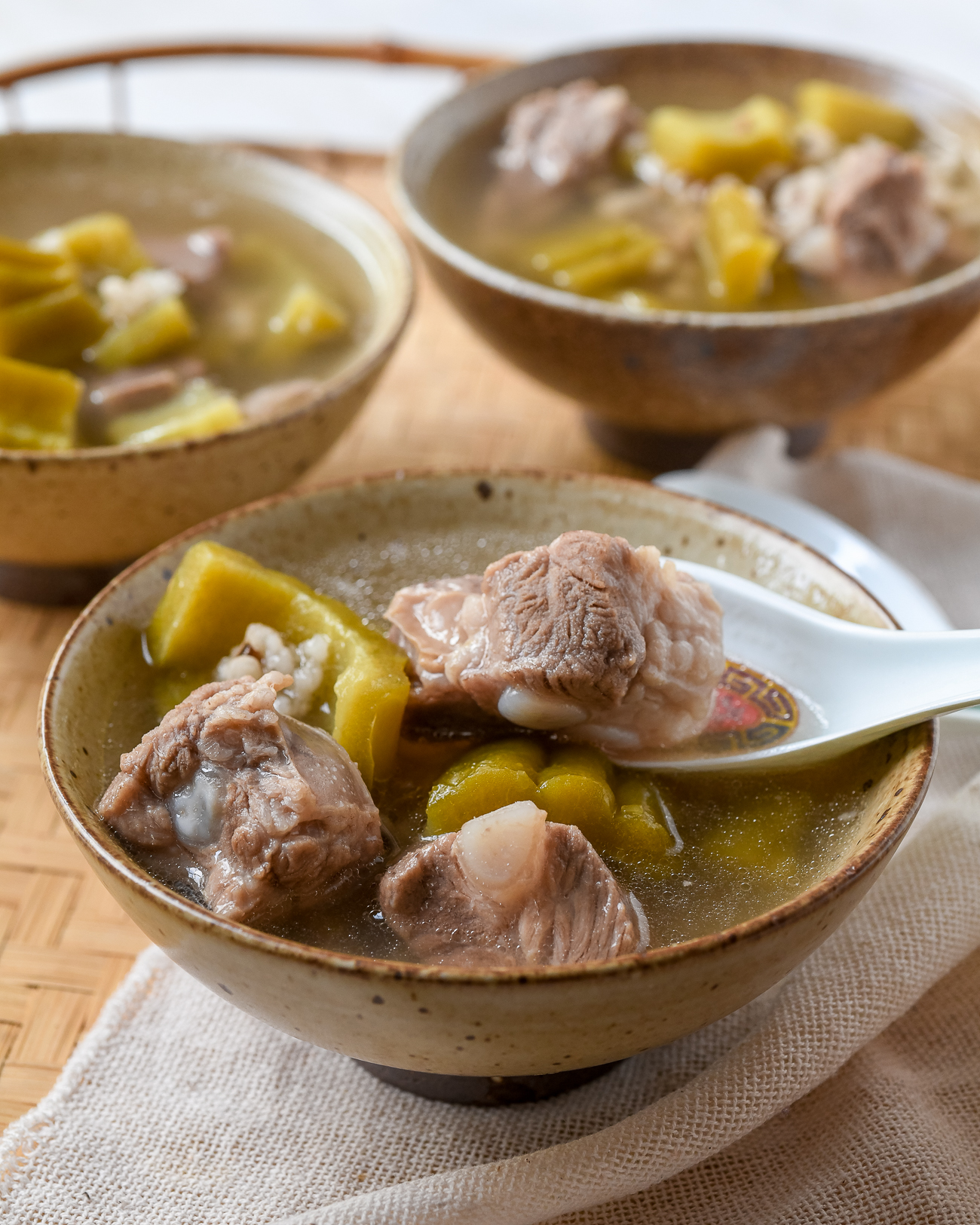
Bitter Melon Soup with Pork Bones
Another common way to cook bitter melon is to have it in soup. We pair it with rich pork bones and barley to create a healthy, surprisingly delicious Cantonese soup! With a little pinch of MSG, this soup is extra tasty!
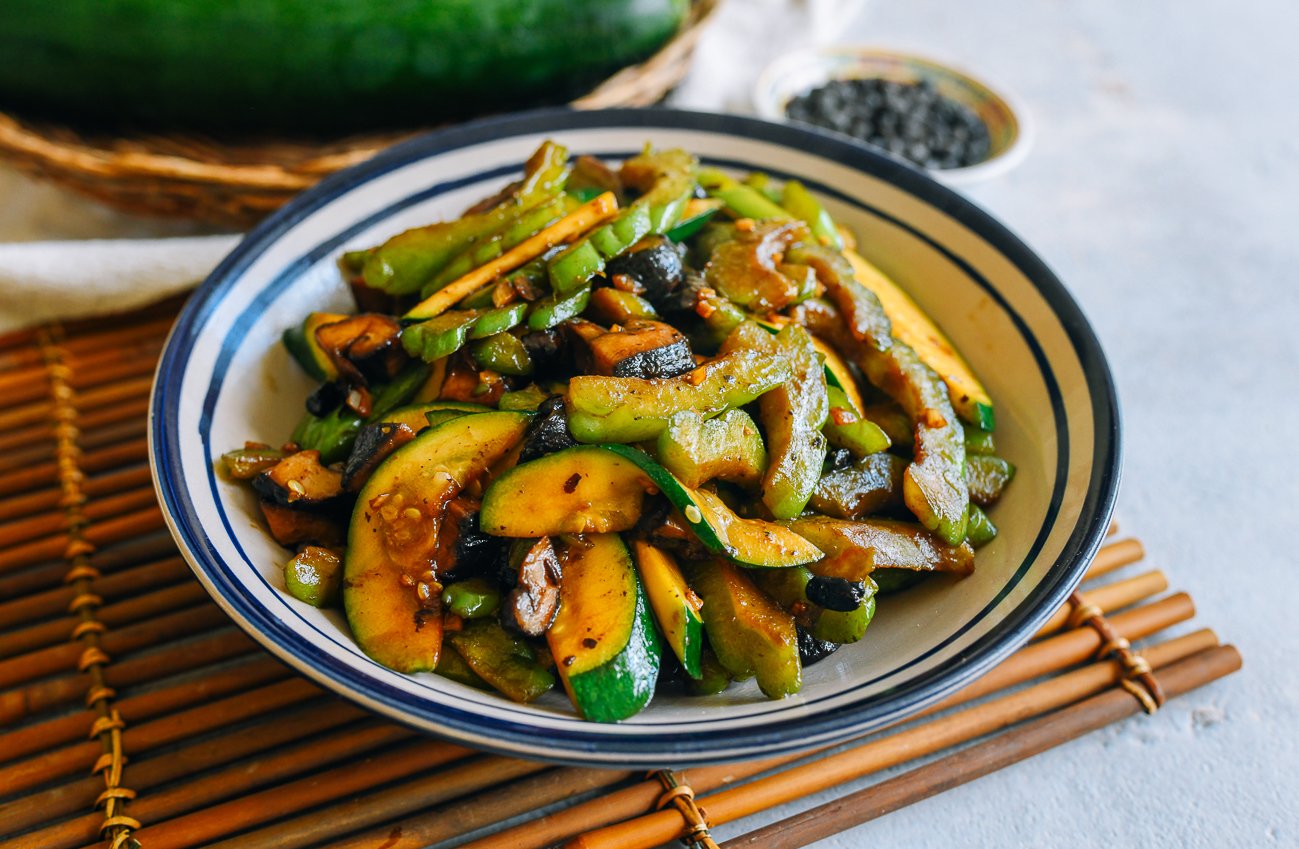
Bitter Melon Stir-fry with Black Bean Sauce
This is a vegetarian/vegan version of the Cantonese bitter melon with black bean sauce and beef. Instead of beef, we used mushrooms to create a savory black bean sauce without the meat!
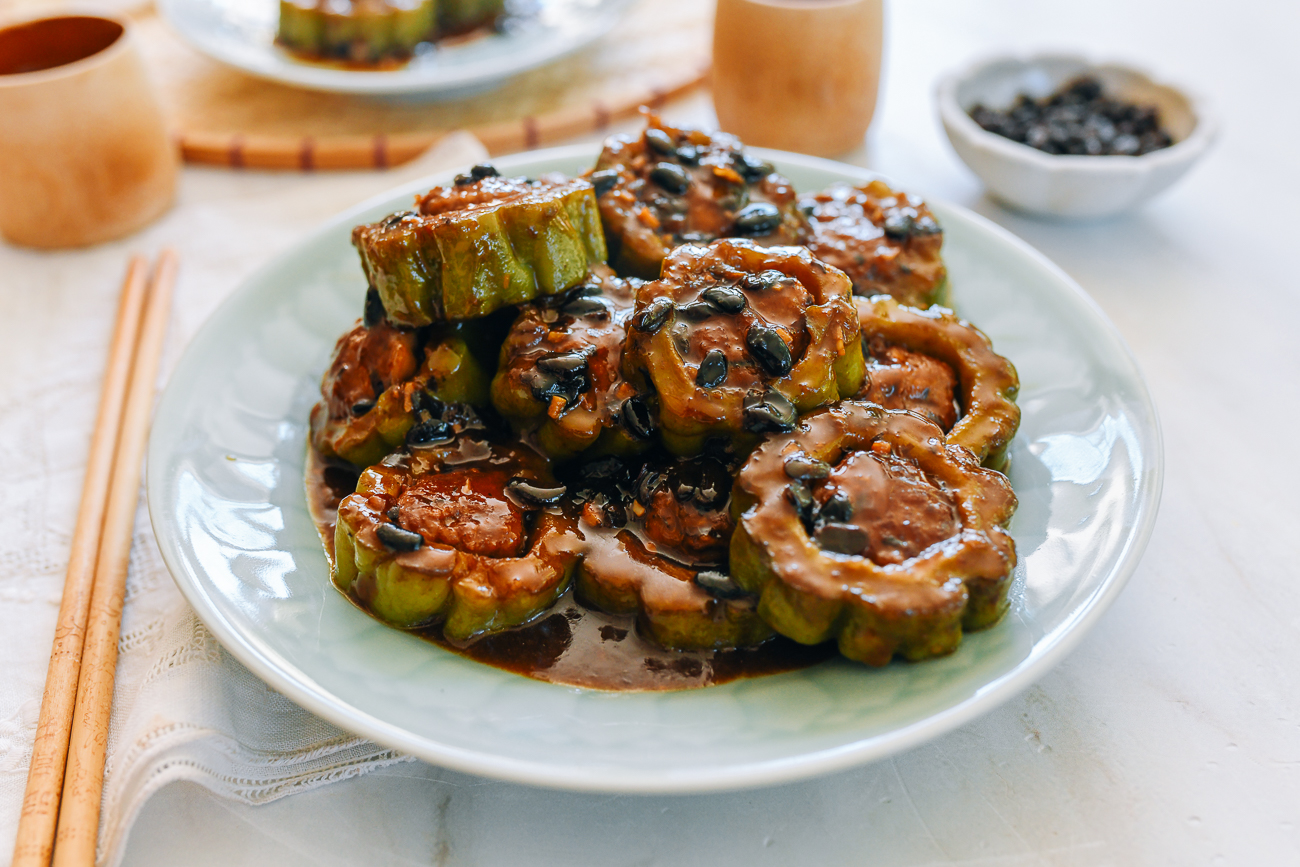
Stuffed Bitter Melon with Black Bean Sauce
This is another classic Cantonese preparation for bitter melon, with a meat filling. The bitter melon pieces are then pan-fried and braised in a tasty sauce.
We hope that the name “bitter melon” hasn’t scared you off, and that you’re thinking about growing it in your garden next year.
While it’s certainly an acquired taste (like broccoli rabe or any other bitter fruit/vegetable), it’s definitely worth trying. Be sure to keep following along with our How to Grow Chinese Vegetables series!
Next month, we’re talking about how to grow Choy Sum (yu choy)! Happy gardening and cooking everyone!