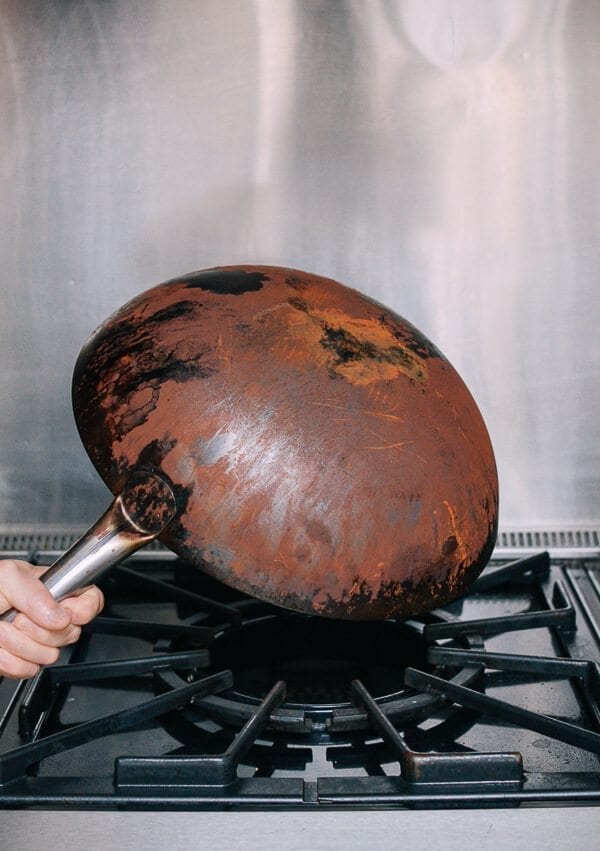
Did you buy a carbon steel wok years ago and promptly forget about it? If it’s rusty or otherwise a little worse for wear, don’t worry. In this post, we’re talking about how to clean and re-season a rusty wok and start cooking with it again!
Don’t Throw Away Your Rusty Wok!
If you’ve read our post on what type of wok to buy, you know that we’re strongly in favor of carbon steel woks! However, carbon steel (as well as cast iron) is susceptible to rust, especially if left in a humid or moist environment for an extended period (read: that corner of your basement or garage!). Both materials contain iron, which oxidizes and forms rust when wet.
We’ve heard from many readers over the years who have told us that they stored an old wok away, only to dig it back out of their damp basement, garage, or pantry to find it covered in rust.
Sadly, the impulse is often to throw this rusty wok away and buy a new one. But this is an important Woks of Life PSA: Carbon steel and cast iron woks can last a lifetime (or multiple lifetimes—we have woks that are decades old—they can be passed down to the next generation). They CAN be revived if rusty. If you have a carbon steel or cast iron wok that’s rusted, don’t throw it away!

All you need to do is scrub off the rust and re-season the wok, and you’ll be back to cooking with it in no time. We’ll also talk about how to prevent rust in the future, so you can use and maintain your wok for years to come!
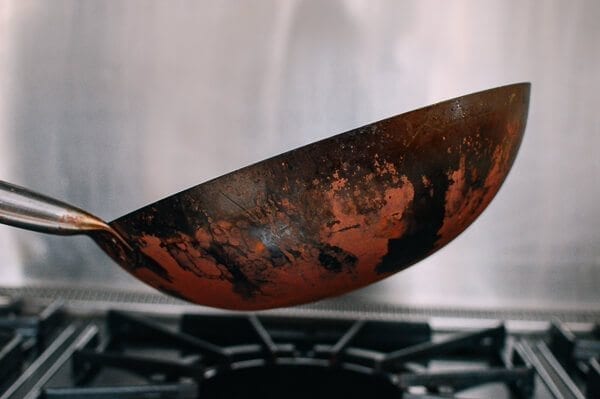
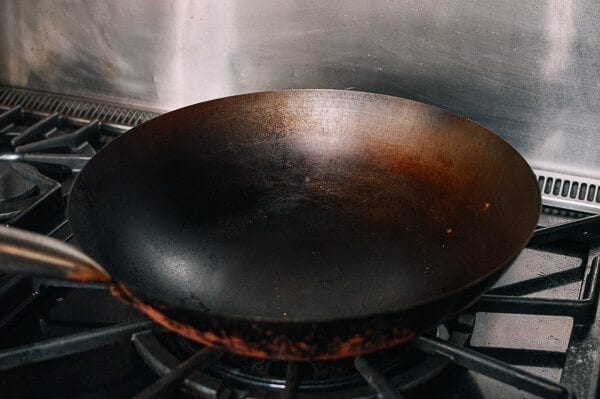
How to Revive a Rusty Wok
There are two parts to the process of bringing a rusty wok back to working order: scrubbing and re-seasoning.
1. Scrubbing
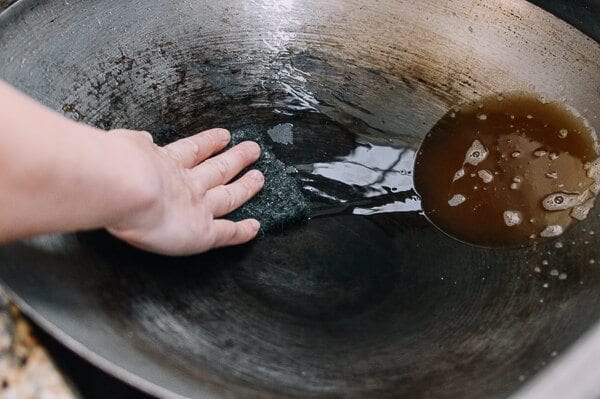
Let’s start with scrubbing. Get some steel wool or other scouring pad, and a little dish soap, and give the wok (inside and outside) a good scrub to remove the surface rust.
You’ll want to rinse with hot water as you scrub, until you have removed the visible rust, and the surface of your wok feels nice and smooth. In addition to the rust, you may be removing burnt and caked on oils and bits of food.

The rust isn’t coming off?!
Hi everyone, Kaitlin dropping in here. The other day I found myself with a new wok that had somehow gotten a bit rusty sitting inside my oven. This could be from small condensation on other pans that I had washed, dried, and put away (but not heated before doing so), creating an environment where a thin dusting of rust could form on my brand new wok!
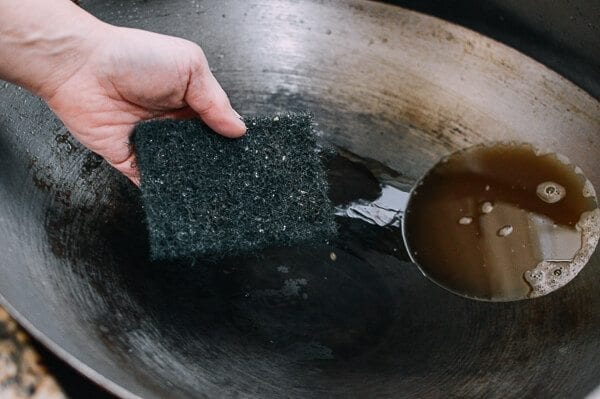
Heeding my dad’s advice, I grabbed the rough green side of my sponge and started scrubbing. At first I thought I had gotten most of it so I proceeded with the drying step over the stove. Later I came back and noticed it still had an orange patina on the underside. So I went in with the heavy duty scouring pad shown below and really went to town on it. Eventually I revealed the silver carbon steel once again and this time all the rust was truly gone.
As always with real world kitchen exploits, explaining is easy, but actually doing the thing might take some trial and error and persistence! So don’t forget to bring your elbow grease when reviving a rusty wok. :)
We find that many of you have been instructed not to ever clean your wok with soap, or even wash it very thoroughly, which is incorrect! Not washing your wok properly can lead to burnt bits of crusted on food building up, and little black bits in your cooked dishes. No one wants that.
To Dish Soap, or not to soap?
For “cleaner” dishes like stir-fried veggies, steaming setups, and boiling/simmering, dish soap is usually not necessary. You can probably get a way with a quick scrub and rinse under warm water before drying your wok (over flame to ensure it’s completely dry, of course) for its next use.
However, if cooking a particularly oily or saucy dish that results in some caked on food residue, there is no harm in using a little bit of dish soap in your wok. We treat cast iron pans the same, without supposedly messing up the seasoning/patina.
Trust us, this is better than not properly washing your pans and ending up with old food residue in your dishes!
Keep scrubbing and rinsing until you’ve scrubbed off the rust, and the surface of the wok feels nice and smooth. Place the wok over high heat to dry it, until all the moisture has evaporated.
Let your wok cool, and scrub it once more. This extra step ensures that it’s nice and clean before you re-season.
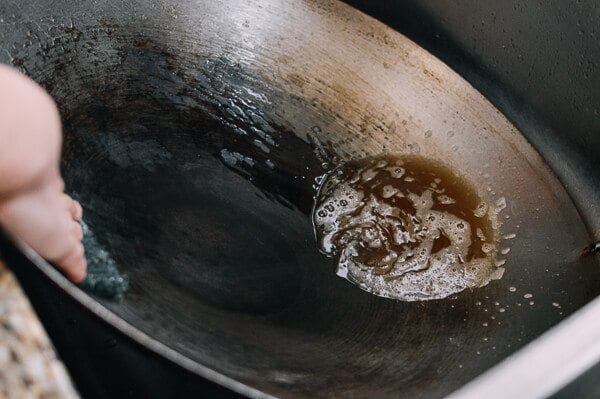
Then dry it again over the heat of your stove, until all the moisture has again evaporated.
What’s the best cleaning tool for a wok?
If your wok is excessively rusty, steel wool or other scouring pad is the thing to reach for. In normal times, you can use just about any kind of sponge to wash your wok. You can read more about it in our guide to washing your wok.
We avoid using stainless steel scrubbers, which can be a bit too harsh on the pan (and on your hands) and are not as effective as steel wool.
2. Re-seasoning
Heat the wok over medium-low heat, and pour in 1 tablespoon of neutral oil. Swirl the oil evenly around the surface of the wok. Use a paper towel to spread the oil around the entire interior surface. You can use a metal spatula/wok spatula to move the paper towel so your hands don’t need to get close to the heat.
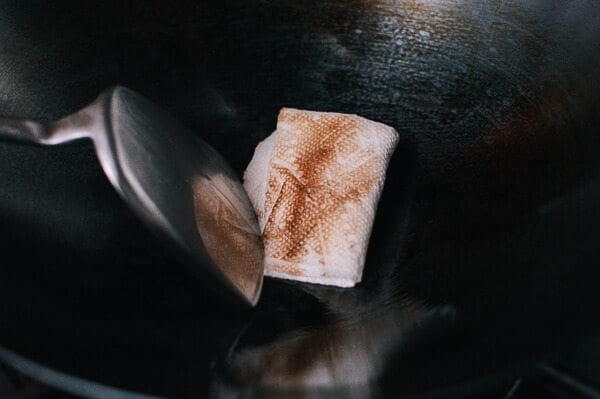
There shouldn’t be any standing oil, though you may have a little extra if your wok is on the smaller side. The heat of the pan should bond the oil with the metal to help create a non-stick cooking surface.
The wok is now again ready to use!
Is rust toxic? (What’s that brown residue on the paper towel?!)
If there is still some minor rust residue (e.g., you see a tint of brown or see some rust residue on the wok or on the paper towel), rest assured it is safe to use. As you regularly use the wok, your patina will get better and better and this small amount of rust will go away.
Rust shouldn’t be ingested, but usually a small amount of rust is not considered toxic, rather the way that it can damage cooking utensils and lead to spoiled food is.
How to Prevent Your Wok from Rusting in Future
To prevent your wok from rusting in the future, make sure you’re heating it over the stove to completely dry it after washing. This step is KEY.
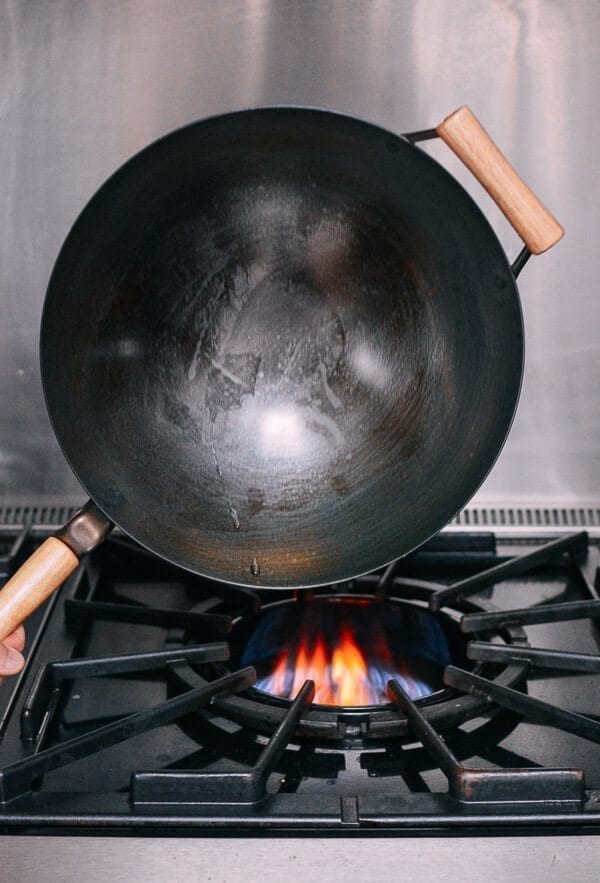
Then you can allow your thoroughly dry wok cool down on the stove before storing it away.
If you like, you can also lightly oil it with an oiled paper towel after drying. This will go even farther in helping to prevent rust.
That’s it! Thoroughly dry it, oil it if you like, and avoid storing your wok in a damp place or leaving it anywhere damp for a long period of time. You’ll be able to enjoy it and cook with it for many years to come.
Conclusion
We hope this quick post and tutorial on how to revive a rusty wok was helpful! We also hope it prevents the unnecessary discarding of perfectly good woks everywhere!
Also check out these posts:
- Choosing a Wok to Buy (Our Recommendations!)
- How to Season a New Wok
- How to Wash a Wok
- How to Prevent Food from Sticking to Your Wok
- Our Full List of Chinese Cooking Tools
Any more wok questions? Let us know in the comments below!
We want to see your rusty wok—Before and after!
If you’ve got a before and after of cleaning a rusty wok, shoot us a picture via email (family@thewoksoflife.com) or tag us on Instagram @thewoksoflife and we’ll share it here!