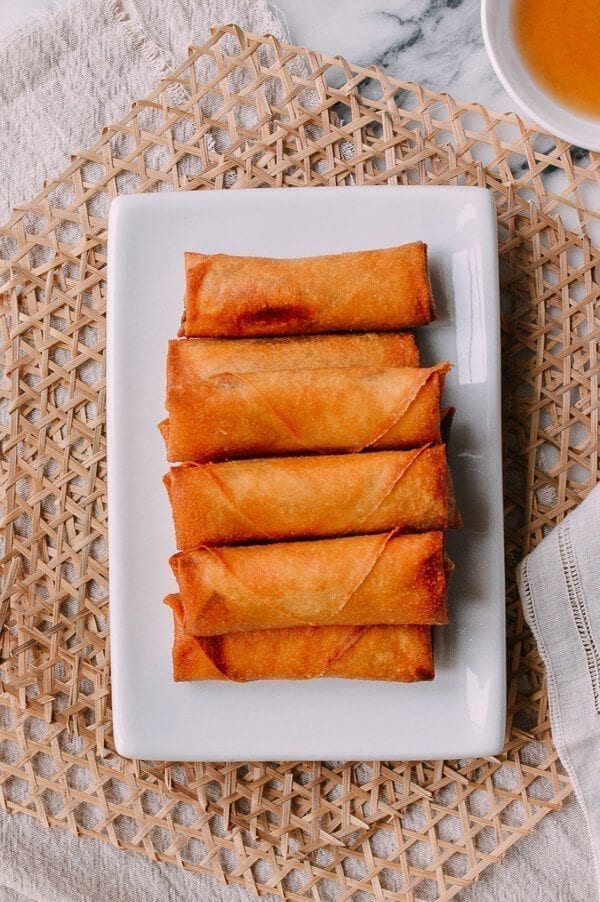
Spring rolls are a favorite dim sum item, party appetizer, and symbolic Chinese New Year food. However, some people steer clear because they don’t know how to wrap spring rolls properly, causing them to fry unevenly or worse—come apart during frying.
Well, that just won’t do. On our blog, we’ve covered several delicious spring roll recipes:
- Cantonese Spring Rolls (like the ones you can get at dim sum restaurants)
- Shanghai-style spring rolls (Judy makes these every Chinese New Year)
- Vietnamese Fried Spring Rolls (AKA cha gio)
In this post, we’ll go over in detail how to fold spring rolls (both Chinese and Vietnamese) so you can give those recipes a try.
With Lunar New Year celebrations coming up, you definitely don’t want to miss out. Spring Rolls resemble gold bars, and are symbolic of wealth and prosperity!
Different Types of Spring Rolls
About: Chinese Spring Rolls
Chinese spring rolls (春卷, chūnjuǎn) get their light, crisp exterior from thin wheat-based square wrappers.
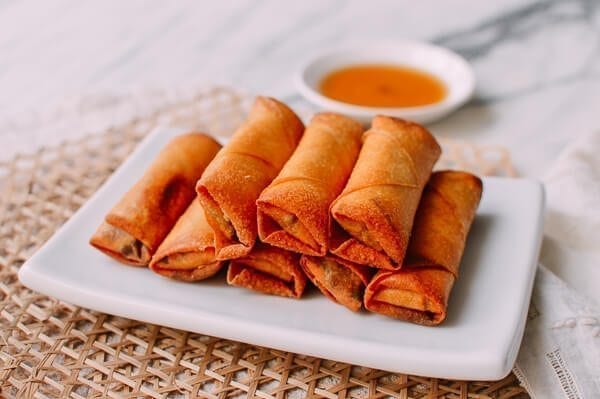
The wrappers come in different sizes, and might be labeled spring roll “wrappers,” “pastry,” “skins,” or “shells.”
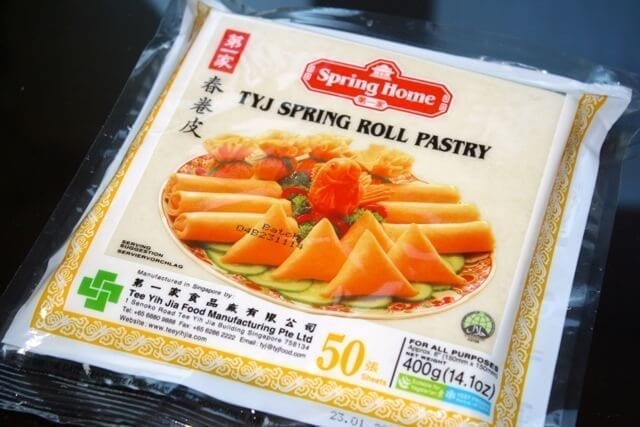
You can find them in the freezer section and store them frozen at home. They defrost easily and are ready to use right out of the package.

Tip!
It’s best to use spring roll wrappers not long after purchasing, as they are quite delicate and can get freezer burned if stored too long. Also make sure to use them shortly after thawing.
Usually, Chinese spring roll filling consists of a rather moist mixture of napa cabbage, mushrooms, pork, and other vegetables/seasonings.
Cabbage/other vegetables make up the bulk of the filling, which is why it’s generally wetter than a meat-based Vietnamese spring roll filling.
Tip!
The best way to seal your spring rolls is using a slurry of cornstarch and hot water. We have tried egg wash, but it tends to “stain” the spring roll, creating dark spots that become more obvious after frying. A cornstarch mixture is best for getting a clean, even golden brown!
About: Vietnamese Spring Rolls
Vietnamese spring rolls (cha gio) are also fried, but they’re made with rice paper wrappers rather than wheat-based wrappers. They’re a favorite appetizer on any Vietnamese restaurant menu, and we never pass them up!
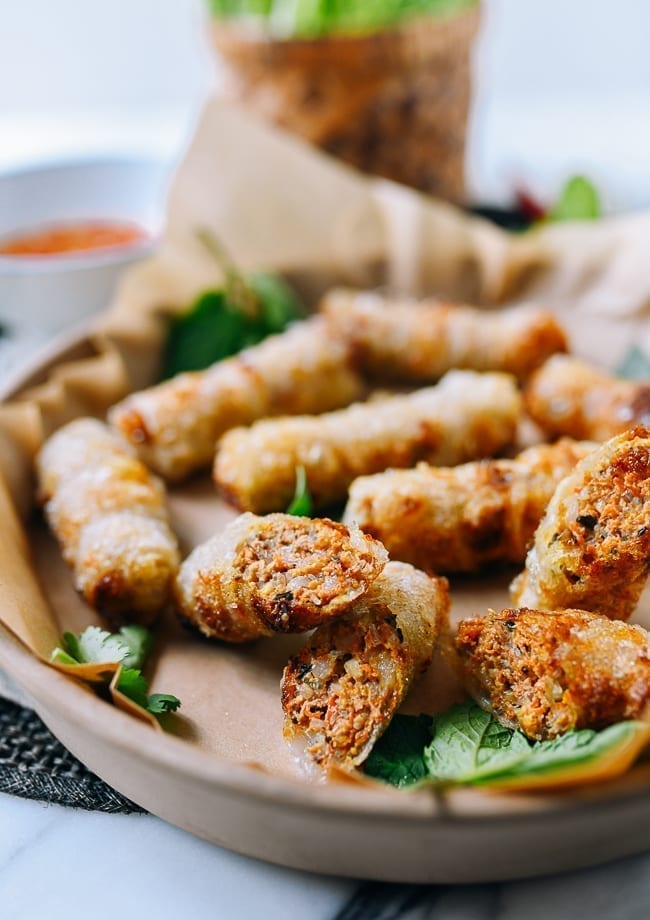
While Chinese spring roll wrappers are usually in the freezer section of the Asian market, you’ll find these shelf-stable dried rice paper wrappers near the dried rice noodles.
Some rice flour wrappers also use tapioca flour. Both varieties are generally gluten-free, but always double check by looking at the ingredients label on the package. You can use them interchangeably.
They come in thin round sheets that look almost like clear plastic. They rehydrate quickly in water (just a few seconds will do it) and will then become flexible enough to wrap around filling.
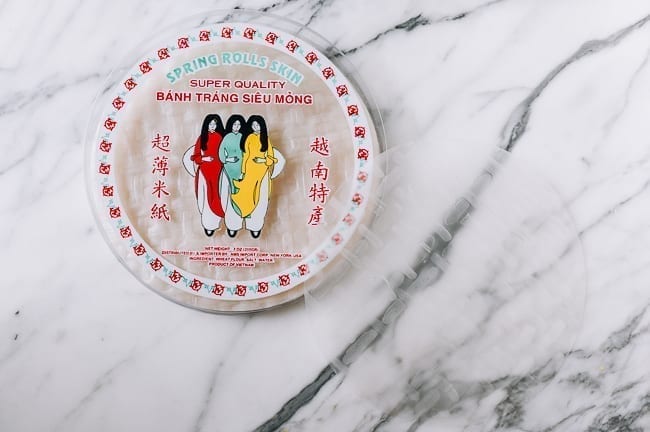
After rehydrating, the wrappers are also quite sticky. They are therefore self-sealing—you don’t need anything additional to seal a Vietnamese spring or summer roll.
Cha gio filling is usually pork-based, with other ingredients mixed in, including chopped wood ear mushrooms, glass noodles, and carrots. The result is a meatier, drier spring roll.
Spring Rolls vs. Summer Rolls
We should make a quick distinction between spring rolls and summer rolls. They are both made with rice wrappers (bánh tráng), but spring rolls are crispy and deep fried (cha gio), while summer rolls are made with raw rice paper wrappers and fresh/cold ingredients (goi cuon). Check out our recipe for Vietnamese Shrimp Summer Rolls!
Other Types of Spring Rolls
There are many other types of spring rolls across Asia, including those specific to Hong Kong/Macau, Taiwan, the Philippines (where they’re called lumpia), Malaysia, Singapore, Myanmar, and even countries outside of Asia with large immigrant populations.
Most of these varieties were derived from Southern-Chinese-style spring rolls, and the Chinese spring roll folding method would apply.
However, because Vietnamese spring rolls (and summer rolls) use a different type of wrapper (rice paper vs. a wheat-based wrapper), the method is slightly different.
In both types, however, the key is making sure the spring rolls are tight, yet not overstuffed. We’ll go over everything in our instructions below!
How to Wrap Chinese Spring Rolls (春卷, chūnjuǎn)
Place the spring roll wrapper on a flat surface so one of the four corners is facing toward you (it should look like a diamond).
Use about two tablespoons of pre-cooked, cooled/refrigerated filling per spring roll, and place the filling 2 inches from the corner closest to you.
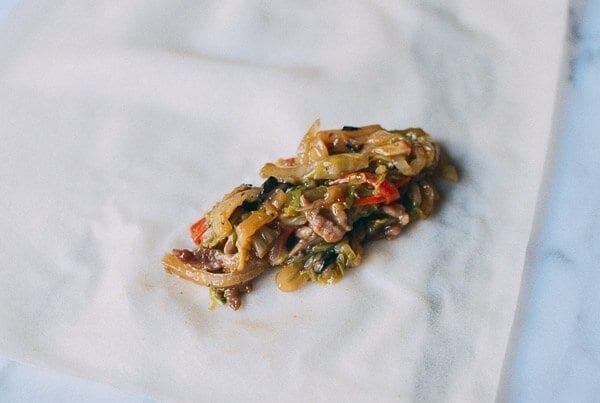
Roll the corner over the filling once…
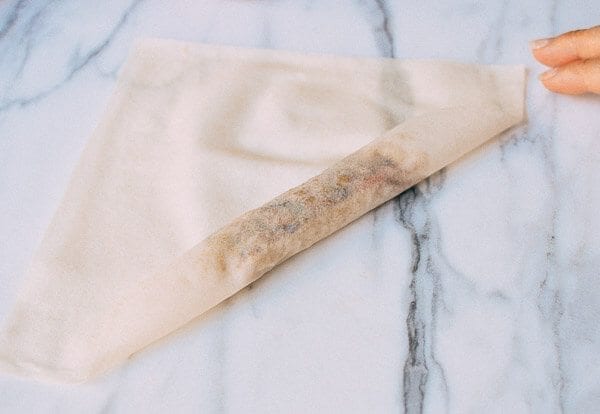
And gently press down on each side of the filling to flatten the spring roll wrapper.
Next, fold over both the left and right sides of the wrapper towards the middle.
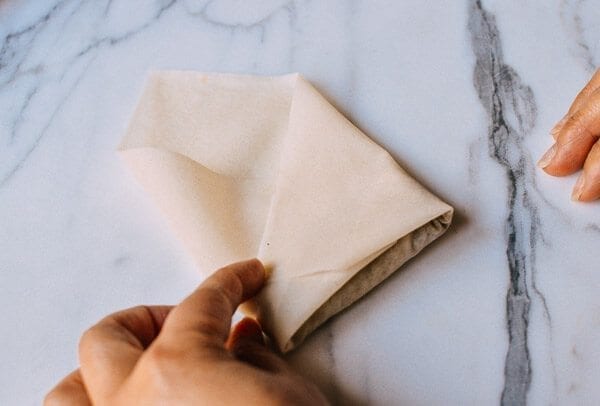
Stir up the cornstarch slurry with your finger, and gently brush it onto the opposite corner of the wrapper (you can also do it on the diagonals, like an envelope seal). Continue rolling the spring roll into a tight cigar.
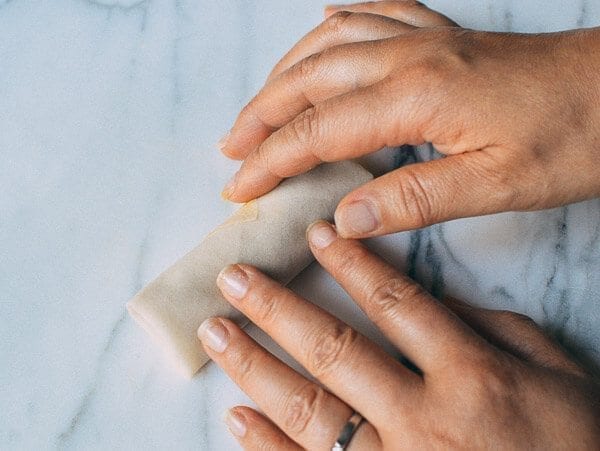
Place it sealed side down on a wooden cutting board or a sheet pan lined with parchment paper.
See this type of folding in action in the video below!

How to Fold Vietnamese Spring Rolls (cha gio)
In a large, shallow bowl, dissolve 2 teaspoons of granulated sugar in 1 cup warm water.
(The sugar is optional. It will help the rolls brown during frying, but you could also omit it and end up with lighter colored results.)
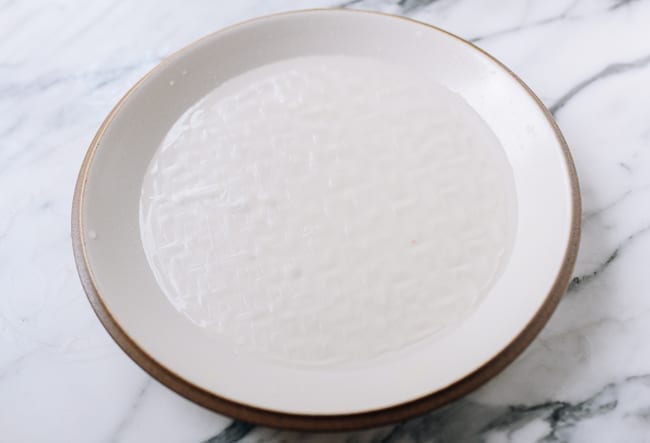
Submerge each rice paper wrapper into the prepared sugar water for about 5 seconds, and carefully remove from the water.
Hold it vertically to let the excess water drip off, and place it on a clean work surface, i.e. a clean cutting board or countertop.
Press your filling into a log shape, placing it on the lower third of the wrapper.
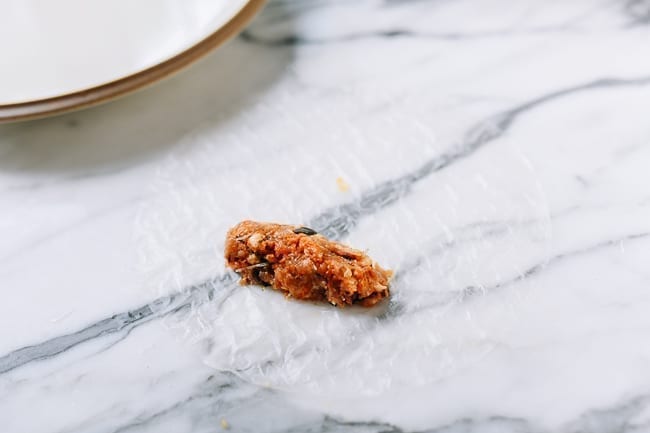
Begin folding the wrapper over the filling (try not to trap any air between the wrapper and the filling), and roll the spring roll forward one complete revolution.
Lightly press down on each end of the filling to flatten the rice paper and eliminate air bubbles.
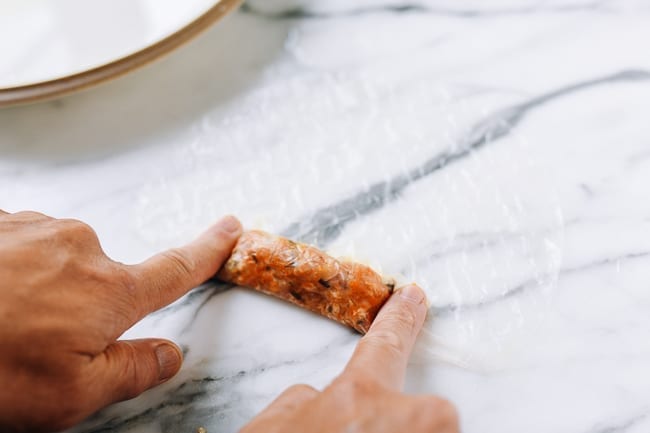
Fold each side of the wrapper towards the middle of the spring roll…
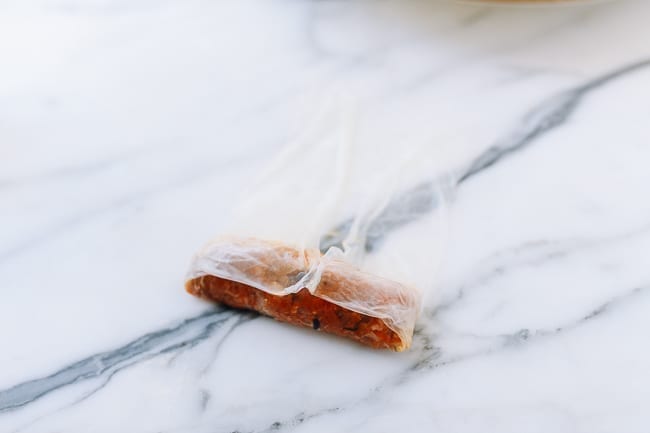
And roll it forward while tucking in the front to prevent air pockets from forming.
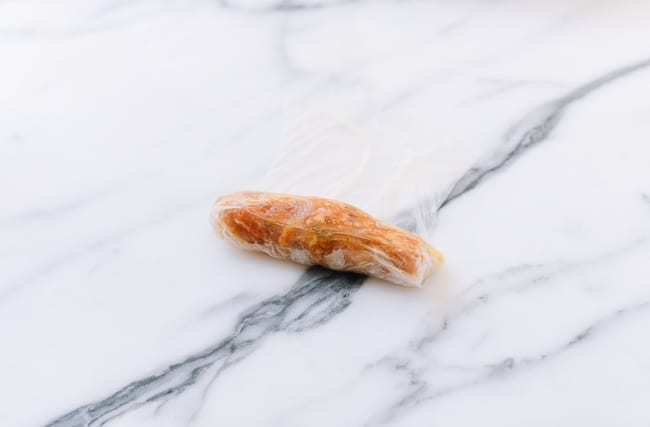
The rice paper wrapper will stick to itself naturally. Place the rolls on a sheet pan lined with parchment paper.
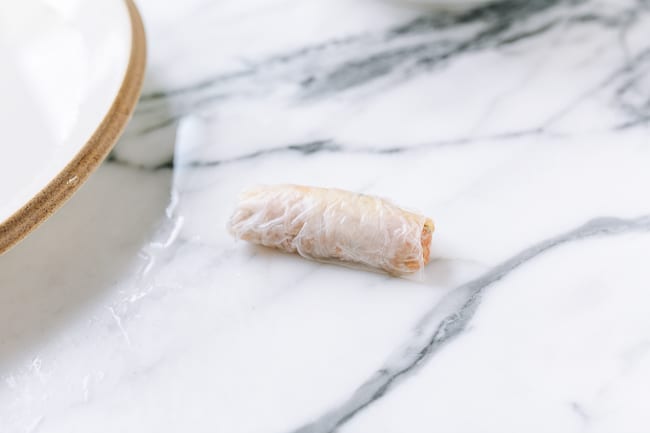
See a live demonstration in the video below:

Additional tips for folding cha gio:
- Use just enough water to wet the rice paper. It won’t soften right away, but soon after you remove it from the water, it will absorb moisture and be soft enough to roll.
- Work quickly, since the rice paper can get sticky after rehydrating, making it harder to work with.
- As you’re folding, ensure there’s no air between the wrapper and the filling.
- Once wrapped, chill the spring rolls before frying so the wrapper can dry out and firm up. This makes them easier to handle, less prone to sticking, and results in a more even texture after frying.
How to Wrap a Vietnamese Summer Roll (goi cuon)
Let’s also quickly go over how to wrap a summer roll. This is a much easier, foolproof process, since there’s no additional step of deep-frying! These rolls are also quite a bit bigger in size.
Place 1 cup of water in a large, shallow bowl. Submerge each rice paper wrapper for about 5 seconds.
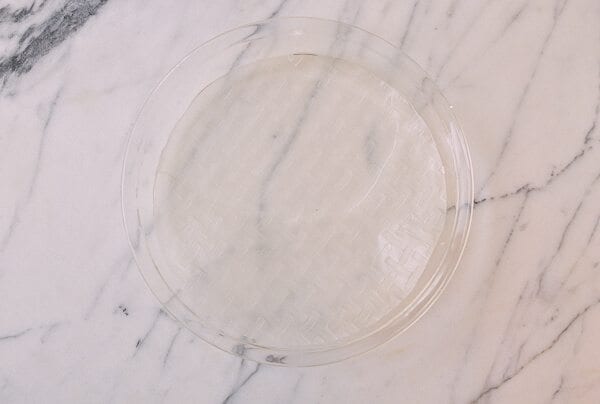
Carefully remove from the water and let any excess drip off. Place the rehydrated wrapper on a clean work surface.
Place your filling in the lower third portion of the wrapper.
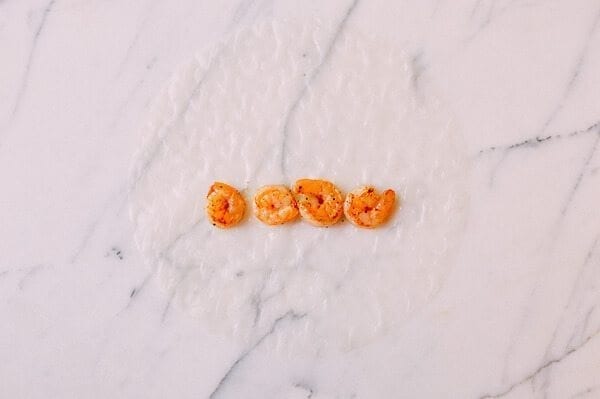
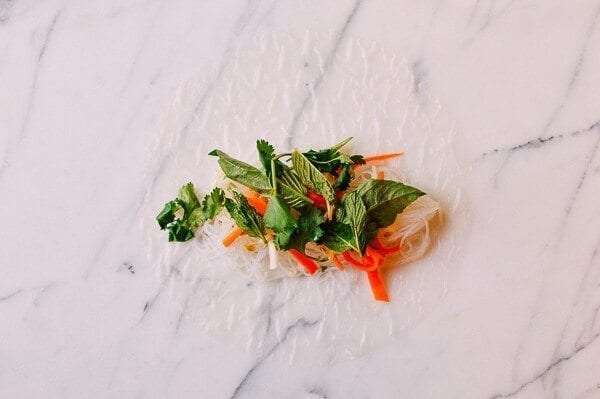
Fold the wrapper over the filling and roll the spring roll forward 1 complete revolution to cover the filling. It’s ok for the filling to be loose.
Lightly press down on each end of the filling to seal the ends, and fold each side of the wrapper towards the center of the spring roll, rolling forward until it’s completely sealed.
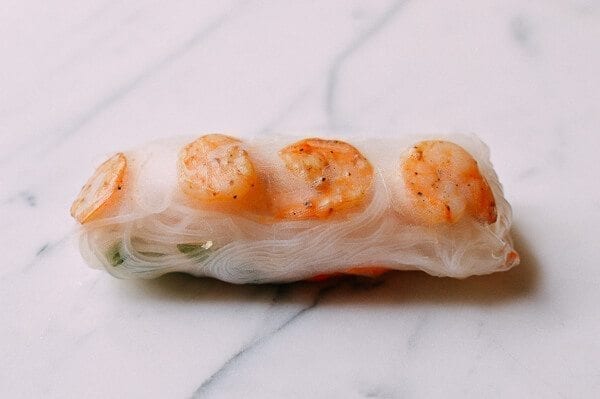
The rice paper wrapper will stick to itself and doesn’t require anything additional to seal. Place the rolls on a serving plate so they do not touch, or they will stick together.
Looking for more authentic recipes? Subscribe to our email list and be sure to follow us on Pinterest, Facebook, Instagram, and Youtube!
Recipe

How to Wrap Spring Rolls
Ingredients
For Chinese spring rolls:
- 1 package thin Chinese Spring Roll wrappers (keep frozen, and thaw right before use)
- 1 tablespoon cornstarch
- 1 tablespoon water
For Vietnamese fried spring rolls:
- 1 package dried rice paper wrappers
- 2 teaspoons sugar (optional)
- 1 cup water
For Vietnamese summer rolls:
- 1 package dried rice paper wrappers
- 1 cup water
Instructions
To Wrap Chinese Spring Rolls:
- Place the spring roll wrapper on a flat surface so one of the four corners is facing toward you (it should look like a diamond). Use about two tablespoons of pre-cooked, cooled/refrigerated filling per spring roll, and place the filling 2 inches from the corner closest to you.
- Roll the corner over the filling once, and gently press down on each side of the filling to flatten the spring roll wrapper.
- Next, fold over both the left and right sides of the wrapper towards the middle. Stir up the cornstarch slurry with your finger, and gently brush it onto the opposite corner of the wrapper.
- Continue rolling the spring roll into a tight cigar, and place it sealed side down on a wooden cutting board or a sheet pan lined with parchment paper.
To Wrap Vietnamese Fried Spring Rolls (cha gio):
- In a large, shallow bowl, dissolve 2 teaspoons of granulated sugar in 1 cup warm water. The sugar is optional. It will help the rolls brown during frying, but you could also omit it and end up with lighter colored results.
- Submerge each rice paper wrapper into the prepared sugar water for about 5 seconds, and carefully remove from the water. Hold it vertically to let the excess water drip off, and place it on a clean work surface (e.g., a clean cutting board or countertop).
- Working quickly, press your filling into a log shape, placing it on the lower third of the wrapper. Begin folding the wrapper over the filling (try not to trap any air between the wrapper and the filling), and roll the spring roll forward one complete revolution.
- Lightly press down on each end of the filling to flatten the rice paper and eliminate air bubbles. Fold each side of the wrapper towards the middle of the spring roll, and roll it forward while tucking in the front to prevent air pockets from forming. The rice paper wrapper will stick to itself naturally. Place the rolls on a sheet pan lined with parchment paper. For best results, chill the spring rolls before frying so they can dry out and firm up for a more even texture after frying.
To Wrap Vietnamese Summer Rolls (goi cuon):
- Place 1 cup of water in a large, shallow bowl. Submerge each rice paper wrapper for about 5 seconds. Carefully remove from the water and let any excess drip off. Place the rehydrated wrapper on a clean work surface.
- Place your filling in the middle of the wrapper. Fold the wrapper over the filling and roll the spring roll forward 1 complete revolution to cover the filling. It’s ok for the filling to be loose.
- Lightly press down on each end of the filling to seal the ends, and fold each side of the wrapper towards the center of the spring roll, rolling forward until it’s completely sealed. The rice paper wrapper will stick to itself and doesn’t require anything additional to seal. Place the rolls on a serving plate so they do not touch, or they will stick together.