When people try to figure out how to eat less meat, the conversation usually goes one of two ways:
- You’re all-in on vegetarianism or veganism…
- Or you designate one or two days a week to go meatless (hello, Meatless Monday).
Or…if you’re someone who loves meat and has zero interest in giving it up? Well, you’re probably tuning out entirely. (I see you! If you’re not interested in this topic, feel free to stop reading now. If you’re feeling open-minded, hear me out!)
What if I told you there’s a third way—one that lets you keep enjoying meat while eating healthier and more sustainably—that’s been practiced in Chinese kitchens for generations?
Growing up in a Chinese-American household and now running The Woks of Life with my family, I’ve come to realize that traditional Chinese home cooking offers a blueprint for what I call eating “meat-lite.”
A Changing Relationship to Meat on The Woks of Life Family Table
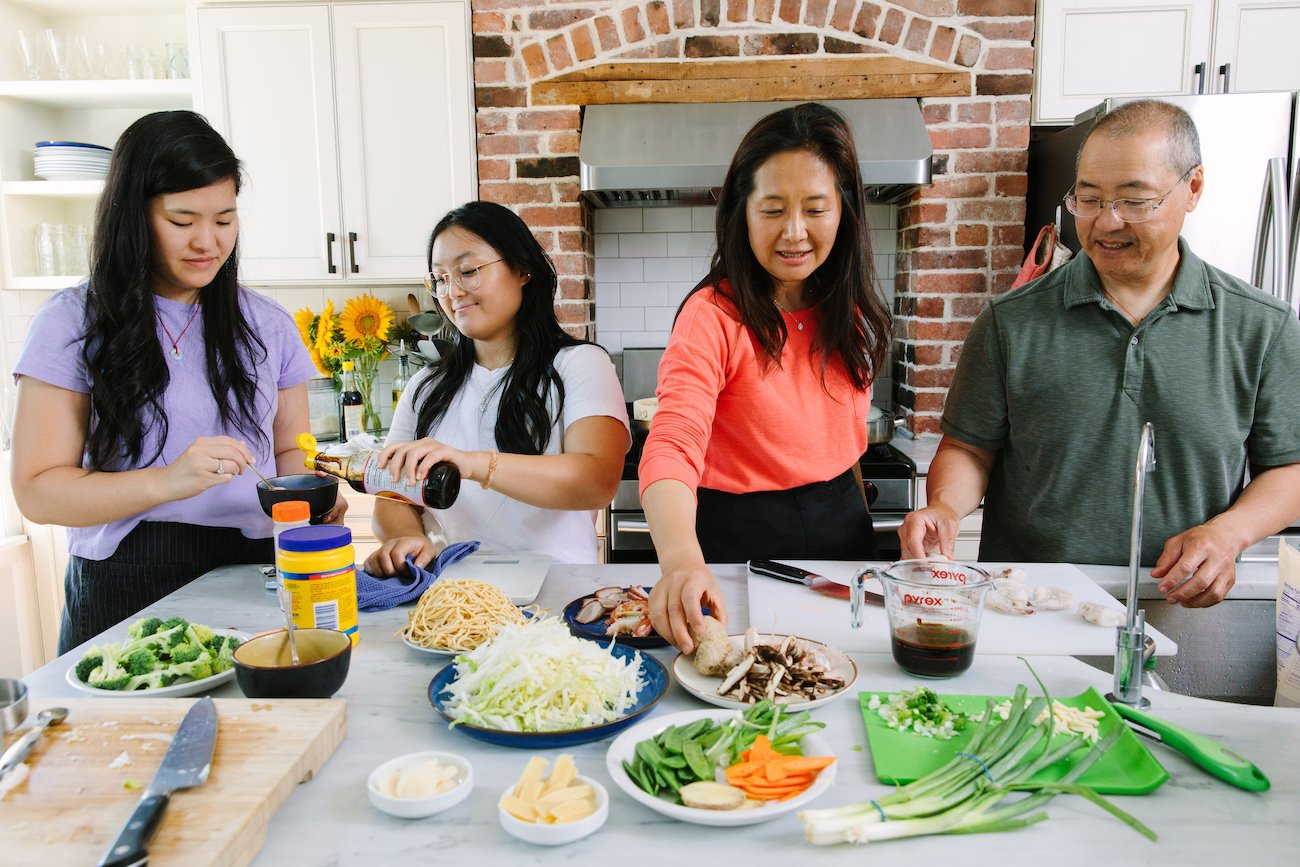
I first thought about this idea while sitting around our dinner table after a marathon blogging day. We’d just finished cooking and photographing a bunch of recipes, and the remnants were scattered across the table alongside some dishes we’d whipped up fresh for dinner.
As I looked at our spread, something struck me. The table felt both completely familiar and subtly different from the meals Kaitlin and I grew up with. Familiar, because we were still enjoying the flavors that had shaped our palates from day one. But different in a way that took me a moment to pinpoint.
Then it hit me: meat used to dominate our family table. When we were kids, steaks, full racks of ribs, and whole chicken leg quarters were more frequent sights at dinnertime.
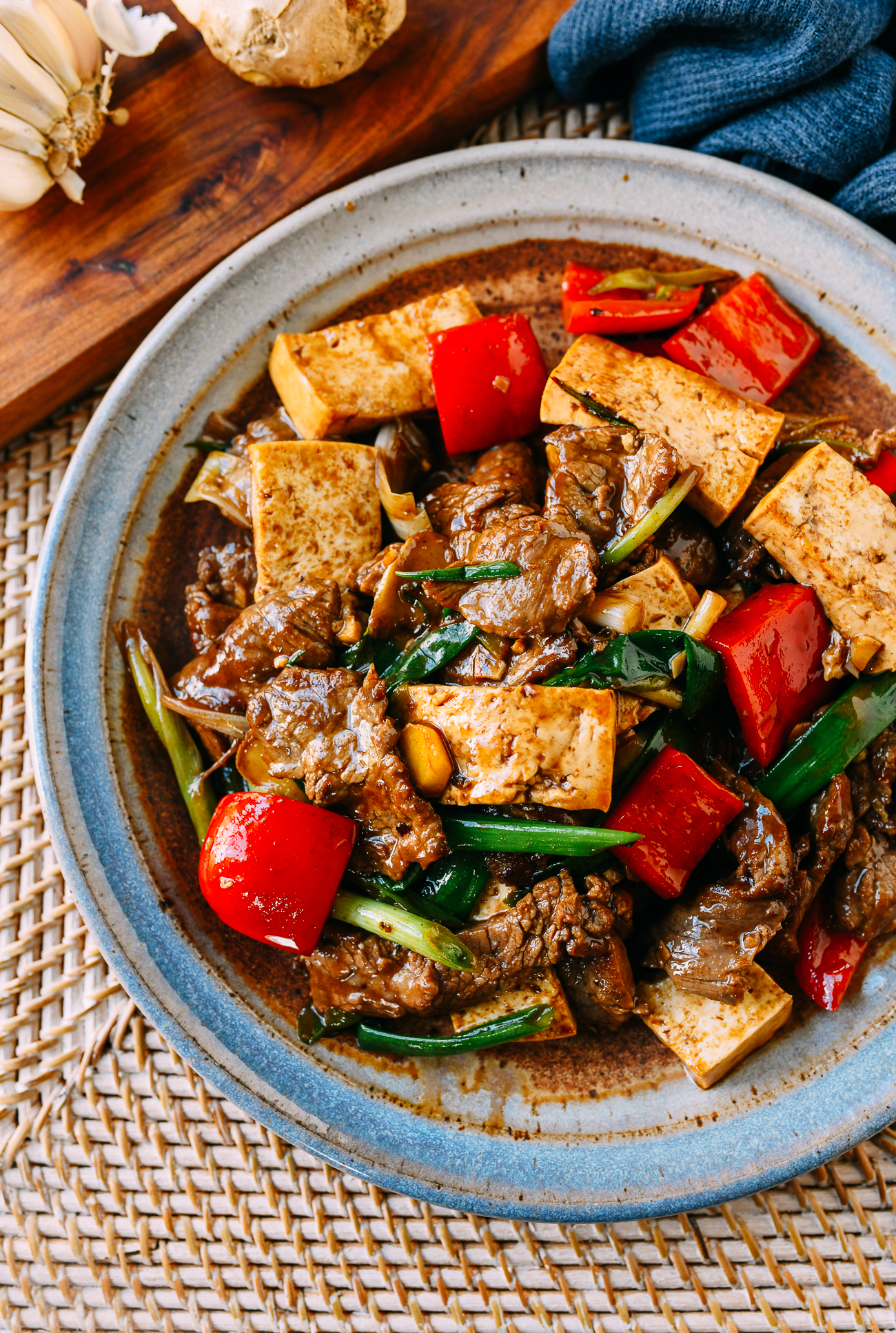
That night, though, I was looking at a couple boneless chicken thighs stir-fried with okra, spicy peppers, and Sichuan peppercorns, maybe an 8-ounce portion of flank steak transformed into something magical with bamboo shoots, ginger, and scallions, and diced pressed tofu with blanched, finely chopped greens, seasoned simply with sesame oil and salt. There was also a plate of stir-fried greens and an egg dish. All to serve 7 people (including Ethan!)
Here’s the thing that really got me: over the twelve years we’ve been running The Woks of Life, diving deeper into Chinese cooking than we ever thought we would, we’ve all naturally reduced the amount of meat we eat. But somehow, we feel like we’re cooking and eating better than ever. The flavors are more complex, the textures more interesting, and honestly? We’re more satisfied after every meal.
The Wisdom of Chinese Home Cooking
In traditional Chinese home cooking, meat doesn’t always demand center stage on your plate. Instead, it’s a supporting actor that elevates the entire performance.
Think about classic dishes like mapo doufu, where small amounts of ground pork mingle with silky tofu and bold Sichuan flavors. Or gan bian si ji dou, where just a handful of minced pork and some preserved vegetables transform humble green beans into a vegetable dish you crave more than anything else.

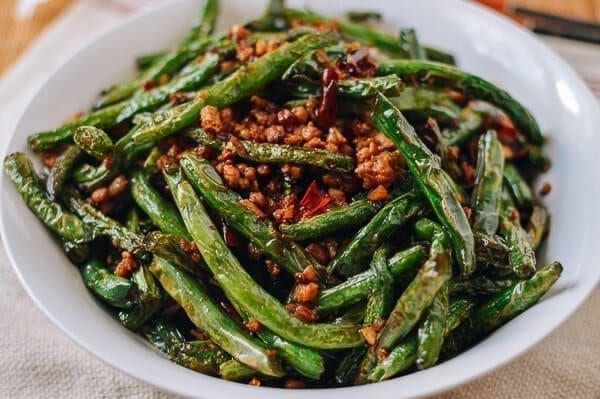
This approach isn’t born from environmental consciousness or health trends. It’s rooted in practicality and resourcefulness that spans all of Chinese culinary tradition.
Meat was precious. Every bit had to count, so cooks learned to stretch small amounts across entire meals by pairing them with vegetables and grains. Meat was sliced, diced, and chopped, easily picked up with chopsticks and shared amongst many.
I feel like the most authentic expression of this cooking philosophy comes from nongjia cai (农家菜)—the hearty, resourceful cooking of Chinese agricultural communities. This represents the purest example of necessity-driven cooking that created this balanced approach.
One of the most incredible meals I had in my time living in China was in the village of Hongcun, in Anhui Province. I was walking through the village with my parents, admiring the small gardens—popping up everywhere along the path—and the fruit trees growing over the courtyard walls of various homes.


We passed by a woman harvesting loofah (sponge gourd) in a small plot along the path, and said hello. She was very friendly, and told us that she ran a bed and breakfast with her husband, asking us whether we’d eaten yet. Intrigued, we followed her into her courtyard, where she showed us around the place—a few small rooms with clean, comfortable beds, and the kitchen, where she had a selection of fresh vegetables to choose from.
Well, obviously we had to have lunch there. The whole exchange felt too serendipitous to pass up.
It was one of the tastiest and most memorable meals we had on the whole trip—and also the most simple: dried bamboo shoots steamed with thin slices of their family’s homemade ham, a homestyle tofu, stir-fried sponge gourd that she had just harvested, and a stir-fried green that she simply called “yěcài” (wild vegetable).
My mom asked the proprietor if we could buy a piece of the ham she had hanging in the courtyard. She politely declined, explaining that it was last season’s ham, and it had to last them until they could make another one.


Why Meat-Lite Makes Sense
The beauty of eating meat-lite is that you get to enjoy the umami depth and satisfaction that meat brings without making it the focal point of every meal.
When you cut your pork or beef into small pieces and distribute them throughout a stir-fry loaded with vegetables, you’re still getting that savory richness, but you’re also getting fiber, vitamins, and all the nutritional benefits that come from eating more plants.
From an environmental standpoint, this approach makes sense too. We all know that meat production has a significant environmental footprint, but going completely plant-based isn’t realistic or appealing for everyone. Meat-lite eating allows you to reduce your environmental impact without feeling like you’re making a huge sacrifice.
This isn’t to say that you can’t enjoy a steak every now and then—we do! But you may find that cooking this way makes you see vegetables in a new light. They can be just as lip-smacking and tasty when stir-fried with a small amount of meat!
The practical beauty of meat-lite cooking is that it’s incredibly flexible and satisfying. The meat becomes more of a flavoring agent, and the vegetables are all the better for it. Same goes for soups—a little bit of pork bone or chicken can create a rich, nourishing broth that supports loads of vegetables, tofu, and noodles. You’re getting protein, but you’re also getting a rainbow of nutrients from all the plant ingredients.


Beyond Fake Meat
What really excites me about the meat-lite approach is that it doesn’t rely on processed meat substitutes. Don’t get me wrong—I’m not anti-vegan or anti-processed foods entirely. But when the solution to eating less meat is to eat more highly processed “meat,” something feels off to me.
In Chinese cooking, vegetables aren’t trying to be something they’re not. Eggplant is celebrated for being eggplant. Bok choy shines as bok choy. When you stir-fry Chinese broccoli (gai lan) with just a small amount of beef, it enhances the vegetables’ natural flavors rather than masking them.

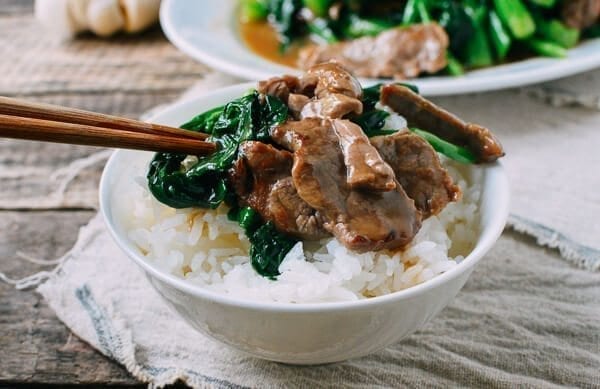
A Sustainable Middle Path
What I love most about this approach is that it doesn’t ask you to completely change your relationship with food or sacrifice flavors you love. It’s not about restriction or deprivation—it’s about balance.
When you eat this way, you naturally consume less meat without feeling like you’re missing out. You develop an appreciation for vegetables as more than just a side dish or something you have to “endure” for your health.
The next time you’re in your kitchen, start with your vegetables and grains. Then think about how a small amount of meat can enhance and complement them. Cut your pork or beef into small pieces. Let them mingle with ginger, garlic, and soy sauce. Toss them with seasonal vegetables.
You might find, as I have, that this way of eating doesn’t feel like compromise at all. It feels nourishing and satisfying, all while treading a little more lightly on our planet.
Get Started! Recipes to Try:
- Spicy Okra Stir-fry with Chicken
- Beef with Peppers & Bamboo Shoots
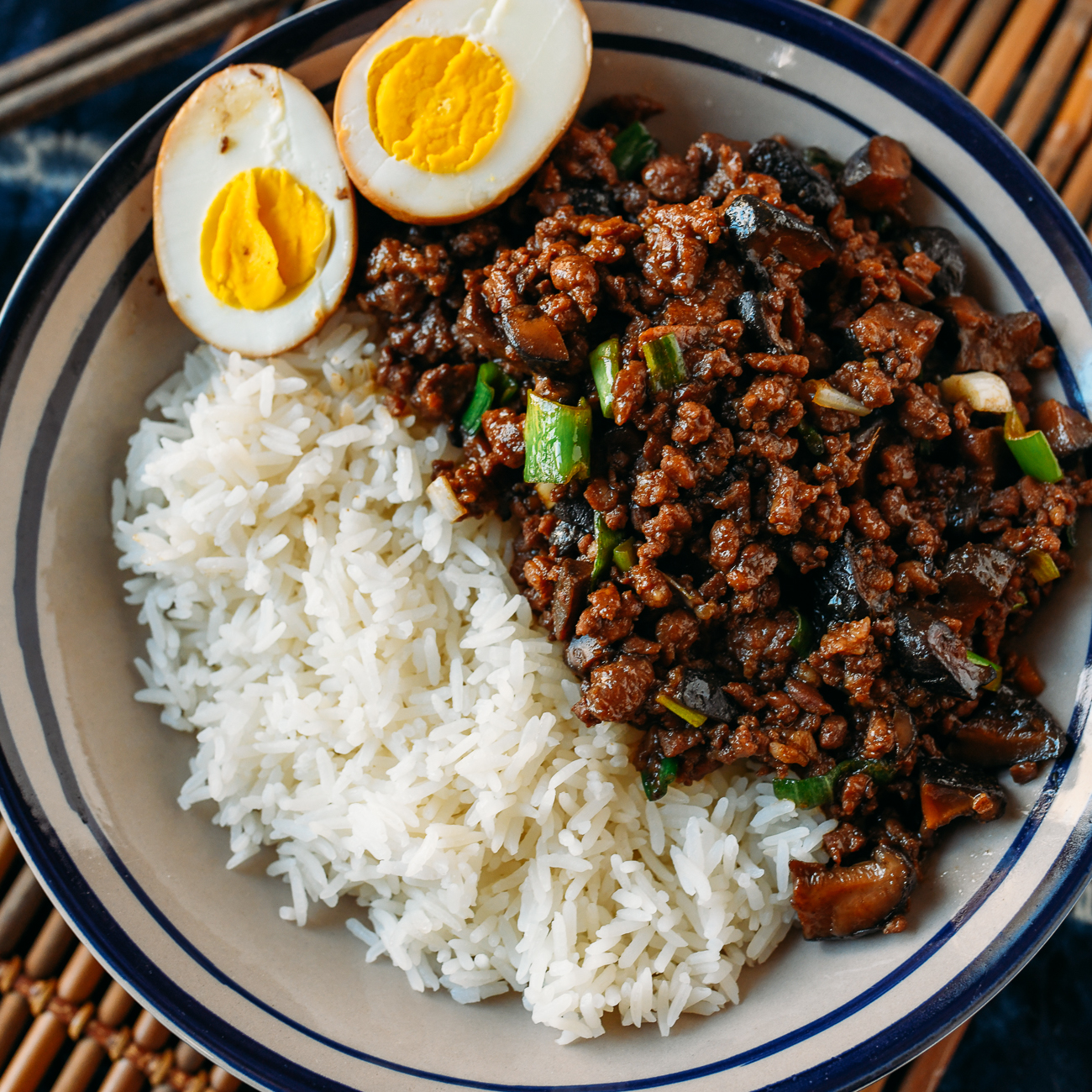
- Braised Turnip Rice Bowls
- Stir-fried Cabbage
- Zucchini Chicken Stir-fry
- Five Spicy Tofu with Shredded Pork
- String Beans with Pork & Zhacai
- Eggplant with Garlic Sauce