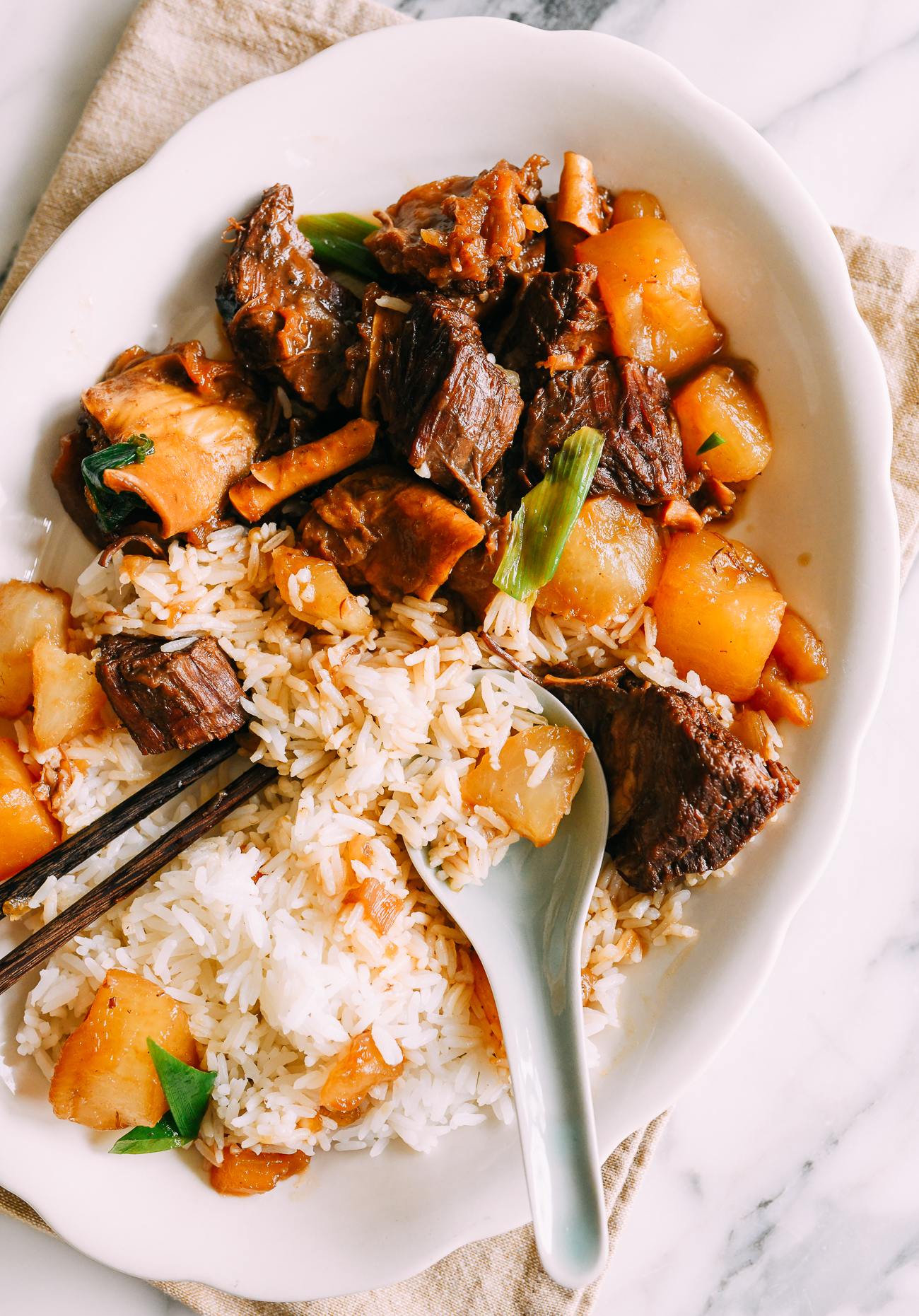
This Chinese Braised Beef Stew is a famous yet very homey Cantonese dish, and now is the time of year to prepare it!
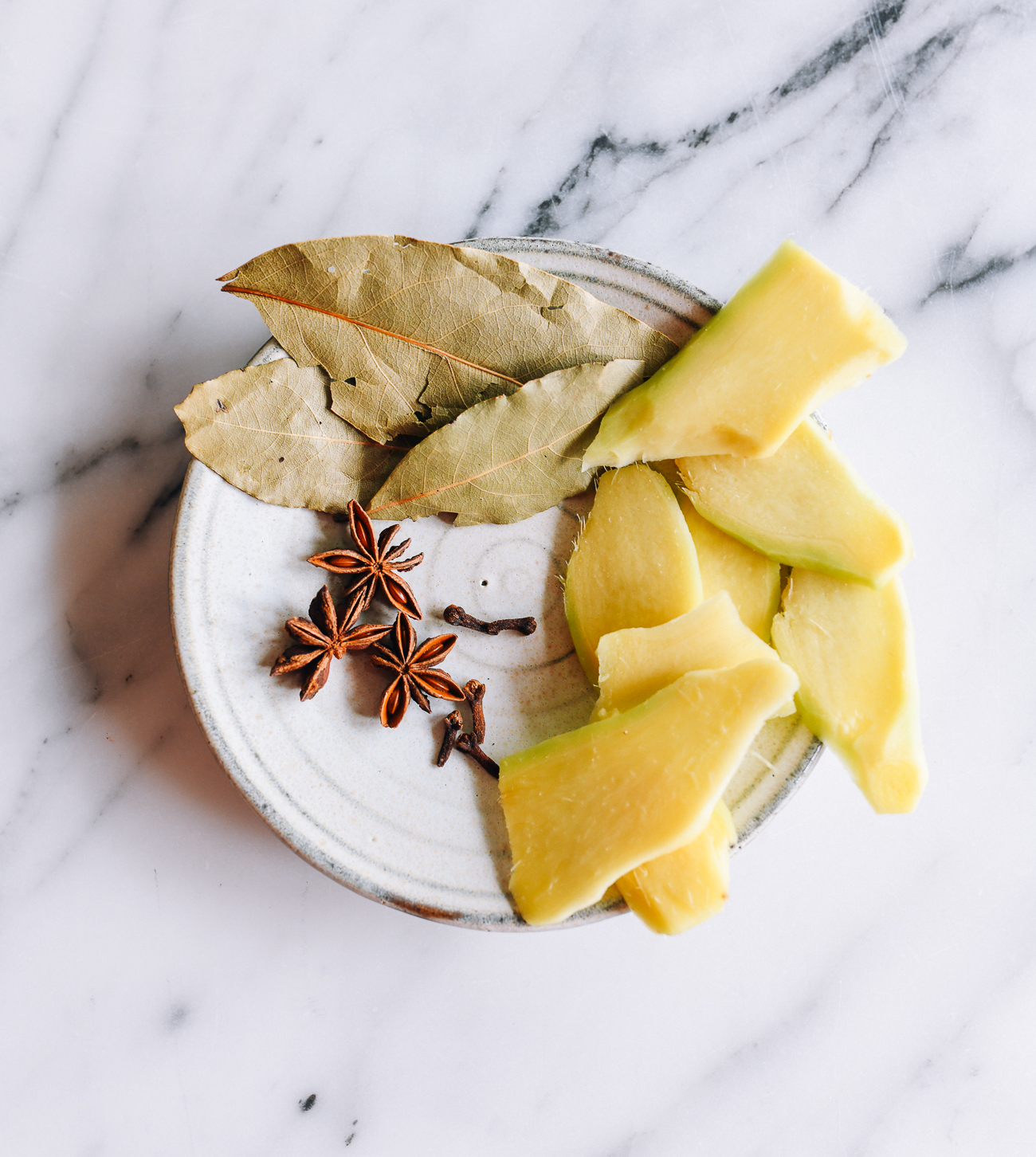
The ingredients are simple, beef, daikon radish (also sometimes translated as “turnips” in English), ginger, scallion, star anise, cloves, bay leaves, and Shaoxing wine.
All you need is a big pot and some time (about 3 hours). It is very much like making a Western beef stew, in that you throw the beef into a pot with liquid, cook it for a long time, then add vegetables and cook until they’re tender. (So everything is at the right doneness at the same time!)
Get this dish started in the afternoon, and go do some laundry, go back to work, or re-grout your bathroom (that’s what WE did when we first blogged this recipe). It’s a tasty dinner with a side of rice to soak up the sauce, and some stir-fried leafy greens.

SHORT ON TIME?
Try Sarah’s Instant Pot version of this recipe. It takes about half the time!
Note: This recipe was first published in October 2013. It was one of the very first recipes we ever published on the blog! (See how different our photos used to look??) We have since re-tested it, so here is the new and improved version, with new photos, clearer instructions, and metric measurements. If you’d like to see the old recipe, scroll down to the bottom of the post!

The Cut of Beef Traditionally Used In This Recipe
In this recipe, we call for a cut of beef that you may have never heard of. It’s called “rough flank.” Known as niúnǎn (牛腩) in Mandarin, or ngau lam in Cantonese, this is not to be confused with flank steak!
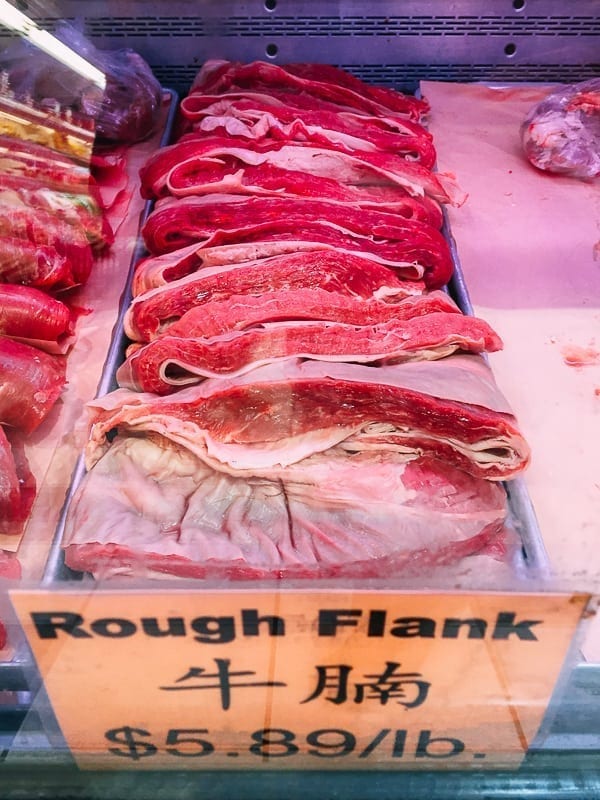
As you can see in the photo above, there are tough connective tissues on this piece of meat, which is why the dish has to be braised for a long time.
While this cut of meat isn’t the most popular here in the U.S. generally, you’ll find it in Chinese and Southeast Asian grocery stores. Those gelatinous bits add texture as well as flavor to the final dish.
If you can’t find rough flank…
Substitute another tougher cut of meat, such as beef chuck. We prefer a well-marbled beef chuck over something like brisket, because we find brisket tends to be rather dry after braising. Note that beef chuck will likely take less time to cook, so you may want to reduce the cooking time by about 20 minutes, or simply check it until it’s at the level of tenderness you prefer.
The Other Main Ingredient: Daikon Radish
Daikon radish, or luóbo (萝卜) in Mandarin and lo bak in Cantonese, is a large, bright white radish with green leaves (you can actually eat the leaves too!).
We add them to soups and stews like this one, or make dishes like Boiled Daikon and Stir-fried Daikon with Carrots. They add a special flavor to this dish, and are as big a part of it as the beef!
When shopping for daikon, look for firm, shiny white radishes around 10-inches long. They should be heavy, which means they haven’t dried out, with smooth skin that doesn’t have any brown spots on it. Look for fresh green tops, another indication of freshness.
On to the recipe!
Recipe Instructions
Add the beef to a large pot, and add enough water to cover the beef. Place over high heat, bring to a boil, and cook the beef for 1 minute. (We used a pot that was a bit too small in the photo below.)
You will see scum and foam rise to the top of the water.
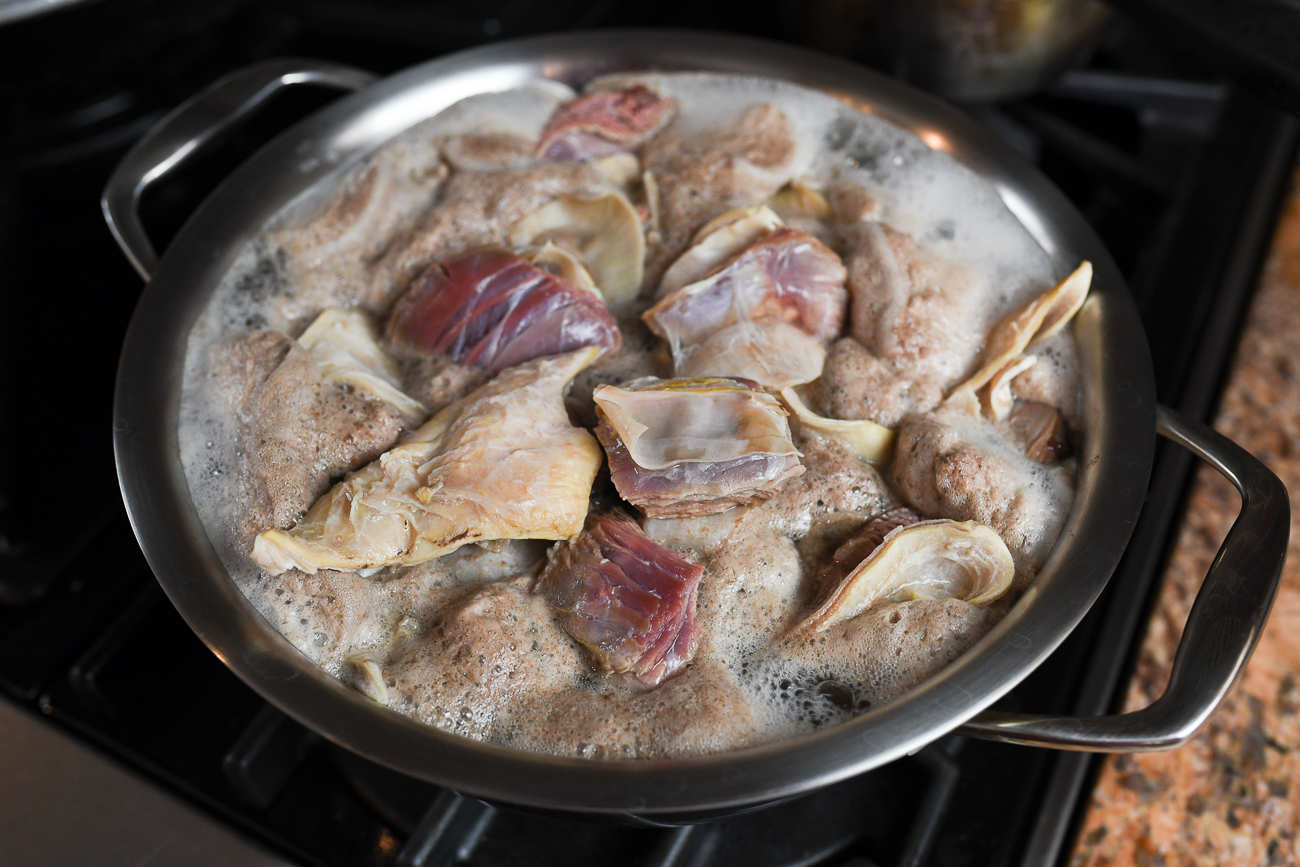
Remove from heat, drain, and rinse the beef chunks clean. Set aside.
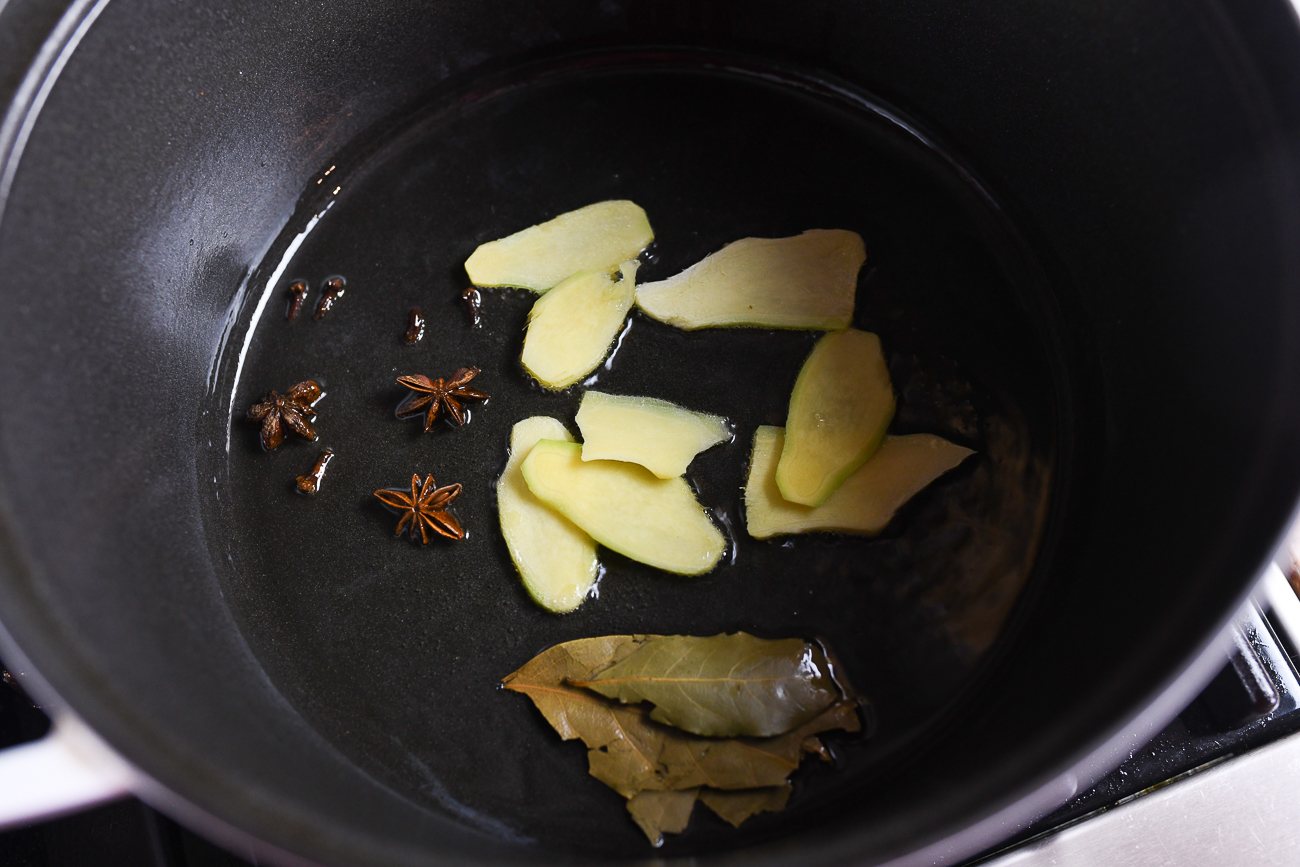
Heat the oil in a Dutch oven or other thick bottomed pot over medium heat, and add the ginger, cloves, star anise, and bay leaves. Cook for 2-3 minutes until fragrant.
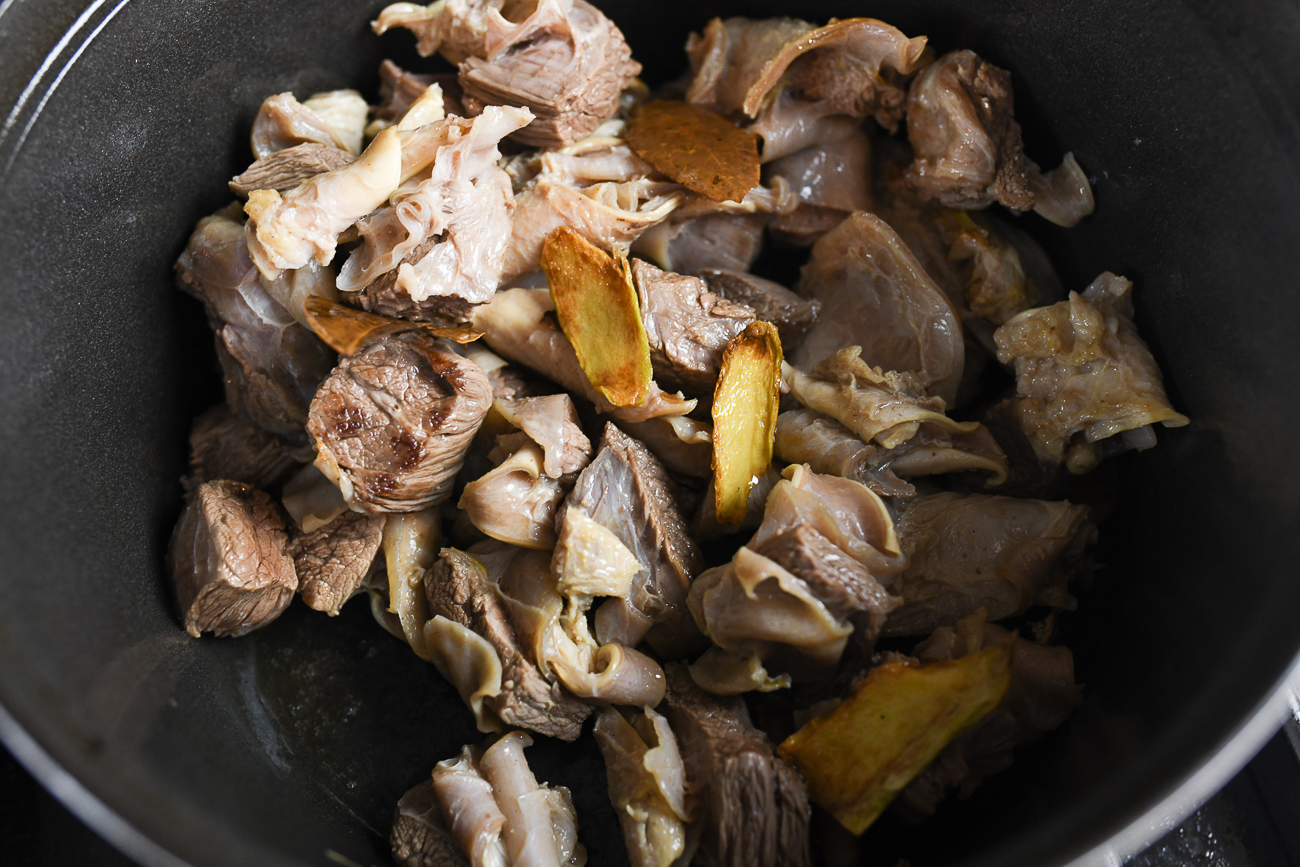
Increase the heat to high, and add the beef back to the pot. Cook for 8-10 minutes, until the pieces of beef are lightly browned around the edges.
Stir in the Shaoxing wine, light soy sauce, dark soy sauce, and oyster sauce, and bring to a boil. Once boiling, add the water and sugar.
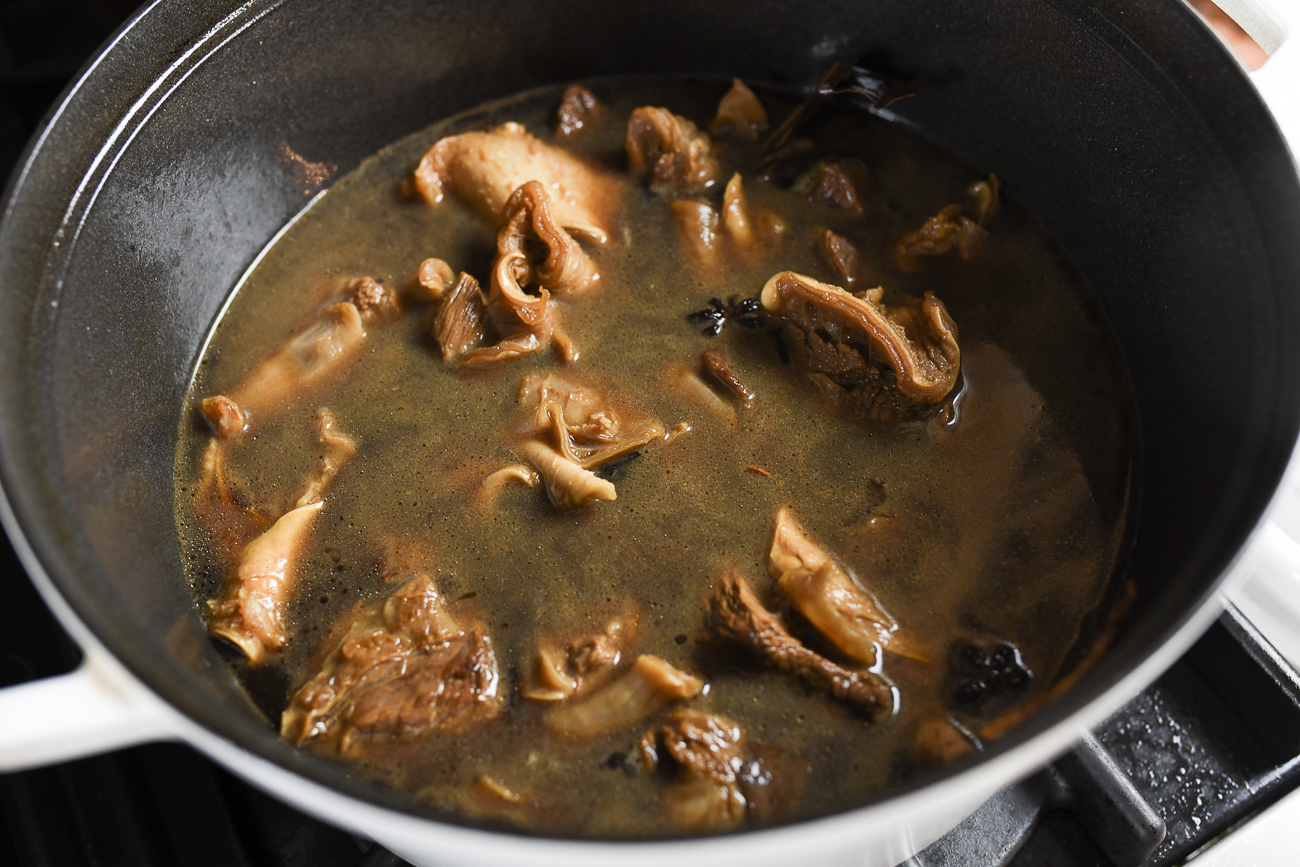
Cover the pot, and bring it to a boil once again. Once boiling, reduce the heat to medium-low, cover, and simmer for 90 minutes to 2 hours. The liquid should be at a slow bubble. Stir the pot occasionally to prevent sticking or burning.
Then, add the daikon…
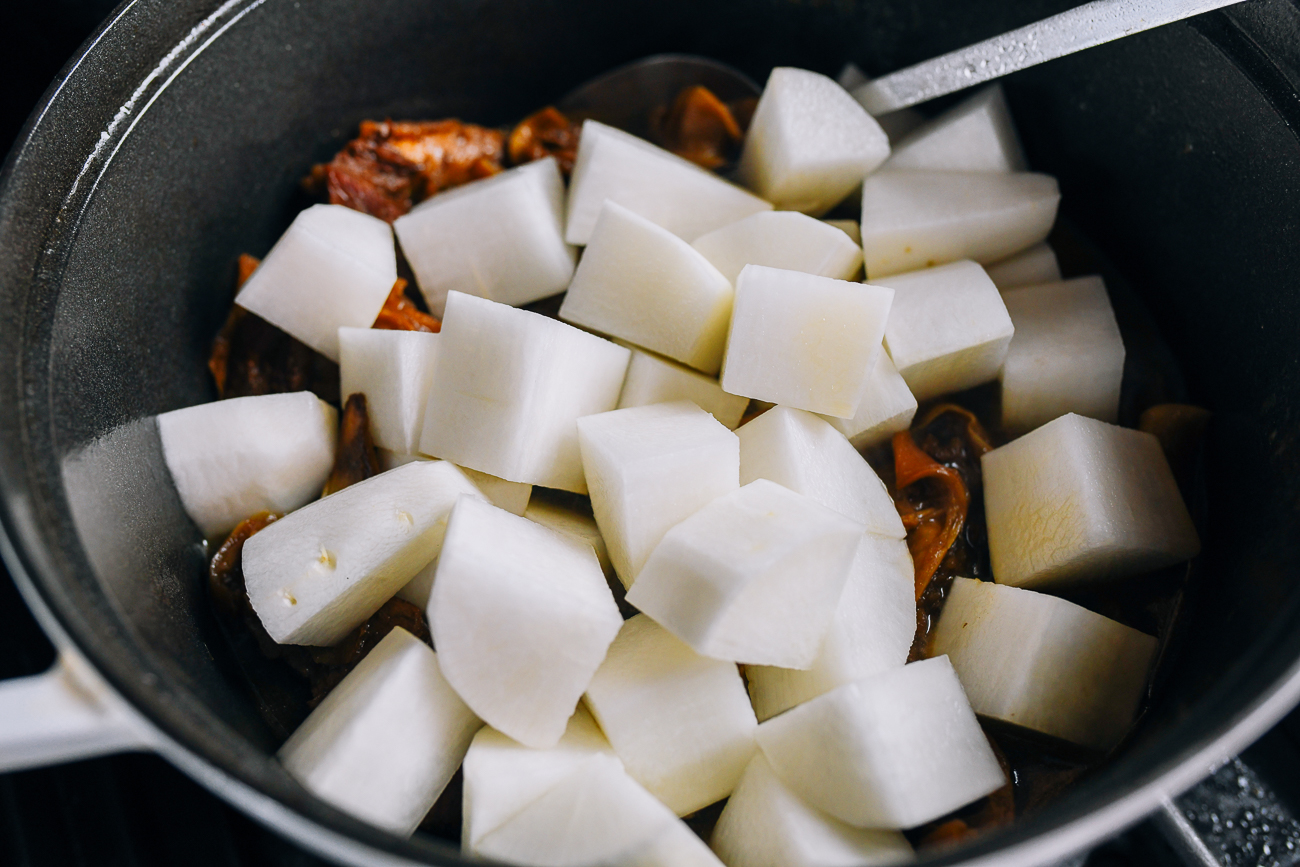
And gently stir it in:
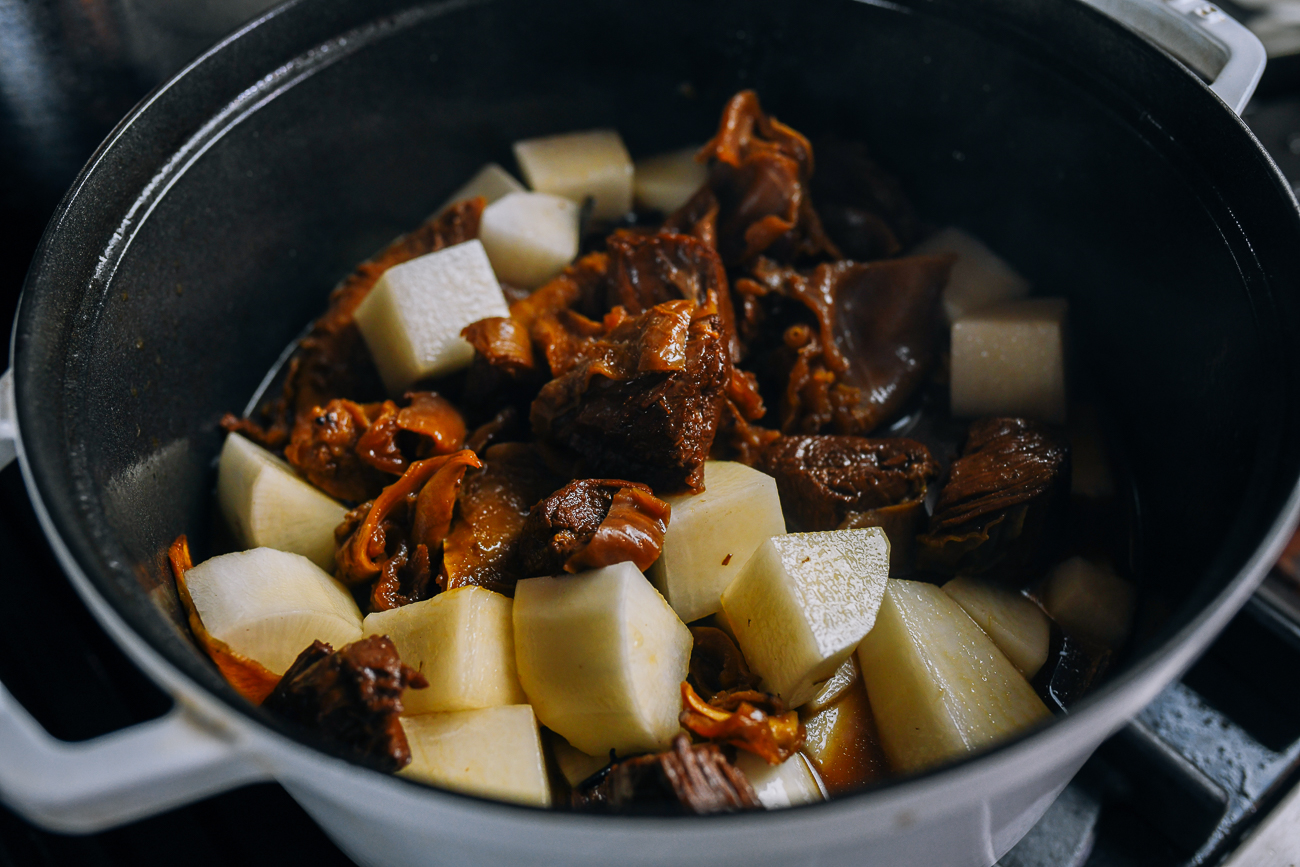
Continue cooking for another 45 minutes, until the daikon is tender.
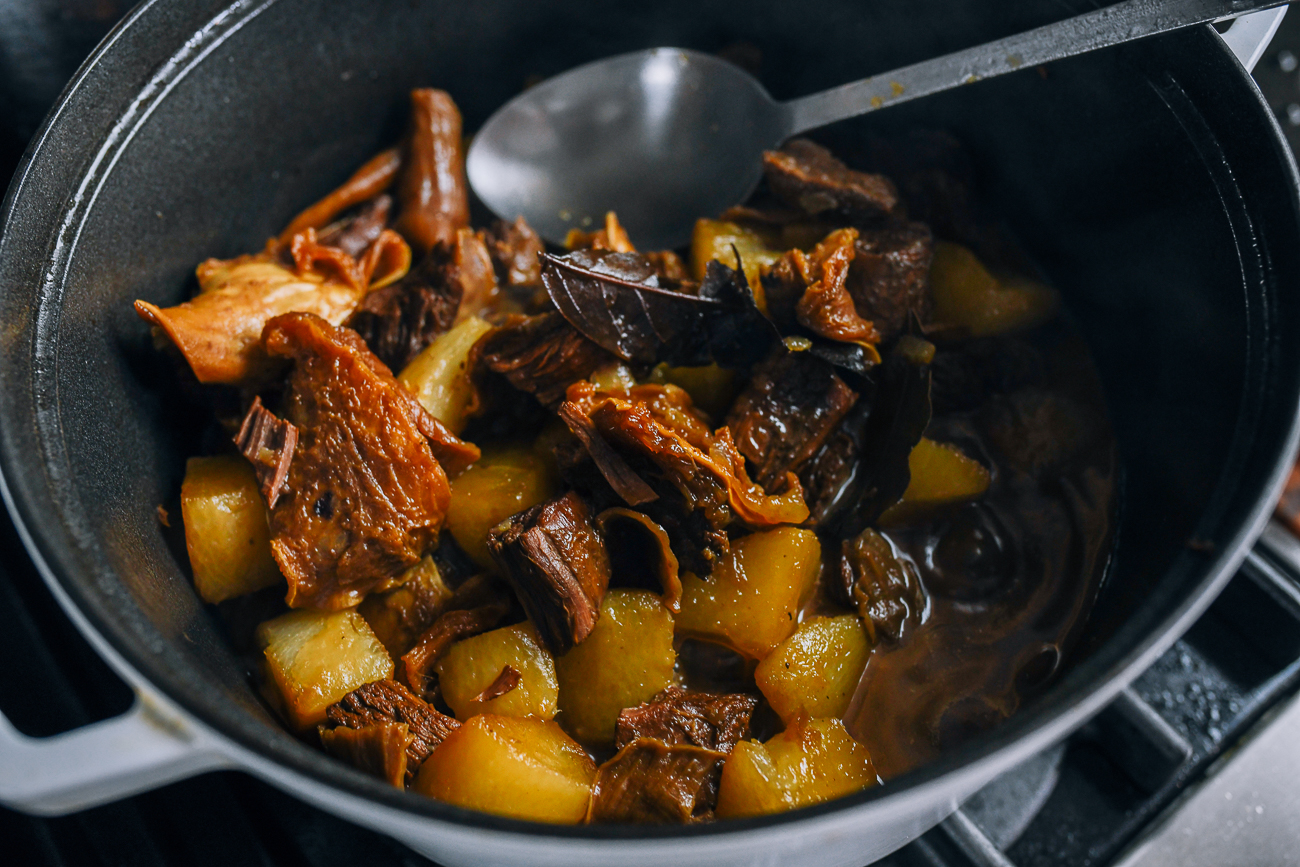
Season with salt to taste, and add the scallions just before serving.
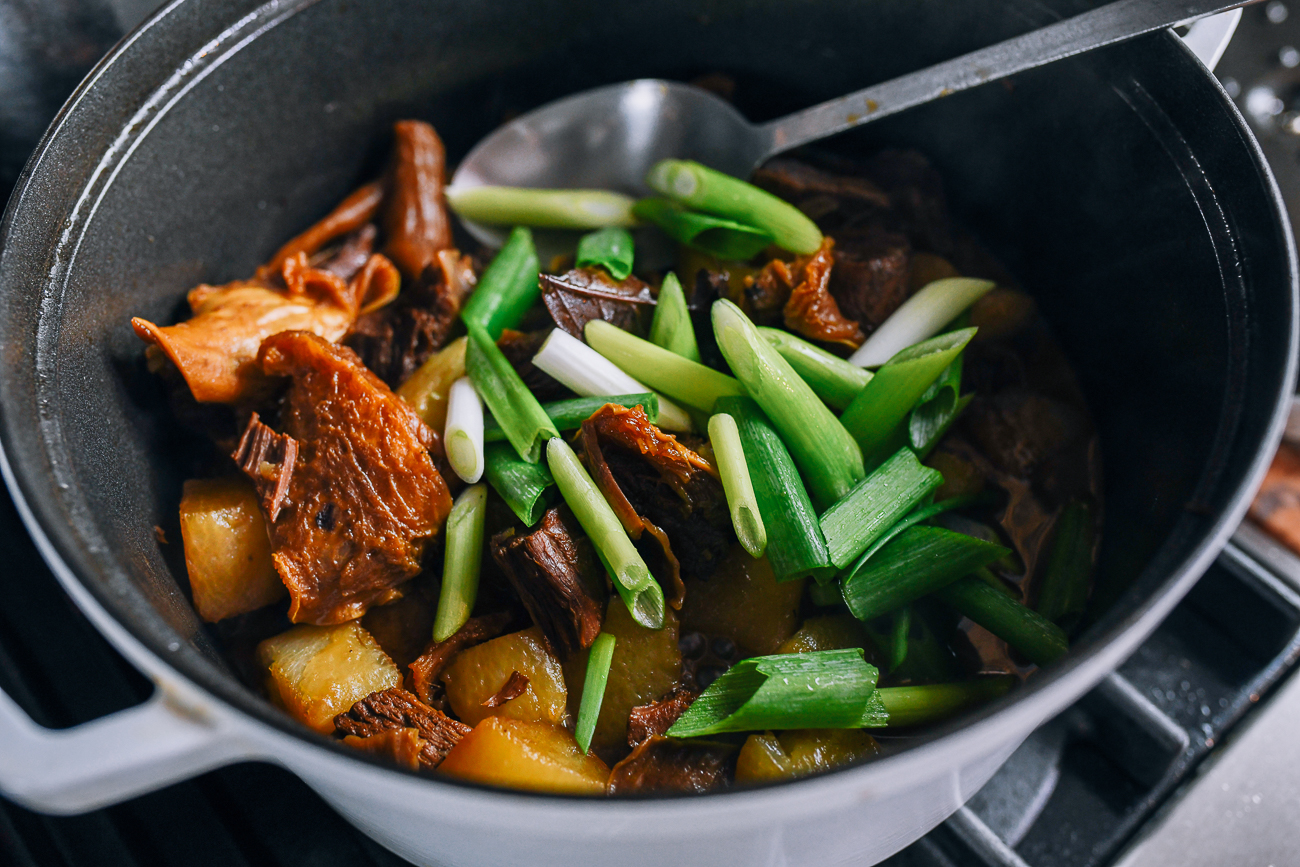
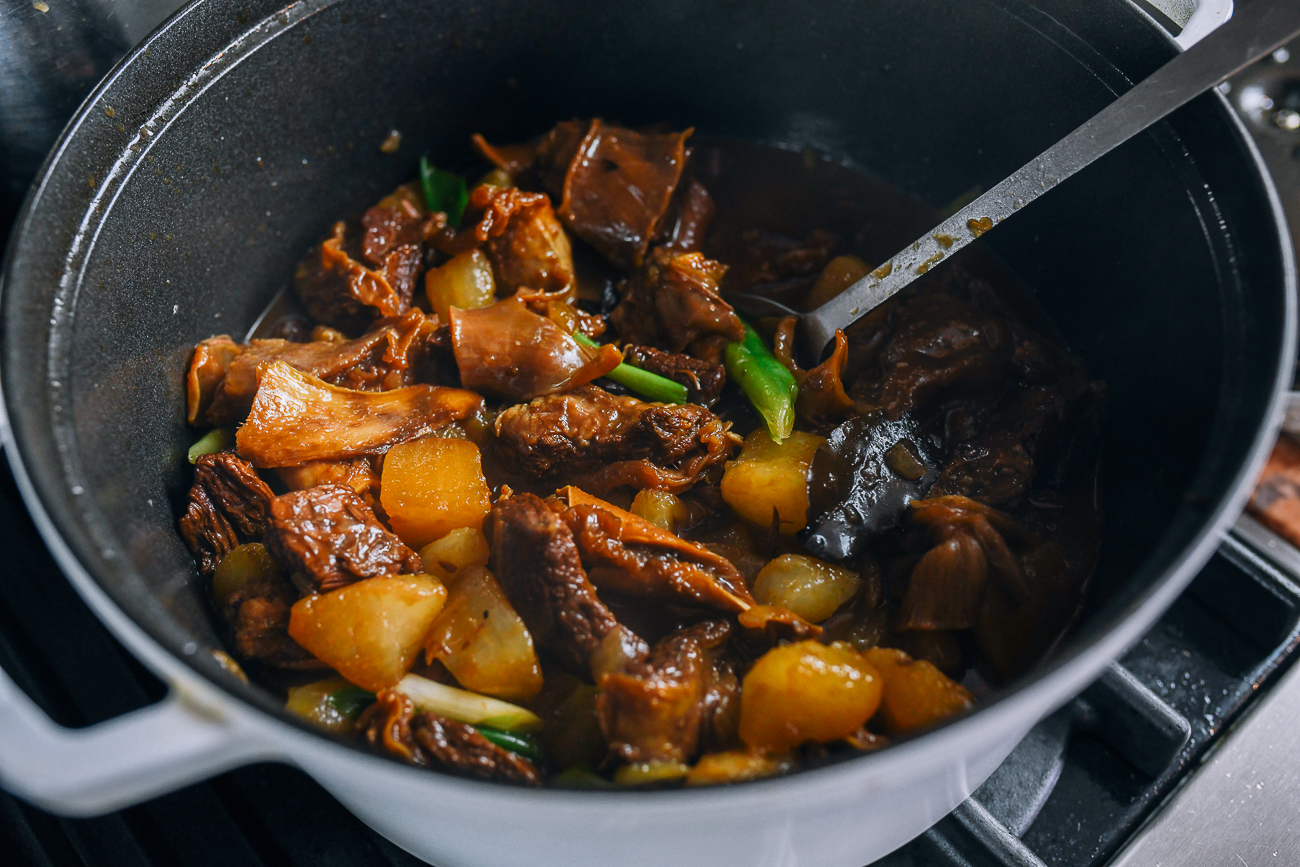
You also have the option of thickening the sauce before serving. If you’d like to thicken the sauce, combine the cornstarch with 2 tablespoons of water to make a slurry. Pour the slurry into the bubbling sauce, and stir until the sauce thickens slightly and has a glossy appearance. Add more slurry if the sauce is still too thin for your liking.
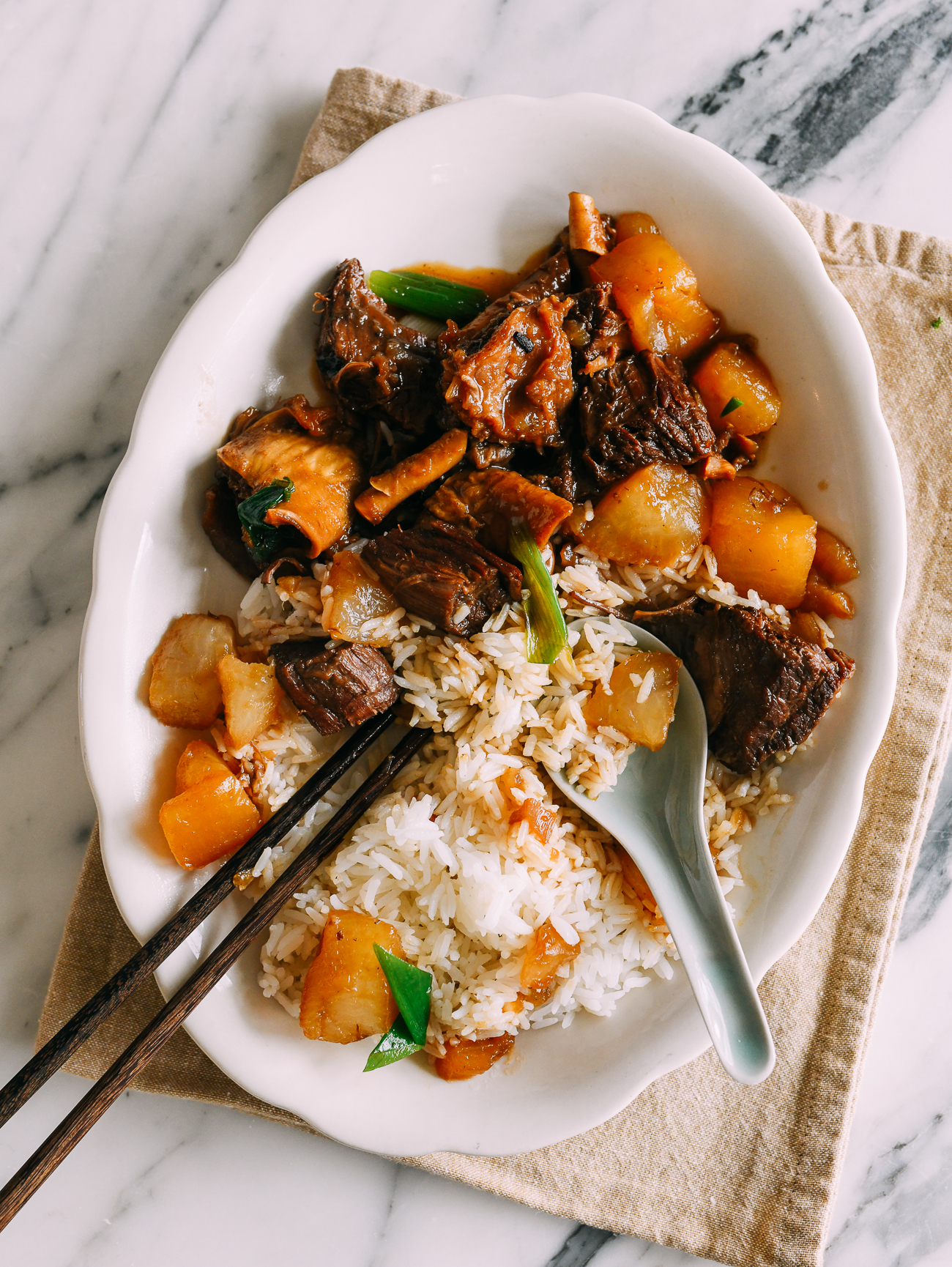
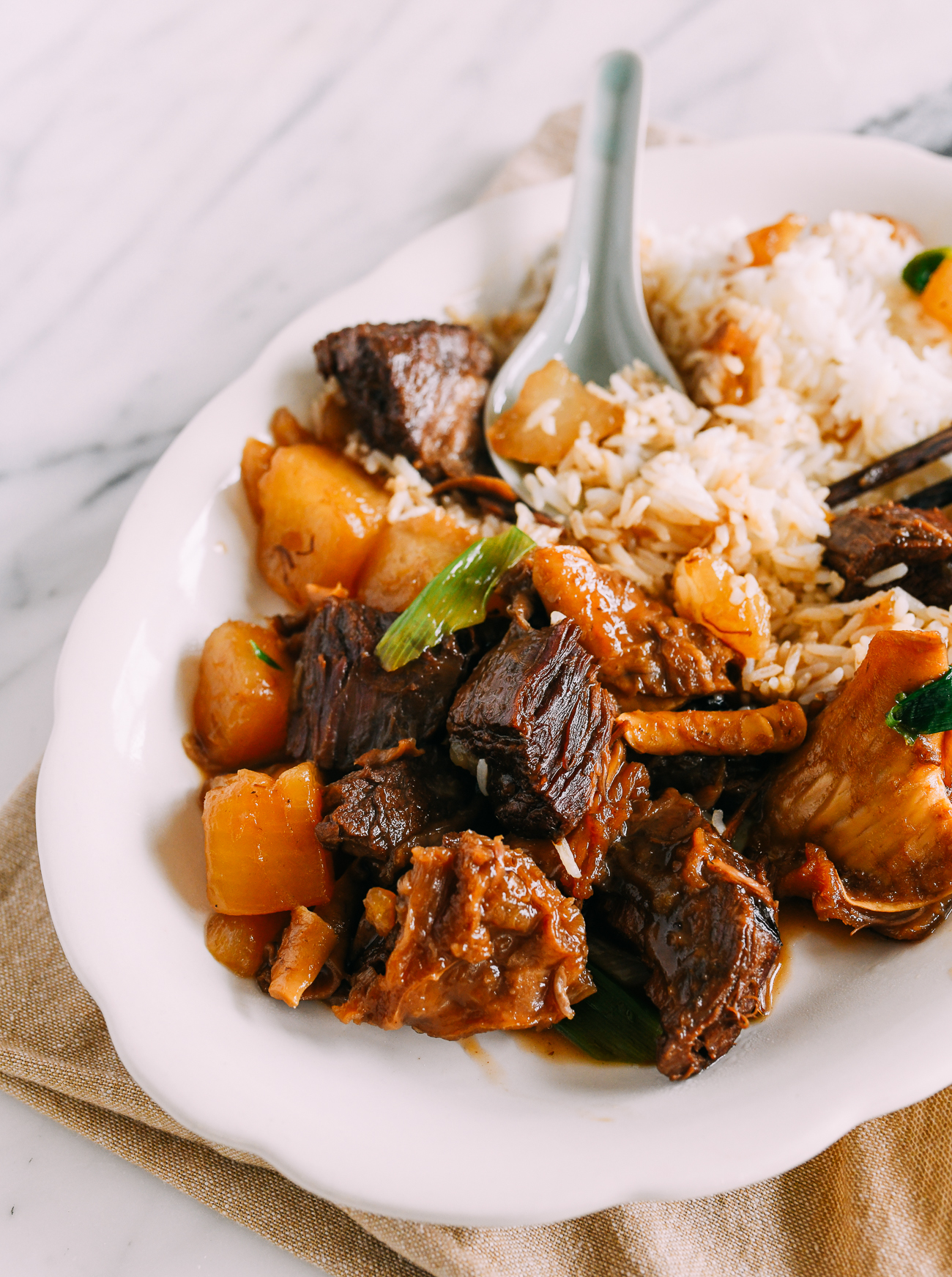
Serve with steamed rice!
Looking for more authentic recipes? Subscribe to our email list and be sure to follow us on Pinterest, Facebook, Instagram, and Youtube!
Recipe

Chinese (Cantonese) Braised Beef Stew
Ingredients
- 3 pounds beef rough flank (cut into 1½- to 2-inch/4-5cm pieces; can substitute well-marbled chuck, which will take less time to cook)
- 2 tablespoons vegetable oil
- 7 slices ginger
- 5 cloves
- 3 pieces star anise
- 3 bay leaves
- 1 cup Shaoxing wine
- 3 tablespoons light soy sauce
- 1 tablespoon dark soy sauce
- 1 tablespoon oyster sauce
- 5 cups water
- 1 tablespoon sugar
- 2 pounds daikon radish (peeled and cut into 1½- to 2-inch/4-5cm pieces)
- salt (to taste)
- 3 scallions (cut on a diagonal into 2-inch pieces)
- 1 tablespoon cornstarch (mixed into a slurry with 2 tablespoons water, optional)
Instructions
- Add the beef to a large pot, and add enough water to cover the beef. Place over high heat, bring to a boil, and cook the beef for 1 minute. You will see scum and foam rise to the top of the water. Remove from heat, drain, and rinse the beef chunks clean. Set aside.
- Heat the oil in a Dutch oven or other thick bottomed pot over medium heat, and add the ginger, cloves, star anise, and bay leaves. Cook for 2-3 minutes until fragrant.
- Increase the heat to high, and add the beef back to the pot. Cook for 8-10 minutes, until the pieces of beef are lightly browned around the edges.
- Stir in the Shaoxing wine, light soy sauce, dark soy sauce, and oyster sauce, and bring to a boil. Once boiling, add the water and sugar.
- Cover the pot, and bring it to a boil once again. Once boiling, reduce the heat to medium-low, cover, and simmer for 90 minutes to 2 hours, depending on how tough your beef is! The liquid should be at a slow bubble. Stir the pot occasionally to prevent sticking or burning.
- Then gently stir in the daikon, and continue cooking for another 45 minutes, until the daikon is tender. Season with salt to taste, and add the scallions just before serving.
- You also have the option of thickening the sauce before serving. If you’d like to thicken the sauce, combine the cornstarch with 2 tablespoons of water to make a slurry. Pour the slurry into the bubbling sauce, and stir until the sauce thickens slightly and has a glossy appearance. Add more slurry if the sauce is still too thin for your liking. Serve with steamed rice!
Nutrition Facts
Old Version of the REcipe:
- 2 pounds beef brisket (900g, washed, pat dry and cut into 1 ½ inch pieces)
- 1 tablespoon oil
- 5 slices ginger
- 1 cup Shaoxing wine
- 2 1/2 tablespoons light soy sauce
- 3 star anise
- 8 cloves
- 1 teaspoon sugar
- 5 cups water
- 1 daikon radish (cut into 1 ½ inch pieces)
Prep your beef. Heat cooking oil and ginger in a wok or Dutch oven over high heat. Add the beef and lightly brown all sides. Now add your cooking wine, light soy sauce, star anise, cloves, sugar, 3 cups of the water and bring everything to a boil. Then turn down the heat to simmer for about 90 minutes using low heat. For simmering, the heat should be high enough that the liquid is moving, but not boiling. Stir the pot occasionally to avoid sticking or burning.
After that, the sauce should be almost dry. This is a good time to skim out any excess fat. Then add the turnips and the last 2 cups of water. Allow the stew to simmer for another 40 minutes, until the turnip is soft and tender. Serve hot over rice.