Dried jujube fruit, also known as Chinese dates or red dates (hóng zǎo – 红枣), are a key ingredient in many Chinese recipes. They are prized for both their culinary versatility and medicinal properties.
Learn everything you need to know about these sweet, nutritious dried jujubes—from their flavor profile and health benefits to cooking applications and storage tips. Whether you’re making a nourishing soup, lightly sweet dessert, or medicinal tea, this comprehensive guide will show you how to use them in your cooking!
What are Jujubes?
Jujubes (pronounced “joo-joo-bes”), also known as Chinese red dates, are small red fruits that grow on deciduous shrubs or small trees native to southern Asia.
When fresh, they’re crisp like an apple, with a mild, sweet flavor. (Watch out for the pit in the middle!) However, they’re most commonly used in their dried form in Chinese cooking, having developed a chewy texture and a deep, caramel-like sweetness reminiscent of dates.
Sometimes, well-stocked Chinese markets carry fresh jujube fruit when in season—in late summer to early fall. The color of the fresh fruit ranges from green to a mix of green and reddish brown.


They turn red as they ripen on the tree. Once ripened and dried, the skin on the fruit are deep red, shiny, and wrinkly.
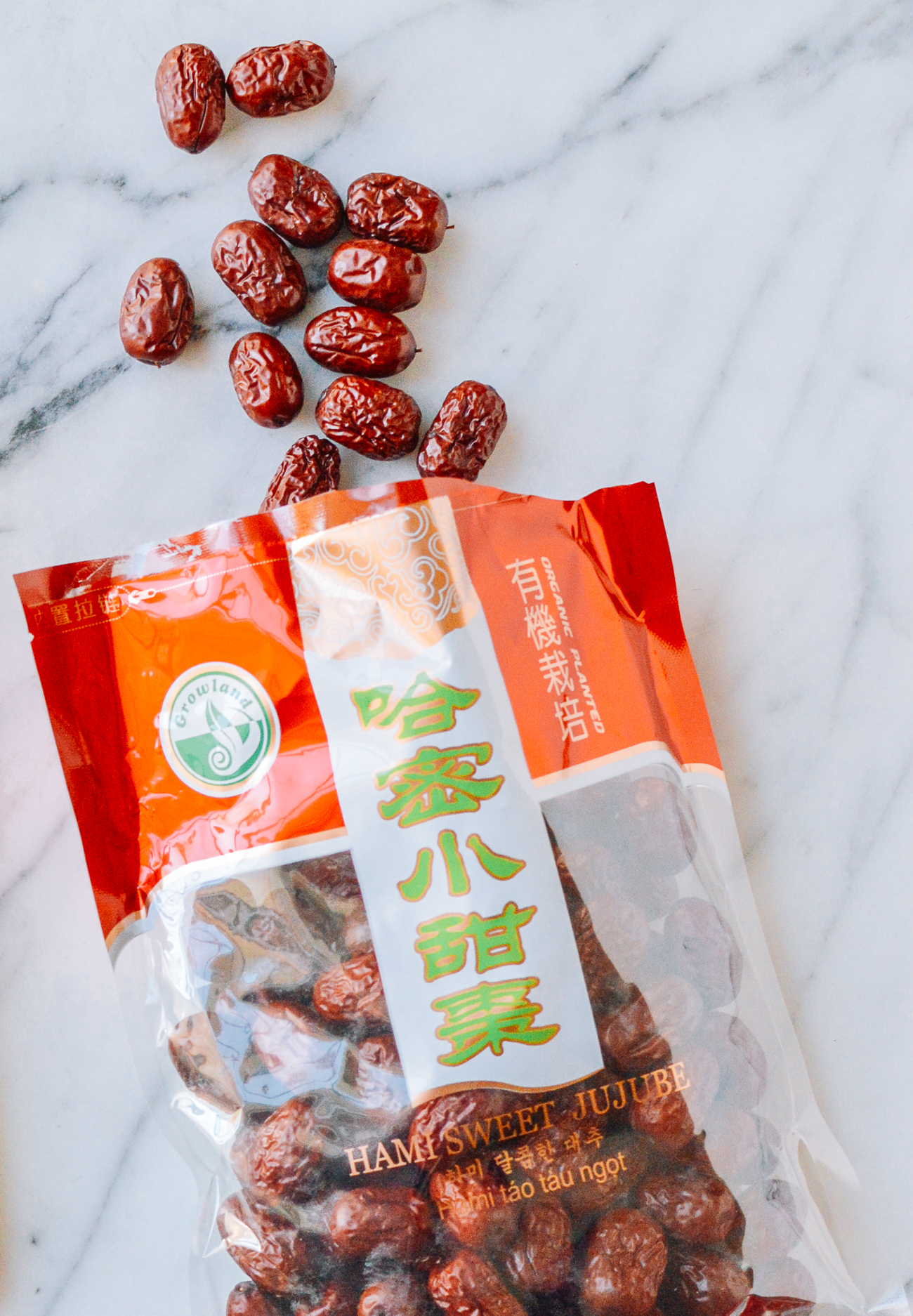
At this stage, they have a very long shelf life in a sealed container stored in a cool, dry place—up to 1 year, or perhaps even a few years if stored in a vacuum sealed bag in the refrigerator.
Don’t confuse these with the Mediterranean dates that are more commonly known to Westerners. While similar in appearance when dried, Chinese red dates and Mediterranean dates come from entirely different plant families. Chinese dates aren’t as meaty or quite as sweet.
Dried Chinese red dates have:
- A lightly sweet, fruity flavor with notes of caramel and apple
- A chewy, somewhat dense texture (softer when rehydrated)
- A mild, pleasant aroma
Health Benefits
Chinese red dates have been used in Traditional Chinese Medicine for thousands of years. They’re considered warming in nature and are believed to:
- Replenish blood and improve circulation, making them especially beneficial for women after menstruation or childbirth (see our postpartum recovery recipes collection)
- Boost energy and combat fatigue
- Support digestive health
- Calm the mind and improve sleep
You can add them to daily teas and soups for energy support without caffeine and consume during the colder months for warming effects. They’re also a good source of iron and rich in antioxidants. Jujube is known as a “natural vitamin C pill,” with 5X the Vitamin C content of strawberries and 20X that of citrus!
There is an old Chinese saying “一天三颗枣,青春永不老”, which means: eat three dates a day, and you will stay young forever!
(Always consult your healthcare provider before using any food for specific or long-term therapeutic purposes, especially for those on medication or with chronic health conditions!)
How to Use Chinese Dates
Okay, let’s talk more about how we use them in cooking. For a fruit, Chinese red dates are incredibly versatile in Chinese cooking and you can prepare them in many different ways.
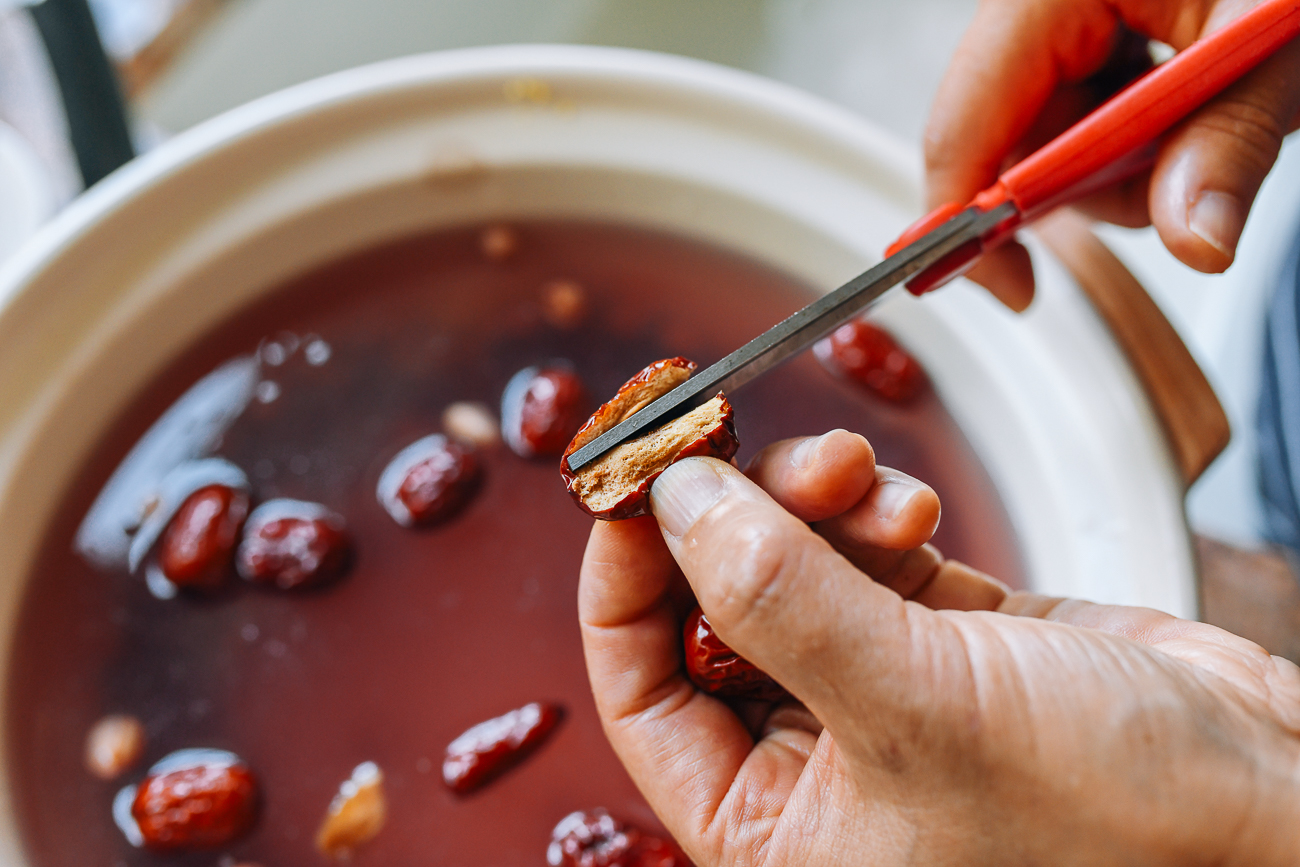
To prepare the dates, slice in half or open them up and remove the pit in the middle.
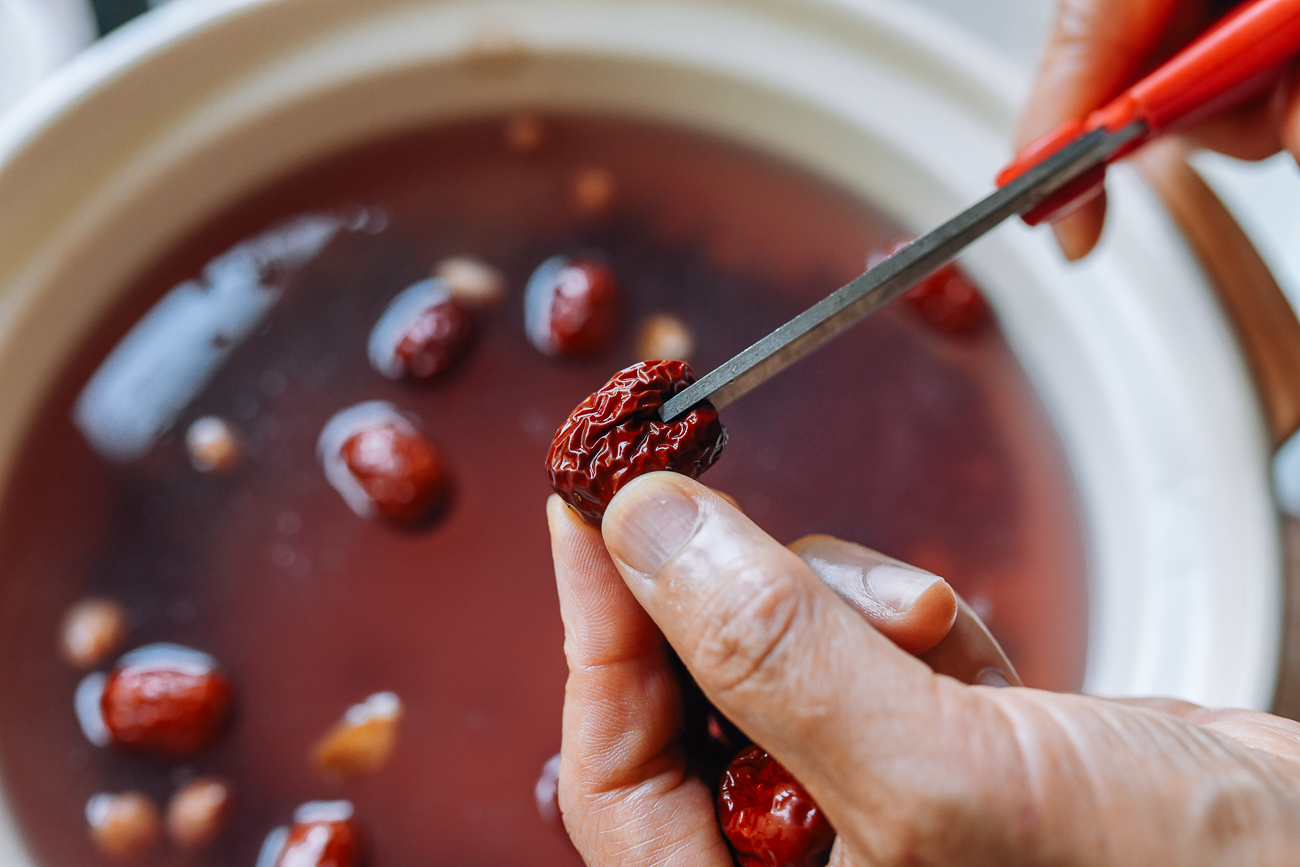
Even if you plan to use them whole, it’s a good idea to slice each one open so the flavor and nutrients can come out.
Add them to:
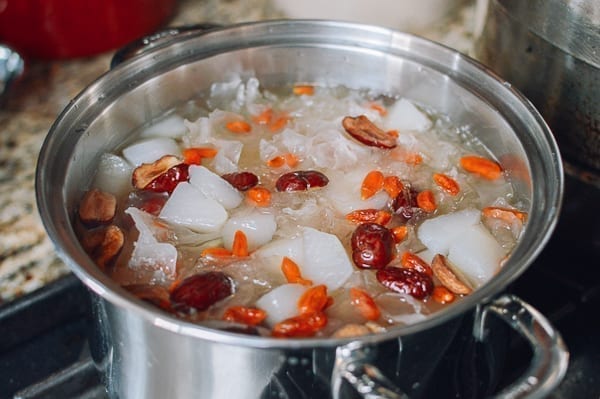
- Sweet Soups: A classic use for red dates is in sweet soups like Red Bean Soup or Snow Fungus Soup. They pair well with ingredients like lotus seeds, dried longan, and goji berries.
- Porridge: Add whole or chopped red dates to both savory and sweet congee for natural sweetness and added nutrition. We do so in our Postpartum Porridge. They’re also a great addition to Millet Porridge.
- Glutinous Rice Desserts: Incorporate into Chinese New Year sticky rice cakes or Eight Treasures Rice (八宝饭). You’ll often see dates as decorative elements on top. We have a recipe for Eight Treasures Sticky Rice in our cookbook!
- Red Date Tea: Simmer whole dates with ginger slices and/or goji berries for a warming, caffeine-free tea. Try our Ginger Date Tea recipe!
- Soups: The dates add a subtle sweetness to soups with fish, chicken, or pork.
- Other desserts: Add chopped dates to traditional steamed cakes for natural sweetness. You can also cook them down and mash them to be used as a filling in baked goods. Northern Chinese people love their zǎoní (枣泥 – red date paste) pastries and mantou (馒头 – steamed buns).
- As a natural sweetener: You can use them as a natural sweetener for everyday cooking by adding them to any dish that needs a little extra sweetness! To distribute their flavor more evenly, you can finely chop them!
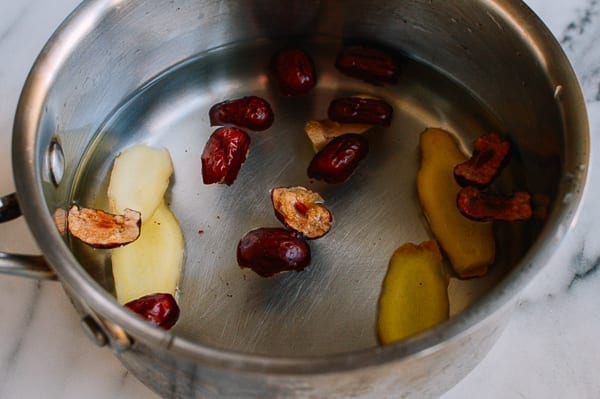
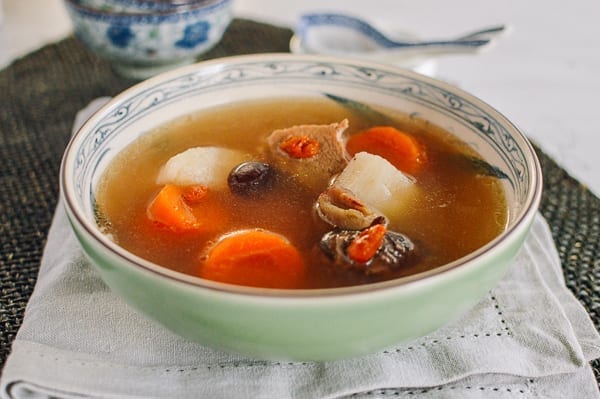
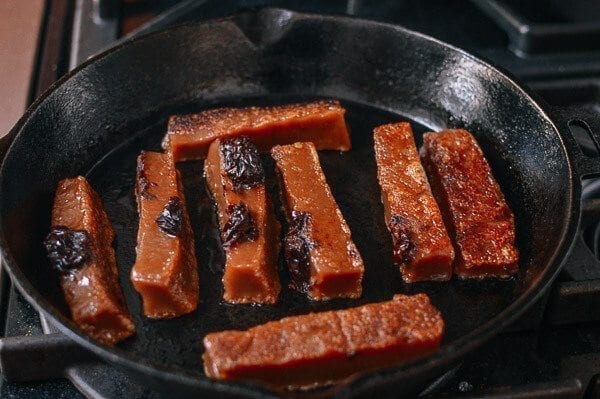
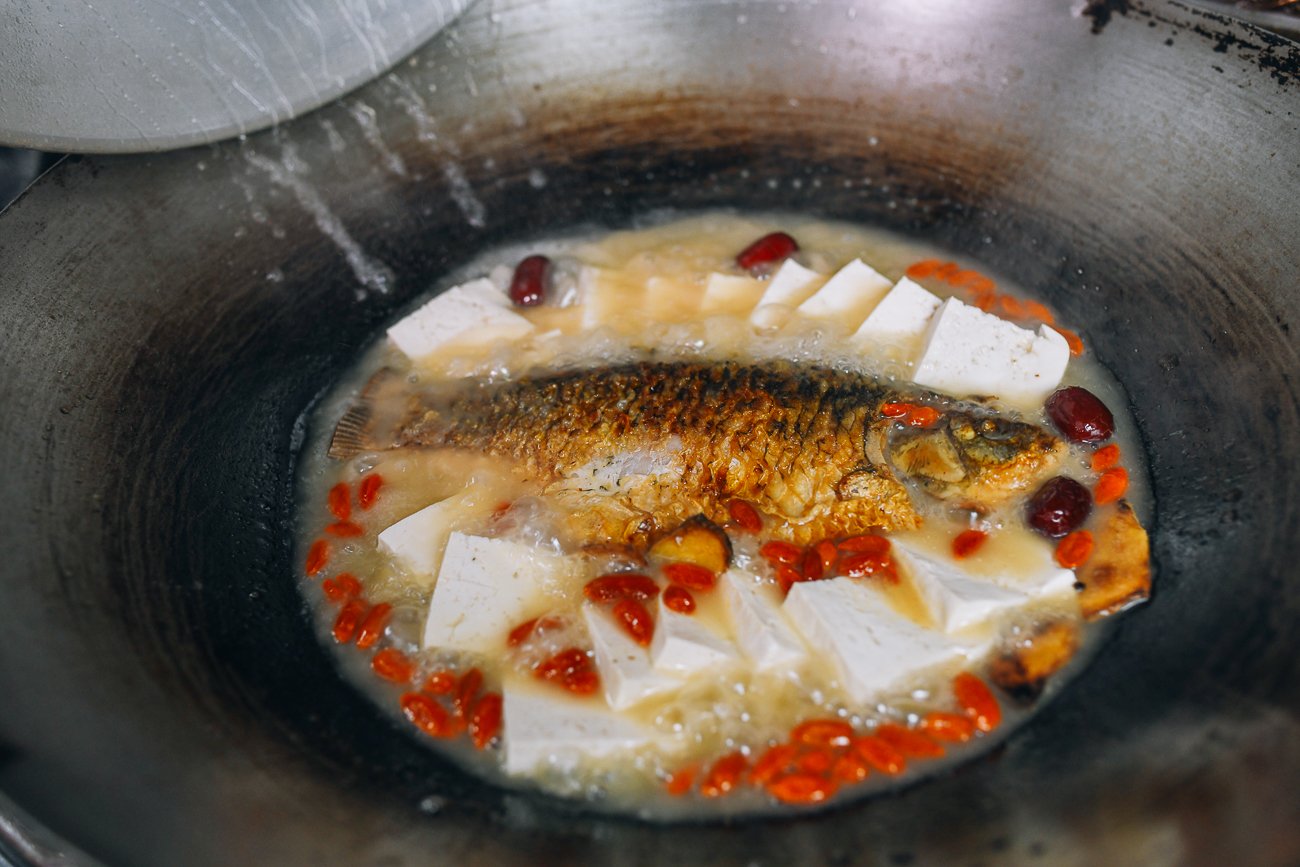
Where to Buy
You can find Chinese red dates in most Chinese or Asian grocery stores, often in the dried goods section. They’re also increasingly available in health food stores and online. Look for plump dates with a vibrant red-brown color without mold. You may also find them pitted or unpitted.
How to Store
Store dried Chinese red dates in an airtight container in a cool, dry place for up to a year. For longer storage, you can keep them in the refrigerator or freezer.
Recipes Using Dried Jujubes
Dried jujubes appear in many of our recipes:
- Chinese Ginger Tea with Red Dates
- Homemade Caffeine-Free Tea
- Apple Cinnamon Oatmeal (with a TCM twist!)
- Milky Fish Soup with Tofu
- Cantonese Pork Soup with Carrots & Chinese Yam
- Chinese New Year Sweet Rice Cake (Nian Gao)
- Chinese Postpartum Porridge
- Snow Fungus Soup
- Postpartum Pig Feat & Papaya Soup
Let us know if you have any additional questions about dried jujube fruit / Chinese red dates, or your favorite ways to use them!