This pumpkin soup is everything you want in a fall recipe: creamy, comforting, and bursting with the natural sweetness of pumpkin. It’s simple enough for a light weeknight dinner with some crusty bread and a salad, but elegant enough to serve as a starter for your holiday table. It’s the perfect way to enjoy pumpkin in the height of autumn!

Learning to Love Pumpkin Soup
I’ll be honest—I was never a huge fan of pumpkin soup. Growing up, my experience with pumpkin was limited to desserts, and the idea of using it in a savory dish just didn’t compute. But in our time living in China, my pumpkin horizons expanded! I had it in sweets, yes, but also stews and stir-fries.
The inspiration for this recipe came from watching Jacques Pépin make a simple Lyonnaise-style pumpkin soup on YouTube. It just looked so homey, comforting, and “of the land.” I looked at my parents’ growing pile of pumpkins curing on the sunny steps of their house, and I decided to try it.
In developing my own version, I added aromatics like leeks, fresh thyme, and a bay leaf for depth, plus a hint of nutmeg to bring out the pumpkin’s natural sweetness. Every ingredient in this recipe earns its place—I tested and tasted multiple times to make sure each addition made a real impact. The result? A pumpkin soup that converted this former pumpkin soup skeptic!
Different Types of Pumpkin
One of the best things about this pumpkin soup recipe is its versatility. You don’t need to hunt down a specific variety of pumpkin to make it work. I’ve successfully made this soup with kabocha squash (my personal favorite), butternut squash, and even the mystery hybrid squashes that seem to appear every year in my parents’ vegetable garden.
Here’s what you should know about different pumpkin and squash varieties:
Kabocha Squash is probably my top choice for pumpkin soup. It has a naturally sweet, almost chestnut-like flavor and a dense, creamy texture that makes incredibly smooth soup. The flesh is deep orange and less watery than other varieties. For this recipe, I used a 3-pound 5-ounce kabocha, which yielded about 1 pound 14 ounces of cubed flesh after peeling and seeding.
Butternut Squash is probably the most accessible option at grocery stores and makes excellent pumpkin soup. It has a sweet, nutty flavor and smooth texture. The long neck of the butternut is easier to peel and has fewer seeds, so look for specimens with a long neck and smaller bulbous end.
Sugar Pumpkins (also called pie pumpkins) are smaller, sweeter pumpkins specifically grown for cooking. Don’t use the large jack-o’-lantern pumpkins—they’re bred for carving, not eating, and have watery, stringy flesh that won’t give you the creamy texture you want in pumpkin soup.
Those are just three common varieties you can find in stores, but there are so many delicious heritage varieties to try—at farmer’s markets, farm stands, or from your garden! The key is simply choosing a winter squash with dense, flavorful flesh. Choose a pumpkin or squash that feels heavy for its size—that density translates to better flavor and texture in your finished soup.
Check out my dad’s video below to see how to trim pumpkins and squashes of all shapes and sizes!

What Makes This Pumpkin Soup Recipe Special
The magic in this pumpkin soup comes from a few carefully chosen ingredients that work together to create something greater than the sum of their parts.
The Gruyere cheese is a really delicious addition, but the amount doesn’t make the soup “cheesy” per se. As it melts into the hot soup, it just adds a subtle nuttiness and creates a luxurious texture. You can’t quite identify it as cheese in the finished soup, but you’d definitely miss it if it weren’t there.
Leeks (or onions if you can’t find leeks) provide a gentle aromatic base without overpowering the delicate pumpkin flavor. I used leeks because they’re slightly sweeter and more subtle than onions (and my parents have a ton of them in the garden), but a yellow onion works perfectly well too.
Fresh thyme adds an earthy, herbaceous note that complements the sweetness of the pumpkin. I grow thyme in a pot on my deck in the summer, and it always lasts well into the winter months. It’s a hardy herb!
The bay leaf contributes depth and a subtle background complexity. It’s one of those ingredients that you might not be able to pinpoint, but the soup would taste noticeably flatter without it.
A pinch of nutmeg brings out the natural sweetness of the pumpkin and adds warmth without making the soup taste like pumpkin pie (unless you go overboard, which is easy to do—a little goes a long way!).
Finally, cream or half and half can add richness to the soup, but it is optional. The soup is actually still delicious without it. My mom prefers her soup without cream!
Pumpkin Soup Recipe Instructions
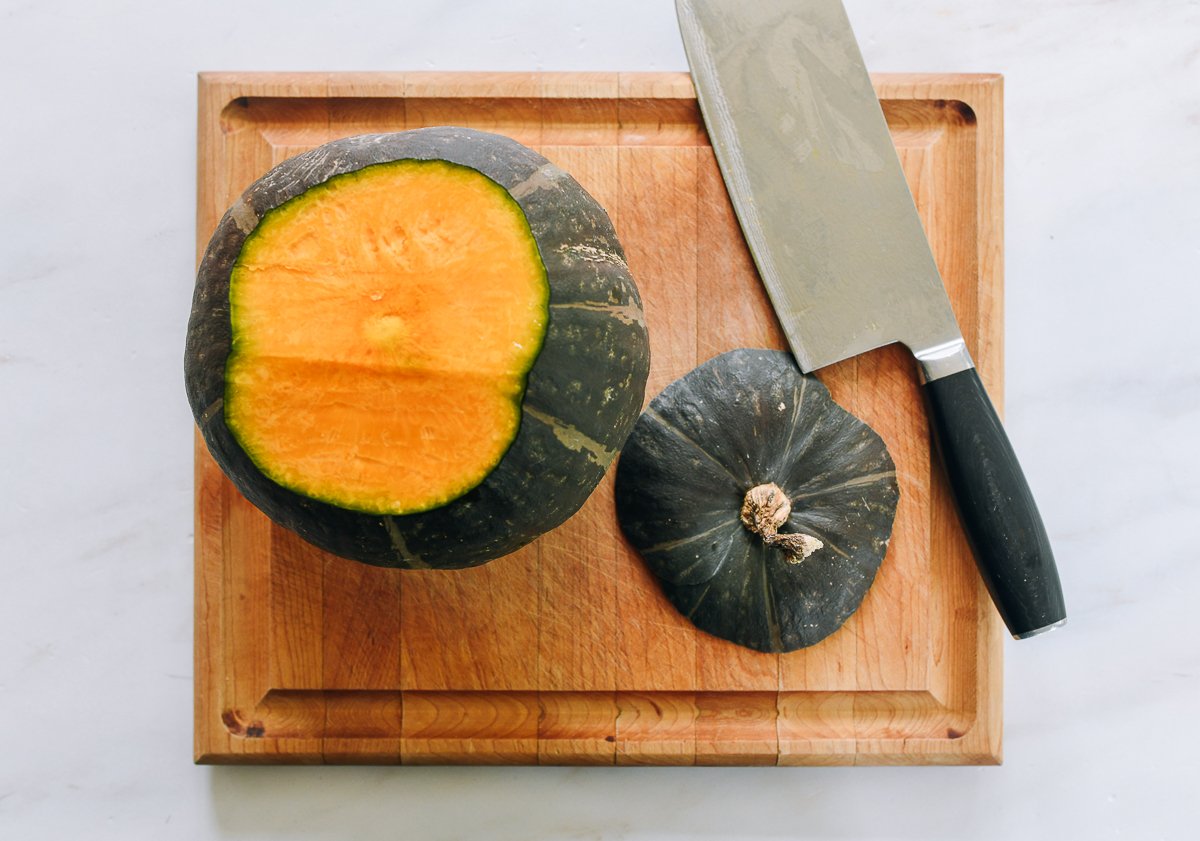
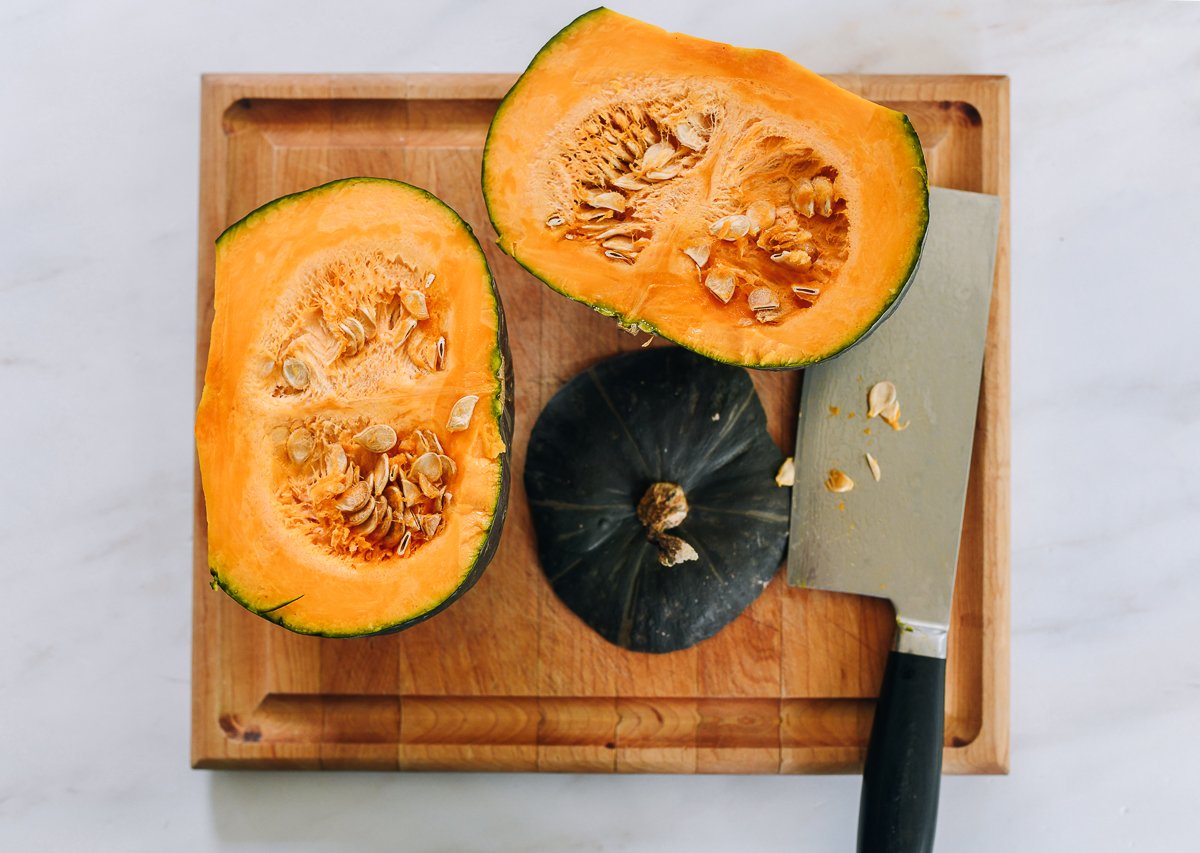
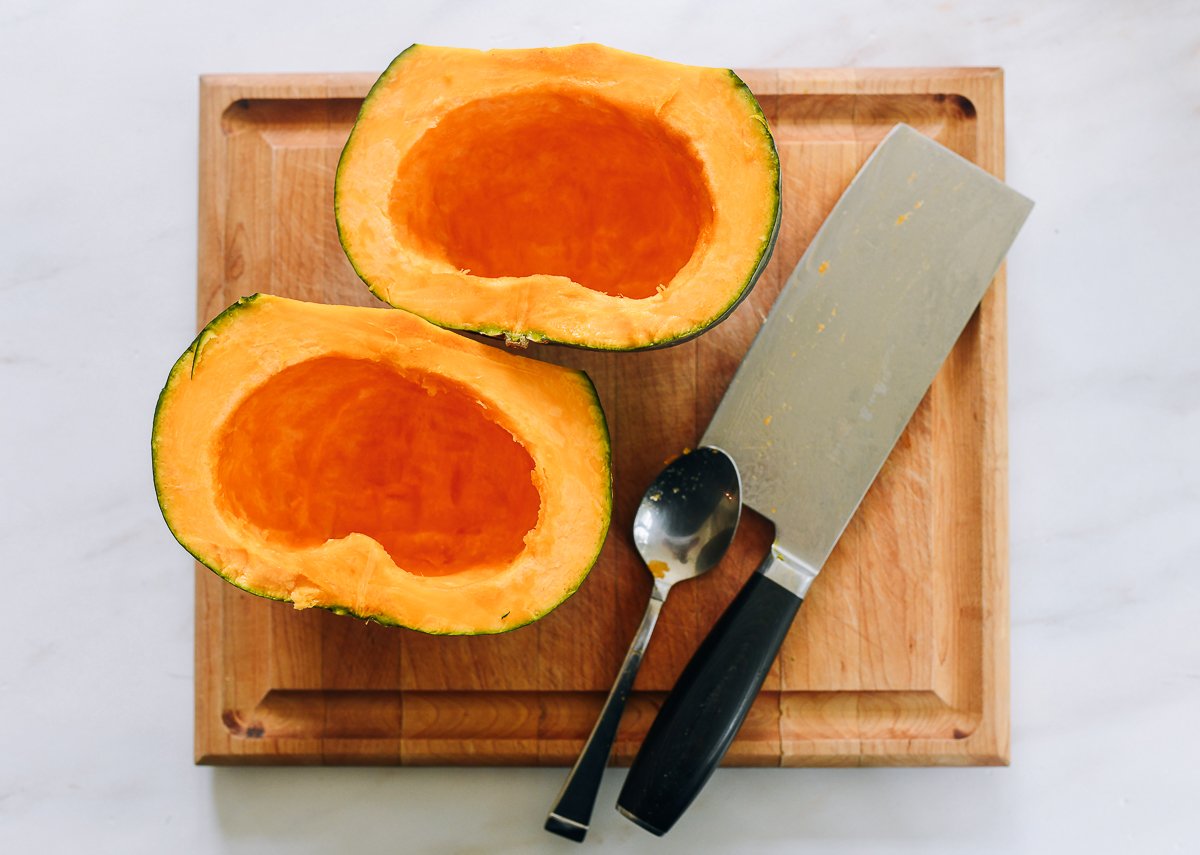
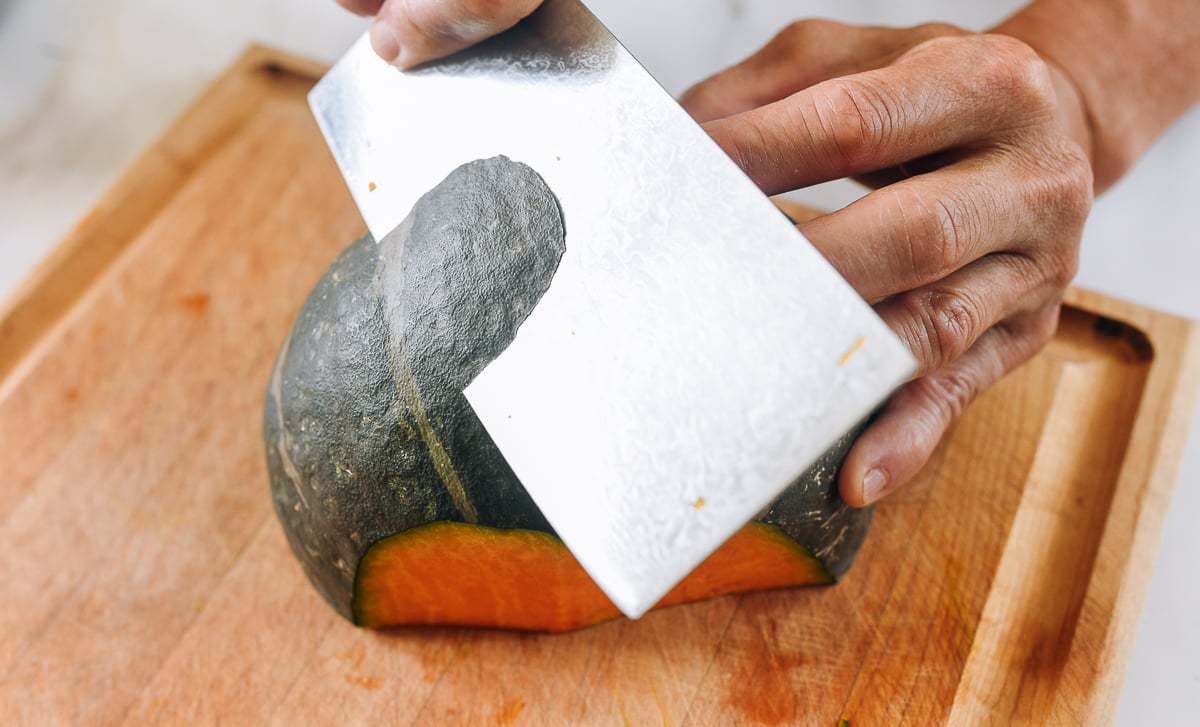
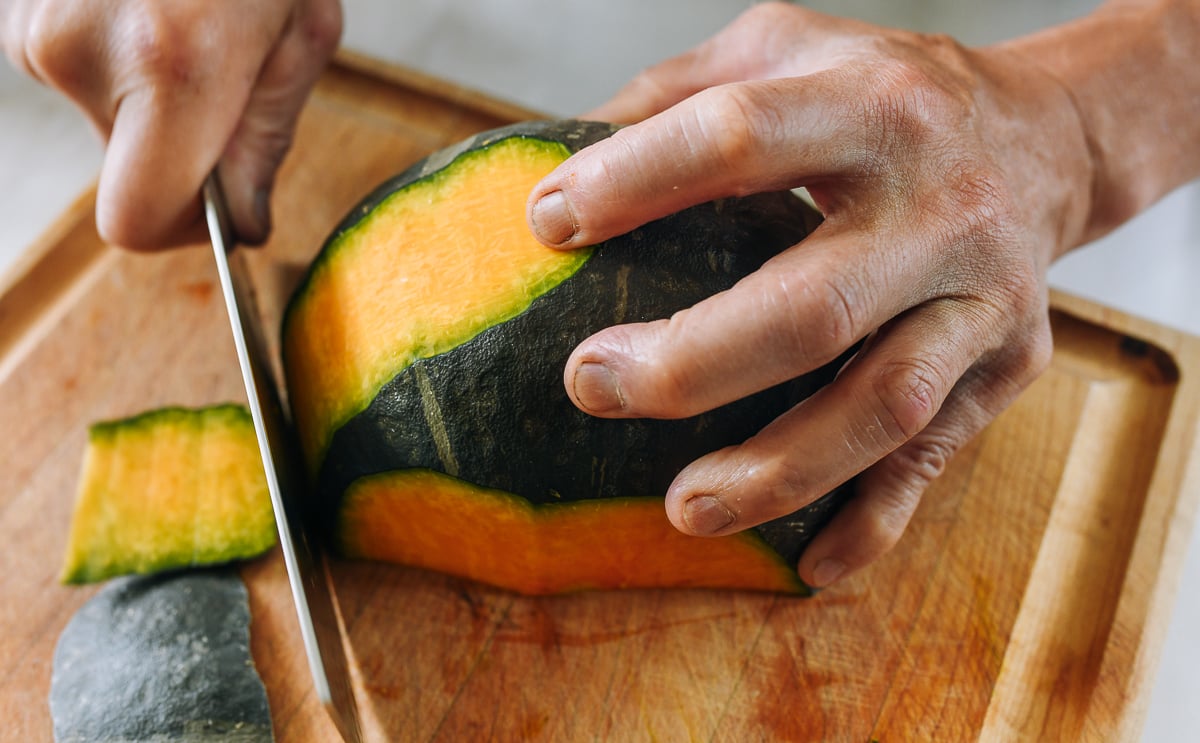
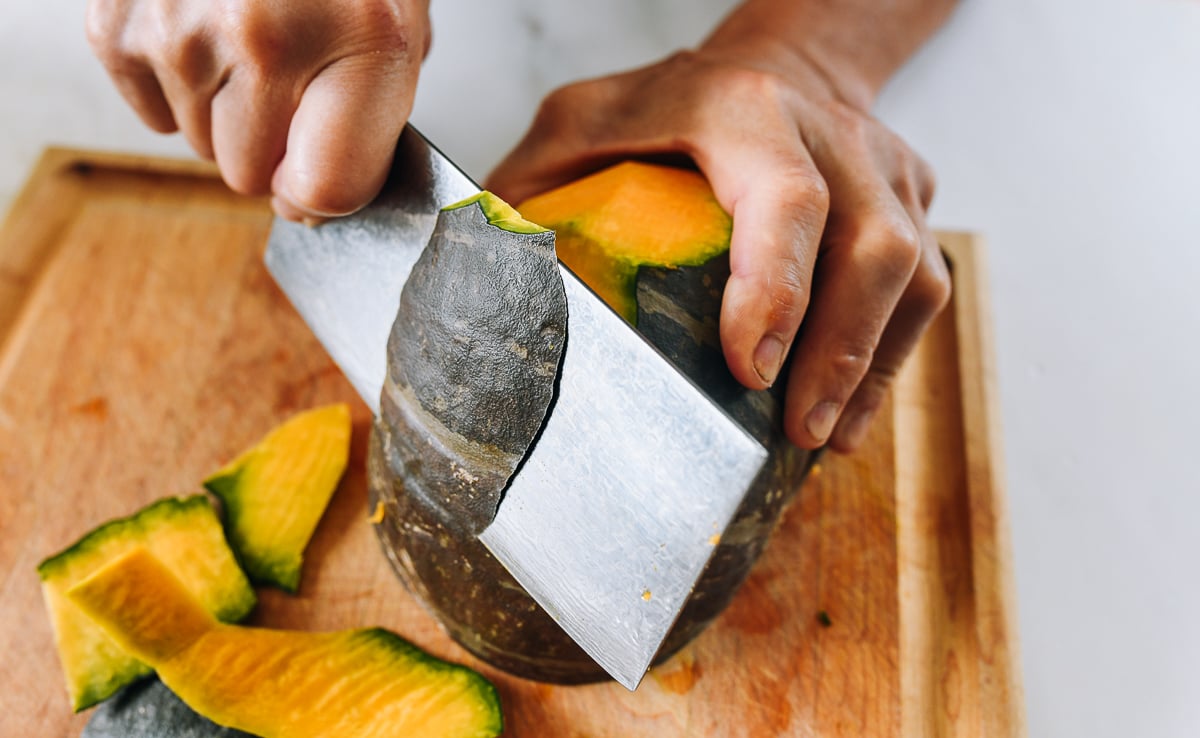
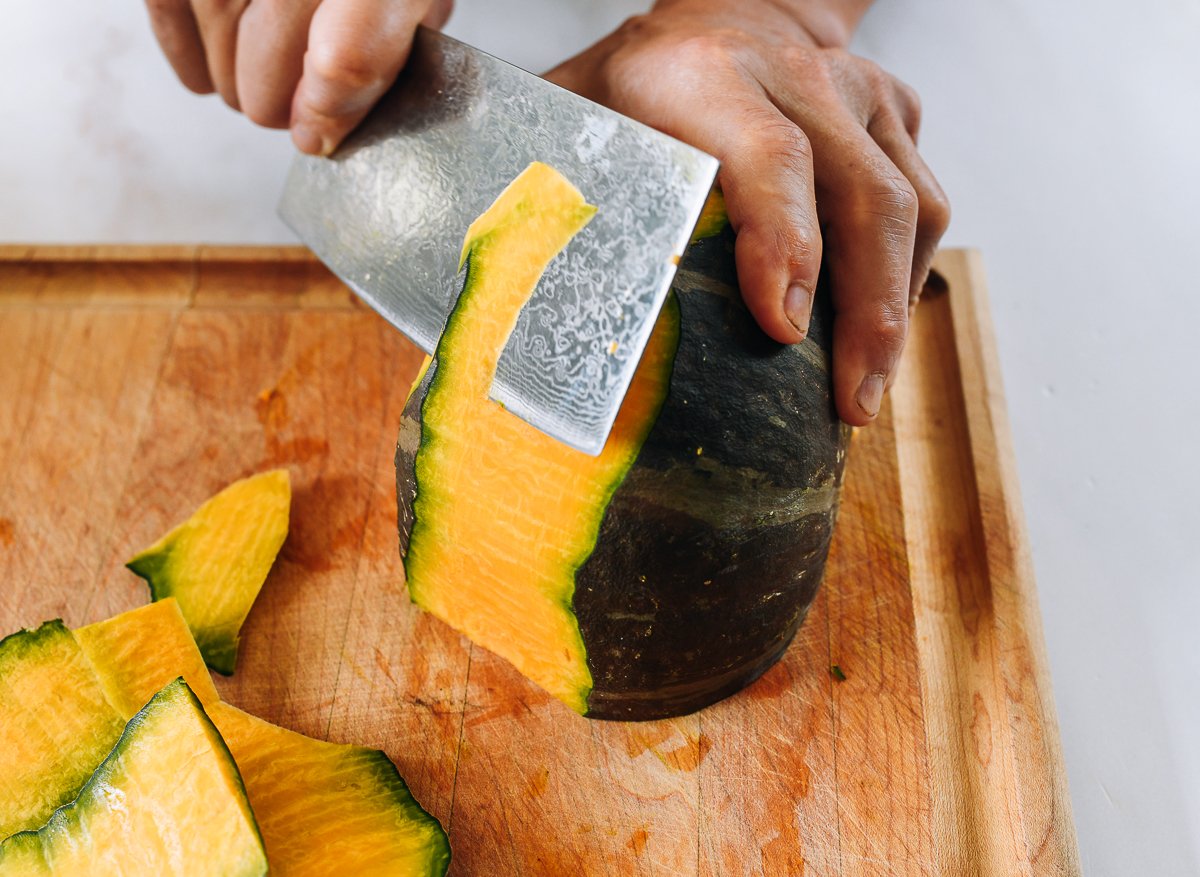
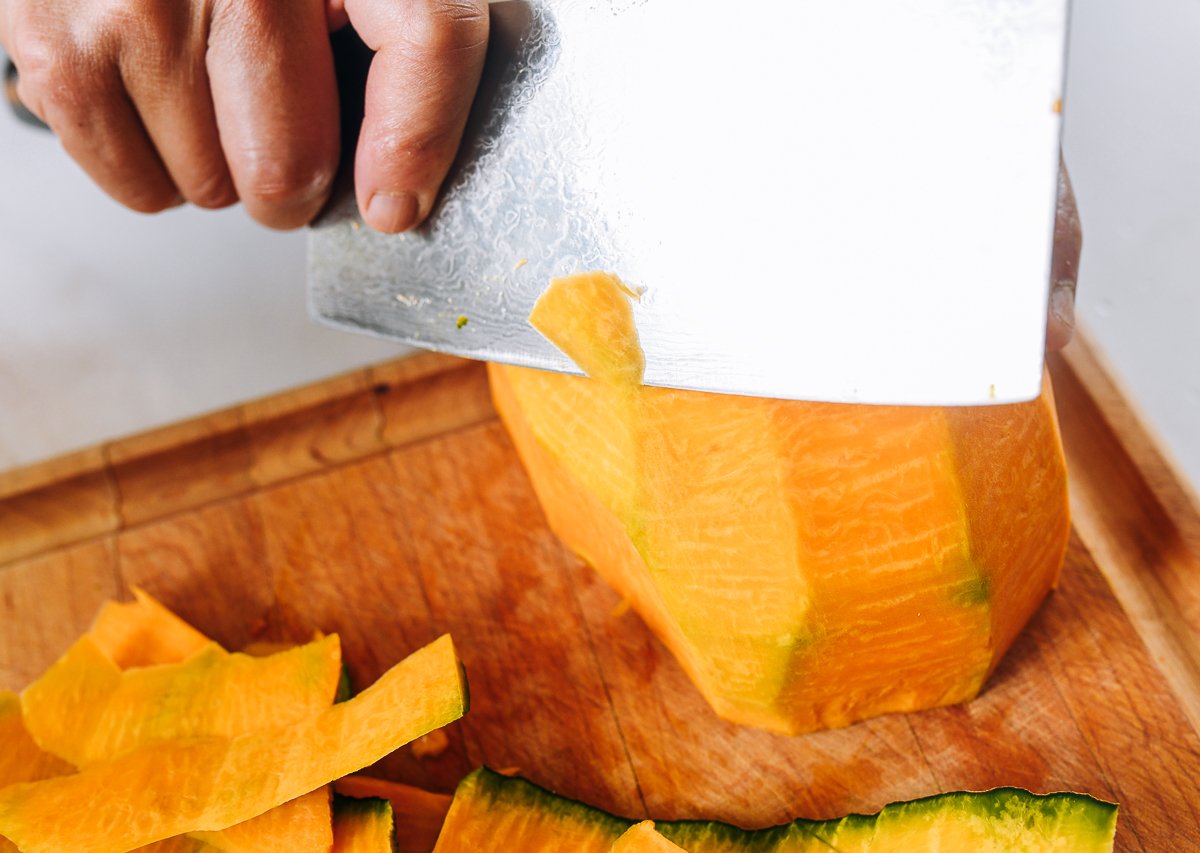
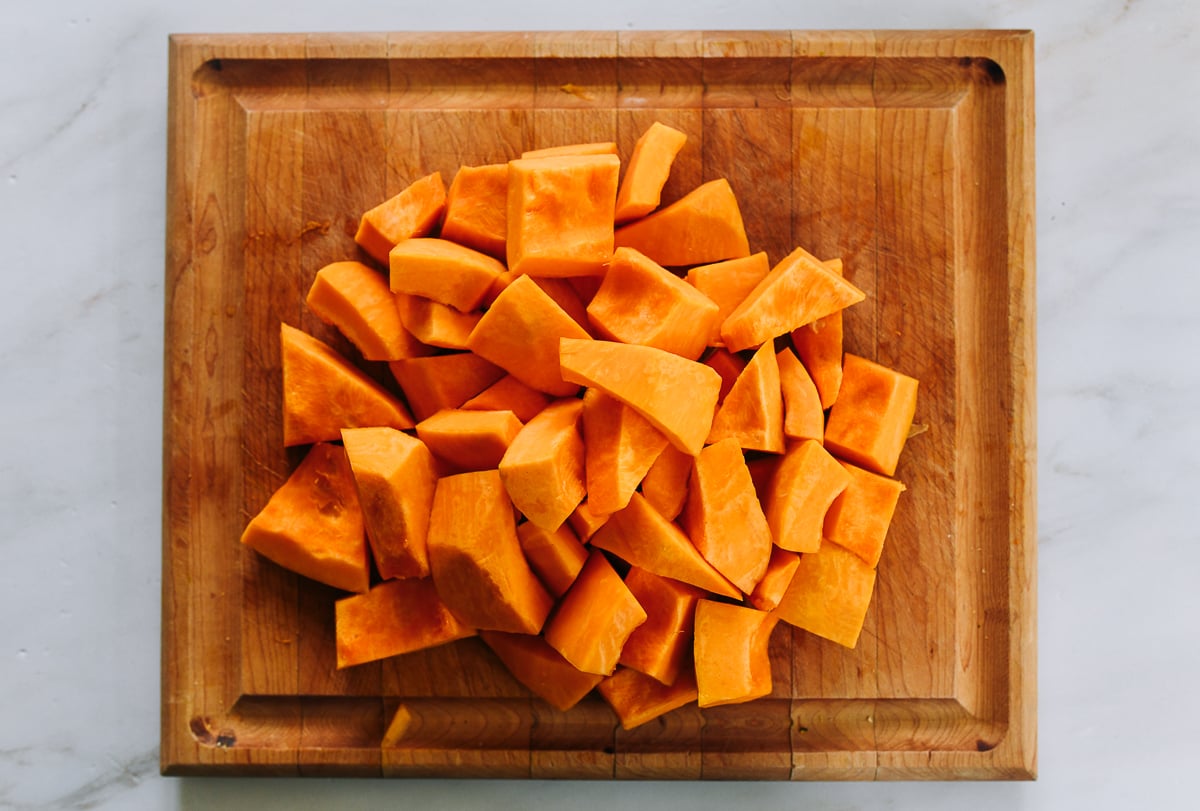
Cut the pumpkin in half carefully using a knife or heavy cleaver. Hollow out the seeds and stringy bits with a spoon. Slice off the rind, and cut into chunks.
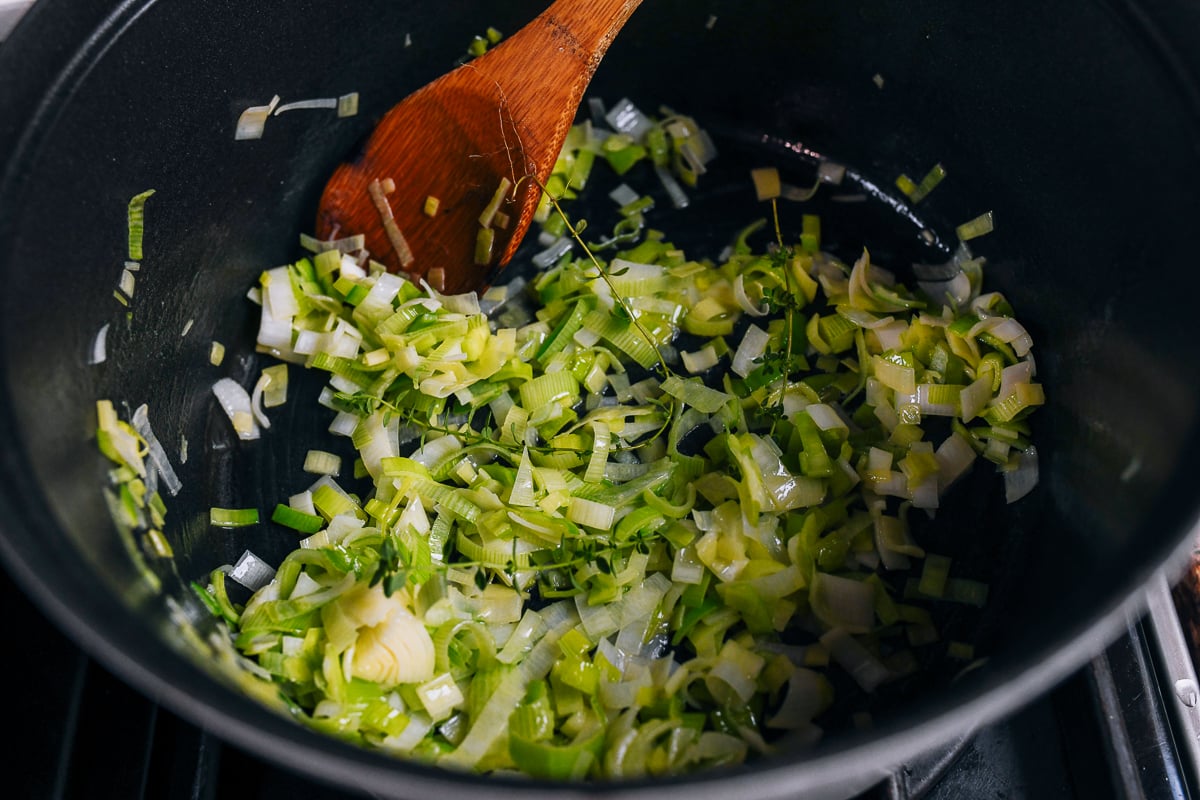
To a large dutch oven over medium heat, add the butter, leeks (or onion), and thyme. Cook for 5 minutes, until softened but not browned.
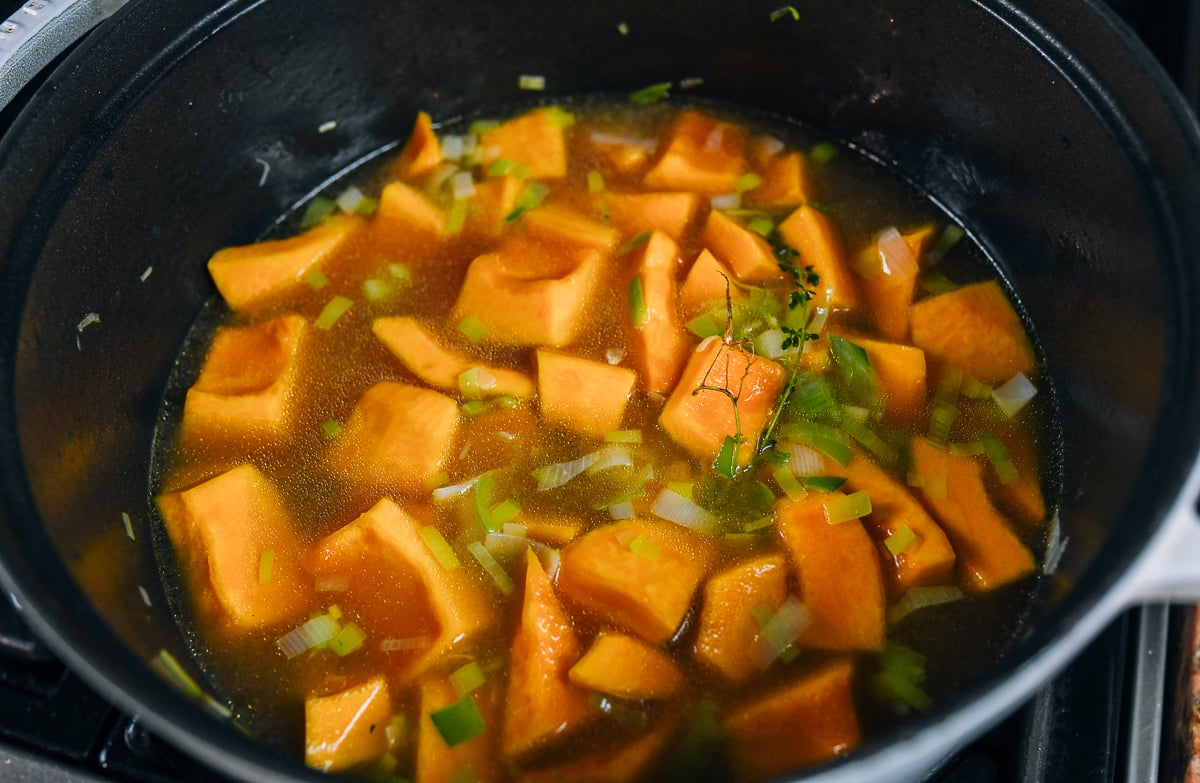
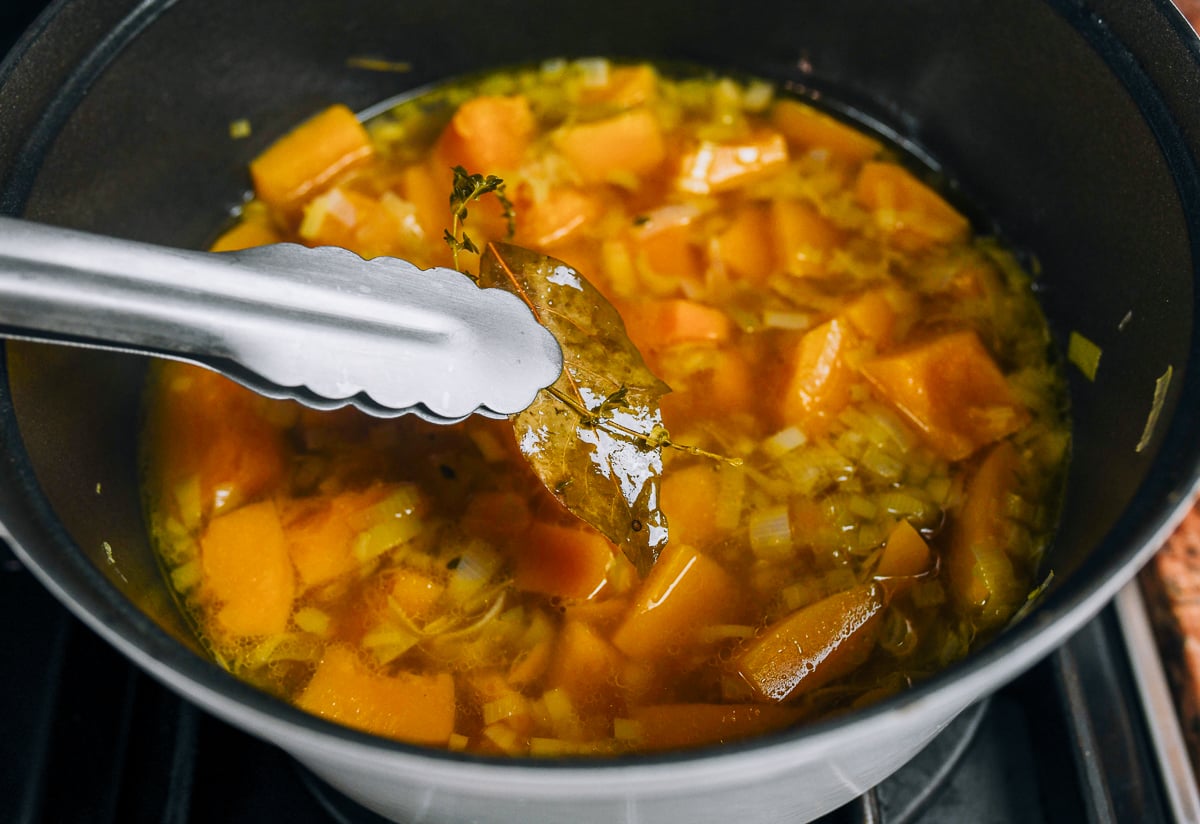
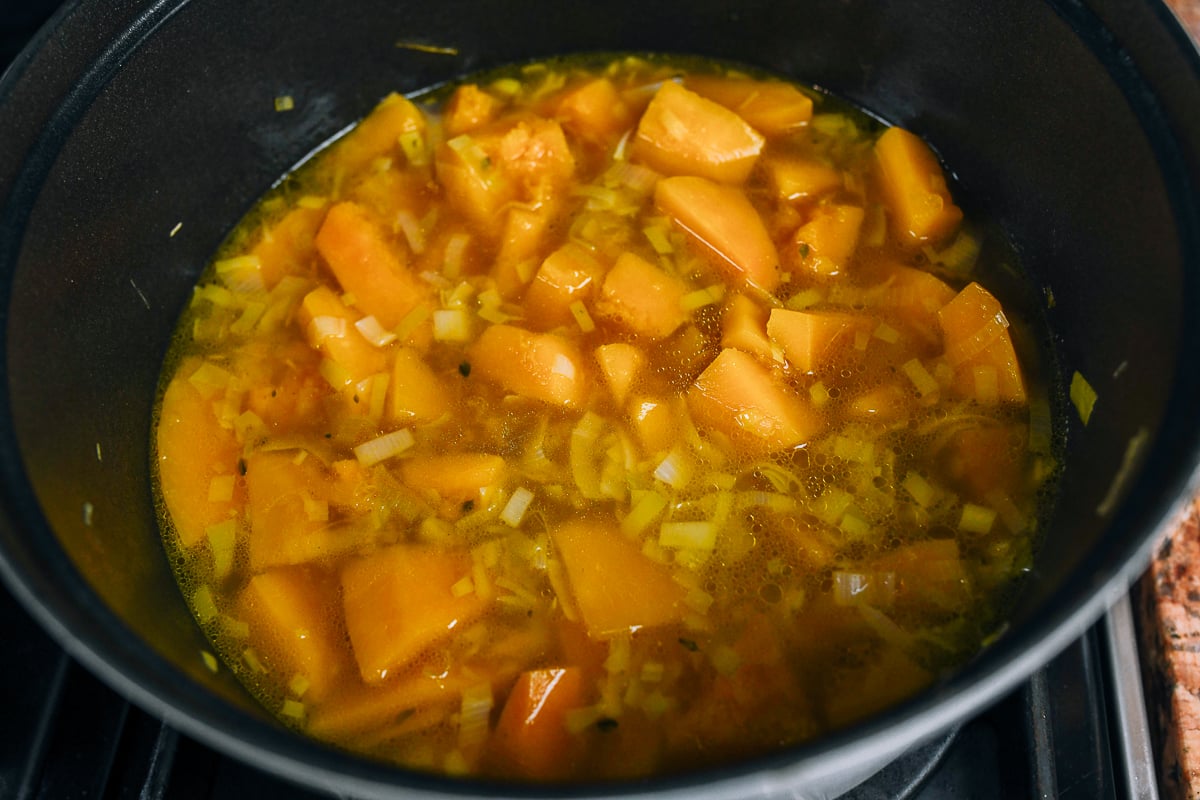
Add the pumpkin chunks, stock, and bay leaf. Bring to a boil, then turn the heat down to a simmer. Cover the pot, and cook for 35 minutes, or until the pumpkin is very tender. Remove the bay leaf and thyme sprigs.
Off the heat, use an immersion blender to get the soup to a smooth, creamy texture (or pour into a blender or food processor in batches.) Stir in the cheese. Once melted, blend (or whisk) once again so the cheese is totally emulsified into the soup.
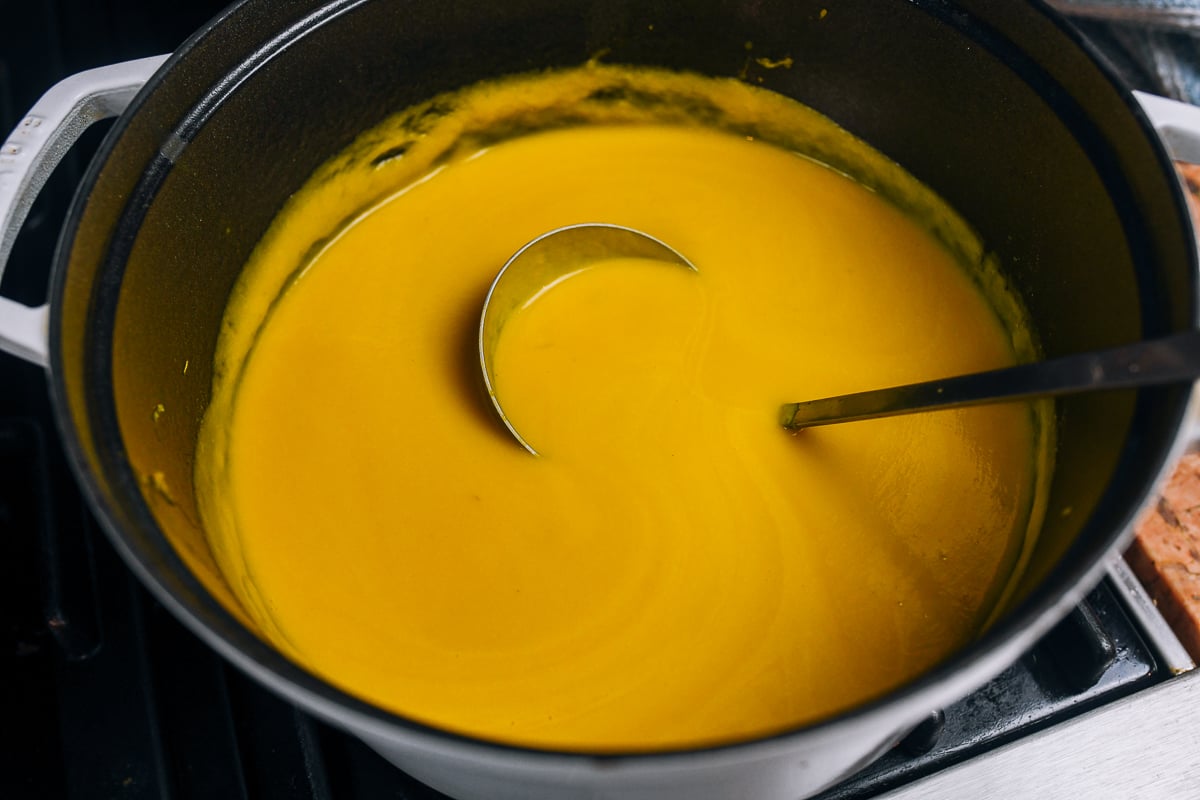
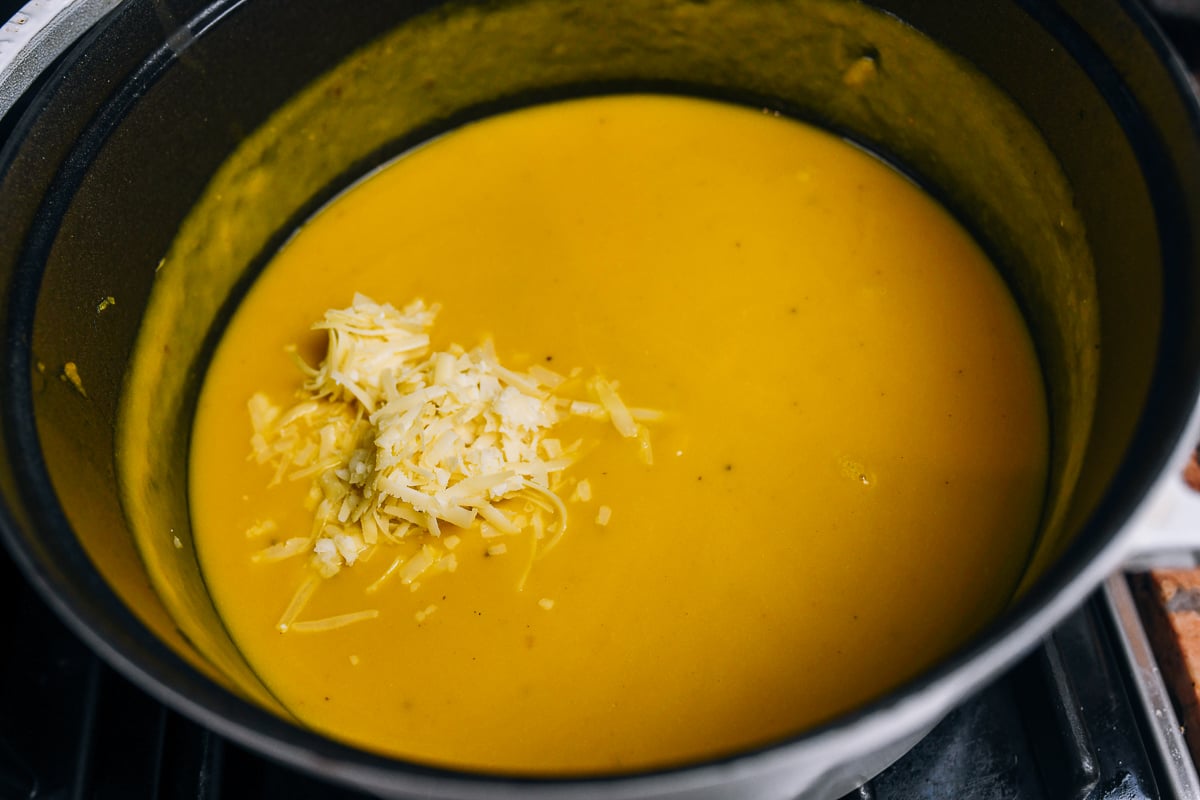
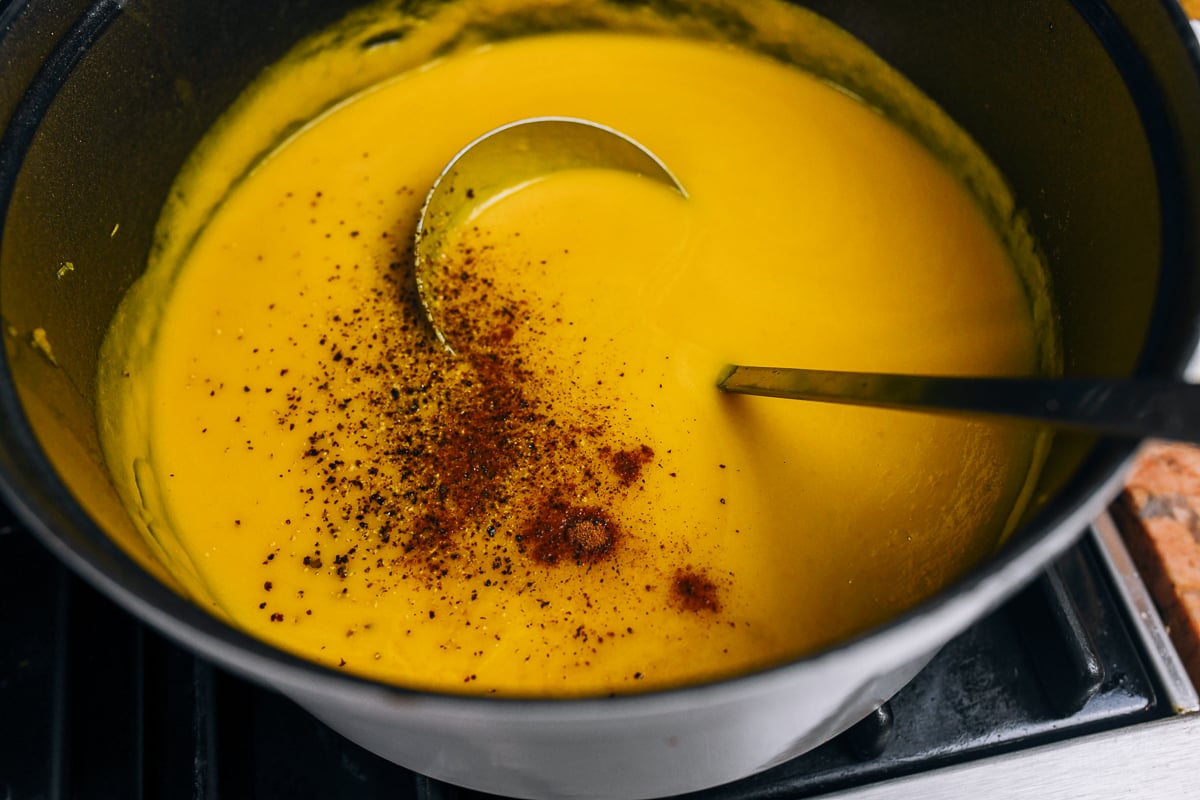
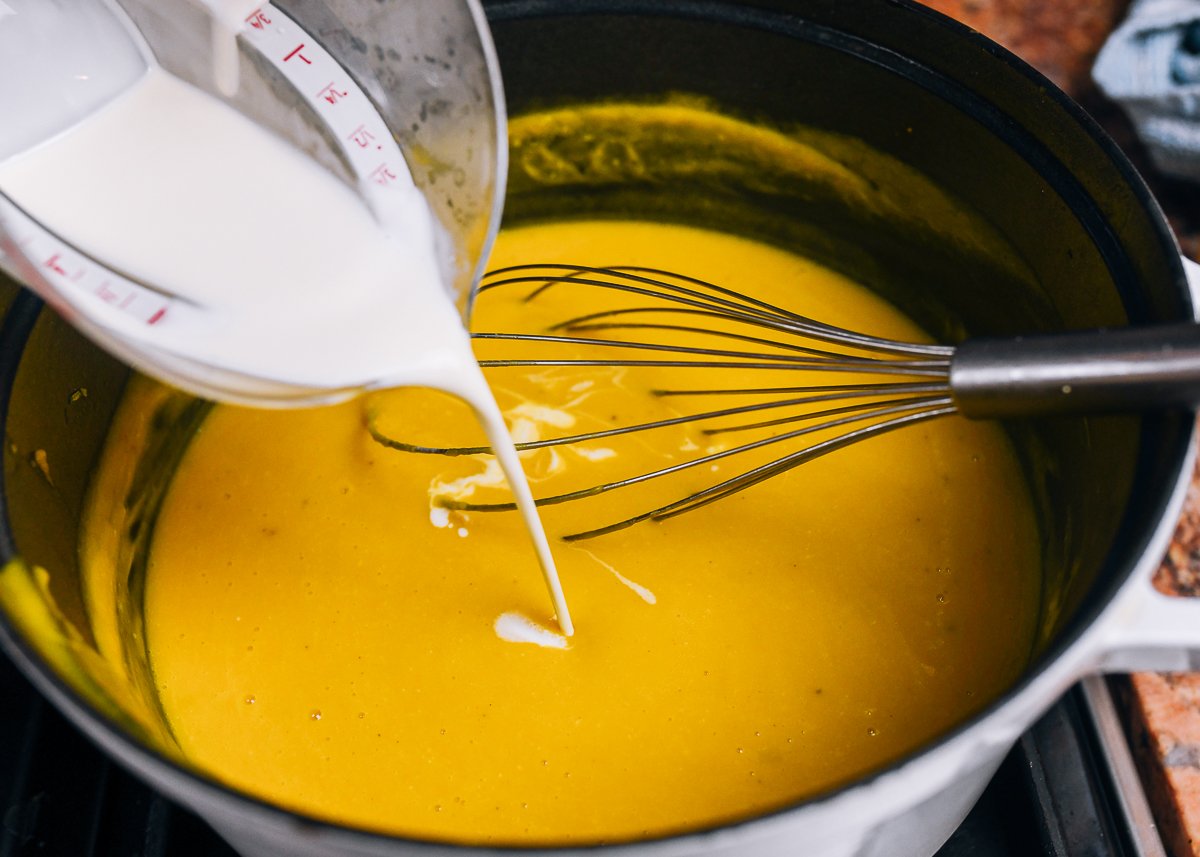
Stir in the salt, pepper, nutmeg, and cream (if using). At this point you can keep the soup warm over low heat, but don’t let it come back up to a boil, or the cream will split (which will make the soup grainy).
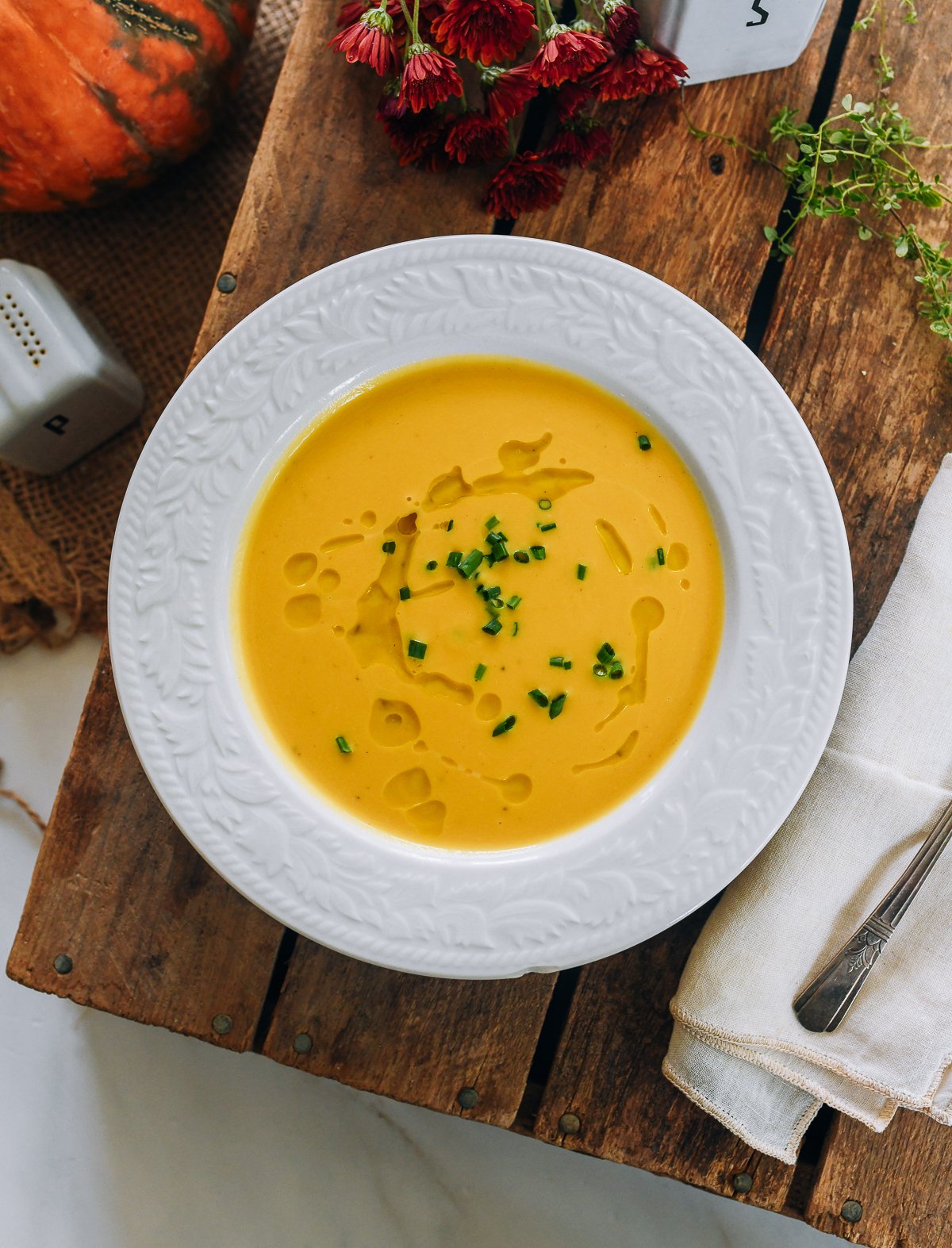
Serve the soup in bowls, garnished with chopped chives or whatever garnishes you like (crumbled bacon, homemade croutons, fried sage, toasted nuts or pumpkin seeds are all great options).
Looking for more authentic recipes? Subscribe to our email list and be sure to follow us on Pinterest, Facebook, Instagram, and Youtube!
Recipe

Classic Pumpkin Soup
Ingredients
- 3- pound pumpkin (kabocha squash or butternut squash; around 2 pounds/900g peeled)
- 2 tablespoons butter
- 1 leek (white part only; or medium yellow onion)
- 1 sprig thyme
- 1 quart vegetable or chicken broth/stock
- 1 bay leaf
- 2/3 cup grated gruyere cheese
- 3/4 teaspoon salt or to taste
- 1/2 teaspoon black pepper
- 1/4 teaspoon ground nutmeg
- 1/2 cup heavy cream (or half and half, optional)
- 2 tablespoons chopped chives (optional, to serve)
Instructions
- Cut the pumpkin in half carefully using a knife or heavy cleaver. Hollow out the seeds and stringy bits with a spoon. Slice off the rind, and cut into chunks.
- To a large dutch oven over medium heat, add the butter, leeks (or onion), and thyme. Cook for 5 minutes, until softened but not browned.
- Add the pumpkin chunks, stock, and bay leaf. Bring to a boil, then turn the heat down to a simmer. Cover the pot, and cook for 35 minutes, or until the pumpkin is very tender. Remove the bay leaf and thyme sprigs.
- Off the heat, use an immersion blender to get the soup to a smooth, creamy texture (or pour into a blender or food processor in batches.) Stir in the cheese. Once melted, blend (or whisk) once again so the cheese is totally emulsified into the soup.
- Stir in the salt, pepper, nutmeg, and cream (if using). At this point you can keep the soup warm over low heat, but don’t let it come back up to a boil, or the cream will split (which will make the soup grainy).
- Serve the soup in bowls, garnished with chopped chives or whatever garnishes you like (crumbled bacon, homemade croutons, fried sage, toasted nuts or pumpkin seeds are all great options).
Tips & Notes:
Nutrition Facts
Serving Suggestions and Garnishes
This pumpkin soup is delicious on its own, but it also welcomes all sorts of toppings and accompaniments. Here are some of my favorite ways to serve it:
- Crusty bread makes this soup a meal. A thick slice of sourdough or a warm baguette is perfect for soaking up every last drop.
- Crumbled bacon adds a salty, smoky contrast to the sweet, creamy soup. I like to crisp up a few strips and crumble them in right before serving. Crispy prosciutto or pancetta is another great option if you want something a bit fancier than bacon.
- Homemade croutons give you that satisfying crunch. Just cube some day-old bread, toss with olive oil and salt, and bake until golden and crispy.
- Fried sage leaves are a classic garnish for pumpkin soup. Just fry whole sage leaves in butter or oil until crisp. They add a lovely pop of green and an earthy flavor.
- Toasted pumpkin seeds (pepitas) are a natural pairing and add great texture. Toast them in a dry skillet with a pinch of salt until they’re golden and fragrant.
- A drizzle of good olive oil or a swirl of warm cream adds visual appeal and richness.
Storage and Make-Ahead Tips
This pumpkin soup stores beautifully and reheats like a dream, making it perfect for meal prep or making ahead for entertaining.
- Refrigerator storage: Let the soup cool completely, then transfer it to an airtight container. It will keep in the refrigerator for up to 5 days. Reheat gently on the stovetop over medium-low heat, stirring occasionally. You may need to add a splash of stock or water to thin it out.
- Freezer storage: This pumpkin soup freezes wonderfully for up to 3 months. Let it cool completely, then freeze it in quart containers (or pint containers if you’d rather have individual servings). You can also pour the soup into heavy-duty freezer bags (squeeze out as much air as possible), seal, and flatten so the soup is evenly distributed in the bag. This saves space in the freezer. Thaw overnight in the refrigerator, then reheat gently on the stovetop.
- Make-ahead tip: You can make this soup a day or two ahead and just reheat it before serving. This works great for meal-prep or when you’re having people over—one less thing to worry about on the day of your dinner party.