The Woks of Life
My Saved Recipes
  • Recipes
    • Recipe Index
    • Recipe Filter
    • View all By Date
    • Our Cookbook: NOW AVAILABLE!
    • Videos
  • How-To
    • Cooking MethodsAll how-to cooking methods
    • Cooking ToolsAll Cooking tools including hand and electrics
    • Wok Guide
    • Garden/FarmWe share our learnings from our new Woks of Life HQ/farm (where we moved in Fall of 2021) on how to grow Chinese vegetables, fruits, and other produce, as well as farm updates: our chickens, ducks, goats, alpacas, and resident llama!
    • CultureCulture related posts
  • Ingredients
    • Chinese Ingredients Glossary
    • Sauces, Wines, Vinegars & Oils
    • Spices & Seasonings
    • Dried, Cured & Pickled Ingredients
    • Noodles & Wrappers
    • Rice, Grains, Flours & Starches
    • Tofu, Bean Curd & Seitan
    • Vegetables & Fungi
    • Fresh Herbs & Aromatics
  • Life & Travel
    • Life
    • Travel
  • Contact
    • Work with Us
    • Press
    • Send Us A Message
  • About Us
Home ❯ Ingredients ❯ Sauces, Wines, Vinegars & Oils ❯ Thai Curry Paste

Thai Curry Paste

Everyone

by:

Everyone

57 Comments
Updated: 9/29/2022
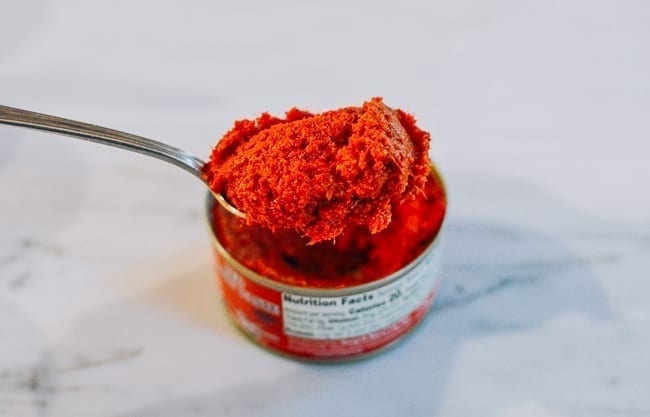
Canned Thai Curry Paste, thewoksoflife.com

Thai Curry Paste is an incredibly useful ingredient. They come in multiple flavors, and can help you create delicious Thai dishes at home with minimal effort. In this article, we’ll talk about the different varieties available at your local Asian market and how to use them.

What Is Thai Curry Paste?

A Thai curry paste is a mixture of herbs, spices, and aromatics used to make what Westerners know as Thai-style curry dishes, or “kaeng.” 
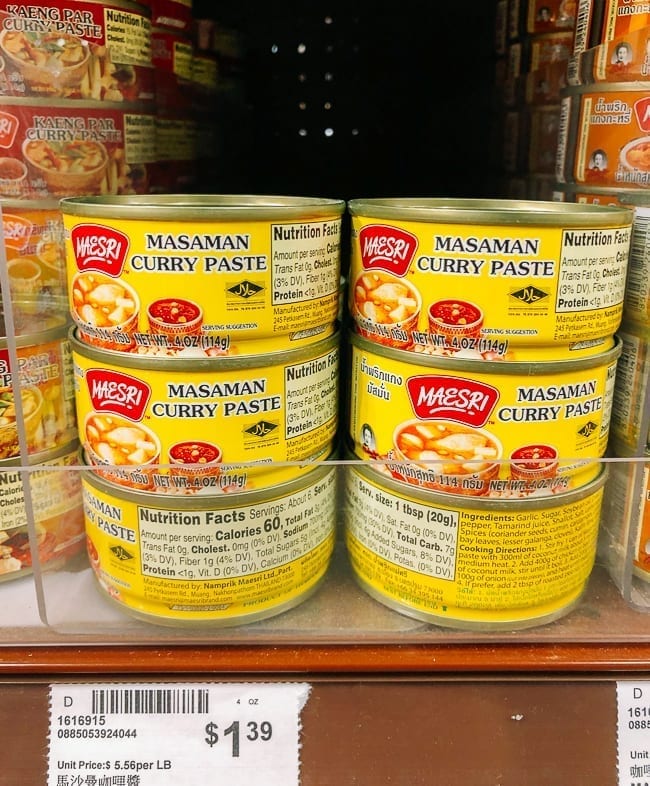
Massaman Curry Paste on store shelf, thewoksoflife.com

Thai curries, such as red curry and green curry, are dishes that usually feature the flavors of shrimp paste, onions or shallots, chilies, and garlic. These curries may also include coconut milk. Other ingredients include lemongrass, kaffir lime, galangal, coriander, cumin, and cardamom. 

Thai curries can range from a soupy consistency to sauces that resemble gravies. They can also be drier dishes, where chefs use the curry paste as a base for a stir-fry.
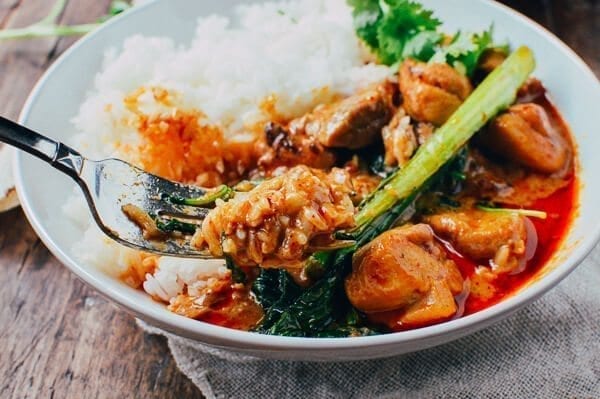
Red Curry Chicken, by thewoksoflife.com

It’s important to note that Thai curries do not usually involve curry powder, which is what many people think of when they think “curry.” In Thailand, this type of curry is called “kari” and refers to Indian-style dishes featuring curry powder or other Indian spices. 

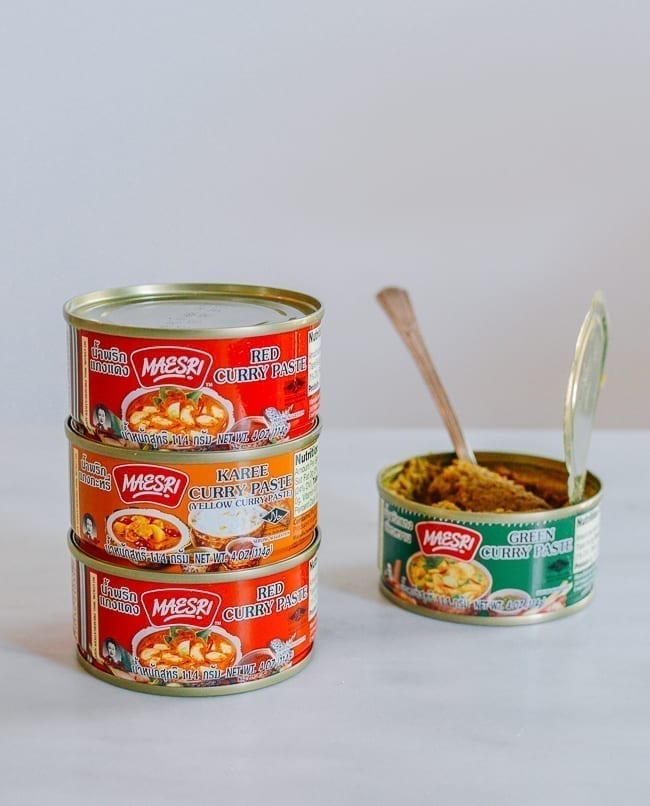
Note, however, that there IS a yellow curry paste “often labeled karee curry paste” that includes turmeric and curry powder and can be applied to a more Indian-style curry.
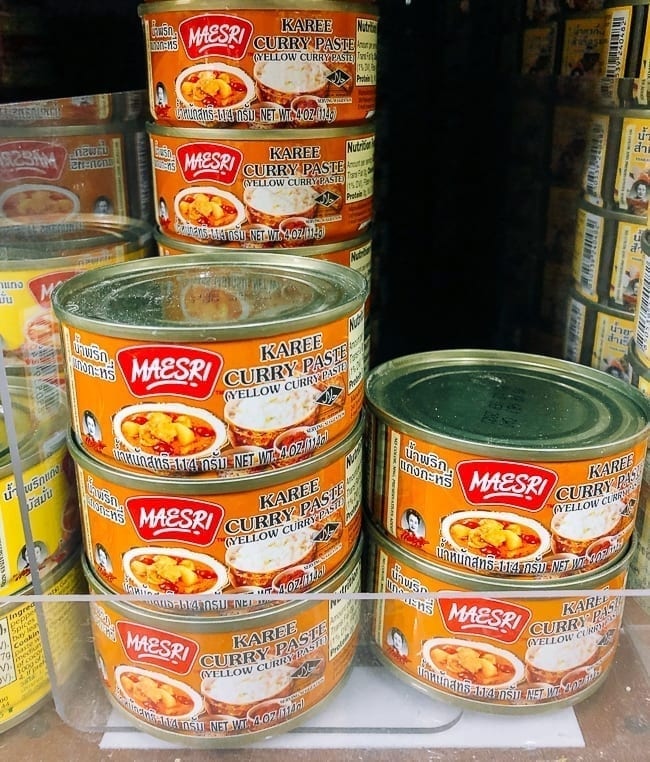
Maesri Karee paste, thewoksoflife.com

The main types of Thai curry paste that we buy are the green and red varieties. 
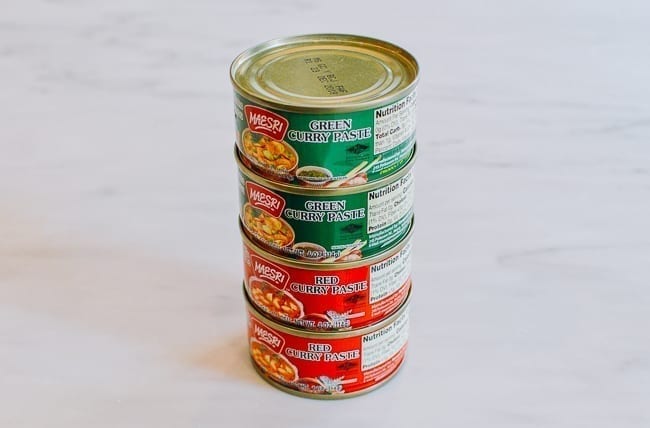
Green and Red Thai Curry Pastes, thewoksoflife.com

How Is It Used?

The best part about this ingredient is, all the necessary aromatics and spices are already there! Thai curry pastes make it easy and convenient to prepare Thai curry dishes without having to source hard-to-find ingredients.

After all, it’s not like galangal and kaffir lime are easily accessible, even in Asian markets here in the U.S. Even many Thai restaurants use canned curry pastes rather than making their own. 

We use them to make dishes like Red Curry Tofu, Red Curry Chicken, and Green Curry Chicken. We also use them to add kick to creative salads, soups, and noodle dishes (scroll down for a list of our favorite recipes using Thai curry paste). 
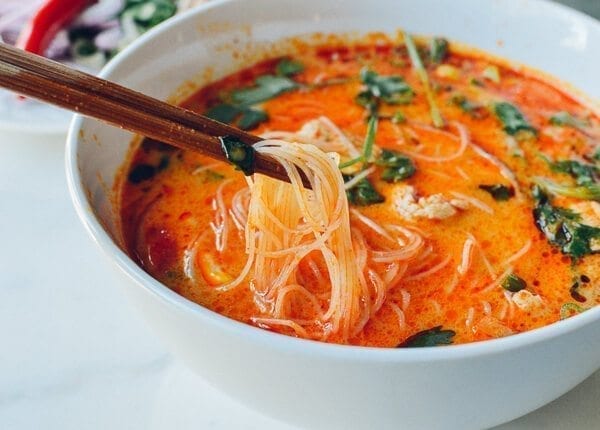
15 Minute Coconut Curry Noodle Soup, by thewoksoflife.com

Buying & Storing

Maesri is our go-to brand for Thai curry pastes. We stock up on cans of red and green curry paste so we have it on hand to whip up tasty Thai dishes. 

As you can see in the photo below, they’re a bargain at $1.19-$1.39 each!
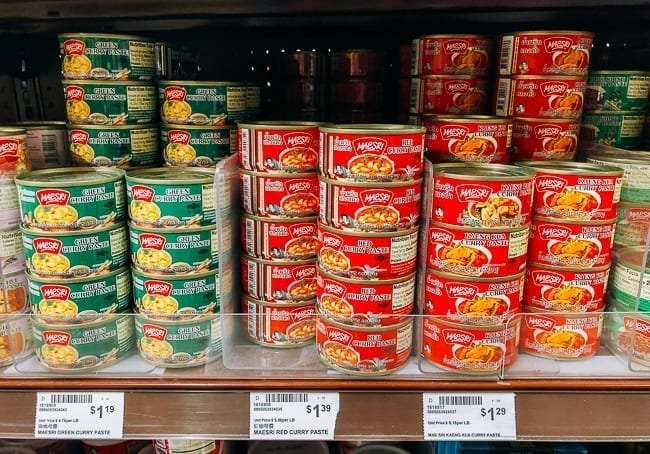
Different types of Thai curry paste on shelf, thewoksoflife.com

Here’s what the green curry paste looks like:
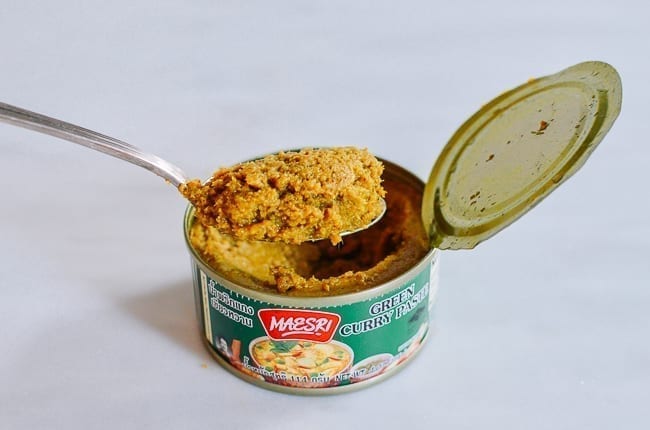
Thai green curry paste, thewoksoflife.com

And the red:

Thai red curry paste, thewoksoflife.com

You can find Thai curry paste in most Asian grocery stores, but you may also be able to find it these days in a well-stocked regular supermarket. You can also find it easily online. 

Store sealed jars or cans in a cool, dry place, such as your pantry. Always use a clean utensil when handling.

If you have leftover curry paste, refrigerate in an airtight container for 2-3 weeks (as long as it hasn’t been contaminated). For longer-term storage, freeze in an airtight container until you’re ready to use it again.

Our Favorite Recipes That Use This Ingredient

  • Coconut Curry Noodle Soup
  • Red Curry Lime Chicken Wings
  • Chicken Satay with Peanut Sauce
  • Thai Chicken Salad with Red Curry Butternut Squash
  • Red Curry Tofu
  • Red Curry Chicken
  • Green Curry Chicken
  • Red Curry Noodles
  • Butternut Squash Soup with Red Curry Butter Croutons

If you have further questions, let us know in the comments!

You may also like…

  • Thai Red Curry Chicken with Steamed Rice
    Thai Red Curry Chicken
  • Thai Style Red Curry Lime Wings by thewoksoflife.com
    Thai Style Red Curry Lime Wings
  • Green Curry Chicken with a bowl of white rice, by thewoksoflife.com
    Thai Green Curry Chicken
  • Tamarind Concentrate, thewoksoflife.com
    Tamarind Paste
Everyone

About

Everyone
Bill, Judy, Sarah, and Kaitlin Leung are a family of four and co-creators of The Woks of Life, which began in 2013 and has since become the most trusted online resource for Chinese recipes—what Bon Appetit has called “The Bible of Chinese Home Cooking.” New York Times bestselling cookbook authors, IACP award finalists, and James Beard Award nominees, the Leung family continues to build this multigenerational project, a culinary platform and robust online community trusted by millions of home cooks. This post includes contributions from two or more family members. So rather than deciding who gets a byline, it’s posted under the general moniker, “Everyone.” Very diplomatic, wouldn’t you say?
guest
Rate this recipe:


guest
Rate this recipe:


This site uses Akismet to reduce spam. Learn how your comment data is processed.

57 Comments
Newest
Oldest Most Voted
Inline Feedbacks
View all comments
Sarah, Kaitlin, Judy, and Bill cooking together

Welcome!

We’re Sarah, Kaitlin, Judy, and Bill– a family of four cooks sharing our home-cooked and restaurant-style recipes.

Our Story

sign up for our newsletter and receive:

our Top 25 recipes eBook

Our email newsletter delivers our new recipes and latest updates. It’s always free and you can unsubscribe any time.

Wok Guide
Ingredients 101
Cooking Tools
Kitchen Wisdom
* Surprise Me! *

Save Your Favorite Woks of Life Recipes!

Create an account to save your favorite dishes & get email udpates!

Sign Me Up

Sign Up For Email Updates & Receive Our

Top 25 Recipes Ebook!

“

“I am proud to say that your genealogy has been the sole tutorial for my Asian-inspired culinary adventures for years; probably since you began. Time and again, my worldwide web pursuits for solid recipes that I know my family will eat has landed me back here.”

Beth, Community Member Since 2013

Shanghai Scallion Flatbread Qiang Bing
Eggs with Soy Sauce and Scallions
Scallion Ginger Beef & Tofu
Bill with jar of haam choy
Soy Butter Glazed King Oyster Mushrooms
Taiwanese Rou Zao Fan
  • Facebook
  • Instagram
  • Pinterest
  • YouTube

All Rights Reserved © The Woks of Life

·

Privacy Policy

·

Disclaimer

·

Site Credits

·

Back to Top
wpDiscuz