If you grew up in a Cantonese household, fried dace with salted black beans may have been a pantry staple. For us, it was always ready when we needed a quick, flavorful dish to complete our family dinner.
This humble canned fish has traveled from working-class tables in Guangzhou to being featured in the New York Times, bringing its distinctive umami flavor and chewy texture to appreciative palates worldwide. Let’s share with you everything you need to know about this nostalgic Chinese preserved food that will always make us reach for one more bowl of rice!
What is Fried Dace?
Fried dace is made from a small freshwater fish found in the Pearl River in Southern China. Its scientific name is Cirrhinus molitorella, and its common name is dace, or mud carp. While there are several variations, the most common is seasoned with fermented black soybeans.
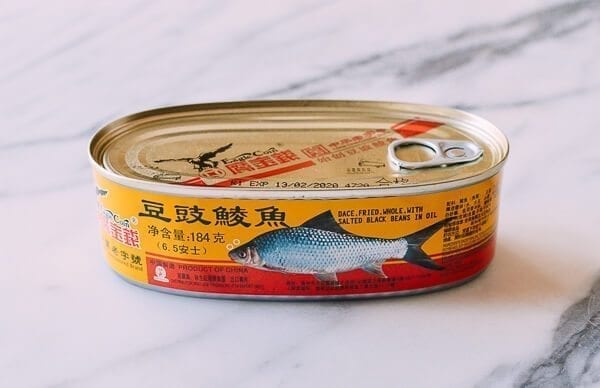
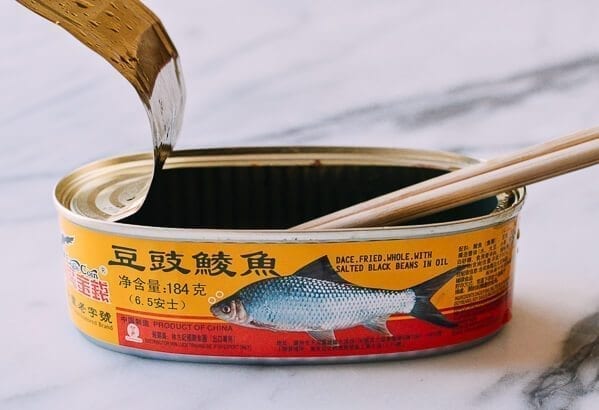
The Chinese name appears right on the can: 豆豉鲮鱼 in Chinese. It’s pronounced “Dòuchǐ líng yú” in Mandarin or “dao see liang yee” in Cantonese.

To prepare fried dace, the fresh fish is cleaned and deep-fried until crispy. Then it’s canned with soybean oil, salted fermented black soybeans, and various spices, creating strong, savory bursts of umami.
The texture is somewhat chewy, similar to jerky. Like sardines or anchovies, the bones are soft enough to eat, and add to that chewiness.
It has a distinctively addictive quality in both taste and texture.

Originating in Guangzhou, China, fried dace was traditionally considered a working-class food. It was inexpensive, had a long shelf life, and packed enough savory punch to stretch out a meal for a family with plenty of rice.
Used as emergency food or whenever the table needed an extra dish, many people—especially those with Cantonese roots—have fond memories of it.

I remember how my father, stepfather, and mother (all from Guangzhou and Hong Kong) always made sure there was a can on our pantry shelf. We ate it often with plain rice congee or sometimes with white rice, and it was always a welcome addition to the table. As I grew up, I introduced it to non-Chinese friends who really enjoyed it—some even put it in sandwiches for lunch!
Fried dace comes in an oval-shaped can and is available at any Chinese grocery store and many online retailers. These days, you can find several varieties: plain fried dace without salted soybeans, spicy dace with or without fermented black beans, fried dace with bean curd sticks, or even fried dace with olive vegetable—another of our favorite preserved ingredients! Some of these varieties are harder to find, so if you spot them, grab one to try.
Fried Dace Has Become Famous
Fried dace was what I would call a “low-profile food” that existed for many years under the radar. But with the recent spread of information about Chinese cuisine (from The Woks of Life and other sources!), it has gained fame.
You know something has “made it” when it appears on a New York Times best list—in this case, the New York Times / Wirecutter list of Best Tinned Fish.
Although the article’s title mentions fish, it covers various seafood products from around the world. Representing China is this classic dace with salted black beans. Here’s what they had to say:
“…We recommend it because it’s truly delicious. It’s heavily salted and a little sweet, with a round umami flavor from the addition of salted black beans. The texture is drier than most fish we tested, and appealingly chewy—multiple tasters described it as jerky-like.”
Where Can I Buy Fried Dace?
Fried dace comes in an oval-shaped can and is available at any Chinese grocery store. Our family has been buying and enjoying it for years since I was a kid. The brand I remember my family purchasing was Eagle Coin, with that iconic red and yellow label.
These days, you can also find Pearl River Bridge brand (also with a red and yellow label, though with slightly different color tones) in stores, arguably more often than the Eagle Coin brand I had as a child. If you don’t have Chinese grocery stores nearby, you can order it from online Asian grocers like SayWeee, but definitely shop around since prices and quantities vary.

How Do You Eat Fried Dace?
Fried dace is quite versatile. There are several ways to enjoy it, depending on regional variations and your own preferences.
Serving suggestions:
- With Rice: Fried dace is excellent with steamed rice. I’ve made an entire meal from just one can and some fresh rice. Place the fish on top of the rice, along with the salted soybeans, and drizzle the soybean oil over everything. Judy has a recipe for a rice cooker fried dace rice that’s insanely tasty.
- In Congee (Rice Porridge): Fried dace is often used as a topping or condiment for congee. A typical plain congee meal in our house might include one or more of the following: fried dace with salted black beans, fermented white bean curd, wok roasted peanuts, salted fish (hom yee), and any leftovers from the fridge.
- In Stir-Fries: You can chop it and add it to stir-fries with vegetables, tofu, or meat. The fish’s texture and salty taste work particularly well with Chinese leafy greens, giving them an extra layer of flavor.
- With Noodles: Serve it with noodles, whether stir-fried or in a broth-based soup. If you’re looking to add some umami to your noodles, just reach for that can of fried dace!
- Right Out of the Can: You can also eat it simply as a snack on its own. You can serve it with scrambled eggs, on top of vegetables, or just out of the can onto a plate.
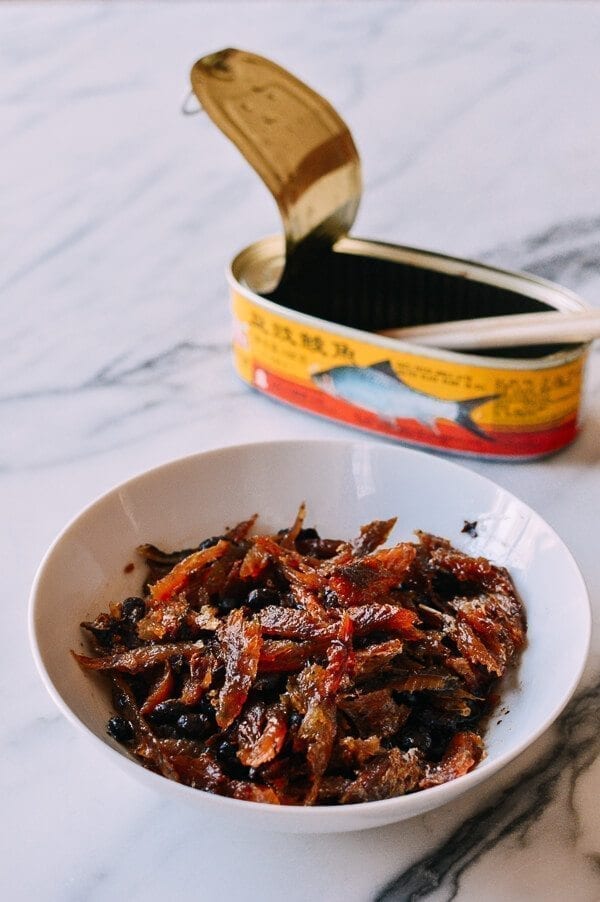
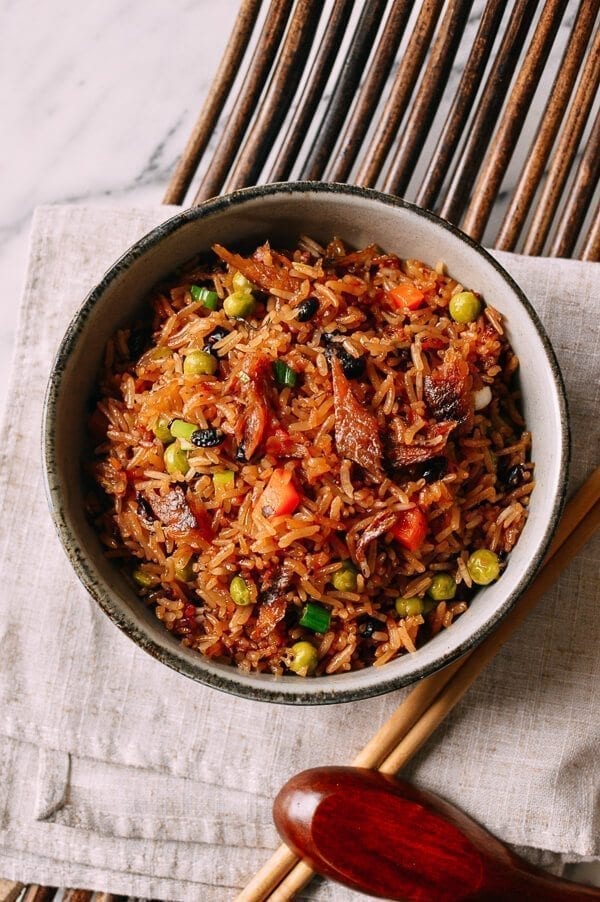
In my personal experience, we ate fried dace with congee, or simply when we needed something extra on the dinner table. It pairs wonderfully with rice, or as the Chinese say, it’s “hen xia fan” (很下饭). This Chinese expression literally translates to “very down rice.”
Essentially, this means that something is so delicious that it makes you eat more rice! The expression describes dishes or condiments that are so flavorful and/or salty that you want to keep eating them with more rice than you normally would.
So if something on the table is particularly salty or savory, someone might say it’s “hen xia fan,” meaning it’s the perfect match to enjoy with a bowl or two (or three!) of plain rice.