The Woks of Life
My Saved Recipes
  • Recipes
    • Recipe Index
    • Recipe Filter
    • View all By Date
    • Our Cookbook: NOW AVAILABLE!
    • Videos
  • How-To
    • Cooking MethodsAll how-to cooking methods
    • Cooking ToolsAll Cooking tools including hand and electrics
    • Wok Guide
    • Garden/FarmWe share our learnings from our new Woks of Life HQ/farm (where we moved in Fall of 2021) on how to grow Chinese vegetables, fruits, and other produce, as well as farm updates: our chickens, ducks, goats, alpacas, and resident llama!
    • CultureCulture related posts
  • Ingredients
    • Chinese Ingredients Glossary
    • Sauces, Wines, Vinegars & Oils
    • Spices & Seasonings
    • Dried, Cured & Pickled Ingredients
    • Noodles & Wrappers
    • Rice, Grains, Flours & Starches
    • Tofu, Bean Curd & Seitan
    • Vegetables & Fungi
    • Fresh Herbs & Aromatics
  • Life & Travel
    • Life
    • Travel
  • Contact
    • Work with Us
    • Press
    • Send Us A Message
  • About Us
Home ❯ Recipes ❯ Soups & Stocks ❯ Four Herbs Soup (Si Shen Tang – 四神汤)

Four Herbs Soup (Si Shen Tang – 四神汤)

Judy

by:

Judy

33 Comments
Jump to Recipe
Updated: 11/3/2023
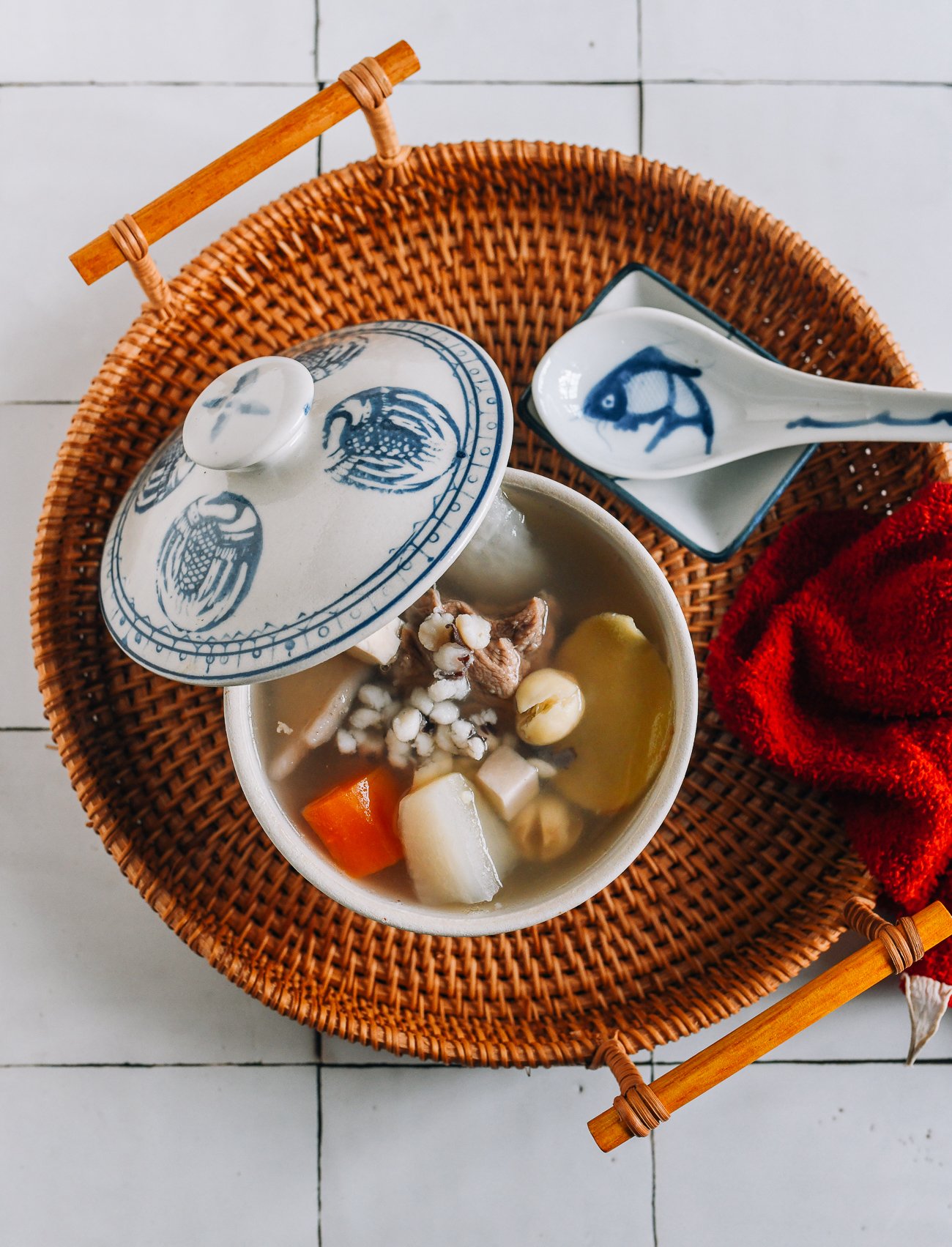
Four Herbs Soup - Si Shen Tang

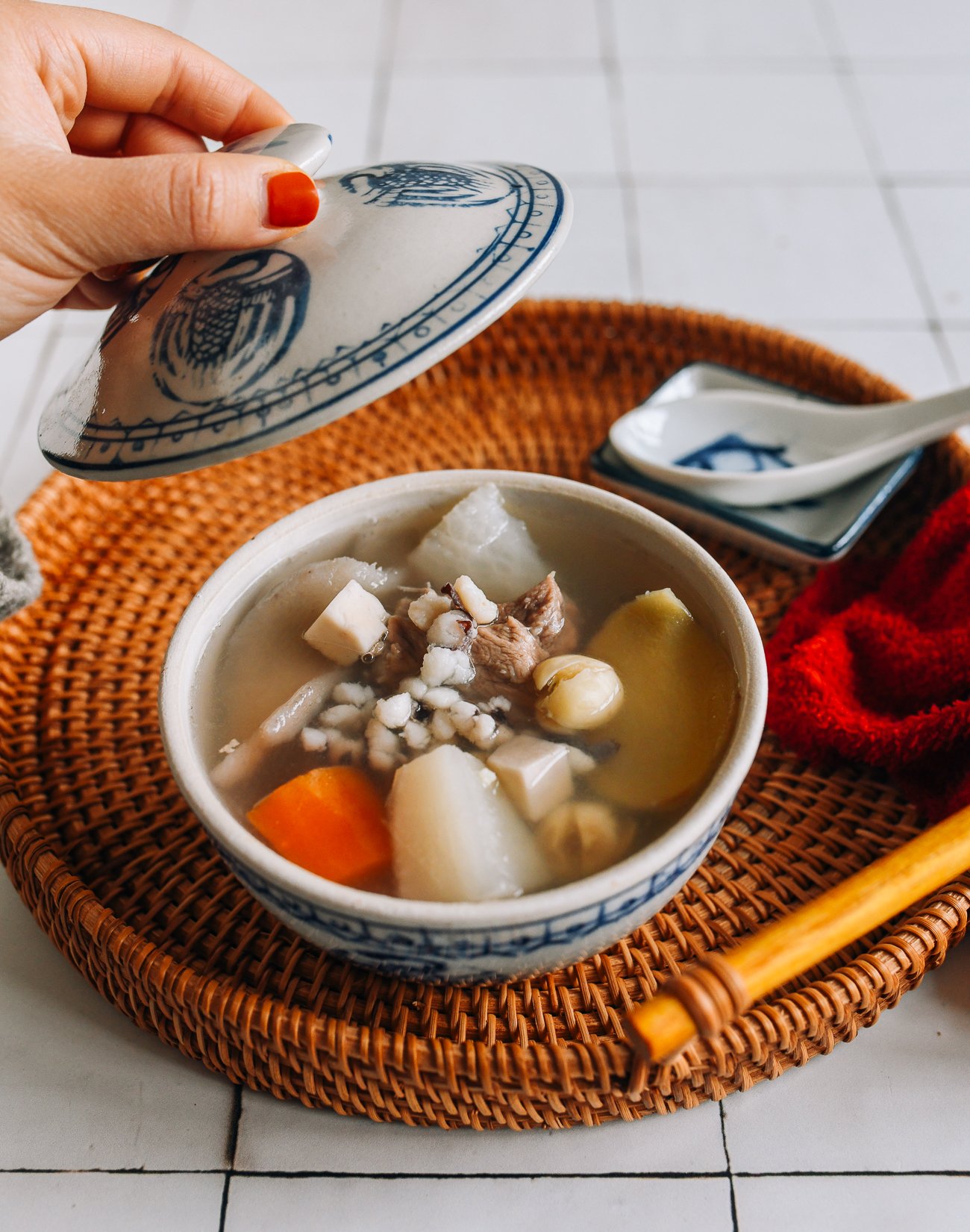
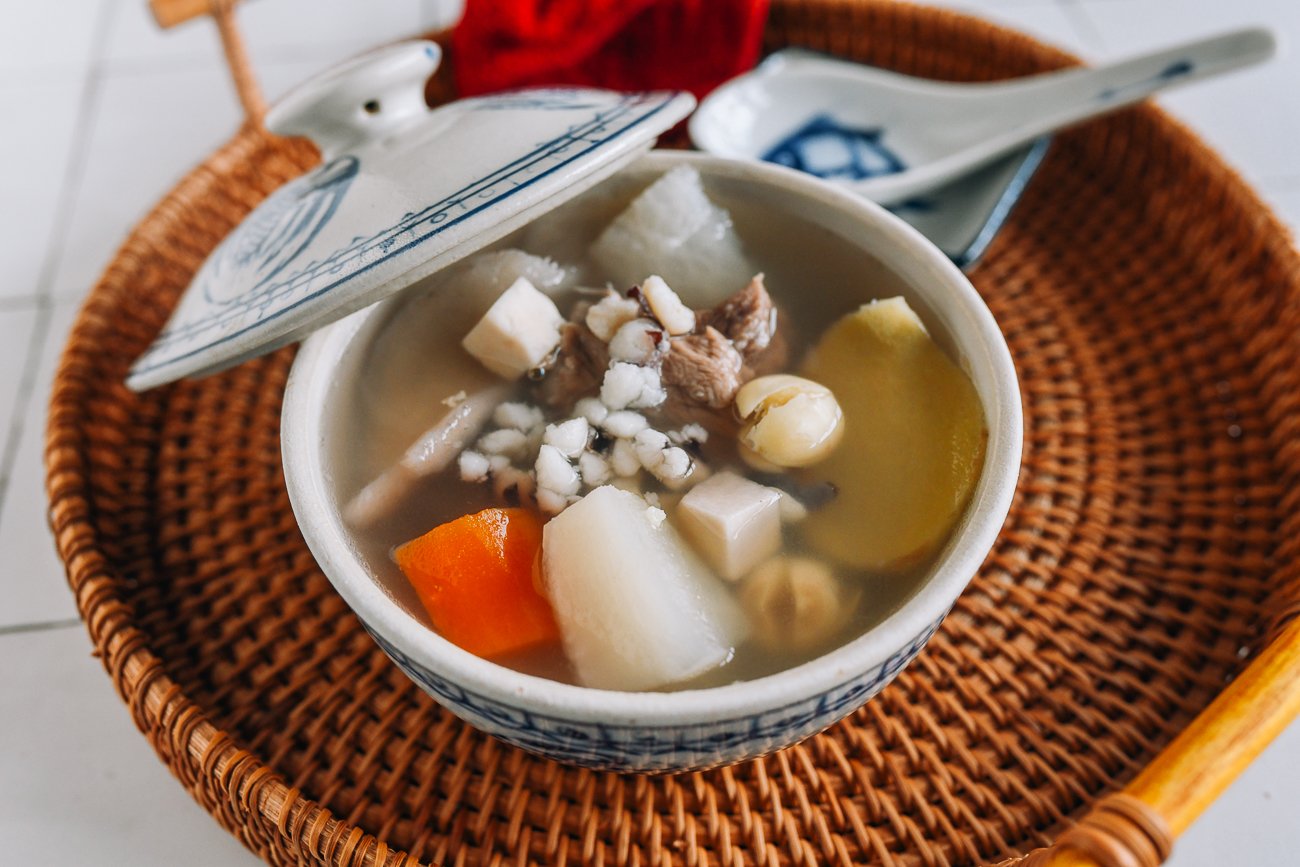
Four Herbs Soup, or sì shén tāng (四神汤), got its name from its use of four Chinese medicinal herbs: dried fox nut barley, lotus seeds, Chinese yam, and poria cocos mushrooms. You may also see this recipe translated as Chinese Four Spirits Soup or Four Gods Soup. 

A Very Traditional Chinese Herbal Soup Recipe 

Four Herbs Soup is a great example of Traditional Chinese Medicine’s emphasis on food, or shíliáo (食疗), as medicine. Just as you might consider a smoothie, salad, protein, or grain bowl as a healthy option, you can also think of this Chinese soup to help you feel balanced and healthy.

Dried fox nut barley (芡实, qiànshí) and lotus seeds (莲子, liánzǐ) are thought to strengthen the spleen and help reduce dampness. Chinese yam (known in Chinese as shānyào – 山药, which translates to “mountain medicine”) is used to tonify deficiency (balance the energy in your body). And the poria cocos mushroom (苻苓, fú líng) is supposed to remove dampness from your system.

All these ingredients can be found dried at your local well-stocked Chinese grocery store.
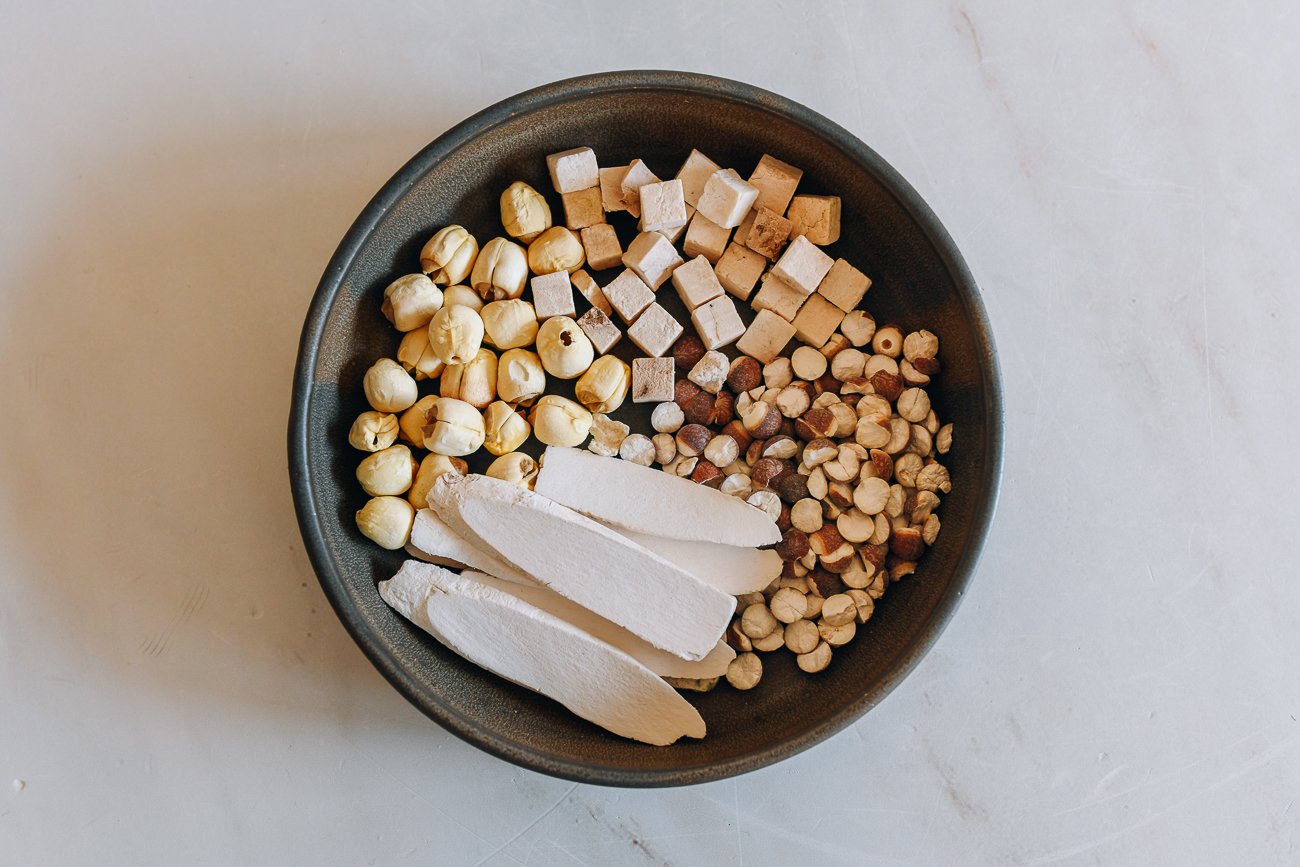
Dried lotus seeds, poria cocos, fox nut barley, and Chinese mountain yam

Also, if you enjoy the flavor of supremely clear, traditional Cantonese soups, I think you will enjoy this recipe! 

Traditional Chinese soups are different from the soups many of us are familiar with. The essence of a Cantonese soup is in its broth. It is clear, thanks to slow cooking at very low heat (more on how to achieve this here!). 

Don’t be fooled by its unassuming clear appearance. Cantonese soups are delicate, but also rich. We serve them before the meal, to fully appreciate their flavor.

What does it mean to have “dampness”? 

All my life, I have been picking up various learnings from Traditional Chinese Medicine (commonly abbreviated as TCM). It is a vast area of study. 

My basic understanding of dampness is that it’s like a clog in a drain. It’s something that we all develop to some extent through the wear and tear we put on our bodies. It slows movement of qi (energy) throughout the body, and like a clogged drain, it can cause problems!

According to TCM, excessive dampness is the root of many illnesses and discomforts. It can cause you to feel sluggish and affect your sleep, slow down your metabolism, and cause swelling or water retention.

The key function of this soup is to help with the health of your spleen and stomach, and to expel that dampness. Dampness can be damp-heat (燥湿), or damp-cold (阴湿), where 阴 is yin, i.e., the opposite of 陽—yang. It’s all very complex, and I would need years of study to understand TCM’s many nuances!

To make a long story short, this soup recipe has been passed down through generations for a reason! 
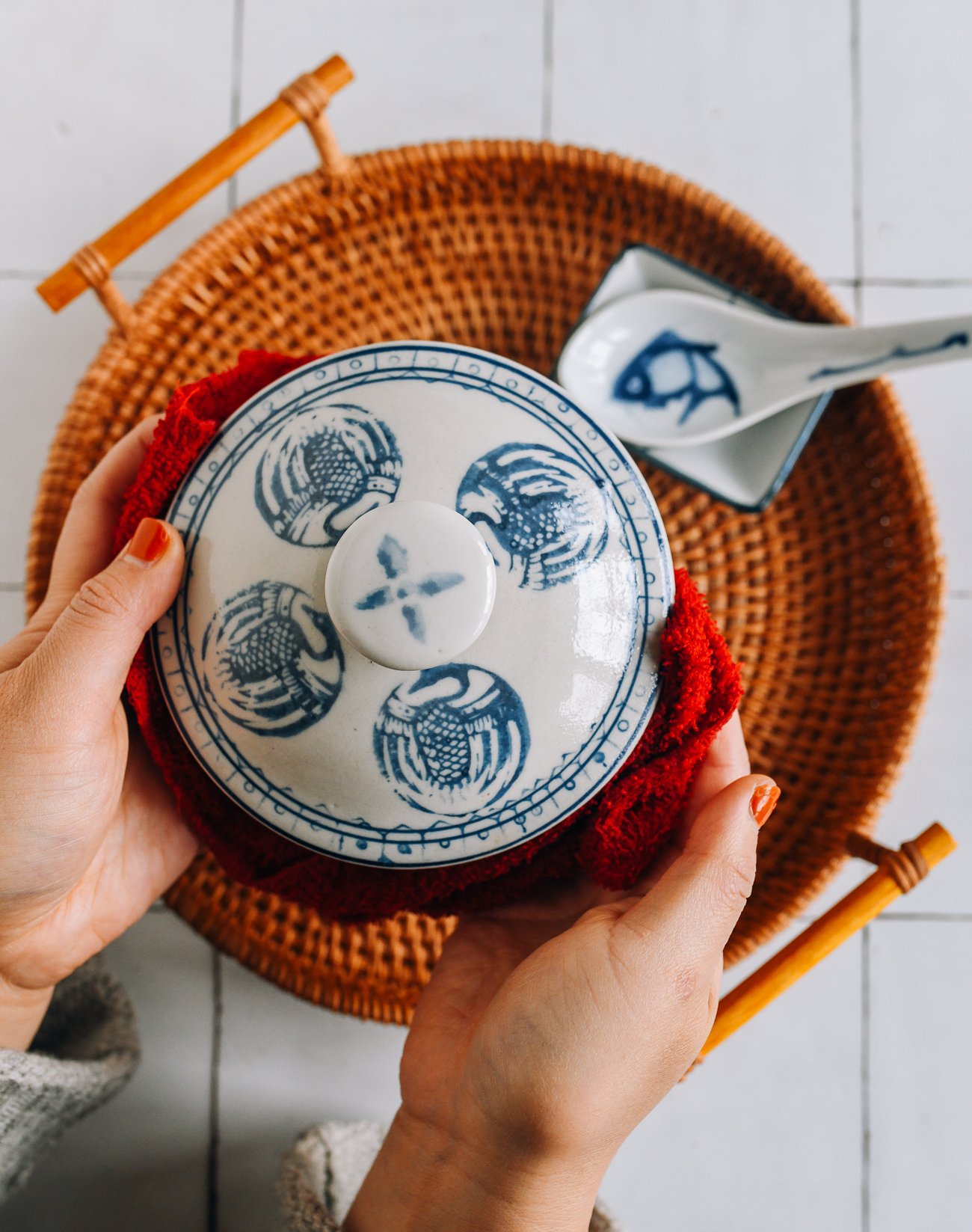
placing a small Chinese soup tureen on table

Seasonal Substitutions

Recipes for this soup most often use pork bones and pork stomach. You can also use soybeans (about 100g dried) as a vegetarian option.

I also included daikon (it’s in season right now) and carrot for more flavor and a hint of natural sweetness. For the summertime, you can use corn + carrot, seaweed + carrot, or winter melon + carrot. They’re all very good for you!
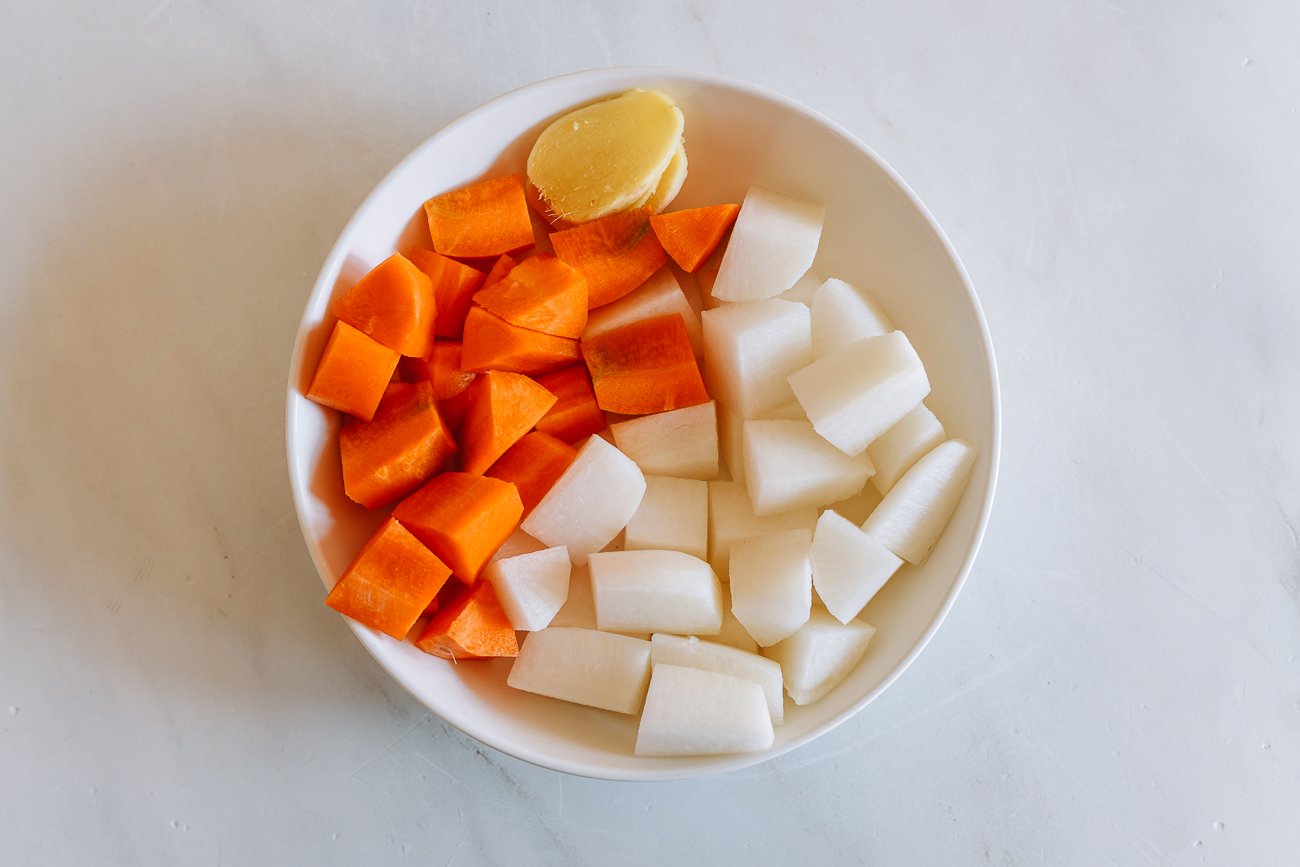
plate with carrot, ginger, and daikon

These little adjustments mean you can make this a soup for all seasons! I make it year round. 

Recipe Instructions

Soak the dried fox nut barley, dried lotus seeds, dried Chinese yam, and poria cocos mushrooms in a bowl with enough water to cover them.

Meanwhile, soak the pork bones in cold water for 1 hour. Rinse thoroughly, and drain. In a large thick-bottomed stock pot, add the pork bones and enough cold water to cover. Bring to a boil over high heat. Once boiling, immediately drain the pork bones through a colander and rinse them clean. Wash the soup pot as well. This soaking and boiling process washes away impurities and keeps the soup clear.
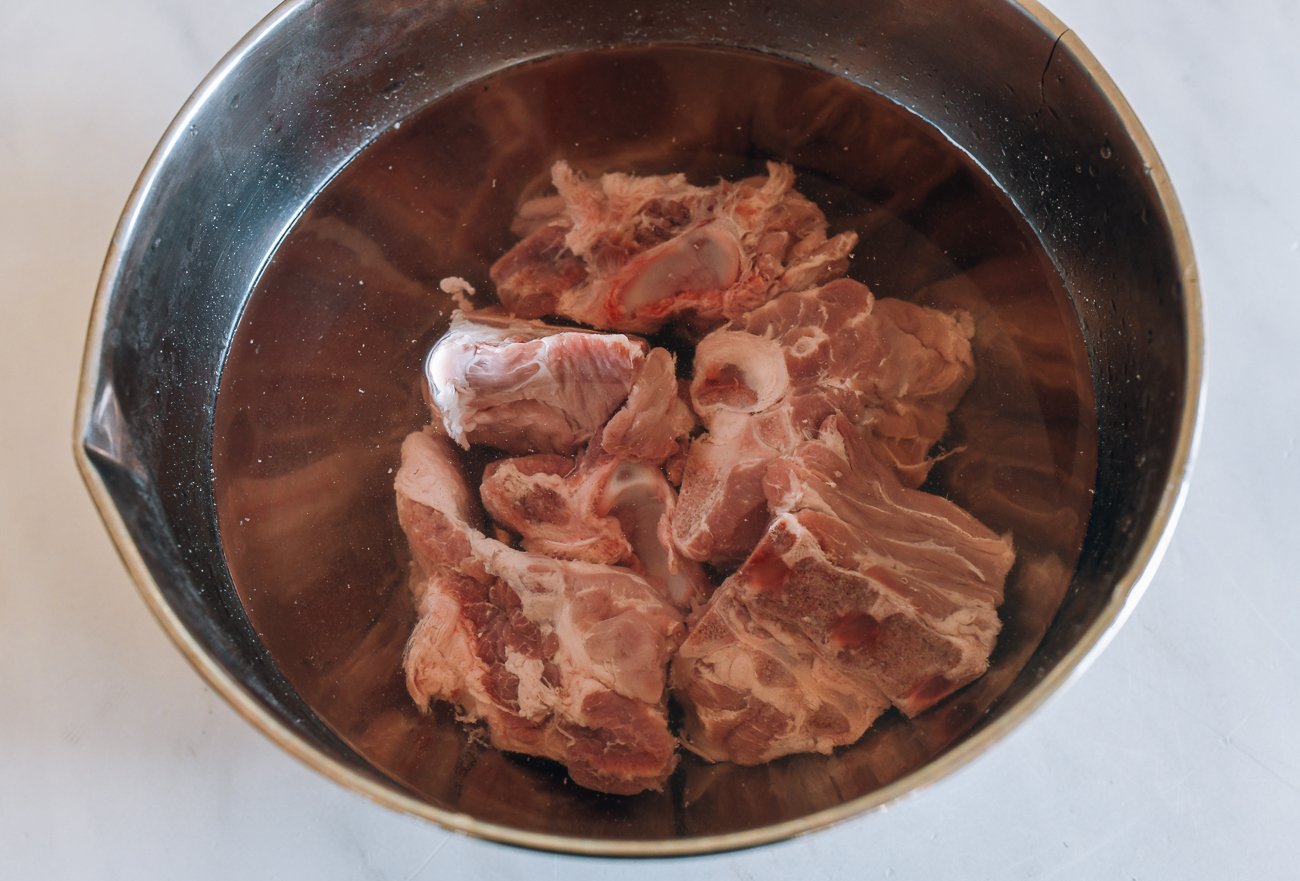
soaking pork neck bones in water

Add the pork back to the pot. Drain the dried herbs, and add to the pot as well, along with the ginger, carrot, daikon, and 10 cups of water. 

Ingredients for Chinese four herbs soup in pot

Bring to a boil, then cover and reduce the heat to medium-low. The water should be moving at a slow simmer—not simmering rapidly or boiling. Cook for 2 hours.

Add salt to taste just before serving. Pork neck bones can be quite meaty, so enjoy them with light soy sauce for dipping.

This soup tastes better the next day, so you can make it in advance as well! 

Chinese Four Herbs Soup
Chinese Four Gods or Four Spirits Soup with Dried Herbs

Looking for more authentic recipes? Subscribe to our email list and be sure to follow us on Pinterest, Facebook, Instagram, and Youtube!

Recipe

Four Herbs Soup - Si Shen Tang
Print
4.88 from 8 votes

Four Herbs Soup (Si Shen Tang – 四神汤)

Four Herbs Soup, or sì shén tāng (四神汤), got its name from its use of four key Chinese medicinal herbs: dried fox nut barley, lotus seeds, Chinese yam, and poria cocos mushrooms. You may also see this recipe translated as Chinese Four Gods Soup or Four Spirits Soup.
by: Judy
Serves: 6
Prep: 2 hours hrs
Cook: 2 hours hrs 30 minutes mins
Total: 4 hours hrs 30 minutes mins

Ingredients

  • 30 g dried fox nut barley (芡实, qiànshí)
  • 25 g dried lotus seeds (莲子, liánzǐ; make sure bitter green centers are removed; look for a brand that's done it for you already!)
  • 30 g dried Chinese yam slices (山药, shānyào)
  • 35 g poria cocos mushrooms (苻苓, fú líng)
  • 2 pounds pork neck bones (or 100g dried soybeans as a vegetarian option)
  • 5 slices ginger (⅛-inch/3mm thick and 2 inches/5cm long)
  • 6 ounces carrot about 1 medium, cut into 1½-inch (4cm) chunks
  • 12 ounces daikon radish about 1 small, cut into 1½-inch (4cm) chunks
  • 10 cups water
  • salt to taste

Instructions

  • Soak the dried fox nut barley, dried lotus seeds, dried Chinese yam, and poria cocos mushrooms in a bowl with enough water so that everything is submerged.
  • Meanwhile, soak the pork bones in cold water for 1 hour. Rinse thoroughly, and drain. In a large thick-bottomed stock pot, add the pork bones and enough cold water to cover. Bring to a boil over high heat. Once boiling, immediately drain the pork bones through a colander and rinse them clean. Wash the soup pot as well. This soaking and boiling process washes away impurities and keeps the soup clear.
  • Add the pork back to the pot. Drain the dried herbs, and add to the pot as well, along with the ginger, carrot, daikon, and 10 cups of water.
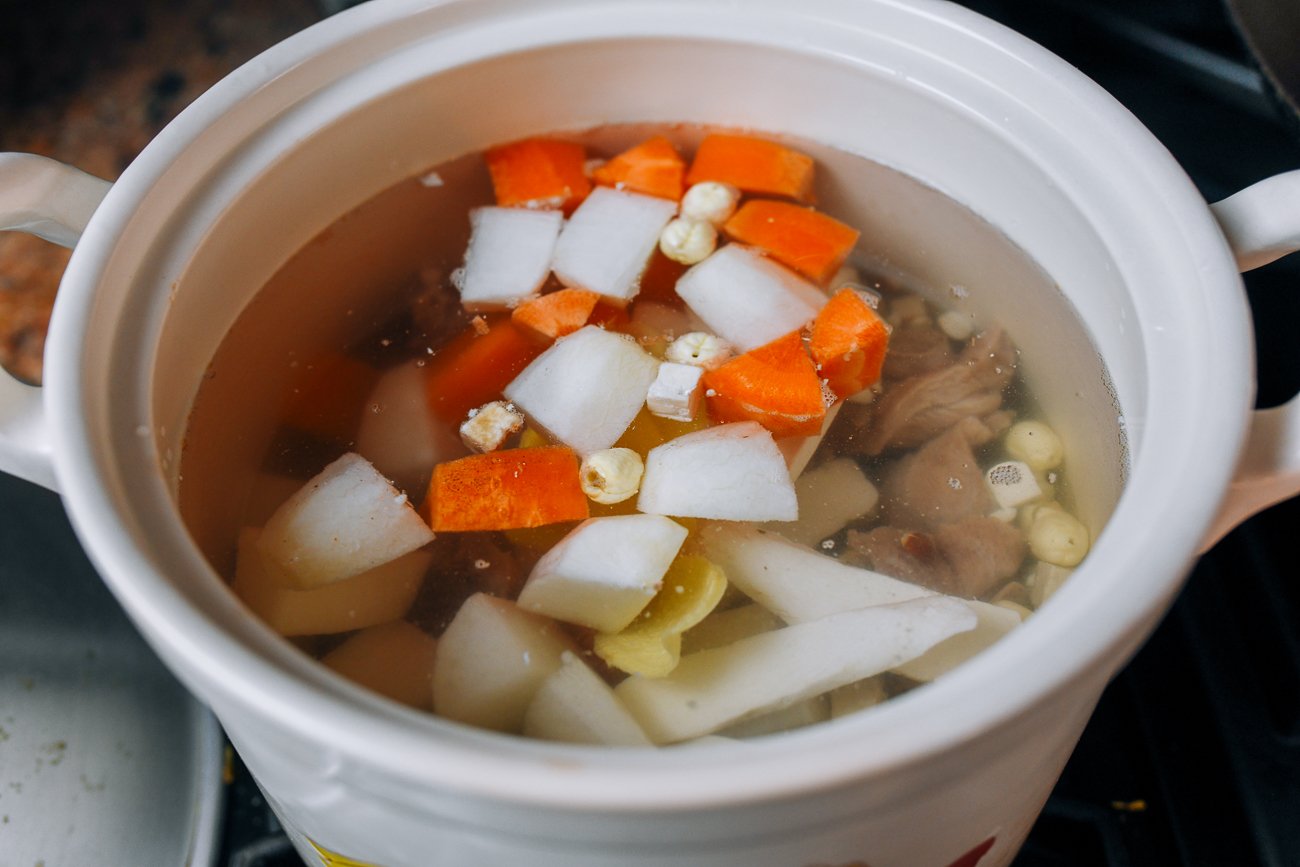
  • Bring to a boil, then cover and reduce the heat to medium-low. The water should be moving at a slow simmer—not simmering rapidly or boiling. Cook for 2 hours.
  • Add salt to taste just before serving. We like to enjoy the meat from the pork bones with light soy sauce for dipping.

Tips & Notes:

Nutrition information does not include added salt.
This soup tastes better the next day, so you can make it in advance as well!
Nutrition Facts

Calories: 81kcal (4%) Carbohydrates: 17g (6%) Protein: 3g (6%) Fat: 1g (2%) Saturated Fat: 0.1g (1%) Polyunsaturated Fat: 0.1g Monounsaturated Fat: 0.1g Sodium: 53mg (2%) Potassium: 386mg (11%) Fiber: 2g (8%) Sugar: 3g (3%) Vitamin A: 4739IU (95%) Vitamin C: 15mg (18%) Calcium: 46mg (5%) Iron: 1mg (6%)
Nutritional Info Disclaimer Hide Disclaimer
TheWoksofLife.com is written and produced for informational purposes only. While we do our best to provide nutritional information as a general guideline to our readers, we are not certified nutritionists, and the values provided should be considered estimates. Factors such as brands purchased, natural variations in fresh ingredients, etc. will change the nutritional information in any recipe. Various online calculators also provide different results, depending on their sources. To obtain accurate nutritional information for a recipe, use your preferred nutrition calculator to determine nutritional information with the actual ingredients and quantities used.
Did You Make This?Tag us on Instagram @thewoksoflife and be sure to follow us on social for more!
@thewoksoflife

You may also like…

  • Simple Oxtail Soup, by thewoksoflife.com
    Chinese Oxtail Soup
  • Packet of Hot Pot Soup Base, thewoksoflife.com
    Hot Pot Soup Base
  • Superfood Miso Soup, by thewoksoflife.com
    Japanese Superfood Miso Soup
  • Spoonful of tomato egg drop soup, thewoksoflife.com
    Tomato Egg Drop Soup
Judy

About

Judy
Judy Leung is the matriarch of The Woks of Life family, working on the blog alongside husband Bill and daughters Sarah and Kaitlin. Born in Shanghai, China, she immigrated to the United States at sixteen. Fluent in both English and three Chinese dialects, she also plays the important role of researcher and menu translator! Drawing from over four decades of cooking experience and travel, Judy aims to bring Chinese culinary traditions to readers and preserve recipes that might otherwise be lost to time. Her expertise spans from Shanghainese cooking and everyday homestyle dishes to a variety of regional foodways, showcasing the depth and breadth of Chinese cuisine for a global audience. Over the last decade, she’s helped transform The Woks of Life into what Saveur Magazine has deemed “the internet’s most popular Chinese cooking blog,” co-written a New York Times bestselling cookbook, and become convinced that we will never run out of recipes to share!
guest
Rate this recipe:


guest
Rate this recipe:


This site uses Akismet to reduce spam. Learn how your comment data is processed.

33 Comments
Newest
Oldest Most Voted
Inline Feedbacks
View all comments
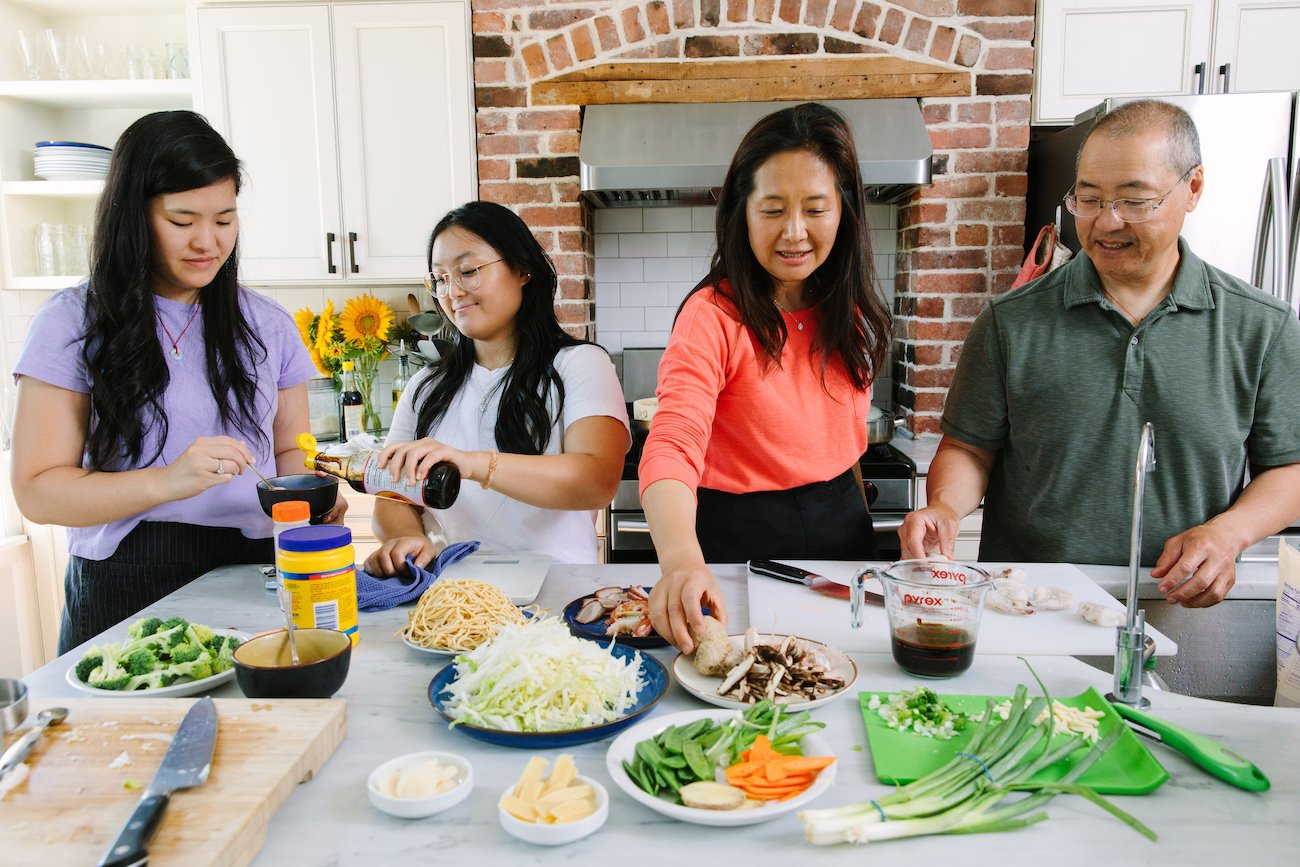
Sarah, Kaitlin, Judy, and Bill cooking together

Welcome!

We’re Sarah, Kaitlin, Judy, and Bill– a family of four cooks sharing our home-cooked and restaurant-style recipes.

Our Story

sign up for our newsletter and receive:

our Top 25 recipes eBook

Our email newsletter delivers our new recipes and latest updates. It’s always free and you can unsubscribe any time.

Wok Guide
Ingredients 101
Cooking Tools
Kitchen Wisdom
* Surprise Me! *

Save Your Favorite Woks of Life Recipes!

Create an account to save your favorite dishes & get email udpates!

Sign Me Up

Sign Up For Email Updates & Receive Our

Top 25 Recipes Ebook!

“

“I am proud to say that your genealogy has been the sole tutorial for my Asian-inspired culinary adventures for years; probably since you began. Time and again, my worldwide web pursuits for solid recipes that I know my family will eat has landed me back here.”

Beth, Community Member Since 2013

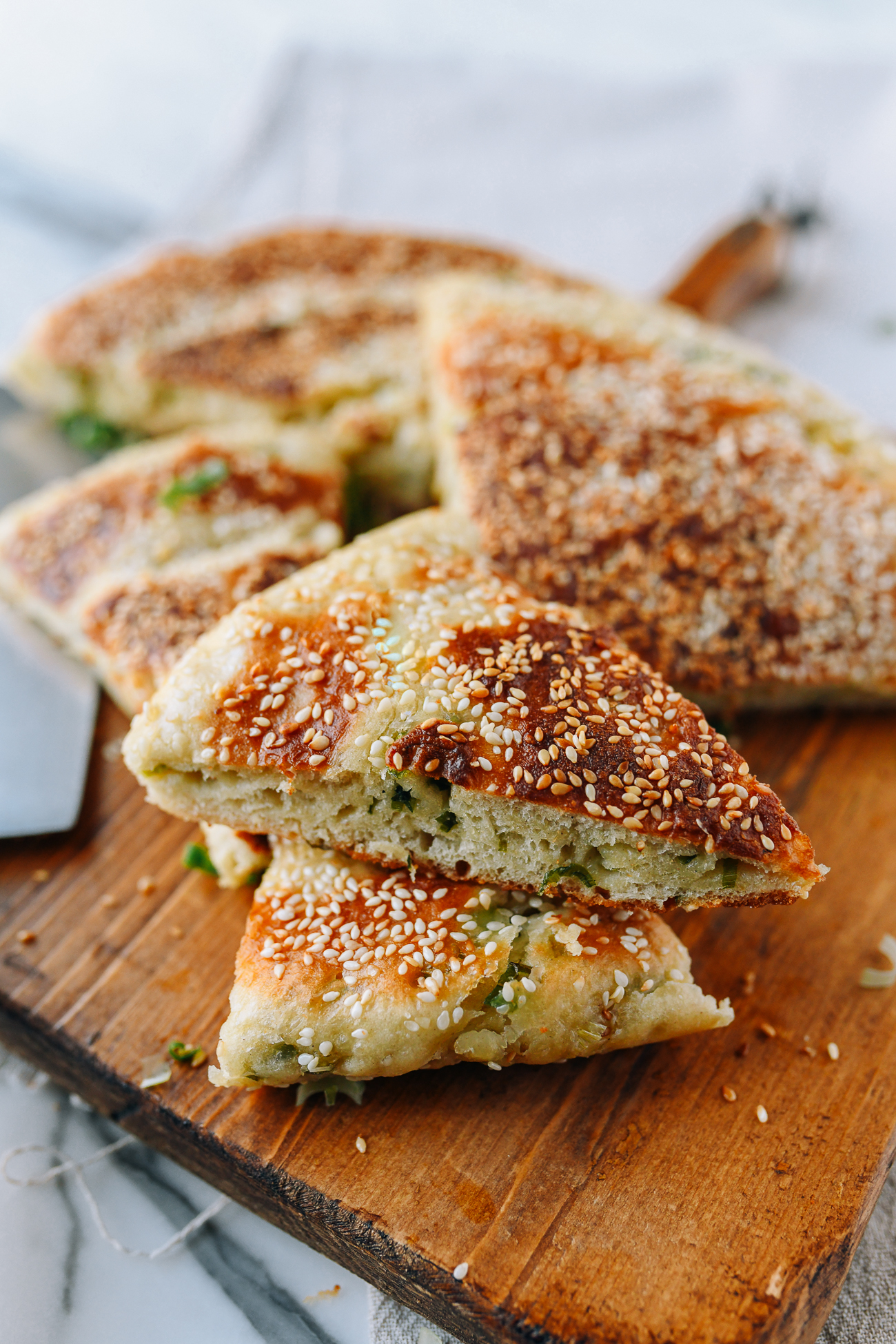
Shanghai Scallion Flatbread Qiang Bing
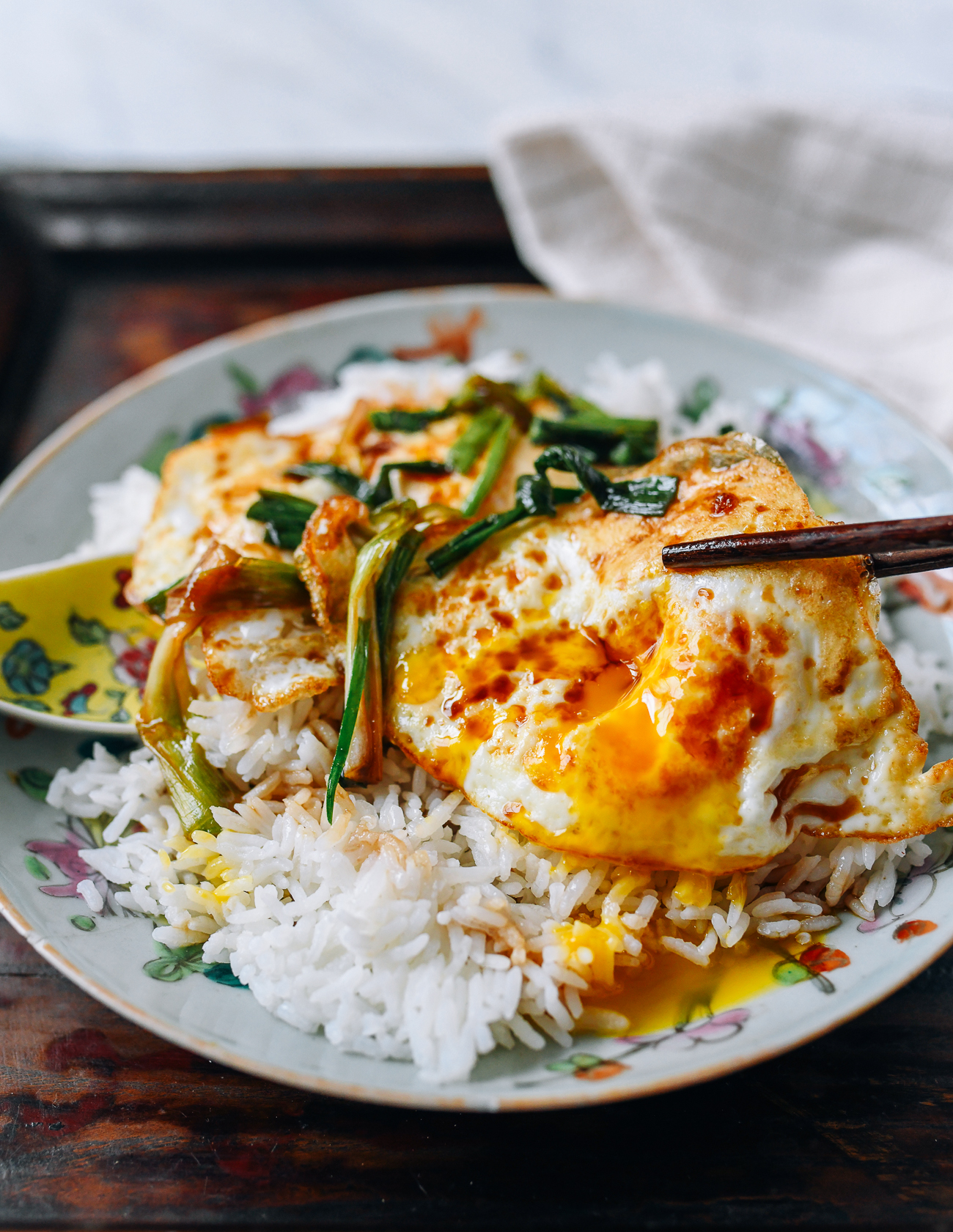
Eggs with Soy Sauce and Scallions
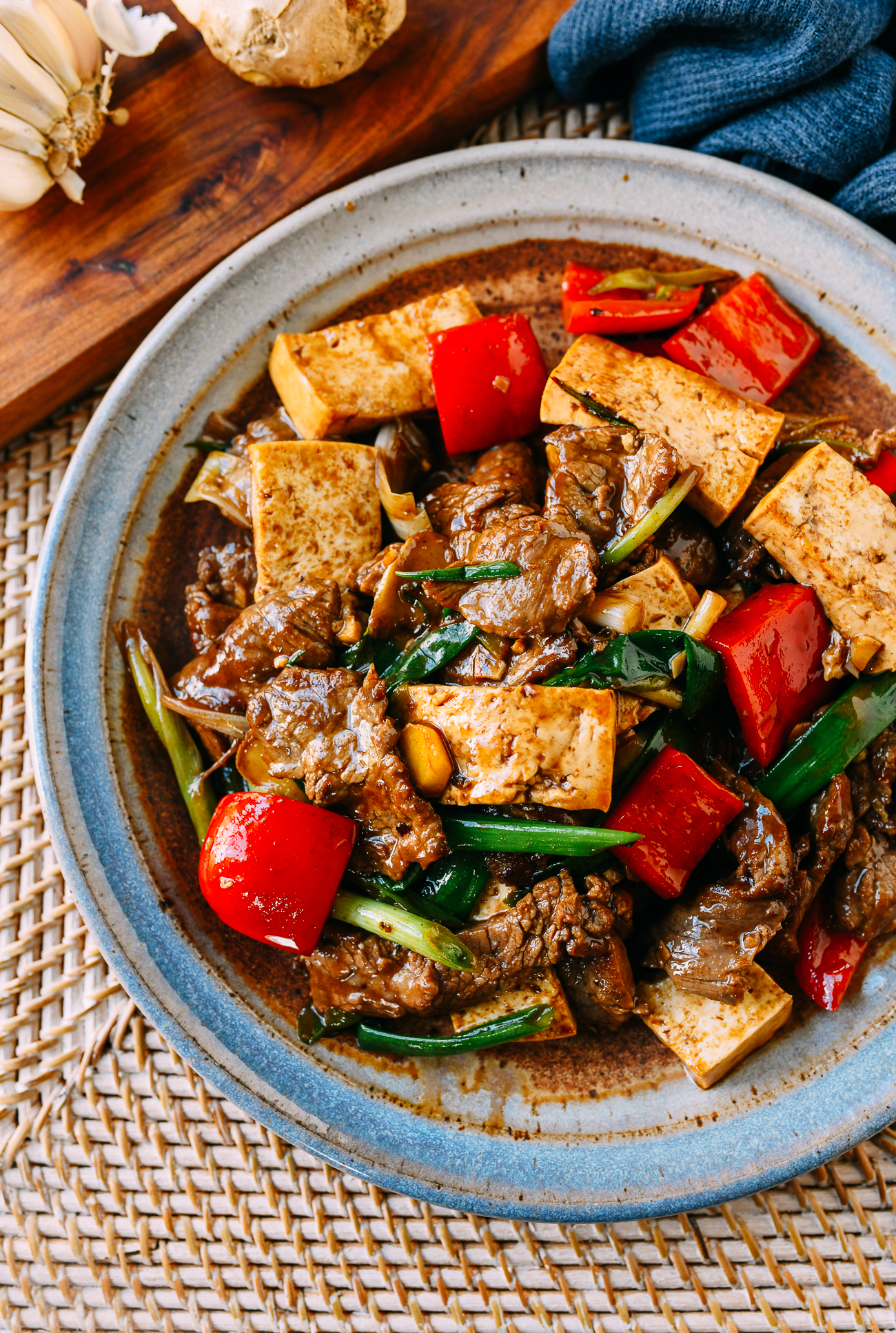
Scallion Ginger Beef & Tofu
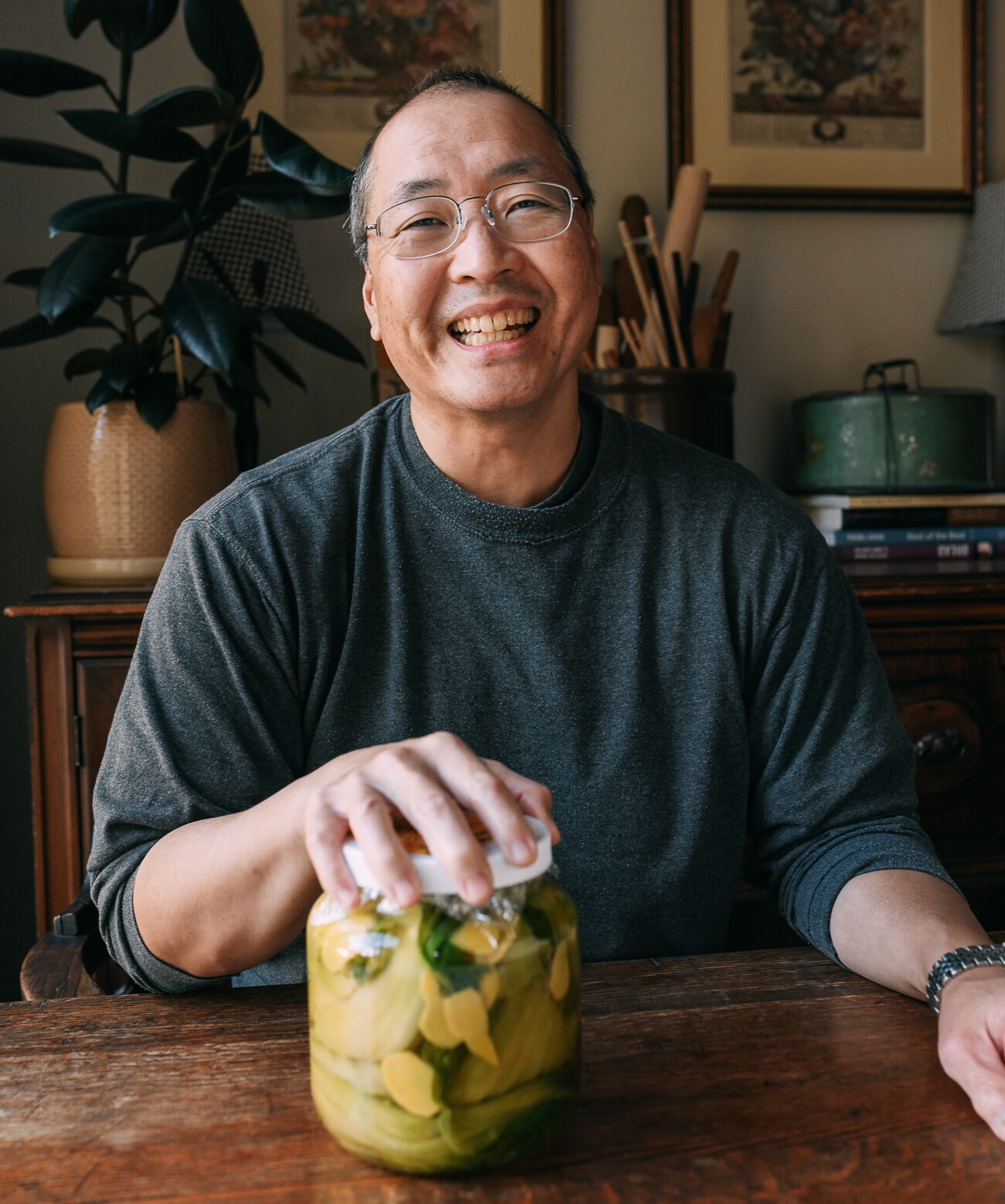
Bill with jar of haam choy
Soy Butter Glazed King Oyster Mushrooms
Taiwanese Rou Zao Fan
  • Facebook
  • Instagram
  • Pinterest
  • YouTube

All Rights Reserved © The Woks of Life

·

Privacy Policy

·

Disclaimer

·

Site Credits

·

Back to Top
wpDiscuz